Rumours Of Curves In Walthamstow
Last night, Lea Bridge station opened without ceremony, as I wrote in The People Of London Welcome Lea Bridge Station.
I got talking to someone, who knows a lot more about what will be happening to the railways in East London, than I do and when I asked about the Hall Farm Curve, they indicated it could be reinstated soon.
This map from carto.metro.Free.fr shows the lines North from Lea Bridge station.

Lines North Of Lea Bridge Station
The Hall Farm Curve connects Lea Bridge and St. James Street stations.
My informant said the curve would probably be only single-track and signalled to allow trains to go both ways.
With my scheduling hat on, I do wonder if the curve would effectively connect spare capacity on the Northern end of the Chingford Branch to some spare capacity between Lea Bridge and Stratford stations. I think it is probably true to say, that North of Coppermill Junction, the West Anglia Main Line needs more capacity, so this sneaky way to Chingford doesn’t impact.
The limiting factor on the number of trains per hour between Chingford and Stratford would probably be platform capacity at the two ends of the route.
My informant also indicated that the Coppermill Curve could be rebuilt to allow trains to go between the West Anglia Main Line and the Chingford Branch Line.
This Google Map shows the area around Chingford station.
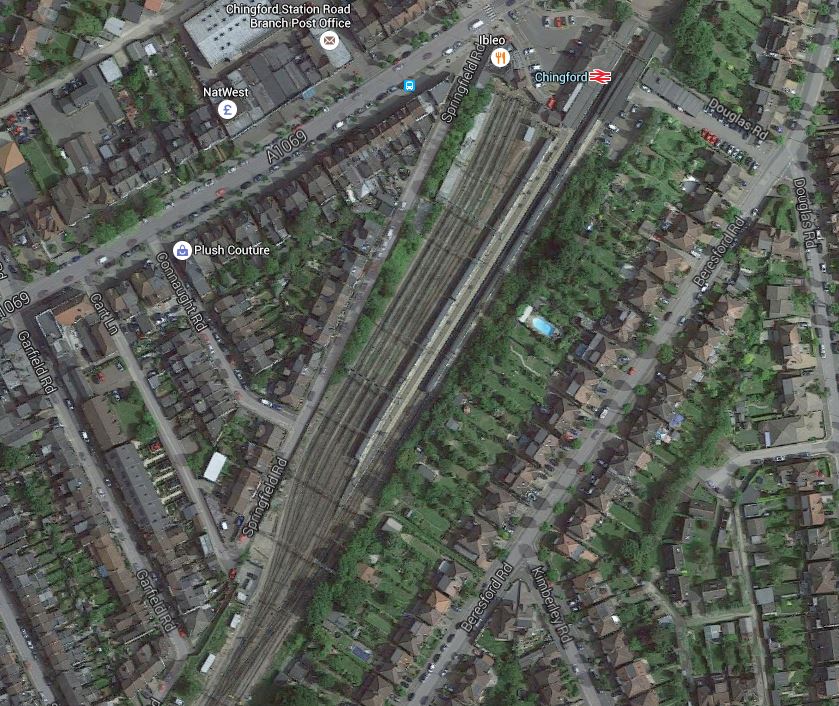
Chingford Station
Note the extensive sidings by the station.
My informant said the main purpose of reinstating a double-track Coppermill Curve, would be to move empty trains to and from Chingford, rather than new passenger services.
But with the design stage of Crossrail 2 well underway, I do wonder, if connecting Chingford station and the related sidings to the West Anglia Main Line, might give Crossrail 2 better options to build the line or provide alternative services, whilst the West Anglia Main Line is rebuilt through the area.
It strikes me that the cost of doing both curves together would be less than only building the Hall Farm Curve and then finding that construction of Crossrail 2 needs the Coppermill Curve.
Related Posts
Improving The Chingford Branch Line
Could Electrification Be Removed From The Chingford Branch Line?
Could Reversing Sidings Be Used On The Chingford Branch Line?
Could The Hall Farm Curve Be Built Without Electrification?
Crossrail 2 And The Chingford Branch Line
New Stations On The Chingford Branch Line
Will Walthamstow Central Station On The Victoria Line Be Expanded?
Will Redevelopment Of Fenchurch Street Station Help To Pay For Crossrail 2?
I have just written Could Crossrail 2 Go To Grays?, after various articles suggested that a Hackney Branch of Crossrail 2 could take over c2c lines through Barking and have termini at Bssildon and Grays.
This map is provided.
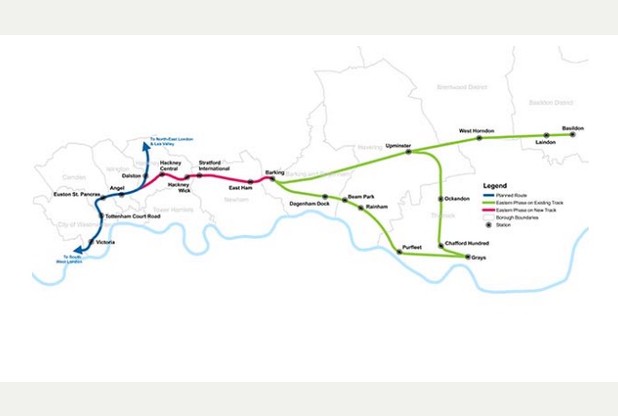
Possible Crossrail 2 Eastern Branch
The red section is new track, which would need to be in tunnel as far as East Ham.
Looking at this proposal, it became apparent, that the number of trains terminating at Fenchurch Street station could be severely reduced.
This Google Map shows Fenchurch Street station.
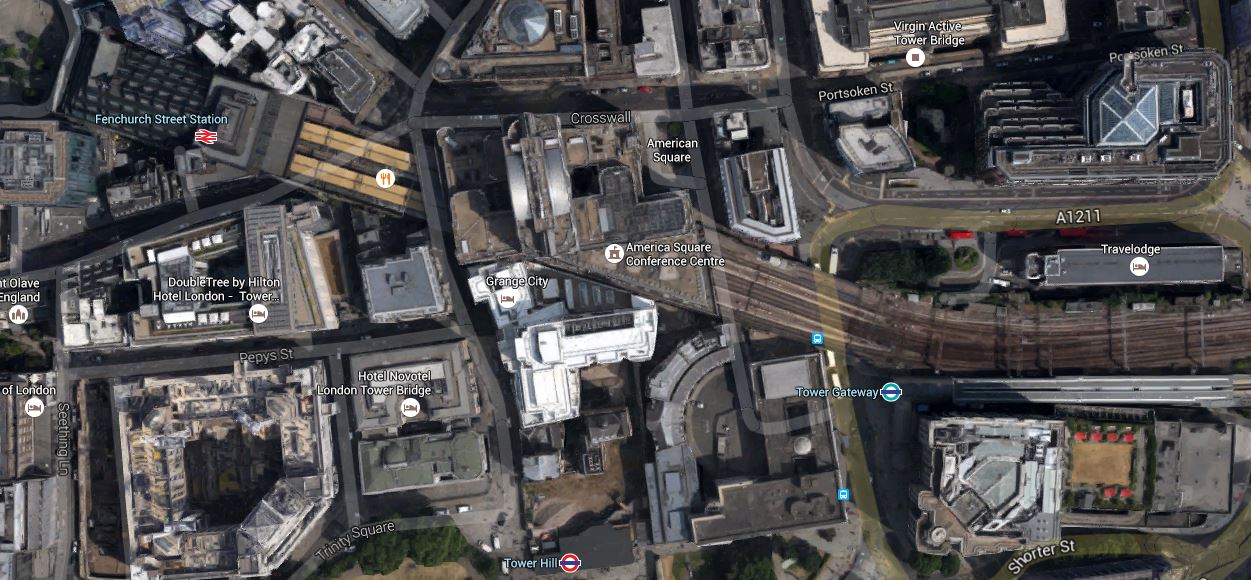
Fenchurch Street Station
Note Tower Gateway station on the DLR and Tower Hill station on the District and Circle Lines, to the South of the lines into Fenchurch Street.
The site must be worth a fortune in the City of London and could surely be redeveloped.
- It could have enough capacity to provide four trains per hour to Southend and/or Shoeburyness.
- The Docklands Light Railway terminus could be moved alongside the new station.
- It could have direct connectivity to Tower Hill station.
- There would obviously be a lot of offices on top.
There has been a proposal in the past to extend the DLR to Charing Cross and Victoria.
A rebuilding of Fenchurch Street station with the c2c and DLR stations underneath, might enable this extension from the Toewer Gateway branch.
This map from carto.metro.free.fr shows the rail lines from Tower Gateway to Charing Cross.
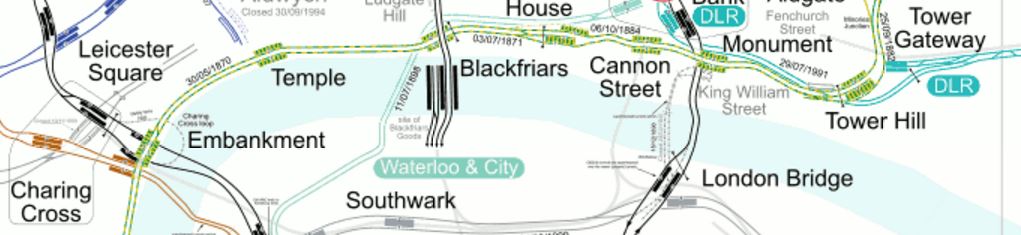
Tower Gateway To Charing Cross
This is said about the proposed route in Wikipedia.
Two reasons driving the proposal are capacity problems at Bank, having just one interchange between the DLR and the central portion of Underground, and the difficult journeys faced by passengers from Kent and South Coast between their rail termini and the DLR. Intermediate stations would be at City Thameslink/Ludgate Circus and Aldwych.
Could it be, that one of the drivers of linking Crossrail 2 to c2c services is to enable the Fenchurch Street station site to be redeveloped?
Crossrail 2 Will Be Threaded Through This
The map from carto.metro.free.fr, shows all the lines around Kings Cross station.

Lines Around Kings Cross
It certainly isn’t the easiest place to connect Crossrail 2, which will call at Angel, King’s Cross St. Pancras and Euston stations into the system. From a map in this document, it would appear that Crossrail 2 runs across to the north of the Victoria and Northern Lines.
Thank Heaven for 3-D computer design systems!
Painting London Orange
This article on BBC News is entitled Transport for London to take over suburban rail routes and it describes how TfL will have much more control over trains within and around London.
These are relevant points from the article.
- The new partnership between the Department for Transport and TfL says it aims to ensure there are more frequent trains and increased capacity.
- As franchises come up for renewal, they will come more under TfL’s control.
- The plan would mean more than 80% of stations would have a train at least every 15 minutes, up from 67%.
- Services running from London Bridge, Victoria, Charing Cross, Cannon Street and Moorgate would all be transformed under the scheme.
I think we’ll be seeing a lot more Overground orange on stations.
The Overground Philosophy
There are well-run railways all over the world, but somehow the Overground is different.
Whether it is because it is an offspring of the well-respected and much-loved Underground or whether because it reaches the parts the Underground doesn’t, it is difficult to explain, why in only a few years, the Overground has wormed its way into the hearts and minds of residents and visitors alike.
All lines adhere to the following principles.
- Trains at a frequency of at least four trains per hour.
- Staff on the station from the time the first train arrives to the time the last train leaves.
- Clean, modern trains and stations.
- Simple contactless ticketing.
- Increasing the proportion of step-free access.
- No pre-booking for passenger assistance for the disabled.
- All profits made, are invested back in the network.
- Continuous innovation and improvement
Some of these principles have come direct from the Underground.
The North London Line
Around the turn of the millennium the North London Line, had all the charm of a set of travelling urinals. Everything was tired and worn out, but within a few years of the start of the Overground, with new Class 378 trains, a couple of new stations and a deep clean of the others, ridership had soared and its major problem was increasing the size and number of the trains to cope with the growth in passenger numbers.
One of my local stations is Canonbury. The Overground has improved the station in the following ways.
- Six trains per hour on the North London Line and eight trains per hour on the East London Line.
- A new ticket office and two extra platforms.
- Full step-free access to all platforms.
- Large platform shelters.
- Cross platform interchange between Westbound NLL services and Southbound ELL services.
The only thing it lacks is a high quality artwork on the spacious island platform.
Canonbury even gets the occasional steam train, as I wrote about in Tornado at Canonbury Station.
I think it’s probably true to say, that Transport for London haven’t spent a fortune at Canonbury, but somehow they’ve created a quirky station that does its job with style.
London needs more Canonburys.
London Votes
London doesn’t vote red or blue any more. It now votes red, blue and orange!
In other words, if you stand as Mayor and don’t have a creditable policy for expanding London’s transport network, you won’t get elected. And one of the things you must do is support the Overground.
So now that Transport for London is going to get overall control of suburban services, it is perhaps worth looking at what lines out of London stack up against the principles of the Overground.
The Orange Standard
I’ll first look at various Overground routes to gauge their characteristics.
- Clapham Junction to Stratford – 2 trains per hour
- Clapham Junction to Willesden Junction – 2 trains per hour
- Dalston Junction to New Cross – 4 trains per hour
- Dalston Junction to West Croydon – 4 trains per hour
- Euston to Watford Junction – 3 trains per hour
- Gospel Oak to Barking – 4 trains per hour
- Highbury and Islington to Clapham Junction – 4 trains per hour
- Highbury and Islington to Crystal Palace – 4 trains per hour
- Liverpool Street to Cheshunt – 2-4 trains per hour
- Liverpool Street to Chingford – 4 trains per hour
- Liverpool Street to Enfield – 2-4 trains per hour
- Richmond to Stratford – 4 trains per hour
- Romford to Upminster – 2 trains per hour
All have or will have new trains by 2020.
Non-Train And Station Improvements
When you travel to a TfL-controlled station like say my local one of Dalston Junction and need to get a bus to your ultimate destination, there are lots of maps; geographic and spider and staff to ask as well.
This is not the same if you turn up at some stations controlled by South West Trains, Southeastern and other companies.
Transport for London should devise a standard for all stations connected to London.
London Lines To Paint Orange
The next few sections deal with London terminals.
Waterloo
These are the suburban lines out of Waterloo.
- Chessington South – 2 trains per hour – Must try harder
- Epsom – 4 trains per hour
- Hampton Court – 2 trains per hour – Must try harder
- Shepperton – 2 trains per hour – Must try harder
Quite frankly it’s a mess.
- There are not enough platforms at Waterloo.
- Some stations like Raynes Park come from the Topsy school of design.
- Some stations need lengthened platforms.
- There is a lack of turn-back platforms.
- Services tend to go a long way out of London, stopping in too many places, so you have overcapacity at the outer ends and overcrowding towards Waterloo.
- Connectivity meeds to be improved between the various lines.
- A lot of sacred cows need shooting.
- Action is needed now!
- South London can be very obstructive of changes!
Transport for London are promoting Crossrail 2 to sort out the mess, but I think there is a need to act immediately.
I think that these services need balancing, so that the outer overcapacity and inner overcrowding are reduced.
I have my ideas, which I’ll keep personal, but they involve rebuilding the truly awful Raynes Psrk station.
Should Crossrail 2 Be Extended?
In the gestation of Crossrail, alternative proposals were made including the ambitious Superlink, which would have linked Ipswich, Cambridge and many other places into the network.
Even as Crossrail was being built, in March 2014, it was decided to extend the line to Reading.
As the plans for Crossrail 2 are being developed, various councils are proposing that Crossrail 2 serve their area.Here’s three of those proposals!
- This article on the BBC is entitled Call to extend Crossrail 2 further into Surrey.
- This article on Your Harlow is entitled Crossrail could benefit Harlow economy says council.
- This article on Hertfordshire Mercury is entitled Railway station in Turnford could be part of Crossrail 2 plans.
There will probably be a few others too!
I think that during the consultation process one or two small extensions or additional stations might be incorporated.
The Ideal Cross City Line
A lot of my working life has been spent in writing scheduling software for large projects and sometimes it is just too complicated.
For this reason, a rail line like Crossrail, where services are queuing up to go through a series of stations, needs to have scheduling policy that is simple and easily understood, by passengers.
The classic cross-city line is London’s Victoria Line, which was built simple with no junctions and has now been reduced by cutting out the Seven Sisters turnback to a line where thirty-six trains per hour shuttle between Walthamstow Central and Brixton.
London’s Jubilee Line is another line that has been built simple. After signalling upgrades, this line will be able to run at thirty-six trains per hour from 2019.
London has a long-term objective in splitting the Northern Line into two separate 30-36 trains per hour lines. Perhaps, these could be.
- Edgware to Morden via Bank
- High Barnet to Battersea via Charing Cross.
This can only happen once the Northern Line Extension to Battersea and the rebuilding of Camden Town station are complete.
London’s Piccadilly Line is a simple continuous line, that splits at Acton Town in the west into two branches. The line needs resignalling and currently can only operate at twenty-one trains per hour through Central London. It could appear that new trains and resignalling could increase the capacity of this line substantially. According to Wikipedia, the resignalling could start in 2019 and new trains could start to be delivered in 2022.
Looking at these deep-level Underground lines in London, it would appear, that this type of metro line, has a top frequency of over thirty trains per hour, when running under modern signalling with partial automatic train control. It could be full automatic train control, like the Docklands Light Railway, if the Mayor and London’s population decided to give the unions a good kicking!
At the present time, the heavy-rail Thameslink Programme is underway and this will give it twenty-four trains per hour through a central core line from St. Pancras to Blackfriars.
Crossrail will be designed with a central-core frequency of twenty-four trains per hour
London’s other high-capacity cross-city heavy-rail line is the East London Line of the London Overground, where the core section from Dalston Junction to Surrey Quays has been designed to handle twenty-four trains per hour, with aspirations to make all trains six-car. That would be a capacity upgrade of eighty percent on the current five-car sixteen trains per hour.
The East London Line has a simple route structure, where four dedicated platforms in the North serve four separate destinations in the South, through the central core on a four trains per hour basis.
I think the simple concept copes better with things like train or power failures, but it will be interesting to review this statement over the years and especially, when Crossrail and Thameslink are fully open.
The question has to be asked, why London’s Underground lines are moving upwards to frequencies over thirty trains per hour and that the heavy rail lines seem to be aiming for a pathetic twenty-four trains per hour.
The biggest difference between the two sets of lines are the increasing automation of the Underground and the over-complicated nature of heavy-rail lines.
If the farce of the Sutton loop on Thameslink is anything to go by, then passenger conservatism is probably to blame as well.
My engineering and scheduling experience, tells me, that a well-designed partially-automated heavy rail line through a major city, should be capable of thirty trains per hour. This is said under usage for the Paris RER.
Despite a frequency of more than one train every two minutes, made possible by the installation of digital signalling in 1989, and the partial introduction of double-decker trains since 1998, the central stations of Line A are critically crowded at peak times.
London’s cross-city lines have a lot of improvement to catch up with Paris.
Crossrail
In Crossrail the original terminals were.
- Abbey Wood
- Heathrow
- Maidenhead
- Shenfield
Maidenhead has since been changed to Reading. In my view this was a sensible change, as Maidenhead is not a large station and Reading is one of the busiest interchanges in England.
These are my thoughts on the terminals in a bit more detail.
- Abbey Wood has only two Crossrail platforms and two for North Kent Line services. I was disappointed that the station wasn’t designed with cross-platform interchange between the two sets of lines.
- Heathrow is rather a cobbled-together station, that doesn’t serve Terminal 5 directly.
- Reading is a proper terminus and I suspect that when it becomes operational, changing between Crossrail and longer-distance services will be easy.
- Shenfield is getting an extra platform and will have three Crossrail platforms and two for longer distance services.
I think that all terminals need a touch of the Readings about them.
- A larger station in a town or city centre, that is a destination in its own right, with lots of shops and restaurants.
- More than two Crossrail platforms.
- Easy access, which preferably should be cross-platform, to longer-distance services.
- The ability to be a terminus for services coming from the other direction.
In some terminal stations, the ability to run Crossrail or cross-city services, to another terminal a few miles further out could be useful. Reading probably doesn’t need that, but Shenfield services could run to Southend Victoria and Abbey Wood services to Ebbsfleet International.
I doubt we’ll see Shenfield services extended, but Abbey Wood to Gravesend is safe-guarded.
On the other hand, I suspect that Crossrail could handle thirty trains per hour and possibly thirty-six, through the central core.
As plans have been mentioned to extend Crossrail up the West Coast Main Line, surely a route like Ebbsfleet International to Milton Keynes would be possible.
- It would provide a high capacity north-west to south-east cross-London link from Abbey Wood to Old Oak Common and Watford.
- It would link the West Coast Main Line and HS2 directly to Continental train services at Ebbsfleet International.
- If services in South East London were organised around a hub at Abbey Wood, it would improve transport links substantially in the area.
- Old Oak Common, Watford and Milton Keyns could become hubs linked to St. Albans, Amersham and large parts of North West London, Hertfordshire and Bucks.
- Could suburban services be removed or substantially reduced out of Euston to ease HS2 construction?
- Could services be semi-fast perhaps only stopping at Old Oak Common, Paddington, Bond Street, Farringdon, Liverpool Street, Whitechapel, Canary Wharf and Abbey Wood?
The vision of up to a dozen trains an hour from Milton Keynes to Ebbsfleet International is truly mind-blowing.
Crossrail 2
Crossrail 2 is similar to Crossrail.
- It has a high-capacity central tunnel under London.
- It probably is being designed to a pathetic twenty-four trains per hour.
- There is good connectivity with other lines.
- The two main northern branches or Crossrail 2 to New Southgate and Broxbourne, which join at Dalston Junction, mirror Crossrail, where the eastern branches to Shenfield and Abbey Wood, join at Whitechapel.
But the southern end of Crossrail 2 seems to have been designed like the western end of Crossrail on a see-what-we-can-join-up basis.
In the north the two terminals of New Southgate and Broxbourne could certainly be mini-Readings, that collect passengers for the line and provide access to longer-distance services.
But there is no terminal in the South that does a similar job.
Wimbledon is more of a Stratford than a Shenfield and I’m not saying, it won’t work, but building it will be horrendous upheaval for the area.
So to return to the reports of places wanting Crossrail2 extensions.
Harlow
Harlow Town is just a big station on a section of line between Broxbourne and Cambridge, that needs better services to serve Cambridge, Stansted Airport and the increasing population.
Perhaps, a tram-train or metro network centred on Cambridge, with links to Broxbourne, Harlow and Stansted Airport in the South, Ely and Peterborough in the North and perhaps Bury St. Edmunds, Haverhill and Newmarket in the East would be much better.
If tram-trains were to be used, they could go walkabout in the larger towns and cities, like Cambridge, Harlow and Peterborough. Tram-trains would also be an ideal replacenment for the guided bus.
Turnford
This Google Map shows it all.
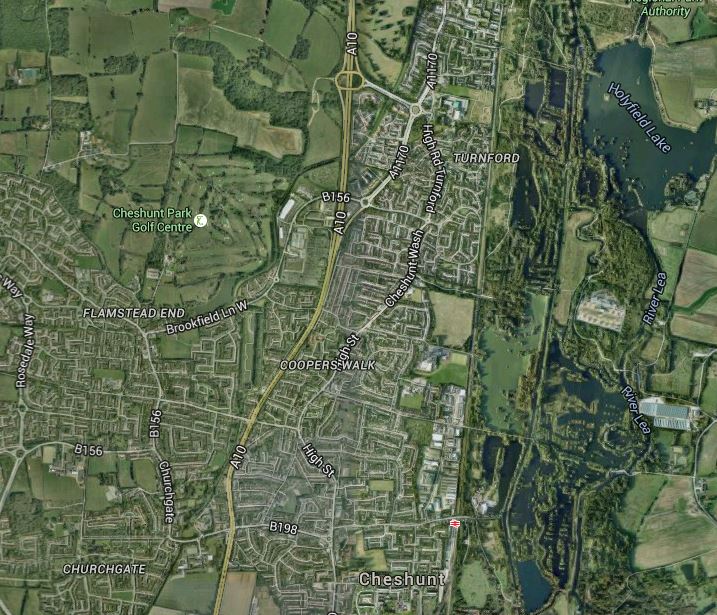
The Area Of The Proposed Turnford Station
Note.
- Cheshunt station is the station towards the bottom of the map.
- The Broxbourne Campus of Hertfordshire Regional College is surrounded by playing fields just off the roundabout on the A10.
- The plans call for the station to be built close to the College.
- The station would also be close to Holyfield Lake.
- Because of the links to the A10, would it make a good Park-and-Ride station?
I think that a station here, could open up the area for residential and leisure purposes.
Woking and Dorking
The BBC article about Surrey, mentioned earlier says this.
A new rail route running crossing from north London into Surrey should extend as far as Woking and Dorking, according the the county council.
Plans for Crossrail 2 currently include Shepperton, Surbiton, Epsom, Hampton Court and Chessington South stations.
But Surrey County Council (SCC) said extending it further south would bring significant benefits to commuters and businesses in the county.
I think that the Crossrail 2 designers have laboured long and hard at the southern end of the route.
The current design effectively combines all the suburban services from Waterloo to Shepperton, Surbiton, Epsom, Hampton Court and Chessington South stations, comines them and sends them in a new tunnel to Clapham Junction, Victoria.
This takes twenty-four trains an hour out of Waterloo, but means passengers wanting to travel to and from Waterloo will have to change trains at Wimbleon or Raynes Park.
I will look at important stations in detail, but before let’s consider 2012-13 passenger numbers at Crossrail 2’s chosen terminal stations and others mentioned as possibilities.
- Chessington South – 493,000
- Dorking – 1,234,000
- Epsom – 3,741,000
- Hampton Court – 2,238,000
- Shepperton – 427,000
- Surbiton – 9,031,000
- Woking – 7,463,000
Also consider the following points.
- Woking and Dorking to Waterloo are 36 and 48 minutes respectively, which are quicker journeys that both Reading and Shenfield to Central London on Crossrail.
- The South Western Main Line is at full capacity.
- Crossrail 2 adds up to another twenty-four train per hour between Central London and Wimbledon/Raynes Park
- Crossrail 2 frees up terminal platforms in Waterloo.
- Extra tracks may be possible between Surbiton and Clapham Junction according to Wikipedia on the future of the South Western Main Line.
- Crossrail’s two hundred metre long Class 345 trains or similar may give the capacity increase needed between London and Woking to Dorking.
- The mess that is Raynes Park station could be rebuilt to create a better interchange, between the line through Surbiton and Working and that through Epsom and Dorking.
- Space is available at both Dorking and Woking station for extra platforms, some of which could face out of London.
- Could it result in a simpler Wimbledon station?
- Dorking could be properly connected to the North Downs Line.
So I do wonder if Surrey County Council has a point.
I do think that Wimbledon and Raynes Park stations are the key, that could unlock a much better Southern end to Crossrail 2.
Wimbledon Station
There is a lot of opposition to the rebuilding of Wimbledon station, so could it be simplified if the following was done.
- Crossrail 2 serves the station in underground platforms.
- The Crossrail 2 tunnels would surface between Wimbledon and Raynes Park
- The trams cross over the main lines on a flyover and meet the District Line platforms head on.
- The station is rebuilt within its current boundaries.
Three other developments could have effects on Wimbledon station.
- Transport for London have plans for a Streatham Common hub. I wrote about that in Puzzled Over Streatham Common Station
- Transport for London’s Transport Plan for 2050 talks about improving the Overground, by using existing lines to create a circular railway based on the Gospel Oak to Barking Line. It could be routed via the Dudding Hill Line to Hounslow and then via Twickenham, Wimbledon and Peckham Rye to Abbey Wood, from where a new Thames Crossing would take the line to Barking to complete the circle.
- The Tramlink could be extended.
All could be built before Crossrail 2, to take pressure off Wimbledon.
I certainly believe that there is a better design to Wimbledon station, that would cause less disruption during the construction and might even cost no more than the current design.
Raynes Park Station
This Google Map sums up Raynes Park station.
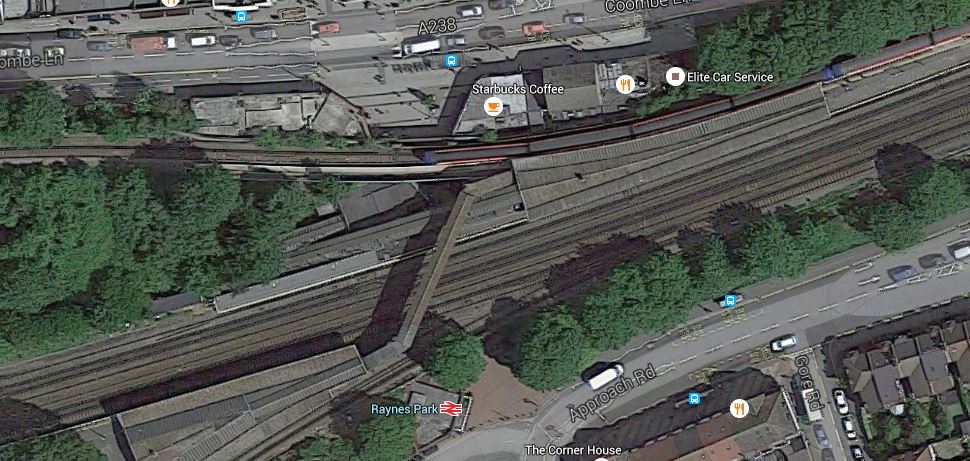
Raynes Park Station
And these are some pictures of the station.
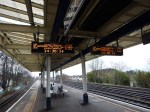
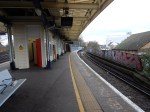
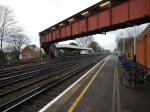
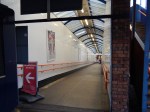
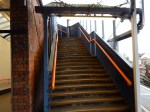
Topsy certainly had a hand in the design.
- Effectively the station has two island platforms; the eastbound 1/2 and the westbound 3/4, which are connected by the footbridge across the fast lines between them.
- All trains from platforms 1 and 2 go to Waterloo, which seems unusual.
- Platform 3 serves services via the South Western Main Line, including Hampton Court, the Kingston Loop and Shepperton.
- Platform 4 serves services via the Mole Valley Line, including Chessington South, Dorking, Epsom and Guildford.
- I think all of the current services that stop at Raynes Park, will transfer to Crossrail 2.
Whitechapel station on Crossrail has a similar problem, where the two eastern branches of the line must be joined or split to the east of the station.
Whitechapel will use only two platforms both handling twenty-four trains per hour, to give walk across interchange between passengers wanting to reverse direction, in perhaps a journey between Romford and Canary Wharf.
As there is plenty of space around Raynes Park station, which will handle only twelve Crossrail 2 trains per hour in both directions, I’m sure that there must be a solution to providing a much better layout at this station.
Look at this map of the lines from carto.metro.free.fr.
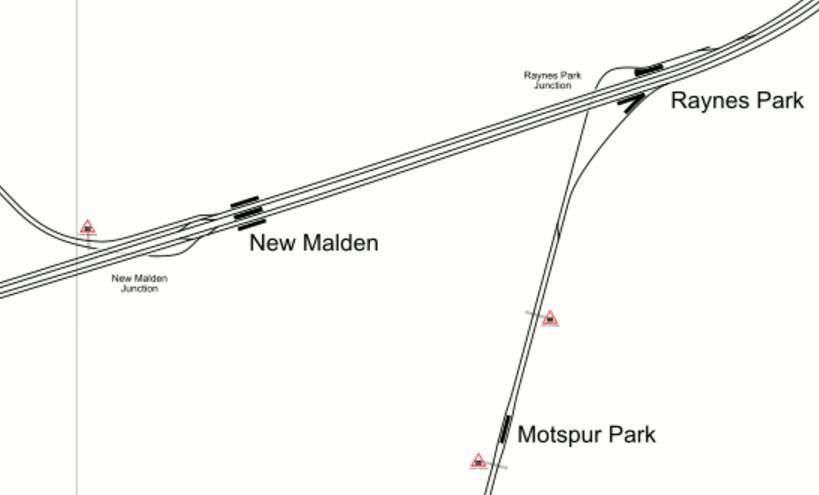
Lines Through Raynes Park Station
Note.
- How close to the east of the station, the lines split and join.
- The level crossings bracketing Motspur Park station. These need to be removed.
- New Malden station to the West has platforms on both slow and fast lines, although those on the fast lines can’t be used.
I think it would be possible to do the following.
- Move the junction to the west of single platforms on the single slow lines.
- If Crossrail 2 is built, the two slow lines would go into tunnels and platforms under Wimbledon at a convenient point.
- All crossings from the fast to slow lines between Wimbledon and Raynes Park would be eliminated.
- Move the two platforms opposite each other.
- Connect the platforms by an updated subway or even a spectacular wide bridge with a cafe above the lines.
- The platforms would be served by escalators and lifts.
Surely if the number of platforms devoted to stopping services could be reduced from four to two, would this mean it would be easier to increase the capacity of the main lines through the station?
After my brief look and a think, I’m sure that there is a very cost effective solution to Rayne Park station, whether Crossrail 2 is built or not. It just needs an architect, engineer or railway professional with imagination.
Dorking Station
Dorking station is one of the alternative termini put forward by Surrey County Council, probably as an alternative to Epsom, which I wrote about in Before Crossrail 2 – Epsom.
Compare this Google Map of Epsom station.

Epsom Station
With this one of the two stations in the centre of Dorking.
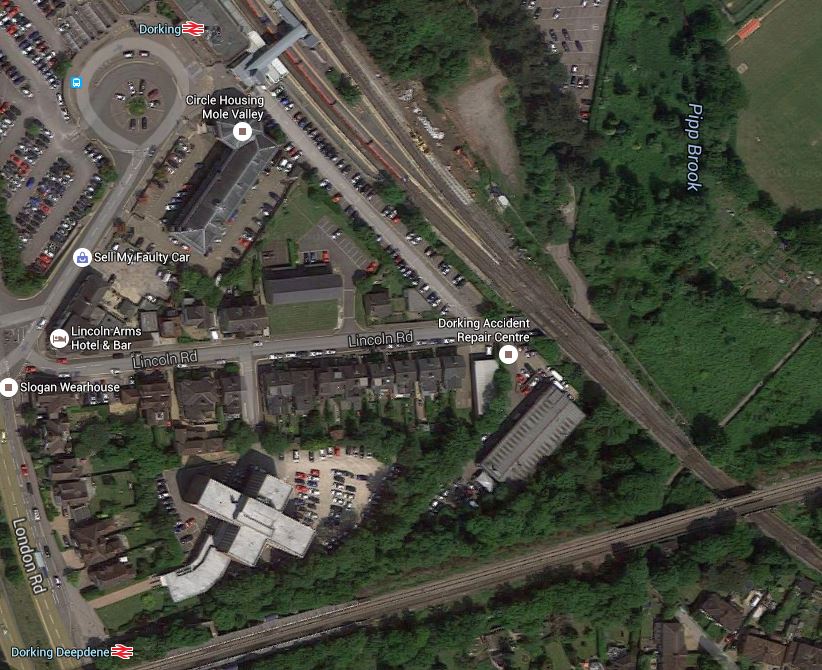
Dorking And Dorking Deepdene Stations
Dorking Deepdene station is on the North Downs Line from Reading to Gatwick Airport.
The big advantage of Dorking over Epsom, is that, it is surrounded by so much space and not crowded round with buildings and rail bridges.
I also feel that a good architect could extend and upgrade Dorking station so that it connected to the North Downs Line , which crosses about two hundred metres or so south of the station.
Dorking station is shown in these pictures.

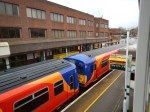
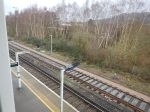
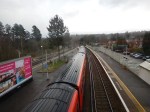
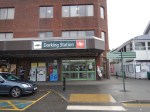
I feel that Crossrail 2’s engineers will look seriously at extending the Epsom branch to Dorking.
Woking Station
Woking station is an important one in a town of around a hundred thousand people.
This Google Map shows the station.
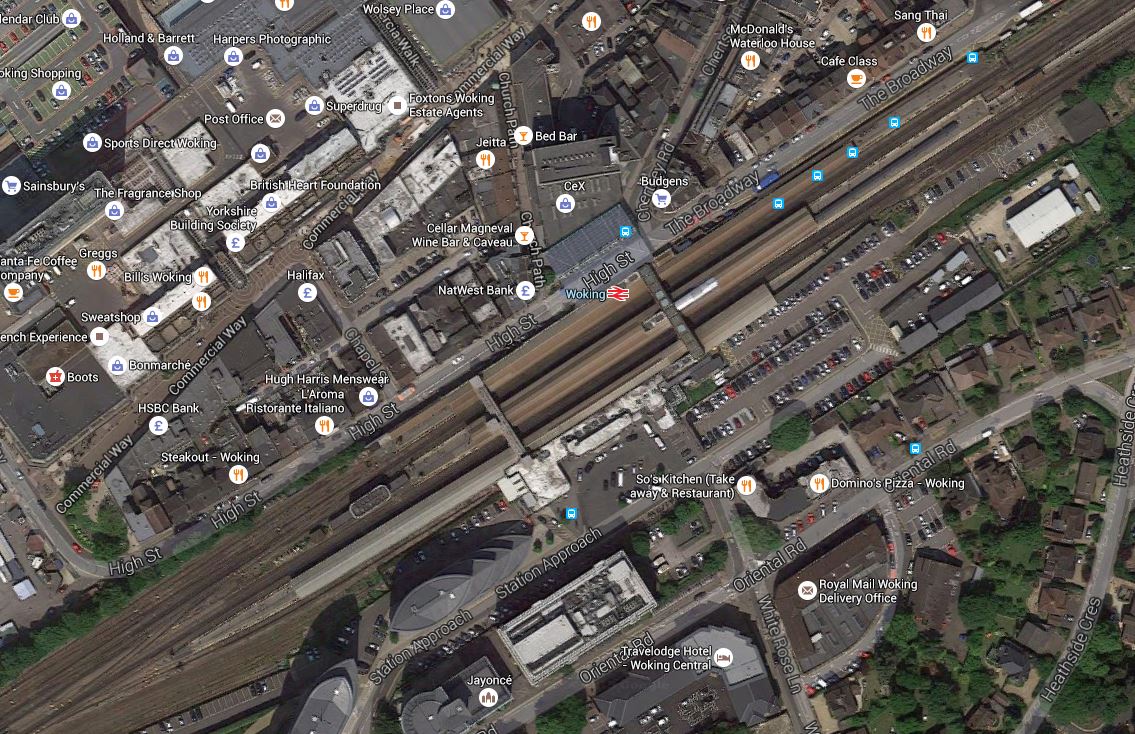
WokingStation
Note how the railway line goes right through the town centre.
It would be difficult, but not impossible, to put a sensible number of new platforms for Crossrail 2 in the station.
These are some pictures of the station.
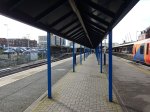
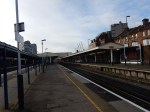
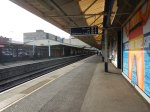



I believe Working has possibilities to provide a busy terminus in the South West to match Broxbourne in the North and Reading and Shenfield on Crossrail.
Conventional solutions are possible with bay terminal platforms replacing the car parks to the south-east.
Other radical solutions might be implemented.
As the fast main lines are the middle two of the four lines, could they not be dropped into a cut and cover tunnel, which had the terminal platforms for Crossrail 2 on top? I wrote about Antwerp Central station in A Triple Decker Station. So it wouldn’t be a first!
Land is an expensive resource in a railway station and we must make it work harder with-over station developments and innovative station layouts.
Flat land used for car parking is a waste of space.
Other Stations
The other stations from Raynes Park outwards are a bit of a mixed bunch, with only a few having step-free access. These are some pictures, I took on the way to Woking.


Whether Crossrail 2 is built or not, some of these stations must be updated to a modern standard.
Conclusions
As to Crossrail 2 being extended north and south, I’ll leave that to the planners.
But if Crossrail 2 is built or not, this will not affect the fact, that there are a lot of stations on this line, that need updating to a modern standard.
I also feel that there is scope to create local metro networks, based on large towns and cities served by Crossrail, Crossrail 2 and Thameslink.
For Crossrail these might be based on.
- Abbey Wood and Dartford.
- Milton Keynes, Reading, Slough and Basingstoke.
- Shenfield, Billericay, Basildon and Southend.
- Watford, Amersham and St. Albans.
For Crossrail 2 these might be based on.
- Broxbourne, Harlow and Cambridge.
- New Southgate.
- Wimbledon, Surbiton and Raynes Park.
For Thameslink these might be based on.
- Brighton and the East and West Coastways.
- Croydon, where Tramlink already exists.
- Cambridge
- St. Albans and Hatfield
- Peterborough
These metro networks could be a mixture of trains, trams and tram-trains. Add tram-trains to the Tramlink and you would have a good model to start from.
Crossrail, Crossrail 2 and Thameslink are just the long distance string, that would connect everything together.
One action that would help capacity in London, would be to screw as much increase in frequency out of the cross-London routes. Compared to the Victoria Line, Jubilee Line and Paris, twenty-four trains per house is a very poor frequency.
Puzzled Over Streatham Common Station
Transport for London’s proposal for the Bakerloo Line Extension comes with a very nice map of the various projects that will be carried out to improve rail services in South London.
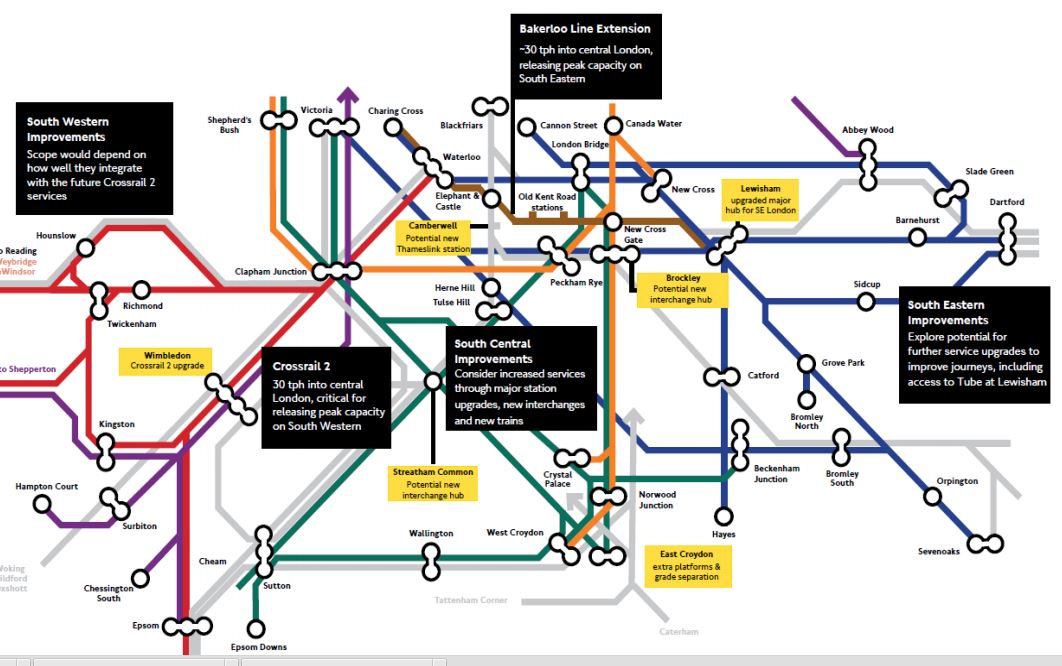
Rail Improvements South Of The Thames
It is all good stuff and most is easily explained.
The black boxes are about more general and larger projects, whereas the yellow boxes are comments about specific stations.
The projects; large and small, fit together like a jigsaw. And not a particularly difficult one to understand!
Of the larger projects, the simple extension of the Bakerloo Line to Lewisham station via two new stations and New Cross Gate station is a masterstroke.
- It provides a thirty trains per hour rail link through the Old Kent Road Opportunity Area.
- It gives all those living on the East London Line, as I do, a much needed connection to the Bakerloo Line.
- Coupled with an upgraded Lewisham station, it gives South East London access to the Underground.
- The project can be opened without an expensive set of new trains.
- New Cross Gate and Lewisham stations have space for construction.
- The extension can be built with minimal closure of the Bakerloo Line.
- The project is almost a repeat of the Northern Line Extension.
- No-one’s current train service will be discontinued.
- There is no replacing heavy rail with smaller Underground trains.
- If in the future, the line needs to be extended, this will be no problem, if Lewisham station is designed correctely.
The only negative, is that the plan doesn’t provide a much-needed rail link in Camberwell.
But Transport for London have done there research and have concluded that reopening the disused Camberwell station on Thameslink could be a worthwhile alternative.
The TfL report gives this concise summary.
A new station at Camberwell would be a significantly lower cost option to a Tube extension, whilst serving the same catchment area. Investigations show significant journey time improvements could accrue to Camberwell passengers and that operationally there may be scope to integrate re-opening of the station into the launch of the completed Thameslink programme.
We will therefore undertake further planning work with Network Rail and the London Borough of Southwark to assess the proposal.
It is a second masterstroke.
Camberwell station will probably get a similar service to Loughborough Junction station. I’m not sure what it will be, but something like four eight-car trains an hour both ways. In around fifteen minutes, passengers could be at.
- Balham for the Northern Line and Crossrail 2
- Elephant and Castle for the Bakerloo and Northern Lines
- Blackfriars for the Circle and District Lines
- Farringdon for Crossrail and the Metropolitan Line.
- Kings Cross St Pancras for main line services and the Victoria Line.
Camberwell station could easily be double-ended, with entrances on both sides of Camberwell New Road.
Camberwell would get at least a high-capacity four trains per hour service to virtually everywhere, with just a single change.
And this could be delivered by 2020, if they get the turbo-charged engineering skates out.
On the South London map, there are some other stations mentioned.
- Brockley – Potential new interchange hub
- East Croydon – Extra platforms & grade separation
- Lewisham – Upgraded major hub for SE London
- Streatham Common – Potential new interchange hub
- Wimbledon – Crossrail 2 upgrade
All of these station upgrades are understandable, with the exception of Streatham Common station.
I can only believe that Transport for London have a cunning plan for this station and the tangle of lines to its North.
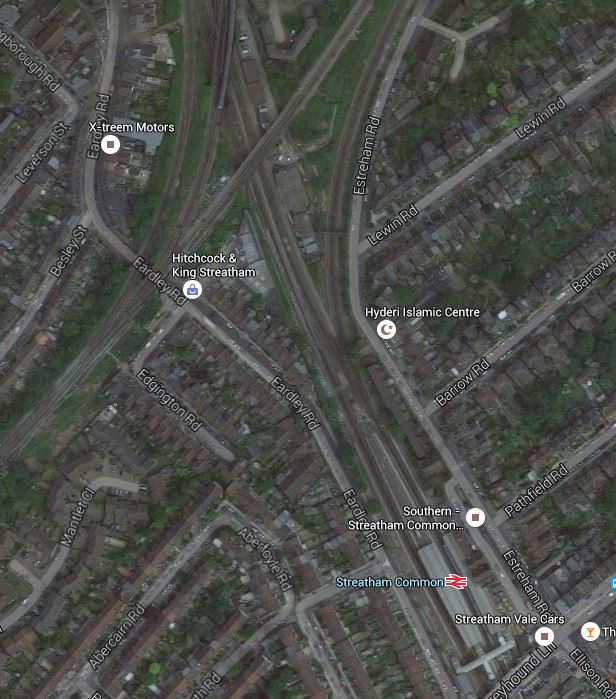
Streatham Common Station And The Tangle Of Lines
So what would an interchange hub be like?
In the simplest design, two platforms would be built across the lines through Streatham Common station alongside the Sutton Loop Line. They would be connected to extended platforms from the existing station, by stairs and lifts.
I think there would be space to build some bay platforms into the station, so that Streatham Common station could be used as a terminus.
This schematic of the rail lines is from carto.metro.free.fr
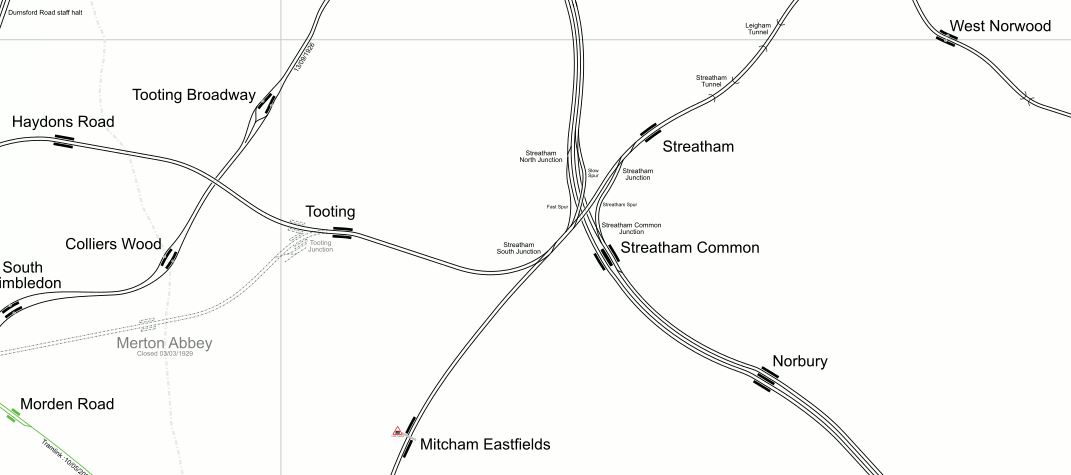
Lines At Streatham
Note how there are very few rail lines, south of Streatham towards Mitcham Eastfields station. Wikpedia says this about the station.
The station is located at Eastfields Road level crossing, in an area previously poorly served by public transport. The nearest station was Mitcham Junction, which along with Mitcham tram stop, was over 1 mile (1.6 km) from the district.
I wrote about the station in Mitcham Eastfields Station.
The lines that currently go or could go through the Dtreatham stations are set out in the following sections.
The Sutton Loop Line Of Thameslink
Streatham station is the last station on Thameslink before the Sutton Loop starts and finishes. Stations on the Sutton Loop include.
- Tooting
- Haydons Road
- Wimbledon
- Wimbledon Chase
- South Merton
- Morden South
- St. Helier
- Sutton Common
- West Sutton
- Sutton
- Carshalton
- Hackbridge
- Mitcham Junction
- Mitcham Eastfields
The fourteen stations have the following service.
- Currently, there are two trains per hour in each direction on the loop.
- Only Mitchan Junction and Wimbledon have connecions to Tramlink.
- I think Streatham to Streatham takes about forty-five minutes of travelling time.
- These trains eventually terminate and come back at St. Albans or Luton in the Peak.
- When the ongoing Thameslink Programme is finished, there will be two eight-car Class 700 trains in each direction every hour.
When the Thameslink Programme was planned, Network Rail intended to terminate these services at Blackfriars.
Residents and their politicians objected! Wikipedia says this.
Network Rail had planned to terminate Sutton Loop Thameslink trains at Blackfriars station, rather than have them continue through central London as at present. This upset many residents in South London and their local politicians, who saw it as a reduction in services rather than an improvement. In response to pressure, government has ordered Network Rail to reverse the decision.
I think this illustrates a certain sensitivity about train services in the area. Do they think that other places like Balham, Croydon and Wimbledon, get all the goodies?
So we have four trains an hour through the core section of Thameslink going on the Sutton Loop.
Although, this shouldn’t affect the services on the loop, could this cause problems for passengers on the trains through Wimbledon and Sutton, as long-distance trains are being used for short local journeys.
For example, you might have mothers with buggies taking babies and children to nurseries and schools, mixed up with commuters, who want to go north of the Thames.
A simple solution would be to have more trains going round the loop, so that instead of just two trains per hour each way, there were perhaps four or even more.
But where would they come from?
They could come a long way from somewhere like Orpington or Cannon Street, which would mean finding paths all over South East London and perhaps beyond.
Or perhaps they could just do the loop and start and finish at either Streatham or an expanded Streatham Common.
As Streatham is just a two platform station, with little space to expand, a bay platform in Streatham Common might be one solution.
Possible Reason for an expanded Streatham Common station – The station could be the terminus of a two train per hour local service around the Sutton Loop.
The Brighton Main Line
The Brighton Main Line goes from Victoria to East Croydon with fast trains generally only stopping at Clapham Junction station en route. However services pass through several important stations like Balham and Streatham Common without stopping.
Could there be advantages in stopping some of these services at an upgraded Streatham Common?
I don’t know under normal circumstances, but there may be good operational reasons for services to be able to call at Streatham Common station.
Possible Reason for an expanded Streatham Common station – The station could be a valuable interchange between Brighton Main Line and other services.
Tramlink
Although Tramlink doesn’t go anywhere near Streatham at present, it does have a main route, south of the area.
There is also a distinct lack of rail services in the area between Streatham and Mitcham, which led to the building of Micham Eastfields station.
In Wikipedia, it says that extensions to the Tramlink have been proposed North and South of Croydon. This is said about North of Croydon.
To the north of Croydon, it is proposed to use a highway alignment based on London Road. To the south of Thornton Heath Pond, the use of a shared carriageway is a possibility. North of this point the road becomes the A23 again, but there are likely to be some opportunities for trambaan type segregation to Norbury and between Norbury and Streatham, although Norbury is a pinch point. The proposal is to terminate the line at Streatham railway station, providing an interchange to the extended East London Line
Possible Reason for an expanded Streatham Common station – The station could be a destination for Tramlink.
Tram-Trains
In areas of Germany, where there are both trains and trams, the Germans are getting very enthusiastic about tram-trains which can run on both networks.
If tram-trains, were to be used on a possible Tramlink Extension to Streatham, they could join the railway at a convenient station, like Norbury or Streatham Common and become trains to go round the Sutton Loop.
Possible Reason for an expanded Streatham Common station – Tram-trains on Tramlink.
The East London Line
I use the East London Line a lot and it has the problem of success.
Trains have grown from three to five cars and some recent trips from Denmark Hill to Dalston Junction have shown, that at times standing is common.
Increased frequencies in 2018/2019, will ease the problems, but would another terminus in South London be a good idea for the East London Line?
The capacity of the core section of the East London Line is twenty-four trains per hour, so even from 2018/2019, there are four more paths available.
So could we see some services going to Streatham Common station perhaps via Peckham Rye, Tulse Hill and Streatham?
A factor that might apply here, is can Platform 1 at Clapham Junction cope with enough trains from Dalston Junction?
Possible Reason for an expanded Streatham Common station – A terminus for a branch of the East London Line.
The West London Line
Southern’s hourly service between South Croydon and Milton Keynes calls at Streatham Common station.
London Overground has a service of around four trains per hour on the West London Line between Clapham Junction and Willesden Junction, which Southern’s service augments for part of the route.
But there are problems with the West London Line.
- There are some extended service intervals at times.
- The Southern service doesn’t call at Willesden Junction.
- West London Line services call at different platforms at Clapham Junction.
- As with the East London Line, could platform space at Clapham Junction be a problem for the West London Line of the Overground
Unlike the East London Line, the West London Line is not a turn-up-and-go service.
So could there be advantages to use Streatham Common station, as a southern terminus for services through the West London Line?
Possible Reason for an expanded Streatham Common station – A terminus for the West London Line.
HS2
When HS2 opens in 2026, getting to Euston station will not be easy, as it is unlikely that Crossrail 2 will have been started, let alone up and running.
Passengers will need to get to a Northern or Victoria Line station and have a deep and possibly tedious journey across Central London.
Thameslink will be of use to some, but there will be a walk or a short-but-difficult tube journey between St. Pancras and Euston.
But HS2 will stop at Old Oak Common station on the North London Line. If the West London and East London Lines were to be extended to Streatham Common station, either could be a good alternative route to HS2 and the West Coast Main Line.
I estimate that Streatham Common to Old Oak Common will take thirty three minutes, compared to Morden to Euston on the Northern Line, which can take forty-one minutes.
Possible Reason for an expanded Streatham Common station – The station could be an important hub, collecting passengers for HS2 and the West Coast Main Line
Crossrail 2
Crossrail 2 is not planned to call at Streatham Common station, although it might go underneath in its route from Balham to Wimbledon.
Even so, I suspect that an expanded Streatham Common station will be to the advantage of Crossrail 2.
As I said earlier the station can help improve services on the Sutton Loop, which would have effects.
- Bring more passengers to Wimbledon for Crossrail 2.
- If extra stations were added to the Sutton Loop, these could help solve the Tooting Broadway/Balham wars.
- Could a new station be built at St. George’s Hospital, between Tooting and Haydons Road stations?
But the biggest benefit would be that Streatham Common station, would be an alternative hub, for those wanting to avoid Wimbledon during the building of Crossrail 2.
Possible Reason for an expanded Streatham Common station – Crossrail 2
East Croydon
When East Croydon station is being extended or the grade separation at Windmill Bridge Junction is being built, surely a well-connected interchange at Streatham Common, could be an asset towards helping to maintain a service.
Even under normal circumstances with a decent tram and train connection to Croydon, Streatham Common station may take the pressure off public transport in Croydon.
Possible Reason for an expanded Streatham Common station – Alternative routes for Croydon
Conclusions
Build a Streatham Common interchange hub!
It is just a pity that Crossrail 2 can’t have a station at Streatham Common.
Is the Streatham Common interchange hub, a third masterstroke?
Crossrail 2 Consultation – Wandsworth Common Shaft
This Crossrail document is entitled Wimbledon to Clapham Junction.
If contains a small section about a proposed shaft that will be built at Wandsworth Common. It says this about the two shafts between Clapham Junction and Wimbledon.
Between Wimbledon and Balham stations – one shaft in the Weir Road site and another within the Springfield Hospital development
Between Balham and Clapham Junction stations – one shaft on the eastern edge of Wandsworth Common, at the end of Honeywell Road.
A single worksite would be required to build each shaft and a typical shaft would take approximately five years to complete. Activity on site would fluctuate during this period. Once the site has been cleared and prepared, the major construction work to dig out the shaft would usually be complete within two years
This map from the Crossrail 2 document shows the position of the shaft at Wandsworth Common.
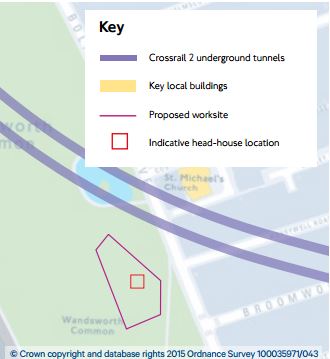
Wandsworth Common Shaft Site
This is a map of the rail lines as they pass the site.
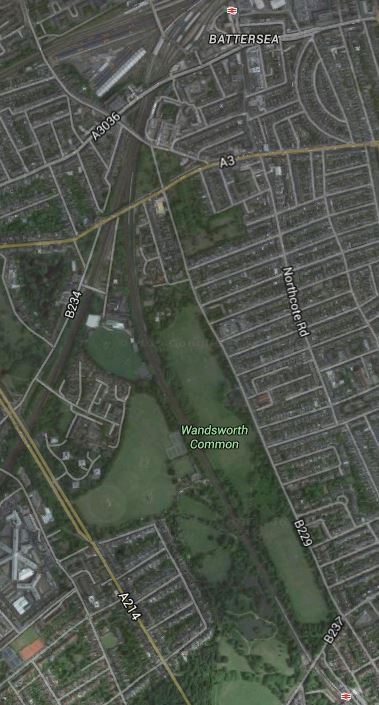
Between Clapham Junction And Wandsworth Common Stations
The shaft will be at the position, where the Google Map has the Wandsworth Common legend. The Crossrail 2 document says this.
The shaft would be on the eastern edge of Wandsworth Common, at the end of Honeywell Road (off Bolingbroke Grove). Our current preferred site has been selected because it is the only non-residential piece of land in the area which is large enough to allow construction of a shaft.
This morning I walked from Clapham Junction station at the top of the map to Wandsworth Common station at the bottom and took these pictures.






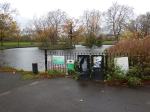

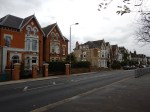



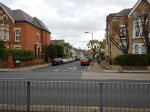

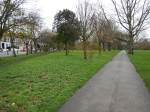


Most of my thoughts are in the comments for the pictures, but I would also add the following.
- The site of the shaft seems to have been chosen with care, so that no mature trees are affected. It’s all flat grass.
- I have a feeling that for Health and Safety reasons the designers like shafts in large open spaces. Crossrail trains hold 1,500 passengers. Evacuating them into Wandsworth Common or Mile End Park would be easier than say bringing them up in the City.
- Information appears to be very preliminary at the moment. That at Wimbledon is more detailed and I would expect more detail on Wandsworth Common in the future.
- I’d never been to Wandsworth Common before and what surprised me most, was that it appeared to be on top of a hill. I have a feeling that this could make the routing of the tunnel less complicated and it could be deeper under all the buildings.
The Head House
People worry, that they’ll get some awful head house on the shaft, like those for the Channel Tunnel Rail Link, which look like they were used as defences against Napoleon.
This shows the head house, that Crossrail is building in Mile End Park.
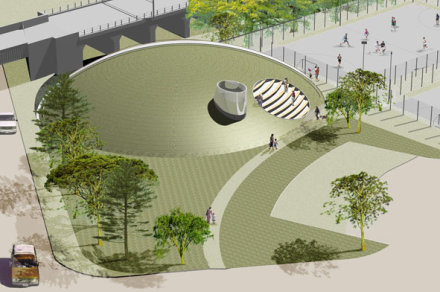
In fact the Mile End Park shaft, with an appropriate head house, would probably be closest to what is proposed to be built at Wandsworth Common.
- It will be a similar size underground.
- As head houses will be here for virtually ever, lots of care is taken in their design.
- They are both in large open spaces.
- They both have good road access on wide roads.
The shaft at Mile End Park was one of several designed by Fereday Pollard. Not all were actually built, as Crossrail cut a few out in the detailed design phase.
Construction
The biggest worry for many is the construction of the shafts.
This Google Map shows the site of the Mile End Park shaft under construction.
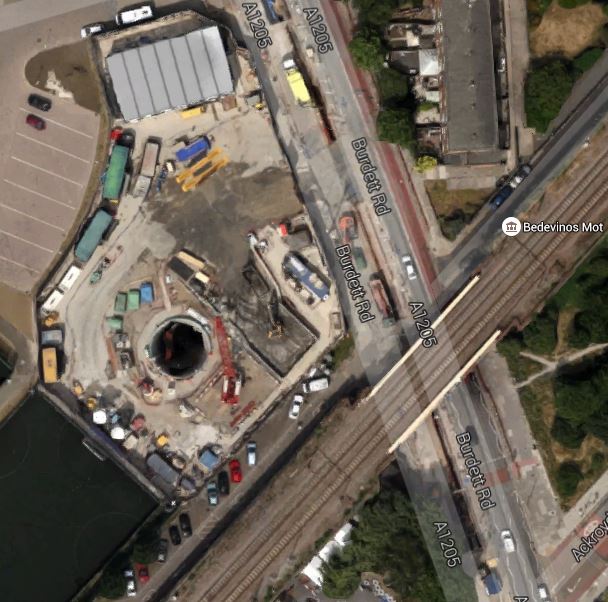
Mile End Park Shaft Site
I estimate the work site is around fifty metres across and has been deliberately positioned alongside the road.
The black hole is the actual shaft.
When I wrote How Will Crossrail 2 Affect De Beauvoir Town?, about how Crossrail 2 will affect where I live, I said this.
I’m pretty certain, that the digging of the southern shaft at Site A will be the only major part of the construction, that will affect De Beauvoir Town, as I suspect they’ll have to remove the spoil in a succession of trucks. I estimate there will be about 10,000 cubic metres of spoil to remove to create the hole for the shaft.
As the shaft at Wandsworth Common is probably the same size as that at Dalston, it would mean about a thousand truck loads, spread over the time that the shaft was being dug. Unless, they decide to use conveyors to move the spoil across the Common to the railway. I’m not sure what they did at Mile End, but I haven’t heard of any complaints.
The big difference between Wandsworth Common and a lot of the other sites, is that there will be no demolition.
It is a perfect green field site. I doubt there’s any gas mains or power cables across the site.
Conclusions
I think that everybody who lives in South London, will get lots more hassle from the large construction project at Wimbledon, where according to current plans, the station will be completely rebuilt for Crossrail 2.
If I lived near Wandsworth Common, I would start to think now, what would be appropriate for a head house to the shaft, as if cards are played right, then Crossrail 2 will provide it.
Wandsworth might like a temple in a garden.
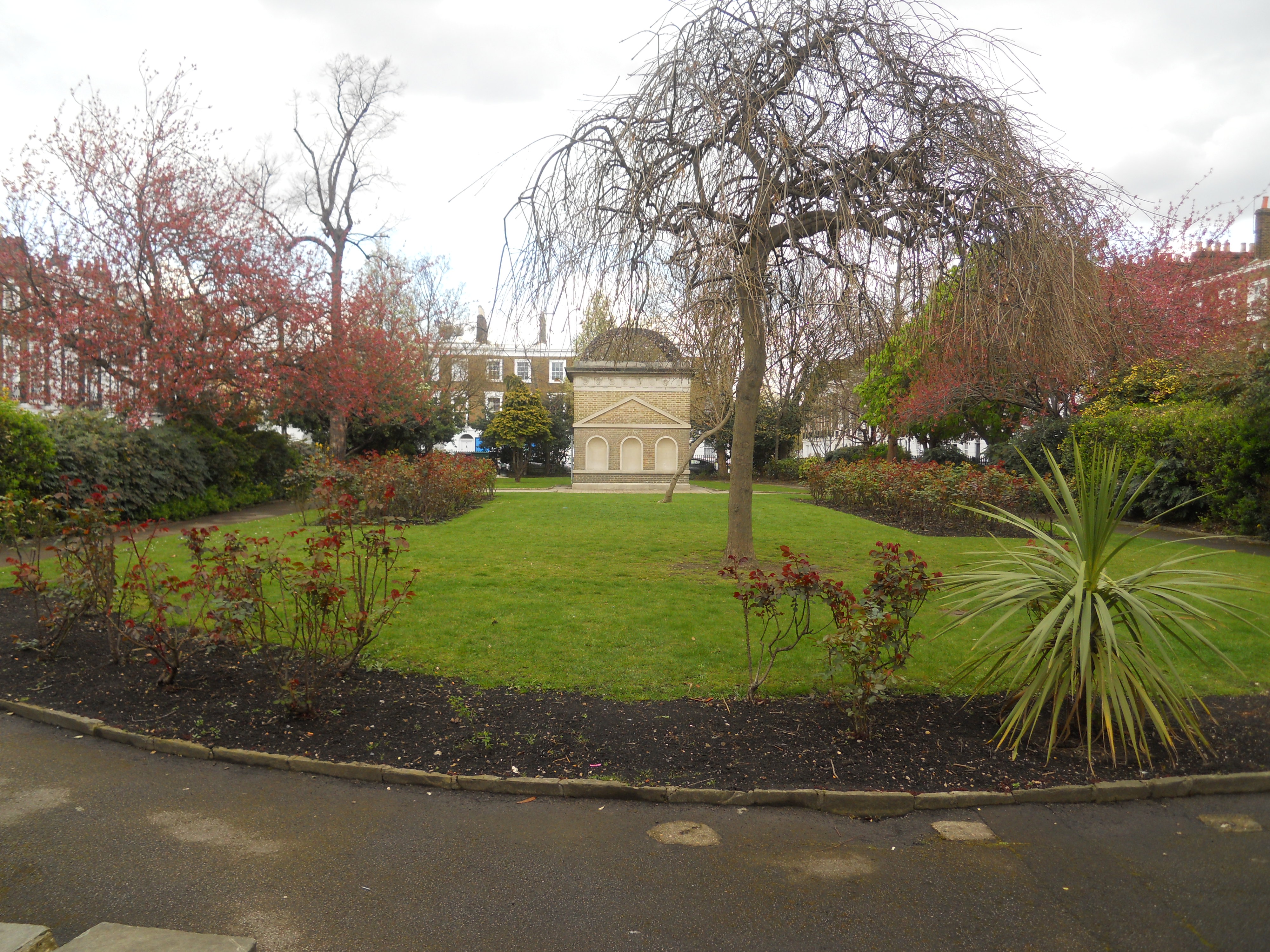
This was actually built in the 1960s as the head house of a ventilation shaft for the Victoria Line in Gibson Square, Islington.
We need more whimsey!
Crossrail 2 Question Time
I was rather disappointed with the first two Crossrail 2 consultations, that I visited. The people from the project I had met, tended to be managers or in public relations people. I was starting to feel that I would need to take anther route to find out about Crossrail 2, so I could answer questions of those worroed that the project might change their lives, in a way they would not welcome.
Recently, I have been to two presentations by Transport for London.
Camden Town Station – This presentation was very professional and I was able to speak to the Project Manager, who explained what they were proposing, which I detailed in The Camden Town Upgrade Exhibition.
Hackney Central Station – This smaller presentation was also very professional, despite just being a series of architect’s visualisations on easels in a library. But they did have people there who understood the whys and wherefores of the project. My visit is detailed in A First Glimpse Of The Planned Hackney Central Station.
Late last week, I came across another presentation and as it had just opened for the day, I went in and asked if any of the engineers were present.
This time there were at least two.
The following sections describe the chat I had with one of the engineers. Some of the things I say here, have been suggested by the words we had on a subject.
My Blog
It turned out they had seen this blog and asked if they could use some of the pictures in their documentation, as up-to-date pictures are difficult to find.
The answer is of course yes, anyone can use my pictures, provided they tell me!
I take pictures for my own enjoyment, and if they help someone in their business, profession or personal life, then I’m pleased to help.
Four-Tracking Along The Lea Valley
The main West Anglia Main Line from Liverpool Street to Cambridge and Stansted Airport, via Tottenham Hale, Broxbourne and Bishops Stortford is generally a twin-track railway, but Network Rail have plans to add two extra tracks, which would be conventionally a pair of slow and a pair of fast lines.
I asked if the two new lines would be on the East of the current tracks.
The answer was yes, with a qualifier of tricky! I think you can say that again if you look at some of the stations like Brimsdown, which I talked about in Before Crossrail 2 – Brimsdown.
I think that something radical will end up being done up the Lea Valley.
My plan would of course be impossible as I’m not knowledgeable enough.
It would be something like this.
- Create separate fast and slow railways, each of which would have two tracks.
- Trains on the fast railway would only call at Tottenham Hale and Broxbourne, when they are in Crossrail 2 territory. It would mean that a passenger from say Cambridge to Ponders End, would have to change at Broxbourne. But they do that now!
- The slow lines would be the Western pair of lines, not the East.
If the slow lines, which would be used by Crossrail 2, were on the west, this might simplify the junction, where the Crossrail 2 trains enter the tunnel under London, as they don’t have to cross the fast lines.
If Crossrail 2 also incorporates the Hertford East branch, then having the slow lines on the West means that trains for the branch don’t have to cross the fast lines. It might be arranged, that past Broxbourne, the slow lanes go to Hertford East.
Broxbourne Station
Broxbourne station may end up being complicated, but then if the Hertford East branch is incorporated into Crossrail and four trains per hour (tph) go to Hertford East and eight tph terminate at Broxbourne, it can’t be anything else.
- I would have a series of terminating bay platforms for Crossrail 2 and other services, with the two fast lines on either side.
- The Hertford East trains would be on the Western side of the station, possibly with a single island platform.
- Passengers would walk across on the level between the fast platforms and the terminating ones in between.
- Passengers would only use lifts and escalators to exit the station and access the Hertford East lines.
- There would probably have to be some way for the Down Fast line to cross the lines going into the bay platforms. Would a dive-under be possible?
Broxbourne has plenty of space as this Google Map of the station shows.
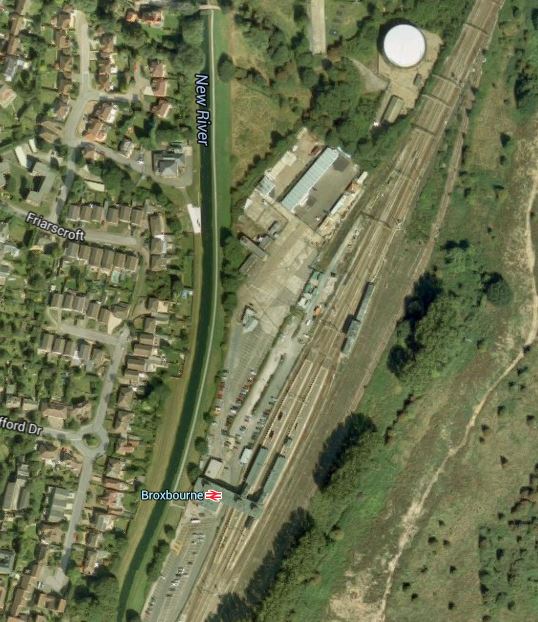
Broxbourne Station
It sounds complicated, but many stations are a mix of terminating and through platforms. As the Google Map shows Broxbourne is a greenfield site with space, not a cramped inner-city one.
Terminating London Overground Services At Broxbourne
I would also provide enough space at Broxbourne for more bay platforms, so that London Overground services could be extended to the station to link up with the long distance services, that would not call at Cheshunt station.
This would not degrade any services, you’d just change at a different station, if say you were going from Stamford Hill to Cambridge.
Stratford And Lea Bridge Services
Services from Stratford station and the new Lea Bridge station are an added complication.
Transport for London needs to answer these questions.
- Do they want to run Stansted Expresses from Stratford to the Airport from Stratford?
- Do they want to lumber Crossrail 2 with a service of 4 tph from Stratford to Northumberland Park, which is supposed to be starting soon?
- How do they get better services on the Chingford Branch Line?
- How do they get more trains through Lea Bridge station?
- How do they get extra Overground platforms at Stratford?
I believe a lot of problems can be solved by reopening the Hall Farm Curve and running four trains or more per hour from Stratford to Walthamstow and Chingford via Lea Bridge.
The problem still remains of how you get a decent service between Stratford and the stations from Tottenham Hale northward. At present they have a totally inadequate two trains an hour.
But as Stratford is such an important hub and after Crossrail opens will be even more so, there surely is a strong need for a service up the Lea Valley to Bishops Stortford and Stansted.
So could a 4 tph Stansted train go from Stratford stopping at all stations to Broxbourne, where it continued calling at all stations to Bishops Stortford and Stansted?
Probably yes! But I suspect there are better plans!
There’s even been suggestions of extending the Chingford branch to the airport, through Epping Forest.
Any Crossrail 2 plans must deal with the problems of Stratford services.
Four-Tracking Along The Lea Valley Should Be Done Soonest
With my Project Management hat on, I’ve felt for a long time, that the surface sections of Crossrail 2, should be upgraded to full step-free access before the central works on Crossrail 2 begin.
Four-tracking along the Lea Valley should also be done as early as possible, whether Crossrail 2 is built soon or in a hundred years.
Tunnelling
My informant had some interesting things to say about tunnelling.
This will be simpler than Crossrail and hopefully, there will just be a single drive betweenTottenham Hale and Wimbledon.
They would also aim to take as much of the spoil as possible out through the tunnels. This obviously removes the contentious issue of large numbers of trucks in Central London.
When asked specifically about uphill excavation, my informant said they were looking at using something better and would like to do the tunnels first and take out all the spoil through the tunnels.
I was told that they preferred to run tunnels under existing rail corridors, as they did with the Channel Tunnel Rail Link under the North London Line. I think we both agreed that if the Palace Gates line were to be still in place, that the New Southgate branch of Crossrail 2 would be easier.
I was also told that some of the ground conditions in South London are very poor, but that there is a band of London clay to the West of the route. This partly explains the substitution of Balham for Tooting Broadway. But it would appear Balham may be challenging, although it is a station, where a passenger-friendly connection between Crossrail 2 and the Northern Line can be built.
Crossrail 2 At Dalston
My informant had some specific things to say about Crossrail 2 at Dalston.
Crossrail 2 will have to avoid the Channel Tunnel Rail Link at Dalston and at the moment, they could go over the line.
This would make the two station shafts at Dalston shallower, which would have all sorts of implications, both positive and negative. There would be less spoil to remove when building the shafts and as height is always expensive in building, it could lower the cost.
Politics And Economics
We were agreed that these would be the big drivers of the development of Crossrail 2.
Crossrail, Archaeology And Public Relations
Crossrail has used archaeology to good effect to publicise what they are doing.
Archaeology will not be an issue with Crossrail 2, but they must find something to fire the public’s imagination.
The first thing that should be done is sort out the surface sections that will be used for Crossrail 2. This would include.
- Four-tracking the West Anglia Main Line
- Making all stations on the surface sections step-free and Crossrail 2-ready.
- Rebuilding stations like Broxbourne, Tottenham Hale and Wimbledon.
- Sort out the relationship between trains up the Lea Valley, the London Overground and the stations at Stratford and Stansted Airport.
- Sort out the various branches served from Wimbledon.
- Increase services as best we can on the existing lines, that will be part of Crossrail 2.
If this could be done in the next few years, it would demonstrate that Crossrail 2 are serious about London.
I feel strongly that we can use Crossrail 2 as also an education project, perhaps specifically in the areas of engineering, architecture and how infrastructure projects benefit communities.
Crossrail was designed before the explosion in social media and Crossrail 2 should be taking advantage of it to enthuse children of all ages.
Crossrail 2 is London’s railway and there is a lot more it can do for the City, other than just people around.
Conclusion
I had a good and very fruitful discussion.
Crossrail 2 should make sure that informed people are available at all consultations.
Crossrail 2’s Roadshow At Dalston
Today was a Roadshow Day for Crossrail 2 at Dalston.




You do get a chance for a chat, but most of the information presented is on their web site.
Crossrail 2 Consultation – Angel Station
This Crossrail document is entitled Angel Station.
The current Angel station is not a run-of-the-mill station with long escalators, an unusual platform layout and a situation in the ground-floor of an office block!
But as it was only built in the 1990s, I suspect the design is such to aid the construction of the Crossrail 2 station.
This is TfL’s proposal for the Crossrail 2 station at Angel.
-
2×250 metre long platforms.
-
Station platform tunnels around 30 metres below ground level to the top of tunnel
-
An increase in capacity within the existing Northern line ticket hall to accommodate a Crossrail 2 ticket hall on Islington High Street
-
An enlarged station entrance and a new second entrance onto Torrens Street
-
An underground connection between Crossrail 2 and Northern line services
-
A facility for reversing Crossrail 2 trains
The last item is possibly surprising, as although they need reversing facilities, I didn’t think it would be Angel.
This map from the document shows the layout of the station and the work-sites.

Crossrail 2 – Angel Station
The four work-sites are as follows.
- Site A – The site of the Royal Bank of Scotland building would be used for station tunnelling works and construction of the station entrance, station box and station shaft.
- Site B – Includes Iceland and other properties to the north of White Lion Street. This site would be used for construction of the station shaft. Impacts on Chapel market would be avoided.
- Site C – At the southern part of Torrens Street, the location of the old entrance to Angel station would be used as access to support the construction of the underground connection between Crossrail 2 and the Northern line.
- Site D – The Public Carriage Office site, which is owned by Transport for London, could be used for construction of a facility for reversing Crossrail 2 trains at Angel. This is subject to further investigation.
I have walked round the Angel and the various sites taking pictures in the order A, C, D and B.






All of this leaves me with these observations, thoughts and conclusions.
- All sites except D are bordered by roads carrying large amounts of traffic.
- The chaotic Junction At The End of White Lion Street needs easing before rebuilding Angel station.
- It is quite surprising how far the Northern Line platforms are from the entrance to the station. Sadly, this history will probably mean that there will be no simple interchange between the two lines as is promised at Balham.
- I would split the Northern Line into two lines before building Crossrail 2, as this might take pressure off Angel station during building of Crossrail 2.
- I think it is also a pity, that there is no entrance to the station shown on the Chapel Market side of the road.
On the plus side, I can’t see the design of the station causing too many problems in both design and construction.
A 2020 Update
It is now over five years since I wrote this post, so these are some new thoughts.
The Reversing Facility
The TfL document says that the facility will be for reversing trains at Angel station.
- As the site is to the West of Angel station, it would reverse trains from the East.
- Usually reversing sidings are between the two tracks and would be long enough to take a full-length train.
- The facility would be underground and it could be built in the traditional way as the new Bank tunnel was recently.
- The effect on buildings, would probably be the same as the main Crossrail 2 tunnels.
Operation of the reversing siding would be as follows.
- Trains would pull into the Westbound platform at the Angel.
- After all passengers had got out, the train would move forward into the siding.
- The driver would then change ends.
- When the line was clear move into the Eastbound platform.
It should be noted that Crossrail doesn’t have a reversing facility under London, and I think it would have been useful in enabling the route to open in sections.
 The Anonymous Widower