Crossrail 2 October 2015 – King’s Road Chelsea Station
The reason for my walk this morning, between Sloane Square and Imperial Wharf stations, was to look at Crossrail 2’s plans for King’s Road Chelsea station.
If the station is built it will sit between Victoria and Clapham Junction stations.
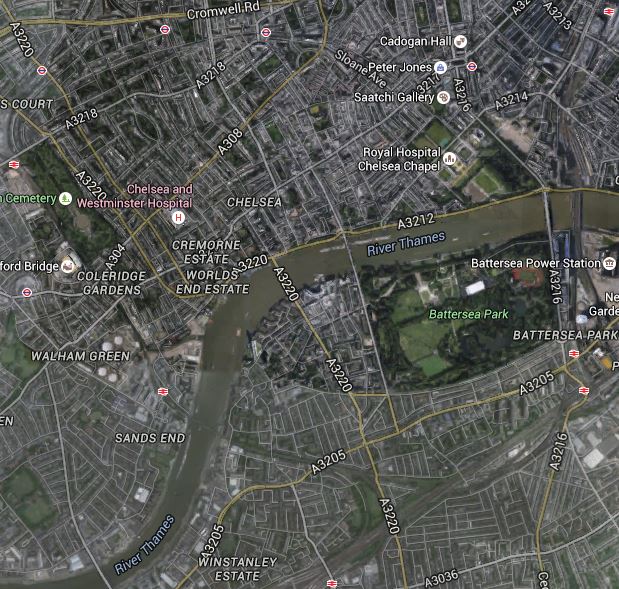
This Google Map shows the area.
Victoria To Clapham Junction
Victoria station is in the top right corner and Clapham Junction is at the bottom of the map.
So what do Crossrail 2 say about the need for a King’s Road Chelsea station in their document about the station. They say this.
A station in the Chelsea area has always been part of the Chelsea – Hackney line safeguarding since it was first proposed in 1989. A Crossrail 2 station in Chelsea would improve community access to rail based public transport in an area where current service levels are low in comparison to similar inner London locations. It would also improve connectivity to the Royal Brompton and Royal Marsden hospitals and provide access to the existing retail and commercial developments along King’s Road. Providing a Crossrail 2 station in Chelsea would also improve journey times for those travelling to or from King’s Road.
Chelsea currently suffers weekday congestion and delays on its main roads. By 2031 congestion on London’s roads is expected to increase by 60 per cent. Providing a Crossrail 2 station would encourage more people to use public transport, which would help to reduce traffic congestion in the area and improve air quality.
That is an answer that would persuade someone like me, who doesn’t drive and knows the arguments for buses and trains, but to the average selfish driver of a high-powered car or off-road vehicle, that is almost an insult.
The Google Map does show the enormous problem in working out the route of Crossrail 2.
Victoria and Clapham Junction stations are about four kilometres apart, so for safety and ventilation reasons any tunnel between the two stations will need an access shaft.
And what lies between the two stations? The River Thames!
I’m sure that part of the reason for a new station in the Chelsea area, is to provide the necessary shaft for the tunnels, as the only other alternative is somewhere in Battersea and that is probably too close to Clapham Junction.
This creates a wonderful irony for Chelsea. Suppose that Crossrail 2 decide that because of opposition, they are going to drop building a station in Chelsea.
They might still decide to build a shaft in perhaps a block of flats, in the same way they did on Moorgate with Moor House.
So Chelsea would have an unseen emergency access and ventilation shaft, but no station.
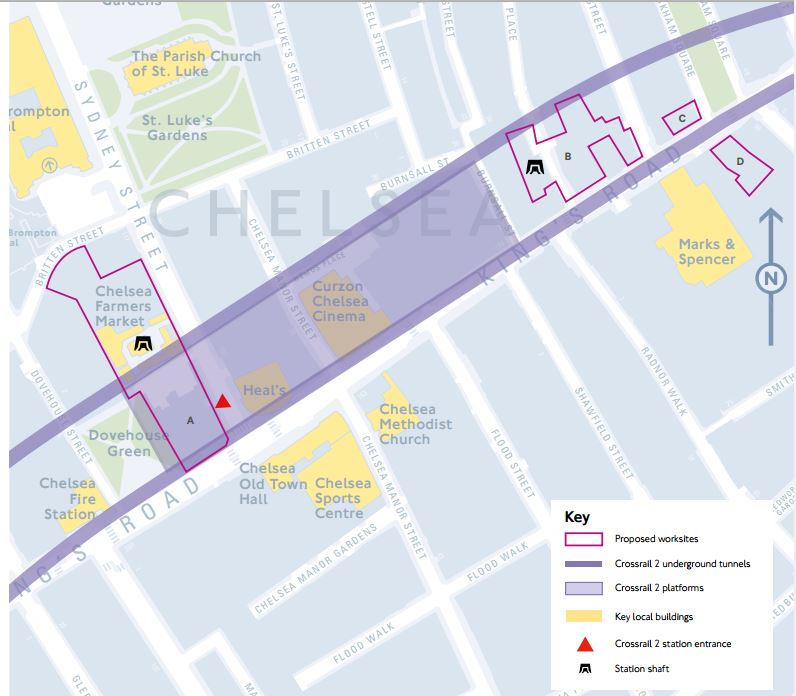
This map from the Crossrail 2 document shows the proposed station and its shafts, entrances and work-sites.
King’s Road Chelsea Station
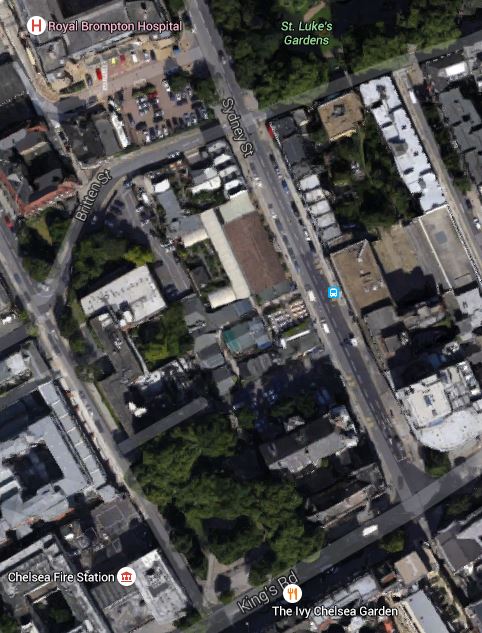
This Google Map shows the area of Site A in an enlarged format.
King’s Road Chelsea Station Site A
Site A is described like this by Crossrail 2.
Includes the Chelsea Garden Centre and Farmers Market. This would be the main worksite for construction of the station tunnels, station entrance, ticket hall and station shaft. Although the site boundary includes 250 King’s Road and 151 Sydney Street, these buildings would be retained.
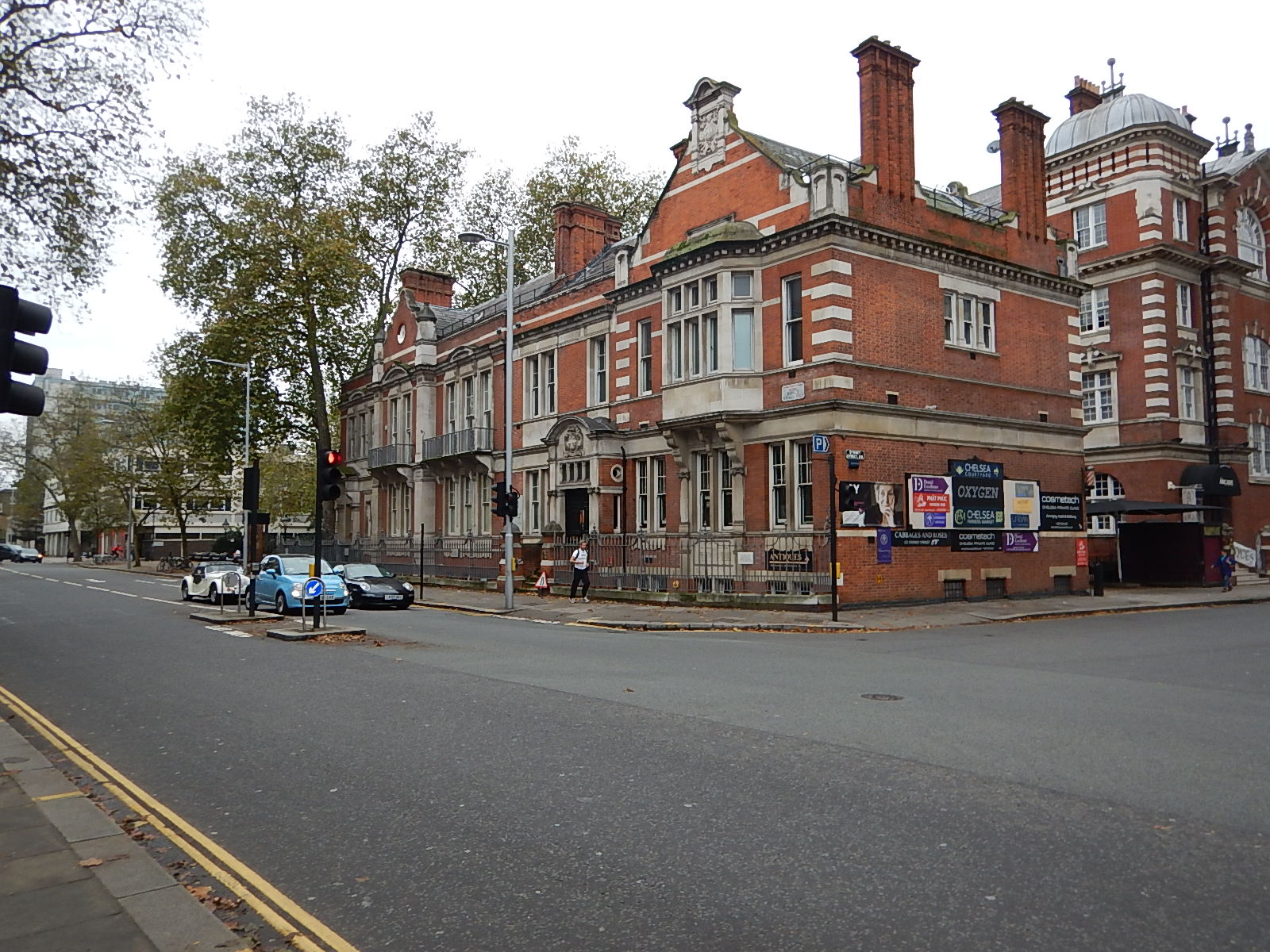
I would assume that the buildings to be retained are these on the corner.
This Google Map shows the area of Site B in an enlarged format.
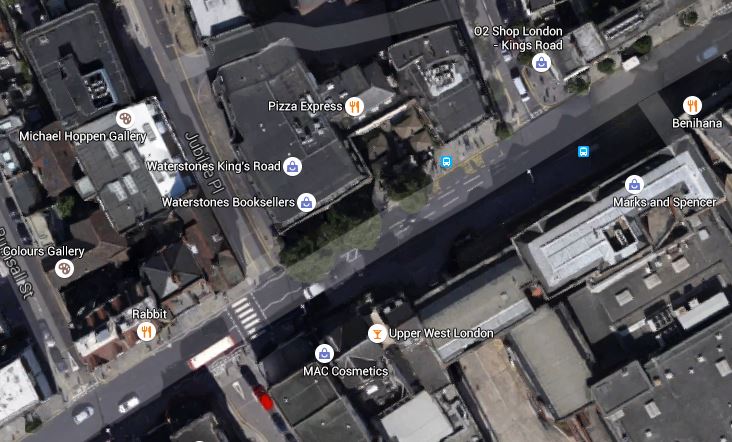
King’s Road Chelsea Station Site B
Site B is described like this by Crossrail 2.
Includes retail and office buildings adjacent to The Pheasantry and extends across Jubilee Place, which would be closed temporarily. This site would be used for construction of the eastern station shaft.
The Pheasntry, where Pizza Express has their restaurant is to the right of Waterstones and Ryman
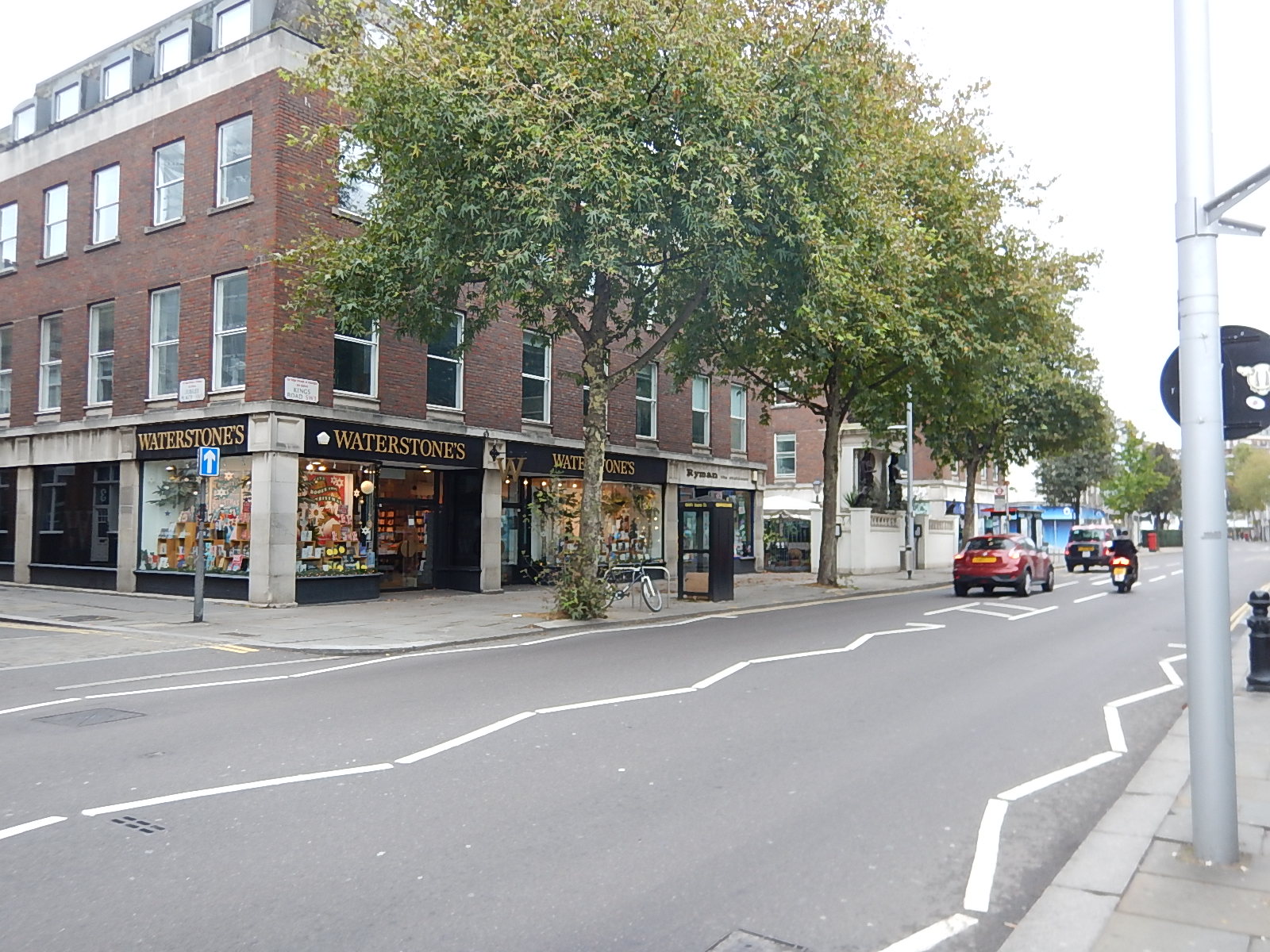
Jubilee Place is to the left of Waterstones and appears to be one-way away from the King’s Road.
This station design is not very ambitious, when you compare it to Balham or Dalston, in that it appears to be single as opposed to double-ended.
Is this because there is no interchange with other lines or because Crossrail 2 want to have to argue only one entrance with protestors?
What Will The New Buildings Be Like?
Obviously I don’t know, but I can make a few points.
- On both sites A and B, I suspect that both shafts and the station at Site A will be incorporated into buildings in keeping with the area.
- It looks from the proposed position of the station entrance, that if the building on the corner of Site A is to be retained as Crossrail 2 say, then it will double as the station.
Surely, this would be two briefs that would be welcomed by one of our world-class architects.
Conclusion
This is probably the most difficult station to build for Crossrail 2.
Not in terms of the actual engineering, but in the sensitive nature of the site and the local residents.
But as I said earlier, I have a feeling that if Crossrail 2 is built it will have to build something in the Chelsea area, due to London’s geography.
A Walk Between Sloane Square And Imperial Wharf Stations
I waled between Sloane Square and Imperial Wharf stations, to get a feel of the area and formulate my views of whether the area needs a Crossrail 2 station and if it does, what form it will take.

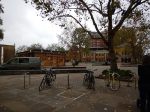

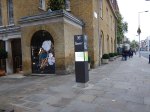
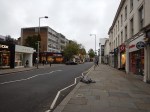
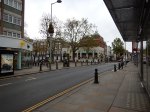

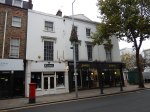
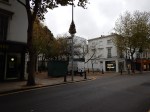

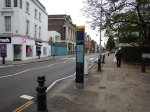
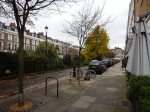


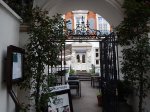


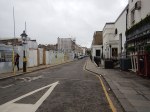
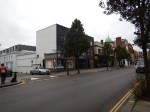


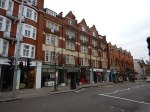
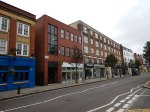

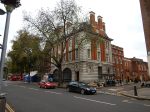
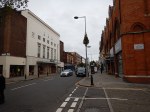


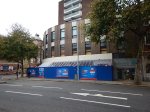
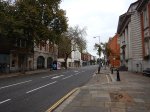
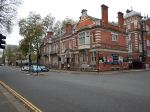
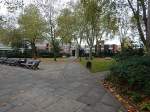

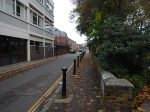


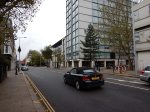
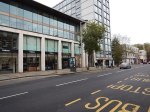
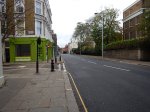
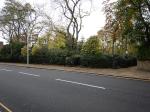

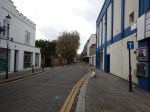

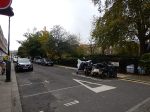


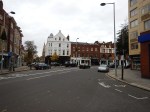

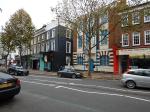
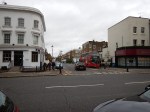
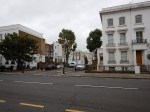
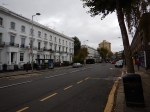

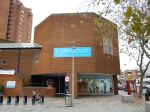
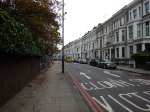
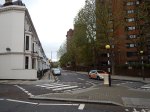

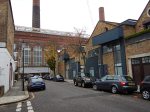
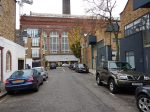

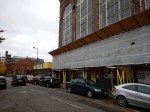
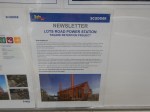
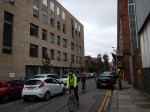


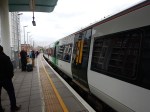
The walk and the area did raise a few interesting questions.
- Why is the Department Store in Sloane Square not called John Lewis? After all Jones Brothers, George Henry Lee and Robert Sayle have all taken the corporate name.
- Why at nine o’clock in the morning were expensive cars rushing about at well above the speed limit? This area needs a fully enforced twenty limit to make everybody safer.
- Why all the fuss about demolishing an empty Fire Station to use the site for a Crossrail 2 station? With an imaginative architect, it would enhance the buildings in that area of the King’s Road.
- Why would anybody want to live in the very attractive but expensive side streets? You’d effectively be a prisoner of the traffic for most of the week.
- Why are so many of the shops boring members of chains? I didn’t see many that I felt, I should return visit to perhaps buy something for my house.
- Why are there no signs to Imperial Wharf station?
- Why are there so few maps?
- Why do the artisan bakeries not have anything without gluten? The only places that do gluten-free I saw were Marks and Spencer, Waitrose and Starbucks. The Angel has those and several others!
I really think that the whole point of the opposition by some, to the building of a Crossrail 2 station on the King’s Road, is that they want to keep the area congested with traffic, so that visitors stay away!
After all. posh people in Chelsea, don’t want to allow plebs like me with a degree in a very non-artistic subject like Engineering to lower the tone of the area, by visiting!
Which Constituencies Lie On Crossrail 2?
Alexandra Palace – Catherine West – Labour
Angel – Emily Thornberry – Labour
Angel Road – Kate Osamor – Labour
Balham – Sadiq Khan – Labour
Berrylands – James Berry – Conservative
Brimsdown – Joan Ryan – Labour
Broxbourne – Charles Walker – Conservative
Cheshunt – Charles Walker – Conservative
Chessington North – James Berry – Conservative
Chessington South – James Berry – Conservative
Clapham Junction – Jane Ellison – Conservative
Dalston – Meg Hillier – Labour
Enfield Lock – Joan Ryan – Labour
Epsom – Chris Grayling – Conservative
Ewell West – Chris Grayling – Conservative
Euston Kings Cross St. Pancras – Keir Starmer – Labour
Fulwell – Tania Mathias – Conservative
Hampton – Tania Mathias – Conservative
Hampton Court – Dominic Raab – Conservative
Hampton Wick – Tania Mathias – Conservative
Kempton Park – Kwasi Kwateng – Conservative
Kingston – James Berry – Conservative
Kings Road Chelsea – Greg Hands – Conservative
Malden Manor – James Berry – Conservative
Motspur Park – James Berry – Conservative
New Malden – James Berry – Conservative
New Southgate – David Burrowes – Conservative
Norbiton – James Berry – Conservative
Northumberland Park – David Lammy – Labour
Ponders End – Kate Osamor – Labour
Raynes Park – Stephen Hammond – Conservative
Seven Sisters – David Lammy – Labour
Shepperton – Kwasi Kwateng – Conservative
Sunbury – Kwasi Kwateng – Conservative
Stoneleigh – Chris Grayling – Conservative
Surbiton – James Berry – Conservative
Teddington – Tania Mathias – Conservative
Thames Ditton – Dominic Raab – Conservative
Tolworth – James Berry – Conservative
Tottenham Court Road – Keir Starmer – Labour
Tottenham Hale – David Lammy – Labour
Turnpike Lane – Catherine West – Labour
Upper Halliford – Kwasi Kwateng – Conservative
Victoria – Mark Field – Conservative
Waltham Cross – Charles Walker – Conservative
Wimbledon – Stephen Hammond – Conservative
Wood Green – Catherine West – Labour
Worcester Park – Paul Scully – Conservative
Totalling it up, there are fifteen stations in Labour consituencies and thirty-three in Conservative ones.
What has surprised me is how many MPs have more than one station in their constituency. James Berry has eleven for example.
How Will Crossrail 2 Affect De Beauvoir Town?
The recent publication of the latest plans for Crossrail 2 and the launch of a consultation about the project has led me to ask me the question that is the title of this post.
A Few Truisms About Large Projects
I was involved with large projects and writing software to help them get built on time and on budget and hopefully in a more affordable and less disruptive manner for over thirty years.
This leads me to a few truisms about large projects.
- What gets built in the end after extensive consultation, is often very different from the original plans.
- Successive similar projects get better and more affordable.
- More time spent planning a project, often results in a better and more affordable project.
- Political interference often results in a worse and more costly project.
- Good design, engineering and architecture costs less than bad.
As the design and planning process for Crossrail 2 is being started fifteen years before the stated opening in 2030, hopefully London will get this one right!
The Consultation
The consultation has a page on the Transport for London web site.
There are masses of pages to read, but if you have better things to do, then at least give the three Crossrail 2 documents in the following sections, a quick butchers.
I’ve added a few notes in the next few sections.
A Typical Crossrail 2 Station
These are my thoughts on a typical Crossrail 2 stationa typical Crossrail 2 station
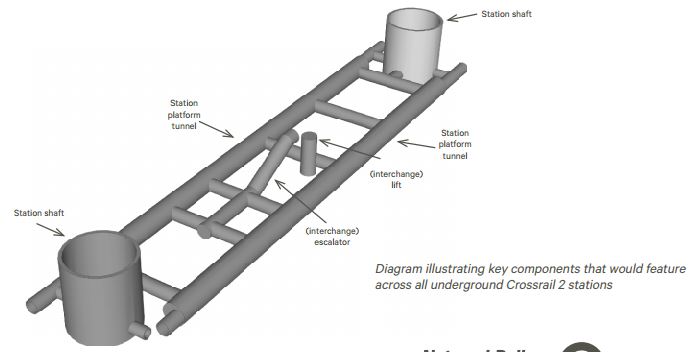
This diagram shows how a typical station will be laid out underground.
A Typical Crossrail 2 Station
Note the two shafts at each end, which provide ventilation and access. In some places, but not Dalston, they are difficult to fit amongst the buildings.
One of the reasons Balham has been chosen rather than Tooting Broadway, is that shafts at Balham fit in a Waitrose car park and where a rather poor 1960s office block sits.
Crossrail 2 Shafts
These are my thoughts on Crossrail 2 shafts
These allow access from the surface to the tunnels and trains, for stations, emergency access and ventilation.
There will be two shafts proposed for Dalston; one by Dalston Kingsland station and one by Dalston Junction station to ventilate and provide emergency access to the platform tunnels up to thirty metres down.
Don’t think that the top of shafts will be eyesores like this one in Graham Road for the Channel Tunnel Rail Link.

If you want to get a look at this awful monument to bad urban design, look to your right, as you arrive at Hackney Central station on a westbound North London Line train.
We’ve come a long way since that one was built. This is a computer visualisation of what is being built in Mile End Park for Crossrail.
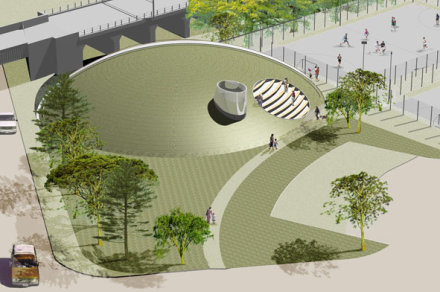
I think it’s also been designed to serve as a viewing mound for the pitches nearby.
You can get a good view of the site from the top of 277 bus going to Leamouth, as the bus runs alongside Mile End Park.
Ventilation shafts can even be incorporated into buildings.
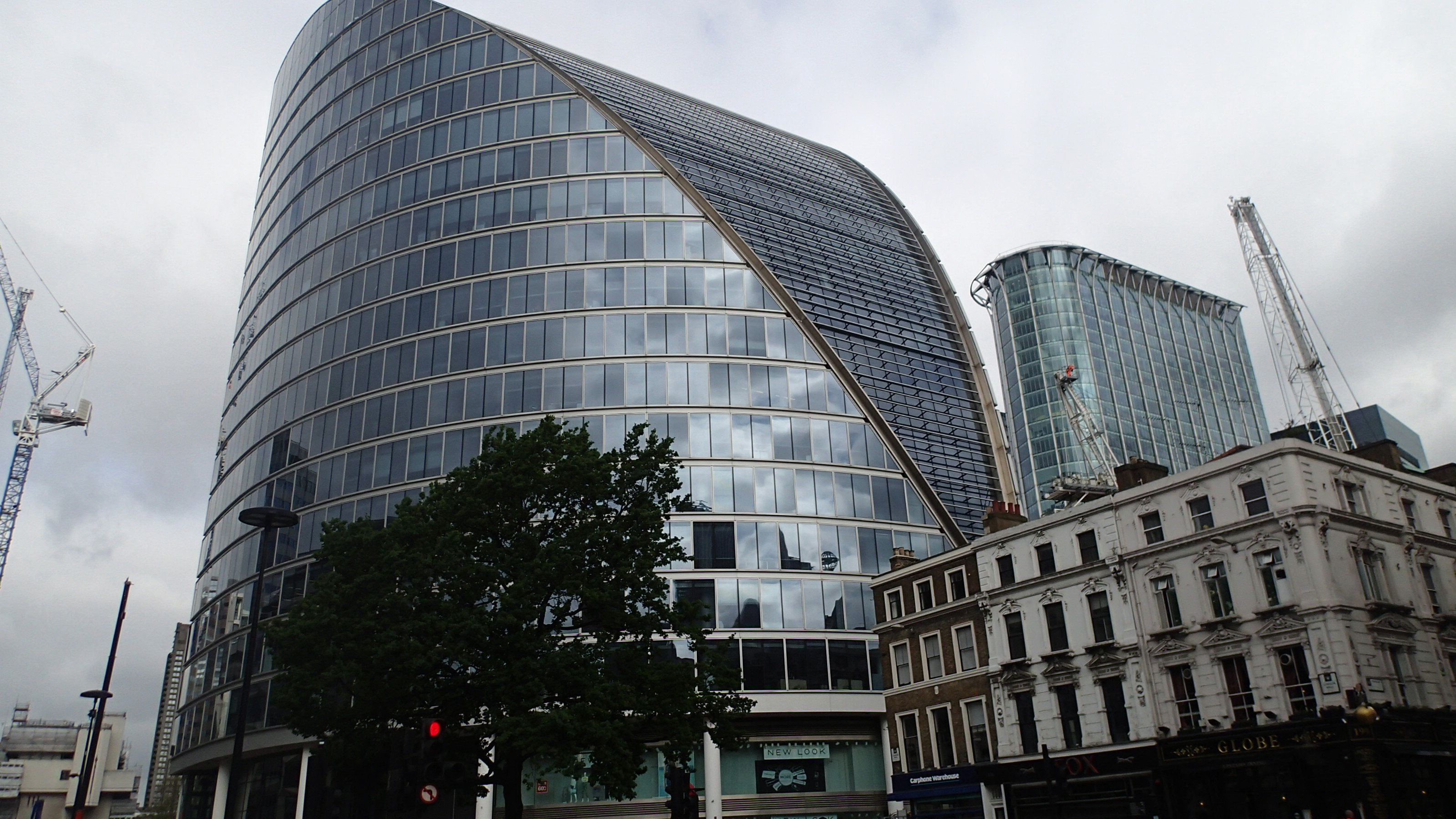
This Norman Foster- designed building is Moor House on Moorgate and it incorporates a Crossrail ventilation shaft for the massive Liverpool Street/Moorgate Crossrail station. Wikipedia says this about Moor House and its use by Crossrail.
Completed in 2004, it was the first building to be designed for the forthcoming Crossrail, with a ventilation shaft to the station underneath the building. It has the deepest foundations in London, which reach down 57 metres (187 ft) and are specifically designed to withstand further tunneling below it in the future.
I’m sure these days if you wanted to put a tunnel ventilation and access shaft by St. Paul’s Cathedral, one of our very good architects could find an acceptable solution.
Practically though, as Crossrail 2 is now being designed and probably won’t be finished until 2030, that gives us a long time to create the needed ventilation shafts in buildings that are developed on the sites where they will go.
Dalston Station
These are my thoughts on Crossrail 2’s Dalston Factsheet
This is their description of the station.
The Crossrail 2 station at Dalston would be a double-ended station, with an interchange at Dalston Junction at the southern end, and an interchange with Dalston Kingsland at the Northern end.
The Crossrail 2 station at Dalston would be underground and could include:
- 2×250 metre long platforms. Station platform tunnels around 20 metres below ground level to the top of the tunnel
- An enhanced station entrance and ticket hall onto Kingsland High Street, for interchange with Dalston Kingsland station
- An enhanced station entrance and ticket hall onto Dalston Lane, for interchange with Dalston Junction station
This map from Crossrail 2’s document shows the layout of the new station.

Note how that most of the station is underneath Kingsland High Road. I think it could be deeper than their proposed twenty metres, if it has to go under the Channel Tunnel Rail Link, which runs in a tunnel in-line with the North London Line.
The two black squarish icons are the two station shafts, as were shown in the picture of a typical station.
I estimate that the Northern shaft is opposite Dalston Kingsland station to the North of Ridley Road in a block that contains the NatWest bank and Kings Land Butchers.
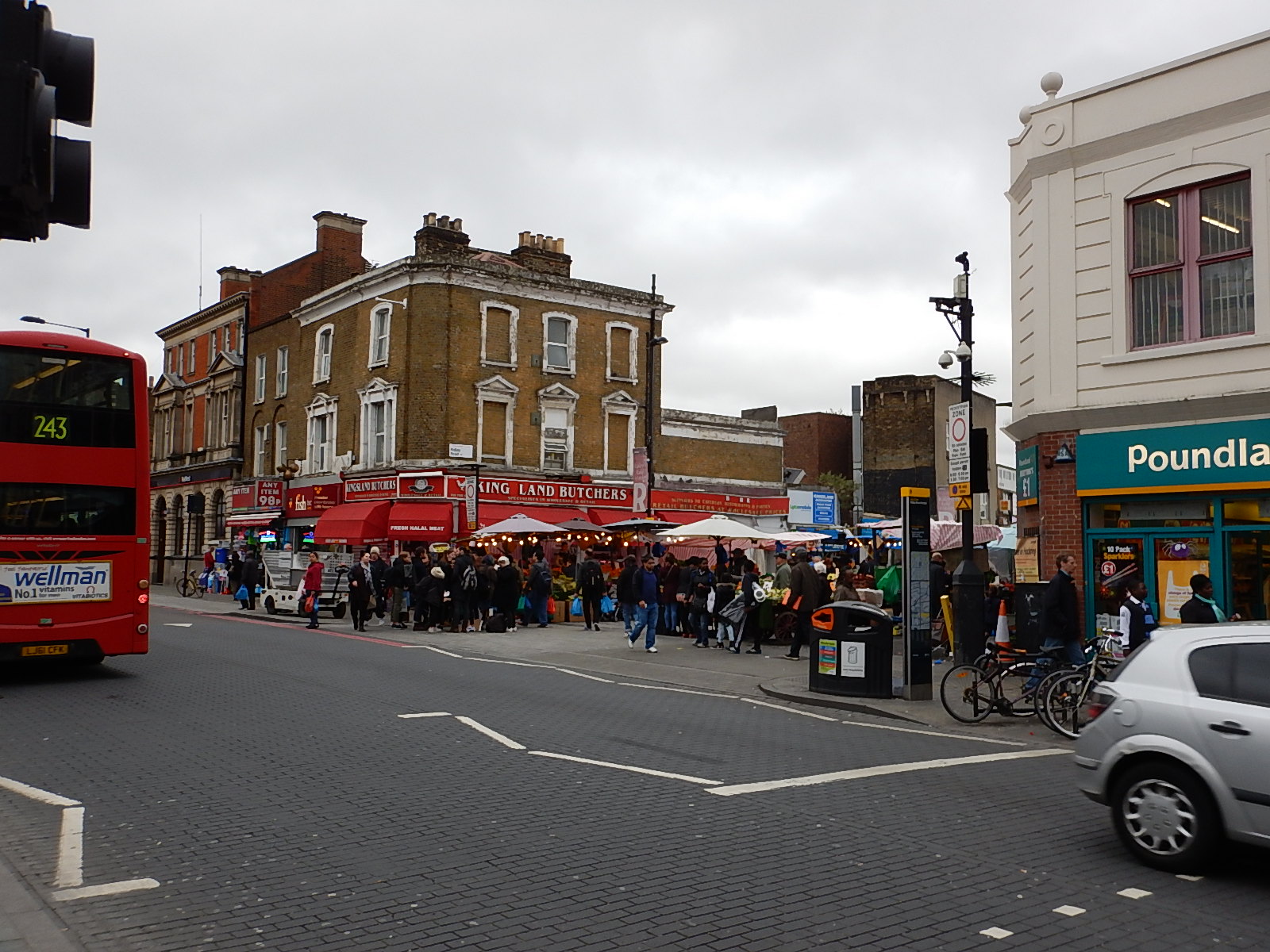
The Southern one is on the West side of Kingsland Road, just North of Tottenham Road.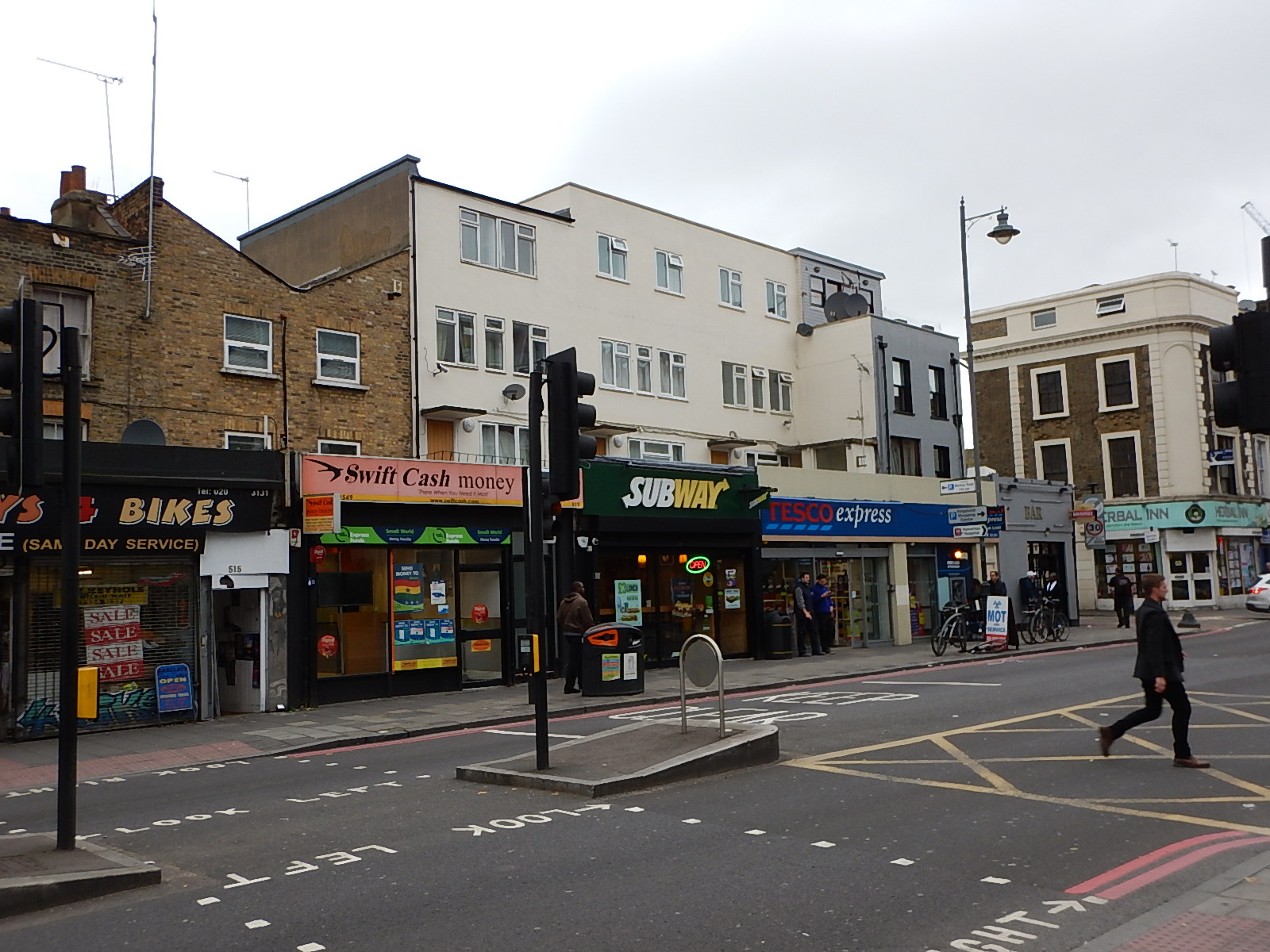
Will the buildings on these sites be missed?
Personally, I won’t miss the Subway, as I’m a coeliac and have to be gluten-free.
Railway Development In Dalston
Before looking at the effect of Crossrail 2 on Dalston and De Beauvior Town, I will look at other rail developments that could also have an effect.
- Twenty-four six-car trains per hour on the East London Line – This proposal is in some of Transport for London’s published documents and plans have already been published to increase the number of trains through Dalston Junction from sixteen to twenty trains per hour, by 2019.
- More trains on the North London Line – If the level of freight trains can be reduced, plans exist to increase the number of passenger services through Dalston Kingsland station.
- East London Line Trains to Willesden – This was talked about in the original proposals for the Overground, but was dropped, probably to cut costs.
- HS2 at Old Oak Common – Transport for London are planning a big development at Old Oak Common, which will connect a lot of lines together including the North London Line and HS2. Certainly North London Line trains will go there, but there are innovative characters in TfL and they may terminate some East London Line trains at Old Oak Common, rather than Highbury and Islington.
- Crossrail – Who knows what effects this will have all over London? As Dalston Junction is just four stops from Whitechapel, it certainly solves the difficult problem of getting from this area to Paddington and Heathrow.
- Reopening the Hall Farm Curve – Reopening this curve north of Lea Bridge, will allow direct trains from Chingford and Walthamstow to Stratford and then possibly along the North London Line.
- Reopening the Dalston Eastern Curve – This could happen to connect Stratford and South London.
- Shoreditch High Street station on the Central Line – A connection between the East London Line and the Central Line at Shoreditch High Street station has been proposed, but not until after Crossrail is opened.
- Penge And Brockley Station Improvements – There are rumours that these stations will be improved to create better links to South East London. There are design challenges, but they are in TfL’s plans and Birmingham solved a similar problem at Smethwick Galton Bridge station.
None of these will be implemented until after Crossrail is fully opened, except some of the extra services on the East and North London Lines.
What actually happens will probably be more determined by passenger traffic statistics than anything else.
But all will have the effect of moving more trains and passengers through the two Dalston stations.
Whether Crossrail 2 is built on not, Dalston will become one of the most important interchanges on London’s transport network.
This will have three main effects on the area.
- Property developers will see it as good place to do business.
- The area will grow as a business and cultural hub.
- House prices will continue to rise.
If and when Crossrail 2 is built, these effects will get bigger.
I do wonder when the area will get a Waitrose!
How Will Crossrail 2 Affect De Beauvoir Town?
In the end, after Crossrail 2 opens it will be better transport links for De Beauvoir Town and more development in property, business and cultural directions and ever increasing house prices.
Building Dalston Station And Crossrail 2 Through Dalston
But during the building of the line, it could have other effects.
The three main sites used to construct Dalston station, will have to be redeveloped.
- Site A – The Tesco Express site on the West side of Kingsland Road opposite Dalston Junction station. This site will contain the Southern station shaft.
- Site B – Dalston Kingsland station and the block to the North.
- Site C – The block containing NatWest opposite Dalston Kingsland station. This site will contain the Northern station shaft.
I believe that just as Moor House was developed some years before Crossrail, I feel that these sites should be developed separately some years before Crossrail 2, perhaps with flats or offices above and shops at street level. The building of the blocks would incorporate the shafts and any other underground works for Crossrail 2, if it was thought appropriate.
I would also expect that development of each of these three sites, will each be a similar sized project to the creation of the two blocks of flats on the Dalston Western Curve, which are being built at the present time.
I’m pretty certain, that the digging of the southern shaft at Site A will be the only major part of the construction, that will affect De Beauvoir Town, as I suspect they’ll have to remove the spoil in a succession of trucks. I estimate there will be about 10,000 cubic metres of spoil to remove to create the hole for the shaft.
At the northern shaft at Site C . they could and should use the railway.
Question for Crossrail – Is it intended to build the two shafts at Dalston station inside other buildings and complete them early, in the manner of Moor House?
Question for Crossrail – How do you intend to remove the spoil from the shafts at Sites A and C in Dalston?
My project management knowledge suggests to me that we don’t have much to fear from the building of Crossrail 2 in Dalston and De Beauvoir, if everything goes to plan.
The reason I add the caveat, is that several rail projects have found bad ground conditions, that have made things difficult. But the railways and property developers have done so much digging in the Dalston area in recent years, I would hope they’ve found all the problems.
Rebuilding Dalston Kingsland Station
The rebuilding of Dalston Kingsland station is desperately needed, as it is a cramped station, that is totally inadequate for most of its users and all of those, who are in wheelchairs, pushing buggies or carrying the average suitcase.
I can’t find anything substantial on the Internet except for odd drawings and images.
There is this construction map of the Crossrail 2 work-sites at the station in Crossrail 2’s document.
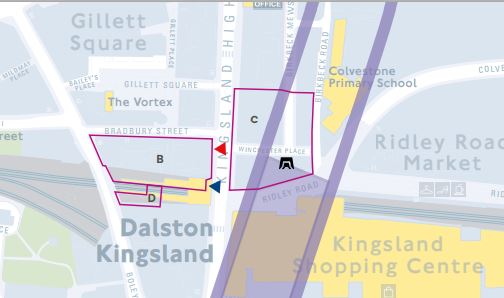
Dalston Kingsland Station Work-Sites
Note, there is a small Site D on the station side of the site currently being developed as Fifty Seven East. The Crossrail 2 document says this about Site D.
Would be used for construction of a new bridge providing access from the new ticket hall to the westbound platform at Dalston Kingsland.
So we know that at least there is going to be a new pedestrian bridge between the two platforms. As opposite Site D is Site B, about which Crossrail 2 says this.
Would be used for construction of a new Crossrail 2 station entrance and ticket hall. The site includes properties on the southern side of Bradbury Street.
Much of Site B bordering the station seems to be closed.
One sensible plan for Dalston Kingland station, would involve putting the new fully-accessible bridge in first and then building a temporary station on the site of the closed pub on the north side of the current station. This would enable passengers to still use the North London Line, whilst the current station building was rebuilt.
Note that most temporary stations that I’ve seen, are better than the current Dalston Kingsland.
I suspect that Transport for London has a complete plan, but I do feel that it will involve the fully-accessible bridge that will intrude into Fifty Seven East, being built.
Dalston Station Entrances
The station platforms lie almost under the Kingsland High Road, with entrances into Dalston Kingland at the North and Dalston Junction at the South.
As far as I can tell from the drawings. entrances into the station are as follows.
- One new and one existing entrance at Dalston Kingsland on the West side of Kingsland High Road
- One new and one existing entrance at Dalston Junction on the east side of Kingsland Road
So we have entrances in the North-West and South-East, but I can’t see any in the North-East and South-West.
The purpose of Site C in the North East is described like this by Crossrail.
Would be used for construction of the northern station shaft and escalator connection to the Crossrail 2 platforms
Given that this corner is by the iconic Ridley Road Market, surely there needs to be an entrance here, with perhaps a subway under the road to the Ticket Office.
Question for Crossrail – Is there going to be an entrance to the station close to the Ridley Road Market?
The purpose of Site A in the South West is described like this by Crossrail.
Would be used as the main site for construction of the station tunnels and southern station shaft
No mention of any entrance or escalators.
Question for Crossrail – Is there going to be an entrance to the station in the South West corner?
Question for Crossrail – Are there going to be escalators at both ends of the Crossrail 2 station?
Note that if there isn’t escalators at both ends, this means that a passenger changing from Dalston Junction to Crossrail 2 would have to virtually walk to Dalston Kingsland first.
Dalston Station and De Beauvoir Town
De Beauvoir Town is a grid of wide roads and pavements and we all have our favourite ways of crossing the area! Often we make use on our travels of the diagonal roads across the area, like Ardleigh and Stamford Roads.
As it happens Site A is just at the junction of one of these diagnonal roads; Stamford Road and the Kingsland Road. So I believe that every man, woman and fox, who lives in De Beauvoir would vote for an entrance into the station at this point. A subway would probably be welcome, as waiting for the lights on the Kingsland Road can get boring.
Incidentally, I walked this mornin from St. Peter’s to Site A and it took me ten minutes.
Question for Crossrail – What will be the pedestrian arrangements for those going between the station and De Beauvoir Town?
What Bribes Do We Want?
This is very much in jest, but Crossrail has shown itself to be a good neighbour at some of the sites it’s used.
It also ran a high-profile archaeology program that many in London, including myself, enjoyed.
One thing that disappoints me is the number of large bronze and other metal artworks, that are in store, because to display them in their intended outdoor setting, could mean they would get stolen! Surely, some could be displayed inside the new stations. It wouldn’t be easy to remove a tonne of bronze up an escalator.
Art should be accessible to everyone!
Tail-Piece
I am waiting for the 25th of November with excitement and trepidation. Will Osborne say go in his Autumn Statement?
Remember that there’s a small matter of an important election in May 2016! I have counted and there are thirty-three proposed Crossrail 2 stations in Conservative-held parliamentry consituencies and only fifteen in Labour ones!
The Tramlink Is Back In Wimbledon Station
The Tramlink is now back in a two platform stop in Wimbledon station.


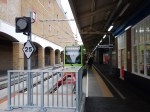
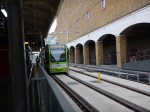


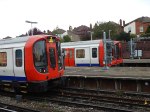

I always found that the old tram stop was like going into a mine as it was dark and not very welcoming.
This new tram stop is a lot better and there is plenty of space.
Although one passenger said it is now further to walk, as the trams stop further down the platform.
As the two platforms appear to be independent, I wonder if the proposed Extension A to Sutton could now be incorporated into Wimbledon station? This is said in the Wikipedia section.
The Sutton to Wimbledon proposal utilises the existing line between Wimbledon and Morden Road, but the cramped terminus inside Wimbledon station is barely adequate for its present function. If another service is to serve Wimbledon a new terminus will be needed.
The terminus is certainly not cramped any more and now that a second platform for the trams is available, then could Extension A be built?
In Crossrail 2 October 2015 – Wimbledon station, I said that I felt, the trams should cross over the rail lines on a viaduct and come into the other side of the station opposite to the District Line platforms, as this would give some advantages.
- Any rebuilding of the tram connection at Wimbledon station for Crossrail 2, might be avoided.
- A large concourse could be provided between tram and Tube, to give a totally flat interchange and provide the services interchanging passengers need.
- The trams would be well out of the way of Crossrail 2 and during the building of that line could keep running at most times.
- It might be possible to have three tram platforms for extra services if required.
I know because of the viaduct over the tracks and the building the platforms on the other side of the station, that my solution would be very much more expensive, but it does completely separate the trams from Crossrail 2.
The Crossrail 2 proposal achieves the same separation by putting the trams on Wimbledon Bridge in front of the station, which would probably mean that traffic would need to be restricted to buses, taxis and trams.
Other vehicular traffic would require a new bridge over the station.
I think we’ll get a better solution, when a decent architect has had a good look at the problems caused by trying to put Crossrail 2 through Wimbledon station.
Crossrail 2 October 2015 – Tooting Broadway Or Balham
In Crossrail 2 Changes its Mind under Tooting Broadway Or Balham, I wrote this.
Both Tooting Broadway and Balham stations are on the Northern Line, but I think Balham is being preferred as it is also a busy main line station.
As some of the main line services through Balham, are duplicated by Crossrail 2, the new line now offers opportunities to release the pressure off the lines through Balham.
If you look at a map of the railway lines in the area, it may be that Crossrail 2 will send the new tunnels in a wide circle from Balham to Wimbledon under Tooting and Haydons Road stations, so that the tunnels are dug totally under existing railway land.
Using Balham rather than Tooting Broadway seems a good idea.
I don’t live in |South London, or even know it too well, so I’ll accept that what I said could have been a comment in haste.
This report from This is South London is entitled Sadiq Khan demands answers as Balham is proposed instead of Tooting Broadway in Crossrail and says this.
It comes after ground faults near Tooting were discovered, meaning work there would take two years longer than originally estimated and cost more.
The news was met with frustration as many said Tooting needed the station more than Balham.
I know he’s the local MP, so he will stick up for his constituents.
Let’s look at the two stations.
This Crossrail 2 document is entitled Wimbledon To Clapham Junction and I’ve used it for information.
Tooting Broadway
These pictures show the area around Tooting Broadway station.


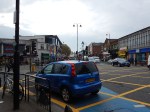

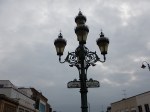
Tooting Broadway station is a typical Underground station on a busy surburban shopping street, that appears to be ruined by heavy traffic. I certainly wouldn’t go there to shop.
Tooting Broadway station is in the London Borough of Wandsworth
It is on the Northern Line
The Crossrail 2 document says this about a station at Tooting Broadway.
To relieve crowding on the Northern line, we had proposed a station at Tooting Broadway. Land for this was safeguarded earlier this year and further work on the station design has been completed to inform this consultation. Recent assessments have identified that ground conditions in the Tooting area would make it significantly more difficult to build a station at Tooting Broadway than originally thought. As a result of these challenges, we are looking at an alternative station location at Balham.
Work to date has suggested that a station at Balham could be built with significantly less disruption and would still provide many of the same transport benefits as a station at Tooting Broadway.
A station at Tooting Broadway would take up to two years longer to build, would require much larger worksites and thousands more lorry movements. This is because a station there would have to be built from the surface with more material removed by road. This would mean it would be more disruptive and cost nearly twice as much to build than a station at Balham.
I also think that even the world’s greatest architect, would have problems creating a decent station for the area.
If I lived in Tooting, I’d think that all those lorry movements would say that Balham can have the station and I’ll go there for shopping and entertainment.
Perhaps the only reason to build a station at Tooting Broadway, would be that it would make it easy to get away from the place.
Balham
These pictures show both the Tube and main line station at Balham.


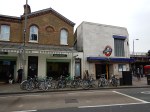


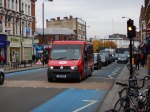

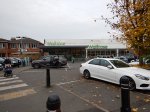


I have a feeling that Balham is a very rare design for a Tube station in that it has two buildings on either side of the road and I can imagine that Crossrail 2 could serve Balham with a double-ended station with entrances on both sides of the High Road.
A good architect could create a world-class station here, that could act as a magnet for visitors and businesses to the area.
Balham station is in the London Borough of Wandsworth
It is on the Northern Line and also a busy station, through which the Brighton Main Line passes.
There are three trains an hour from Victoria to Epsom via Balham, which is a route duplicated by Crossrail 2. Could there be scope for cutting a few services?
This Google Map shows Balham station.
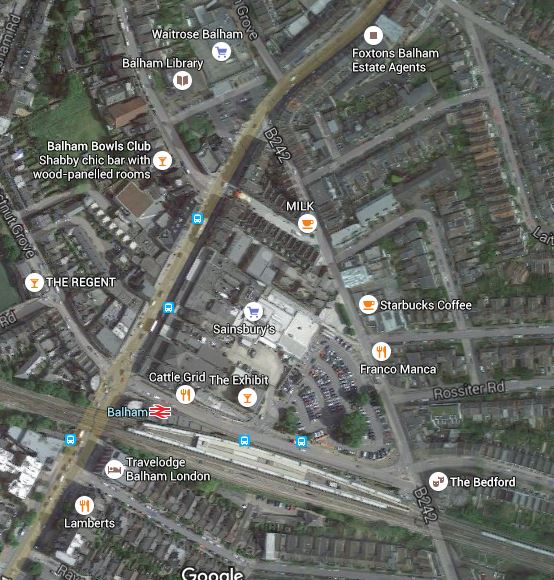
BalhamStation
The Northern Line crosses the main line at virtually a right angle following Balham High Road. The Crossrail 2 line will be built on the Western side of and parallel to the Northern Line.
The two lines would be linked by dedicated passenger tunnels, effectively creating a four platform underground station.
This link means that Crossrail 2 will go some way to meeting a secondary objective of relieving capacity on the Northern line.
It also enables anybody coming from or going to stations south of Balham, like Tooting Broadway for instance, will have a faster route to Central London.
Two work-sites would be used to sink shafts to the new line and Crossrail 2 station.
- Site B – A Northern one on the site of Balham Waitrose.
- Site A – A Southern one just south of where the Northern Line crosses the main rail lines.
It is worthwhile looking at the main lines through Balham on this Google Map.
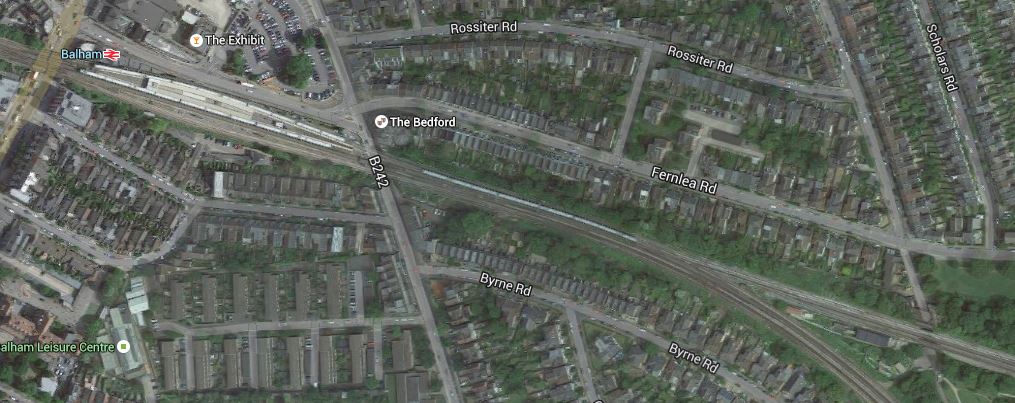
Lines Through Balham Station
Note how the lines split to the East of Balham station, with the Brighton Main Line going south.
If you’re building a new Crossrail 2 station at Balham, you should probably rebuild and extend Balham station if that is required to improve services on the Brighton Main Line.
You’ve certainly got a lot of space!
Balham and its new Crossrail 2 station looks an excellent solution, especially as the link between the Northern Line and Crossrail 2 could be made so simple and totally step-free.
Making The Decision
So on a quick look, it would appear that Balham offers the better connectivity and Tooting has ground faults and would be much more difficult, expensive and disruptive to build.
Let’s face it, Tooting does not have any of the charm and space of Balham and save for complete demolition, Tooting Broadway is probably beyond redemption.
In some ways, it gives Sadiq Khan a difficult problem if he is elected Mayor next year. Should he insist as Mayors possibly can, that Crossrail 2 call at Tooting Broadway in his current constituency?
On what I have written here, I think it would be a seriously wrong decision to chose Tooting Broadway.
Crossrail 2 October 2015 – Capacity On The West Anglia Main Line
The West Anglia Main Line is an overcrowded line from Liverpool Street to Cambridge, Ely and Stansted Airport.
This Crossrail 2 document is entitled Services at Broxbourne, Cheshunt and Waltham Cross.
It says this about creating more capacity.
To create the extra capacity needed to run more services along the West Anglia Main Line, Crossrail 2 would require the addition of more tracks along the route from south of Tottenham Hale station to north of Broxbourne station. This would also allow for a further four trains per hour from all stations on the line to Stratford, in addition to Crossrail 2. In addition, the new tracks could also enable an increase in the number of faster longer-distance services between Liverpool Street, Bishop’s Stortford and Cambridge. We are still at a very early stage in the development of our proposals for the new tracks. We will carry out further consultation in the local areas about these proposals as they develop.
This is the first time, I’ve read that services all Lea Valley stations like Brimsdown, Cheshunt and Broxbourne will have a four trains per hour service to Stratford.
At present there are just a few trains per hour from Stratford to Bishops Stortford, but with the opening of the new Lea Bridge station next year, this may be turned into a more frequent service.
There is also talk of a service called STAR that links Stratford to Angel Road station.
There is a lot of circumstantial evidence on the Internet that mainly because of the need for more and faster longer distance services, whether Crossrail 2 is built or not, that the West Anglia Main Line will be given extra tracks from South of Tottenham Hale station to North of Broxbourne station.
If four tracks were provided this would allow the separation of slow and faster services.
But it would not be a trivial project as all the stations from Tottenham Hale to Cheshunt would need to substantially modified, with most given one or more extra platforms.
Although once it was finished, it would have created the tracks andreadied the station sites for the buildimng of the North-Eastern branch of Crossrail 2.
Crossrail 2 October 2015 – Tottenham Hale Tunnelling Site
This Crossrail document is entitled Tunnelling Worksite At Tottenham Hale.
This is said.
A new Crossrail 2 portal at Tottenham Hale would include the following:
A retained cutting approximately 300 metres long where the surface railway gradually descends to the tunnel entrance
The tunnel entrance, where the surface railway enters the tunnel and the tunnel boring machines would start from during construction
A worksite for building and equipping the tunnels
It’s all quite simple really and this Google Map shows the area.
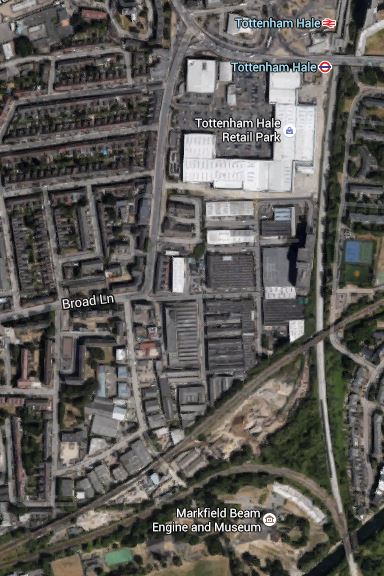
Tottenham Hale Tunnelling Worksite
The worksite is the triangular area, bounded by rail lines, north of the Markfield Beam Engine and Museum. The rail lines are.
- The North-South West Anglia Main Line.
- The East-West Gospel Oak to Barking Line.
- The curve that allows trains to pass between the two other lines.
You can get a good view of the site from both of the first two lines.


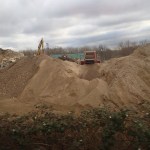
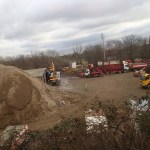
The site seems to be mainly a site that collects London’s demolition rubbish. Some of the pictures came from Could This Be Where Crossrail 2 Is Dug?
In addition to the tunnel portal here, it may also be the starting point of the four-tracking of the West Anglia Main Line to increase capacity.
I have always assumed that the two new slow lines that are being built alongside the West Anglia Main Line will be built on the Eastern side of the current two tracks. I could have made a wrong assumption, but if this is the case, there will need to be tunnels under the main lines so that Crossrail 2 can join up with the slow lines.
Crossrail 2 October 2015 – Stations
This Crossrail 2 document is entitled A Typical Station.
Read the document and you’ll see that a typical station has the following.
- Two 250 metre long platform tunnels with platform edge doors.
- Several cross tunnels
- Shafts at each end of the platforms for ventilation and evacuation.
It does look as if they’ve gone for the simplest design possible, that meets all needs and regulations.
I’ve been in two Crossrail stations and it does seem that this design is simpler.
Crossrail 2 October 2015 – Dalston Station
Are us plebs in humble Dalston going to get one of the best and busiest stations on Crossrail 2?
I wrote that opening statement in jest, but think about the proposed combined Dalston station’s position in London’s rail network.
- It is the most Northerly station before the two branches to New Southgate and Broxbourne link under Stamford Hill.
- Dalston Junction (Or is it Dalston South?) gives an escalator connection between Crossrail 2 and an up to twenty-four trains an hour to South-East London on the East London Line.
- Dalston Kingsland (Or is it Dalston North?) gives an escalator connection between Crossrail 2 and all those trains on the North London Line.
So Dalston will become the important interchange for a large number of cross-London journeys. Raynes Park to New Southgate may well be direct, but so many journeys like Norwood Junction to Brimsdown will just be a single change at Dalston.
Crossrail 2 will put Dalston in one of the most important places on the map of London’s rail network.
Crossrail 2’s proposal for Dalston Station
This Crossrail document is entitled Dalston Station.
The proposal in the document starts like this.
The Crossrail 2 station at Dalston would be a double-ended station, with an interchange at Dalston Junction at the southern end, and an interchange with Dalston Kingsland at the Northern end.
So we get three stations in one, which also means that at last there will be a true dry interchange between Dalston Kingsland station on the North London Line and Dalston Junction station on the East London Line.
This map from the document shows the layout of the two existing stations and their connection by means of two two-hundred and fifty metre long underground Crossrail 2 platforms.
Crossrail 2 Dalston Station
It would appear that two shafts will be sunk to the Crossrail 2 tunnels.
- The Southern one would be in the Tesco Express or the bar next door,
- The Northern one would be just to the north of Ridley Road in the block containing the NatWest Bank.
Note how much of the route of the Crossrail 2 tunnels, runs on the East side of Kingsland High Street, under the Shopping Centre and the new flats. The tunnels will be at least twenty metres down just to get past High Speed One, which runs under the North London Line and Dalston Kingsland station, so any older buildings will be well above any Crossrail 2 construction.
I would also suspect that High Speed One also makes designing and construction of the Kingsland end of the station challenging.
The Work Sites
The Crossrail 2 proposal for Dalston station is nothing but ambitious and to build it there will be no less than five work sites.
- Site A – Would be used as the main site for construction of the station tunnels and southern station shaft
- Site B – Would be used for construction of a new Crossrail 2 station entrance and ticket hall. The site includes properties on the southern side of Bradbury Street.
- Site C – Would be used for construction of the northern station shaft and escalator connection to the Crossrail 2 platforms
- Site D – Would be used for construction of a new bridge providing access from the new ticket hall to the westbound platform at Dalston Kingsland
- Site E – Would be used for construction of a station entrance and ticket hall, for interchange with Dalston Junction station.
But I would be very surprised if the work wasn’t phased so that the work-load in Dalston was spread and work is performed in a logical order.
Dalston Kingsland station is a dump compared to Dalston Junction station, with all the charm, access problems and convenience of a Victorian tube station.
In a reasonable world, it would be replaced now, whether Crossrail 2 is built soon or postponed to the Twenty-Second Century.
The need for a Site D indicates that a new bridge will be built across the station to give access. As Site D is currently in the construction site for new flats called Fifty Seven East and Dalston Kingland station desperately needs step-free access, then surely this bridge should be built now!
To further assess the work-sites, I walked along Tottenham Road to Site A, then crossed to Site E, before walking up Kingsland High Street to look at Sites B, C and D.


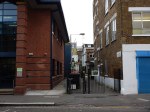
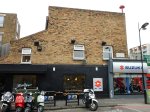


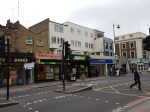
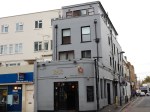

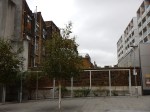
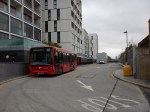


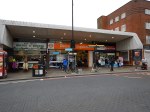


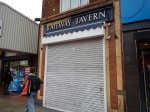


There is certainly, a lot going on and if everybody gets it right, it can become one of London’s more important High Streets.
What Is Already Happening In Kingsland High Street?
Before I come to my conclusions, I’ll say a little about what is already happening.
- Plans may have been published to rebuild Dalston Kingsland station.
- There are more projects to build flats in the area. London needs housing and as these will be designed so they don’t affect Crossrail 2, they will go ahead.
- The Dalston Kingsland Shopping Centre is supposed to be being rebuilt.
- There are also plans to improve the pedestrian flows on what is a very congested road for walkers.
- There will be other changes due to the Cycle Superhighway passing about fifty metres to the west of Kingsland High Street.
So in say four or five years time, we should have a better High Street and Kingsland station, whether Crossrail 2 is coming or not!
Conclusions
So what are my initial conclusions?
- Because of the station design, there will need to be some demolition at both current stations.
- Site A needs a full rebuild, as it has very little property of merit and I certainly wouldn’t miss the Subway, Tesco and the bar on the end. The shaft to access the new platforms, will probably be in the middle of the current Tesco.
- Site B is in a bad state with much of the property locked up. Some of the properties on Bradbury Street will need to be demolished to rebuild Dalston Kingsland station, let alone build the Crossrail 2 station. Will anybody mourn?
- Site C is where the Northern shaft will be. There will be some demolishion.
- Site D is a curious one in that it is inside a site that is being developed.
- Site E is where the new entrance to |Dalston Junction and the Crossrail 2 station is going to be built. I’d have hoped that the Crossrail 2 passages would have been laid out in the redesign of the Overground station. What’s been published gives me doubts!
- How much of the demolition will be of properties worth keeping? Those that I photographed didn’t shout save me!
There are three sites on the High Street, which will be very much affected by the rebuilding of Dalston Kingsland station and building of Crossrail 2.
- Site A, where the Southern shaft for the station is located.
- Site B, where the Northern entrance to the new station is proposed, is substantially closed at present.
- Site C, opposite Dalston Kingsland station that will contain the Northern shaft for the station and escalator connection to the Crossrail 2 platforms.
All could be developed with new residential or commercial properties on top.
I believe that the proposed plan for the new Crossrail 2 station should be treated as what it is, just a proposal.
Or at least as far as the above ground presence is concerned.
All three sites could be developed as welcoming portals to enhance the public transport system as it serves the area around Dalston.
I would apply the principle, that access to the Crossrail 2 station, should be available from both sides of Kingsland High Street at both the Northern and Southern ends.
I will now look at each site in detail.
Site A
This is a Google Map showing Dalston Junction station and Site A.
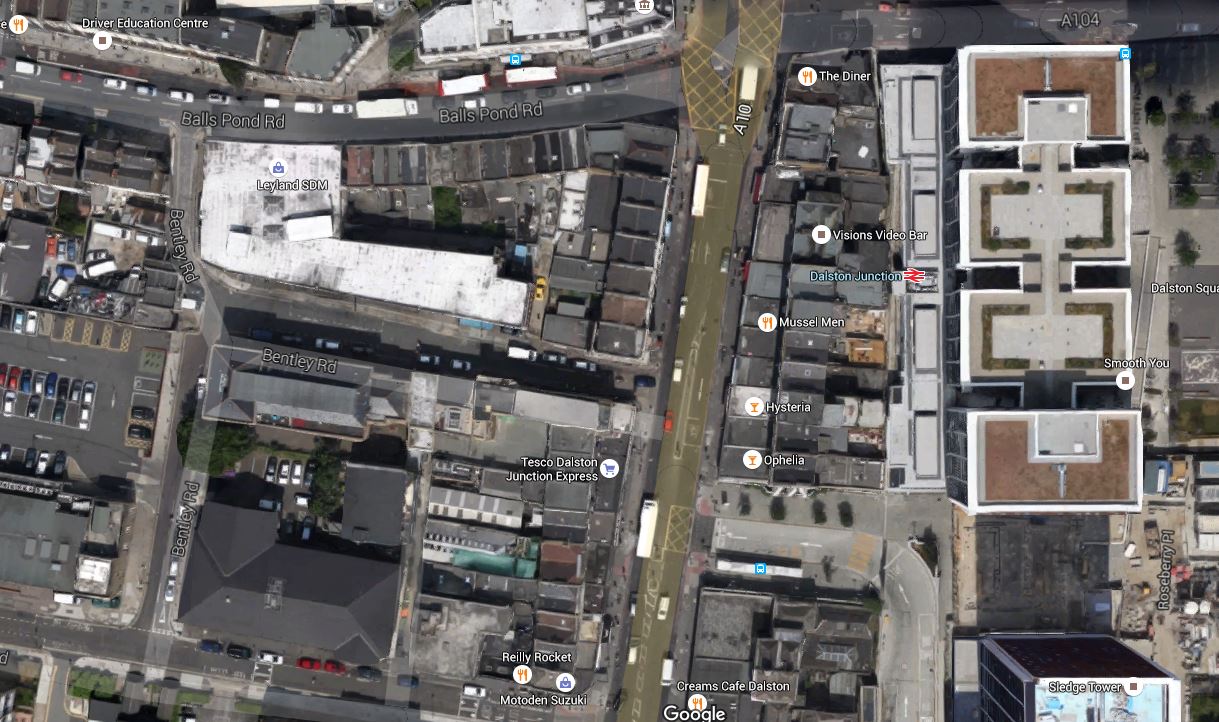
Dalston Junction Station And Site A
Note the station and its towers above in the East and Bentley Road Car Park in the West. You should be able to pick out the Tesco Express on the Kingsland Road.
I walk to Dalston Junction station most days to get the Overground. But it is not a good walking route.
- The pavements along the Balls Pond Road and Kingsland Road are very narrow and you are squashed between traffic and large numbers of walkers.
- It is easier to walk up Tottenham Road, but as with the other route crossing Kingsland Road can be difficult.
- If you live to the South West of Dalston Junction station, it is probably easier to walk to Haggerston station, as I do sometimes.
- It is particularly difficult to cross at the cross roads where the Balls Pond Road meets the Kingsland Road.
As the frontage of Site A on the Kingsland Road will have to be substantially demolished, in an ideal world, provision would be made to access the escalator and lift connection to the Crossrail 2 station from the West side of Kingsland Road.
Perhaps when the frontage of Site A on Kingsland Road is rebuilt after Crossrail 2 works have finished, it should provide a subway under the road to the station and the sort of shops and cafes, that passengers like in their stations.
It would welcome those, who live to the South West of Dalston Junction station to the area, just as Dalston Square on the other side of the station welcomes those from the South East.
Site B
This is a Google Map showing Dalston Kingsland station and Sites B and C.

Dalston Kingsland Station And Sites B And C
Site B is to the North of Dalston Kingsland station, on the West side of Kingsland High Street.
Note that this map was made before the construction of Fifty Seven East started, as Peacocks is still on the West side of Kingsland High Street.
I feel that if they rebuild Dalston Kingsland properly, then then are possibilities to not only build residential or commercial development on top of Site B, but over the railway and the station as well.
Land is expensive and the station occupies almost as much space as Fifty Seven East, so surely a similar sized development over the station would be a welcome addition to London’s housing stock.
I would also hope that the design of the station includes the following.
- A step-free subway under Kingsland High Street to Ridley Road Market. This is probably a given, as the escalators to Crossrail 2 go down from Site C.
- As the station is close to the Cycling Superhighway, I suspect that it will be heavily used by cyclists, who would need lots of secure bike parking.
- Personally, I would like easy walking access along Bradbury Street as I regularly walk to Dalston Kingsland station along that route.
There are certainly lots of possibilities to make the existing Dalston Kingsland station a welcoming North West gateway to Crossrail 2 and Kingsland High Street.
Site C
This is a Google Map showing Dalston Kingsland station and Sites B and C.
Dalston Kingsland Station And Sites B And C
Site C is to the North of Dalston Kingsland station, on the East side of Kingsland High Street. The NatWest bank, which is at the Northend of Site C is indicated.
Any development on this site must enhance the Ridley Road Market and provide that gateway for those travelling to and from the North East of the station.
It is essential that there is an entrance to the station on the East side of Kingsland High street, to give good connections to the market and the Shopping Centre.
My Ultimate Test Of The New Station
My ultimate test of the new Dalton station would be on a cold and wet day, to have the ability to arrive at Dalston Kingsland station on the North London Line, go down an escalator to Crossrail 2, where I can walk along to the Southern End, go up the escalator and exit the station on the West side through a rebuilt Site A.
And do it pushing my yet-to-be-born great-grandchild in a buggy! The spirit of my grandmother, who was born opposite Dalston Junction station would be very pleased!
 The Anonymous Widower