The New Cannon Street Entrance To Bank Station
This entrance will help to solve Bank station’s chronic problems. It will go on the corner of Nicholas Lane and Cannon Street.
These pictures were taken on a walk from King William Street to Cannon Street station.
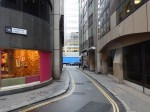





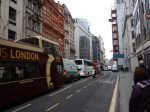

I would assume, it will replace the McDonald’s, with a new office block on top.
This Google Map shows King William Street, Nicholas Lane, Cannon Street and the various stations.
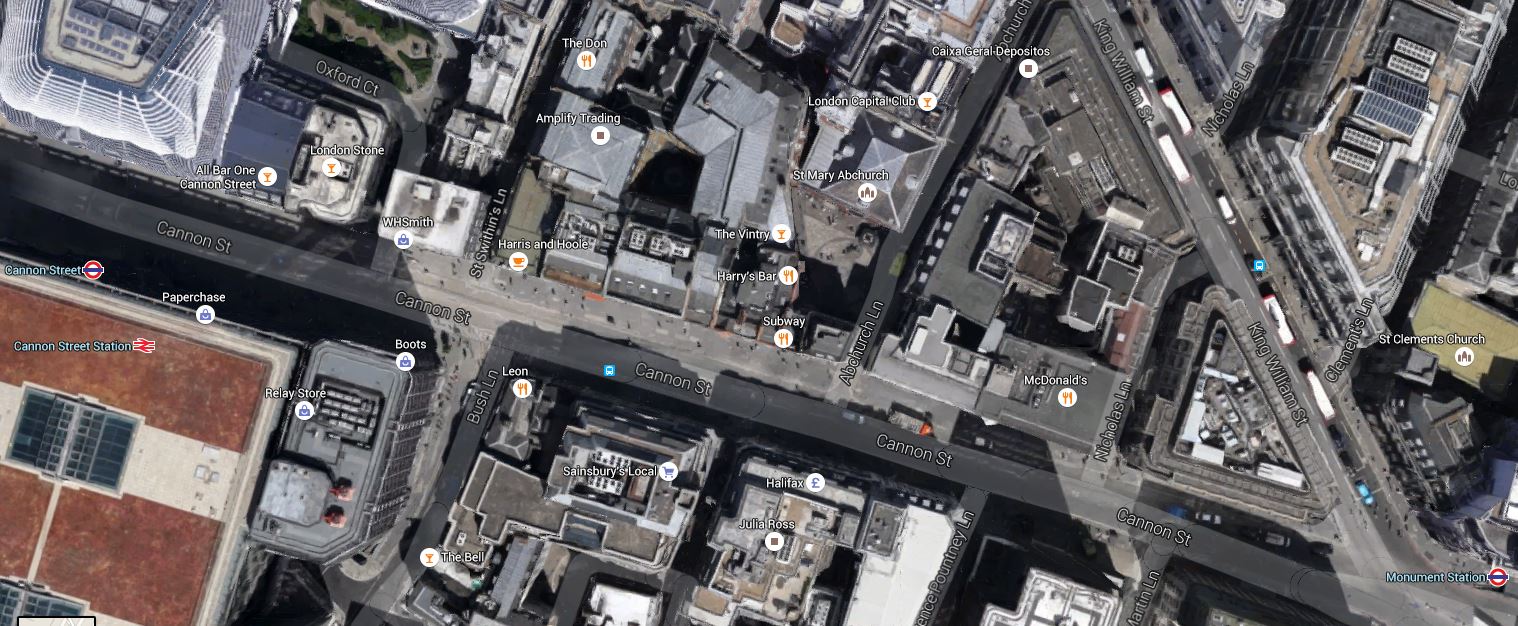
New Cannon Street Entrance At Bank Station
Note the McDonald’s. I had an excellent lunch in the Leon.
If you want to read more about the proposed station, you start by looking at this page on the TfL web site, which is entitled.
I found these two documents answered a lot of the questions, I had about the design of the station.
Design and Access Statement – Part 1 – Opens with a detailed drawing of the whole new entrance project.
Design and Access Statement – Part 2 – Opens with a detailed summary of the proposal.
They also have a lot of good images, visualisations and diagrams.
Summarising what I learned, I will make the following points.
- The new entrance will be a wide one where the current McDonald’s is situated.
- Passengers will go through the wide gate line and banks of escalators will take them down to the Northern Line.
- Passengers requiring step-free access will have a dedicated route to the lifts from two wide gates on the left of the entrance.
- The Northern Line is deep and because of the constricted nature of the site, the escalators will be vertically split into two banks with a landing, as some at London Bridge station are.
- At the bottom of the escalator will be a large circulation area, with cross passages accessing the rebuilt and wider Northern Line platforms.
- Moving walkways from the circulation area, will take you to the Central Line.
- The rise between the Northern and Central Line levels will be handled by escalators between the Central Line platforms.
- Access to the DLR platforms, which are several metres below and parallel to the Northern Line platforms, will be via escalators in the middle.
- The District and Circle Lines will be accessed from the Southern end of the circulation space by means of an improved passage to existing escalators.
- I suspect that the access to the Central Line and DLR platforms, can be built without any lengthy closures.
- Don’t forget that there is a new entrance at Walbrook Square being built to give lift and escalator access to the Waterloo and City Line, that will open in 2017.
- All existing links between lines and the existing entrances will be preserved and upgraded.
- Two seventeen passenger lifts will descend from the new entrance to both the Northern Line and the DLR.
- The station is to be completed by 2021.
I think it is true to say, that the new Cannon Street entrance is effectively a second station that is connected to all the existing lines.
In the latter part of the project, the Bank branch of the Northern Line will be closed, so that the new running tunnel can be dug. I don’t think it will be possible to turn trains at say Moorgate and London Bridge, so the branch will cease to be any use.
Could this blockade, be planned to happen after Crossrail opens, so that passengers can walk to Liverpool Street/Moorgate to access other North-South routes?
- Crossrail to Farringdon station for Thameslink
- Crossrail to Tottenham Court Road station for the Charing Cross Branch of the Northern Line.
- Crossrail to Whitechapel for the East London Line.
- The Northern City Line at Moorgate station.
The Central, District and Circle Lines had better behave too!
So how would the new station at Bank change my transport habits?
- Journeys between my house and Bank station are often done on a 21 or 141 bus, where the stops are within a hundred metres of my house. I would hope for better access between buses and the new complex at Bank.
- The new Wallbrook entrance and the improved access to the Waterloo and City Line, will greatly improve one of my routes to Waterloo,
- I often go south on the Northern Line, as it is easy to get a 38 or 56 bus around the corner from my house and dive straight into the Northern Line at Angel station. From Bank I will use the easy access to the DLR and the District and Circle Lines.
- I suspect that when I need the DLR, I will go to Bank, rather my route now via Shadwell on the East London Line.
- If I’m coming North on the Northern Line, I get out at either Bank, Moorgate or Old Street and take the 21 or 141 bus.
I shall certainly have a lot of interesting transport routes.
The expansion of the station, in addition to sorting the connection between the various lines at the station, will after the Wallbrook entrance is complete, create two new terminii for the two smaller lines at the station.
Waterloo And City Line
The new Wallbrook entrance will create a step-free entrance into an upgraded Waterloo and City Line.
This will generate a few questions.
- How long will it be before demand is such, that the Waterloo and City Line opens on a seven-day-a-week basis?
- Will the passageways still connect the Waterloo and City Line platforms to the to the DLR and the Northern Line?
- Will the connections to other lines at Bank station be good enough?
- As the Bank end of the line will be step-free, what will happen at the Waterloo end?
- Could access to the line be improved from Waterloo East station?
I think that the Waterloo and City Line will get a few more small upgrades. Especially, as during the blockade of the Northern Line to build the new spouthbound tunnel, it will be used to bring travellers to and from Bank station.
Docklands Light Railway
The two DLR platforms and their connections to the other lines will be transformed by the station expansion.
- Many of the walking routes to other lines and the exits will be step-free, and all will be an improvement on the present routes.
- The important connection to the Northern Line will be by escalator or lift.
- There will be a lot more space around the two DLR platforms.
I think this ease-of-use of the DLR part of the station, will increase passenger numbers dramatically.
It appears to me that the new design will future-proof the DLR terminus, as the new layout of the DLR platforms and their connections seems to have been designed, so that the DLR can be extended to the West.
According to Wikipedia, two possible westward extensions have been proposed.
I think that the former which would take the DLR to Charing Cross and possibly Victoria via City Thameslink and Aldwych would be the most promising.
This would give me a route to Charing Cross station, which is probably the most difficult station to get to from Dalston.
But will it ever happen?
Bank station will certainly ready for a DLR extension in 2021.
Would A Tram-Tube Be Feasible?
I have seen tram-trains at work in Karlruhe, Kassel and Mulhouse and they work well as they travel on the tram-tracks in the city centre and the train tracks as they travel outside and to the next major town. We’re soon to introduce Class 399 tram-trains between Sheffield and Rotherham as an experiment and after what I’ve seen in Europe, I don’t believe that the trial will be a substantial failure because of the concept.
When I looked at Crossrail 2 at Wimbledon, I said I had a bonkers idea. If we can have tram-trains, then why can’t we have tram-tubes?
Dimensional restrictions would apply and I suspect it would only be possible with the larger size of tube train. But the cross-section of the modern S7/8 stock is not that different to your average tram, although they are longer. Although, I’ve seen some substantial tram-trains in Europe, with at least four coaches.
What gave me the thought was the problem of the Tramlink platforms at Wimbledon would be solved if they could run up the District Line to another terminus.
It is probably infeasible at Wimbledon for various reasons, but once the tram-train technology is proven in a UK environment, I can’t see why the concept might not work in the right way in the right place on the sub-surface lines of the London Underground. One possibility would be to create a branch line shuttle. Such a concept could have been used at Barking Riverside, but they have decided to extend the Gospel Oak to Barking Line instead.
I do think it will be wrong to underestimate the devious minds of those engineers trying to squeeze the last drop out of London’s transport infrastructure.
Dalston To Wimbledon And Back
Yesterday evening, I went to Wimbledon to have a drink with a friend. It’s not a difficult journey, but I was going out in the rush hour and Victorian railway planners didn’t really expect anybody to travel from the very poor East London to the affluent South-West.
They only built two cross-river rail links east of London Bridge and one of these was a re-use of some leftover infrastructure in the shape of the Thames Tunnel. It’s got better in recent years, with the re-opening of an extended East London Line, through the Thames Tunnel and new lines in the shape of the Jubilee Line and the Docklands Light Railway to Lewisham, but if you live in Dalston and want to go south-west regularly, you’re living in the wrong part of the city.
If I’ve got plenty of time to get to Wimbledon, I have three slow routes I can take.
1. Walk to Canonbury station and take a North London Line train to West Brompton, where I change onto the District Line to Wimbledon.
2. Walk to Dalston Junction station and take an East London Line train to Clapham Junction, where I change to a train for Wimbledon.
3. Take a 76 bus to Waterloo and then get a train to Wimbledon.
The first two routes are best used at a non-busy time, where perhaps you’ve got a paper to read and the third can be very slow, if the traffic is heavy.
Because of Crossrail work and diverted buses, taking a bus to Bank for the Drain to Waterloo is not the serious proposition it should be.
To further complicate matters, the Transport for London Journey Planner, says walk to Dalston Junction and take a train to Canada Water, from where you get the Jubilee Line to Waterloo,
In the end, I took a 141 bus to Bank and struggled to Waterloo through a very crowded Drain.
Coming back, it was after eleven, so I had to wait ten minutes for a train to Waterloo, where I decided to come home via Canada Water and the East London Line. This is a good route coming home, as it means two stops on any bus, drops me just round the corner from my house.
If Crossrail 2 ever gets built, this journey will become much easier, as between Dalston Junction or the Gateway to the North-East and Wimbledon or the Gateway to the South-West, there will be only seven intermediate stations; Angel, Kings Cross/St. Pancras/Euston, Tottenham Court Road, Victoria, Chelsea Kings Road, Clapham Junction and Tooting Broadway.
So using my mother’s Ready Reckoner, Dalston to Wimbledon will take just sixteen minutes.
I’m certainly backing Crossrail 2!
Sorting The Under/Overground Around Gunnersbury
After I wrote this article about reversing loops instead of termini, I wondered if I could find any references to operating problems on the Piccadilly Line loop that serves Termial 4.
I didn’t find anything but I did find an article on London Reconnections called Upgrading The Piccadilly: Calling Time On Mind The Gap?
It is a well thought-out article that starts by talking about the new trains and the problems of platform-edge doors. It then goes on to suggest what it thinks appears to be the bad idea of transferring the Ealing Broadway branch of the District line to the Piccadilly line.
This is the map of the area.

Gunnersbury Triangle
The triangle of lines in the area is bordered at the West or left by the North London Line (orange), the District and Piccadilly lines from Acton Town to Turnham Green at the top right and the District line to Richmond at the bottom right. Chiswick Park station is marked with the red arrow.
The article then goes on to suggest reasons why it might not be a bad idea and that Chiswick Park station might be put on the Richmond Branch of the District line.
I think the Overground and Crossrail could be the key to what happens in this area.
1. Transport for London’s Infrastructure Plan for 2050, talks about linking the Gospel Oak to Barking Line to Hounslow through the area. It would branch off just south of South Acton station.
Acton To Houslow Link
The line is there and I suspect, it will be used to provide a link between West and North London.
2. Crossrail calls at Ealing Broadway station, so will it be better if it joins up with the Piccadilly or District lines?
There are probably advantages for both lines and I won’t choose what is better. But note that the District line has two interchange stations with Crossrail and the Piccadilly has just the one at Heathrow.
3. There are also proposals to create another rail route into Heathrow. One is Airtrack, which goes through Clapham Junction and Richmond.
4. There is also the problems of installing platform-edge doors on the western reaches of the Piccadilly Line, as outlined in the London Reconnections article.
I think the only certainty is that these and many other factors will result in major changes in this area.
And the solution will be very radical.
One thing though convinces me that something must be done. I was on Chiswick Park station today, and in about ten minutes, I met two young ladies; one French and one Italian, who had got seriously confused by the track layout in the area.
Raw Material For A New Train
I wrote a couple of days ago about an innovative use of old London Underground trains, to create the D-Train
So what is the raw material; the D78 Stock like? I took a trip on one from Whitechapel to Kew Gardens, where I took the North London Line home.
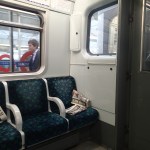

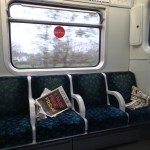
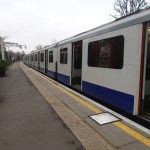
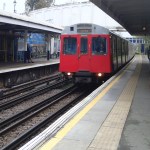
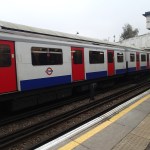
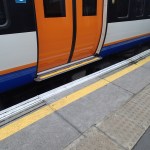
Scrapyard specials they are not! They ride well on rubber coil suspension, with a quality somewhere just short of the S Stock on the Underground. When the train emptied a bit and I got a seat, it made me wonder, why Transport for London are replacing all of them.
Wikpedia says this about their withdrawal.
The stock is scheduled for replacement by S Stock in 2016. It is being replaced about 15 years short of its intended lifespan, as a consistent fleet will allow for frequencies to be increased.
So that’s why. It must also be so much easier for staff on the sections of the line, where it shares tracks with the Metropolitan and Circle lines, that all trains are identical and stop in the same place. Passengers also like the walk-through design of the new S Stock, which eases getting on and off. It also increases capacity by spreading it through the train.
I suppose the main problem is their boxy design, which is not by any means sexy! But you could argue, that they look better than a Class 142. They certainly ride better on those rubber springs.
The more I read about this concept the more I like it.
The designers seem to have taken the approach that a good architect would do, when they’re presented with a Listed building like Kings Cross station and told to make it fit for the next few decades. Every preconception has been thrown out of the window and the designers have just concentrated on a limited set of objectives. These certainly include an affordable, reliable train that meets all the regulations and the expectations of staff, train companies and passeners alike.
But nothing of any substance, can be created without good foundations. The current trains ride well, make the maximum use of the loading gauge and thanks to the refurbishment of the last few years, they have an airy feel, with lots of windows that can be opened for ventilation, if required. I suspect too, that say if you wanted to create some new internal components, a lot of the jigs and mock-ups are still sitting in a shed or are on a computer somewhere.
I particularly like the concept of the power pack. Roger Ford in Modern Railways describes it as being so far off the wall, as to be in next door’s garden. Each driving motor car, will have two fully-enclosed power packs or rafts fitted underneath the train, The engine is a Ford Duratorq, which is built in that centre of railway technology; Dagenham. Vivarail claim that one engine will get the train home, but surely the great thing about having four power packs to a train, means that they can be selectively shut down, when the route allows. The Class 185 trains used across the Pennines, have an Eco-Mode, which selectively adjusts the power to the route, so something similar is surely possible. Computers have been used to control multiple engines according to conditions, fuel economy and power need in aircraft for decades, so I suspect the expertise to create a train that chugs efficiently round the country, is not difficult to find. In the ultimate manifestation, the engine control system would be geared to the ERTMS signalling, when that comes in, so the system would start up and shut down engines in an optimal manner according to traffic.
The power rafts give a tremendous advantage for maintenance. Roger says that taking one out will be a simple ten minute job with a pallet truck, and units will be replaced rather than repaired. Obviously, they’ll be repaired centrally. Vivarail says the concept needs less time in depots
The power raft concept also allows a new raft with perhaps energy storage, like a flywheel to be designed and tested. Given the projected life of the trains, I doubt that a Mark Two power will be developed, but who knows?
The design appears to have an amazing degree of flexibility. Look at this page on the Vivarail web site, which shows some example configurations. Trains can have two or four doors per sides, toilets if required and pictures show the classic four-to-a-table-by-the-window layout is possible.
I also think a seaside or country special would be possible with a large area dedicated for bicycles. Sometimes on Ipswich-Cambridge services, there are bikes everywhere and it is virtually impossible to get in and out.
If I look at the concept from my field of project management it is a dream. Trains arrive from London, as they are replaced by new ones, so for a start there is no storage problem. A separate factory produces the power rafts as required, so materials and cash flow are all as needed.
Even testing and certification is not the extended process it must be with a new train.
There are only a couple of problems that have been flagged up.
Some people think the doors are too narrow. But then, the trains currently run on one of the busiest routes in London and cope well.
Roger worries about the reliability of the power rafts and their Ford engines. I don’t, as if they get the control system right and run the engines efficiently, this will make the task less onerous.
I might flag up another – It’s just a pity, that there aren’t a few more D78 trains to save from the scrapyard.
Innovative Engineering To Recycle Trains
I often refer to Pacers; Class 142 and Class 144 as scrapyard specials. They were built in the late 1980s and some units will be thirty years old next year. They have not worn well and they don’t meet the modern disability regulations.
The London Underground D78 Stock is a few years older and after a major refurbishment a few years ago, the trains are still running on the District Line. I travel on them regularly and although they are not as nice as the new S Stock, they still provide an adequate and reliable service across London.
It wouldn’t seem logical to replace the elderly Pacers with rebuilt D78 Stock that was even older.
On the other hand, a group of very experienced railway personnel who feel that these 75 third rail electric trains can with the addition of a couple of automotive diesel engines be converted into diesel multiple-units.
It sounds crazy, but the realisations on the Vivarail website of what they have called the D-train look good. They also don’t look like a D78 to those who don’t know them well. They will even have wi-fi!
To paraphrase one of my own sayings.
Politicians have a theory and try and prove it, engineers have a problem and solve it.
Roger Ford in Modern Railways for December is reporting that in six months time, there will be a demonstrator. He says this.
If anyone can make D78 stock conversion commercially viable, it is this battle-hardened bunch of veterans.
As Roger also reports they have spent a seven figure sum on buying the trains, I have a feeling that we’ll be seeing at least some of these trains for a long time.
In the article and the Vivarail web site, what I see as a big advantage of the trains is not mentioned.
Some estimates say that we need upwards of fifty replacement trains for the Pacers. And that is about the size of the fleet that could be created.
With George Osborne needing an affordable project that benefits many different areas of the country, it would appear that the D-train has arrived exactly on time.
The biggest problem could be getting the public to believe that re-manufactured nearly forty year old trains are up to the job. But at least, as with the Parry People Mover, it’s a train that can be put into service on a real railway to charm the public.
In the same magazine, there is also an article about rescuing some Class 56 locomotives and returning them to active service.
In the UK, we have a shortage of diesel locomotives for freight. We’ve even used a preserved Class 55 Deltic to haul commercial bauxite trains and you sometimes see pairs of Class 20 locomotives like this doing real work. The article explains how new locomotives get used on the premium high-value trains, but for pulling things like engineering and work trains, they are expensive.
A company called UK Rail Leasing has acquired fifteen and intend to return some to service. There is talk in the article about fitting modern engines. But then they did that with that other relic of the 1970s the InterCity125.
Both of these stories are in some ways a tribute to our rail engineering skills of thirty years and more ago.
Is Whitechapel Station Going To Be A Jewel In The East?
When I wrote about Crossrail as a tourist attraction, I said nothing about the station at Whitechapel.
I probably didn’t as although I use the station regularly, you don’t see much as you pass through except for hoardings with lots of graphics, pictures and information. When I went through last time, I took these pictures.
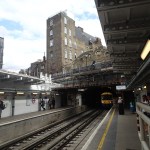

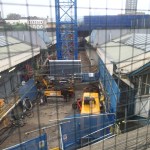

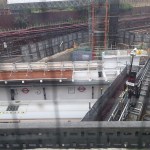
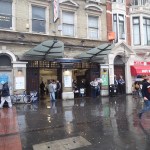
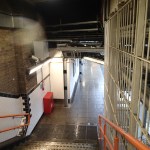

It shows the construction going on over the two north-south Overground platforms. Crossrail will run east-west about forty metres down. Note how the Underground is on top of the Overground.
I was told by a man in an orange suit, that there will be a bridge over the Overground platforms connecting it all together. Escalators to Crossrail will be going down from between the two Underground platforms, where the blue crane is now situated. The space between the Underground platforms will then be filled in to create a wide island platform with the two lines on either side. It will be an easy step-free interchange from Crossrail to the Underground.
There are some detailed architect’s impressions of the new station here. The page also says this.
The new Whitechapel Crossrail station will use the existing Whitechapel Road entrance to the Whitechapel London Underground and London Overground station.
The Crossrail platforms will be in deep tunnels to the north of the existing station but they will all share a concourse, ticket hall, gateline and station operations room, leading to a fully integrated station that provides an easy step-free interchange between the Crossrail, Hammersmith and City, District and Overground lines.
Transport for London’s, Transport Infrastructure Plan for 2050, states that at some point twenty-four trains per hour will run through this section of the Overground in both directions.
This matches the Crossrail and Thameslink frequencies, so once all these lines are complete, London will have gained a high-frequency H-shaped railway, where journeys like Luton, Brighton or Peterborough to Crystal Palace or Walthamstow might be accomplished using two easy step-free changes. In fact, the biggest problem after 2019 about travel in London, will be choosing which of two or three equally fast and convenient routes is best for you.
Travel is going to be fun!
I suspect Whitechapel might be my entry into Crossrail and Thameslink. I’ll just walk to Dalston Junction, take a four stop journey to Whitechapel and then fan out to the myriad destinations, that can be reached directly from there.
Edgware Road Station Revisited
I had to go round to High Street Kensington today, so I went by the Circle line from Kings Cross St. Pancras station to Edgware Road station, where I changed across between Platform 4 to Platform 3 to the District line for Kensington High Street station. Coming back, I got a Circle line train back to Edgware Road, from where I got another Circle line train to Moorgate, by walking from Platform 2 to Platform 1. So they were two very easy step free changes. Here’s some pictures, which compliment those I took yesterday.

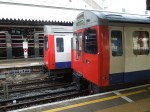


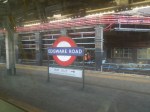
The station sign was is at Kensington High Street station. It advises you to get a Circle line train, if you are going onwards to the east at Edgware Road station.
Notice that at the eastbound end of the platforms at Edgware Road station, there is quite a bit of space. It is just a pity, that they have to allow for trains to run through between the two pairs of platforms, as if they didn’t then perhaps the two central platforms, 2 and 3, could be used as traditional terminal platforms, with the ability of passengers to walk across directly between the two pairs of platforms.
Perhaps something like Thomas Hetherwick’s rolling bridge could be used.
A set of rules should probably be used.
Going from east to south, you should get the first District line train on the opposite platform, changing to the Circle line if that is the one you want by getting off at either Paddington, Bayswater or Notting Hill Gate and taking the first Circle line train that stops. It’ll probably be the first train anywhere.
Going from west to south, is similar, except you get a Circle line train and change as before if you need to.
Going from south to east, you can either climb over the stairs or make sure you’re on a Circle line train, when you get to Edgware Road station.
Going from south to west, is similar, except you make sure you’re on a District line train. It looks like the trains on both District and Circle lines run at a frequency of six trains per hour.
It sounds complicated, but I suspect most of the regular users know the rules. There perhaps is a need for a bit more information to get the passengers going the right way!
I suppose too, that it’s all step free.
One point to note is that the new S-Stock trains are walk-through, and passengers will probably walk to their most convenient exit a lot of the time, just as they already do on the Class 378 of the London Overground. So this will probably make the turn-rounds at Edgware Road quicker.
The Operation Of Edgware Road Station
Edgware Road station has been changed dramatically over the last few years, by becoming the balance station in the Circle line. The platforms are organised this way according to Wikipedia.
The usual service pattern is: platform 1 for outer rail services to Kings Cross, Liverpool Street and beyond, platform 2 for circle line to High Street Kensington and Victoria, platform 3 for district line trains to Earls Court and Wimbledon, and platform 4 (inner rail) for Shepherds Bush Market and Hammersmith. This may vary in times of disruption – trains can go east from any of platforms 1 2 and 3 and to any of the westbound destinations from platforms 2 3 or 4.
As I came back from Paddington station, I got out of the station to get a newspaper and I also watched Circle line trains reverse on Platform 2. There actually waiting for a few minutes and cleaners were cleaning the trains before they returned back through Victoria. It was all very efficient.
It would appear that most of the transfers at the station, just involve a simple cross platform transfer, although not always.
But by adding lifts and sorting out the access between Platforms 1 and 2, and 3 and 4, would improve those travelling through the station, especially for those who need step free access or are travelling with heavy cases.
As an example, if you are coming north through Notting Hill Gate station on the District or Circle line and want to go west at Edgware Road station, you are best to get a District line train, but if you’re going east, a Circle line train is better.
Should London Improve The Sub Surface Tubes?
London’s three sub-surface lines; Metropolitan, District and Circle, are getting new S-Stock trains, but you do wonder if investment in the stations along their core route would improve things no end and perhaps even add more capacity to the lines. It should be said incidentally that the new trains will add more capacity and when they are running at full speed, they should give a further increase in passengers carried.
The part I know best is the Hammersmith and City and Circle lines from Whitechapel to Paddington.
Kings Cross St. Pancras station has already been rebuilt and has good access from the two main line stations and to the three deep lines that meet at the station. It will be even better in a few months, when the buses have been reorganised around the new square opening outside. We tend to forget about buses, but they are often an invaluable way to get to your required train line.
Whitechapel, Liverpool Street, Moorgate, Barbican, Farringdon and Paddington stations are all on Crossrail and will probably go through a lot of changes to improve access over the next few years. The stations from Liverpool Street to Farringdon, will effectively be connected to two giant double-ended stations on Crossrail, so interchanges to the Central and Northern lines and Thameslink will be greatly improved. In fact, when you look at journeys made in the eastern part of Central London, you can see how Crossrail will transform them. Even a journey as mundane as Liverpool Street to London Bridge will be a lot easier, as you’ll just dive into the Crossrail station to walk to the Northern line at Moorgate. I’ll probably use that route to get to my 141 or 21 bus from Liverpool Street to get home.
The next station is Euston Square, which is one of those stations on the London Underground, that was built in the wrong place. They didn’t even rectify the problem, when the current Euston station was built in the 1960s, by moving it in front of the station, like the corresponding station at Kings Cross St. Pancras. Probably all that could be done is to put lifts into the North entrance to the station and improve the walking route from the main line station. When the main line station is rebuilt, Euston Square station will probably be part of the rebuilding.
Great Portland Street station is typical of many of the Central London, sub-surface stations. Short double staircases lead down to two platforms on either side of the tracks. Lifts or escalators could probably be installed, but I suspect a clever engineer or architect could do better.
Baker Street station is one of the architectural gems of the Underground and doing anything to improve it will be difficult. The junction to the east of the station also makes things difficult operationally.
Edgware Road station, is one that needs significant improvement, although as with many of the sub-surface stations, space is limited. Since the Circle line, stopped being a circle in 2009, the station has become a nightmare, as many visitors can’t understand that you have to change trains to continue round.
Paddington station, when it is fully rebuilt and Crossrail has been opened, may help with the problems of the sub-surface lines. If I come into Paddington from say Bristol or Cardiff, I will take the bridge at the back of the train and walk to the Metropolitan line, from where I get a train to Moorgate for a bus home. But when Crossrail is running from Reading to Moorgate, I might take that route instead, by changing trains at Reading. I suspect that many commuters from Reading, will go direct to Central London stations on Crossrail. After all, that was one of the reasons for which the line is being built.
So it would seem that on the Northern part of the lines, only Edgware Road and Euston Square stations need substantial improvement.

