Are We Seeing A New Approach To Electrification On The Gospel Oak To Barking Line?
Over the years, I’ve followed several electrification schemes starting with the Lea Valley Lines through Southbury in the 1960s.
The electrification of the Gospel Oak To Barking Line (GOBlin), is not a particularly large or important one, in the overall scheme of things, but after the well-publicised problems of the electrification of the Great Western Main Line and the Trans-Pennine routes, Network Rail don’t want another train-load of bad publicity.
Take a ride down the line and you see the following.
- A collection of quite run-down stations, only a few of which are step-free. And some of those have extensive and somewhat tortuous ramps.
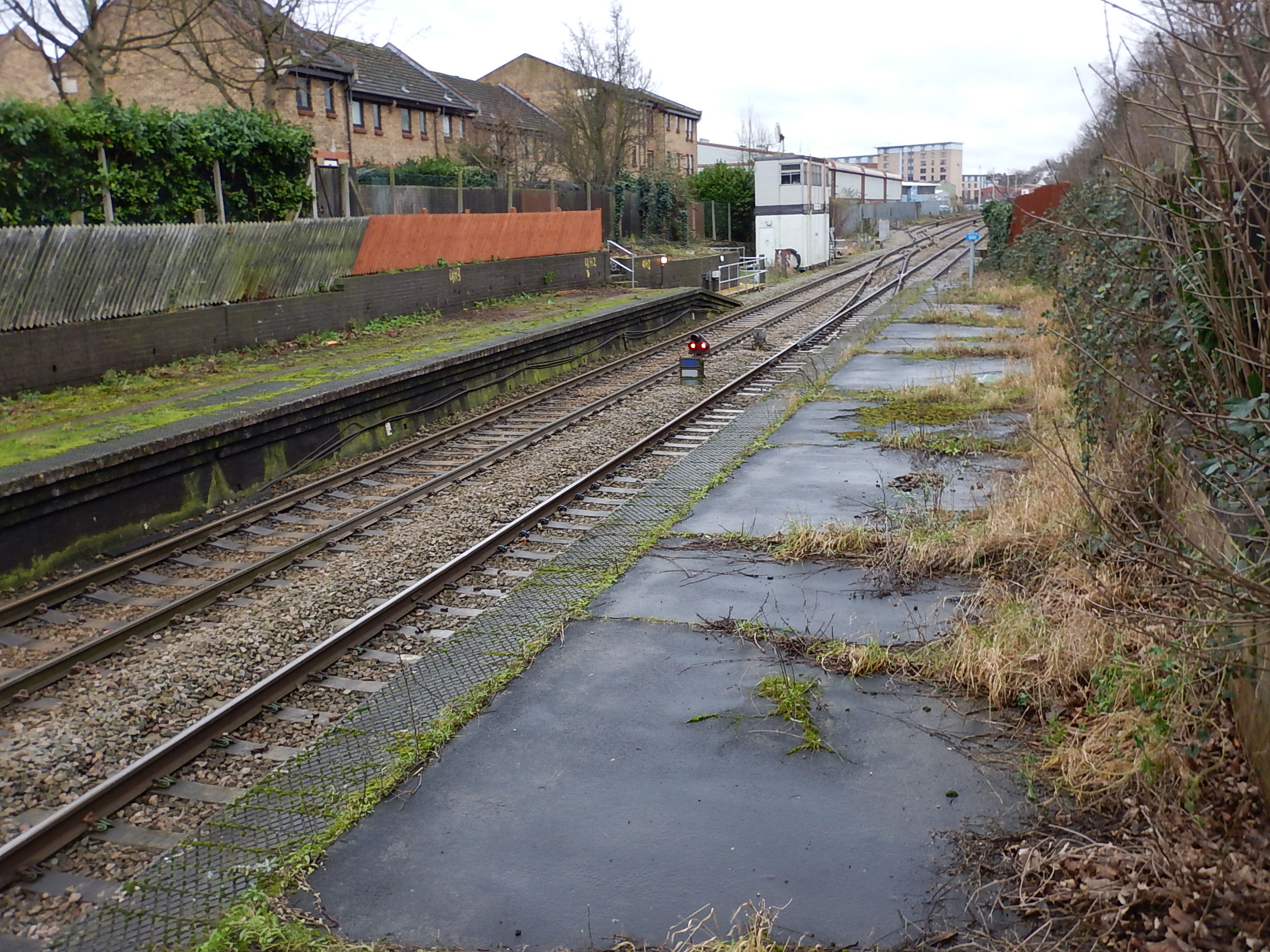
- The western end of the line from South Tottenham station sits in the middle of a wide track bed, with a few convenient metres of grass and scrub on each side of the line.
- The eastern end of the line from Leyton Midland Road station is on a viaduct, with the platforms either side of the track.
- Several of the station p[platforms are not long enough, but there are often disused sections that can be brought back into use.
- I don’t think there is any points or crossings between West of Blackhorse Road and East of Wanstead Park stations, which is all the viaduct section of the line.
- The line terminates in two bay platforms at Gospel Oak and Barking stations.
I suspect a few objectives have been laid down for the design and installation of the electrification and updating of the stations.
- Simple and affordable.
- Well-proven techniques.
- Installation in a minimum time, with as little disruption as possible.
- Ability to handle six-car trains after simple upgrades. This was not built-in to the North London and East London Lines
- As step-free as possible.
The following sections show what has been achieved so far and some of the problems and helpful factors of the electrification.
IPEMU
I like the IPEMU or Independently Powered Electric Multiple Unit and feel that it has a place in many electrification schemes.
We have to remember that the Class 710 trains destined for the GOBlin can be fitted with an IPEMU-capability.
So how could an IPEMU help in making the GOBlin an electric railway?
- The extension to Barking Riverside is only a few kilometres and could be run totally by IPEMUs charging on the rest of the line. Imagine the kudos, that would give the development at Riverside and the electrification costs it will save.
- During the construction phase, IPEMUs could provide a service from an electrified line over a section, where the wires were still being erected.
Whether we believe it or not, the IPEMU is coming and it’s just whether it will make its debut on the GOBlin.
Where Are The Trains?
One rumour from a reputable source (NC!), says that the line will be closed from June or July 2016 for eight months, whilst electrification is completed on the line and testing takes place. It will then open (Feb/Mar 2017?) with a full electric service.
If you look at Bombardier’s production schedule, the Class 710 trains destined for the GOBlin will not enter service until 2018.
So bang goes the reason for the eight-month suspension of service, as passengers won’t accept all that pain for no gain.
Perhaps, there could be some Class 315, Class 317, Class 321 or even some of the very ugly Class 319 trains available. After all only eight four-car units are required!
But I don’t think anybody would be pleased if a new flagship service was to be started after an eight-month closure, with the contents of British Rail’s dustbin.
It is often said, that someone else’s troubles is somebody else’s gain and the problems on the Great Western electrification, means that there could be some almost-new Class 387 trains available.
It should not be forgotten, that a Class 379 train, was used as the demonstrator in the IPEMU trial in Essex, and 379s are very much cousins of 387s.
I believe that the Class 387 trains, are the only acceptable and available trains, that will be available to open the service after an eight-month blockade.
Power Supplies
Often supplying power to the overhead wires is an expensive business, with the need for massive transformers and connection to the electricity supply.
The GOBlin has good connections to electrified lines and short sections that are already electrified.
- A connection to the North London Line at Gospel Oak
- A short electrified section at South Tottenham.
- A connection to the Great Eastern Main Line at Woodgrange Park.
- A short electrified section between Woodgrage Park and Barking.
So getting the power is one problem, that won’t challenge the engineers.
The Pattern Of The Piles
Look at any overhead electrified line in the UK and every fifty metres or generally less, you’ll see a masts and/or a portal frame to support the overhead wires, which is supported from both sides of the track. This Google Map shows Woodgrange Park station on the GOBlin.
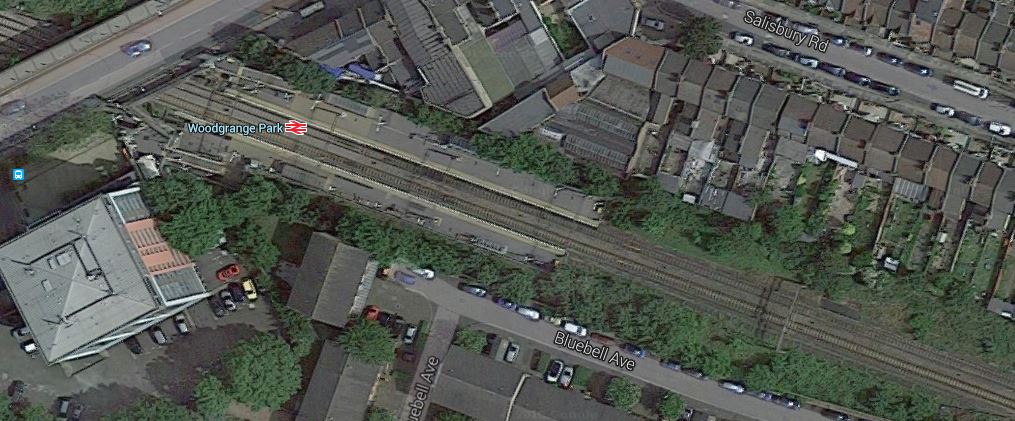
Electrification At Woodgrange Park Station
Note the frames supporting the wires everywhere, in the station, on the disused sections of the platforms and on the way to Barking,which is to the East (right).
If you look at the piles that have been put in to support the masts for the overhead wires on the western end of the GOBlin, they show a totally different pattern to that which I would expect. Here’s a few pictures.

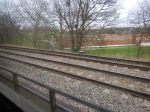
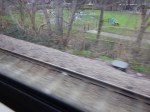
My observations lead me to define the pattern of piles as follows.
- Piles are paired, with one on each side, as expected.
- There are none in stations.
- There isn’t even any tell-tale paint, to indicate where the masts will go in the stations.
- Piles seem to stop thirty metres or so before stations and overbridges.
Murphys were so keen to get the piling started, they were thumping away on Christmas night, so given the days and nights available since them, there doesn’t seem to be too many piles in the ground.
So short of using skyhooks or drones, or perhaps calling on the services of someone like Jasper Maskelyne, what is going to happen?
In my view, there is only one possible solution and that is to put central masts between the two tracks.
I also suspect that some of the substantial road bridges over the GOBlin, will be used to support the overhead wires, as I’m sure that the engineers have a solution for that method of fixing. This picture shows an ancient fixing, under the arch at Stoke Newington station.

Overhead Wires At Stole Newington Station
I’m sure the modern product, is more elegant! And less corroded.
Central Masts
Normally in the UK, the overhead wires are supported from the sides of the track. But look at this picture from the Sheffield Supertram.
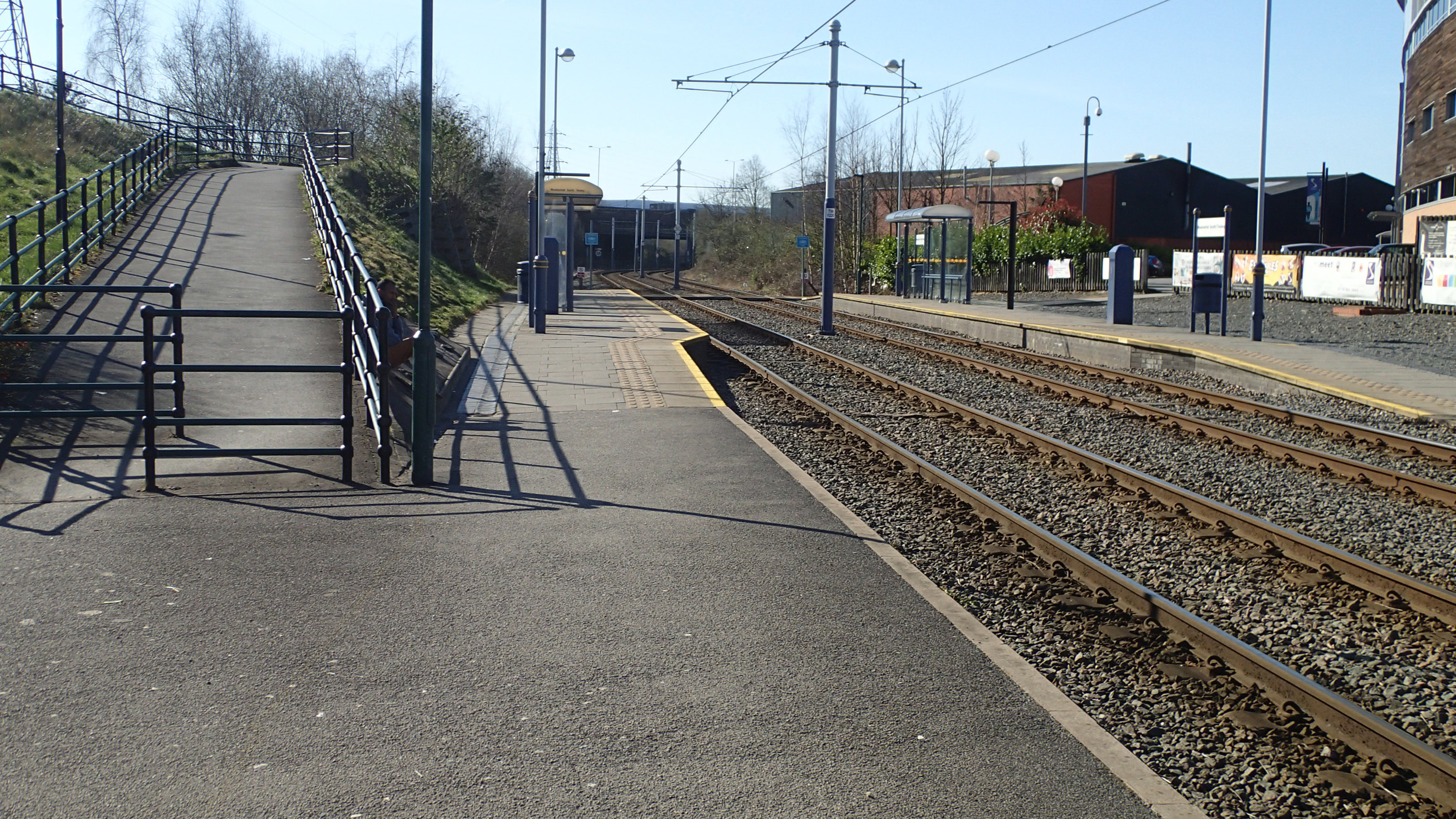
The Meadowhall South/Tinsley Tram Stop
Note how the overhead wires are supported from a central mast between the tracks.
Furrer + Frey, who are a well-respected Swiss manufacturer of equipment for railway electrification and a big supplier to Network Rail, have a wide range of methods shown in this page. One method is to use a central mast to support wires on both sides over the two tracks.
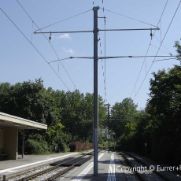
Furrer + Frey Central Mast
I feel that given the challenging constraints and demanding time-scale of electrifying the GOBlin, that central masts could help considerably.
They would need to be sturdy, but if you analyse the stresses in a typical central mast, the wires on both sides balance each other. It’s like a milkmaid carrying two buckets.
There may be other advantages in the installation of central masts, as the work will probably be done on a flat surface, using a rail mounted crane, whereas installing a portal frame over the railway may need scaffolding to be erected.
The latter method might also mean closing the businesses in the many arches under the line for the duration of the work.
The Upper Holloway Bridge
One of the problems of the work, is that in the middle of all this electrification, the bridge at Upper Holloway station is being replaced with the electrification work going on at the same time.
According to this document from TfL, the bridge deck is due to be replaced over Christmas 2016 and the project will be completed by the end of 2017.
Surely, this blows the time-scale of the whole project, as until the bridge is finished, surely electrification can’t proceed!
Or does it?
If the overhead wires through the station are supported centrally between the tracks, with the assistance of two strong portal frames outside the station/bridge area, it might be possible to change the bridge deck, using some of innovative techniques that were used at York, which I wrote about in Dancing With Cranes And A Bridge With Help From Lego.
This Google Map shows the station/bridge area.
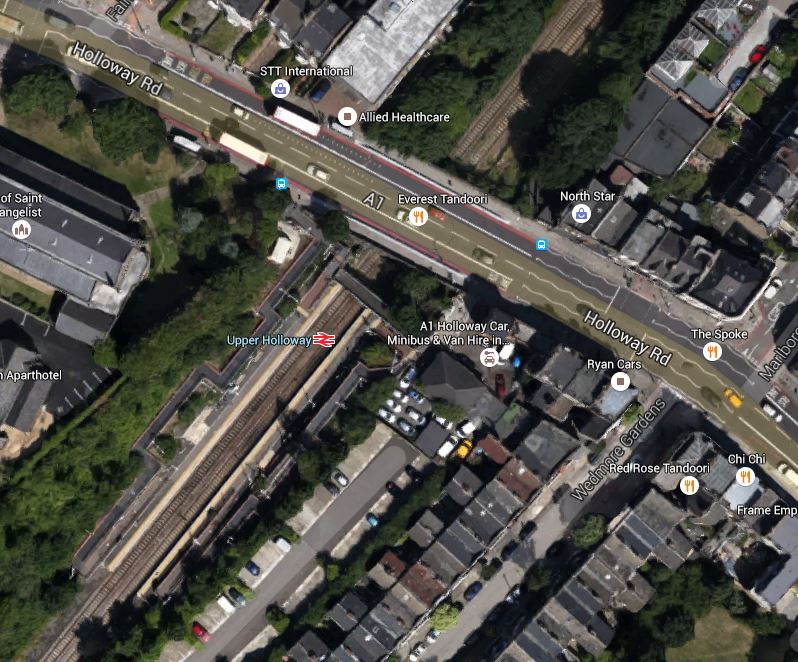
Upper Holloway Station, Bridge And The A1
Note that there is more space along the railway, than on the main road.
I think we need a new word to describe the nature of replacing this bridge, in just a few days over Christmas.
I suspect the bridge deck has been designed as a series of components, that are small enough to transport into the area, either by road or train, and then bolt them together like Meccano. It could be the most exciting live television of Christmas 2016.
To sum up, I believe that engineers have found a solution to electrify the line before the bridge deck is replaced.
I went to the station today and had a chat with an engineer.
He told me, that the bridge will be replaced bit-by-bit and indicated that there will be no big closure.
So could Transport for London have had a change of heart and decided to fit a new bridge over the gap, that will allow the wires to be put up at the same time, with the bridge assembled from a kit of smaller more manageable pieces?
The next few months will give an answer.
Whilst I was at Upper Holloway station, I took this picture, which shows the layout of lines to the West of the station.
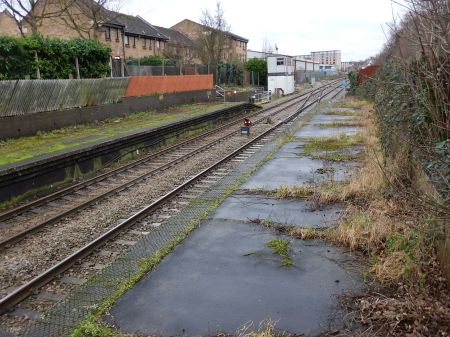
Note.
- There is only one pile in the picture and it is between the stacked-Portakabin signal box and the grey cabinet about ten metres further on, on the left.
- There are no piles or paint markings in the station area.
- There is plenty of space to extend the platforms, if that should be required.
- The crossing, which will need to be fully electrified, allows freight trains to access the Midland Main Line.
This all leads me to believe, that if overhead wires are going through this station, then they might well be supported on central masts.
Obviously, portal frames could still be attached to the platforms, but there is a lot of work going on to add two nice waiting rooms to the station. Surely, good project management would put up the masts and frames first!
Obviously, the wires can also be supported on the bridge, which was about thirty metres behind me, when I took the picture.
So you would have a solid road bridge at one end of the station and a very sturdy portal frame over the crossing by the signal box at the other to support the catenary, with some help from a couple of central masts in the station area.
Harringay Green Lanes Station
Harringay Green Lanes station is the nearest station on the line to my house, and to get there I just get a 141 bus direct too the station.
These pictures show the station.
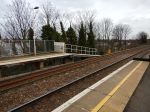
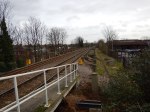


It should be said, that the station sits in the middle of an area, that Harringey Council want to redevelop and that this will involve a new station. I wrote about stations in the area in The Piccadilly And Victoria Lines, Manor House Station And Harringay Green Lanes Station.
You can understand why it needs a rebuild.
Typical portal frames to support the overhead wires would either have to reach from outside the platforms or be mounted on the platforms themselves. In the case of the former, there are extensive ramps and staircases in the way and in the case of the second, the platforms may be able to support a lot of passengers, but would they need substantial rebuilding to bear the weight of the portal frames?
Incidentally, there has been some piling to both the east and west of the station, so perhaps they’ll be two strong frames about twenty to thirty metres from the platforms? Obviously, to future-proof the station, they would be far-enough away to allow any possible platform extensions.
Between the platforms the wires could be supported on central masts. The pictures show, that the space between the tracks is probably wide enough for the installation of central masts.
Traditional electrification might be difficult or even impossible, but I’m sure there are clever engineers, who can get round the problems of stations like Harringay Green Lanes.
Leytonstone High Road Station
Leytonstone High Road station is typical of the viaduct-mounted stations towards the eastern end of the line. Leyton High Road and Wanstead Park are similar.
These pictures show the station, the viaduct to the east of the station and a nearby bridge.
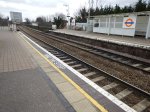

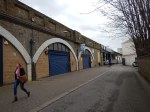
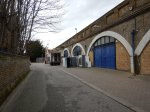

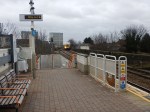
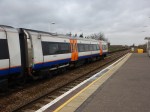

Note the following.
- The unrestored platforms, that could be brought back into use for longer trains.
- The industrial units under the station.
- The generous width between the platforms.
- No sign of any electrification works or even markings on the platforms.
I believe that these stations and the viaduct between them, could be electrified using central masts to support the overhead wires.
Arches, such as used to hold up the viaduct and house the industrial units are some of the strongest forms around. Look at any medieval cathedral or castle!
These arches may have been built by the Victorians, but you don’t hear many stories of sixty-eight tonne Class 66 locomotives and dozens of freight wagons and containers falling through.
Obviously, the masts would be properly anchored into the arches.
Could the viaduct section of the line be electrified using central masts from a company like Furrer + Frey?
Conclusion
Someone has got a very firm grip on this project and the finish date is very much up for grabs.
But it does seem, that they could be using the space between the tracks to support the overhead wires.
I also think that there could be a well-respected Swiss company somewhere in there rolling around.
Have they looked at Network Rail’s problems and applied their expertise of running electric trains in some of the most difficult terrain in Europe?
A Trip To Barking
In A Story And A Rumour About The Gospel Oak To Barking Line, I reported on a rumour that an LO staffer had said that the electrification will be complete by June.
I think this is impossible, as according to this document on the TfL web site, the bridge at Upper Holloway station will only be completed before the end of 2017. I don’t think I’m alone in thinking that the bridge must be completed before the electrification.
Surely,if the electrification is to be completed by June, then there will be evidence of construction all along the line.
Today, I went to Barking station and had a look around.
- The GOBlin terminates in Platform 1 at Barking station and there is no evidence of any construction there.
- There was no evidence of piling between Barking station and the short length of electrification between Barking and Woodgrange Park station.
- There was also no evidence of any work tro create supports for the catenary on the elevated section of the line between Woodgrange Park and Leyton Midland Road stations.
On a quick look too, there didn’t appear to be any construction cabins, that would be normal for such an undertaking, as electrifyimg a dozen miles of railway..
I then had a think about the objectives of all the work on the Gospel Oak to Barking Line.
- Replace the two car Class 172 diesel multiple units with four-car Class 710 electric multiple units.
- Allow freight trains to be hauled by electric locomotives.
- Extend the line to Barking Riverside.
This map from carto.metro.free.fr shows the lines at Barking station.
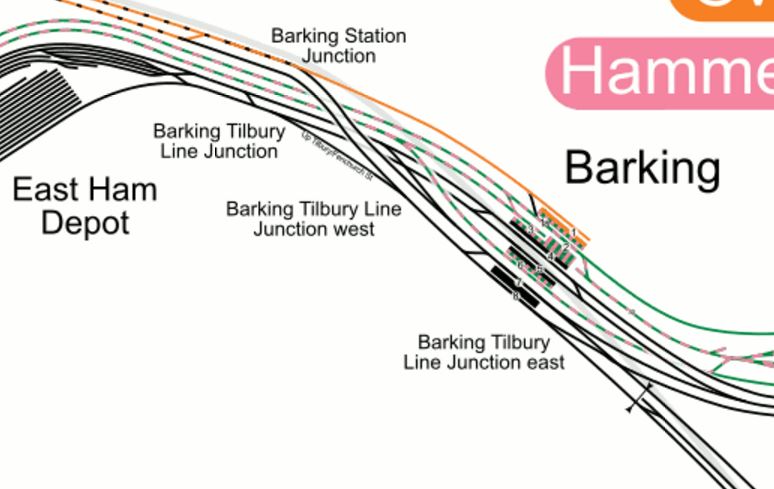
Lines At Barking Station
Note the following.
- The GOBlin (orange) terminates in the bay platform 1, on the North side of the station.
- Freight trains to and from London Gateway, Tilbury and the East, go through the two Barking Tilbury Line junctions and then access the GOBlin using a flyover and the Barking Station junction.
- Barking Riverside station is on a spur off the Tilbury Line to the South East.
So I asked myself, what electrification needs to be done to get electric-hauled freight trains off and on the GOBlin.
As c2c runs electric services in and out of Liverpool Street at certain times, I suspect that the wiring to get electric-hauled freight onto the GOBlin is already there.
So we’re left with the only electrification at Barking being platform 1 and the extension to Barking Riverside. The total length is probably under ten kilometres.
According to Bombardier, all Aventra trains like the Class 710 will have an energy storage capability.
So could we be seeing an extension to Barking Riverside like this?
- Between Barking Station junction and Barking Riverside station, the Class 710 trains run on their batteries.
- Eastbound and westbound services both use Platform 1, so the GOBlin has its own single-platform at Barking. Recently, Network Rail has built several single-platform stations.
- Platform 1 is not electrified.
- The line through Platform 1 is extended under the station to give a direct connection to Barking Riverside. This might need another flyover or some extra points and crossings.
- The branch line to Barking Riverside and the station are not electrified.
Effectively, using the IPEMU capability of the Class 710 trains, has simplified the project and reduced the length of electrification required by a large amount.
Whilst I was at Barking station, I took this picture.
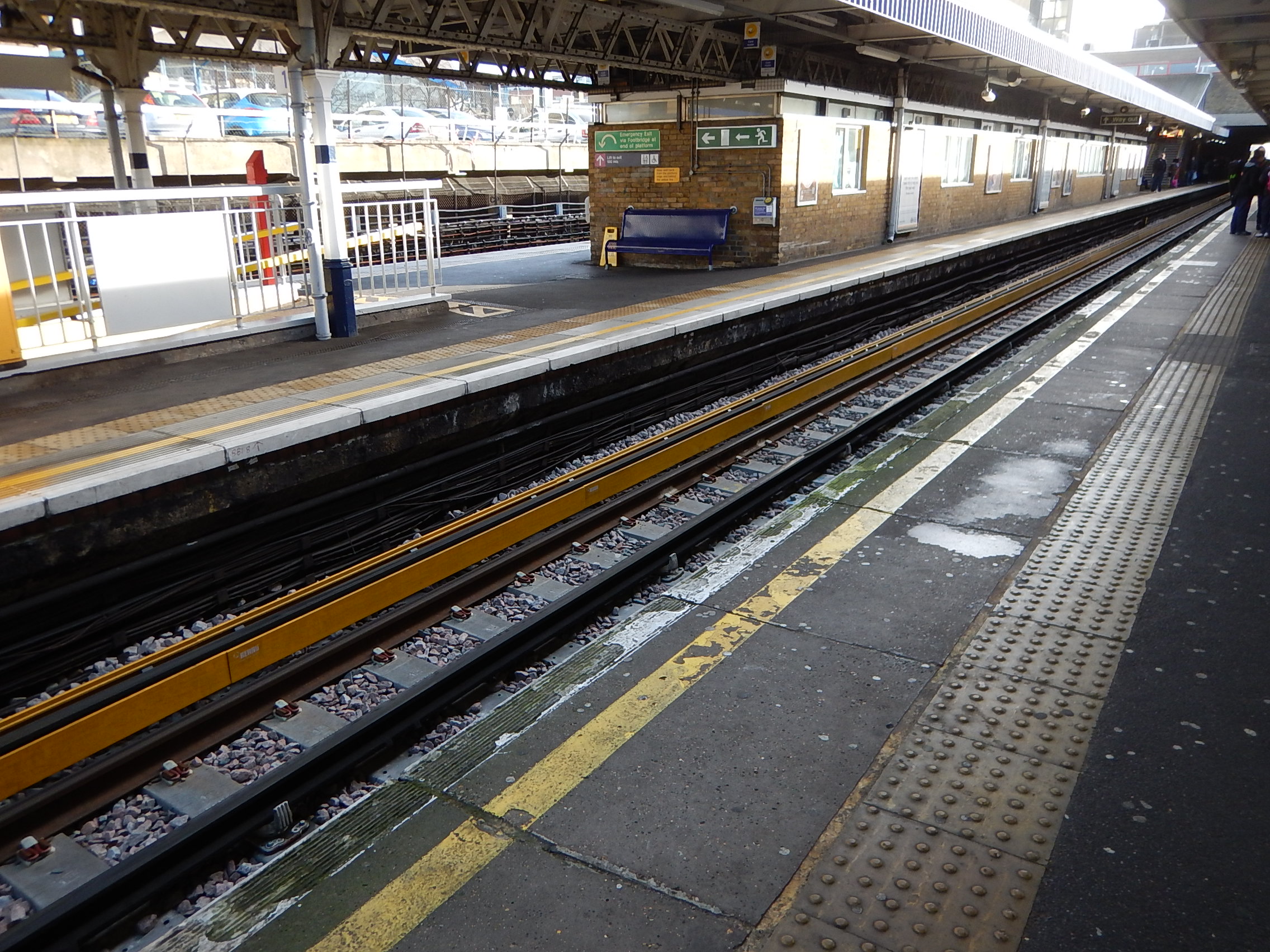
A Protected Conductor Rail At Barking Station
Note how the conductor rail is protected by a yellow wooden shield.
Why?
Is it to protect passengers or the work-force?
How To Charge A Battery Train
There is a Twitter hashtag of #ipemu and this tweet has been posted, which describes something called a Railbaar from a well-known Swiss company called Furrer + Frey, who are very much involverd in transport electrification.

Railbaar
This could be the missing link in running IPEMU trains on branch lines, like those to Barrow, Lowestoft, Scarborough or Windermere. After pulling into the terminal, the battery is topped up to make sure the train gets all the way back.
As an example, current schedules at Windermere allow somewhere between six and fifteen minutes for the turnround, which is probably typical around the UK rail network
Platform Extensions At South Tottenham Station
The platforms at South Tottenham Station need to be lengthened for the new four-car Class 710 trains, that will run on the Gospel Oak to Barking Line from 2018.
This pictures show the lengthening is in process, at the same time as lifts are being added to the station.
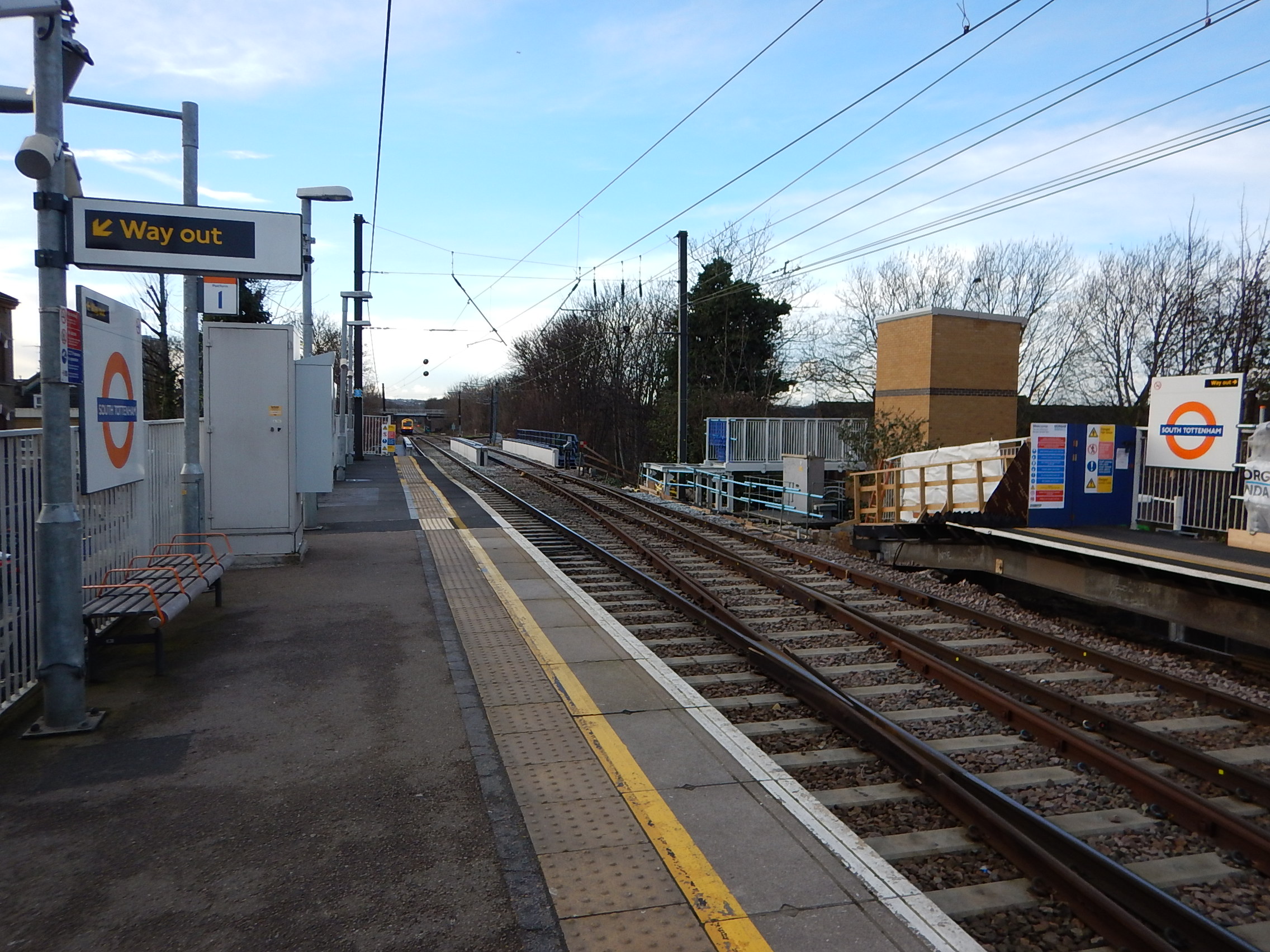
Platform Extensions At South Tottenham Station
This Google Map shows the station a couple of years ago.
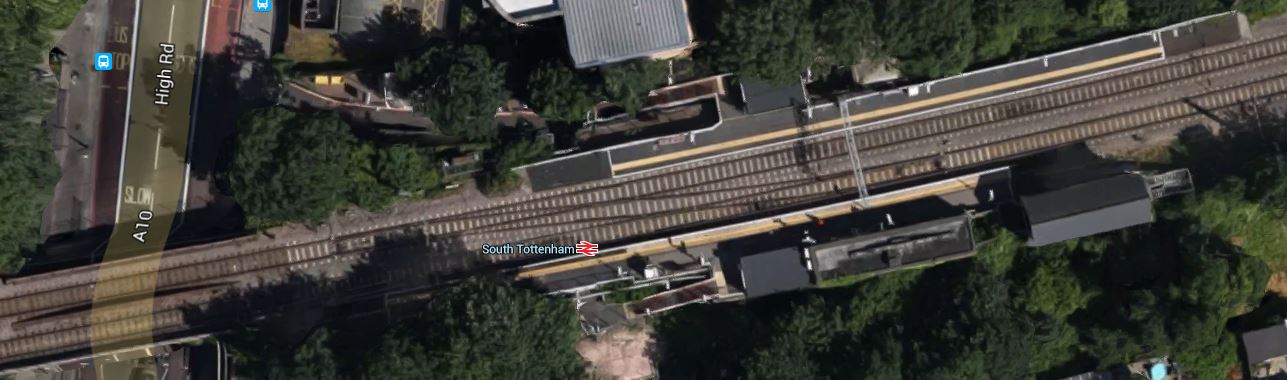
South Tottenham Station
Note that as the bridge doesn’t appear to be the blue colour it now is, I would assume this picture is from before the bridge was replaced at Christmas 2014.
You can gauge the length of the extension by the position of the rail crossing between the two tracks.
From Hebden Bridge To Leeds
The weather was bad and on the last leg from Hebden Bridge to Leeds, I didn’t see much.
According to the Bradford-Halifax section in the Wikipedia entry for the Calder Valley Line, there are five tunnels of which two are over a thousand yards.
So as on the rest of the line electrification could be challenging.
On the other hand some sections, like Sowerby Bridge-Halifax might be easier to electrify.
But I can’t help feeling, that whatever Network Rail decide to do about this line, that IPEMU technology will be part of the solution.
Say you have a section of a couple of miles, that because of various issues would be virtually impossible or very expensive to electrify.
Could a train approaching the neutral section drop its pantograph, use battery power in the neutral section and then automatically put the pantograph up to reconnect to the electricity supply, once the neutral section was passed?
As a Control Engineer, I know such automation is possible, but can it be implemented on a train at 100 mph?
I suspect that the answer is yes and by the end of 2017, there’ll be videos of an IPEMU, swapping from overhead to battery power and back at high speed.
Thoughts On The Gospel Oak To Barking Electrification
The electrification of the Gospel Oak To Barking Line (GOBlin), is the closest I’ve been to an electrification project since the nineteen-sixties when I was travelling up and down between London and Liverpool, through the electrification on the West Coast Main Line.
Yesterday, I took a look at the start of work at Gospel Oak station. Thinking about what I saw, it strikes me that everything is much better organised than it has been in some places in the past.
Perhaps, they’re doing their project management in a lot better way.
Signalling
As an illustration of project performance, I have read that not knowing where signalling cables were buried, was a big problem on the electrification of the Great Western Railway. So out of curiosity, I searched the Internet for any reports about the state of the signalling on the GOBlin.
I found this web page on the Sweett Group web site, which is entitled Gospel Oak To Barking Electrification. This was a brief summary of the work they did.
Sweett Group was engaged by TfL to review and validate the Grip 3 estimate prepared by Network Rail in order to assist TfL in the determination of their funding contribution.
Reading the whole of the report, leads me to the conclusion that TfL wanted to make sure, that the only surprises they get on this project, will be positive ones.
As to signalling, very little is said, except this.
In addition, modifications to existing signalling had to be carried out in order to overcome conflicts with signal sighting caused by OLE support structures and to accommodate the introduction of longer freight trains.
So in answer to my original question on signalling, it looks like most of it is in good order.
Line Closures
Will planned closures of the line tell us anything? This web page from TfL details all their line closures for the next six months.
Those specific to the GOBlin are.
- Sun 10 Jan 16 – South Tottenham to Barking until 12:00
- Sun 17 Jan 16 – Gospel Oak to Barking until 12:00
- Sun 24 Jan 16 – Gospel Oak to Barking
- Sun 31 Jan 16 – Gospel Oak to Barking
- Sun 07 Feb 16 – Gospel Oak to Barking until 12:00
- Sun 14 Feb 16 – Gospel Oak to Barking until 12:00
- Sun 21 Feb 16 – Gospel Oak to Barking until 12:00
- Sun 28 Feb 16 – Gospel Oak to Barking until 12:00
- Sun 06 Mar 16 – Gospel Oak to Barking until 12:00
- Sun 20 Mar 16 – Gospel Oak to Barking until 12:00
- Sun 27 Mar 16 – Gospel Oak to Barking until 12:00
- Sun 03 Apr 16 – Gospel Oak to Barking until 12:00
- Sun 10 Apr 16 – Gospel Oak to Barking
- Sat 16 to Sun 17 Apr 16 – Gospel Oak to Barking
- Sat 23 to Sun 24 Apr 16 – Gospel Oak to Barking
- Sat 30 Apr to Mon 02 May 16 – Gospel Oak to Barking
- Sat 07 to Sun 08 May 16 – Gospel Oak to Barking
- Sat 14 to Sun 15 May 16 – Gospel Oak to Barking
- Sat 21 to Sun 22 May 16 – Gospel Oak to Barking
- Sat 28 to Tue 31 May 16 – Gospel Oak to Barking
There are also a few closures of the North London Line, that start at Gospel Oak.
- Fri 01 Jan to Sun 03 Jan 16 – Gospel Oak to Stratford from 22:00
- Sun 21 Feb 16 – Gospel Oak to Stratford
- Sun 28 Feb 16 – Gospel Oak to Stratford
- Sun 06 Mar 16 – Gospel Oak to Stratford
- Sun 20 Mar 16 – Gospel Oak to Stratford
The first is an interesting one, as it is this weekend, when the contractors are known to be piling for overhead wires, late into the night.
On all the other four Sundays, the GOBlin is closed all or part of the day.
Surely, you wouldn’t close both routes across North London, unless you wanted to work on both at the same time!
Could the contractors be wiring up Gospel Oak Junction and Platform 3 at Gospel Oak station?
These are my overall comments.
- Monday to Friday passengers won’t have to suffer many replacement bus services.
- Something is planned for the Spring Bank Holiday Weekend
- As there is no closures scheduled in June, it looks like May 31st will mark a natural break in the project.
- Someone has been doing some very good project management.
It will be fascinating to take a look on Mondays for the next few months, to see what has been completed.
Space To Work
I wonder if anybody has ever done any research on the performance of the amount of space available to building projects.
What surprised me yesterday, as my train trundled between Harringay Green Lanes and Gospel Oak stations, was how much space was available and it had all been cleared of vegetation.
I hope this is a sign that they mean to carry on as they’ve started.
Having looked at many large projects in the actuality, I strongly believe that a project with lots of space, that is kept tidy, is more likely to be delivered on time and on budget.
Today, I also followed the line on a Google Map and virtually all the way from Gospel Oak station to Leyton Midland Road station, there are green verges, several metres deep on both sides of the tracks.
Look at this section of the line from Crouch Hill to South Tottenham stations.
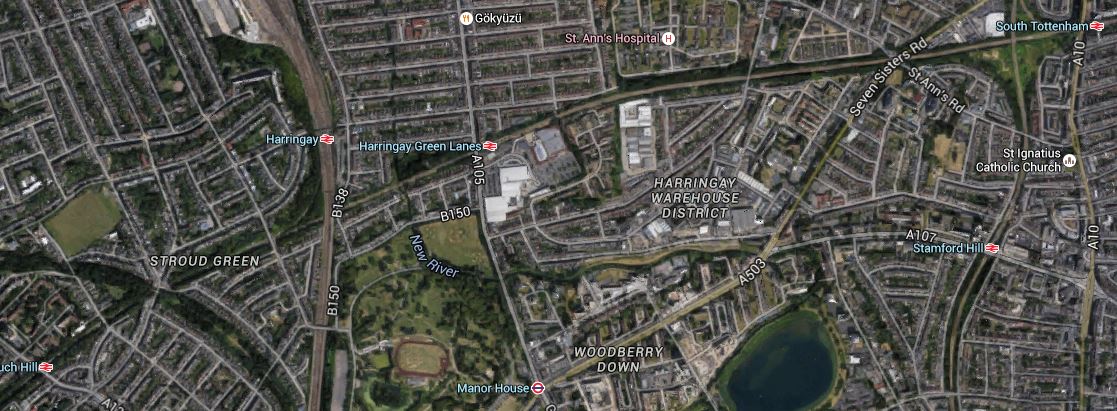
Crouch Hill To South Tottenham
Note all the green space, especially where the line crosses the East Coast Main Line, where a chord is to be electrified.
This space must contribute to a successful project.
Obviously towards the east, where the line is on a Victorian embankment is going to be more challenging.
Murphy’s Contract
A lot more detail on the GOBlin electrification is given in this article in Rail Technology Magazine, which is entitled J Murphy & Sons to carry out electrification of Gospel Oak-Barking route. This is said.
J Murphy & Sons Limited will carry out electrification works along the 12-mile line from Gospel Oak to Barking on the Anglia route, after winning the £56.9m contract from Network Rail.
The contract, which was awarded three months later than originally expected, will allow work to start on the ‘Goblin’ project in October.
In some ways, I was surprised, the contract was awarded to Murphy, as I didn’t think they were noted for doing rail electrification. I know them as a well-respected London contractor, who have been around since my childhood. Their premises are actually close to the line, which must help.
I know it said that the project would start in October and it just made a start in 2015, but at least it’s got going. The article says this about the project timeline.
The electrification contract runs until April 2017 but, if carried out according to the planned timeline, “major on-site works” will commence in June 2016 with services ready to operate a year later. Network Rail’s official classification of the works is for GRIP stages 4-8: ‘Main Works – Civils, Structure, Building, Track, & Bonding’.
This gives the intriguing prospect, that the electrification could take twelve months. This question has to be asked – Have major on-site works already started?
Even if they haven’t, judging by the noise at Gospel Oak something has started and that completion date of April 2017, is starting to look very feasible and just in time for the May 2017 timetable change.
Stations
Not all stations can accept the new four-car Class 710 trains or are to the standard passengers expect these days.
- Gospel Oak – Disabled access, lifts, coffee stall – Platform needs extending.
- Upper Holloway – Disabled access, ramps – Platforms need extending by reopening closed sections – Road bridge by station is being replaced by the end of 2017.
- Crouch Hill – Stairs-only access – Platforms need extending by reopening closed sections
- Harringay Green Lanes – Disabled access, ramps – Platforms need extending
- South Tottenham – Disabled access, lifts – Platform needs extending.
- Blackhorse Road – Stairs-only access – Disabled access in planning – Platforms need extending
- Walthamstow Queen’s Road – Disabled access, ramps – Platforms need extending by reopening closed sections
- Leyton Midland Road – Stairs-only access – Platforms need extending by reopening closed sections.
- Leytonstone High Road – Stairs-only access – Platforms need extending by reopening closed sections.
- Wanstead Park – Stairs-only access – Platforms need extending by reopening closed sections.
- Woodgrange Park – Stairs-only access – Platforms need extending by reopening closed sections.
- Barking – Disabled access, lift
So of the twelve stations on the line seven need platforms to be extended by reopening closed section, four need new extensions and six need improvements to the disabled access.
It will be interesting to see what is completed other than the necessary platform extensions, before the electric trains run.
Electrification
The Rail Technology Magazine article also details the scope of the electrification.
In addition to wiring from Gospel Oak to Barking and both the terminal platforms, the following will be electrified.
- Carlton Road Junction to Junction Road Junction – Connects to the Midland Main Line
- Upper Holloway Reception Line
- Harringay Park Junction to Harringay Junction – Connects to the East Coast Main Line
Note that there is no mention of the extension of the line to Barking Riverside.
Electrification work has obviously started at the easier Gospel Oak end of the line, so I think we can assume that Murphy and a lot of sub-contractors are pulling out all the stops to get this job finished on time.
One problem they don’t have is getting power to the new electrification, as it connects to several electrified lines.
There is also only twelve miles to electrify.
I think we could well be seeing, the electrification completed and the platforms lengthened, before the Class 710 trains are delivered.
Class 710 Trains
The Class 710 Trains ordered for the line are unlikely to arrive before May 2018. But I suspect that TfL will find something to run services.
They could even hire some of Porterbrook’s speculative build of Class 387 trains, or perhaps borrow some of the redundant and very ugly Class 319 trains.
After all, they only need eight trains of four-cars each.
Extension To Barking Riverside
It looks like, that this will be done, after the main project has been completed.
Conclusion
It looks like the following will happen.
- Due to some rather excellent project management, that finally the Gospel Oak to Barking Line will be electrified and capable of running four-car electric trains.
- It’s not the biggest of projects, that could be fairly straightforward.
- The completion of the electrification project could be as early as April 2017.
- The trains, unless they rustle up some from elsewhere, will probably be delivered later.
- There will be little if any interruption to the important Monday to Friday service of the line during electrification.
- More freight trains will be hauled by electric locomotives in the near future.
I can’t see anybody complaining about all that!
Electrification Work Starts At Gospel Oak Station
My Google Alert on the Gospel Oak to Barking Line picked up this article from the Camden New Journal, which is entitled Noisy railway work disturbs Gospel Oak residents on Christmas Day.
So I went to have a look at Gospel Oak station.
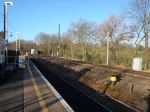

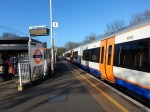
Note the piles in the ground covered by a piece of wood.
That was what all the noise was about!
This Google Map shows the station.
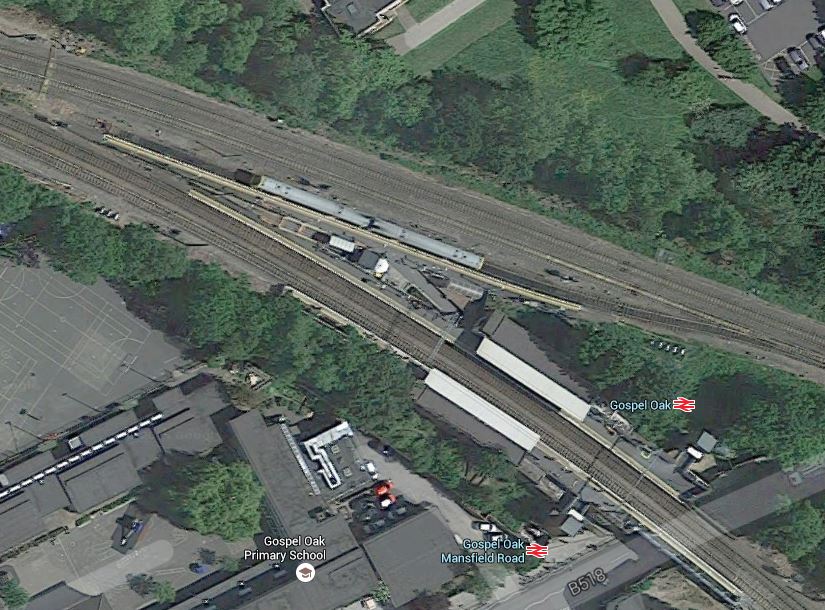
Gospel Oak Station
Note that there is a two-car Class 172 train in the station.
From this image, it would appear that the platforms will have to be lengthened for the four-car Class 710 trains.
Giving the map a close scrutiny, I wonder if they ever wanted to install a Platform 4 for future eastbound services on the Gospel Oak to Barking Line, if it would be possible.
I don’t think London Overground have any plans to do this, but services from the GOBlin past Gospel Oak have been suggested in the past.
Note the
Towards A Thames Valley Metro!
After my visit yesterday to Twyford Station and the Henley Branch and today to The Marlow Branch, I think something bigger could be emerging.
On the Great Western Main Line, between Paddington and Didcot, there are several branch lines and other more major routes that run local services into Reading and/or Paddington.
Taken in order from Paddington, they are.
- Acton to Northolt Line – 11 miles – Rather a leftover line that gets used for all sorts of traffic, including freight, diversions and driver training.
- Greenford Branch from West Ealing – 2.7 miles – Another leftover line, that is being rerouted to a bay platform at West Ealing – Could be transferred to the London Overground.
- Brentford Branch Line – 4 miles – Freight only
- Staines and West Drayton Line – 5.5 miles – Freight only.
- Windsor and Eton Branch from Slough – 2.5 miles
- Marlow Branch from Maidenhead – 7.15 miles – I wrote about it in The Marlow Branch.
- Henley Branch from Twyford – 4.5 miles – I wrote about it in Twyford Station and the Henley Branch
- Waterloo to Reading Line – Electrified, but links to the North Downs Line for Gatwick Airport, which isn’t!
- Reading to Basingstoke Line – To be electrified, with possibly some extra stations.
- Cherwell Valley Line from Didcot Parkway – To be electrified.
What follows are my observations.
Class 387 IPEMU Trains
Great Western Railway is to receive twenty-nine Class 387 trains from Thameslink and eight new ones from the factory.
These could easily be upgraded to IPEMU variants by the addition of batteries.
Once the power is switched on as far as Didcot Parkway station, I suspect that all these mainly short branches could be run using IPEMU trains, if passenger services were required or required to be run by electric trains.
Some like Greenford, Windsor and Eton, Marlow and Henley, would be as now, one train per branch. But elderly two car diesels would be replaced by new four car electric trains with a superior performance.
In Rumours of Battery Powered Trains, I reported on an article in Modern Railways magazine, which speculated that the extra Class 387 trains were to be IPEMUs and that they could be used on routes like Bedwyn and Oxford.
So it’s not my speculation!
Electrification Of The Branches
Some of the branches like Marlow Branch with its unusual layout and the Bourne End bridge and Windsor and Eton Branch with the historic nature of where it goes, will not be straightforward, as I suspect the heritage lobby will have a field day. As I wrote in Why We Should Use Independently Powered Electric Trains, the opposition to electrification in sensitive areas is stirring.
Electrification of the Greenford Branch might be more straightforward, but with five stations and a terminus in a bay platform at Greenford, I would suspect that a dedicated Class 387 IPEMU would cost less and only require the bay platform at West Ealing station to be electrified.
North Downs Line
In some ways, the North Downs Line is the most interesting, as I think that a dual-voltage IPEMU could easily supply a high quality service between Reading and Gatwick.
At present the direct service is hourly and takes around eighty minutes, using a two car Class 156 train.
Reading to Gatwick by Crossrail and Thameslink could on current figures and predictions for Crossrail times, take a few minutes over a hundred.
So the current direct route is quicker now with Class 165 diesel trains!
What difference would a faster four-car electric train make?
Crossrail’s Effect On The Great Western Main Line
The biggest effect will be when Crossrail arrives at all stations on the Great Western Main Line from Paddington to Reading.
Stations like Slough, Maidenhead and Twyford, where branches connect, will see a positive effect, as I suspect that more connections to and from the branches will be easier and involve less waiting.
Improving Services On The Branches
I think we could see some reorganisation of the services on the branch lines to give increased frequencies?
I think if Great Western Railway take the IPEMU route instead of electrifying the branches, there is scope for providing improved services from Slough to Reading and on the branches in the area. Diagrams could be arranged that after trundling down a few branches, the IPEMU did a section on the electrified lines to charge the batteries.
On thing I noticed on my trip to Marlow, was that Network Rail seem to be installing a lot of bay platforms at Crossrail stations. Some are London-facing for flexibility in the Crossrail schedules, but some are facing the other way. Could Network Rail be thinking out of the box and making sure, they don’t compromise any possible future services?
Reading As An Important Hub
As the routes develop, it would almost be like a Thames Valley Metro centred on the extremely well-connected Reading.
- Great Western Railway to Wales, the West Country and London
- Crossrail to London and beyond.
- Cross-Country Trains to the South, Midlands and North
- In a few years time the East West Rail Link could join Reading to Oxford, Milton Keynes, Bedford and the East.
The Class 387 IPEMU trains could serve the following stations from Reading, with very little extra electrification and perhaps the odd curve or two.
- Basingstoke
- Bedwyn
- Gatwick Airport
- Heathrow Airport
- Henley-on-Thames
- London Paddington
- Marlow
- Newbury
- Oxford
- Windsor and Eton Central
- Wokingham
If the Marlow Branch were to be extended, the trains could even reach High Wycombe.
Reading is going to have a very interesting time!
 The Anonymous Widower