Towards A Thames Valley Metro!
After my visit yesterday to Twyford Station and the Henley Branch and today to The Marlow Branch, I think something bigger could be emerging.
On the Great Western Main Line, between Paddington and Didcot, there are several branch lines and other more major routes that run local services into Reading and/or Paddington.
Taken in order from Paddington, they are.
- Acton to Northolt Line – 11 miles – Rather a leftover line that gets used for all sorts of traffic, including freight, diversions and driver training.
- Greenford Branch from West Ealing – 2.7 miles – Another leftover line, that is being rerouted to a bay platform at West Ealing – Could be transferred to the London Overground.
- Brentford Branch Line – 4 miles – Freight only
- Staines and West Drayton Line – 5.5 miles – Freight only.
- Windsor and Eton Branch from Slough – 2.5 miles
- Marlow Branch from Maidenhead – 7.15 miles – I wrote about it in The Marlow Branch.
- Henley Branch from Twyford – 4.5 miles – I wrote about it in Twyford Station and the Henley Branch
- Waterloo to Reading Line – Electrified, but links to the North Downs Line for Gatwick Airport, which isn’t!
- Reading to Basingstoke Line – To be electrified, with possibly some extra stations.
- Cherwell Valley Line from Didcot Parkway – To be electrified.
What follows are my observations.
Class 387 IPEMU Trains
Great Western Railway is to receive twenty-nine Class 387 trains from Thameslink and eight new ones from the factory.
These could easily be upgraded to IPEMU variants by the addition of batteries.
Once the power is switched on as far as Didcot Parkway station, I suspect that all these mainly short branches could be run using IPEMU trains, if passenger services were required or required to be run by electric trains.
Some like Greenford, Windsor and Eton, Marlow and Henley, would be as now, one train per branch. But elderly two car diesels would be replaced by new four car electric trains with a superior performance.
In Rumours of Battery Powered Trains, I reported on an article in Modern Railways magazine, which speculated that the extra Class 387 trains were to be IPEMUs and that they could be used on routes like Bedwyn and Oxford.
So it’s not my speculation!
Electrification Of The Branches
Some of the branches like Marlow Branch with its unusual layout and the Bourne End bridge and Windsor and Eton Branch with the historic nature of where it goes, will not be straightforward, as I suspect the heritage lobby will have a field day. As I wrote in Why We Should Use Independently Powered Electric Trains, the opposition to electrification in sensitive areas is stirring.
Electrification of the Greenford Branch might be more straightforward, but with five stations and a terminus in a bay platform at Greenford, I would suspect that a dedicated Class 387 IPEMU would cost less and only require the bay platform at West Ealing station to be electrified.
North Downs Line
In some ways, the North Downs Line is the most interesting, as I think that a dual-voltage IPEMU could easily supply a high quality service between Reading and Gatwick.
At present the direct service is hourly and takes around eighty minutes, using a two car Class 156 train.
Reading to Gatwick by Crossrail and Thameslink could on current figures and predictions for Crossrail times, take a few minutes over a hundred.
So the current direct route is quicker now with Class 165 diesel trains!
What difference would a faster four-car electric train make?
Crossrail’s Effect On The Great Western Main Line
The biggest effect will be when Crossrail arrives at all stations on the Great Western Main Line from Paddington to Reading.
Stations like Slough, Maidenhead and Twyford, where branches connect, will see a positive effect, as I suspect that more connections to and from the branches will be easier and involve less waiting.
Improving Services On The Branches
I think we could see some reorganisation of the services on the branch lines to give increased frequencies?
I think if Great Western Railway take the IPEMU route instead of electrifying the branches, there is scope for providing improved services from Slough to Reading and on the branches in the area. Diagrams could be arranged that after trundling down a few branches, the IPEMU did a section on the electrified lines to charge the batteries.
On thing I noticed on my trip to Marlow, was that Network Rail seem to be installing a lot of bay platforms at Crossrail stations. Some are London-facing for flexibility in the Crossrail schedules, but some are facing the other way. Could Network Rail be thinking out of the box and making sure, they don’t compromise any possible future services?
Reading As An Important Hub
As the routes develop, it would almost be like a Thames Valley Metro centred on the extremely well-connected Reading.
- Great Western Railway to Wales, the West Country and London
- Crossrail to London and beyond.
- Cross-Country Trains to the South, Midlands and North
- In a few years time the East West Rail Link could join Reading to Oxford, Milton Keynes, Bedford and the East.
The Class 387 IPEMU trains could serve the following stations from Reading, with very little extra electrification and perhaps the odd curve or two.
- Basingstoke
- Bedwyn
- Gatwick Airport
- Heathrow Airport
- Henley-on-Thames
- London Paddington
- Marlow
- Newbury
- Oxford
- Windsor and Eton Central
- Wokingham
If the Marlow Branch were to be extended, the trains could even reach High Wycombe.
Reading is going to have a very interesting time!
Twyford Station And The Henley Branch
I went for lunch in Henley-on-Thames today taking the Great Western Railway to Twyford station for the Henley Branch Line to Henley-on-Thames station.
These pictures document the journey between my two train changes at Twyford station.
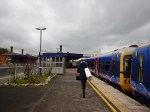
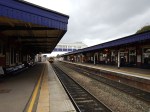
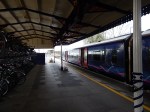
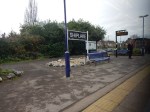

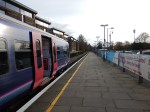
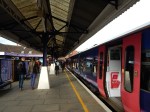
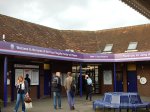
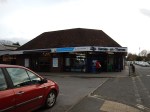



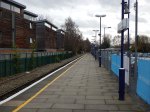
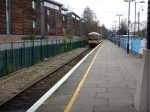

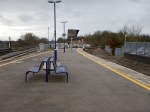
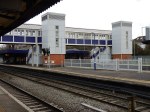


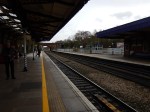
The branch is a typical single-track rural branch line that trundles its way through the countryside, over the River Thames to a single platform, that can take eight car trains.
It is currently served by a single two car Class 165 train, that goes up and down every fifty minutes or so all day, which is augmented by a couple of direct trains in the peak.
I feel that the Henley Branch Line could easily by worked by an IPEMU train. This could be either one of Class 387 trains ordered by Great Western Railway and converted to the technology or a new Aventra train.
Consider the following about the Henley Branch.
- It is only four and a half miles long.
- The speed limit of the line is fifty miles per hour.
- The bridge over the Thames has a lower speed limit and would probably be challenging to electrify.
- The two intermediate stations of Shiplake and Wargrave are built for eight car trains.
- There is at least one level crossing on the branch.
- The bay platform at Twyford station looks like it could take a five car train.
The Class 379 IPEMU test train with its sixty mile range could probably do six up-and-downs without a recharge. When an IPEMU train needed a recharge it would just pull into Platform 4 at Twyford station instead of the normal bay Platform 5, raise the pantograph and charge the batteries. Alternatively, Plstform 5 could have a short length of overhead wiring for recharging the battery.
This Google Map shows Twyford station.
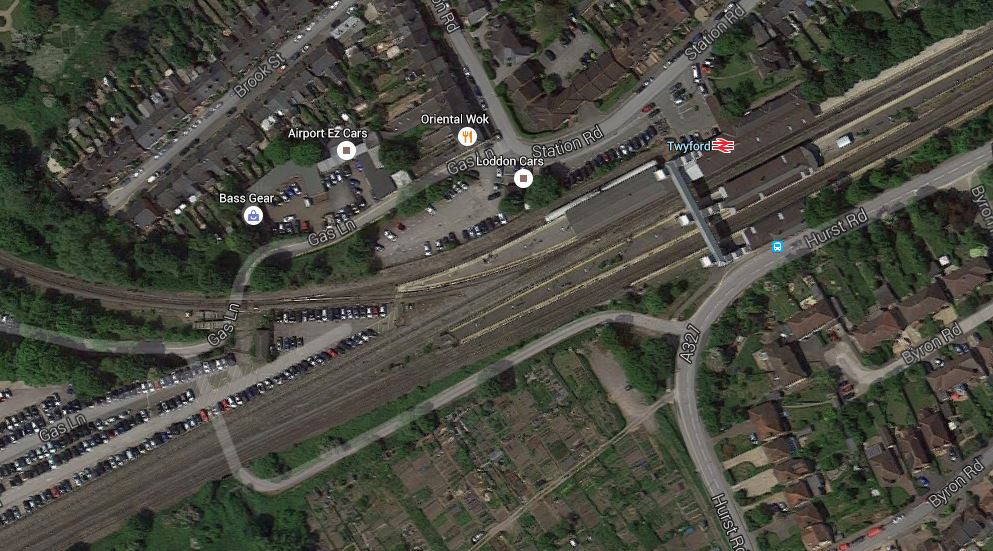
Twyford Station
Note the two car train in Platform 5 and the Henley Branch Line leading away to the north from the Great Western Main Line..
If Class 387 trains modified with IPEMU technology were to be used, Henley could receive four car electric trains as soon as the power was switched on as far as Twyford, with no major works on the Branch.
Two Class 387 trains could be coupled together to make an eight car train, that could also be run to and from Paddington during the peak and the Henley Regatta.
Why We Should Use Independently-Powered Electric Trains
I was looking for something else and found this article in the Henley Standard entitled Goring rail line work ‘will ruin countryside’. This is said.
THE electrification of the railway line through Goring will ruin the surrounding countryside, say residents.
Network Rail is installing overhead power cables as part of the scheme, which covers the route between Reading and Oxford and is expected to be finished next year.
Last week contractors began felling trees and putting up steel lattice gantries which will span the track at regular intervals to hold the wires in place.
You can argue that on a major line like the Great Western Main Line, we need robust overhead wire systems, as many of us have suffered serious delays on lines like the East Coast Main Line and the Great Eastern Main Line because of the flimsy overhead wire design.
But still the residents have a point and I think there must be a better design that mitigates the visual intrusion. Would Jasper Maskelyne and others skilled in the art of camouflage have ideas to assist Network Rail?
Network Rail can get it right, as is shown at the Grade 1 Listed Wharncliffe Viaduct, where the overhead wires are arranged to reduce the visual impact.
Are they usually as measured about where they place a gantry, as they have been on the viaduct?
Away from main lines, there will be lines like the Settle and Carlisle and the Hope Valley Line, where visual intrusion will be very important and activists will attempt to stop the installation.
It is for places like this where we must have independently-powered trains to service the route. There are two available technologies.
Electro-Diesel Trains
At the present time, there is only one electro-diesel train planned in this country and that is the Hitachi Class 800 train, which soon be seen on the Great Western Main Line and the East Coast Main Line.
They are a solution to the problem and can switch between propulsion modes at line speed, but they require diesel engines to be lugged around the country for where they are needed, so they may not be as efficient as a purely electric train.
There seems to be a few ideas for electro-diesel trains, but none appear to be comng to fruition.
Electric Trains With On-Board Energy Storage (IPEMU)
I rode the Class 379 train, that had been converted to act as a demonstrator for this technology.
It was impressive, as we trundled through the Essex countryside powered by energy stored in batteries, that had been charged from the overhead wires.
The fact that the technology works is all down to the physics of steel wheels on steel rails, which make train travel efficient in the first place.
As an electrical engineer, I know that this is technology, that can only get better.
- Electricity storage, whether based on batteries, flywheels, capacitors or some other method, will only get better.
- Trains will roll better through improvements in design.
- Energy harvesting from sources like regenerative braking will be more comprehensive.
- Secondary electrical systems on trains like air-conditioning, toilets and the provision of wi-fi will use less electricity.
- Automatic control systems will control the train tightly according to schedule, terrain and signals to minimise electricity use.
- Pantograph deployment will be automatic, when overhead wires are available.
But using the on-board storage to power the train on its route, is only one of the reasons it will be installed.
- If a train has on-board storage and regenerative braking, it will be more efficient.
- When the overhead line gets damaged or the power supply is cut, an electric train with on-board storage might still get through.
- Depots can have simplified electrification, which is safer for staff.
Bombardier must be impressed with the concept, as all Aventra trains will be wired so that on-board energy storage can be fitted.
Conclusion
Both technologies for independently powered trains are proven, but you wouldn’t want to use on-board energy storage over more than a limited distance, beyond which the diesel would be ideal.
By using independently powered trains, you can balance electrification cost, installation disruption and visual intrusion against the extra cost of a train with on-board storage or diesel engines.
Provided of course, the independently powered train can handle the route to the satisfaction of passengers and rail companies!
On the Great Western Main Line because of the distances involved and the reliability required, electric trains using overhead power on robust supports are probably the best method we have at present.
Although, Great Western Railway have been reported as saying they might use Class 387 trains with an IPEMU capability to destinations a few miles off the Great Western Main Line, like possibly Bedwyn and Oxford.
Are The Class 387 Trains Getting Excited?
I travelled from Blackfriars to St. Pancras on one of Thameslink’s Class 387 trains.


With only a couple of hours to the Chancellor’s Autumn Statement, are these trains getting excited about visiting places they never thought they would?
Since I wrote Rumours of Battery Powered Trains a few months ago, nothing has been heard. In that article I quoted from Modern Railways, who said this about future orders for Class 387 trains.
Delivery as IPEMUs would allow EMUs to make use of as much wiring as is available (and batteries beyond) while electrification pushes ahead under the delayed scheme, and in the longer term would allow units to run on sections not yet authorised for electrification, such as Newbury to Bedwyn. The use of IPEMUs might also hasten the cascade of Class 16x units to the west of the franchise.
Note that IPEMU is Network Rail’s term for a part-time battery train, that has the same performance as a standard train.
It is a deafening silence!
There has been nothing heard about electrification either, except the award of the contract for the Gospel Oak to Barking Line to J. Murphy and Sons as reported in this article in Rail Technology.
So is it a case of no news is good news for electrification?
I still believe that a fleet of Class 387 IPEMUs could be used to extend electrification by stealth, into areas, where everybody thinks it is impossible to go.
I would use them to run these routes for a start.
- Liverpool to Newcastle – There is one gap of 43 miles between Leeds and Manchester
- Blackpool to Scarborough – There might need to be some electrification at Scarborough
- Liverpool to Hull – There might need to be some electrification at Hull
- Euston to Blackpool
- Euston to Chester
- St. Pancras to Corby
- St. Pancras to Leicester – There might need to be some electrification at Leicester
- Kings Cross to Hull
- Kings Cross to Harrogate
- Kings Cross to Lincoln
- Kings Cross to Middlesbrough
- Kings Cross to Sunderland
- Liverpool Street to Lowestoft
- Liverpool Street to Norwich via Ely
- Ipswich to Cambridge
- Ipswich to Peterborough
- Paddington to Oxford, Newbury and Bedwyn
- St. Pancras to Ashford, Hastings and Eastbourne
- London Bridge to Uckfield
- Assorted Branch Lines to Barrow, Felixstowe, Greenford, Maidenhead, Marlow, Windermere and Yarmouth
On many of these lines, IPEMUs could run as soon as they are built or modified from existing trains!
If anybody doubts the concept, it could be proven on the Gospel Oak to Barking Line in North London.
So how does electrification figure in George Osborne’s statement?
Note these points!
- Electrification cuts carbon emmissions.
- Electric trains are faster and more efficient.
- Electrification needs to be done all over the country, so a lot of areas will benefit.
- It looks like there are upwards of thirty Class 387 trains, that have nowhere to go! But fitted with batteries they do!
- Using battery trains means that the costs and disruption of electrification are reduced.
If electrification is enabled using battery trains, it will be the biggest rabbit any Chancellor has ever pulled!
Battery Trains In Japan
Some think I’m wrong about battery trains and believe they will never catch on! But none of the doubters are engineers or physicists, and perhaps more importantly none rode the amazing Class 379 BEMU, when it was being trialled last year in Essex.
I have just searched for battery trains and found this article on the Rail Journal web site entitled Battery-Electric Trains For Japan’s Oga Line. This is said.
EAST Japan Railway Company (JR East) has announced plans to carry out trials with ac battery-electric multiple units (BEMUs) on the 26.6km Oga Line in Japan’s northern Akita prefecture from Spring 2017.
But this is not an experiment, as this is said later.
The Oga Line will be the second line on the JR east network to benefit from BEMU operation, following the introduction of EV-E301 series trains on the Karasuyama Line in Tochigi Prefecture in March 2014.
If the Japanese use BEMU (IPEMU in the UK!) technology in daily service, it can’t be their version of Mickey Mouse! The train is called an EV-E301, and looks a professional train, even if a bit spartan for use in the UK.
I just wonder when George Osborne makes his Autumn Statement today, will he be announcing new battery-electric trains or IPEMUs for all?
In my view, it’s the only way to electrify large parts of the UK and reduce the costs of electrification!
Is The Cavalry Arriving?
I can’t understand this article on Global Rail News entitled Porterbrook buys more trains from Bombardier. This is said.
Rolling stock company (ROSCO) Porterbrook Leasing has announced that it will purchase an additional 80 Class 387 vehicles from Bombardier.
This deal is in addition to the 256 vehicles in this class already on order. Delivery from Bombardier’s Derby factory will take place between October 2016 and June 2017.
Now I’ve ridden in Class 387 trains many times and they are a very good 110 mph electric multiple unit. In a Future section of their Wikipedia entry this is said.
Once the 387/1s are released from Thameslink they will be cascaded to the Great Western Railway franchise. It will also receive eight new Class 387s, which will be built after the 387/2 order for Gatwick Express. They will replace Class 165 and 166 diesel multiple units on the newly electrified Great Western Main Line from London Paddington to Oxford and Bedwyn. This is scheduled for December 2016, however delays may defer this.
In November 2015, Porterbrook Leasing announced it had ordered a further a total of eighty additional Class 387 vehicles to act as a buffer stock of trains guarding against future demand for electric units, with a number of operators already expressing interest in obtaining the use of them.
At present, the trains are arranged in four-car sets and delivered or on order are 29 for Thameslink, which will be released as the Class 700 trains arrive, 8 for Great Western Railway and now 20 for Porterbrook. In addition there are also another 27 for the Gatwick Express, which can be ignored in this analysis.
So that means we have a total of fifty-seven four-car electric trains to accommodate on the UK rail network. There is one problem on the GWR, where 37 would have been used and that is that the electrification isn’t complete.
So they’ll be parked in sidings!
A couple of months ago, Modern Railways talked about rumours that the extra eight Class 387 trains for the GWR would be IPEMUs. I wrote about it in Rumours Of Battery Powered Trains.
In early 2014, I rode the prototype IPEMU, which was based on a Class 379 train between Manningtree and Harwich.
I was impressed and the prototype is now back in service as a regular Class 379 train.
So it would appear that converting Class 379 trains from standard to IPEMU is not an exercise that needs to completely rebuild the train. Incidentally, Bombardier have told me, that in the upcoming Aventra train, you just add and remove battery modules as required.
These facts lead me to speculate that a cunning plan is emerging.
Consider the following.
- Why would a professional company like Porterbrook buy trains on spec, just to have them sit in sidings? If that was their plan, then imagine the headlines in the Mirror and Mail!
- Changing production at Bombardier from Electrostar to Aventra will introduce a gap in the production of trains. Look at the gap, when Ford bring in a new Mondeo, for example.
- Bombardier has probably got the production of Electrostars down to a fine art, given the numbers of Class 375s, 377s, 378, 379s and 387s, they’ve produced in recent years. So if someone will order Electrostars, they’ll build them!
- Bombardier have proven that the concept of an IPEMU works.
- Everybody is getting fed-up with Network Rail’s performance, from David Cameron and George Osborne down to the passenger on the crowded Leeds-Manchester train.
- There is a need to get rid of a lot of tuly dreadful diesel trains.
- As the Class 700 trains arrive from Siemens, could the replaced Class 387 train be converted to an IPEMU immediately? This would enable the cascade of some diesel trains . It would just be an amusing game of musical trains!
- The new Hitachi factory is coming on stream to deliver Class 800/801 trains. Luckily they can be fitted with diesel engines, but we don’t need too many more high speed diesel trains. There have been rumours that Hitachi have been asked to dliver more electro-diesel version to Great Western.
If you look at all this together we end up with an oversupply of electric trains and a chronic shortage of quality diesel trains.
But suppose that Bombardier is building a virtually new production line for the very different Aventra.
Would it be economic for them to continue building Electrostars at a rate of several a month? You bet it will!
And would it be feasible to produce these trains as IPEMU variants as these could then be used to bridge the gaps in electrification on the TransPennine and Midland Main Lines. Using IPEMUs on these lines would probably release some quality Class 185 diesel trains.
They could also be used to release quality diesel units by running on routes like.
- Gospel Oak to Barking – Class 172 trains leased from Angel Trains
- Marshlink Line – Class 171 trains leased from Porterbrook
- Uckfield Line – Class 171 trains leased from Porterbrook
These three lines alone, would release eighteen two car and six four-car high quality diesel multiple units.
Note the following.
- The leasing company for the Class 171 trains is Porterbrook.
- Southern already operate Class 387 trains.
- Southern gets an all-electric fleet if they replsce the Class 171 trains with Class 387 trains.
So will Porterbrook swap the trains here, to release the Class 171s to serve elsewhere? If it’s profitable of course they will.
It almost looks like you get a free quality diesel train with each new electric IPEMU, without having the expense and inconvenience of putting up the wires or laying more third rail.
Another article in Rail Magazine about the Porterbrook order says this about who might receive the trains.
A number of parties have already expressed an interest in leasing this new fleet, notably Rail for London but also established operators and prospective bidders of upcoming franchises
Rail for London is one of TfL’s operating companies.
Incidentally, I was at Upper Holloway station today and took this picture of a bridge that is being replaced by 2017.
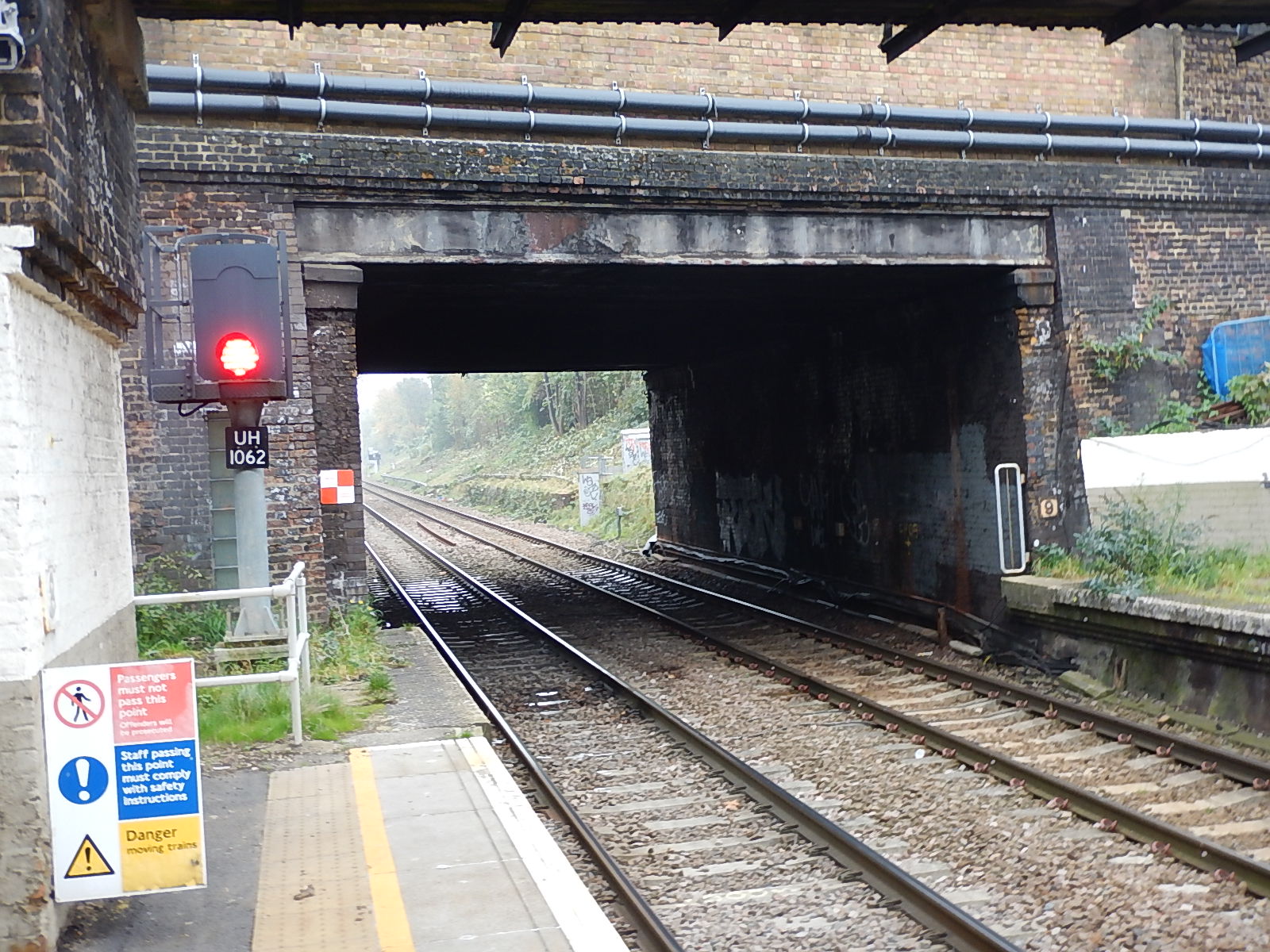
Upper Holloway Bridge
Someone told me, that the bridge will take longer than that. You certainly couldn’t electrify it now!
So I can’t see conventional electric trains running on that line before 2019 at the earliest, thus delaying the cascade of the much-needed Class 172 trains.
But an IPEMU variant of a Class 387 train could run on that line much sooner than that.
Just replacing the Class 172 trains with Class 387 trains would solve one of the major problems on that line, which is a chronic lack of capacity.
There would probably need to be a few platform extensions, but surely the increase in passengers would compensate.
In some ways, the beauty of this approach, is that where you are using IPEMUs to bridge gaps in electrification, when you electrify the gap, you can either convert the IPEMUs to standard trains or replace them with something designed for the line and send the IPEMUs on to another line to work their magic there!
I suspect George Osborne will order the cavalry to charge in the Autumn Statement on November 25th.
Will IPEMU Trains Transform The Greater North-East?
I think before I write this, I should define a few terms.
The Greater North East
By this area, I mean that area of England, that is North of the River Humber and is bordered in the West by those towns and cities that lie on or just to the West of the electrified East Coast Main Line. So they would be working Northwards up the line.
- Doncaster – On the ECML
- Sheffield – Including Meadowhall
- York – On the ECML
- Leeds – On the ECML
- Bradford – Electrified from Leeds
- Darlington – On the ECML
- Newcastle – On the ECML
It would also include those branches that reach to the West to places like Bishop Auckland, Carlisle, Halifax and Hexham.
IPEMU Trains
IPEMU stands for Independently Powered Electric Multiple Unit and is a normal train, that has on-board energy storage which is uses on lines that are not electrified to power the traction and other systems on the train.
To a passenger they would appear to be a normal four-car electric muliple unit. I described my ride in the prototype between Manningtree and Harwich in Is The Battery Electric Multiple Unit (BEMU) A Big Innovation In Train Design?
I was extremely sceptical until I rode the train and looked into the physics.
Bombardier are developing a new train called the Aventra, which will be wired so that it can be converted to an IPEMU, if operators need the capabilities.
An Aventra IPEMU have at least the following properties.
- At least a sixty mile range on the stored energy (Batteries or perhaps KERS?)
- Identical passenger experience to a standard train.
- The energy storage would be charged when the train was running on electrified lines.
- Regenerative braking would also be used to charge the energy storage.
- The energy storage could be used to move the trains around depots and sidings that were not electrified.
These trains sound almost too good to be true!
But as a Control Engineer by training, I have a feeling that the Ultimate Aventra IPEMU might be an impressive beast with a two hundred kilometre per hour top speed under wires, a range greater than sixty miles on energy storage and a very impressive electrical efficiency, which would make the train more affordable to operate.
I would also feel that the trains could use some form of mechanical energy storage like KERS in Formula One. Batteries are rather naff, but using something lifted from Formula One could be rather sexy and high-performance.
IPEMU Hubs
Suppose you were to build a series of IPEMU hubs, where the storage on IPEMU trains could be charged.
In several cases these hubs already exist, as they are stations with electrified platforms.
- Carlisle
- Darlington
- Doncaster
- Leeds
- Newcastle
- York
Some like Carlisle, Darlington and York would only need a couple of extra platforms to be electrified.
There would also possibly be other stations, where some form of charging would need to be provided, so that trains could be topped up with energy before returning to a main hub.
Stations in this category might include.
- Cleethorpes
- Hull
- Scarborough
- Sheffield
- Whitby
Sheffield will get fully electrified under the Midland Main Line electrification program anyway.
Services
The big route that could be run by IPEMUs would be North TransPennine, as IPEMUs would be capable of bridging the gap between Leeds and Manchester.
Also given the right structure of IPEMU hubs, virtually every passenger service in the Greater North East could be run using IPEMUs.
Conclusion
Who needs conventional electrification?
Freight services do!
So eventually the main freight routes will need to be electrified. This will mean that the primary use for the energy storage in the IPEMUs would be to make the trains more efficient.
Progress On The Great Western Main Line – 22nd October 2015
On my way out from Paddington to Greenford to see the new inclined lift, I took these pictures.




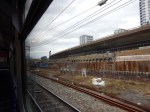
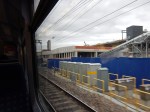
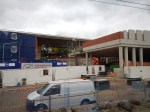
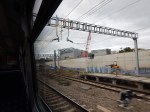
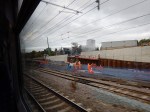
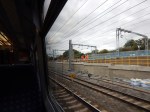
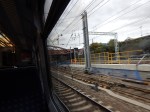
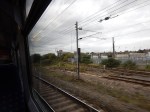




As reported in a lot of news media, progress doesn’t seem to be to fast.
Project Management Says No, But Politicians Say Yes
There is a puzzle over rail electrification all over the country.
Take this article in Rail Technology Magazine entitled NR reopens one of final Manchester-Preston electrification bridges four months late.
The headline says it all and there are problems like this all over the United Kingdom. Some are down to incompetence, some are due to poor ground conditions, some are because new equipment is failing to work and some are just because of a shortage of trained staff.
So we are left with the great dilemma, that why is it that electrification in the North and West is in trouble and Crossrail, which is a much more expensive project is supposedly on time and budget?
In my view it’s like comparing apples with oranges.
Crossrail is a mostly new railway built in virgin ground. Most of the reused bits like the lines to Shenfield, Reading and Heathrow have been rebuilt and electrified in the past. Some things need to be beefed-up and brought up to modern standards, but these tend to be a series of small projects like updating most of the stations or a few big construction projects like building Canary Wharf and the other central stations.
On the other hand electrifying existing lines, of which much of the infrastructure hasn’t been touched for years, is a much more difficult business. Especially when you come across places like the bridges in Bolton, Chat Moss and the Farnworth Tunnel.
How many of us have despaired as the bills have come in as we are doing up an old houise and sworn on our father’s grave, that we’ll never buy another old property? I certainly have and now live in a twelve-year-old house, that although it was badly built is easily fixed.
I have heard engineers say that the Victorians Gerry-built a lot of our railways. That may or may not be true! But certainly, it’s not an easy job to electrify Britain’s railways.
So when I read this article on the BBC entitled Network Rail to restart electrification of train lines, which says this.
The electrification of two railway lines is to be restarted after the projects were halted so a review could be carried out, the government says.
Work on the TransPennine Express Railway – between Manchester and York – and Midland Mainline – from London to Sheffield – was paused in June.
Sir Peter Hendy, Network Rail chairman, said the “temporary pause” had “given us the space to develop a better plan”.
How do I square it with reality?
Obviously, Peter Hendy must be off his trolley, as if you put the wires up for electrification, you’ll have problems.
But at Blackpool and Rugeley, which are two part-completed electrification schemes, where everything appears ready for the wires to go up, I think I saw the germs of the new plan. The sites were all tidy, with no evidence of electrification or the detritus that Network Rail commonly leave behind. All the bridges were finished and where needed platforms seemed to have been extended for the new longer trains. Balfour Beatty have even walked away from the electrification contract at Blackpool.
Other clues have been published in the media.
- Northern Rail split their Liverpool to Blackpool service to at least use electric trains to Preston and diesels thereafter.
- First Great Western were rumoured to be buying battery-powered trains or IPEMUs for their services along the Thames Valley
- Hull Trains are also rumoured to be buying electro-diesel trains.
- But I missed the biggest clue. The only section between Liverpool and Newcastle, that is not electrified is the 34 miles between Leeds and Manchester. This had been announced deliberately as being unpaused. An IPEMU would bridge the gap with ease.
- All the Midland Main Line electrification announced as unpaused can be implemented by IPEMUs.
- A study has been anounced into the creation of a second main line to Brighton, which is an ideal route for running using IPEMUs in prime Tory territory. It would also release a number of modern diesel multiple units for use elsewhere.
- In today’s Sunday Times, there is talk of some of the new Class 801 electric trains being built as Class 800 electro-diesel trains for the Great Western. This doesn’t matter in the long-term, as it just means you remove the diesel engines to convert the 801s to 800s, when the wires are working.
Every day seems to bring more and more clues.
I’m getting more and more convinced that this technology that I rode in Essex in 2014, is going to be the solution. IPEMUs as they are now called have a range of about sixty miles on batteries and if the trains are properly engineered with regenerative braking and intelligent control systems, they might even manage further.
I may be totally wrong, but then I can see no other way that electrification can be delivered, in the desired time-scale, than by going for a mixture of Class 800 electro-diesel and IPEMU trains.
The Class 800 electro-diesel can be summarised as follows.
- Proven Hitachi technology with on-board diesel engines for non-electrified sections.
- Built in Japan and Newton Aycliffe in the North East.
- Ideal for main lines, which are not fully electrified.
- 200-plus kph capability
- Highly automated
- Can be converted to a Class 801 electric train by removing the diesel engines.
The Aventra and the IPEMU-variant can be summarised as follows.
- Proven Bombardier electric train technology coming together in a modern lightweight shape.
- Built in Derby.
- Just under 200 kph capability, if required. Normally probably 160 kph.
- Most Aventra trains can be fitted with batteries to work in IPEMU mode.
- Battery technology has been proven in public trial.
- Range is IPEMU mode is sixty plus miles.
- IPEMU trains have regenerative braking, so they are actually more efficient than many trains.
- Highly automated
The approach does have other advantages.
- Many lines can be served by new electric trains with only minimal upgrading.
- Those who object to unsightly overhead electrification, have nothing to complain about.
- Lines can be electrified as fast as new trains can be delivered, provided there is enough electrified route to charge the IPEMUs.
- Depots don’t need to be fully electrified.
- The approach gets round the shortage of overhead electrification engineers.
- If a line like Gospel Oak to Barking is going to be electrified for other purposes like freight, there could be much less disruption to passenger services.
As an Electrical Engineer, who specialised in control systems, at Liverpool University, I do feel a touch of admiration.
I believe that although it doesn’t look feasibly from a project management basis to electrify lines to the stated time-scale, engineers in Japan and Derby have given the politicians their dream.
I shall be watching every word of George Osborne’s Autumn Statement on Wrdnesday, November the twenty-fifth.
Where Does The Borders Railway Go Next?
My Borders correspondent, who lives near Selkirk, says that the Borders Railway has been generally well received. Certainly if you search Google News for Borders Railway, you don’t find many problems or complaints, except one about the singing of the National Anthem for the Queen.
A friend in Edinburgh has just told me, that the trains are too crowded at times. So what’s new? New railways are always crowded, especially if they fulfil a need.
The most common articles on the web, are ones like this one from the Border Telegraph, entitled Next Stop Hawick….
So what will effect this line in the next few years and what do I think will happen?
The Me Too Effect
Now that Galashiels has a reliable half-hourly service to Edinburgh, I suspect that the inhabitants South of Tweedbank, will say that if Galashiels and Tweedbank can have this, why can’t Melrose and Hawick?
Cross Border Co-operation
The Borders area of Scotland and the neighbouring area of England are very similar and probably have the same strengths, problems and needs.
In some ways they are very economically linked now.
- Carlisle is economically tied to the Scottish Borders for shopping and transport links.
- Newcastle is a major airport for the area.
- There is even a rail service between Glasgow and Newcastle, that goes via Kilmarnock, Dumfries, Hexham and the Metro Centre.
- Area rail tickets for North West England include Lockerbie.
- Carlisle and Newcastle are the two major places to catch trains to the South, unless you go North to Edinburgh and Glasgow..
Surely this togetherness should be built on to develop the Borderlands, provided the politicians can be kept out of their way, in their offices in London and Edinburgh.
Increasing Railway Capacity Between England And Scotland
At present, the East Coast Main Line and the West Coast Main Line do not provide enough capacity between England and Scotland, for both passengers and freight.
Tourism And Other Economic Effects
I live in the Dalston area of Hackney, which is an area that has been uplifted by the creation of the London Overground from the rather decrepit railways that used to run through the area.
Unless you have lived through the process, most people will not understand how regular trains, running on a frequency of at least two an hour, can bring economic benefits to an area.
The Borderlands, probably have an economic profile not unlike the areas of East Anglia away from the large towns and cities that I know well.
- Both areas are ringed by a series of large towns and cities
- There is a lot of farming.
- There are a lot of tourism-related businesses of all sizes.
- In the summer, visitors take days out into the areas.
- There is a certain amount of specialist manufacture.
- Housing is being developed for those who have retired, who live and work locally and who commute to major towns and cities nearby.
All of these activities will increase the need for better transport links to the major cities that ring the areas.
The latest East Anglian Rail Franchise will mandate the franchisee to provide much better services all over the area and especially on the branch lines.
I can’t believe that the areas on both sides of the Border would not be worth developing in a similar way to that proposed for East Anglia.
Extending The Borders Railway To Melrose, Hawick And Carlisle
Scottish Borders politicians are all in favour of this extension, as are probably the good citizens of the area. My Borders correspondent and his family certainly appear to be.
Just as I have seen an economic uplift in Hackney because of the London Overground, I think it would be unlikely that the Borders Railway running through Melrose and Hawick, would not increase economic activity in the area.
This extension would certainly happen if Scotland stayed in the United Kingdom, as in some ways, this reopening, would help develop tourism in the wider area of the whole Borderlands, the Lake District and North Yorkshire.
Carlisle is probably the big winner in this activity and becomes a city with important or picturesque railway lines going everywhere.
- The West Coast Main Line, links England to Edinburgh and Glasgow.
- The Glasgow And South Western Line to Glasgow via Dumfries and Kilmarnock
- The Settle and Carlisle Line
- The Cumbrian Coast Line around the Lake District to Barrow and Preston
- The Newcastle and Carlisle Line
- The Borders Railway to Edinburgh
The Borders Railway provides the missing link in the railways of the Borderlands.
So when the Scottish politicians discuss the project, they should take into account, the positive affects a complete line would have on England!
Should The Borders Railway Be Electrified?
This question could legitimately by asked about all the other lines meeting at Carlisle, that are not electrified.
But as Carlisle, Edinburgh, Glasgow, Newcastle , Preston and Skipton are all electrified, I suspect all of the Carlisle lines have enough electrification to be run by modern four-car Aventra IPEMU trains, charging their batteries where overhead power is available and running on batteries as needed.
Some of the lines, including possibly the Borders Railway, are probably ready for Aventra IPEMUs now, with a bit of modification to platforms, track and signalling! Some like probably the Cumbria Coast Line would need some electrification or other means to charge the batteries en route.
So the answer to the electrification question must be yes, if Aventra IPEMUs are used.
But it would create a local railway network, as good as any in Europe, in an environmentally-friendly but totally affordable way.
It would be a showpiece of British technology and an attraction to rail enthusiasts from all over the world.
The network also connects to four World Heritage Sites and the Lake District, Hadrian’s Wall and the major cities of Edinburgh, Glasgow and Newcastle.
Would An Extended Borders Railway Provide Extra Capacity Between England And Scotland?
The Borders Railway has a limited number of paths for trains and when a steam special is run, one of the diesel multiple units has to give up its slot. Read various criticisms on Wikipedia.
My scheduling experience, does suggest to me, that if the line was run by the faster and better accelerating electric trains, including Aventra IPEMUs, that this might create some extra capacity on the line.
Unless the line was fully electrified, it wouldn’t be a route for using the electric trains that run up the East and West Coast Main Lines.
But it would be able to take services run by Aventra IPEMUs or any diesel-hauled passenger or freight trains.
These capacity arguments would also apply to the Glasgow and South Western Line, so with a bit of selective electrification and Aventra IPEMUs, some extra capacity might be squeezed in.
I certainly think that a railway time-tabling expert could certainly find some extra capacity.
But it might be overnight freight trains?
Are There Any Branches To The Borders Railway That Could Be Created?
The original Waverley route had several branches including to Peebles and Hexham.
Midlothian Council have also thought about a branch to Penicuik.
Extra branches are up to the economics and the politicians.
Conclusion
In my view, not to extend the Borders Railway to Carlisle by way of Melrose and Hawick, would be total stupidity.
The problem is that despite being totally in Scotland, extending the Borders Railway to Carlisle, has substantial benefits for England too!
What will Nicola think?
 The Anonymous Widower