Up And Down The Gospel Oak To Barking Line
Over the last couple of weeks, I have been taking photographs of various parts of the Gospel Oak to Barking Line (GOBlin).
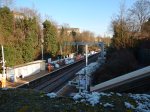
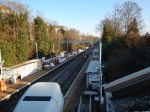
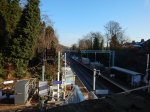
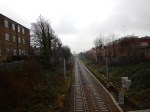
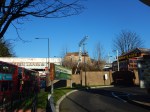
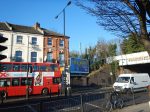
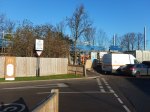
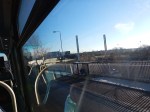
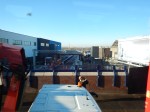
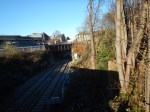
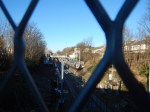
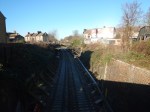
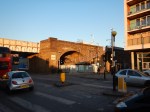
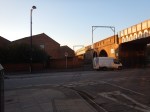
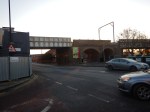
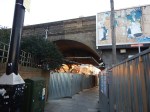
There would still seem to be a lot to do to restore the railway to operation as a non-electrified railway.
However, the National Rail on-line timetable is showing that from Monday, the 13th of February, 2013, a four trains per hour (tph) service will be working.
It is also worthwhile looking at Transport for London’s Track Closures Six Months Look Ahead. This is usually reliable and states the following.
There is no London Overground service between Gospel Oak and Barking until late February 2017. Replacement buses are running.
It also lists no substantial closures on the GOBlin in the next six months.
There is also this article on Global Rail News, which is entitled Electrification of London Overground’s Gospel Oak-Barking line 80% complete.
These various statements and my pictures could point to a coherent interim set of objectives.
An Interim Set Of Objectives
Both Transport for London and Network Rail will want to get the line open for the following trains as soon as possible.
- Engineering trains to support the finish of the electrification and station works.
- Diesel-hauled freight trains.
- Restoration of the four tph passenger service using the two-car Class 172 trains.
It could be that from the point of view of the electrification, the engineering trains are the most important.
So what will need to be done to meet these interim objectives.
- Full reinstatement of the track, with all track lowering and bridge raising complete.
- Rigorous testing of track and signalling systems.
- Completion of the road bridge at Upper Holloway station.
- Completion of the pedestrian bridge at Blackhorse Road station.
- Completion of the rebuilding of Walthamstow Queen’s Road station.
- Ensure other stations are safe to use for a two-car train.
Hopefully, the line will reopen to passenger traffic before the end of February 2017. But no-one would complain, if it happened earlier.
Finishing The Project
Once the limited objectives are met and trains are running, the following will need to be done to complete the modernisation.
- The completion of platform lengthening, as at Harringay Green Lanes station.
- Erection of the missing gantries.
- Installation and testing of the overhead wires.
All of these tasks , can probably be done alongside of the working railway, as similar work has been done on the North and East London Lines and Crossrail.
The contractors will have the following advantages.
- The track and signalling will be complete.
- It can probably be arranged that overnight very few trains will use the line.
- They will have a working double-track railway to bring in supplies and specialist rail-mounted equipment.
- No electric trains will need to run on the line.
- They will soon have light evenings in which to work.
If they can fit construction around the passenger service, everybody will benefit.
Handling Regenerative Braking
Little has been said about regenerative braking on the GOBlin.
I think, it will be likely, that the Class 710 trains will be able to use regenerative braking on the line, as it typically saves around 20% of the energy required to drive a train.
In Class 710 Trains And Regenerative Braking, I discussed the issues.
I came to the conclusion, that it is highly likely, that onboard energy storage will be used to handle regenerative braking on the Class 710 trains and thus the method would be used on the GOBlin.
As the prototype Aventra is now being tested, any design issues of handling braking energy will probably be resolved soon.
But prudence probably dictates that regenerative braking with batteries must be shown to work before the electrification design is finalised.
So could this explain, the delay in putting up the overhead wires?
Handling Regenerative Braking For Freight Trains
This is more complicated, as the freight locomotives on the UK network are not the most modern units.
- The Class 86 locomotives are vacuum and air-braked.
- The Class 90 locomotives aren’t fitted with regenerative braking.
- The Class 92 locomotives are fitted with regenerative and rheostatic braking.
I’m not sure, but the Class 92 could probably work the route using rheostatic braking.
Conclusion
I think that this project has been planned to open up a non-electrified railway before the end of February 2017.
This probably gives least disruption to all of the stakeholders.
- Passengers get a four tph service.
- Freight operators can run trains through under diesel haulage.
- A route for engineering trains is maintained to assist in the finishing of the line.
But also by delaying the electrification, they can make sure they incorporate all of the lessons learned by the test running of the Class 345 trains.
Some might think it’s a bit of a dog’s breakfast, but in truth, it could be some very clever project management, which has minimised the closure of the line.
The Holloway Road Bridge Is Now Open
I took these pictures this morning of the reopened bridge by Upper Holloway station.

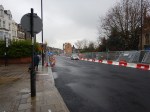

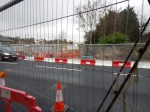

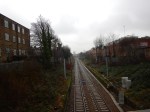
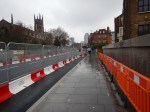
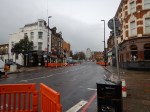
Note there are no wires on the tracks of the Gospel Oak to Barking Line. But it does look, that the line could be run with the current Class 172 trains
Around The Hounslow Loop Line
The Hounslow Loop Line is a suburban railway in South-West London, that runs in a loop off the Waterloo to Reading Line.
Today, to get to know the line, I took a Hounslow train from Waterloo and after passing through Clapham Junction, Putney and Barnes stations, the train took to the Hounslow Loop Line calling at a succession of stations on both sides of the Thames.
We waited a minute or so at Hounslow station, before starting to return via Whitton and Twickenham stations.
When the train got to Richmond station, I changed to the North London Line to come home directly, whilst the train went back into Waterloo, by way of the Waterloo to Reading Line.
These pictures give a flavour of the Hounslow Loop Line.


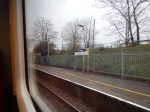


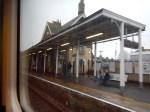
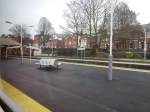
It is a very tidy suburban line.
- Most platforms have been lengthened to take ten-car trains.
- Whitton station has been rebuilt as I wrote about in How To Spend Five Million Pounds.
- It has a triangular junction with the North London Line around Kew Bridge station.
- In the mid-2000s, the train frequency on the line was doubled from 2 trains per hour (tph) to four.
All of this work has led to a 162% increase in passengers between 2004-5 and 2007-8.
I wonder what is the limit of trains round the Hounslow Loop Line.
This is more proof if it were needed, that suburban lines need at least 4 tph to really bring in the passengers.
Transport for London’s Orbital Railway
In August 2014, I wrote Will The Gospel Oak To Barking Line Be Extended To Hounslow?, which was based on a Modern Railways report on the Mayor’s Transport Infrastructure Plan for 2050. This is said.
There may be a case for further orbital rail capacity, says the document – it shows an indicative, uncosted network to link Hounslow, Old Oak Common, Neasden, West Hampstead, Harringay, Walthamstow, Barking, Abbey Wood, Bexleyheath, Norwood Junction, Sutton and New Malden and back to Hounslow, with another route between Abbey Wood and New Malden via Lewisham, Peckham Rye and Wimbledon.
The proposed orbital railway passes takes a route from Hounslow to Wimbledon via the following stations.
- Whitton
- Twickenham
- Strawberry Hill
- Teddington
- Kingston
- New Malden
- Raynes Park
Nothing concrete has been said since about the railway, but the following is happening or planned.
- The Gospel Oak to Barking Line (GOBlin) is being electrified.
- New four-car Class 710 trains will go to the GOBlin and the Watford DC Line.
- More five-car Class 378 trains will be available to boost services on the North London Line.
All these should happen by the end of 2018.
Will More North London Line Trains Go To Richmond?
Currently the North London Line service from Richmond is 4 tph to and from Stratford.
It takes around an hour, which is ten minutes faster than going via Waterloo and taking the Jubilee Line.
The only possibly faster way would be when Old Oak Common station is opened and a change there would be made to Crossrail.
I estimate, that this could result in a timing of around 45 minutes or perhaps lightly less.
As Old Oak Common station, will also have connections to HS2, the West Coast Main Line ans other important routes, Richmond to Old Oak Common could become a very heavily used route.
4 tph would probably not be enough trains, especially as the current service to the East from Willesden Junction is 8 tph.
So I think it quite likely, that the frequency between Richmond and Old Oak Common stations would be eight tph.
The extra four trains, wouldn’t need to go all the way to Stratford, as there has been talk of alternative routes.
- Terminate at Old Oak Common.
- Terminate at somewhere convenient on the North London Line.
- Terminate at Barking via the Gospel Oak to Barking Line
- Go Along the Dudding Hill Line to Brent Cross Thameslink
The choice would be large.
But could Richmond handle the increased frequency of trains?
If the trains used the same route as now, there is probably a current limit of 4 tph, as the route is shared with the District Line from Gunnersbury station. Especially, as the District Line service will be increased!
So alternative ways of turning the trains is needed.
Trains could take the Houslow Loop Line after South Acton station and go through Hounslow, Whitton and perhaps terminate at Twickenham, where it should be possible to create a suitable bay platform.
But it’s not just events at Twickenham that need more capacity and North London Line services, so could we see services going in a loop via Hounslow, Whitton, Twickenham and Richmond?
This Google Map shows the line between Richmond and North Sheen stations.

Between Richmond and North Sheen Stations
Note.
- Richmond station is to the West.
- North Sheen station to the East.
- The North London Line turns North off the line through the two stations.
In some ways, North Sheen station is a bit of a mess and a real problem.
- It has a level crossing at one end.
- It has no disabled access.
- There is another three level crossings between Mortlake and Barnes stations, which are the next stations on the line towards London.
- The level crossings feature regularly in Google News with respect to accidents, failures and suicides.
It might be best, if North Sheen station was completely rebuilt and the level crossings are consigned to the dustbin of history.
This map from carto.metro.free.fr shows the layout of lines at Richmond station.
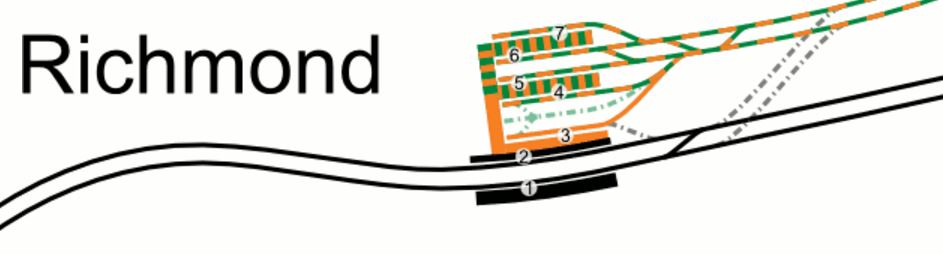
Platforms And Lines At Richmond Station
I don’t think it would be too difficult to complete the loop, so that trains from the North London Line could turn without needing a terminal platform
It has a level crossing at one end.It has no disabled access.There is another three level crossings between Mortlake and Barnes stations, which are the next stations on the line towards London.
Improving Richmond To Waterloo
But the problems of the level crossings are still there!
These posts describe the line between Richmond and Barnes station.
- Is There A Worse Station Than This In London?, describes North Sheen station.
- Mortlake Station With A Level Crossing
- A Level Crossing In White Hart Lane, Barnes
- A Pair Of Level Crossings At Vine Road, Barnes
Currently, 8 tph run on the lines between Richmond and Waterloo via Clapham Junction stations.
In the other direction, the service is as follows.
- 2 tph to Reading
- 2 tph to Windsor and Eton Riverside.
- 2 tph to Waterloo via Hounslow and Brentford
- 2 tph to Waterloo via Kingston and Wimbledon.
Richmond will become an important station connecting lots of places to Old Oak Common.
Will 8 tph between Richmond and Waterloo be sufficient?
Heathrow Airtrack
Heathrow Airtrack was an attempt to create a link from Waterloo to Heathrow Airport.
Wikipedia says this about the proposal.
The scheme, estimated to cost around £673 million, was controversial mainly because of the projected impact on local road traffic due to the high number of level crossings on the route.
Trains would have been 2 tph calling at the following stations.
- Clapham Junction
- Richmond
- Twickenham
- Feltham
- Staines
Could another 2 tph be squeezed in through Richmond?
With difficulty and Automatic Train Operation, it might be a possibility.
But it also looks like the level crossings have already killed one project.
On the other hand, it does appear that if more capacity could be created between Richmond and Waterloo, other services would follow.
Are Murphy Group Playing A Long Game?
This news release on the Murphy Group web site is entitled Murphy Wins £60M+ London Overground Electrification Project.
Given, that it was known to be a difficult project, I don’t think I am alone in thinking that Murphy’s contract price was good value for London Overground.
Since then, progress has not been at a fast pace and some challenging problems seem to have emerged, but on whole professional commentators in magazines like Modern Railways an Rail Engineer have been broadly praising of the way the work is being done and what has so far been finished.
The troubles on the Holloway Road Bridge, which is not in Murphy’s contract, that I wrote about in Did The Project Management Go Wrong On The Holloway Road Bridge?, can’t have helped either.
I do wonder though, if the Murphy Group could be a beneficiary of the successful electrification of the Gospel Oak to Barking Line (GOBlin).
This Google Map shows the area between Gospel Oak and Kentish Town stations.
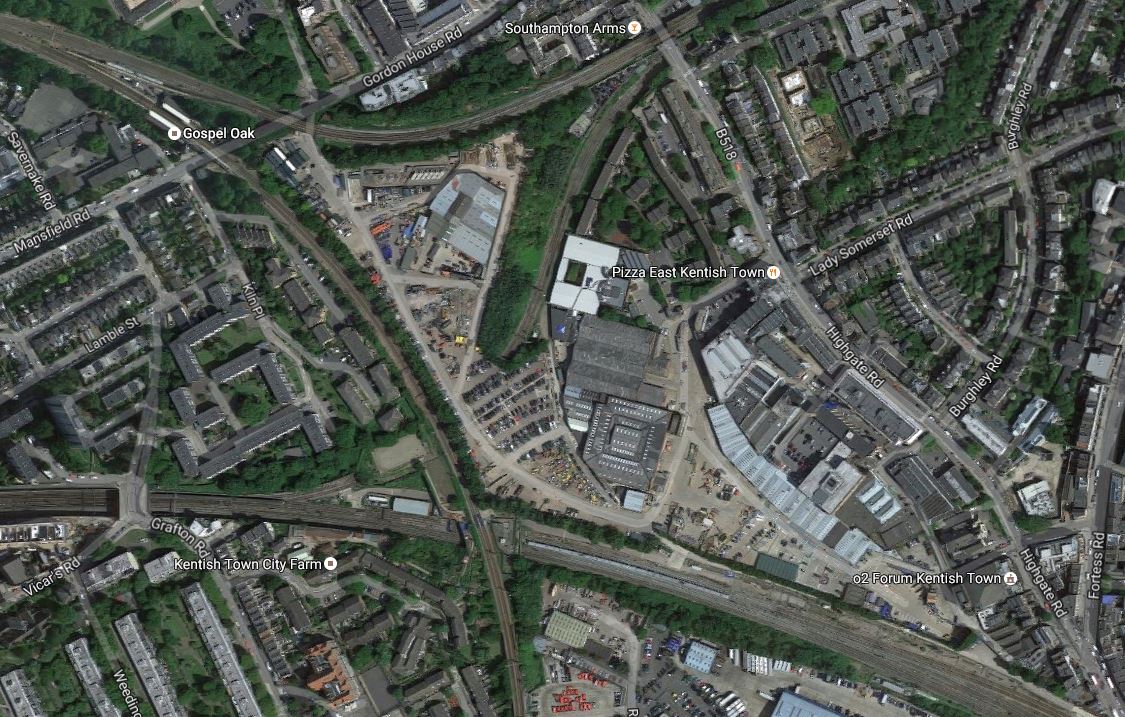
Murphy Group’s Site In Kentish Town
Note.
- Gospel Oak station in the top left, where the GOBlin meets the North London Line.
- The Midland Main Line curves across the bottom of the map, with Kentish Town station, just off the bottom right corner.
- There is another rail line (Tottenham North Curve ?) connecting the GOBlin to the Midland Main Line, that is current used by freight trains.
Between all these lines is a massive builders yard, which is the home of the Murphy Group.
In some ways giving the Murphy Group, the contract for the GOBlin upgrade and electrification, is like giving your local builder, the job of upgrading your house.
The Murphy Group have even accessed some parts of the work, by putting gates in the security fence between the railway and their yard.
This map from carto.metro.free.fr, shows the railway lines in the are.
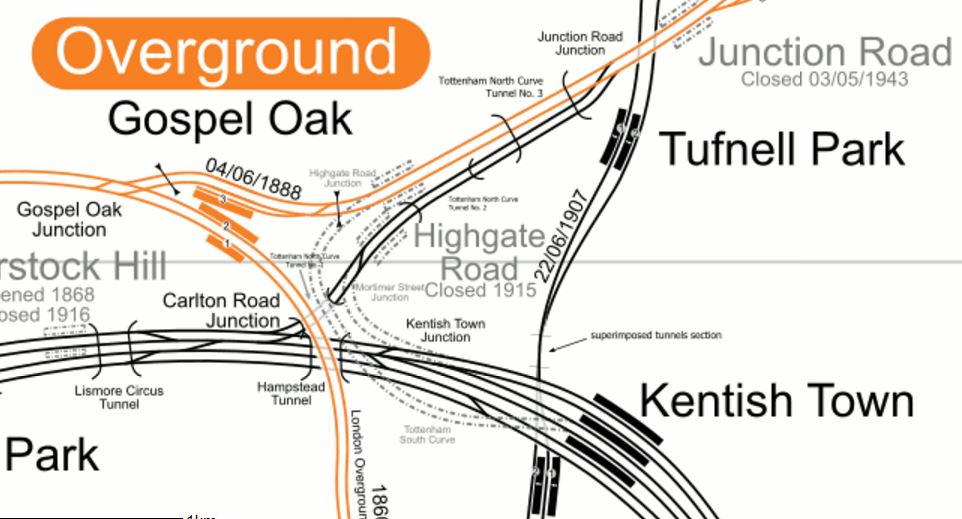
Lines Between Gospel Oak And Kentish Town
It shows how at times in the past, the rail connections from this area, were some of the most comprehensive in London.
There are already plans for some of the railways in the area.
- The Tottenham North Curve from Carlton Road Junction to Junction Road Junction is being electrified, so that electric-hauled freight trains can run between Barking and the Midland Main Line.
- Passenger services could be introduced on the Tottenham North Curve to create a second route across North London, linking Barking and Acton via West Hampstead Thameslink and the Dudding Hill Line.
- Could we even see a re-opened Highgate Road station?
I have a feeling, that all this, together with London’s enormous need for new housing will see the Murphy Group site developed, in a manner that is best for London. And the Murphy Group!
Consider.
- The development will have very good transport links.
- A reopened Highgate Road station, would be in the middle of the development.
- The development site is occupied by largely one company.
- The site is well-connected to railways for the transport of building materials and spoil.
- The site could be developed gradually, as the Murphy Group released the space.
Probably, the biggest problem would be finding the Murphy Group a new site.
It will be very interesting to see what happens on this very valuable site!
East Of Wathamstow Queen’s Road Station – 16th November 2016
Don’t knock it, but the sun ruined some of these pictures.

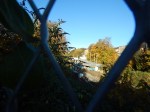


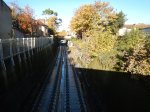
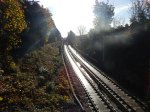

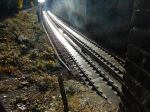

Note.
- I’m only one metre seventy, so taking pictures over a high bridge parapet iis not easy.
- Shrubland, Albert and Queen’s Roads are respectively Bridges 68. 69 and 70.
- From Bridge 70, you can get good views of the slab track.
- East of Bridge 70, there is extensive piling, that probably stabilises the cutting.
- East of Queen’s Road station, there was little evidence of overhead gantries.
- There appeared to be work going on at the Eastern end of the slab track, where the viaduct starts.
It looks to me, that there is still a lot of work to do and the planned reopening as a diesel-powered railway in February, that I wrote about in The Gospel Oak To Barking Line Is Planned To Reopen On February 6th 2017, must be in doubt.
Unless of course, all that the closure is intended to do, is get the track, bridges and viaducts, in tip-top condition for the actual electrification.
A little bird told me, that the work around Bridge 70 at Queen’s Road was particularly challenging, but there was very little evidence of work still being carried out. As the pictures show, there is slab track and lots of piling. The slab track is from Rhomberg and will hopefully last for sixty years (Modern Railways – August 2016)
It should be that the design of slab track used, is one that facilitates easy repairs if anything goes wrong.
Did The Project Management Go Wrong On The Holloway Road Bridge?
It was originally planned that the bridge decking where Holloway Road crosses the Gospel Oak to Barking Line (GOBlin) at Upper Holloway station would be replaced over Christmas this year.
But plans were obviously changed.
This article in the Islington Gazette is entitled Holloway Road closures: Islington Council threatens to sue TfL over ‘last-minute’ plans.
This is said.
TfL says work to transfer underground pipes and cables from the old bridge to another specially-made bridge has proved problematic because of their “complex layout, poor condition and a leaking water main”.
But Cllr Webbe was having none of it. She said: “This section of Holloway Road will be closed in at least one direction for nearly three months, including over half term, Christmas and New Year.
It looks like the water main is the problem and perhaps this didn’t show up until they started to move everything.
But whatever the problem was, it looks to me like there has been a cock-up by someone.
Was it the surveyor, who looked at the moving of the cables and the water main and didn’t quantify the task properly?
Surely though, the big problem now is that if this bridge problem delays the rebuilding of the trac for the GOBlink, which is needed for the electrification.
It’s a mess!
I took these pictures of the area today.


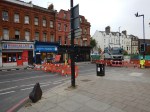
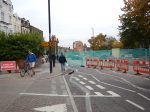


I walked down from Archway station and then caught a free bus to Holloway Road. At least TfL had got the buses right.
But except for Junction Road from Archway to Kentish Town, which was blocked solid, the traffic levels were very low.
An Excursion To Shoeburyness
After I saw the Class 387/3 trains for c2c at Crewe, I thought that if the weather was nice, I’d take a trip to Shoeburyness. So as the weather was good on Sunday, I bought an extension ticket for under a tenner and went.

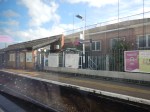


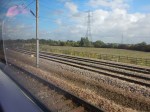
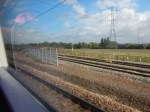
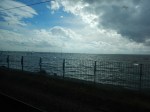
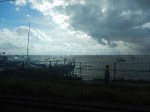
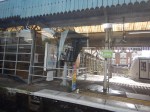

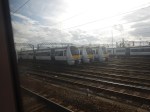


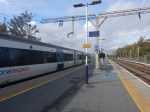
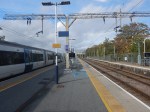
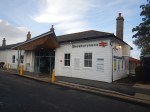

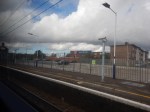
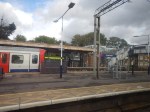
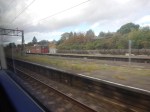
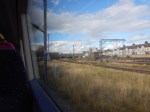



It is very much a trip into deepest Essex.
A few points.
- As I changed trains at Whitechapel station, it looked like they’re starting to fit out the passageways.
- I was surprised to see lots of disused space on the District Line platforms between Barking and Upminster. I guess that was so they could run long trains all the way to Shoeburyness.
- There are quite a few level crossings on the line.
- The Shoeburyness Depot isn’t small.
- The track to Tilbury Riverside station is still visible.
- There appears to be electrification gantries on the single-track leading to Platform 1 at Barking station, which Gospel Oak to Barking trains have used as a terminus for years.
- I came back via Stratford to do some shopping at Eastfield.
Unlike many other rail companies and possibly because they are a smaller franchise, c2c doesn’t seem to have too many published plans and ambitions, other than to keep satisfying their customers.
But then there is very little of an expansionist nature that they could do!
- In future years, there may be a need for a station at London Gateway.
- Would housing and leisure developments around Tilbury Riverside, make it worthwhile reopening the station.
- Much of the infrastructure work will be minor improvements for safety or to gain a few seconds here and there.
- There could be a program of level crossing removal.
- A new station will probably be built at Beam Park, to support housing development.
But there is no major project, like some proposed by companies like Chiltern Railways.
The Mayor’s Plans For East London River Crossings
This article on the BBC is entitled Mayor accused of ‘betrayal’ over Silvertown river tunnel.
I made my feeling clear about the tunnel in No To Silvertown Tunnel . I started by saying this.
My personal feelings about the Silvertown Tunnel are that it is irrelevant to me, except that it might help some trucks bring goods that I buy online or at a local shop. Although as a sixty-eight year-old-widower living alone, I don’t think my transport needs through the tunnel will be high.
I don’t drive after my stroke and I like that lifestyle, except when last night it takes me three trains, a coach and a taxi to get back from watching football at Ipswich. But that tortuous late night journey was caused because NuLabor spent my tax money on pointless wars that will haunt us for generations, rather than in extending and renewing our rail system, that will nurture and enrich our future.
I don’t think, that I’ve changed my views much.
The Mayor is actually proposing five river crossings.

Five New Thames Crossings
Here my thoughts on each
Rotherhithe – Canary Wharf Bridge
This is detailed in Wkipedia as the Rotherhithe Crossing or Brunel Bridge.
Wikipedia says this about the location.
The preferred location for the bridge identified in the feasibility study would be between the Impound Lock close to Cascades Tower on the northern (Canary Wharf) bank, and at Durand’s Wharf park on the southern (Rotherhithe) bank.[2]
There is currently a Thames Clippers ferry shuttle between these two points. The Jubilee line parallels the route of the proposed bridge, with the nearest stations at Canada Water and Canary Wharf.
I took these pictures of the current ferry from Canary Wharf pier.
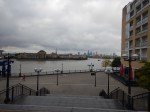
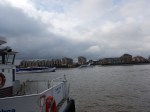
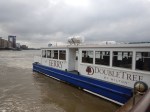
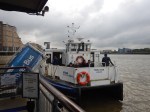
The bridge has its own web site, with a dramatic picture on the home page.
The visualisations show a bridge, that I think few would dislike. I certainly don’t!
- It’s dramatic.
- It would be open to pedestrians and cyclists.
- It would be the longest bascule opening bridge in the world.
- It would allow tall ships to pass through.
But above all I suspect that Marc and Isambard would have approved.
Canary Wharf – North Greenwich Ferry
If Canary Wharf to Rotherhithe can sustain a ferry, then surely a ferry at the other side of Canary Wharf connecting to North Greenwich with the O2, must be viable.
This Google Map shows the Thames between Canary Wharf and North Greenwich.

Canary Wharf And North Greenwich
It is not the longest ferry link, but there are questions to be answered.
- Does the ferry go right into the heart of Canary Wharf or only as far as the bank of the Thames?
- Does the ferry go all round the O2 to North Greenwich Pier or call at a new pier on the west side of the Greenwich Peninsular?
- Will the ferry be fully accessible?
- Will the ferry accommodate bicycles?
- Will the ferry be free, as is the current Woolwich Ferries?
- How many boats will be used?
I think that there could be an opportunity to design an integrated ferry and pier, that would be all things to all users.
It certainly shouldn’t be boring and if possible it should call at the heart of Canary Wharf.
Silvertown Tunnel
In my view the Silvertown Tunnel is just another route for some travellers and possibly their goods to take between the two banks of the Thames.
Categories of traffic across the river through a new Silvertown Tunnel would include.
- Individuals, groups and families, who don’t necessarily need a vehicle. But sometimes choose to take one.
- Individuals, groups and families, who absolutely need to take a vehicle.
- Vans and trucks collecting or delivering goods.
- Buses and coaches
- Taxis, mini-cabs and private hire vehicles.
One thing that has been said about the Silvertown Tunnel is that it will be funded by a toll and some reports have said that the Blackwall and Rotherhithe Tunnels will be tolled as well.
London already has a congestion charging system for areas in the centre and I suspect that this could be updated to charge for the cross-river tunnels.
We’ve never had a toll to get across the Thames in London, with even the Woolwich Ferry being free, so I suspect that a toll would reduce cross-river vehicular traffic.
Remember that, when tunnels were built under the Thames in Central London, there was few quality alternatives with the exception of the Northern and Victoria Lines and the original undeveloped Thameslink.
But over the last few years, cross-river and other public transport has been getting better. And it still is!
Consider.
- In the last year, a lot has been disclosed about Crossrail and its enormous Class 345 trains.
- We’ve also seen the opening of the new London Bridge station and can see the improvements taking place in South London.
- We’ve also seen the arrival of the Night Tube.
- Capacity is being increased on the cross-river East London Line and the Jubilee, Northern and Victoria Lines.
- We have Night Thameslink, so will we see a Night Crossrail?
Other developments will follow.
The only certainty is that we will be seeing a large increase in quality public transport, over, under and on the Thames.
I think for the first time in my life, there could be two competing ways of getting across the Thames; driving through a tunnel or using public transport.
Cost, convenience, needs and possibly an all-singing-and-dancing computer or phone app will tell you where to go.
As I said earlier, if the Silvertown Tunnel is built, it will be just another route for travellers, with perhaps a higher, but fixed cost.
If it is built, I think there should be conditions.
- The Blackwall, Rotherhithe and Silvertown Tunnels should all have tolls.
- Crossrail and Thameslink should have a great deal more Park-and-Ride capacity.
- All buses, coaches, mini-cabs, taxis and trucks in Central London should be low emission.
I also think that large areas of Central London, like the City and Oxford Street should be pedestrianised and some are on track for this to happen.
Much of the decision about the Silvertown Tunnel revolves around politics.
Sadiq Khan, has said he’s in favour of the tunnel with conditions, but he is up against a formidable movement that don’t want the tunnel built at any price.
I also find it interesting, that Ken Livingstone was in favour of the Silvertown Tunnel. But Ken brought in congestion charging.
I wouldn’t be surprised, if there’s some researchhanging aroiund in TfL, that says that a tolled road crossing will cut traffic. But it’s the sort of research no-one would believe.
So perhaps a tolled Silvertown Tunnel with conditions will be a good idea.
But only because there are now alternatives!
Gallions Reach DLR
The BBC article says this about this proposal.
A DLR crossing at Gallions Reach, helping support the development of around 17,000 new homes across Newham and the Royal Borough of Greenwich
It is different to the original proposal of a Docklands Light Railway extension to Dagenham Dock, which stayed on the North bank of the Thames.
This map shows the area of London from Gallions Reach to Abbey Wood.
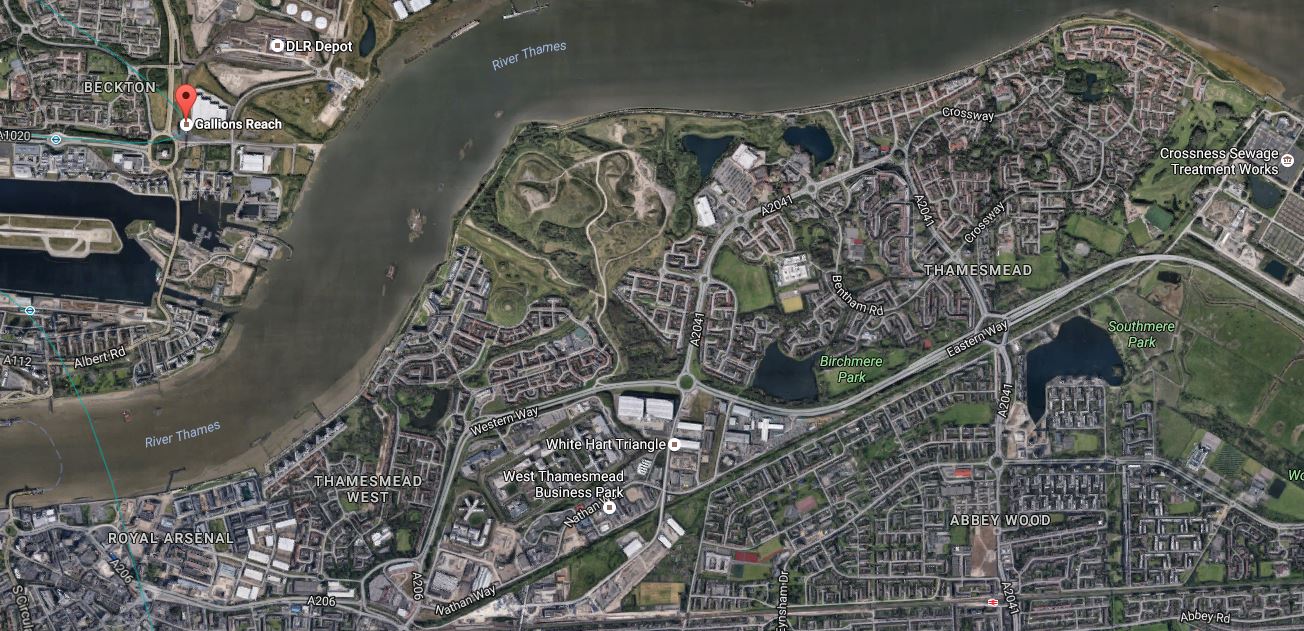
Gallions Reach To Abbey Wood
Note.
- Gallions Reach DLR station is marked with the red arrow.
- Just to the North of Gallions Reach station is the main DLR depot, which would probably be an excellent site to start a tunnel.
- The tunnel would probably emerge on the South bank of the Thames to the West of Thamesmead.
- It could then weave its way along the side of the main road.
- The North Kent Line with Abbey Wood and Belvedere stations runs along the bottom of the map.
- Crossrail could be extended to Gravesend.
- Crossrail should also be extended Ebbsfleet International for European rail services.
If the DLR extension went from Gallions Reach DLR station to Abbey Wood station it will be a loop on Crossrail serving a lot of areas ripe for quality housing and commercial development.
It certainly looks a feasible area to think about taking the DLR.
Barking Riverside Overground Extension
When I first heard about the Thamesmead Extension of the Gospel Oak to Barking Line, I thought it was a good idea.
As it is mentioned in the Mayor’s plans, I suspect that building the extension is getting nearer to reality.
Certainly provision has been made in the design of the Barking Riverside Overground Extension to extend the line under the river if required.
Joined Up Connections
If you take out the Silvertown Tunnel, which is the only one of the five crossings for which you need a vehicle, you get a route along the Thames from Canada Water To Barking.
- Walk from Canada Water to the Rotherhithe – Canary Wharf Bridge
- Cross the Rotherhithe – Canary Wharf Bridge
- Walk to the Canary Wharf – North Greenwich Ferry
- Take the Canary Wharf – North Greenwich Ferry to North Greenwich
- Take the Emirates Air-Line to Royal Victoria
- Take the DLR to Gallions Reach and on to Thamesmead
- Take the Gospel Oak to Barking Line to Barking
It’s an interesting route using various means of transport.
 The Anonymous Widower