What’s This Dirty Rotten Beast Doing On The GOBlin?
I photographed this dirty rotten beast at Blackhorse Road station on the Gospel Oak to Barking Line at 10:30 this morning.
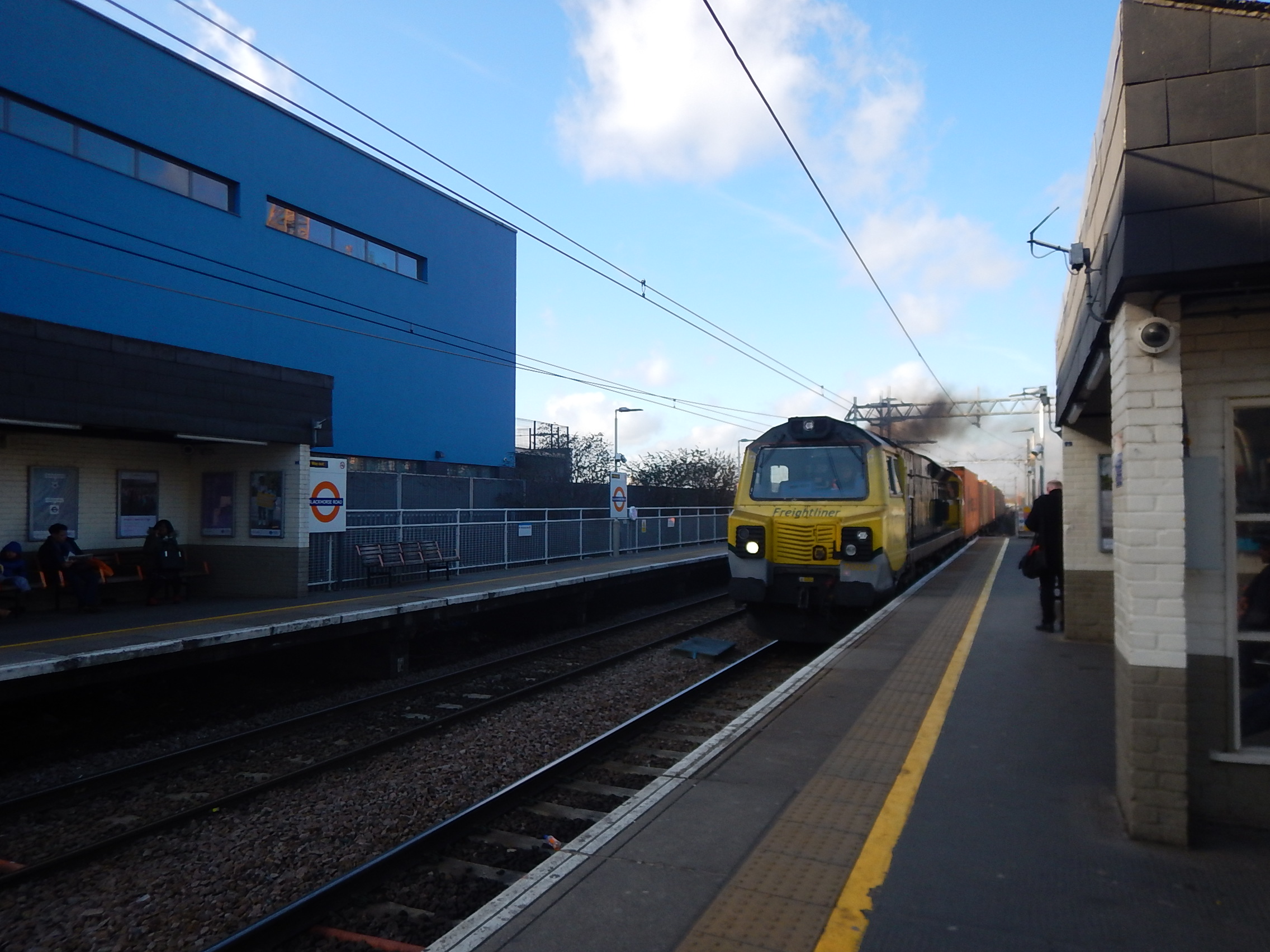
Isn’t this very much a load of pollution in the face of all those, who had to put up with all the disruption whilst the line was electrified.
By the way, it is exhaust smoke above the train and not a tree on the nearby Wetlands!
The Class 70 locomotive is supposed to meet EU Tier IIIa emission regulations.
Pull the other one!
The freight train was going from Garston F.L.T. to Lonfon Gateway Freightliner.
As neither of these terminals are electrified, the train has to be diesel-hauled.
But surely, the diesel shouldn’t be throwing out this level of pollution.
Will The Gospel Oak To Barking Line Have Long Term Capacity Problems?
There are certainly, short term capacity problems on the Gospel Oak to Barking Line, (GOBlin) due to the non-delivery of the new Class 710 trains.
Comparison With The North London Line
There are a lot of similarities between the Gospel Oak to Barking Line and the North London Line (NLL).
- Both run roughly East-West across North London.
- Both have interchanges with the Underground, Crossrail and National Rail.
- Both run electric trains.
- Both have several freight trains per day.
In addition, the Eastern end of the NLL and the GOBlin, run through areas of East London, where a lot of regeneration and housing development is ongoing.
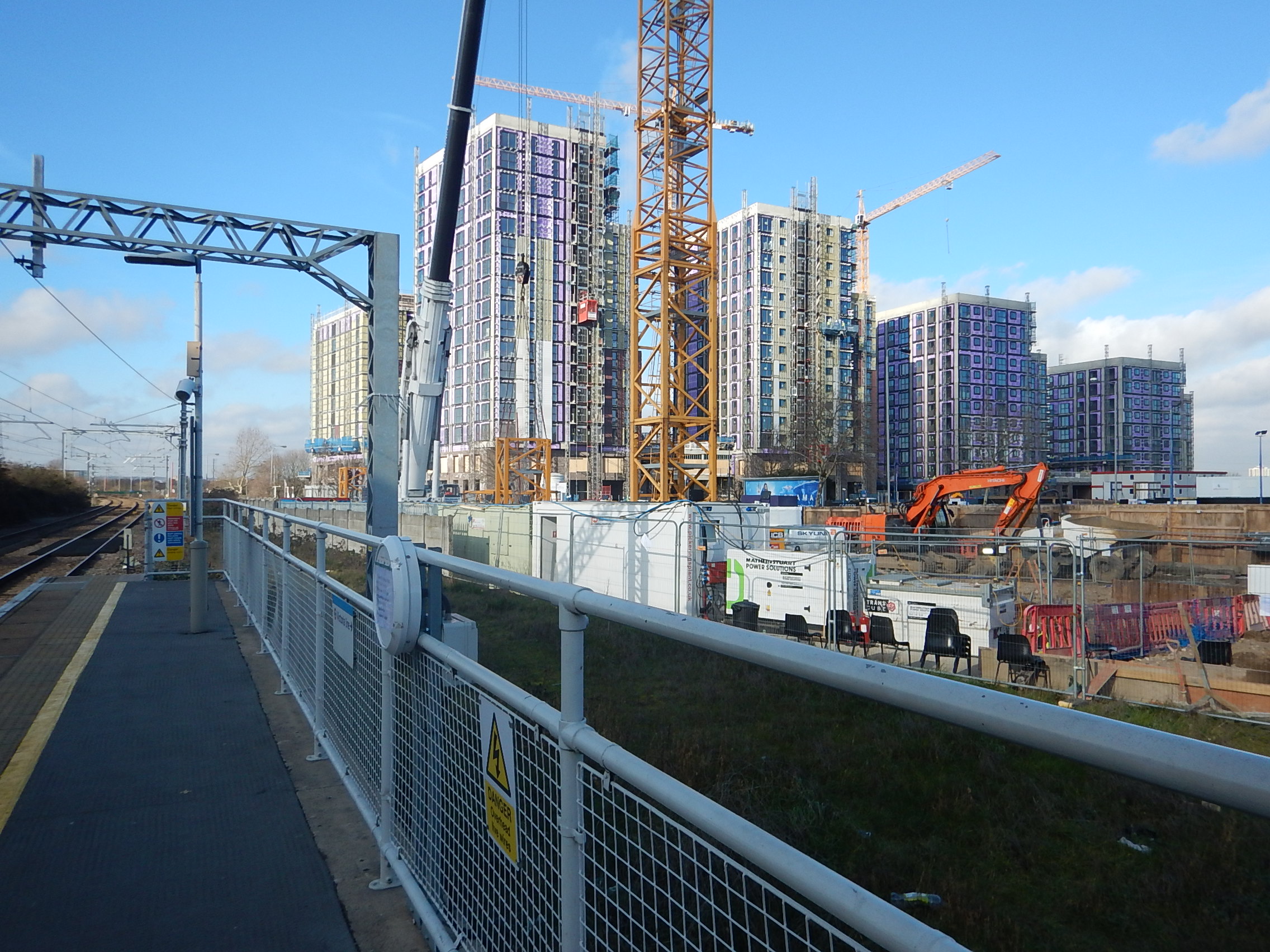
This picture was taken at Blackhorse Road station. The station is being surrounded, by a large amount of housing.
Capacity On The North London Line
When I moved to Dalston in 2010, the frequency of trains between Stratford and Willesden Junction stations was around six trains per hour (tph). The trains were three-car Class 378 trains, giving a capacity of 18 carriages per hour (cph).
Now in early 2019, the frequency on the same section of the NLL is eight tph and the trains are five-cars, giving a capacity of 40 cph.
This large increase of 120 percent, has not been enough to prevent trains on the NLL from being very full at times. But then there have been large housing and commercial developments at Stratford, Hackney Wick, Hackney Central, Dalston Junction and West Hampstead stations.
Future Capacity On The Gospel Oak to Barking Line
Until a few months ago, the GOBlin had a frequency of four tph. The trains were two-car Class 172 trains, giving a capacity of 8 cph.
The service from today is two four-car Class 378 and two two-car Class 172 trains per hour, giving a capacity of 12 cph.
Hopefully, when the Class 710 trains are working, we’ll be seeing four four-car Class 710 trains per hour, giving a capacity of 16 cph.
It is not the 120 percent increase that the NLL has already seen, but surely a 100 percent increase is better than nothing.
My Observations On The Gospel Oak To Goblin Line
For the last three of four years, Highbury & Islington station has been a station to avoid.
- There have been continuous roadworks in the area of the station.
- There have also been several water-main bursts.
- The bus service between the station and my house has been halved in frequency.
Consequently, if I’m coming East to my home, I find it a lot easier, but slightly slower to change to the GOBlin at Gospel Oak station and then get a bus home from Harringay Green Lanes station.
So if a GOBlin train is waiting at Gospel Oak station, I take that route.
Helpfully, Transport for London have improved the cross-platform interchange.
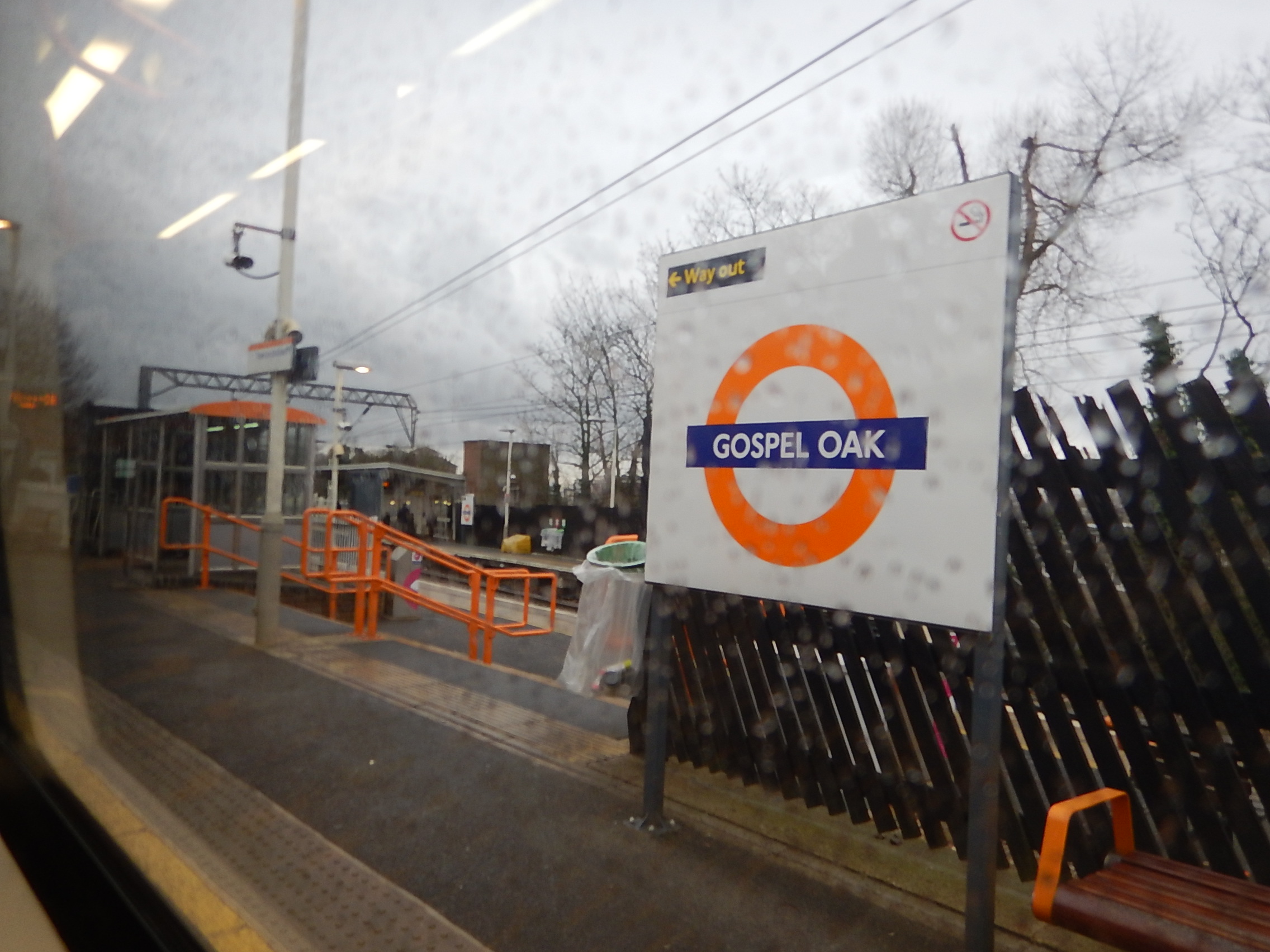
They’ve also added more stairs to the right of these.
I actually, think, that passengers wanting to go to areas between the two lines are starting to use the GOBlin, as often by Harringay Green Lanes station, a lot of passengers have left the train.
Londoners are just practising their ducking and diving!
I’ve also left Barking a couple of times in a very full train in the Off Peak.
- Passengers for whatever reason, seem to be using the GOBlin more!
- Do clean electric trains attract passengers more than less friendly diesels?
- Does the occasional four-car journey impress passengers with more space?
- Is it since the Class 378 trains took over some duties, that the service is more reliable?
Or perversely could it be, that all the bad publicity about the GOBlin has reminded people that it is still there and might be worth a second chance?
Will The Proposed Gospel Oak To Barking Line Be Enough In The Long Term?
I am rapidly coming to the conclusion, that although capacity on the GOBlin is going to be doubled, when the new Class 710 trains arrive, this may not be a large enough increase for the long-term.
What Measures Can Be Taken To Increase Capacity?
There are some simple measures that can be taken.
Higher Frequencies
Transport for London are planning to run five tph in the Peak this year.
If it happens, this will increase capacity by a small amount, where it is needed.
But it probably can’t be a general increase, as that would probably restrict the number of freight trains.
Trains With A Higher Performance
The electric Class 710 trains probably have a higher performance than the diesel Class 172 trains.
This will help with running higher frequencies and faster services, but on its own, it won’t increase capacity.
Longer Trains
The Class 710 trains are Aventras, and these trains have been ordered up to ten cars by other operators.
So five- or six-car trains would certainly be possible.
But the problem is that some platforms would need to be lengthened.
- Barking already handles longer trains.
- Upper Holloway, Crouch Hill, Harrigay Green Lanes, Walthamstow Queens Road, Leyton Midland Road, Leytonstone High Road, Wanstead Park and Woodgrange Park used to have longer platforms, which might be possible to reinstate.
- Blackhorse Road, South Tottenham and Gospel Oak would be major undertakings.
Five-car trains might be possible, if selective door opening was used at the last three stations.
Five-car trains would increase the capacity to 50 cph or an increase of twenty-five percent on the capacity after the Class 710 trains are successfully introduced.
Conclusion
I am very sure, that the only way to increase the capacity of the Gospel Oak to Barking Line, would be to run longer trains.
But they would need to use selective door opening at Blackhorse Road, South Tottenham and Gospel Oak stations.
After the problems of platform lengthening on the East and North London Lines, why weren’t platforms at least prepared for five- or even six-car trains, when the GOBlin was rebuilt and electrified?
And Now There Are Two!
The second Class 378 train; 378206 is now in service on the Gospel Oak to Barking Line.


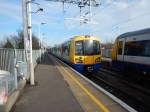
I have had a thought about these trains and also the Class 710 trains, which will have a similar interior.
At two in the afternoon on the short trip between Gospel Oak and Harringay Green Lanes stations about three-quarters of the seats were occupied.
I would estimate that there were perhaps 160 passengers on board.
As the Class 172 trains have only 124 seats, I feel that the electric trains and all the publicity are attracting passengers.
A Class 313 Train In Not Bad Condition
On Friday, I took a train between Moorgate and Essex Road stations.
It was not in bad condition.
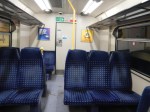
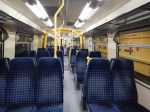
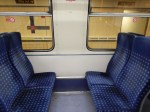
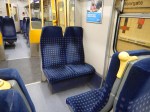
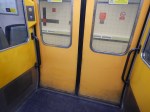
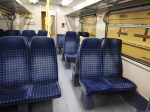
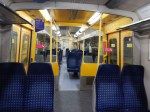
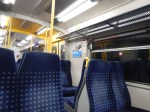
These trains are three-car trains and run in pairs as six-cars.
These trains used to run on the Watford DC Line, so I wonder if when they get to be released by the new Class 717 trains, some could be put back on that line to release some more Class 378 trains for the Gospel Oak to Barking Line.
Anybody like a game of Musical Trains?
The Junction Between The Barking Riverside Extension And The Tilbury Line
This map from carto.metro.free.fr shows the route of the Barking Riverside Extension of the Gospel Oak to Barking Line and how it connects to the c2c lines between Barking and Tilbury.

One big advantage is that the two c2c lines between Barking and Tilbury, go either side of the Barking Freightliner Terminal.
- The Down Tilbury Line between Platform 7 at Barking station and Dagenham Dock station goes around the Northern side.
- The Up Tilbury Line to Platform 8 at Barking station goes around the Southern side.
This is extremely convenient, as there is plenty of space between c2c’s busy tracks to build the flyover.
If you want to get a better look, click on the map and this will give you a larger image on which you can follow the two tracks from Dagenham Dock station.
This second map from carto.metro.free.fr, shows the complicated tracks to the West of the Freightliner Terminal.
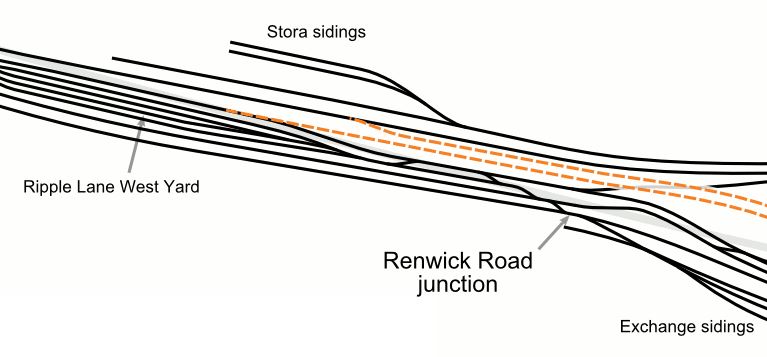
The Renwick Road bridge goes North-South over the tracks. I appears to cross, at the point, where the Stora sidings join the East-West track.
Note how the two new tracks connect the flyover to tracks that connect to Platforms 7 and 8 at Barking station.
This is a Google Map which shows where the Renwick Road bridge crosses the tracks.

The two new tracks will need to be squeezed under Renwick Road.
I took these pictures on a walk down Renwick Road, just to the South of the bridge, that takes the road over the railway lines.
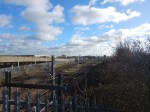
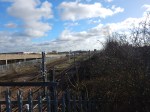
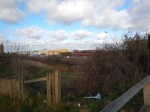

Unfortunately, most of Renwick Road is surrounded by high concrete walls.
But as these pictures show, there is quite a large amount of land crossed by a few sparse railway lines.
I then took a train between Barking and Rainham stations and was able to take a few pictures of work in the area of the proposed viaduct, which will go over the freight terminal.
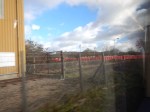
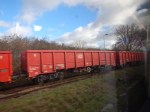
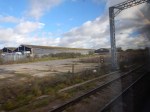

The red train was parked on theStora sidings at the top of the second map.
The top four pictures were taken going to Rainham station and the bottom four were taken coming back.
Tilbury Down Line Train-By
These pictures were taken from a train going to Grays station on the Tilbury Down Line.

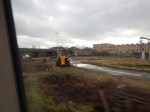

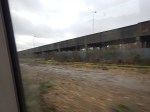
The last two picture show the Renwick Road bridge and the vehicle ramp leading to the freight terminal.
The Design Of The Viaduct
It looks to me, that two new tracks will do the following.
- Start to the West of Renwick Road bridge, with connections that take them to Platforms 7 (Down) and 8 (Up) at Barking station..
- Go through the safeguarded site of the future Renwick Road station and under Renwick Road.
- Climb on a viaduct, that will lift them over the freight terminal and the lines to Tilbury and continue to Barking Riverside.
It could be a spectacular ride.
Renwick Road Station
I walked to the Renwick Road bridge from the Renwick Road bus stop on the 173 bus from Dagenham Heathway station.
It was about four hundred metres along broken pavements and in freezing cold, but dry weather.
So a Renwick Road station will be appreciated by those, who live and/or work in the area.
Wikipedia says this about Renwick Road station.
The station would lie east of the proposed merge / diverge points with the Essex Thameside (Tilbury Loop Line) line along which c2c services operate, so whilst the station would not provide an interchange with the aforementioned c2c services, nor would the station’s construction disrupt those services. The new station could generate 5,000 homes.
This Google Map shows the land to the West of Renwick Road bridge.

Note.
- The Stora siding at the top, where the red train was parked.
- The Down Tilbury Line going West-East towards the top of the map and connected to the sidings.
- The three lines towards the bottom of the map are currently the Down Goods, Up Goods and Up Tilbury
It could be that Network Rail could have decided to put the new Renwick Road station in the ample space between the lines.
The station could be very simple.
- A single island platform between the two tracks.
- The tracks could be generously spaced to allow a wide platform.
- The platform would have shelters and perhaps a coffee stall.
- The platform would be linked by stairs and a lift to Renwick Road.
It could certainly be built without disrupting c2c services.
Travelling Between Fenchurch Street And Renwick Road Stations
According to the Wikipedia extract, I included earlier, Renwick Road station, will not have a direct service to Fenchurch Street station.
Renwick Road station will be served by at least four London Overground trains per hour (tph) all day between Gospel Oak and Barking Riverside stations.
Currently, c2c provide the following services between Fenchurch Street and Grays station.
- Four tph in the Peak
- Two tph in the Off Peak
It is also planned that both services will share Platforms 7 and 8 at Barking station.
So passengers from Renwick Road and Barking Riverside stations wanting to go to London will get off a train on Platform 8 at Barking station and wait for the first c2c service to Fenchurch Street station.
I would also suspect that c2c will increase the Off Peak service to match the frequency of the Gospel Oak to Barking Riverside service.
Beam Park Station
Beam Park station is another new station planned for the area.
- It will be between Dagenham Dock and Rainham stations.
- It will be built to serve three thousand new houses.
This station will make it more likely that c2c will run four tph between Fenchurch Street and Grays stations.
Travelling Between Grays And Barking Riverside Stations
This will require a change at Barking station.
This change would be a walk across the island platform 7/8, which would be step-free.
Conclusion
Train services along the Thames from Barking to Grays are going to get a lot better.
The Design Of Barking Riverside Station
The information is coming together about the new Barking Riverside station.
Wikipedia
The Wikipedia entry at the moment is not very information, but it does say that the station has two platforms.
Location
This map from Transport for London, shows the location of the station.
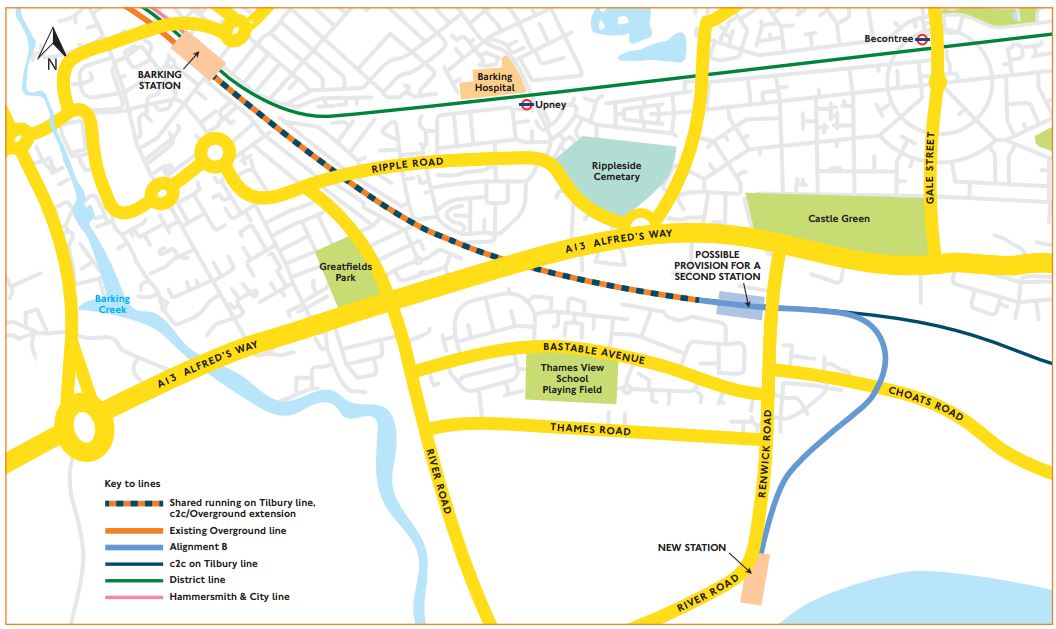
The location of Barking Riverside station is at the end of the branch line that comes South from the Barking to Tilbury Line.
As it is a long term ambition of Transport for London to extend the railway under the River to Abbey Wood station, the North-South orientation of the station is probably important.
carto.metro.free.fr
This map from carto.metro.free.fr gives the layout of Barking Riverside station and the tracks leading to it.
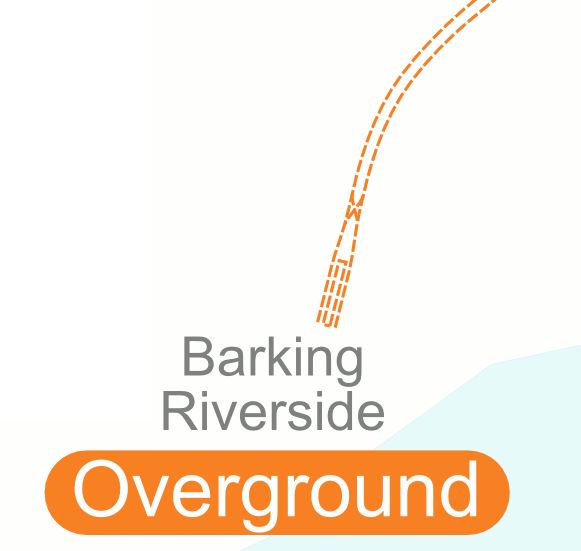
It shows two tracks leading to a two-platform station, with a crossover to allow both platforms to be used.
The Architect’s Visualisations
These are available on this page on the Moxon Architect’s web site.
This is the first visualisation on the site.
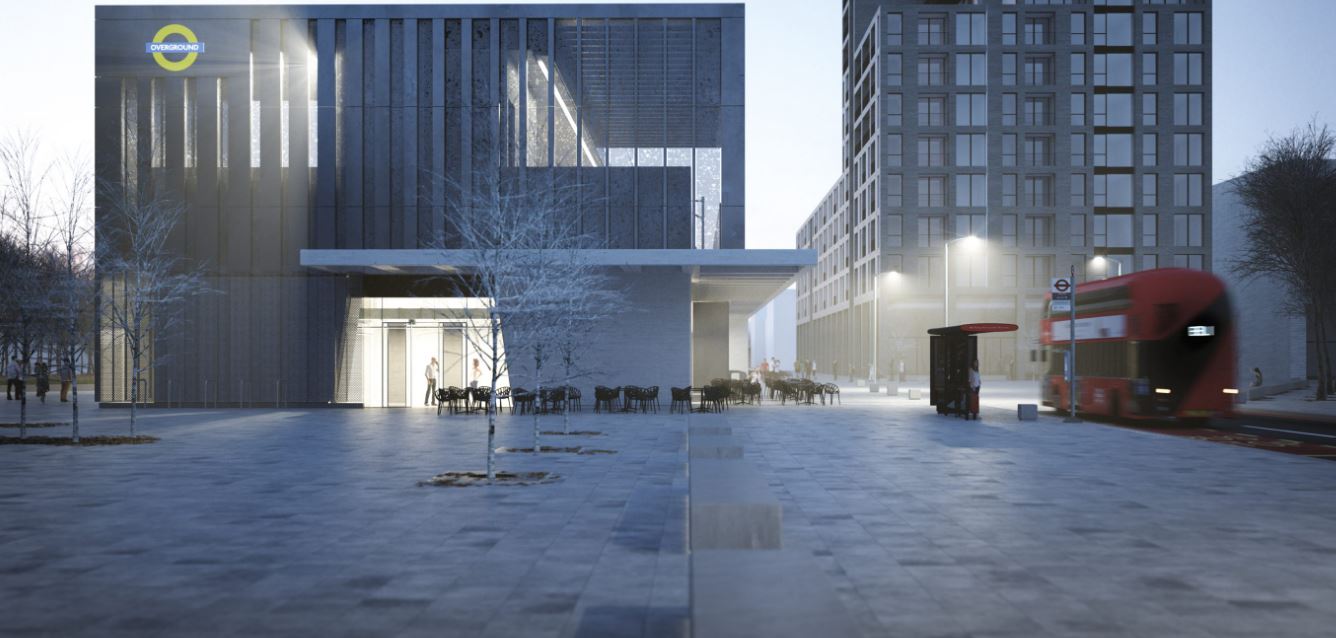
It shows the end view of the station and as no railway lines are visible, I assume that it is looking North, so the River Thames is behind the viewer and Renwick Road is on the left.
This is the second visualisation.
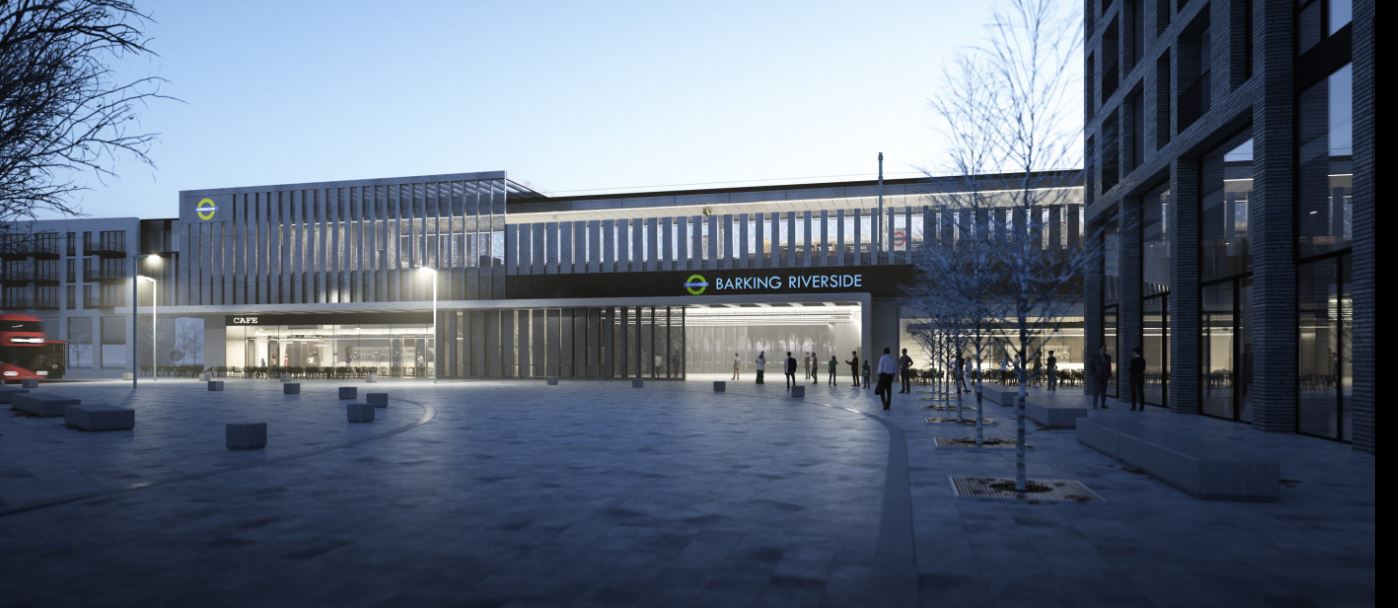
It shows the station looking from the East towards Renwick Road. Note the bus in both images.
As at Hackney Wick station, there is an underpass, so the station is not a barrier to pedestrians.
The seventh visualisation shows the station from above.
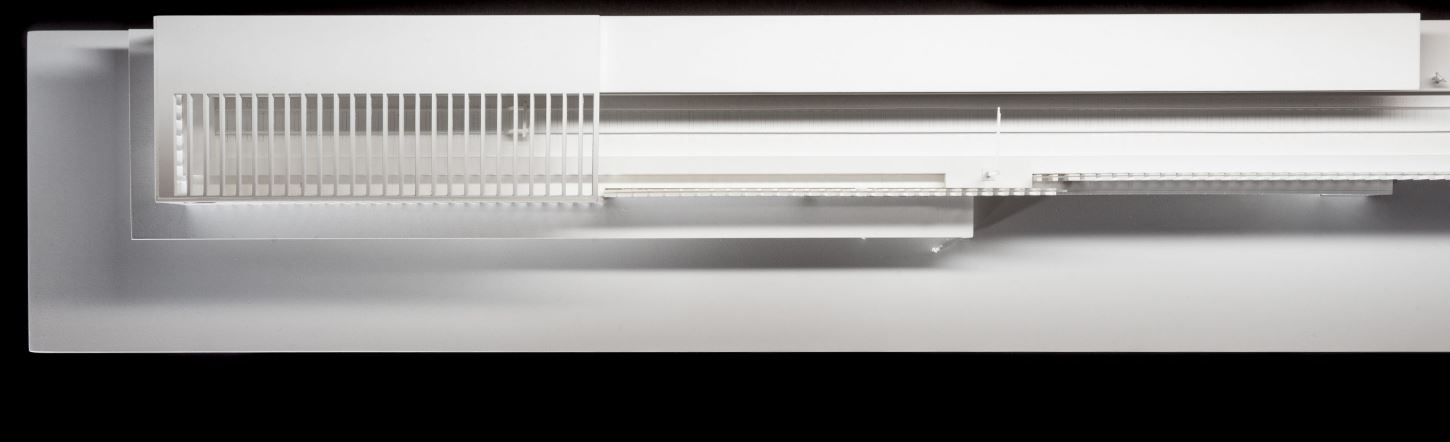
It only shows one platform in the image, as do other visualisations.
Is It A Single Platform Station?
Is this the way the station will be built or is it just to make the visualisation simpler?
A single platform station should be able to handle six trains per hour (tph).
- This year, this frequency will be implemented between single platforms at Highbury & Islington and Crystal Palace stations on the Overground.
- The Gospel Oak to Barking Line will have a maximum frequency of five tph in the Peak.
- The infrastructure and the trains will all be brand new and use the best technology.
So it looks like a single platform station should be able to handle the planned number of trains for the simple extension to Barking Riverside station.
Will There Be Electrification?
This is the fifth visualisation.
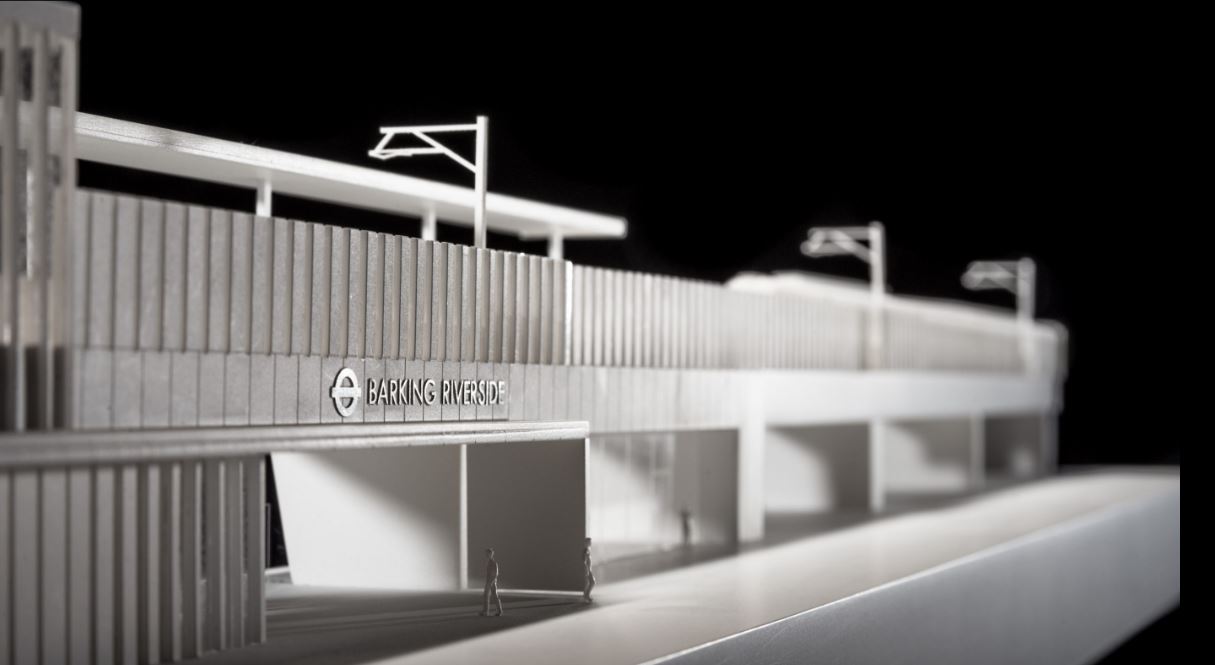
It clearly shows gantries for overhead wires.
But it appears that only one platform is there.
I have thought for some time, that the Barking Riverside Extension could be built without electrification and battery/electric trains could be used.
I laid out my views in Don’t Mention Electrification!.
- All Aventras are wired for on-board electrical storage.
- The Barking Riverside Extension is only 1.5 km long.
- The area of the extension has some very large electricity pylons, that the extension has to dodge through.
- If the line is extended under the Thames, it would be cheaper to build a tunnel for third rail, as it will connect to third-rail lines on the South Bank.
- There must be substantial savings by not putting up overhead wires.
- A safer and more reliable railway in extreme weather.
I also repeated my views in an article in Rail Magazine, which I described in I’ve Been Published In Rail Magazine.
No-one has told me that they disagree with my views.
So why are electrification gantries shown?
- Transport for London or Network Rail don’t believe that battery/electric trains are possible. This is unlikely, as battery/electric trains have been successfully demonstrated in the UK and elsewhere, and ordered for Wales and Liverpool.
- Obviously, there has to be a backstop if conventional electric trains have to be used. So, provision is being made to electrify the extension.
- The single platform is electrified, so that a battery/electric train can be fully-charged before it returns towards Barking and Gospel Oak.
If before the station is built, it is decided that electrification is not needed, the overhead wires can be omitted from the construction phase.
I do feel though, we will know more about the performance and reliability of battery/electric trains in a few years, and we will alter the designs of overhead electrification accordingly.
Extending Across The River
The station has been built to enable extension to Abbey Wood station on the other side of the Thames.
There are probably several designs that would fit with the current station.
The simplest is probably to install a second platform and connect both to a tunnel under the river or a bridge over the river.
This would have several disadvantages.
- A lot of the station would need to be demolished.
- The train service to Barking Riverside station might have to be stopped for several months, during construction.
- All services would have to cross the river.
A better option is probably to install the second platform on a track, that goes under the river in a tunnel.
- The single tunnel portal would require less land take, as it could be very close to Barking Riverside station.
- The tunnel under the river could be a mix of single or double track, to create the most affordable tunnel.
- The current single platform would become a bay platform.
- During construction, the service to Barking Riverside station would be able to continue as normal.
- The bay platform could be used for service recovery in times of disruption.
I particular like the idea of a loop railway on the South Bank of the Thames with perhaps four or five stations. Alternatively, it could be a tram-train on the surface.
Conclusion
It looks like the design of Barking Riverside station, is one that will cater for all eventualities.
I am looking forward to taking the first train to the station.
Checking On The Barking Riverside Extension Of The Gospel Oak To Barking Line
I took these pictures, when I went between Barking and Dagenham Dock stations on the top deck of an EL2 bus.

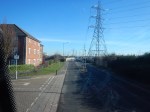
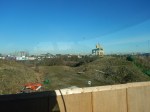
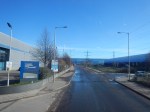
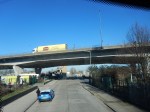
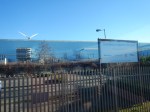
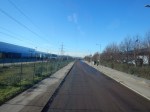
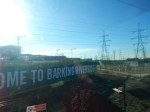
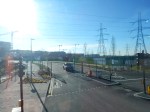
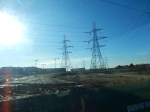
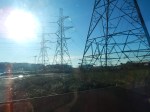
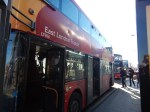
It looks to me, that this will be the easiest and least stressful way to observe the Barking Riverside Exctension, as it is being built.
As the pictures show, the route is run using New Routemaster buses, so on a good day, with a clean bus, the pictures should be good.
 The Anonymous Widower