Could IPEMU Trains Use KERS?
I have just read this article on The Business Desk, which is entitled Torotrak’s bus KERS system gets all-clear. The article starts like this.
Torotrak, a developer and supplier of emissions reduction and fuel efficiency technology in vehicles, and Wrightbus are celebrating the successful completion of the in-service trial of the Flybrid mechanical kinetic energy recovery system (KERS) for buses.
The trial was conducted with Arriva, one of the largest bus operators in the UK.
It must have been successful, as other reports say Torotrak shares have risen and the company is expected to start production of the Flybrid KERS in 2016.
I’m probably not the only engineer, who’s wondering, whether the technology can have applications with trains.
My one regret is that I only bought a thousand pounds worth of shares in the company.
The Future Of The Calder Valley Line
On Saturday and Sunday, I did four trips on the Calder Valley Line
- From Leeds to Burnley Manchester Road
- From Burnley Manchester Road to Manchester Victoria
- From Manchester Victoria to Hebden Bridge
- From Hebden Bridge To Leeds
The pictures aren’t as comprehensive, as I would like, but at times the rain was very heavy.
The Route And Trains
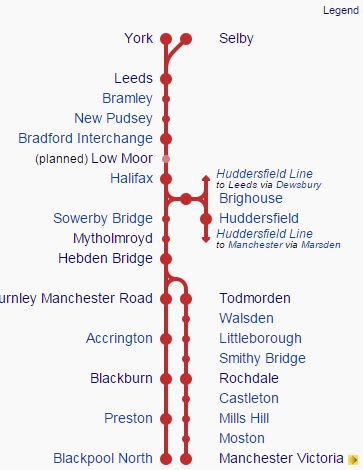
This diagram clipped from Wikipedia, shows the route of the Calder Valley Line.
Calder Valley Line
Note.
- Since the opening of the five hundred metre long Todmorden Curve last year, there is now a direct hourly service between Blackburn and Manchester Victoria via Accrington, Burnley Manchester Road and Todmorden. I used this valuable new service on Sunday.
- Brighouse station reopened in 2000 on a link between the Calder Valley Line and the Huddersfield Line.
- The Huddersfield Line is being electrified.
- Low Moor station is being built and should open next year.
There is not much electrification.
- Leeds to York is either electrified or will be in conjunction with the Huddersfield Line electrification.
- Other routes between Leeds and the other Bradford station; Forster Square are electrified.
- Manchester Victoria station is electrified.
- Preston station is electrified and hopefully will be electrified to Blackpool North station.
The trains are a mixture of diesel Class 150 and Class 158 trains, run by Northern Rail. The Class 150s are a bit small and uncomfortable for the route and the top speeds of 75 mp for the Class 150s and 90 mph for the Class 158s, are probably not fast enough, especially as the two ends of the line have higher speed limits.
The Future
Wikipedia has a section on the Future of the Calder Valley Line. This is said.
Improvements to the line are proposed as part of Network Rail’s Northern Hub plans, which would allow for more frequent services on the line. Some services via Bradford would also be extended to Chester,Crewe, Liverpool and Manchester Airport. The Chester & Liverpool services have since been incorporated into the new Northern Rail franchise agreement – awarded to Arriva Rail North in December 2015 and due to start in April 2016, these will be marketed under the “Northern Connect” brand and operated by new 100mph DMUs once delivered. The Manchester Airport trains will follow one the Ordsall Curve is completed in 2018.
Low Moor station, between Bradford Interchange and Halifax, is due to be re-opened in 2016. A business case is being developed to re-open Elland station between Halifax and Brighouse.
There is no mention of electrification, for which the earliest dates are quoted as somewhere in the period from 2019-2024.
But there is this article is on the Shields Gazette web site, with a title of Electrification of the Calder Valley is ‘top priority’ says Rail Minister.
This article is backed up by other statements, so Network Rail and the Government are thinking seriously about electrification of the Calder Valley Line.
Network development and/or electrification is happening at both ends of the Calder Valley Line and I’ll look at both.
Network Development in Leeds and Bradford
The West Yorkshire Metro has proposed electrification of the Harrogate Line and have performed an extensive new station study.
They have already opened Apperley Bridge station and Kirkstall Forge station will follow in a few weeks.
The new stations survey mentions these new stations.
- East Leeds Parkway – This will be a Parkway station on the Selby Line and will also be a terminus for services from the West, that now terminate in Leeds.
- Elland – This will be between Halifax and Brighouse.
- Haxby – This will be on the York to Scarborough Line
- Crosshills – This will be on the Airedale Line
As I said earlier Low Moor station is being built. It will be on the unelectrified line between Bradford Interchange and Halifax. If Elland station is reopened, then it will be the other side of Halifax towards Brighouse. To serve both these new stations trains will have to serve the following stations.
- Bradford Interchange
- Low Moor
- Halifax
- Elland
- Brighouse
- Huddersfield
This is a modification to the current hourly service from Bradford Interchange to Huddersfield via Brighouse.
In the next few years hopefully, Huddersfield will be electrified, but there is no chance that this route into Bradford Interchange will be electrified at the same time. It would probably be pointless, as Bradford Interchange station, unlike Bradford Forster Square station is not electrified.
To make matters a lot more complicated, the stupid fact that Bradford has two entirely separate stations, means the following.
- There is no train, that calls at both Leeds and Bradford and goes on to Huddersfield and Manchester.
- There is no train, that calls at both Leeds and Bradford and goes on to Halifax and Hebden Bridge.
- There will be no direct train between Leeds and Low Moor.
I think other journeys of less than twenty or thirty miles in the Leeds-Bradford area will probably be either impossible or much more complicated than they should be.
Also, at the moment, two of the Leeds-Bradford routes are electrified and the Calder Valley Line is not.
The only new electrification in the area planned, will be the fast route on the Huddersfield Line from Leeds to Huddersfield via Dewsbury.
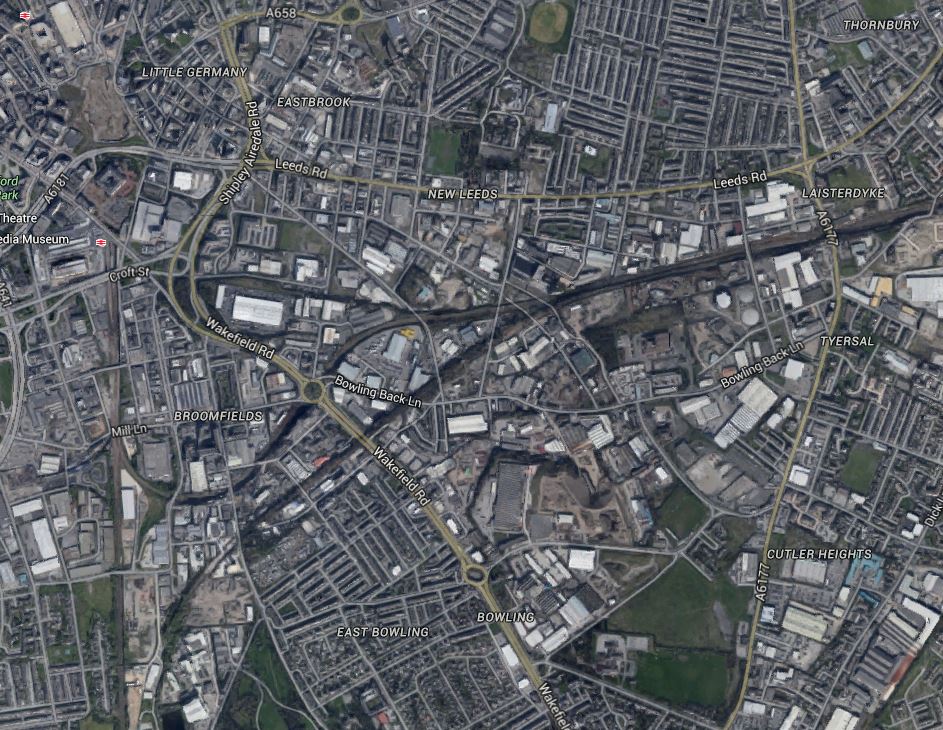
To help in comprehension, this is a Google Map, showing how the Calder Valley Line links into Bradford Interchange.
Bradford And The Calder Valley Line
Bradford Forster Square Station is in the North-East corner of the map, with Bradford Interchange below it.
Note how the Calder Valley Line comes in from Leeds in the east, before doing a turn to the north and Bradford Interchange station. After reversing in the station, trains leave the station in a southerly direction towards the new Low Moor station and onto the West. Because of the dark scar below the line, I wonder if in the past, there has been a connection by-passing the station.
It’s a mess!
The solution needs to be four-fold.
- Electrify Leeds to Huddersfield via Dewsbury. This is being done.
- Electrify the Calder Valley Line from Leeds through Bradford and Low Moor as far as Halifax.
- Electrify the link between the Calder Valley Line and the Huddersfield Line through Brighouse.
- Sort out the absurd situation of the two Bradford stations.
This would enable the West Yorkshire Metro to expand its network of electric trains in the area. It could even use IPEMUs, which would charge their batteries on the electrified core network and then provide services to other towns and cities.
- Scarborough via York and Haxby
- Hull
- Sheffield via Doncaster
- Ripon via Harrogate – I wrote about this in North Yorkshire Proposes Rail Expansion
- Colne via Skipton and a new section of track. – I wrote about this in The Todmorden Curve Has Helped A Campaign For More
I’m sure that the West Yorkshire Metro can be ambitious and will have other and better ideas.
Network Development in Lancashire
Currently, there is a lot happening at the other end of the Calder Valley Line.
- The Todmorden Curve has opened and a new hourly service runs between Blackburn and Manchester Victoria.
- Manchester Victoria station is becoming a top class station and an electrified hub for services spreading out from Manchester.
- Manchester Victoria to Liverpool Lime Street is now electrified.
- Manchester Victoria to Blackpool North via Bolton and Preston is being fully electrified.
- The Ordsall Curve is finally being built to link Manchester Piccadilly and Victoria stations.
- Merseyrail is acquiring a new fleet of trains, which may include IPEMUs.
With the devolution of local rail services to local bodies, I suspect other things will happen.
Northern Connect
Northern Connect is a new sub-brand that will be introduced by Arriva Rail North.
Services in the sub-brand using the Calder Valley Line include.
- Chester to Leeds via Warrington, Manchester Victoria and the Calder Valley
- Blackpool North to York via Preston and Leeds
- Bradford to Manchester Airport via the Calder Valley.
Will the first two services call at Bradford Interchange and will the third call at Leeds?
According to the January 2016 Edition of Modern Railways, these routes will be worked by new diesel multiple units.
The Chester and Manchester Airport services may need to be delayed until after the Ordsall Chord is opened.
But whatever happens Arriva Rail North will be running more services on the Calder Valley Line.
For commercial reasons, they would like to do the following.
- Run faster services.
- Run more frequent services.
- Run services with smart new trains.
- Run services with electric trains.
All except the last could be possible in the next few years.
The Current Infrastructure
The Calder Valley Line between Halifax and Burnley is summed up by Wikipedia like this.
For the section between Halifax and Burnley the line uses the valley of the River Calder, which in fact comprises two separate valleys with rivers of the same name, that of West Yorkshire and the Lancashire River Calder thus giving the services their name; it also follows the Rochdale Canal from Todmorden into Manchester. Since the route crosses the Pennines, there are many tunnels to negotiate en route.
I counted twelve tunnels and at least two major viaducts. The tunnels include at least three over a thousand metres, one of which; the Summit Tunnel is over 2.6 miles long.
The Summit Tunnel is one of the oldest rail tunnels in the world, is lined with 23 million bricks and has been used continuously since it opened in the 1840s.
This Google Map shows the challenging nature of the line.

Between Burnley And Todmorden
Note how the line threads its way between the hills and houses and uses a tunnel to get through.
It must be a nightmare on which to work.
As if the hills, valleys and rivers wasn’t enough, stuck in the middle of the line is the Grade II Listed Hebden Bridge station. I wrote about it in Hebden Bridge and feel that the heritage lobby will strongly resist any changes to this station.
In fact, electrification across the Pennines could bring out all the environment lobby, who feel views are more important, than jobs and prosperity.
I have a feeling, that any sane electrification engineer will look at this line between Manchester Victoria and Halifax and between Blackburn and Todmorden and say that electrifying the line is just not on!
He or she would also feel that leaving the sleeping giant of the Summit Tunnel lie would be best.
But apart from that, the line seems sound and in good order.
Electric Trains On The Calder Valley Line
If electrification of the Calder Valley Line is a top priority of politicians how can that be squared with the undoubtedly difficult nature of the work that would be required to electrify the line.
So what can be electrified?
- As I said earlier, there will be strong pressure to electrify around Leeds and Bradford. to perhaps as far as Halifax and Brighouse.
- I also suspect that electrifying from the West Coast Main Line at Preston to Blackburn would be relatively easy.
So this would leave the these gaps of lines and routes without electrification.
- Blackburn to Halifax – Around thirty miles
- Manchester Victoria to Halifax – Around thirty-five miles
- Blackburn to Manchester Victoria – Around forty miles
All of these runs would be totally within the range of an IPEMU.
Preston to Blackburn electrification, might also allow IPEMUs to take over the following routes.
- Blackpool South to Colne and possibly on to Skipton on a new section of track.
- Blackpool North to Settle
- Manchester Victoria to Clitheroe via Blackburn
So I believe it is possible for the Calder Valley Line to get electric trains, without the cost and disruption of installing the overhead wires.
From Hebden Bridge To Leeds
The weather was bad and on the last leg from Hebden Bridge to Leeds, I didn’t see much.
According to the Bradford-Halifax section in the Wikipedia entry for the Calder Valley Line, there are five tunnels of which two are over a thousand yards.
So as on the rest of the line electrification could be challenging.
On the other hand some sections, like Sowerby Bridge-Halifax might be easier to electrify.
But I can’t help feeling, that whatever Network Rail decide to do about this line, that IPEMU technology will be part of the solution.
Say you have a section of a couple of miles, that because of various issues would be virtually impossible or very expensive to electrify.
Could a train approaching the neutral section drop its pantograph, use battery power in the neutral section and then automatically put the pantograph up to reconnect to the electricity supply, once the neutral section was passed?
As a Control Engineer, I know such automation is possible, but can it be implemented on a train at 100 mph?
I suspect that the answer is yes and by the end of 2017, there’ll be videos of an IPEMU, swapping from overhead to battery power and back at high speed.
Hebden Bridge
I’m treating Hebden Bridge and the Grade II Listed Hebden Bridge station as a single post, as one would do other places where the station welcomes you to the town or city and is most certainly part of the identity. I would also place Brighton, Cambridge, Liverpool Lime Street, Portsmouth and Rochester, in that category, but there are others.
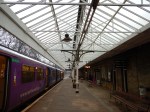
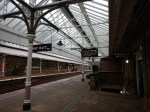
These pictures show my very wet visit.
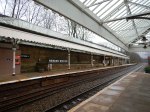
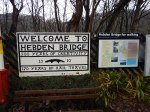
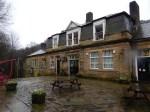
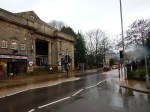
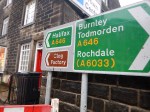
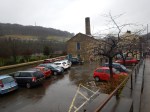
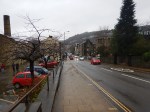
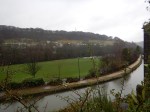
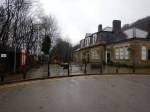
I shall go back one dsy, when the weather is better.
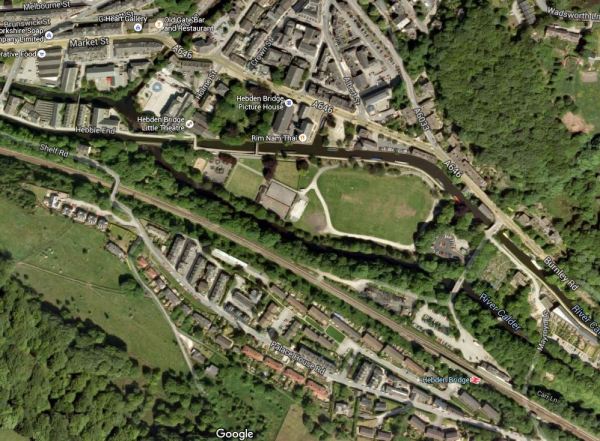
This Google Map shows the town and the station.
Hebden Bridge
Note the Rochdale Canal and the River Calder running in the same direction as the railway.
I believe that Hebden Bridge could be key in the electrification strategy of the Calder Valley Line.
A personable member of Northern Rail’s staff told me a tale about step-free access at the station. There is a subway under the tracks and this used to be served by two parcels lifts. I was told, that it was suggested that the lifts be replaced by passenger lifts, to make the station step-free, but as the station is Grade II Listed, this was not allowed.
What will happen in the end over access, I know not, but in my dealings with Listed Buildings Officers in Suffolk, they tend to be practical and lookfor a compromise, that satisfies all parties. Surely, there could be a design of lift, that would satisfy both the heritage and disabled lobbies without an outrageous expense.
This leads me to the electrification through Hebden Bridge station.
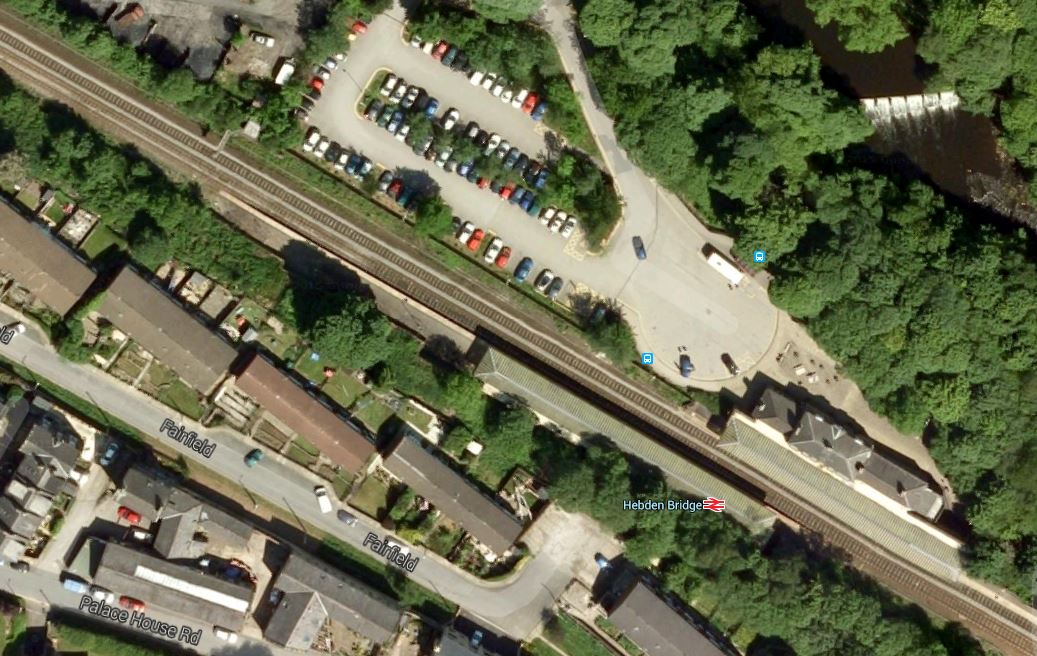
Look at this enlarged Google Map of the station.
Hebden Bridge Station
I think you can see the following.
- The platforms aren’t that long and would need to be lengthened for the four-car trains that would surely be appropriate after electrification.
- The canopies of the platforms will have to be cut back, so that the overhead wires and their supports can be erected.
I don’t think the heritage lobby will like either of these changes.
But what could they object to, if the electric trains were quiet four-car Class 387 IPEMUs, using selective door opening on the current platforms?
These trains could serve Hebden Bridge station tomorrow, if Leeds to Bradford and Blackburn were electrified.
There would be no other overhead wiring needed
An Early Sunday Start From Burnley To Manchester
I started early and took the 08:39 train from Burnley Manchester Road station to Manchester Victoria station.
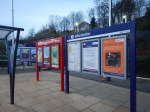
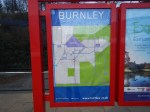
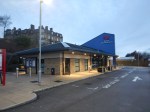
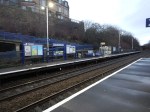

It is a picturesque ride around the Todmorden Curve, over valleys on high viaducts and through traditional stone-built villages and towns, with the hills of the Pennines in the background and quite a bit of water alongside the rail line.
The line has improved greatly in the last few years and there are lots of tidy stations, with seats, shelters and information boards. The only larger ones are Burnley Manchester Road, Todmorden and Rochdale.
Despite the early hour on a Sunday, there were quite a few passengers and the train was about three-quarters full at Manchester Victoria.
Thinking back to my first time by train to Burnley in 2011, the rail link has improved dramatically.
- A smart new station has been built.
- The Todmorden Curve has been opened to provide a direct train service to Manchester.
- An hourly service links Burnley and Manchester Victoria via the curve.
From reports, I’ve read, the line is well-used.
This question has to be asked – Could the line be electrified?
Look at some of the pictures and they show the challenging nature of electrifying the line.
- From Burnley to Todmorden, there are a number of well-built Victorian stone over-bridges.
- Also on this stretch there are at least two high stone viaducts.
- There are several tunnels, includin the Summit Tunnel, which is 2.6 km. long and has been in continuous use since the 1840s.
- Many stations have been upgraded or rebuilt recently.
- Also in this area, some new bridges across the line for new roads and the Metrolink, seem to appear to be rather low.
Also, look as this section of the line between Burnley and Todmorden.
Between Burnley And Todmorden
Note how the rail line curves between the hills and the houses, using tunnels and viaducts to get go on its way.
It’s one of those lines, where you’d try to find an alternative to traditional electrification. If it’s not space, it’s heritage issues and there would be lots of bridges, viaducts and tunels to rebuild.
Go west from Burnley and the line has a couple of high viaducts and a couple of tunnels, but the East Lancashire Line seems to get easier west of Blackburn station, with a line over mainly flat countryside with plenty of space on either side. At Preston it connects to the electrified West Coast Main Line.
Electrifying from Preston to Blackburn, would open up several routes to the use of IPEMU trains.
- Blackpool South to Colne – A substantial part of the route of the fifty mile route from Blackpool South to Colne would be electrified and from the performance figures I’ve seen, this route would be an easy one for something like an IPEMU-variant of a four-car Class 387 train.
- Burnley to Manchester – The service I rode from Burnley to Manchester starts at Blackburn and finishes in a fully electrified Manchester Victoria. So to answer my original question about whether the route could be electrified, there is actually no need to electrify, as IPEMUs could easily link two electrified terminals over that distance.
- Manchester to Clitheroe – Look at the Ribble Valley Line on Wikipedia and there are five viaducts and three tunnels listed, in a line of around thirty miles. However, the good news is three-fold. The line has been well looked after, it’s promoted as a tourist attraction and soon, it will be electrified from Manchester as far as Bolton. I can’t see why with a small top-up at Blackburn, that this route couldn’t be run by an IPEMU.
- Blackpool North to Settle – This route is run as a tourist train called DalesRail on Sundays in the Summer, when it goes all the way to Carlisle. An IPEMU could certainly run a service between Blackpool North and Settle, but I doubt it could stretch all the way to Carlisle along the Settle-Carlisle Line, as there are some massive gradients on that line.
- Blackpool North to Leeds – This route along the Calder Valley Line via Hebden Bridge, Halifax and Bradford would be totally within range of an IPEMU, once Blackburn to Preston is electrified. If necessary, Leeds to Bradford could be electrified as well. A train fit for the Northern Powerhouse, powered by batteries and built in Derby!
This all illustrates how an IPEMU can benefit from even short sections of electrification. Blackburn to Preston would be under twenty miles of electrification without troublesome viaducts and tunnels across fairly flat country and it opens up several routes to new electric trains.
It’s funny, but if you are going to use IPEMU trains, you electrify all the lines, that you can electrify and maintain with ease and leave all the difficult bits to the battery feature in the trains.
IPEMU Trains And Terminal Tunnels
The strongest hint about purchasing trains with an IPEMU capability has come from Merseyrail.
I wrote about these trains in a Merseyside context in Is Liverpool Planning To Invade Manchester By Train? This is an extract from the post, which details their declared interest in IPEMUs.
In the October 2015 edition of Modern Railways, there is an article about Merseytravel looking for a new fleet of trains for their 750V DC network, which is entitled New Trains For Liverpool. This is said.
Merseytravel has indicated that it will be seeking ‘innovative proposals’ from manufacturers, with considerable emphasis being placed on the overall cost of operating the fleet rather than just the basic cost of the trains themselves. Options such as regenerative braking and onboard systems to store energy under braking to be used for acceleration will attract particular interest. The independently-powered EMU (IPEMU or battery train) concept evaluated earlier this year on a modified Class 379 in East Anglia ,might see an application here.
I thought that the main reason for the IPEMU capability would be to connect Preston to Liverpool via Ormskirk and Manchester Victoria to Liverpool via Kirkby.
But does Merseyrail have other reasons? Type “Merseyrail power supply problems” into Google and you get a lot of matches, especially concerning Kirkdale depot.
To emphasise this in Liverpool City Region Long Term Rail Strategy, this is given as an objective.
Future proofing the power requirements of the Merseyrail network by undertaking a full power upgrade.
This question has to be asked – If all trains had an IPEMU capability, could the power supply to the tracks be simplified?
Perhaps the tunnels under Liverpool could be worked on battery power, with the trains charging on the surface. Would it be an advantage, for maintenance and safety reasons not to have any electrical power supply in the tunnels?
So are there any other lines that end in tunnels in other parts of the UK?
I can only think of one – The Northern City Line, which terminates at Moorgate station.
This is said, under Current Roling Stock in the Wikipedia entry for the line.
The line is electrified with 25 kV AC overhead line from Finsbury Park to Drayton Park, and 750 V DC third rail from there in tunnel to Moorgate. Services are operated by dual-voltage Class 313 electric multiple units(EMUs), the only units certified for use on the line. In keeping with regulations for trains operating in single-bore tunnels, they have emergency doors at the end of each unit, and when operating on 750 V DC the two motor coaches are electrically separate as far as the traction supply goes. Unlike other contemporary units, there are no DC traction supply jumper cables between carriages. All Class 313 units operating over the NCL have their Driving Motor B vehicle at the London end, and whilst on DC are electronically limited to 30 mph,[8] which is the maximum line speed. All stations are long enough to accept six car trains.
The Class 313 units are amongst the oldest still operating on the National Rail network. As a consequence, when it took over the Thameslink/Great Northern franchise, Govia Thameslink Railway announced that it would procure a total of 150 new carriages to completely replace the Class 313 fleet operating services to Moorgate
So it would appear that an IPEMU capability on the trains, which would use battery power south of Drayton Park, could be an alternative to a dual-voltage train, with an unusual configuration to meet the regulations.
But as I reported in One Of North London’s Forgotten Lines Is Awakening, Siemens have already received an order for twenty-five six-car Class 700 trains, to run on the line.
So IPEMUs won’t be used there!
The Missing Piece In The IPEMU Jigsaw
I very much believe that the IPEMU is a viable train. But I have never met anybody else, who went to Manningtree to ride the prototype Class 379 BEMU in early 2015.
On the other hand, the techology can’t be that bad, as there is this article in the Derby Telegraph, which is entitled Battery-powered trains win award for Bombardier. This is an extract from the report.
James Ambrose is a principal engineer at Network Rail, which is one of the companies involved in the programme.
He said: “We are always looking for ways to reduce the cost of running the railway and make it greener too.
Per Allmer, head of Western Europe, Middle East and Africa region at Bombardier Transportation, said: “The IPEMU demonstrates what battery technology offers the rail industry.
“It’s a technology we can incorporate onto future trains, such as our Aventra and retro-fit into existing modern rail vehicles, adding value to existing fleets.”
Everybody can understand, how it could be built into a new train like the Aventra and Bombardier have told me that all Aventras will be built so energy storage can be added if required.
Whether an operator would buy their Aventras with energy storage, would depend on a lot of factors.
- Will the trains run on short sections of non-electrified lines?
- Will regenerative braking and energy storage, save the operator money?
- Will they have to fully electrify a depot?
- Would a greener train, fit with their company profile?
The big problem though with buying new Aventras; bog-standard or IPEMU, will be nothing to do with the technology, but the wait for the trains to be delivered.
There are a lot of train companies out there, who need independently-powered trains; diesel or battery-electric, now and not in 2020!
The Missing Piece
The retro-fit market for the technology is the missing piece in the jigsaw.
Consider the conversion of a suitable train into an IPEMU variant.
- There is no need for complete trains to be manufactured.
- Battery rafts can be built in any capable factory.
- The complete train can probably be fitted together in a depot, like Ilford.
- The train can be returned to normal service immediately the energy storage is fitted and tested.
In the extract from the Derby Telegraph article, Per Allner from Bombardier did say that the technology adds value to existing fleets.
So what trains can be retro-fitted with IPEMU technology?
In this article in Rail Technology Magazine, which is entitled Bombardier enters key analysis phase of IPEMU, my question is answered by Marc Phillips, head of engineering projects at Bombardier Transportation. This is said.
Asked about the retrofit and what this could mean for other rolling stock, Phillips told us: “All Electrostars to some degree can be retrofitted with batteries. We are talking the newer generation EMU as well as the older generation. So, the 387s and 379s are the ones where we have re-gen braking where we can top-up the batteries and use the braking energy to charge the batteries. That gives us the best cost-benefit over operational life.”
Older EMUs make the business case more difficult, he said, but it can still technically be achieved.
With my electrical and control engineering knowledge, I would only say that I can’t disagree.
Everybody should read the Rail Technology Magazine article in detail. Bombardier’s attention to detail in getting the bateries right, is to be commended.
Class 379 Trains
I rode the modified Class 379 Stansted Express between Manningtree and Harwich, sitting opposite from one of the engineers working on the project. He gave me the impression, he was pleased with the performance of the train, which had a useful range on batteries, with a similar performance and driver experience to an unmodified train.
The Class 379 train has this specification.
- They are a member of the Electrostar family.
- They were constructed between 2010-2011.
- There are four-cars to a trainset and they can run in eight-and twelve-car formations.
- They have a 110 mph top speed.
- They have regenerative braking, which can be used to charge the batteries to save electricity.
There are thirty trainsets in service between Liverpool Street, Stansted Airport and Cambridge.
The prototype was converted to an IPEMU, demonstrated on a test track and in service, and then converted back to a standard train in only a few months.
So conversion of trains to an IPEMU variant can’t be a very difficult and time-consuming process.
This means that whether you would give Class 379 trains an IPEMU capability, is virtually down to the accountants.
It just depends on whether the new route opportunities and the electricity saving of the regenerative braking/energy storage combination, are sufficient to make installation of energy storage a worthwhile proposition.
Even if Abellio Greater Anglia don’t want to run any new routes with IPEMUs, the installation of the energy storage might be worthwhile on the current routes to Stansted Airport and Cambridge on energy costs alone.
But East Anglia has several lines that could be easily run by Class 379 IPEMUs.
- Liverpool Street-Norwich via Cambridge
- Liverpool Street-Peterborough
- Ipswich-Cambridge
- Cambridge-Norwich
- Ipswich-Peterborough
- Liverpool Street-Lowestoft
I have ignored all the branch lines, as a 110 mph train would be wasted on say Marks Tey-Sudbury or Ipswich-Felixstowe.
On the other hand, Class 379 IPEMUs would displace some better diesel multiple units from the longer routes, which would be ideal for the branches.
As Abellio was very much involved in the IPEMU trial, by lending a train, crew and a suitable branch line, I wouldn’t be surprised to see all of the Class 379 trains given an IPEMU capability.
If none are given one, then Abellio have looked at the figures and found that an IPEMU doesn’t stack up!
All will be revealed in June 2016, when the new East Anglian Franchise is confirmed.
Class 387 Trains
The Class 387 train has a similar if not better specification to the Class 379. It is also dual-voltage, so can run on third rail electrification.
In Rumours Of Battery Powered Trains, I said how in the September 2015 Edition of Modern Railways there was an article entitled Could Class 387 Trains Be Battery-Powered?
I think the answer to this question is in the affirmative. Especially, if Abellio feel that they will be going along the IPEMU route in East Anglia.
There are fifty-seven four-car Class 387 trains, either built or on order, with an extra order of twenty-seven trains for the Gatwick Express.
In their article, Modern Railways says the following about the use of IPEMUs on the Great Western.
Delivery as IPEMUs would allow EMUs to make use of as much wiring as is available (and batteries beyond) while electrification pushes ahead under the delayed scheme, and in the longer term would allow units to run on sections not yet authorised for electrification, such as Newbury to Bedwyn. The use of IPEMUs might also hasten the cascade of Class 16x units to the west of the franchise.
After my investigation to Henley, Marlow and Windsor, I feel that Class 387 IPEMUs could work these branches without the cost of electrification.
Again the decision on IPEMUs is one for the accountants.
And talking of accountants, Porterbrook, who are a rolling stock leasing company have bought twenty trains. Companies like these are not noted for their generosity and usually don’t buy trains to sit in sidings waiting for an operator to come along.
As both Porterbrook are based in Derby, as are Bombardier, I suspect that they know a lot more than they’re saying.
Other Electrostars
I wonder if in addition to the Class 379 and Class 387 trains, the IPEMU technology could be applied to earlier versions of Electrostars.
There are a lot of them.
Class 378 Trains
The London Overground has a fleet of fifty-seven Class 378 trains, with the following specification.
- 75 mph top speed.
- Some trains are dual-voltage.
- Five-car layout with metro-style seating.
- They don’t have regenerative braking.
- They were built between 2009 and 2015.
At present, there is no reason, I can see to give them an IPEMU capability. But who knows?
Class 377 Trains
Various operators have a total of 239 Class 377 trains, with the following specification.
- 100 mph top speed.
- Some trains are dual-voltage.
- All trains are wired for conversion to 25 KVAC.
- Three- four- and five-car trains.
- They don’t have regenerative braking.
- Some were built as late as 2013.
I wonder how different these trains are to the Class 379 and 387 under the skin and if they could have an IPEMU capability added, without great difficulty.
If the upgrading is simple, then I am sure Govia Thameslink Railway could well be interested.
At present, Southern have sixteen Class 171 trains, that work lines without electrification. So perhaps some of their 160 Class 377 trains could be given an IPEMU capability to work those lines and allow the Class 171 trains to be cascaded to other operators.
In One of North London’s Forgotten Lines Is Awakening, I wrote how Govia Thameslink Railway were buying more Class 700 trains for the Northern City Line.
So if they ever decide to replace the Class 377 trains, with more Class 700 trains, could conversion of the Class 377 trains to IPEMUs for cascade become a viable option?
Class 375 And Class 376 Trains
I think that the Class 375 and Class 376 trains may be too old and they don’t seem to have the 25 KVAC capability of the other classes.
Conclusion
The Class 379 and Class 387 trains can be easily converted to IPEMUs and may well be.
The Class 377 trains might be possible to convert, but it would probably be unlikely unless GTR decided to replace them. Once converrted they could be a capable 100 mph IPEMU, for cascade to lines without electrification.
Will Merseyrail Rescue Croston?
Like everybody, I have been watching the news and in particular the floods in the North.
There have been several reports from the village of Croston, which has suffered particularly badly!
I don’t know the village, but I looked it up on Wikipedia and found that there is a Croston station serving the village.
This Google Map shows the village and the station.
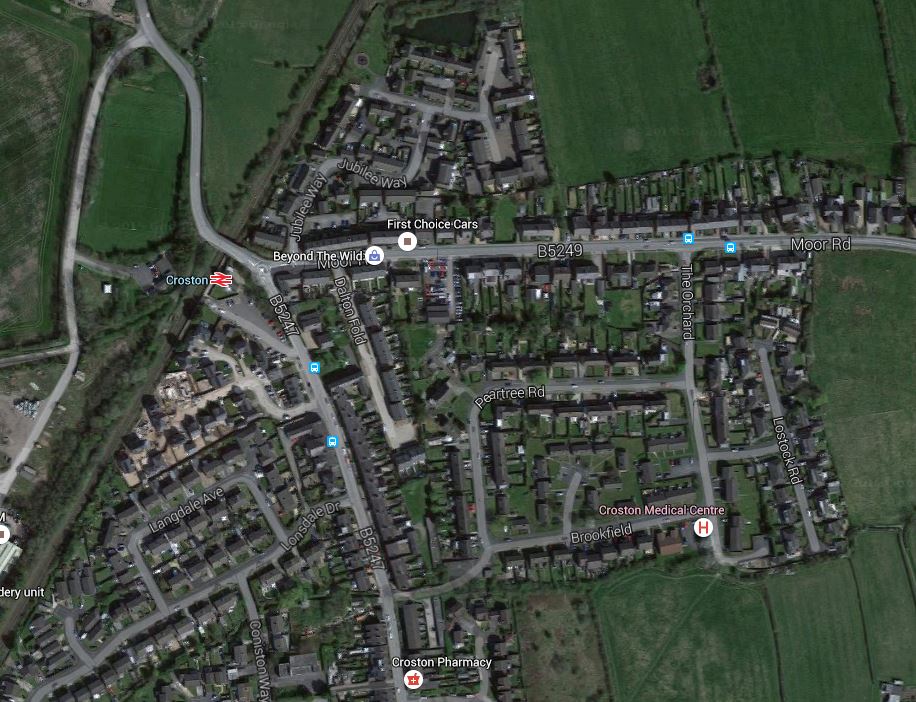
Croston Station
Croston station lies on the Ormskirk Branch Line, which connects Ormskirk on the Mersetrail network around Liverpool, to Preston and the the West Coast Main Line. The Ormskirk Line one of those terrible and neglected pieces of infrastructure, left behind after the cuts of the 1960s and 1970s,
Merseyrail have ambitions to connect Liverpool to both Preston via Ormskirk and Manchester via Kirkby with new electric trains. I wrote on this in Is Liverpool Planning To Invade Manchester By Train? I said this.
———-
In the October 2015 edition of Modern Railways, there is an article about Merseytravel looking for a new fleet of trains for their 750V DC network, which is entitled New Trains For Liverpool. This is said.
Merseytravel has indicated that it will be seeking ‘innovative proposals’ from manufacturers, with considerable emphasis being placed on the overall cost of operating the fleet rather than just the basic cost of the trains themselves. Options such as regenerative braking and onboard systems to store energy under braking to be used for acceleration will attract particular interest. The independently-powered EMU (IPEMU or battery train) concept evaluated earlier this year on a modified Class 379 in East Anglia ,might see an application here.
It does appear on a quick look, that a version of the new Aventra train, which comes with an IPEMU capability as standard might be suitable for Merseyrail, as it could connect Preston to Ormskirk and Manchester to Kirkby, without any more electrification.
———-
Some of my thoughts in the Invading Manchester post, is based on this document, which is entitled Liverpool City Region Long Term Rail Strategy, so it is not idle speculation.
A half-hourly four-car service through Croston and other stations in the area linking to Liverpool and Preston using IPEMU trains, would not help directly with the floods, but would get people into and out of the area without needing to use a vehicle on flooded roads.
I’m sure that the engineers from Bombardier and Network Rail will ensure that an IPEMU can operate some kind of service in conditions as we’ve experienced over the last few days.
Intriguingly, I have just been reading this article in Rail Technology Magazine, which is entitled Bombardier enters key analysis phase of IPEMU. In a section entitled Market Applications, this is said.
Bombardier has started assessing potential customers for battery-powered trains, looking first at branch line applications. Batteries could be a solution allowing non-continuous electrified infrastructure, and emergency rescue and last-mile opportunities.
Although emergency rescue is probably more about power loss than floods, Bombardier obviously feel that an IPEMU has some genes inserted from a cross-country vehicle.
Knowing the way Liverpudlians think, I suspect that what was said about IPEMUs for Merseyrail in the October 2015 edition of Modern Railways will happen.
Could IPEMUs Be Used On The Windsor Link Railway?
I quite like the concept of the Windsor Link Railway.
When I wrote Walking The Proposed Route Of The Windsor Link Railway, I was unsure about how they woud arrange the power supplies on the route.
Now that the concept of an IPEMU or independently-powered electrical multiple unit is better defined and probably nearer to delivery, I think that the train may have an application on the Windsor Link Railway.
In researching the branches of the Great Western, in Towards A Thames Valley Metro, I came to the conclusion, that Slough to Windsor should be worked by an IPEMU.
If the Windsor Link Railway is ever built, then the Windsor Tunnel doesn’t need to be electrified, as at five hundred metres, it is short enough for an IPEMU to get through on batteries.
The tunnel would be smaller and simpler.
New Trains For The North
That is the headline on a two page article in Modern Railways magazine.
It is an article that is strong on promises, in what it says that First TransPennine and Arriva Northern Trains will do.
Under a sub-heading of Bi-Modes for TransPennine, this is said.
FirstGroup is to invest over £400 million in a fleet of 44 new five-car 125 mph trains, which are expected to be based on the Hitachi AT300 design already being procured by sister operator Great Western Railway.
It also states that twelve will be electric only and the rest will be bi-modes.
The timetables state that the first bi-mode will enter service in December 2017.
Under a sub-heading of New and Upgraded Fleet for Northern, this is said.
Arriva is to invest £400 in 98 new air-conditioned 100 mph trains comprising 281 carriages, of which 43 will be three- and four-car EMUs and 55 two- and three-car DMUs. The latter will enable the withdrawal of all Pacers by the end of 2019.
The delivery schedule for the new trains stretches to 2020.
All these promises are all well and good, but I do wonder if they are deliverable with new trains.
AT300
Hitachi have been clever and have bought AnsaldoBreda, so they can build AT300 trains in Italy. This is said in the Wikipedia entry for the AT300, which is based on the Class 800 train, they are building in Newton Aycliffe.
In mid 2015 Eversholt Rail, a rolling stock operating company signed a £361m contract with FGW to purchase 173 new AT300 carriages, consisting of 22 five-car and seven nine-car trains. The AT300 trains are to be built at Hitachi Rail Italy’s Pistoia plant.
The trains are expected to enter service with Great Western Railway from December 2018. and are also expected to reduce journey times from London to Exeter by up to 5min, to Plymouth by up to 6min, and to Penzance by up to 14min.
It puzzles me how First TransPennine will be able to introduce the first bi-mode into service in December 2017, as where will the train be built?
It can’t be built in Italy, as Hitachi won’t have even delivered their first train until December 2017.
The only possibility will be to take trains from Newton Aycliffe and delay deliveries to Great Western Railway and Virgin Trains East Coast. Wikipedia and other sources is rather short on dates for the delivery of the Class 800 and Class 801 trains.
Hitachi in Newton Aycliffe are also involved in the building of AT200 trains for Abellio ScotRail. This is said in Wikipedia.
Abellio ScotRail will introduce a fleet of 46 three car and 24 four car Hitachi AT200 electric trains from December 2017, to operate services on the lines being electrified as part of the Edinburgh to Glasgow Improvement Programme, if it granted a three-year optional franchise extension, it will order a further 10 three car units
I doubt that we’ll see more than a token AT300 running on First TransPennine before the end of 2017.
Class 185 Trains
The Modern Railways article says this about TransPennine’s Class 185 trains
First is expected to retain 28 of the current 51×3 car fleet of Class 185s; the units to be retained will be refurbished.
This means that twenty-three of the Class 185 trains will be available for cascade.
Modern Railways says the two franchises will be jointly managed from Leeds, so would it be sensible to perhaps keep the current fleet together for refurbishment and maintenance?
So perhaps if the answer is yes, then common sense would dictate that the cascaded twenty-three trains would go to Arriva Northern.
Class 319 Trains
Handsome is as handsome does, goes the old horseman’s phrase and you couldn’t call a Class 319 train beautiful.
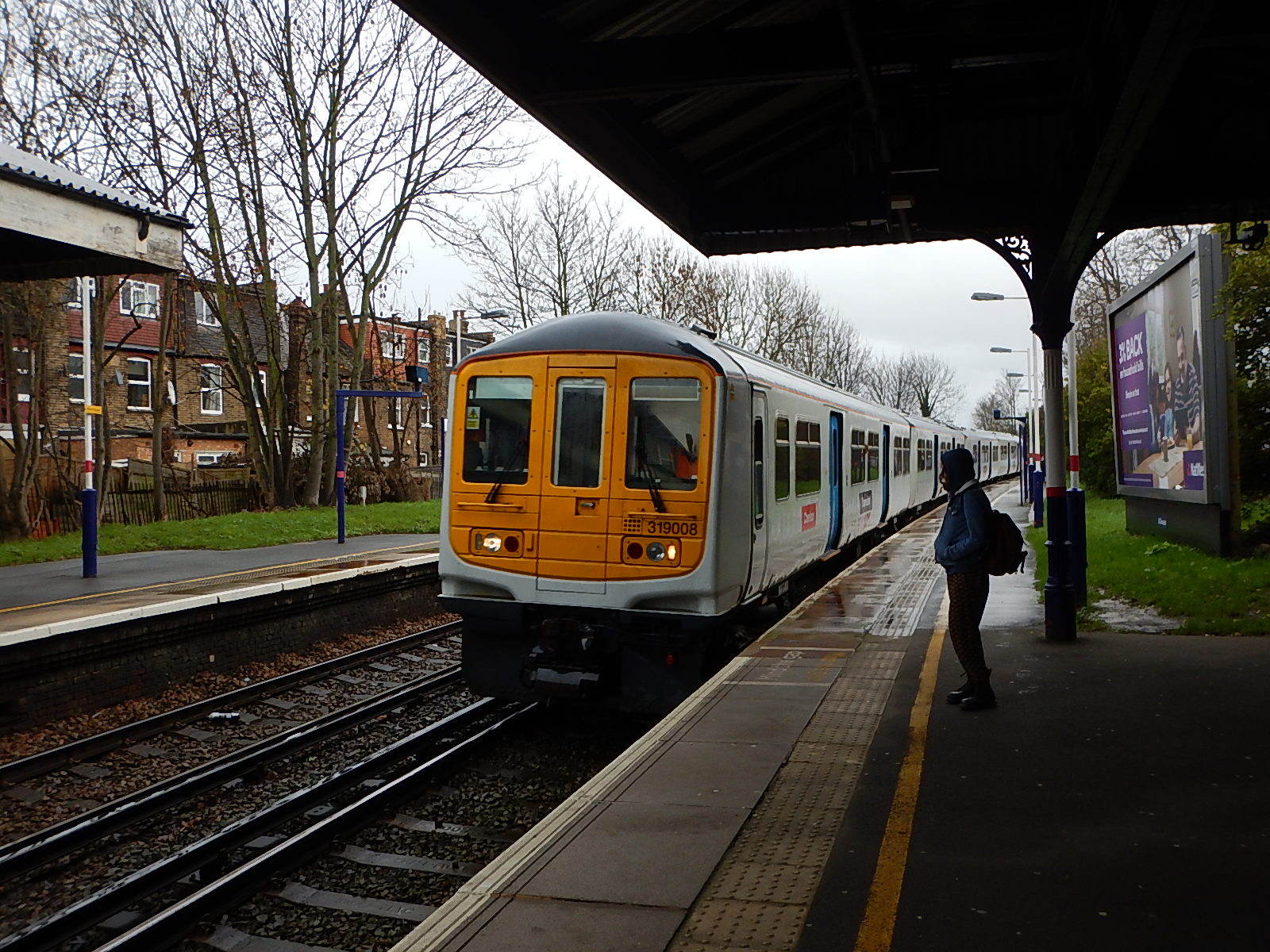
But for some of the electric routes in the North, they’re all we’ve got! And like some elderly actresses, they scrub up well.
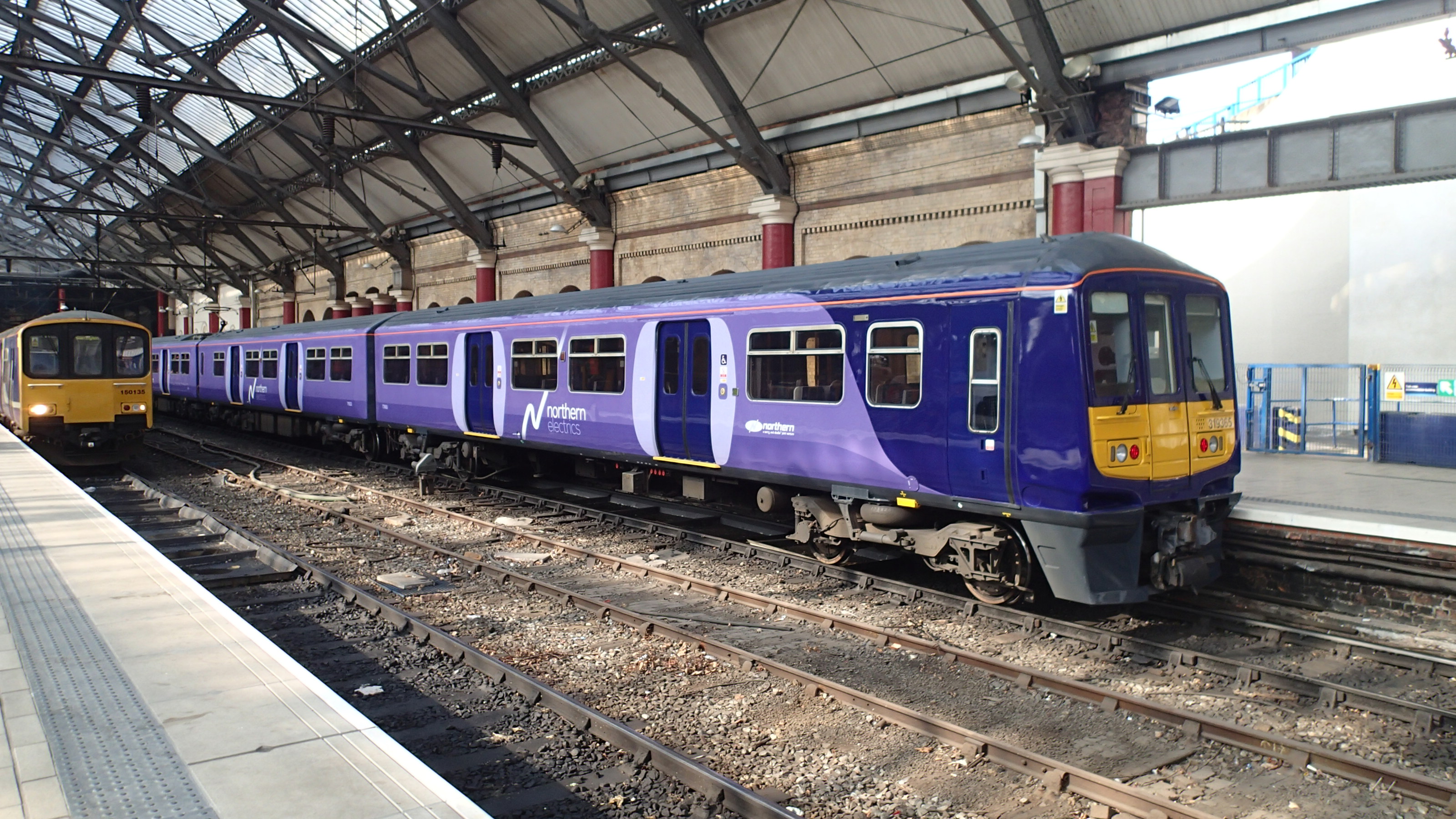
The Modern Railways article says this about Northern’s use of the Class 319.
It is understood that refurbished Class 319s will be used on these services on an interim basis until new build units arrive.
I suspect that these will soldier on for a few years yet!
At least there are eighty-six of these 100 mph four-car trains.
There must be a lot of laughter at reunions of engineers from BREL York, when they see how far their Bedpan Special has gone. after being built especially for the Bedford-Brighton route through the tunnels under London via St. Pancras in the 1980s.
He who laughs last, laughs longest!
Class 442 Trains
This is said in the Modern Railways article about Class 442 trains.
First says it did evaluate the use of Class 442 EMUs displaced from Gatwick Express workings hauled by diesel locomotives.
But they found it was too challenging and have discounted them.
So it looks like the Class 442s won’t be going anywhere in the North and probably have no worthwhile future.
Class 390 Trains And The West Coast Main Line
Virgin Trains have aspirations to run their Class 390 trains that work the West Coast Main Line, at their design speed of 140 mph in as many places on the route as possible. This section in Wikipedia gives more details.
At present because of signalling and regulations, trains are limited to 125 mph, but it is likely that once ERTMS is fully implemented, that pressure will increase to allow 140 mph in places on the West Coast Main Line.
TransPennine’s Scottish Services
TransPennine are increasing their Scottish services and this timetable is given.
- December 2018 – Liverpool-Glasgow service launched
- December 2019 – 12 new electric trains introduced on Anglo-Scottish services.
- December 2019 – Liverpool-Newcastle services extended to Edinburgh
This is said about the Class 350 trains currently running their Scottish services.
The 10 four-car Class 350/4 EMUs currently used on Manchester-Scotland services are expected to be phased out over the first three years and offered to other franchises. First say these trains are too small to run on many diagrams as single units.
So it looks like trains with this specification will be needed.
- Electric power only
- 140 mph top speed, as parts of the West Coast Main Line, will probably get upgraded to this speed, within the service lifetime of the trains.
- Five cars or longer.
- The ability to work in pairs. As all Glasgow trains will probably call at Preston, it might be sensible to join and split Liverpool and Manchester trains there to save train paths on the West Coast Main Line.
- Full on-board customer service.
The specification fits the Hitachi AT300 well, as these trains are available in five car sets and can be upgraded with minor modification for 140 mph running.
But will the timetable of 2019 for twelve new trains, fit the production capabilities?
As delivery into service by December 2019, to give TransPennine their promised service might be exceedingly challenging, could we be seeing something from another manufacturer?
After all, there are several around the world, who could create five-car 140 mph electric express trains?
- Some open-access operators like Alliance Rail are talking about using Pendolinos on Scottish routes, so Class 390 trains or an updated design of Italian-built Pendolino train must be a very real possibility.
- Siemens must also have a suitable train perhaps based on a German ICE design.
- The Chinese, Koreans, Spanish and Swiss shouldn’t be discounted.
If Hitachi can’t deliver, I’d put my money on a five-car Pendolino. After all, it is proven on the West Coast Main Line.
EMUs For Northern
Arriva have said, they will be buying forty-three 100 mph air-conditioned electric multiple units (EMUs), in a mixture of three- and four-car units.
These are probably the easiest trains to source and they might even already have been ordered or even built, in the shape of Class 387 trains. These have the following specification.
- Modern air-conditioned four car electric train.
- 110 mph capability
- Proven performance and certification.
- Bombardier can probably build them alongside all their Aventras at Derby.
But there are few electrified routes in the North, where they can be run.
However on the other hand!
I’ve believed ever since I rode the Class 379 BEMU or IPEMU demonstrator, that battery-powered trains based on this technology, are ideal for some of Northern’s routes.
Partially electrified routes or ones that run between electrified hub stations at Carlisle, Doncaster, Leeds, Liverpool, Manchester, Newcastle and York, could have virtually brand-new four-car electric trains, as soon as Bombardier can add IPEMU systems to Class 387 trains, currently in service or on order and staff can be trained.
A few months ago, I wrote Rumours Of Battery Powered Trains, where I said there were rumours of some of Great Western Railway’s order for Class 387 trains would be delivered as IPEMUs to help solve the shambles of the Great Western Main Line electrification.
Using an IPEMU is an attractive approach for several reasons.
- IPEMUs have a range of around sixty miles on the battery, if it is fully charged.
- IPEMUs have regenerative braking at all times, whether there is an electric supply or not! This improves efficiency and increased on-battery range!
- Bombardier feel that all trains should have energy storage for myriad operational reasons and the upcoming Aventra will be designed to accept an energy storage device as standard.
- Passengers will have the same experience on overhead line or battery power.
- On many routes, IPEMUs need no modifications to be able to run, except perhaps lengthening platforms for four-cars.
- On a scenic line or one in the middle of nowhere, the problems of electrification and its maintenance can be avoided, if services can be run by IPEMUs.
- Electrified hubs can be upgraded or created to charge the trains. In the North, Carlisle is being upgraded and Hull and Middlesbrough could be electrified.
- Some lines are currently run by some of the better diesel multiple units (DMUs) like Class 158 trains. Releasing these would probably eliminate a few of the dreaded Pacers on other lines.
All stakeholders will like these trains.
- Operators know that new four-car trains will attract more fare-paying customers.
- Network Rail will save money on electrification and can skip difficult bits.
- On many routes, opening up bridges and tunnels for the overhead wires is difficult, very disruptive and a time- and money-consuming process.
- Passengers and staff like new trains.
- More places can be served by electric trains.
- New four-car trains replacing ageing diesels will improve the prosperity of an area.
Routes that could be easily converted include.
- Barrow to Manchester Airport
- Chester to Manchester Victoria
- Windermere to Manchester Airport
- Blackpool North to Manchester Airport
- Liverpool to Manchester Airport via Warrington
Add in some electrified hubs and short lengths of tactical electrification to charge the trains and other lines like the scenic Tyne Valley Line between Newcastle and Carlisle could be run using new four-car electric trains.
I believe that these trains have enough energy storage to actually bridge the notorious forty mile gap in the electrification between Manchester Victoria and Leeds, thus creating an electric train service from Liverpool to Edinburgh via Manchester, Leeds, York and Newcastle
Note that news on development of IPEMU trains has been very quiet for several months and the only report is this article in the Derby Telegraph, which is entitled Battery-powered trains win award for Bombardier.
So someone other than I do, think the technology works and deserves its place on the railways of the UK.
Class 323 Trains
Before leaving Northern’s EMUs something must be said about the seventeen three-car Class 323 trains, that run services out of Manchester.
As they are being transferred to London Midland, they will need to be replaced.
Also, according to Wikipedia at times, some of the Class 323s are currently replaced by a pair of Pacers. So perhaps they need a bigger fleet anyway!
So until new units are ordered, will we see Class 319s working these routes? Or could they be a home for some of Porterbrook’s Class 387s?
It’ll all come out in time and in the contracts?
DMUs For Northern
Arriva have said, they will buy fifty-five two- and three-car DMUs.
Two factors could decrease this number.
- If Arriva go down the Class 387 IPEMU route, more routes will be running electric trains.
- The twenty-three Class 185 trains cascaded from TransPennine should they end up with Arriva.
- It seems likely that other companies including Great Western Railway could use the IPEMU route, thus making some high-quality DMUs available.
I won’t speculate on how many new DMUs will be actually ordered and built. If any!
Northern Connect
Northern Connect will be a sub-brand comprising a dozen long distance routes across the North.
Modern Railways publishes a table of the routes and indicates eight routes will be run by new DMUs, two by refurbished trains and two by new EMUs.
Obviously, Northern have a plan to create five of these routes by the end of 2018 and the rest by the end of 2019.
Where will the various classes of train fit?
- Some routes could be run by EMUs, with Class 319s providing an interim service until the new build arrive.
- Some routes could be run by Class 387 IPEMUs, once they are delivered.
- Some of the longer routes around Sheffield and Hull would be ideal for Class 185s.
If the long-rumoured Class 387 IPEMUs do appear, Barrow and Windermere to Manchester Airport, would be ideal routes on which to trial and showcase the technology.
Northern’s Train Philosophy
The Modern Railways article also says this.
Arriva says that it is still in negotiations with the supply chain but expects to sign a contract by April. It also says that the new fleet ‘has the capacity to grow’ with the trains ‘ordered as a family that are expandable’. The first 92 carriages will enter service by the end of 2018, with a further 163 by the end of 2019 to ensure all Pacers are replaced and the final 26 in 2020.
That is a very sound train procurement philosophy, which has a fairly relaxed delivery schedule, given the shortage of train building capacity in the UK and Europe. I suspect the Chinese could build them, but would that be politically acceptable?
I would not be surprised if Arriva went for a purchase of Class 387 trains, of which a proportion were IPEMU variants and some tactical electrification to produce electrified hubs in places like Huddersfield, Hull, Scarborough and Sheffield. It would be an afordable way of getting the benefits of new electric trains at an affordable price.
They would still need a few diesel multiple units, over and above the good ones they replaced with electric trains. But London Overground and hopefully Great Western Railway should be releasing some that are suitable.
Only as a last resort, would any new ones be ordered.
Class 387 Trains
I believe that the Class 387 Trains will play a large part in Northern’s plans.
They are a 110 mph four-car modern unit and currently there are twenty-nine units in service and another twenty-eight on order, if you ignore the separate order of twenty-seven trains for the Gatwick Express.
Thirty seven units are destined for the Great Western Railway and in Rumours Of Battery Powered Trains, I wrote about unconfirmed reports that some of these trains for the GWR would be IPEMU variants. I suspect that this will be confirmed, as it will enable electric services to be started on the shambles that is the Great Western.
The Gatwick Express variant of the Class 387 is going to be a train, worth looking at, as it will be the first Airport train we’ve ordered since the Heathrow Express.
There are to be twenty-seven four car trains replacing twenty-four five-car Class 442 trains.
There may be a few less carriages, but they are designed for the route.
They are also built as dual-voltage trains. Is that just so they can be tested on the West Coast Main Line, as was reported in this article in Rail Magazine, or because they think the type will have other Airport applications, like possibly Manchester, Cardiff, Glasgow, Luton, East Midlands and Stansted.
I can’t wait to ride one in the near future, as I think it might offer, a whole new experience of getting to an airport by train.
A lot of the services in the North West go via Manchester Airport. So would a follow-on order of this variant be ideal to get passengers to the fast growing airport?
Some questions have to be asked.
- As some of these services go all the way to Scotland, could the train be certified to the 125 mph of the West Coast Main Line?
- Could an IPEMU variant be created to bridge the gap between Manchester and Leeds?
- Could an IPEMU variant link Manchester Airport to Barrow, Blackpool North, Liverpool and Windermere?
- Can Class 387 trains be built in five-car formations?
If the answer to all or some of these questions is in the affirmative, Manchester Airport and the Nortrh might receive some interesting trains from Derby to create a 125 mph network of five-car Airport trains all across the North.
I suspect that Bombardier are working hard to see if they can fulfil that dream, as if they can, the rewards to the company, Arriva Northern, First TransPennine, Network Rail and the North in general, could be substantial!
There would be no waiting until 2018 for true bi-mode trains.
Could the silence on the IPEMUs be just because all parties don’t want to show their hands until all of the tiniest details are totally settled?
Political And Commercial Considerations
I mentioned in the section on the Class 387 trains, how important to get any trains, that can improve services in the North is to the companies involved and Bombardier in particular.
Bombardier have been going through a rough patch and were bailed out by the Quebecois. They seem to be sorted with large orders, but creating some more Class 387 trains, must be good cash-flow and profitable.
Network Rail are in a deep mess over electrification everywhere and desperately need some help in creating lines for electric trains. Peter Hendy is trying to sort out the shambles and there is a report in Modern Railways this month with a headline of Hendy Finds £2.5 Billion To Save Enhancements. The article says assets will be sold and there will be more money from the Government.
Arriva and FirstGroup have spent a lot of time and effort to create plans to give the North a modern world-class railway system. It is unlikely, that the train manufacturers will fail to deliver to agreed contracts, as all trains proposed for the North or either in service or at the certification and trial stage. The problem is the tracks. They will not be pleased if Network Rail fail to deliver, the electrification they have promised on time, as pictures of new trains stored in sidings are not good publicity.
Read a lot of the stories about new trains to run on newly electrified lines and dates have a vague air about them.
I suspect all will become a lot clearer, when Peter Hendry fills out his plan for Network Rail in the Spring. All we are getting at the moment are worthwhile aspirations.
And then there is the small matter of the local elections in May!
If the shambles is still persisting before the election, Corbyn and the Labour Party will have a field day, when they say they will nationalise the railways.
This would be a disaster for Arriva, FirstGroup and probably Peter Hendy. The companies would probably lose millions and Peter Hendy would have totally failed.
With my engineering hard-hat on, I’m getting more and more convinced that those clever engineers in Derby will pull the IPEMU rabbit out of the hat.
They have form for this, as in the 1970s, they created the peerless InterCity 125, after the wreckage of the APT.
Conclusion
Wait for April and hopefully before then a lot more will be revealed!
 The Anonymous Widower