‘Encouraging signs’ on Borders Railway Extension to Carlisle
The title of this post is the title of an article on the BBC. This is said.
An MP has said there are “encouraging signs” that the “fantastic vision” of extending the Borders Railway to Carlisle could be realised.
Calum Kerr made the claim in a piece written for the Campaign for Borders Rail newsletter.
This is original article on the Borders Railway! This is said.
The good news is that there are encouraging signs we may be able to win cross party support on this. For instance, I’ve spoken to my neighbouring MP David Mundell, who is the Secretary of State for Scotland in the UK Government. He’s broadly supportive and is planning to speak to the Department of Transport in London to gauge its views.
I’ve also been in discussion with MPs on the English side of the border. They’re also warming to the idea. In particular, I’ve had several discussions with Rory Stewart, who represents the seat of Penrith and the Border, and he’s keen on getting it onto the agenda.
I think the involvement of Rory Stewart is significant. I remember him from one of his excellent documentaries called Border Country: The Story of Britain’s Lost Middleland, which was a fascinating history of the lands both sides of the England-Scotland border.
When I wrote If Manchester Victoria And Birmingham New Street Were The First Two Courses, Is Carlisle The Third?, I wrote this.
I just wonder, if whilst they are rebuilding the platforms, they will electrify some of the bay platforms. Or at least do the preparation work!
This would enable IPEMUs to be able to be recharged, if they were serving routes out of Carlisle, like the Tyne Valley Line, Settle to Carlisle and possibly an extended Borders Railway.
Incidentally, I think that by the time Carlisle station is updated in 2019, IPEMUs or battery trains, would have enough range to reach Edinburgh. You can see the headlines in the Sun!
After reading Calum Kerr’s thoughts, I feel even more that Network Rail have a cunning plan to make Carlisle station a hub for IPEMUs, which would serve the following routes.
- The Borders Railway to Edinburgh
- The Glasgow And South Western Railway to Glasgow
- The Tyne Valley Line to Newcastle
- The Settle-Carlisle Line to Leeds
- The Cumbrian Cost Line to Barrow and Lancaster
Note the following.
- The only major infrastructure work would be the completion of the Borders Railway to Carlisle.
- The area is noted for its superb scenery and occasional extreme weather. Not electrifying large sections of remote and exposed rural lines, is an attractive option, in terms of planning, engineering, building and maintenance.
- Technology exists to do all signalling by radio links.
- The last two lines would probably need some limited electrification to charge the trains en route.
- The Cumbrian Coast Line could be electrified between Sellafield and Barrow, where the line is better protected.
- The infrastructure needs of a four-car IPEMU train, is similar to that of a four-car diesel multiple unit.
- The Glasgow and South Western and Tyne Valley Lines could probably accept IPEMUs tomorrow.
- The network has several connections to the major Anglo-Scottish routes, at Edinburgh, Glasgow, Leeds, Newcastle and Preston.
It would be one of the most scenic set of railway routes in the world!
I won’t comment on the commercial, social and tourism aspects of creating such a railway system.
Towards A Thames Valley Metro!
After my visit yesterday to Twyford Station and the Henley Branch and today to The Marlow Branch, I think something bigger could be emerging.
On the Great Western Main Line, between Paddington and Didcot, there are several branch lines and other more major routes that run local services into Reading and/or Paddington.
Taken in order from Paddington, they are.
- Acton to Northolt Line – 11 miles – Rather a leftover line that gets used for all sorts of traffic, including freight, diversions and driver training.
- Greenford Branch from West Ealing – 2.7 miles – Another leftover line, that is being rerouted to a bay platform at West Ealing – Could be transferred to the London Overground.
- Brentford Branch Line – 4 miles – Freight only
- Staines and West Drayton Line – 5.5 miles – Freight only.
- Windsor and Eton Branch from Slough – 2.5 miles
- Marlow Branch from Maidenhead – 7.15 miles – I wrote about it in The Marlow Branch.
- Henley Branch from Twyford – 4.5 miles – I wrote about it in Twyford Station and the Henley Branch
- Waterloo to Reading Line – Electrified, but links to the North Downs Line for Gatwick Airport, which isn’t!
- Reading to Basingstoke Line – To be electrified, with possibly some extra stations.
- Cherwell Valley Line from Didcot Parkway – To be electrified.
What follows are my observations.
Class 387 IPEMU Trains
Great Western Railway is to receive twenty-nine Class 387 trains from Thameslink and eight new ones from the factory.
These could easily be upgraded to IPEMU variants by the addition of batteries.
Once the power is switched on as far as Didcot Parkway station, I suspect that all these mainly short branches could be run using IPEMU trains, if passenger services were required or required to be run by electric trains.
Some like Greenford, Windsor and Eton, Marlow and Henley, would be as now, one train per branch. But elderly two car diesels would be replaced by new four car electric trains with a superior performance.
In Rumours of Battery Powered Trains, I reported on an article in Modern Railways magazine, which speculated that the extra Class 387 trains were to be IPEMUs and that they could be used on routes like Bedwyn and Oxford.
So it’s not my speculation!
Electrification Of The Branches
Some of the branches like Marlow Branch with its unusual layout and the Bourne End bridge and Windsor and Eton Branch with the historic nature of where it goes, will not be straightforward, as I suspect the heritage lobby will have a field day. As I wrote in Why We Should Use Independently Powered Electric Trains, the opposition to electrification in sensitive areas is stirring.
Electrification of the Greenford Branch might be more straightforward, but with five stations and a terminus in a bay platform at Greenford, I would suspect that a dedicated Class 387 IPEMU would cost less and only require the bay platform at West Ealing station to be electrified.
North Downs Line
In some ways, the North Downs Line is the most interesting, as I think that a dual-voltage IPEMU could easily supply a high quality service between Reading and Gatwick.
At present the direct service is hourly and takes around eighty minutes, using a two car Class 156 train.
Reading to Gatwick by Crossrail and Thameslink could on current figures and predictions for Crossrail times, take a few minutes over a hundred.
So the current direct route is quicker now with Class 165 diesel trains!
What difference would a faster four-car electric train make?
Crossrail’s Effect On The Great Western Main Line
The biggest effect will be when Crossrail arrives at all stations on the Great Western Main Line from Paddington to Reading.
Stations like Slough, Maidenhead and Twyford, where branches connect, will see a positive effect, as I suspect that more connections to and from the branches will be easier and involve less waiting.
Improving Services On The Branches
I think we could see some reorganisation of the services on the branch lines to give increased frequencies?
I think if Great Western Railway take the IPEMU route instead of electrifying the branches, there is scope for providing improved services from Slough to Reading and on the branches in the area. Diagrams could be arranged that after trundling down a few branches, the IPEMU did a section on the electrified lines to charge the batteries.
On thing I noticed on my trip to Marlow, was that Network Rail seem to be installing a lot of bay platforms at Crossrail stations. Some are London-facing for flexibility in the Crossrail schedules, but some are facing the other way. Could Network Rail be thinking out of the box and making sure, they don’t compromise any possible future services?
Reading As An Important Hub
As the routes develop, it would almost be like a Thames Valley Metro centred on the extremely well-connected Reading.
- Great Western Railway to Wales, the West Country and London
- Crossrail to London and beyond.
- Cross-Country Trains to the South, Midlands and North
- In a few years time the East West Rail Link could join Reading to Oxford, Milton Keynes, Bedford and the East.
The Class 387 IPEMU trains could serve the following stations from Reading, with very little extra electrification and perhaps the odd curve or two.
- Basingstoke
- Bedwyn
- Gatwick Airport
- Heathrow Airport
- Henley-on-Thames
- London Paddington
- Marlow
- Newbury
- Oxford
- Windsor and Eton Central
- Wokingham
If the Marlow Branch were to be extended, the trains could even reach High Wycombe.
Reading is going to have a very interesting time!
The Marlow Branch
After my exploration yesterday of Twyford Station And The Henley Branch, I felt I had to explore one of the other branches today.
So I took the Great Western Railway to Maidenhead station and went up and down the Marlow Branch Line.

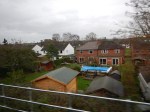

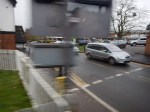



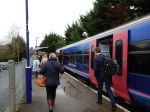
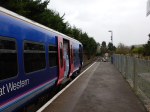
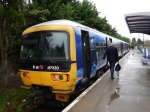
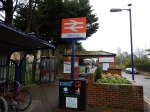





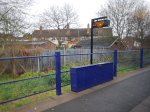


Unlike at Twyford, where you have several minutes to make the connection, at Maidenhead, I only had a couple, so pictures of Maidenhead station are a bit sparse in the gallery. However, I did take some others in Before Crossrail Maidenhead Station.
Much of what was said about the Henley Branch applies to the Maidenhead Branch.
- It is a short branch of just over seven miles with a change of direction in the middle at Bourne End station.
- An IPEMU would appear to be more than capable of providing a service on the line.
- At a quick look, it would appear that the platforms at Bourne End, Cookham, Furze Platt and Marlow stations could easily be made long enough for a four car train.
- The line has several level crossings and a couple of low bridges, that could cause problems with traditional electrification.
- Bourne End Railway Bridge is an historic bridge and I doubt that the heritage lobby would allow it to be electrified using overhead wires.
Operation
One almost unique quirk of the line is that the reversal of direction at Bourne End, where the driver has to walk to the other end of the train.
The Class 165 train is over twenty years old and was built before trains had modern control and wi-fi systems. Surely, a modern train could be driven from the rear, using CCTV for forward vision between Bourne End and Marlow.
Extending From Bourne End To High Wycombe
I think that it is true to say, that a lot of people would be very pleased if the branch line still continued past Bourne End and on to High Wycombe station.
This Google Map shows Bourne End station.
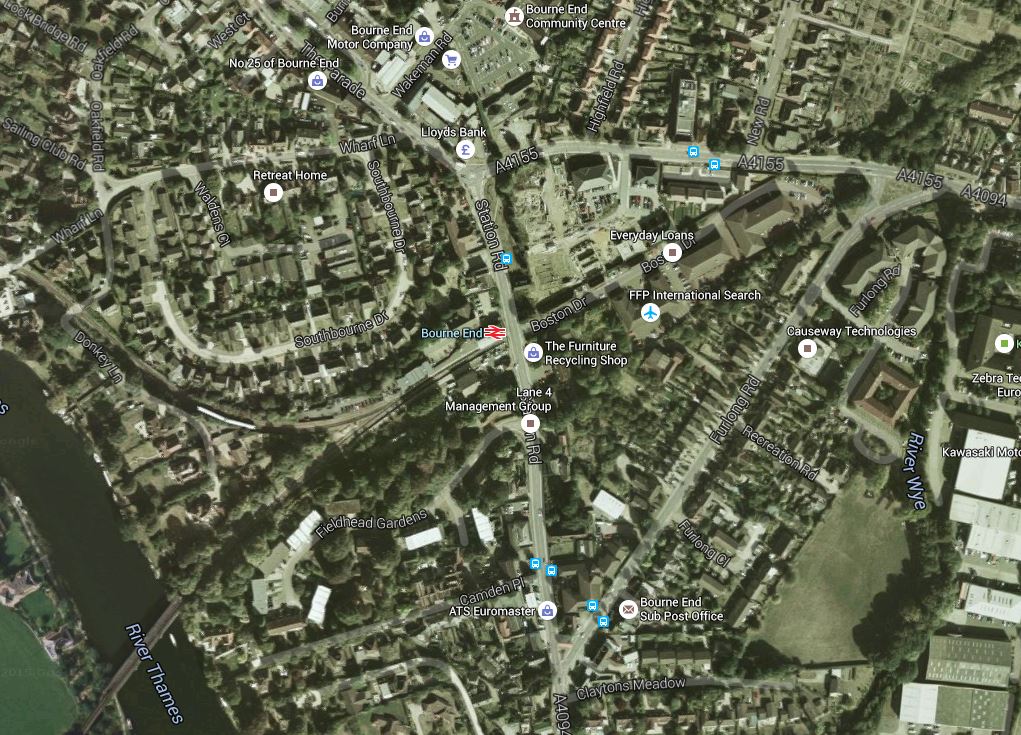
Bourne End Station
Note how the line from Maidenhead comes in from the South West and the line continues to Marlow along the river after the change of direction. The former line to High Wycombe is visible as a green scar going off to the North East.
I certainly think that the ambitious natures of Chiltern Railways, Great Western Railway and Crossrail/Transport for London will mean that this extension to effectively make High Wycombe one change away from Crossrail will be seriously looked at by the train companies.
Twyford Station And The Henley Branch
I went for lunch in Henley-on-Thames today taking the Great Western Railway to Twyford station for the Henley Branch Line to Henley-on-Thames station.
These pictures document the journey between my two train changes at Twyford station.
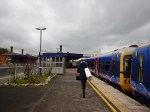
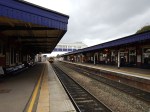
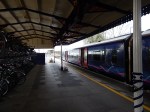
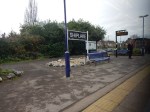
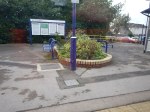
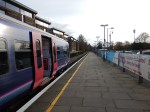
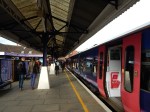
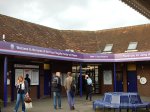
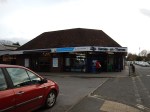



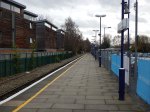
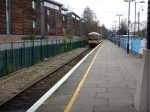
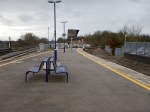
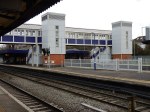


The branch is a typical single-track rural branch line that trundles its way through the countryside, over the River Thames to a single platform, that can take eight car trains.
It is currently served by a single two car Class 165 train, that goes up and down every fifty minutes or so all day, which is augmented by a couple of direct trains in the peak.
I feel that the Henley Branch Line could easily by worked by an IPEMU train. This could be either one of Class 387 trains ordered by Great Western Railway and converted to the technology or a new Aventra train.
Consider the following about the Henley Branch.
- It is only four and a half miles long.
- The speed limit of the line is fifty miles per hour.
- The bridge over the Thames has a lower speed limit and would probably be challenging to electrify.
- The two intermediate stations of Shiplake and Wargrave are built for eight car trains.
- There is at least one level crossing on the branch.
- The bay platform at Twyford station looks like it could take a five car train.
The Class 379 IPEMU test train with its sixty mile range could probably do six up-and-downs without a recharge. When an IPEMU train needed a recharge it would just pull into Platform 4 at Twyford station instead of the normal bay Platform 5, raise the pantograph and charge the batteries. Alternatively, Plstform 5 could have a short length of overhead wiring for recharging the battery.
This Google Map shows Twyford station.
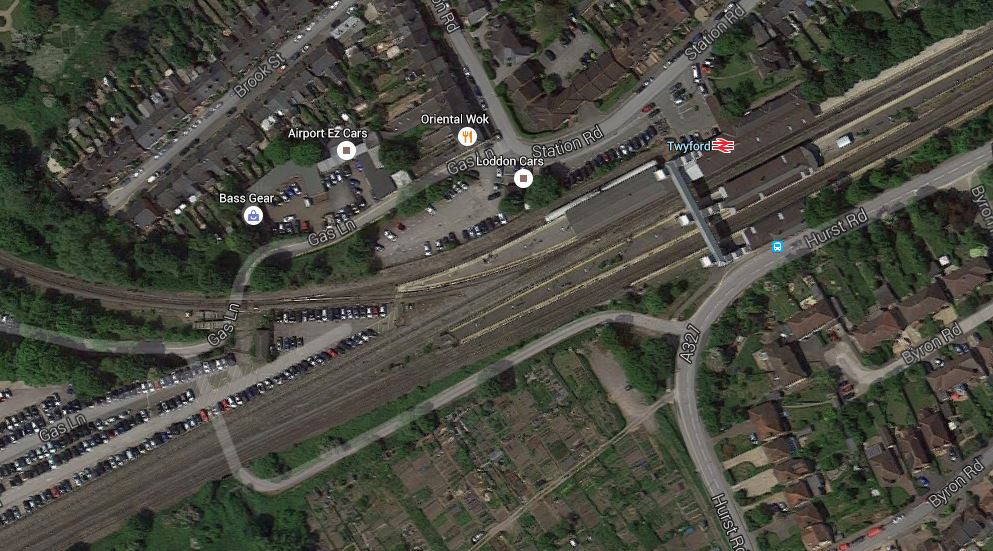
Twyford Station
Note the two car train in Platform 5 and the Henley Branch Line leading away to the north from the Great Western Main Line..
If Class 387 trains modified with IPEMU technology were to be used, Henley could receive four car electric trains as soon as the power was switched on as far as Twyford, with no major works on the Branch.
Two Class 387 trains could be coupled together to make an eight car train, that could also be run to and from Paddington during the peak and the Henley Regatta.
Why We Should Use Independently-Powered Electric Trains
I was looking for something else and found this article in the Henley Standard entitled Goring rail line work ‘will ruin countryside’. This is said.
THE electrification of the railway line through Goring will ruin the surrounding countryside, say residents.
Network Rail is installing overhead power cables as part of the scheme, which covers the route between Reading and Oxford and is expected to be finished next year.
Last week contractors began felling trees and putting up steel lattice gantries which will span the track at regular intervals to hold the wires in place.
You can argue that on a major line like the Great Western Main Line, we need robust overhead wire systems, as many of us have suffered serious delays on lines like the East Coast Main Line and the Great Eastern Main Line because of the flimsy overhead wire design.
But still the residents have a point and I think there must be a better design that mitigates the visual intrusion. Would Jasper Maskelyne and others skilled in the art of camouflage have ideas to assist Network Rail?
Network Rail can get it right, as is shown at the Grade 1 Listed Wharncliffe Viaduct, where the overhead wires are arranged to reduce the visual impact.
Are they usually as measured about where they place a gantry, as they have been on the viaduct?
Away from main lines, there will be lines like the Settle and Carlisle and the Hope Valley Line, where visual intrusion will be very important and activists will attempt to stop the installation.
It is for places like this where we must have independently-powered trains to service the route. There are two available technologies.
Electro-Diesel Trains
At the present time, there is only one electro-diesel train planned in this country and that is the Hitachi Class 800 train, which soon be seen on the Great Western Main Line and the East Coast Main Line.
They are a solution to the problem and can switch between propulsion modes at line speed, but they require diesel engines to be lugged around the country for where they are needed, so they may not be as efficient as a purely electric train.
There seems to be a few ideas for electro-diesel trains, but none appear to be comng to fruition.
Electric Trains With On-Board Energy Storage (IPEMU)
I rode the Class 379 train, that had been converted to act as a demonstrator for this technology.
It was impressive, as we trundled through the Essex countryside powered by energy stored in batteries, that had been charged from the overhead wires.
The fact that the technology works is all down to the physics of steel wheels on steel rails, which make train travel efficient in the first place.
As an electrical engineer, I know that this is technology, that can only get better.
- Electricity storage, whether based on batteries, flywheels, capacitors or some other method, will only get better.
- Trains will roll better through improvements in design.
- Energy harvesting from sources like regenerative braking will be more comprehensive.
- Secondary electrical systems on trains like air-conditioning, toilets and the provision of wi-fi will use less electricity.
- Automatic control systems will control the train tightly according to schedule, terrain and signals to minimise electricity use.
- Pantograph deployment will be automatic, when overhead wires are available.
But using the on-board storage to power the train on its route, is only one of the reasons it will be installed.
- If a train has on-board storage and regenerative braking, it will be more efficient.
- When the overhead line gets damaged or the power supply is cut, an electric train with on-board storage might still get through.
- Depots can have simplified electrification, which is safer for staff.
Bombardier must be impressed with the concept, as all Aventra trains will be wired so that on-board energy storage can be fitted.
Conclusion
Both technologies for independently powered trains are proven, but you wouldn’t want to use on-board energy storage over more than a limited distance, beyond which the diesel would be ideal.
By using independently powered trains, you can balance electrification cost, installation disruption and visual intrusion against the extra cost of a train with on-board storage or diesel engines.
Provided of course, the independently powered train can handle the route to the satisfaction of passengers and rail companies!
On the Great Western Main Line because of the distances involved and the reliability required, electric trains using overhead power on robust supports are probably the best method we have at present.
Although, Great Western Railway have been reported as saying they might use Class 387 trains with an IPEMU capability to destinations a few miles off the Great Western Main Line, like possibly Bedwyn and Oxford.
Is TransPennine Going For A One-Class Fleet?
This report on Rail News announces the awards of the two rail franchises in the North.
It says that First TransPennine will be committed to acquiring forty-four new trains comprising 220 vehicles. The article also says this about increasing services.
The frequency on many routes will be increased, so that there will be six trains an hour between Manchester and Leeds, and 35 a day between Manchester and Scotland — twice as many as now. A new route between Liverpool and Scotland will be introduced in 2019.
The numbers say they are five-car trains, which will certainly sort out some of their capacity problems.
At present First Transpennine has the following fleet.
- Class 156 DMU – 6 of two cars
- Class 170 DMU – 4 of two cars
- Class 185 DMU – 51 x 3 cars
- Class 350 EMU – 10 x 4 cars
All except the Class 350 are diesel-powered.
Add up the current carriages and you get two hundred and three.
So if some of diesel multiple units were retained, there would be a useful increase in fleet size.
But surely from the train maintenance and staff points of view, it would be better if there was one fleet of all the same type of train.
There may also be a slight problem with Scottish services, especially as the number of them is more than doubled.
This will mean that between Preston and Glasgow, they will need extra paths on the overcrowded West Coast Main Line.
I think we’ll see trains between Manchester Airport and Liverpool, and Glasgow, joining and splitting at Preston, as this will mean that Liverpool to Scotland services will not need any extra paths on the West Coast Main Line. Some could also split at Carstairs, with one train going to Glasgow and the other to Edinburgh.
I’ve used the Class 350 trains from Glasgow to Preston and despite being too small, they are also only 110 mph trains, whereas the Class 390 Pendelinos used by Virgin, usually run at 125 mph.
Simple common sense says, that if all trains cruised up the West Coast Main Line at the same speed, this maximises capacity. Also as parts of the TransPennine network in the East are also 125 mph lines, this might be desireable design speed. The government press release about the franchise award also talks about 125 mph trains.
But the biggest problem as is pointed out in the press release is that full electrification is not expected to be complete until 2022.
So trains will need some form of independent power source to bridge the gaps in the electrification.
- Five carriages
- The ability to run in pairs.
- 125 mph cruising speed.
- Some form of independent power.
Logic says that this means they will be Hitachi Class 800 trains, which would use their on-board diesel engines as required.
Currently, the factory at Newton Aycliffe is busy with Class 800/801 trains for Great Western Railway and Virgin Trains East Coast and EMUs for Scotland, so like the extra Class 800s for the South Western routes, they would probably have to be built in Japan.
Would this mean that early introduction into service would be very difficult?
The only alternative would be to stretch the current four car Class 387 trains to five cars and make them IPEMU variants, which would then use their on-board energy storage to bridge gaps in the electrification. If the technology can be proven for a route like Leeds to Manchester, then they could probably start to be delivered next year.
These are some points and questions about Class 387 trains and Bombardier’s IPEMU technology.
- Class 387 trains are built in Derby by Bombardier.
- There are currently a total of fifty seven four-car Class 387 trains either built or on order.
- There must be some standard Class 387 trains sitting in sidings, as they are destined for routes on the Great Western Railway, where there are no overhead wires.
- I doubt it would be difficult to lengthen the trains to five cars, as the closely-related Class 378 trains have received an extra car twice.
- This report in the Derby Telgraph, says that Bombardier have recently received an award for their IPEMU technology.
- This article in Rail Technology Magazine, states that Bombardier are doing extensive testing of the batteries at Mannheim
- IPEMU trains could be more efficient, as regenerative braking is used to recover energy instead of always recharging from external sources.
- As IPEMU technology improves, the range will get longer making it possible for electric trains to serve more destinations in the TransPennine network.
- Bombardier’s next generation train, called the Aventra, will all be wired for the fitting of on-board energy storage,
- The new franchise for First TransPennine has effectively started, as it just a continuation of more of the same. So early train delivery would show they meant business and it wasn’t just jam tomorrow.
- The standard Class 387 trains could be introduced on Scottish services as soon as trains were delivered.
If the IPEMU technology can be proven to be viable on First TransPennine, a lot of companies and groups will benefit.
- Network Rail will be able to avoid a lot of difficult, sensitive or expensive electrification.
- Bombardier could sell a few more trains.
- Passengers will get new electric trains in many places, as fast as they can be built.
- Some politicians and others could get a lot of credit.
It’ll be interesting to see what First TransPennine have decided to do!
Electrification Of The East West Rail Link
East West Rail has this question about electrification in the FAQ.
Q: Will East West Rail be electrified and if so, when?
A: It is expected that the Western Section of the East West Rail link will include electrification of the line between Bedford and Oxford.
Bletchley to Oxford is expected to be completed first during the 2014-2019 railway funding period.
Bedford to Bletchley will follow, probably in the next railway funding period 2019-2024, as part of the wider work done to electrify the Midland Main Line to Corby, Nottingham and Sheffield.
The Office of Rail Regulation has confirmed funding in principle for the electrification. The exact amount of funding and scope is expected to be determined by the ORR by March 2015 following detailed development between NR, DfT and the train operators.
I will take this as a qualified yes or it would be desireable.
Bletchley to Oxford electrification is stated as being done first and if that timetable is met, it would be likely to be completed before services start on these routes.
- Oxford to Milton Keynes
- Milton Keynes to London via Aylesbury.
As both Oxford and Milton Keynes are currently or will be electrified by then, the services between the old and new cities could be performed by a 100 mph EMU, like a Class 387 train, which could then continue to Reading if required.
But there are no plans to electrify any of the London to Aylesbury Line. To complicate matters Chiltern Railways have a shortage of suitable diesel trains.
So although the line might be ready in 2019 or so, there would appear to be no chance of Chiltern Trains running between London and Milton Keynes.
Unless!
Wikipedia gives the length of the passenger section from London to Aylesbury Parkway as about thiry nine miles.
So this probably means that the line could be run by Class 387 IPEMU trains, if there was some electrification in Marylebone station to charge the trains before they travelled North.
It is an interesting possibility.
Especially, as an electrified Marylebone, would probably allow the same trains to run services to electrified stations at Bicester Village, Oxford Parkway and Oxford.
If Manchester Victoria And Birmingham New Street Were The First Two Courses, Is Carlisle The Third?
Manchester Victoria and Birmingham New Street stations have one thing in common with the Eden Project – They all have roofs made of a plastic called ETFE.
According to this article on Network Rail’s web site, which is entitled £14.7m upgrade planned for Carlisle station, Network Rail are going to fit a third station with an ETFE roof. This is said.
Eight of the platforms will be rebuilt, and an updated roof will also help to make the station much brighter.
The work will significantly extend the life of the station’s roof structure, which dates back to 1847, as well as reducing the amount of maintenance it will need. The existing roof covering will be replaced with one made from ETFE (ethylene tetrafluoroethylene), the same material used for the roofs of the new Manchester Victoria and Birmingham New Street stations.
There’s also a computer visualisation of how Carlisle station will look.
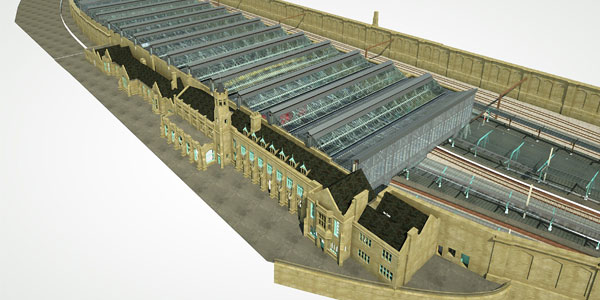
New Roof At Carlisle Station
This Google Map shows the station.
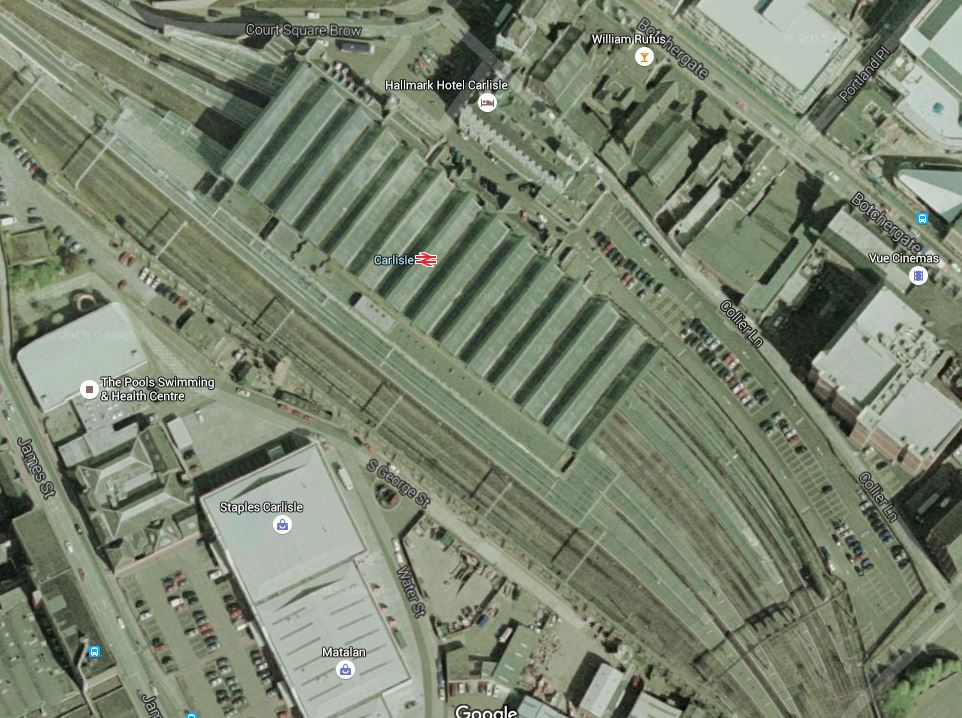
Carlisle Station
Note there are three through platforms, two bay platforms to the North and three to the South. I don’t think too many of the bay platforms are electrified.
I just wonder, if whilst they are rebuilding the platforms, they will electrify some of the bay platforms. Or at least do the preparation work!
This would enable IPEMUs to be able to be recharged, if they were serving routes out of Carlisle, like the Tyne Valley Line, Settle to Carlisle and possibly an extended Borders Railway.
Incidentally, I think that by the time Carlisle station is updated in 2019, IPEMUs or battery trains, would have enough range to reach Edinburgh. You can see the headlines in the Sun!
Are The Class 387 Trains Getting Excited?
I travelled from Blackfriars to St. Pancras on one of Thameslink’s Class 387 trains.


With only a couple of hours to the Chancellor’s Autumn Statement, are these trains getting excited about visiting places they never thought they would?
Since I wrote Rumours of Battery Powered Trains a few months ago, nothing has been heard. In that article I quoted from Modern Railways, who said this about future orders for Class 387 trains.
Delivery as IPEMUs would allow EMUs to make use of as much wiring as is available (and batteries beyond) while electrification pushes ahead under the delayed scheme, and in the longer term would allow units to run on sections not yet authorised for electrification, such as Newbury to Bedwyn. The use of IPEMUs might also hasten the cascade of Class 16x units to the west of the franchise.
Note that IPEMU is Network Rail’s term for a part-time battery train, that has the same performance as a standard train.
It is a deafening silence!
There has been nothing heard about electrification either, except the award of the contract for the Gospel Oak to Barking Line to J. Murphy and Sons as reported in this article in Rail Technology.
So is it a case of no news is good news for electrification?
I still believe that a fleet of Class 387 IPEMUs could be used to extend electrification by stealth, into areas, where everybody thinks it is impossible to go.
I would use them to run these routes for a start.
- Liverpool to Newcastle – There is one gap of 43 miles between Leeds and Manchester
- Blackpool to Scarborough – There might need to be some electrification at Scarborough
- Liverpool to Hull – There might need to be some electrification at Hull
- Euston to Blackpool
- Euston to Chester
- St. Pancras to Corby
- St. Pancras to Leicester – There might need to be some electrification at Leicester
- Kings Cross to Hull
- Kings Cross to Harrogate
- Kings Cross to Lincoln
- Kings Cross to Middlesbrough
- Kings Cross to Sunderland
- Liverpool Street to Lowestoft
- Liverpool Street to Norwich via Ely
- Ipswich to Cambridge
- Ipswich to Peterborough
- Paddington to Oxford, Newbury and Bedwyn
- St. Pancras to Ashford, Hastings and Eastbourne
- London Bridge to Uckfield
- Assorted Branch Lines to Barrow, Felixstowe, Greenford, Maidenhead, Marlow, Windermere and Yarmouth
On many of these lines, IPEMUs could run as soon as they are built or modified from existing trains!
If anybody doubts the concept, it could be proven on the Gospel Oak to Barking Line in North London.
So how does electrification figure in George Osborne’s statement?
Note these points!
- Electrification cuts carbon emmissions.
- Electric trains are faster and more efficient.
- Electrification needs to be done all over the country, so a lot of areas will benefit.
- It looks like there are upwards of thirty Class 387 trains, that have nowhere to go! But fitted with batteries they do!
- Using battery trains means that the costs and disruption of electrification are reduced.
If electrification is enabled using battery trains, it will be the biggest rabbit any Chancellor has ever pulled!
Battery Trains In Japan
Some think I’m wrong about battery trains and believe they will never catch on! But none of the doubters are engineers or physicists, and perhaps more importantly none rode the amazing Class 379 BEMU, when it was being trialled last year in Essex.
I have just searched for battery trains and found this article on the Rail Journal web site entitled Battery-Electric Trains For Japan’s Oga Line. This is said.
EAST Japan Railway Company (JR East) has announced plans to carry out trials with ac battery-electric multiple units (BEMUs) on the 26.6km Oga Line in Japan’s northern Akita prefecture from Spring 2017.
But this is not an experiment, as this is said later.
The Oga Line will be the second line on the JR east network to benefit from BEMU operation, following the introduction of EV-E301 series trains on the Karasuyama Line in Tochigi Prefecture in March 2014.
If the Japanese use BEMU (IPEMU in the UK!) technology in daily service, it can’t be their version of Mickey Mouse! The train is called an EV-E301, and looks a professional train, even if a bit spartan for use in the UK.
I just wonder when George Osborne makes his Autumn Statement today, will he be announcing new battery-electric trains or IPEMUs for all?
In my view, it’s the only way to electrify large parts of the UK and reduce the costs of electrification!
 The Anonymous Widower