Before Crossrail 2 – Enfield Lock
After visiting the house where my mother was born, I took a bus to Enfield Lock station.

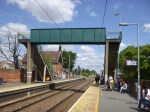
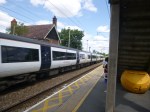
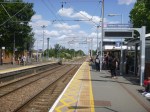

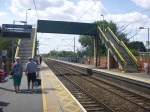
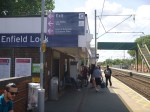
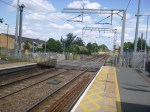
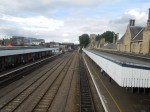
The footbridge must be one of the steepest I’ve seen. At least you can cross the line at the level crossing by the station.
This Google Map shows the station.
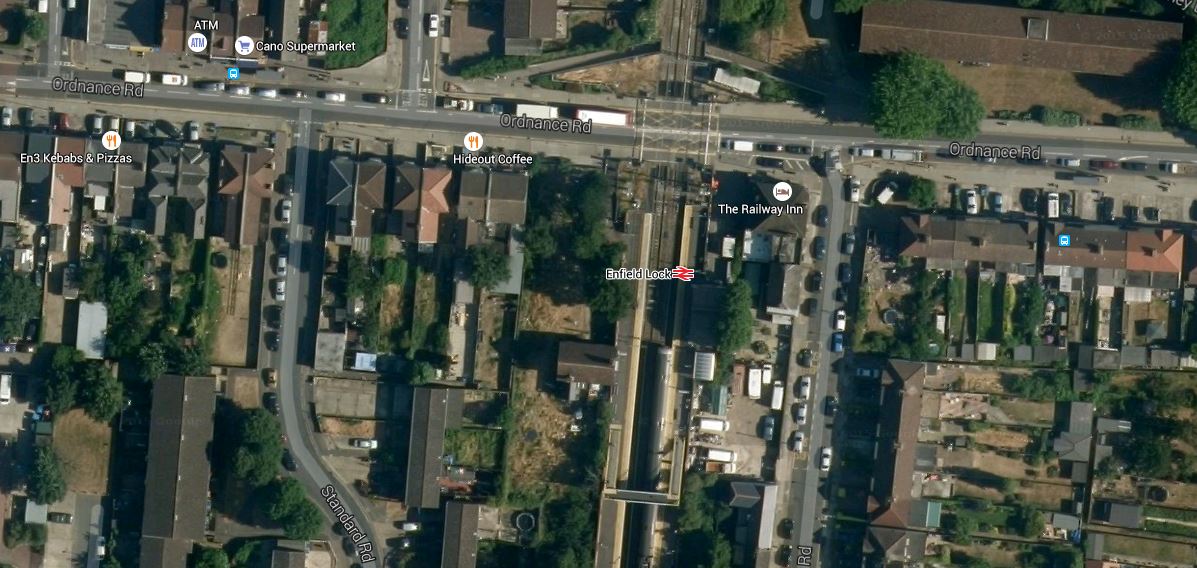
Enfield Lock Station
Note that there appears to be a pedestrian subway on the North side of the level crossing, which also seems to be holding up lots of traffic.
As there is another level crossing at Brimsdown station, when I worked at Enfield Rolling Mills in the 1960s, driving across the railway was a slow and tedious business.
In the 1980s the A1055 Meridian Way was built, which must take some pressure from these two level crossings and a third at Northumberland Park station.
T
The US Has 2,000 Level Crossing Accidents A Year
This is a chilling statistic, which is stated in this article on the BBC, about this morning’s train crash in California. As 250 of these accidents involve fatalities they are a major tragedy and illustrate how level crossings should be eliminated or at least made safer.
In this country we still have more than 6,300 and get quite a few accidents. At least Network Rail is trying to cut the risk in several ways.
Having ridden in the cab of a High Speed Train, I’ve had a unique view of the dangers as we sped to Inverness, although nothing untoward happened. But as level crossings came into view, you kept your eyes peeled for something that might happen.
An Unusual Office Property
I went to see this property at Highams Park, as it was featured in Open House.
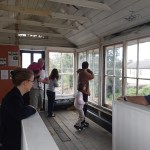
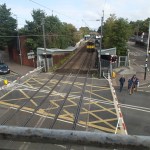

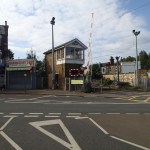
The refurbishment is not complete yet, but it would make a lovely small office for a professional, who needed a lot of light. In fact the developers will be using it themselves as part of a favourable deal with Network Rail, that would appear to ensure that the signal box gets sympathetically restored.
Obviously, you’d have to like trains.
There’s more on the signal box and its history on the Highams Park Forum.
One point to note in the pictures is the subway under the tracks, shown in the picture with the train approaching. Was this subway dug under the tracks to stop idiots crossing when it wasn’t safe? And was it dug without disrupting the train service?
Will The Updated GNGE Affect Lincolnshire?
I ask this question because my Crossrail Google Alert picked up this article from Geoff Ford in the Grimsby Telegraph. He starts by saying this.
Have you noticed that most major transport projects are concentrated in the South, the West Midlands and the North West? And then berates the Chancellor for leaving Lincolnshire off the list of those getting big transport projects!
He has a point
If I have a bone to pick with Geoff, then it is that he doesn’t talk about The Great Northern and Great Eastern Joint Railway (GNGE) , that I talked about in this post. But then I hadn’t heard that such a large project with a value of £330million was taking place in Lincolnshire, until a couple of weeks ago.
The project is certainly an unexpected place to bury that sum of cash.
But the project will be completed before the end of the year and will hopefully stop most of the freight trains on the East Coast Main Line from imposing lower speed limits on passenger trains on the line.
People in Lincolnshire, should be asking the question of “What will the GNGE do for us?”
I’ll start with a negative, as all those freight trains will create noise and also increase congestion at some of the level crossings on the route. Lincoln will still be a problem and there are probably a few old British Rail employees, who cautioned against the closing of Lincoln St. Mark’s station and the associated by-pass line in 1985. But hopefully some clever engineers have got an affordable scheme that will help get the endless camels through the eye of Lincoln.
If I was a Logistics Manager for a company that was importing loads of stuff from China, that was destined for my company’s shops in Scotland and the North and I needed a distribution centre, then Lincolnshire is now on the list of acceptable places to build it. Especially, if the site is close to the GNGE and a decent road to the M62. But that is rather hypothetical, until the first company takes the decision and I think I know a lot more about project management, than I do about logistics.
Some things that the upgraded GNGE will offer is faster journey times for both passenger and freight, through higher speed limits, fewer level crossings and much improved signalling. So will these improvements allow more passenger trains up and down the various parts of the line from Peterborough to Doncaster, via Spalding, Sleaford, and Lincoln?
Currently, on the southern part of the line from Peterborough to Lincoln, there seems to be about one train every hour or so, which takes about ninety minutes to do the trip.
Perhaps more interestingly, is that it takes two hours from Lincoln to London if you change at Newark and thirty minutes longer if you change at Peterborough. So if nothing else is done, with judicious timetabling, the upgraded GNGE might even give extra two hour train journeys to London from Lincoln via Peterborough. It might even open up the market for an easier route for a direct train to London from Lincoln, which has been promised for years.
In one area though there may be an improvement. Wikipedia says this about Sunday services between Peterborough and Lincoln.
The line has a regular weekday daytime service but is closed between Sleaford & Spalding in the evenings (due to the high staffing costs associated with the large number of manned level crossings on this section) and has no Sunday service.
So as there will be fewer level crossings, will the line see an evening and a Sunday service?
Going between Lincoln and Doncaster seems more difficult, but hopefully after the line is finished, journeys will all take the quickest time achieved now.
Those that work out the timetables are going to have a complicated problem on their hands.
Is This The Most Dangerous Level Crossing In The Country?
Level crossings are generally a danger on railways. In East Anglia and Essex, there are a number that should have been removed years ago.
Buit surely the one described in this article from the Thurrock Gazette, must surely be the most dangerous of them all. What makes this one even more dangerous is that there is no alternative route, and sometimes emergency vehicles get stuck, waiting for a train.
When the London Gateway Port, is fully open, there will be regular mile-long freight trains passing this crossing.
I found out about this crossing on the BBC London News tonight. When I saw the report, I was surprised that no-one in authority had ordered Network Rail to do something about it.
I thought the level crossing in Lincoln was a disgrace, but this one is much more dangerous.
A Stopover At Lincoln
Although my ultimate destination was Sheffield to see Ipswich Town play, I had brunch with an old friend at Lincoln on the way.
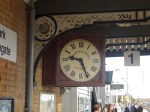

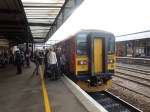


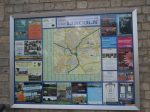
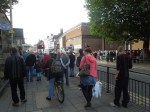

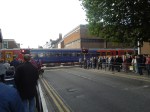
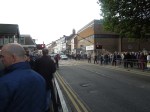

In some ways Lincoln and its station is a very sore point in the UK’s rail network. And my brief visit flagged up many of them.
The rail service from London for an important city like Lincoln, is inadequate despite many promises of direct trains from the capital. I changed at Newark and the train from there to Lincoln was a very clean, but very crowded Class 153. But then it was run by East Midlands Trains, who aren’t exactly famous for providing services that customers want, as my trip earlier in the week to Derby showed.
I found the information at the station to be up with the worst in levels of inadequacy. I knew that our meeting place; Carluccio’s was in the High Street, but I ended up walking the wrong way down it, as maps were not of the standard that many places now have. If they want to get tourists from London on the eight hundredth anniversary of the signing of the Magna Carta in 2015, they ought to get some wayfinding experts in to advise.
There is also the infamous level crossing that causes endless holds-up to pedestrians and drivers going about their business. Surely, this relic of the nineteenth century should be done away. But as Beeching removed the obvious solution, it looks like it is something that the city will have to live with for some time.
The Elsenham Level Crossing
NetworkRail has pleaded guilty to causing the death of two girls at the Elsenham level crossing in Essex.
There is now an immense footbridge there, so you don’t have to walk over the level crossing. It would be a difficult climb for someone like me at 64 with a dodgy heart valve. So does everybody use it? Sometimes level crossings with proper warning systems are much better for most people, except the stupid and impulsive. At a similar level crossing at Foxton, pedestrian access across the tracks is controlled by locks on the gates controlled by the signalling system. That system has been at Foxton for years, so why wasn’t it installed Elsenham?
Further north, just south of Newmarket there is a level crossing on the Ipswich to Cambridge line at Six Mile Bottom. It is on a long straight road with a thirty miles per hour limit and the crossing has barriers and flashing lights. But it still manages to have had a couple of cars hit trains in the last twenty years.
My view has always been that all level crossings should be eliminated on railways, as they have always been a major place for tragic accidents. And also for suicides, as at Ufton Nervet, where several people died. But to eliminate some level crossings, like say the one at Six Mile Bottom would cost several million pounds.
Why We Are Short of Trains in East Anglia
Yet again, there has been a serious level crossing accident in East Anglia. At least the twat in a sewage tanker, who seems to have been the cause of the accident, has been held on suspicion of dangerous driving.
The knock-on of these accidents, is that yet another small diesel multiple unit, which are the backbone of rural services in Norfolk, Suffolk and Lincolnshire, is lost or at least out of service for several months. The line I use regularly between Ipswich and Cambridge, is in desperate need of a two-coach unit to replace one of the trains, which is only one coach an totally inadequate, but this accident probably means that replacement is far in the future. I hope we don’t lose one of our trains to replace the one lost in the accident.
How Safe is the TGV?
TGVs are fast, but are they safe?
It is interesting to look at the list of accidents on Wikipedia.
On high-speed lines, there have been derailments but overall the technology has worked and the train has stopped fairly safely, with perhaps a few bruised passengers. But then the lines are straight, have few points and crossovers, and the trains are designed to hold together in an accident.
But on normal tracks there have been some serious accidents; one bomb, one freak accident in a depot, one derailment and four involving level crossings. The French are worried about the last and are endeavouring to remove all level crossings from lines used by TGVs.
None of the accidents have been as bad as the Eschede accident on Deutsche Bahn, where over a hundred people died.
So are TGVs safe?
Yes!
The French are to be applauded in removing level crossings and keeping their high-speed lines as straight and as clear of things to hit as possible. It could be argued that if the train at Eschede had just derailed and not hit the bridge, then the casualties would have been greatly reduced.
 The Anonymous Widower