EU Funding To Support Madrid – Lisboa Link
The title of this post is the same as that of this article on Railway Gazette.
This is the introductory paragraph.
More EU funding has been allocated to enhancing rail links between Portugal and Spain. The EU co-financing is part of a €1·4bn package of European Green Deal projects in seven EU states that was announced by the Commissioner for Cohesion & Reforms Elisa Ferreira in mid-March.
I very much feel, that the lack of a quality rail link between the two Iberian capitals is one of the most important missing rail links in Europe.
Read The Man In Seat 61 and you’ll find that you can get a sleeper, but nothing convenient during the day.
Lisbon is one of my favourite cities and you can spend days riding their vintage trams.

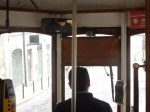
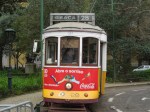
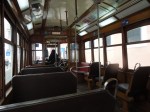
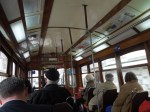
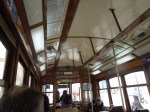
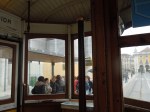
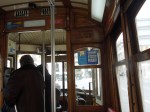
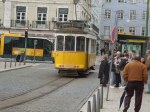


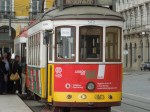
Note that they are cashless and let’s hope that they run for a few more decades.
A Home Run From Oporto
I haven’t done a home run for some time, but Oporto is the one, that I want to do.
- I would fly to Oporto.
- I would travel back via Lisbon, Madrid, Barcelona and Paris.
- I will probably stop off for a few hours in other interesting cities.
- I would return from Paris by Eurostar.
The Railway Gazette article says that trains may be running at reduced speeds in 2023.
Summing Up Lisbon
Lisbon was as I remembered it, when I came here with C twenty or so years ago.
The trams still have their old charm and are sticking up two fingers at the modern age, just as their bigger cousins do in Hong Kong.
Perhaps, I should fly to Portugal and come back by train via Madrid, Barcelona and high speed train back to London.
Lisbon’s Unique Lift
Lisbon is one of the few places I know with a lift to raise you up the hill.
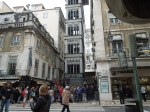

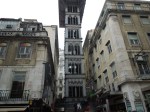
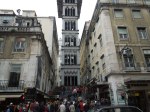
Unfortunately, it was so busy, I decided to give a ride a miss. But I did ride it twenty years ago with C.
I do sometimes wonder, why we don’t see more lift systems like this in cities!
Santa Apolónia Station
Santa Apolónia Station is the station by the Cruise Terminal of the same name.
These pictures show the station and the view from my room looking down on the station.
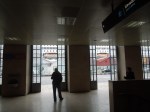


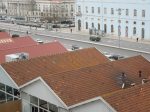
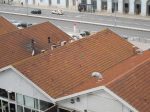
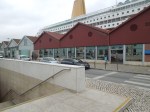
So if you are lucky and are berthed by the Cruise Terminal, you can use the station just behind it.
Lisbon’s Metro
Lisbon’s Metro is modern, fairly extensive and impressive.
I used it several times and especially after I found there was a station by the Cruise Terminal.

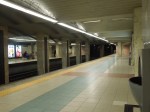
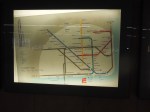
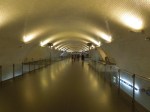

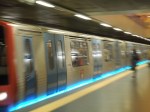
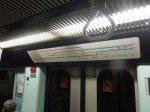
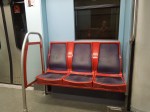

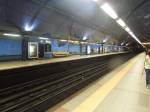
One thing to note is that there is a very large El Cortes Ingles built on top of the São Sebastião Metro station, which is on the line that goes to the Cruise Terminal. The shop had a massive food department, so I suspect, it had a selection of gluten-free food.
Buying A Transport Ticket In Lisbon
I tried to buy a ticket after a coffee in Black Horse Square, where tram route 28 passes through. But there was no information, although someone tried to sell me a ticket for one of the bus tours.
So in the end I got one of the new trams to one of the Metro stations. I bought the ticket for this tram on-board using a few euro coins.
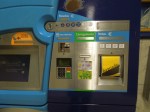
At the Metro station, I found a machine, that after some co-operation with an Austrian lady, I cajoled into giving me a 24 hour ticket. lonely Planet says there are kiosks for these tickets, but I didn’t find one.
Lisbon’s Trams
I explored Lisbon’s trams are best described like the hymn book as a mixture of ancient and modern.
The modern ones are typical of many towns and cities in the world, but the vintage ones are probably unique. I can’t find any information on the age of the trams, but I seem to think some date from before the First World War. I think they might originally have been made in the UK, but they look now to have been fitted with up-to-date electric systems.
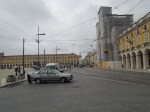
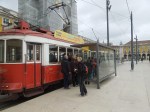


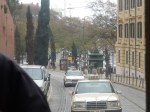


I rode the trams by purchasing a 24 hour ticket, which also allowed me to use the Metro and the buses. It cost me €6.50, which must be one of the cheapest entry fees to a transport museum. You use your paper ticket like an Oyster card.
I found this useful information in the Lonely Planet guide to Lisbon.
Don’t leave the city without riding tram 28 from Largo Martim Moniz or tram 12 from Praça da Figueira through the narrow streets of the Alfama.
I did that and many of pictures were taken on route 28.
On that route 28, the tram climbed some quite steep inclines almost like a mountain goat.
One thing I did was sit at the back and look backwards to the way we had come.
But whatever you do, any visit to Lisbon is not complete without a ride on the trams.
Exploring Lisbon
I explored Lisbon in three ways, by foot, Metro and the amazing trams.
I did a lot by just getting on a tram and then getting off at a place that looked interesting. I then got another tram or the Metro, until I needed to get back to the Oriana.
This gallery shows some of the sites I saw on foot.
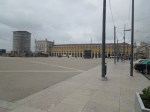






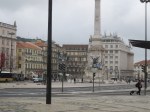
As you can see, it wasn’t the warmest place, but at least it wasn’t raining.
Two Moroccan Corvettes
We were accompanied up the Tagus, by a pair of Moroccan Corvettes; 613 and 614.
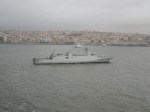




I think they docked further downriver from where the Oriana did.
The corvettes were built by the Dutch and are two of a family of Sigma-class corvettes.
Arriving In Lisbon
After an overnight sail, we arrived in Lisbon early in the morning of the 25th March.



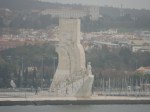


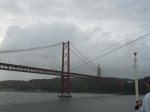


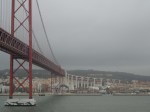




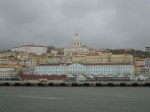
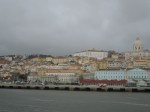



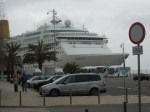
It is an impressive approach under the Tagus Bridge. Note that the blue building by the Cruise Terminal is both a Metro and main line train station called Santa Apolonia, whereas the domed church on the hill is the National Pantheon, where prominent Portuguese are buried.
 The Anonymous Widower