Earba 1.8GW Pumped Storage Hydro Project Secures Approval
The title of this post, is the same as that of this article on the Solar Power Portal.
These three paragraphs introduce the article.
Gilkes Energy has been awarded planning consent for its Earba Pumped Storage Hydro (PSH) scheme.
The Earba PSH scheme is set to be the largest project of its kind in the UK, with an installed capacity of 1.8GW and a storage capacity of 40GWh, meaning that it can provide 22 hours of storage at full power. The planning application for the project was submitted to the Scottish government in early March 2024.
The project will be located at Loch Earba in the Scottish central Highlands. Gilkes Energy states that this location was chosen because the area has an ideal combination of geology and topography, which the firm states will make it one of the most economically viable PSH projects under development in the UK.
In Gilkes Reveals 900MW Scottish Pumped Storage Plan, I said that Loch Earba was a 900 MW/33 MWh PSH scheme, but now it appears a it is 1.8 GW/40 GWh scheme, which will probably put it in the largest twenty PSH schemes in the world.
It will be one of four PSH schemes under development in Scotland.
- Coire Glas – 1.3 GW/30 GWh
- Loch Earba – 1.8 GW/40 GWh
- Loch na Cathrach (formerly known as Red John) – 450 MW/2.8 GWh
- Loch Sloy – 160 MW/16 GWh
In addition.
- Cruachan is being extended to 1 GW/7 GWh.
- Highview Power are planning to build two 200 MW/2.5 GWh of their liquid air batteries in Scotland.
Everything totals up to 5.1 GW/100.8 GWh, which compares with a UK electricity production as I write this article of just under 29.5 GW.
I wouldn’t be surprised to see some high-energy industries moving to Scotland because of all this renewable and hopefully reliable power.
Pumped Storage Hydro In The Highlands – Is Anywhere Still Off Limits?
The title of this post, is the same as that of this article on UK Climbing.
This is the sub-heading.
Are the enormous Earba and Fearna hydro projects merely the thin end of an ever bigger wedge? Thanks to a relaxed developer-friendly planning regime, is anywhere in Highland Scotland now safe from energy projects designed to feed an insatiable demand down south? In pursuit of clean power, do we risk permitting huge and irreparable harm across our remaining wild habitats and scenic land? And if so, what (and who) is it all really in aid of? It’s not too late to shed light on the murky world of Highland mega-energy, says Jane Meek, but time is running out for our mountain heritage.
These are the first three paragraphs.
In case you haven’t heard, Earba is the codename for a massive pumped storage hydro scheme to be hosted by Ardverikie Estate of Monarch of the Glen fame on behalf of Gilkes Energy, a Lakes-based engineering firm hitherto better known as a developer of small-scale run-of-river hydro schemes on Scottish burns and rivers. Some of these may be familiar to you: they include Pattack on Ardverikie Estate, Ben Glas on Glen Falloch Estate near Crianlarich, and Neaty Burn in Glen Strathfarrar, to name just three.
Gilkes Energy has now moved up into the big league of pumped storage hydro (PSH). Visit their homepage to admire a brief slide show of projects past, present and in planning. It’s glossy professional stuff, just what you’d expect from the self-styled “leading independent developer” of conventional hydro and PSH in the UK.
The aerial shots are particularly fine but… hang on a minute… isn’t that Loch a’ Bhealaich Leamhain down there, gleaming like a pearl in the high pass between Munros Beinn a’ Chlachair and Mullach Coire an Iubhair (Geal Charn as was)? And … oh dear, isn’t that Loch Fearna, the glittering shelf lochan below Spidean Mialach, immortalised in countless photographs by walkers crossing the col between Spidean and neighbouring Gleouraich? From the slopes above Fearna, the views across Loch Quoich to Gairich and beyond are simply stunning. After watching the slide show, you may feel simply stunned.
The author of the article makes a statement and asks a question.
It’s industrialisation on a vast scale. Are these truly the right schemes in the right places?
The author may have a point, but environmentalists will argue that saving the planet is more important and that pumped storage hydroelectricity is one of the technologies, that will help us do that!
The UK’s Pumped Storage Hydroelectricity
This post is a simple list of the UK’s pumped storage hydroelectricity.
- Balliemeanoch – 1500 MW/45 GWh – In Development
- Coire Glas – 1500 MW/30 GWh – Under Construction
- Corrievarkie – 600 MW/14.5 GWh – In Development
- Cruachan – 1000 MW/7.1 GWh – In Operation
- Fearn – 1800 MW/37 GWh – In Development
- Dinorwig – 1800 MW/9.1 GWh – In Operation
- Earba – 900 MW/33 GWh – In Development
- Foyers – 305 MW/10 GWh – In Operation
- Ffestiniog – 360 MW/1.44 GWh – In Operation
- Loch Kemp – 600 MW/9 GWh – In Development
- Loch Sloy – 152.5 MW/25 GWh – In Operation
- Red John – 450 MW/2.8 GWh – Under Construction
Note.
- Cruachan is only 440 MW and is being upgraded.
- The storage capacity at Foyers may be wrong, as I can’t find my original source.
When fully developed the total will be 10969.3 MW/223.94 GWh.
The Case For Pumped Hydro Storage
The Coire Glas Project
Note that Coire Glas is a pumped storage hydroelectric scheme being developed by SSE Renewables.
- It is rated at 1.5 GW.
- It can store 30 GWh of electricity.
- It is being built in the Highlands of Scotland above Loch Lochy.
- The estimated construction time will be five to six years.
- It should be operational for more than 50 years.
- There is more about the project on this page on the Coire Glas web site.
Exploratory works have started.
The Case For Pumped Hydro Storage
The title of this post, as the same as that of this page on the Coire Glas web site.
This is the sub-heading.
A study by independent researchers from Imperial College London found that investing in 4.5GW of pumped hydro storage, with 90GWh of storage could save up to £690m per year in energy system costs by 2050, as the UK transitions to a net-zero carbon emission system.
And this is the first paragraph.
The report focused on the benefits of new long-duration pumped hydro storage in Scotland, as the current most established long-duration energy storage technology. The benefit of long duration storage compared to short duration batteries is being able to continuously charge up the storage with excess renewables and also discharge power to the grid for several hours or days when wind and solar output is low.
So Coire Glas will provide 1.5GW/30GW, so where will we get the other 3 GW/60GW?
Loch Earba Pumped Hydro
In Gilkes Reveals 900MW Scottish Pumped Storage Plan, I introduced Loch Earba Pumped Hydro.
- It is rated at 900 MW
- It can store 33 GWh of electricity.
- It is being built in the Highlands of Scotland to the East of Fort William.
- The estimated construction time will be three to four years.
- It should be operational for more than 50 years.
- There is more about the project on the Earba Storage web site.
It would appear we could be edging towards the Imperial College target in lumps of about 1GW/30 GWh.
Other Schemes In Scotland
These are other proposed or planned schemes in Scotland.
Balliemeanoch Pumped Hydro
Balliemeanoch Pumped Hydro now has a web site.
The proposed Balliemeanoch pumped hydro scheme will have these characteristics.
- Output of the power station will be 1.5 GW
- Available storage could be 45 GWh.
This medium-sized station has a lot of storage.
Corrievarkie Pumped Hydro
Corrievarkie Pumped Hydro now has a web site.
The proposed Corrievarkie pumped hydro scheme will have these characteristics.
- Output of the power station will be 600 MW
- Available storage could be 14.5 GWh.
This medium-sized station has a moderate amount of storage.
Loch Kemp Pumped Hydro
I wrote about Loch Kemp Pumped Hydro in Loch Kemp Pumped Hydro, where I said this.
The proposed Loch Kemp pumped hydro scheme will have these characteristics.
- Loch Kemp will be the upper reservoir.
- Loch Ness will be the lower reservoir.
- The power station will be on the banks of Loch Ness.
- The power station will be designed to fit into the environment.
- Eight dams will be built to enlarge Loch Kemp.
- Trees will be planted.
- Output of the power station will be 300 MW
- Available storage could be 9 GWh.
The medium-sized station will have almost as much storage capacity as Electric Mountain, but that power station has an output of 1.8 GW.
Red John Pumped Hydro
I wrote about Red John Pumped Hydro in Red John Pumped Storage Hydro Project, where I said this.
I have also found a web site for the project, which is part of the ILI Group web site.
- The scheme has an output of 450 MW.
- The storage capacity is 2,800 MWh or 2.8 GWh.
- The scheme has planning consent.
- The project is budgeted to cost £550 million.
- The construction program indicates that the scheme will be completed by the end of 2025.
Not a large scheme, but every little helps.
Proposed Pumped Hydro In Scotland
I have listed these schemes.
- Balliemeanoch – 1.5GW/45 GWh
- Coire Glas – 1.5 GW/30 GWh
- Corrievarkie – 600 MW/14.5 GWh
- Loch Earba – 900 MW/33 GWh
- Loch Kemp – 300 MW/9 GWh
- Loch Na Cathrach/Red John – 450 MW/2.8 GWh
Note.
- The scheme’s name is linked to their web site.
- The two figures are output and storage capacity.
There is a total output of 5.25 GW and a total storage capacity of 134.3 GWh.
Conclusion
If all these schemes are built, Imperial’s targets of an output of 4.5 GW and a storage capacity of 90 GWh will be comfortably exceeded.
Gilkes Reveals 900MW Scottish Pumped Storage Plan
The title of this post, is the same as that of this article on renews.biz.
This is the sub-heading.
Earba project would be ‘largest in the UK’ in terms of energy stored
And this is the introductory paragraph.
Gilkes Energy has unveiled scoping plans for its 900MW Earba Pumped Storage Hydro Project in Scotland.
These are a few more details.
- It will have a capacity of 33 GWh.
- Loch a’ Bhealaich Leamhain is proposed to be the upper reservoir.
- Lochan na h-Earba is proposed to be the lower reservoir.
- There will be a three kilometre tunnel between the reservoirs.
- The 900 MW power station will be on the shore of Loch Earba.
- Construction is expected to take between 3 and 4 years.
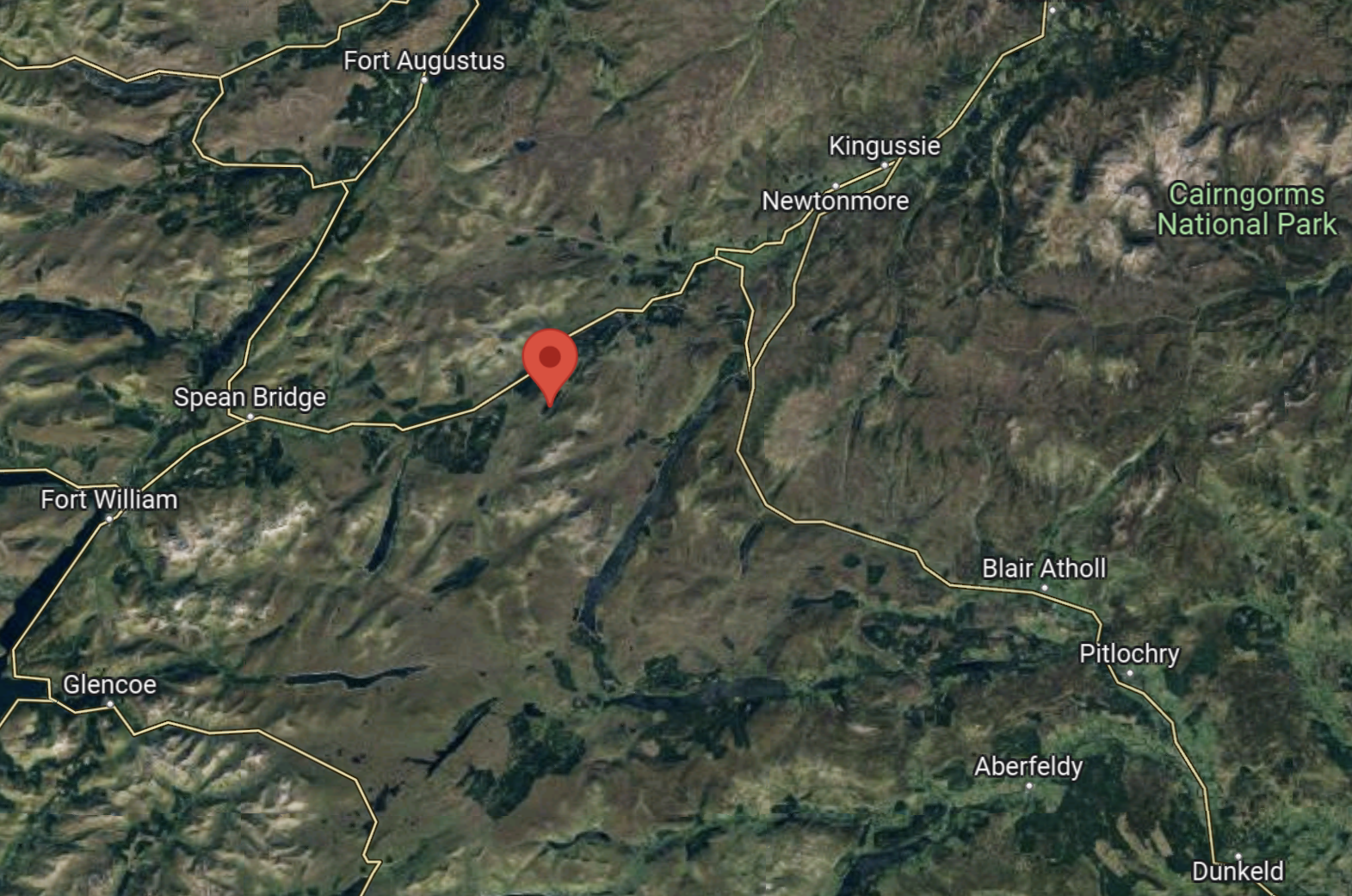
This Google Map shows the location of the site.
And this Google Map shows the site.

Note.
- Lochan na h-Earba, which will be the lower reservoir is clearly marked, in the North-West corner of the map.
- Loch a’ Bhealaich Leamhain, which will be the upper reservoir is in the South-East corner of the map.
- Much of Loch a’ Bhealaich Leamhain appears to be frozen, with only a small triangular area of water visible.
- There doesn’t seem to be too many roads.
- There is a detailed map on the Earba Storage web site.
This looks like it could be extreme construction, at it’s most extreme.
Conclusion
With a power output of 900 MW and a storage capacity of 33 GWh, this pumped storage hydroelectric power station will have the largest storage capacity of any energy storage in the UK.
 The Anonymous Widower