Will Northumberland Line Success Help More Open?
The title of this post, is the same as this article on the BBC.
This is the sub-heading.
On 29 March the final station, Bedlington, opens on the Northumberland Line marking the completion of the project to reopen the route from Newcastle to Ashington.
These three paragraphs add detail to the story.
With passenger numbers exceeding predictions, could its success give new impetus to other projects to reopen former railways across northern England?
Dennis Fancett, chair of the rail users group Senrug, which campaigned for the Northumberland line for 20 years, hopes so.
He believes the obvious next step is to extend it along the existing freight tracks to a new station at Woodhorn and from there to Newbiggin-by-the-Sea.
I believe that the Northumberland Line is following a pattern, that I call London Overground Syndrome.
Silvertown Tunnel Easing Congestion, TfL Says
The title of this post, is the same as that of this article on the BBC.
This is the sub-heading.
Transport for London (TfL) has shared the first insights about the impact on traffic of the new Silvertown Tunnel, as part of commissioner Andy Lord’s latest report to the TfL Board.
These two initial paragraphs gives a summary of about three weeks traffic.
Analysis of data between 21 April and 11 May shows the Silvertown and Blackwall tunnels are being used by an average of about 88,000 vehicles on a typical weekday. Of these, about 20,000 are using the Silvertown Tunnel.
Before the tunnel opened on 7 April, about 100,000 vehicles used the Blackwall Tunnel on weekdays.
TfL are claiming that this 12,000 drop in traffic is helping to ease congestion.
Logically, a drop in traffic will ease congestion, but the BBC article also says this.
However, it said it was aware of some increased traffic volumes at other river crossings, including the Woolwich Ferry.
The only other river crossings in the area are the Rotherhithe Tunnel and the Woolwich Ferry, both of which are free to all users.
So is the drop in traffic through the Blackwall and Silvertown Tunnels, due to drivers objecting to paying a toll and taking a free route instead?
On The Buses
The BBC article says this about bus passengers.
Mr Lord’s report also provided ridership data about the three bus services that operate through both tunnels: the new Superloop SL4, the extended route 129 and the 108, which already ran through the Blackwall Tunnel before 7 April.
Across the routes there is a daily average of more than 20,000 passengers making use of these services, of which typically about 7,000 are crossing the river using one of the two tunnels. In March 2025, there were about 2,700 crossings a day made using route 108.
The increase in bus passengers is not surprising.
Before the opening of the Silvertown Tunnel, there was just this bus service through the Blackwall Tunnel.
- London Bus 108 – Stratford and Lewisham via North Greenwich.
This has now been joined by, these bus services through the Silvertown Tunnel.
- London Bus 129 – Great Eastern Quay and Lewisham via City Airport and North Greenwich.
- London Bus SL4 – Canary Wharf and Grove Park via East India, Blackheath and Lee.
Note how the buses call at rail stations, an airport and other important traffic interchanges.
In Could The Silvertown Tunnel Handle More Buses?, I asked if buses through the Silvertown Tunnel should be increased?
Given that traffic through the combined Silvertown/Blackwall complex has dropped by 12,000 vehicles per day, that must leave space for a few buses or coaches.
- Assuming, that one bus or coach takes up the space of four cars, that would be space for 3,000 buses/coaches per day.
- Also assuming the bus and coach services are run on a twenty-four hour basis, that would be 125 buses/coaches per hour.
If the bus and coach services ran every ten minutes, that would say, there is space in the tunnel for up to a dozen new bus or coach routes.
There could develop a virtuous circle and feedback loop, which drives the tunnel to a state of equilibrium, where traffic grows through the tunnels, until it is maximised.
Consider.
- Research shows a bus route from A to B through the tunnel would attract passengers.
- Drivers and their passengers decide that on balance a bus ride is more convenient, no slower and more affordable than driving.
- Congestion charges and other charges for non-electric vehicles will play their part.
- Green issues will also will play their part.
- Fewer cars will use the tunnels.
- Increasing tunnel charges will only drive more car users to the buses.
- More free space in the tunnel, will allow more bus and coach routes.
- More bus and coach routes will attract drivers from their cars.
Eventually, equilibrium will be reached.
A similar effect happens, when a new bypass is opened and as if by magic it fills up.
When it happens with train services I call it, London Overground Syndrome.
On Your Bike
The BBC article says this about cyclists.
There is also a cycle shuttle service, enabling cyclists to take their bikes free of charge on a bus through the Silvertown Tunnel. TfL said some 100-150 people were using it on a typical day.
While this is below its capacity, TfL believes usage will grow as cyclists adapt their routes to benefit from this safer crossing option.
When I used to cycle around London in the 1970s, I never cycled under the Thames, but I did generally cycle as fast as I could across the city. I wouldn’t have put my bicycle on a free bus.
So, is this why the cycle shuttle service is below capacity?
The BBC article says this.
TfL believes usage will grow as cyclists adapt their routes to benefit from this safer crossing option.
I believe, that if TfL should ever charge for the cycle shuttle service, they’d kill it.
In my opinion, they’d be better off providing secure bike parking, but even some of that seems lightly used.
Tunnel Performance
The BBC article says this about tunnel charging and performance.
TfL said it intended to publish quarterly factsheets on the operational performance of the tunnels’ toll scheme.
This will include information about how many people pay the charge, the compliance rates for vehicles using the tunnels and the number of Penalty Charge Notices that are issued.
The first of these factsheets will be published later this year, but initial data shows that compliance has steadily increased, with about 90% of motorists either paying a charge or benefiting from an exemption.
Surprisingly, so far, I haven’t met anybody who has driven through the Silvertown Tunnel, except for a couple of bus drivers.
More Trains For Fife As ScotRail Enhance Leven Services In May 2025 Timetable
The title of this post, is the same as that of this press release from ScotRail.
This is the sub-heading.
ScotRail is set to introduce significant timetable improvements from Sunday, 18 May 2025, with a major focus on enhancing rail connections for Fife.
This first paragraph gives more details of the improvements to services.
The new timetable will include more frequent services to and from Leven, improving access to and from Edinburgh, and better connecting communities throughout Fife. Additional carriages are also being added to some trains at the busiest times to provide more seats for customers.
It sounds to me, that services to Leven have got a bad case of London Overground Syndrome, which I define in this post, which unsurprisingly is called London Overground Syndrome. I define it like this.
This benign disease, which is probably a modern version of the Victorian railway mania, was first identified in East London in 2011, when it was found that the newly-refurbished East London Line and North London Line were inadequate due to high passenger satisfaction and much increased usage. It has now spread across other parts of the capital, despite various eradication programs.
It keeps appearing across the UK and I suspect it happens in other countries too!
As ScotRail had a severe dose of London Overground Syndrome, when they reopened the Borders Railway, you’d have think that they’d have been prepared this time.
Longer Trains Plan As New Rail Line Fills Up
The title of this post, is the same as that of this article on the BBC.
This is the sub-heading.
A newly reopened railway line has attracted so many passengers that carriages may have to be added to trains to avoid people having to stand, a council said.
These three paragraphs add a bit more detail.
The Northumberland Line, between Ashington and Newcastle, opened in December after being shut for 60 years but so far only half the six stations are in operation.
County council deputy leader Richard Wearmouth said making the carriages longer was being considered to cope with demand, especially on busy Newcastle United match days.
He described it as a “good problem” for the £298m project where passenger numbers are on course to hit five times the original estimate.
It looks to me that the Northumberland Line is suffering a very bad case of London Overground Syndrome.
The only certain thing, is that as the syndrome will get worse as more stations are opened.
At least the syndrome has a proven solution – The operator just needs to rustle up some more trains.
Latest Northumberland Line station Set To Open
The title of this post, is the same as that of this article on Place North East.
This is the sub-heading.
Newsham Station in Blyth will be up and running on Monday, 17 March, allowing passengers to travel to Newcastle in 21 minutes.
These four paragraphs add detail.
It follows on from the reopening of the line in December, when Ashington and Seaton Delaval were brought back into action.
The line has been closed to passengers for almost 60 years, although freight still ran along the tracks.
Morgan Sindall Infrastructure-Rail is the main contractor on the almost £300m project.
Figures released by Northern, which operates the services, show around 50,000 passenger journeys were made on the line in the first month, a figure that has now surpassed 110,000.
Those passenger numbers seem very good and I suspect we’ll see London Overground Syndrome arriving.
It’s already starting to look like the project has been £300 million well spent and we should be looking for more similar projects.
Northumberland Line ‘Phased Reopening’ By Summer
The title of this post, is the same as that as this article on the BBC.
These are the first three paragraphs.
The Northumberland Line will partially reopen this summer days after it was announced it would not be in service until the end of 2024.
Conservative county council leader Glen Sanderson said there had been “challenges” with the project, but when fully reopened the rail line would be a “game changer” for travellers.
The stations due to be open in the summer are Seaton Delaval, Ashington and Newsham.
In my lifetime, the Victoria, Jubilee and Elizabeth Lines in London, have opened on a phased manner.
So why shouldn’t the Northumberland Line?
In fact given the route, it could be opened with a shuttle between Ashington and Newcastle stations, to train drivers and test the concept.
- The intermediate stations could be added over a couple of years.
- I would add a station with lots of parking early.
- If the views live up to the pictures, a lot of passengers will have a day out for the views.
- I’m sure enthusiasts and locals, especially with their kids will be exploring this short railway in droves.
To me, this is definitely a line, that will suffer from London Overground Syndrome.
This OpenRailwayMap shows the railways to the North of Newcastle.
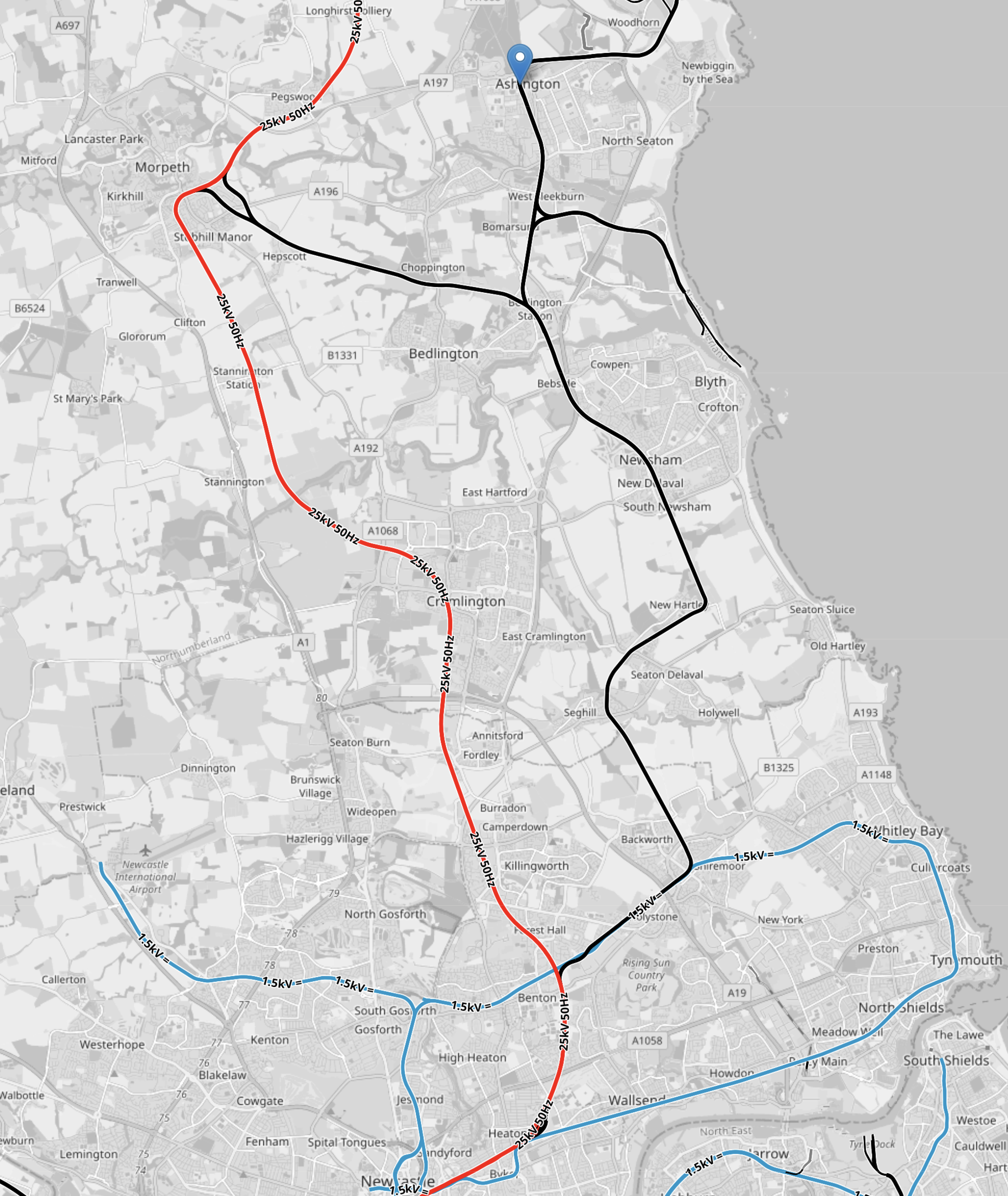
Note.
- The red track is the electrified East Coast Main Line.
- Ashington station is at the top of the map and is marked by a blue arrow.
- The blue track is the Tyne and Wear Metro.
- Newcastle station is where the Metro crosses the East Coast Main Line at the bottom of the map.
- The black trackrunning North-South to the East of the East Coast Main Line is the Northumberland Line.
This OpenRailwayMap shows the railways to the North of Ashington.
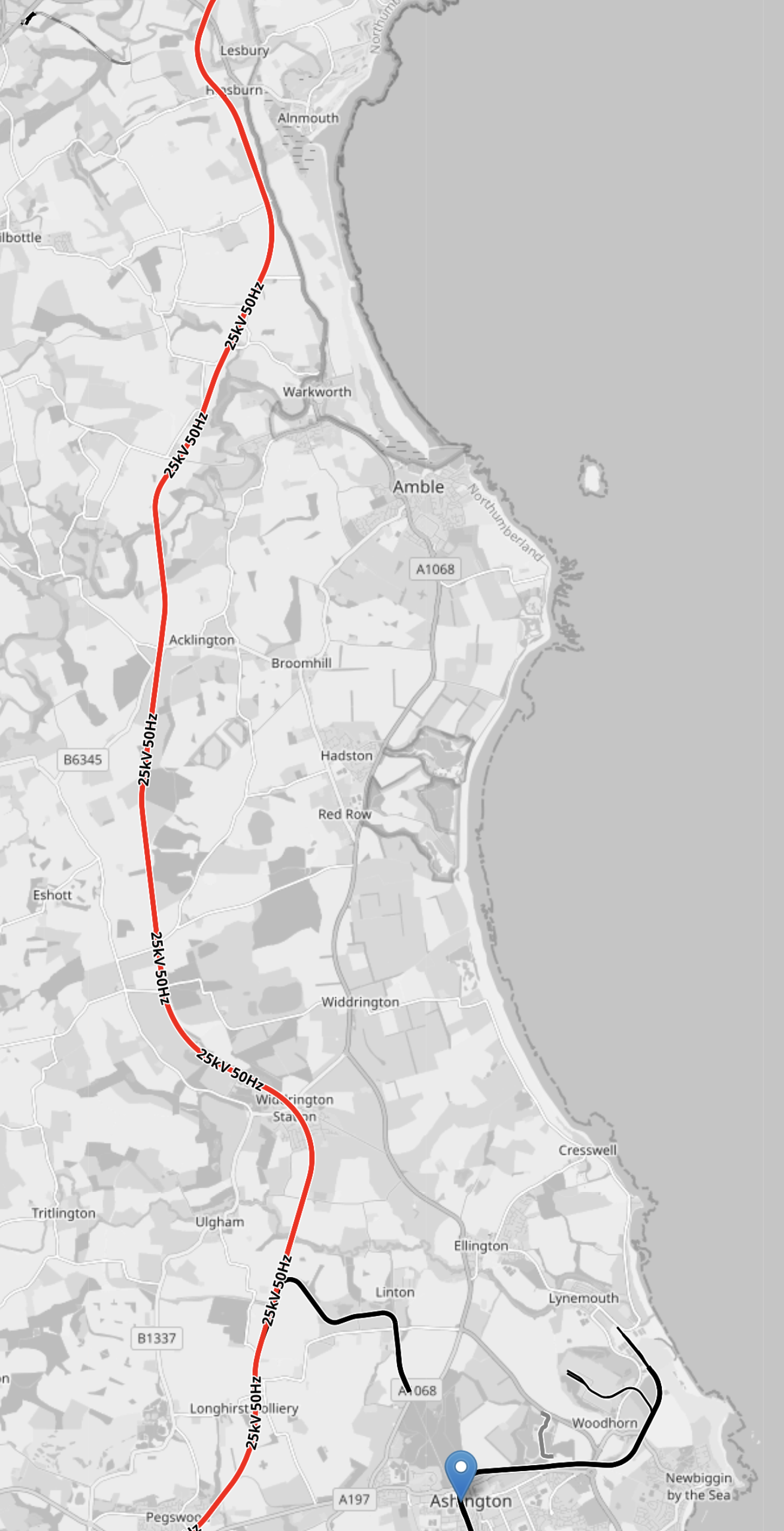
Note.
- The red track is the electrifed East Coast Main Line.
- Ashington station is at the bottom of the map and is marked by a blue arrow.
- There are a few disused colliery lines to the North of Ashington.
I believe that these railways to the North of Newcastle could and should be developed.
The East Coast Main Line Is Congested
Consider.
- The East Coast Main Line has only two tracks.
- It is one of only two rail routes between England and Scotland.
- It carries local services as well as long distance express services.
- In recent years more services have been added by Lumo and TransPennine Express.
It is my belief that applying digital signalling between Newcastle and Edinburgh via Berwick, should be a high priority project to increase the capacity of the East Coast Main Line.
Local Services Can Be Extended
The Northumberland Line opens up possibilities for extension, where track already exists..
- From Ashington to Newbiggin-on-Sea and Lynemouth.
- From Bedlington to Morpeth and the East Coast Main Line.
- From Bedlington to North Blyth.
It would appear that it might be possible to run a new line North from Ashington to connect with the East Coast Main Line.
Distances Are Short
Consider.
- Ashington and Newcastle is 20.6 miles
- Newcastle and Morpeth is 16.6 miles
- Newcastle and Berwick is electrified.
- In The Data Sheet For Hitachi Battery Electric Trains, I stated that Hitachi’s battery-electric express trains have a range of 43.5 miles on one battery. A slower commuter train would certainly achieve this distance.
I have a feeling that a passenger-friendly network of battery-electric trains can be developed along and around the Northumberland Line and the East Coast Main Line.
Scottish Town Regains Its Station After 56 Years
The title of this post, is the same as that of this article on Railnews.
This is the introductory paragraph.
Trains are calling at Kintore in Aberdeenshire today for the first time since December 1964.
Some points about the new Kintore station.
- It is a two platform station on the newly double-tracked Aberdeen and Inverness Line.
- The station has a footbridge with lifts.
- The station is 13.4 miles or 19 minutes from Aberdeen.
- The station is 94.8 miles or two hours and twenty-three minutes from Inverness.
- All the services I can find yesterday, seem to have been run by Class 158 trains.
- There is a 168 space car park, with 24 charging points.
The station cost £15 million.
London Overground Syndrome
I have a feeling that Aberdeen and Inverness Line could be a prime candidate for suffering from London Overground Syndrome.
I suspect though, that ScotRail will quickly eradicate it, by putting on more trains.
Northern Considering Options For More New Trains
The title of this post is the same as that of this article on Rail Magazine.
This is a paragraph.
Senior Northern sources told RAIL on June 28 that the operator believes the new trains will entice more people onto its services, and that within two years – once all 101 new trains are in service – there could be overcrowding.
This sounds to me, like another case of London Overground Syndrome.
At least, Northern have identified it early and taken the only action that works – Acquire more trains.
The High Speed Train Problem
Several of Northern’s routes use 100 mph trains on the West Coast and East Coast Main Lines.
- Blackpool and York
- Chester and Leeds
- Hull and York
- Leeds and York
- Liverpool and Blackpool via Wigan
- Manchester and Crewe
- Manchester and Stoke
- Manchester Airport and Barrow
- Manchester Airport and Blackpool
- Manchester Airport and Windermere
Will Northern acquire some 110 mph or even 125 mph trains to ease the creation of timetables amongst so many high speed trains using the main lines?
Greater Anglia’s New Train Order
Greater Anglia have ordered thirty-eight Class 755 trains, which have a total of 138 cars.
These will replace twenty-six assorted trains, which have a total of 55 cars.
This is an increase of 46% in the number of trains and 150% in the number of cars.
Greater Anglia didn’t increase the fleet so that could sit in sidings, so I think we can expect some new services and higher frequencies.
Conclusion
Northern’s actions are in line with other operators.
The Shape Of Things To Come On The Gospel Oark To Barking Line
Since modernisation in 2010, the service on the Gospel Oak To Barking Line has been run using six two-car diesel Class 172 trains.
Today was the first weekday, when one of the diesel trains had been replaced by a four-car electric Class 378 train.
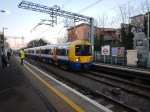
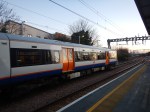
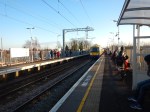
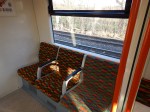
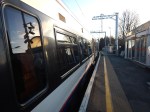
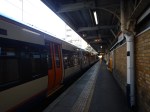
I was able to ride on a Class 378 train between Harringay Green Lanes and Gospel Oak stations. I then doubled back and travelled all the way East to Barking station.
These are a few observations.
Electric Trains
Riding the electric Class 378 trains is a very different experience to riding the diesel Class 172 trains.
- There is a lot less noise and vibration.
- You sit longitudinally in London Undergound fashion, as opposed to transversely.
- There was more capacity in the four cars of the electric train, as opposed to the two-car diesel trains.
I also got the impression that the Class 378 trains accelerated faster and cruised at a higher speed, than the Class 172 trains. I will check this out.
Train Capacity
I said in the previous section, that physical capacity is doubled from two to four cars.
- I actually went from Harringay Green Lanes to Gospel Oak twice in the morning Peak; once in a Class 172 and once in a Class 378.
- The former was jam-packed and the second was very comfortable, with only a few stansdees.
- The Class 172 train has 120 seats in a 47 metre train, which works out as 2.6 seats per metre.
- The Class 378 train has 136 seats in a 80 metre train, which works out at 1.7 seats per metre.
The lower seat density and the wide central isle, probably explains, why the electric train was more comfortable.
Note that in a few months, the Class 378 trains will be replaced with Class 710 trains, which will likely have a similar passenger capacity to the Class 378 trains.
So the capacity and passenger ambience of the Class 378 trains can probably be read across to the internally-similar Class 710 trains.
Platform Length Issues
I did my usual trick of riding in the last car and looking at where the end of the train came on the platform.
The line has been built, so that all platforms fit the standard British Rail four-car length of eighty metres, which applies to both four-car Class 378 and Class 710 trains.
The Possibilities Of Five-Car Trains
London Overground run five-car trains through four-car stations at Shadwell, Wapping, Rotherhithe and Canada Water on the East London Line, by allowing the last car to overhang the platform.
They get away with it without any trouble because.
- The Class 378 trains have selective door opening and a walk-through interior, with large lobbies.
- The announcements on the train are high-quality and advise passengers in the last car to move forward at short platforms.
- East Enders quickly learn how to get in and out of the train with little fuss
So could five-car trains be run the Gospel Oak to Barking Line?
- Barking station has a long platform.
- Some stations like Woodgrange Park, Wanstead Park, Leytonstone High Road, Leyton Midland Road and Upper Holloway originally had longer platforms and these could probably be extended.
- Other stations like Gospel Oak, South Tottenham and Blackhorse Road are probably at maximum length and would use selective door opening.
I suspect that if the demand needed the extra capacity, that the new trains could be lengthened from four to five cars, which would give a twenty-five percent increase in capacity.
Typical Passengers
I have a feeling that the Gospel Oak to Barking Line doesn’t have well-defined typical passengers, like a lot of routes do.
Using the train in the Peak, you notice that many passengers just hopped a couple of stops on the line.
One guy was going from Harringay Green Lanes to Shoreditch High Street, with changes at Gospel Oak and Canonbury.
This journey is probably a reflection on the badly-designed bus routes in the area it serves.
Gospel Oak To Barking Line Connectivity
The line is well-connected to the Underground, especially if you are up for a ten-minute walk.
- District and Hammersmith & City Lines at Barking
- Crossrail at Wanstead Park
- Victoria Line at Blackhorse Road
- Piccadilly Line at Harringay Green Lanes
- Northern Line at Upper Holloway
- North London Line at Gospel Oak
There are also good connections to North-South buses at several stations.
Will Electric Trains Attract More Passengers?
I suspect London Overground will be looking at the passenger statistics on the route with considerable interest, during the period, when some trains are two-car diesels and the others are four-car electrics.
This may well give the answer to my question.
I have a feeling that the reduced crowding on the route will mean that more passengers are attracted.
The new Class 710 trains will have wi-fi and USB charging points, so I wonder how many passengers this will attract.
But as I said earlier, a twenty-five percent increase in capacity may be possible by adding another car to the trains.
Conclusion
I have a very strong feeling that the upgrade to the Gospel Oak to Barking Line and the new electric trains, will change North-East London for the better.
As the London Overground lines to Cheshunt, Chingford and Enfield Town are also getting new trains, I would suspect that the effects will be bigger and more widespread than anybody has predicted.
- Trains will get crowded.
- New stations will be added to the network.
- Existing stations will be upgraded with step-free access
We could even see a serious outbreak of London Overground Syndrome.
Future Additions
These are projects that will or could happen along the Gospel Oak to Barking Line.
- Extension to the new Barking Riverside station.
- Five trains per hour in the Peak
- A new station at Cann Hall.
- A direct link between Walthamstow Queens Road and Walthamsow Central stations, when the latter is upgraded.
- South Tottenham station will be on Crossrail 2 and could be on a future Enfield Town-Stratford service.
- Harringay Green Lanes station could be connected to the Piccadilly Line underneath.
- Reopening of Junction Road station with a link to the Northern Line.
At present only the first two will happen.
London Overground Syndrome
As I keep referring to this, I had better define it.
This benign disease, which is probably a modern version of the Victorian railway mania, was first identified in East London in 2011, when it was found that the newly-refurbished East London Line and North London Line were inadequate due to high passenger satisfaction and much increased usage. It has now spread across other parts of the capital, despite various eradication programs.
It keeps appearing across the UK and I suspect it happens in other countries too!
 The Anonymous Widower