Before Crossrail – The Overground At Stratford
Stratford is the terminus of the North London Line of the Overground. These pictures show the platforms that service the Overground and the Lea Valley Line services that terminate at Stratford.
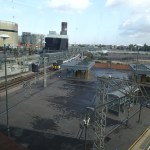
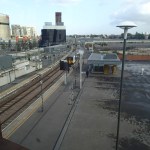
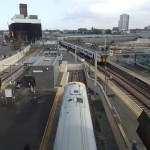
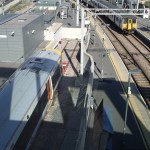
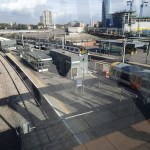
At least the two Overground platforms are long enough to take six car trains, but if services increase will there may be a need for one or more platforms for Overground services.
It would appear though, that the two Lea Valley Lines platforms, on one of which the Class 315 is waiting in the pictures, are not heavily used. And in addition, there is an immense triangular space, which I’m sure for which Network Rail et al. have big plans.
There is actually more potential in the area than appears obvious from these pictures.
Lea Bridge station and possibly the Hall Farm Curve are being reopened, which will link Stratford to Walthamstow and Chingford.
So will this mean services coming along the North London Line and going through Stratford to Chingford. My explorations at Chingford showed it to be a spacious well-connected station with three accessible platforms.
With an Overground spreading out fr0m Stratford, this would mean a lot of changing between the lines, as although they are a few platforms apart, there are lifts for those who need them.
There is going to be a lot of creative arithmetic in this area as London Overground find more and more ways to squeeze gallons out of pint pots.
Before Overground – The Terrible Fifteen
I have now visited all of the stations that will be added to the London Overground on the 31st May 2015.
There is a large group of fifteen stations, that are characterised by steep staircases, no lifts or escalators, few facilities and often poor shelter from the weather on the platforms.
I suppose Walthamstow Central could be added to this list, but the problems there are more fundamental and are more down to the way the station was rebuilt for the Victoria Line.
Looking at the main list, it would appear that nothing short of lifts like those that will soon be operational at Edmonton Green will help to solve the problem.
And a sensible pair of lifts cost upwards of a million pounds. Enfield Borough Council have a page, describing the funding of the upgrades at Edmonton Green. This is an extract.
The Council are working in partnership with Network Rail to deliver two lifts at Edmonton Green Station to enable step free access to both Platforms 1 and 2.
The Council has been awarded £850k for the project following a successful bid for funding from the Department for Transport’s Access for All programme. However, the total cost of the project is estimated to be £1.45m and the balance of funding is being provided by the Council, utilising a mixture of contributions from nearby development schemes and grant funding from Transport for London .
So are we prepared to fund improvements like this which for the terrible fifteen which will probably cost over twenty million pounds?
Although it would be a laudable aim to have every station totally step-free, because of passenger behaviour some stations might never need to be upgraded.
I am not disabled, but at times, I take a roundabout route to my destination, as perhaps it only has a short walk on the level. Rain also affects my chosen route, as I rarely carry an umbrella. But I do know the bus/tube/Overground combinations with the least exposed walking. For instance, I must use about half a dozen routes to get to and from Liverpool Street station depending on various factors and which bus arrives first.
So when a station like Edmonton Green gets a significant upgrade, does this alter all of the travelling patterns in the area?As an example, will passengers for the Silver Street area and the North Middlesex Hospital go to Edmonton Green and get a bus?
So perhaps instead of upgrading all of the stations, we should do a few more major schemes first and then do others as necessary, and as the budget allows.
Where would I start?
White Hart Lane
White Hart Lane is down to be redeveloped, as part of the new Spurs stadium. All options of Haringey’s development plans for the High Road West area, show the station moved a short distance to the south and connected by a wide pedestrian way to the High Road and the new stadium. Click here for the main council site for the development.
I will be very surprised if something much better doesn’t happen at White Hart Lane. which makes travel in the greater Tottenham area better. But then I remember the area well from the 1950s and 1960s and if ever an area has shown an ability to get no worthwhile development it is this one. The council, the politicians and the football club, should all hold their heads in shame.
Walthamstow Central
The Walthamstow area is on the up and something must be done to complete the Victoria Line station and make interchange to the Chingford branch easier and hopefully substantially step-free.
This probably means adding the third escalator to the Victoria Line and putting either a lift or escalator connection between the Victoria Line entrance and the Chingford branch platforms.
If only the job had been done properly in the 1960s.
Hackney Downs
Until the pedestrian link is installed between Hackney Downs and Hackney Central stations is completed, I won’t comment on it.
But it does strike me, that as the two Hackney stations taken together will be very important to the Overground, that some selective and intelligent design could improve the complex substantially.
Let’s face it, You wouldn’t design a station like Hackney Downs, with four platforms connected by a subway, these days. The picture shows an aerial view from Google Earth.
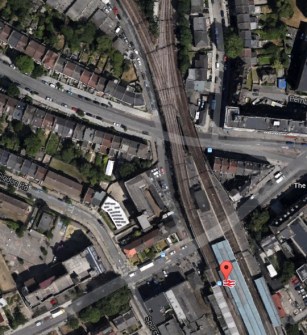
Hackney Downs Station
Note how the lines split to the north of the station, with the right branch going to Chingford and Tottenham Hale and the left branch to Enfield Town and Cheshunt. Platform 1 is to the right in the picture, 2 and 3 make up the island in the middle and platform 4 is to the left.
So could the use of the station be changed so that all northbound and southbound services use just one platform each? When I use the station to go to Walthamstow or Enfield Town, I often have a lonely long wait on an empty platform. So as the off peak service through the station is just ten trains per hour in both directions, surely this could it be arranged, so that southbound services generally call at Platform 1 and all northbound services call at Platform 4. Incidentally, in the evening rush hour, there are around twenty trains an hour from Liverpool Street, that stop at Hackney Downs. You’d still have the two middle lines for fast trains going through the station without stopping, but they’d be running past the current Platforms 2 and 3, which for most of the time would be unused.
Surely, with the modern in-cab signalling, that should be universal in the next few years, Hackney Downs can be reduced to working most of the time, as a two-platform station.
As Thameslink and Crossrail are talking twenty-four trains an hour through tunnels under London, surely ten though Hackney Downs for much of the day and twenty during the rush hour must be possible. I suppose that platform allocation at Liverpool Street could be a problem, but then Crossrail will release platform space in 2018, when it starts using the tunnels.
This would reduce the step-free requirement to just two platforms and would also mean that anybody travelling south and wanting to change to a train from Hackney Central, would have a fairly easy interchange, through the new pedestrian link.
Remember though that at Canonbury and Clapham Junction, London Overground have shown they can think out of the box, where platform usage is concerned.
So don’t be surprised at what might happen at Hackney Downs!
Before Overground – Mind The Gap
Some of the gaps between platform and train are more than passengers and probably Transport for London would like. Here’s two.
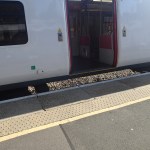
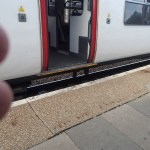
I would think it was fair to assume that nothing will be done about this gap problem until the promised new trains are delivered.
Before Overground – Wood Street
More Steep Stairs And Few Facilities – Rating 2/10
Wood Street station was the last station on the Lea Valley Lines I visited. But I hadn’t saved the best to last!

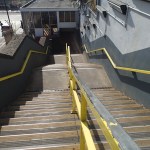


Wood Street is like many on the Lea Valley Lines with steep stairs, few facilities and rudimentary roofs.
Before Overground – Chingford
A Terminus In A Meaningful Place – Rating 8/10
Chingford is a proper terminus, with three platforms and a well-equipped station surrounded by a bus station with upwards of half-a-dozen routes, cafes, shops and a real ale pub.
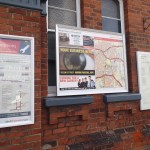


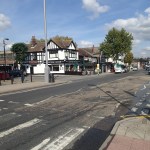
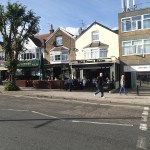

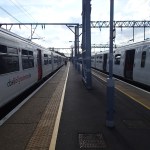
The station doesn’t appear to have any access issues and possibly more trains could be run to and from the station every hour.
Before Overground – Walthamstow Central
When the Victoria Line was built in the 1960s, the design budget seemed to run out. Several stations like Euston, Highbury and Islington, Brixton and Finsbury Park, show British rail infrastructure design of the time at its worst.
Wikipedia includes this in its section on the history of the Victoria Line.
It had been intended to build the line beyond Walthamstow Central to Wood Street (Walthamstow), where it would have surfaced to terminate next to the British Rail station. Proposals were also made to extend the line as far as South Woodford or Woodford, to provide interchange with the Central line. However, in a late decision in 1961 the line was cut back to Walthamstow (Hoe Street) station, renamed Walthamstow Central in 1968.
So does this late cutback, explain why Walthamstow Central is another station in this design disaster group?
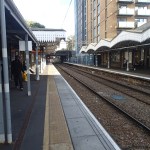
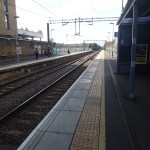
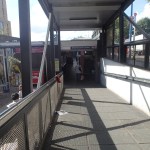

The station has the feel of something designed on the spur of the moment, with a simple subway underneath the Chingford branch to access the Victoria Line platforms. To get between the Chingford branch platforms and the entrance to the Underground station, you need to negotiate a tricky staircase. It’s almost as though London Underground designed the lower half and British Rail did the top.
A station designed today would probably incorporate escalators, lifts and wide straight staircases.
I can’t help thinking that the original plan of connecting the two lines at Wood Street was the correct one.
Wikipedia says this in its description of the station.
The underground station, like many stations on the Victoria line, was never completely finished. White ceiling panels were never fixed to the ceilings above the platforms; instead the steel tunnel segments were painted black and used to support the fixtures and fittings. This has had a detrimental effect on the lighting levels. There is a concrete stairway between the two escalators instead of a third escalator; this caused a hugely disruptive station closure for several weeks in 2004 when both escalators went out of service.
As Walthamstow is going through a building boom in the moment and traffic through the station will only increase, we must accept what’s done is done and we must find a way of correcting the mistakes of the past!
We can do two main things.
1. The interchange routes between the two lines at Walthamstow Central can be made easier by the addition of escalators and/or lifts.
2. We must provide alternative routes that take the pressure off Walthamstow Central. One simple idea would be to reinstate the Hall Farm Curve, which would allow trains to go a reopened Lea Bridge station and the major transport interchange at Stratford, with access to two Underground lines and the DLR.
As with many transport problems in London, I think that in 2018, London’s transport problems will change, with the arrival of the two biggest beasts of all; Crossrail and Thameslink.
1. Crossrail with its stations at Liverpool Street and Stratford will be fed directly by the Lea Valley Lines and pressure should be taken off the Victoria and Central Lines.
2. Thameslink calls at Finsbury Park, so will line be able to act as a bypass for those coming from Walthamstow and Chingford, who need to go to South London.
Hopefully all the changes will be for the better!
Before Overground – Theobalds Grove
A Simple Station With Poor Access – Rating 4/10
Theobalds Grove is typical of the poorer stations on the Lea Valley Lines. It has long staircases geared to the fit, rudimentary facilities and no redeeming features.

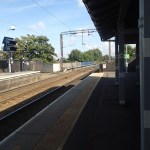
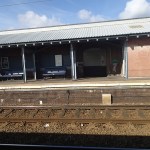
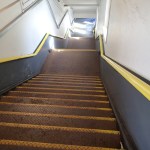
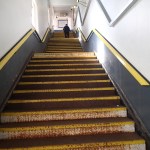
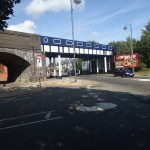
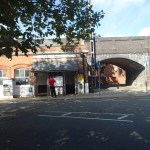
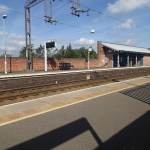
There does at least seem to be some cafes in the shops outside the station. But none had any of the quality you get in those around my local station; Dalston Junction.
Before Overground – Cheshunt
Cheshunt is the terminus of one of the branches of the Lea Valley Lines.
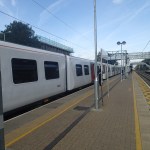
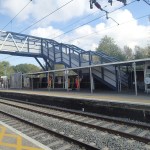
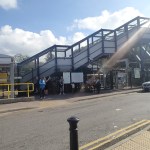
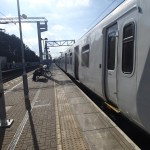
There is no severe access problems at this station, unless you’re changing from a train from the North to one of the local trains for say Hackney Downs. The timetable does seem to allow a generous fifteen minutes to catch the local train.
One thing that needs attention is the bus information and maps. I suppose we can’t really expect a company like Abellio Greater Anglia based in Norwich to know the intricacies of the buses in Hertfordshire. But will the information, after the takeover of the station by London Overground, be to London’s standard or that of Hertfordshire?
Before Overground – Turkey Street
A Convenient Station For The M25 – Rating 5/10
Turkey Street is not the best of stations, but many of its problems are mainly cosmetic. Except of course for the inevitable step-free access problems.


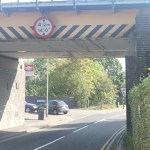


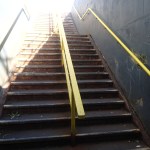

The station though does have the advantage that it is just south of the M25, about 300 metres off the A10.
On this part of the M25, which goes in a wide arc around, where I used to live at Cockfosters, the stations aren’t ideally placed to pick up or drop off a passenger. Turkey Street may be a place to drop a passenger, who’s going to the city, after which you continue around the M25.
London would certainly benefit from a decent Park and Ride station in this area!
Before Overground – Bush Hill Park
A Pleasant Tidy Station In The Suburbs – Rating 7/10
Bush Hill Park is one of the few stations, that is in reasonably good nick.
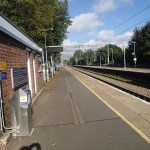
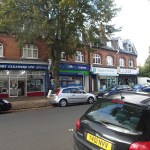
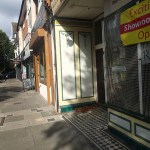

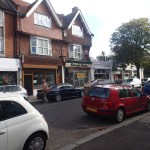

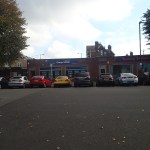
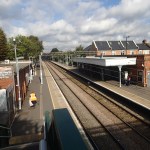

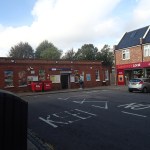
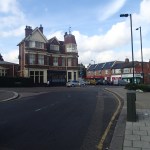
The station isn’t step-free, but if you can arrange that you always get on and off the train so you can walk out directly, you can avoid climbing over the footbridge. Network Rail says this about the station.
There is step-free access to each platform, but not between platforms.
For a station in a residential area, it’s well surrounded by shops, with a good sprinkling of cafes and restaurants. There is even a pub, that could be reasonable.
So it could be one of those stations, where you go to have a meeting for business or pleasure.
 The Anonymous Widower