Will The Gospel Oak To Barking Line Be Extended To Hounslow?
The Modern Railways report on the Mayor’s Transport Infrastructure Plan for 2050 says this.
There may be a case for further orbital rail capacity, says the document – it shows an indicative, uncosted network to link Hounslow, Old Oak Common, Neasden, West Hampstead, Harringay, Walthamstow, Barking, Abbey Wood, Bexleyheath, Norwood Junction, Sutton and New Malden and back to Hounslow, with another route between Abbey Wood and New Malden via Lewisham, Peckham Rye and Wimbledon.
I did a brief piece of research on the route yesterday between West Hampstead and Harringay, and it would appear that there is a link off the Gospel Oak to Barking Line (Goblin), that enables trains to move to and from the Midland Main Line. I got a picture of the link just before my train from Gospel Oak arrived at Upper Holloway station.
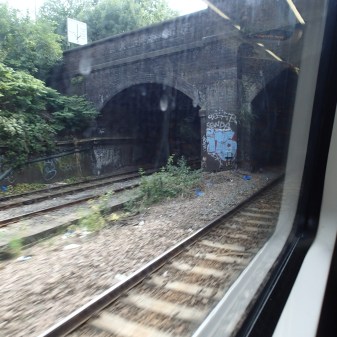
Goblin To MML Link
I suspect freight trains use it to get from the Goblin to the Dudding Hill Line, which branches off the Midland Main Line, just north of Cricklewood station.
So an Overground train could run the same way stopping at West Hampstead and Cricklewood stations, before taking the Dudding Hill Line, through new Neasden and Old Oak Common stations on the way to Hounslow.
The Route
Perhaps it is a good idea to list the stations on the extended line in order from Harringay Green Lanes to Hounslow.
Harringay Green Lanes – My only observation, is that I use this station to pick up the Goblin, as I can get a 141 bus direct to and fom the station from within a hundred metres from my house.
Junction Road – This doesn’t exist at present, but is constantly being talked about to link the Goblin to the Northern Line.
West Hampstead – In a few years this will have grown into a full blown interchange, between Thameslink, Chiltern Railways, Jubilee and North London Lines. Having the new extended Goblin call here would improve the transport opportunities for those who live and work all across North London.
Neasden – This will probably be a new station, somewhere near the current Neasden station on the Jubilee line. I visited the area, when I was researching the Dudding Hill Line. It might be a place where some clever architect and developer could create a very useful interchange combined with some much-needed residential properties.
Harlesden – As the Dudding Hill Line runs virtually over the top of the current Harlesden station on the Bakerloo and Watford Overground Lines, like Neasden this could be a development opportunity.
Old Oak Common – I have seen in some reports Old Oak Common has been described as the Canary Wharf of the West. Also, every time I read about the area, more rail lines and ideas get thrown into the mix.
North Acton – The route has now joined the southern end of the North London Line. An interchange at North Acton has been talked about for years. There’s a discussion here.
Brentford – In recent years, this station was on the London Crosslink between Norwich and Basingstoke.
Points Raised
Listing the stations shows several important points.
1. Interchanges With Other Lines
This part of the line has interchanges to many other lines. You could put these on the list.
2. Development Opportunities
Many of the stations seem to have development opportunities. Perhaps not on the scale of West Hampstead and Old Oak Common, but there would to be scope at many stations.
3. Important Areas Served
The line effectively links Tottenham, which is one of the most deprived areas of London, through most of North London through Old Oak Common to Hounslow in the West. The western end point is close to Twickenham Stadium, which is not the easiest place to get to from North and East London.
I have not seen any figures, but surely this line would open up a lot of employment and leisure opportunities.
4. Freight
An electrified line, as it obviously will be, would also speed freight along the line, perhaps allowing more freight trains to between ports like Felixstowe and London Gateway and the lines to the North and West.
4. No New Rail Lines, Bridges Or Tunnels
In this brief look, it would appear that most of the infrastructure, except for station and the catenary, is already in existence. I can’t see too many protest groups and Nimbys objecting to what is being proposed.
6. Possible Objectors
Perhaps the biggest objectors will be other train companies objecting to London Overground encroaching on their territory.
Summing Up
So to sum up, I think that this part of the proposed line, might be developed in the near future, as it provides an important link without costing the multi-billions of a Crossrail.
The Easy-Entry Spacious Class 378 Train
London Overground’s Class 378 set a high standard for commuter trains.
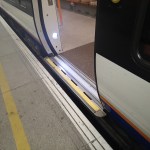
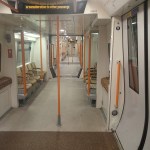

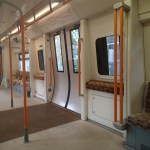
Note the step-free walk-across entry, the longitudinal seating with lots of space for standees and the articulated joint between carriages.
Will It Be More Of The Same?
London Overground has short-listed four manufacturers for the new rolling stock for the Gospel Oak to Barking and the newly taken over lines. There’s an article on Global Rail News. Here’s the first paragraph.
Siemens, Hitachi, CAF and Bombardier have been shortlisted for a contract to supply a new suburban train fleet for London Overground.
The order will include 39 new trains in total, of which 31 will be used on the newly devolved West Anglia franchise routes and eight will replace diesel stock on the Gospel Oak to Barking route.
I obviously don’t have the figures, but surely the current Class 378 trains on the Overground don’t have any drawbacks that are talked about by passengers or the media. Except for the overcrowding, which is due to the success of the Overground.
But surely, it would be a common sense decision to just extend the Class 378 fleet.
1. Maintenance of a single uniform fleet would surely be easier and less costly.
2. All of your drivers and other staff would only have to be familiar with one class of train.
3. The configuration of the Class 378 is flexible, so it would be possible to run three coach trains on one line and four or even five car trains on another.
4. The Class 378 trains are becoming an icon to Londoners and regular passengers know how to use them effectively. Do passengers really want two train fleets on the Overground?
5. We also have the extra procurement costs if another type of train is chosen, as it will have to be fully tested.
I would be surprised if any train other than a Class 378 is chosen.
The Trains For Crossrail And Thameslink
London’s two new cross-town railways; Crossrail and Thameslink will both be fully opened around the end of this decade.
So it would seem logical that the two lines might share the same trains.
But it is not as simple as that!
All sorts of factors like delaying of projects, the slightly different natures of the two lines and the decision of Siemens, who won the contract for the Thameslink trains, to withdraw from Crossrail, because of a lack of capacity, mean that we now have two separate train fleets; Class 700 for Thameslink and Class 345 for Crossrail.
Although separate train fleets, it does look that the design philosophy of the two trains is very similar. Take this paragraph from the specification issued by Crossrail for their Class 345 trains.
Wide through gangways between carriages, and ample space in the passenger saloons and around the doors, will reduce passenger congestion while allowing room for those with heavy luggage or pushchairs.
From what I have read here on First Capital Connect’s web site, the Class 700 might be very similar.
So it would seem that four of London’s important new train fleets will be walk-through. In addition to the Class 345 and Class 700, the Overground’s Class 378 and the Underground’s S Stock are build to similar principles, although the latter two trains, probably expect more standing passengers.
One advantage of these trains is that they can be designed to line up with the platform edge, as the Class 378 generally do, which enables a simple step across the gap into or out of the train. At some stations, like Willesden Junction, on the Overground, the alignment is bad and you certainly notice the difference. So I will hope that the two new train classes line up with the platforms! As on Crossrail and Thameslink most stations will only be served by one type of train, I suspect that it could be possible.
In my view, if we are to have a step-free railway, then all station-train interfaces, should be a simple step across.
Another advantage of this type of train, is that you can walk inside the train to less-crowded areas or perhaps to your preferred door for exit at your destination. I do this regularly, when I take the short hop from Highbury and Islington to Dalston Junction stations on the Overground, as I get in at the front and get out at the back, due to the layout of the two stations.
This walk-through capability will be essential for Crossrail, where the trains and platforms will be 200 metres long. One of Crossrail’s engineers told me, that she felt some people might not like the trains because of their length and the long walks in stations. I don’t think regular users will mind so much, as they’ll develop a strategy that works for their journey. But will a tourist dragging a heavy case going from say Heathrow to Bond Street, be so happy after walking a long distance to get out the station.
The various proposals for new deep-level Underground trains seem to have through gangways like this proposal from Siemens.
So is a de facto standard for train design emerging, where trains have through gangways, flat floors and wide doors with no-gap step-across access?
I think it is and it will be to the benefit of all rail users, including the disabled and those pushing buggies or dragging heavy cases.
Looking at the pictures I took of Siemens Underground proposal, it seems the design fits such a standard!
A secondary advantage of this design is that it should tighten up stopping time at stations, thus making it easier for trains to keep to schedules.
Transport for London’s Two Iconic Brands
I have a Google Alert for the word Overground to pick up any stories about Transport for London’s newest railway system the Overground. The link is to the official site and on a straight Google search, it is number one in the list.
It’s only rarely that the Google Alert picks up a news item, that is not about the Overground.
So how does the Underground fare in Google searches. As with the Overground, the official site for the Underground is first in the search list. On the first page, there are only a couple of pages that are nothing to do with the London Underground.
Even the word Tube typed by itself into Google, produces virtually a complete page of information about the Underground.
I suspect that London’s two iconic brands; Underground and Overground, together with their nickname Tube have one of the best worldwide recognitions.
Frank Pick, who led London Transport in the early days and oversaw the creation of the original corporate branding, will be laughing through history.
Who would have thought that a man from Spalding, who qualified as a solicitor, would have become one of the people with the greatest influence on the look of today’s London? Only Christopher Wren and Joseph Bazalgette come close.
Why We Should Improve Train Lines
I’m biased and love trains and other forms of public transport.
But everybody should read this document, which describes how and why a group wants to upgrade all the train services in the Lea Valley.
It details various solutions and the benefits they will bring.
It is also a report that has been listened to!
Lea Bridge station is being reopened and the London Overground, is taking over the Lea Valley lines.
The report is also full of innovative and sensible suggestions about how to improve the area for work, rest and play. Typical is the idea to create a footpath and cycleway to Northumberland Park station across the Lea Valley.
If the Overground can do for the Lea Valley lines, what it has done for other parts of London, it’ll be a good start.
A Journalist Wasn’t Disappointed
I said in this article a few days ago, that I was disappointed to not be able to walk through the Thames Tunnel.
But this article on Wired, describes a walk by a journalist who wasn’t!
Katie Collins was a lucky lady!
Hackney Downs Station’s Newly Painted Bridge
Hackney Downs Station has been a pain for me in recent months, as they have been refurbishing the bridge over Dalston Lane and this means that the 56 bus has been diverted and I can’t use it to get to the station for a trip to my son’s house in Walthamstow.
But it looks to be finished now and the 56 and 30 buses are back on their normal routes.
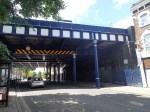
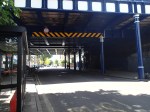
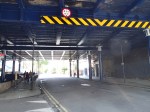

The next phase of the development at the station is completing the lifts and reinstating the walkway to Hackney Central station.
I suspect they’ll be getting the orange paint out for when the station becomes part of the Overground.
Could Transport for London Run A Tourist Train On The East London Line?
The East London Line of the London Overground is a railway line with lots of history, that runs through the Thames Tunnel, which was built my the father and son, Marc and Isambard Brunel.
Could it be turned into a tourist attraction for East London, without interfering with its main function as a valuable cross-river railway line?
In Berlin, they used to run a specially-converted panorama train on the S-bahn, but I couldn’t find it on my last visit.
Obviously, to have a non-standard train or two would be expensive, but small modifications might be possible to enhance its value to visitors, when all the other modifications that will happen are taken into account.
For example, I think that in a few years time, a substantial number of London’s buses and trains will have free or more likely sponsored wi-fi. So could a tourist commentary be broadcast through this to passengers? As I detailed in this post, you can already download audio guides for the Docklands Light Railway.
The East London Line is covered by four services to four destinations in the south and two in the north. All go through the Thames Tunnel, but one between Dalston Junction and New Cross stations is a fair bit shorter than the others and the service is scheduled with just two trains, shuttling north and south every fifteen minutes with a wait time at each end of the line of eleven minutes.
So how could these trains and stations be improved to provide a better service for visitors?
1. I don’t know about New Cross, but Dalston Junction doesn’t have a café, although I think at both stations, there is space on the platforms for a quality coffee stall.
2. If the trains were wi-fi enabled, the trains could have video cameras giving forward and backward views as the train progressed.
3. I would also put sideways facing lights on the two trains, so that, when passing through the Thames Tunnel, the Victorian structure could be illuminated. One of the good features on the Class 378 is that they have fairly wide windows, that give a good view.
4. On the Overground, many trains used to have a conductor. But could a trained tourist guide/conductor be provided on these trains? I suspect they could.
The East London Line is a railway line unique in London and probably in the UK and the wider world, as where else do you pass through such an important Victorian tunnel, that is so rich in history and engineering, and is in such a superb state?
Assets should be made to sweat! Especially, where they have the potential to create jobs.
 The Anonymous Widower