A Bug In The Software
I took this picture on the Southbound platform, at The Angel, this morning.
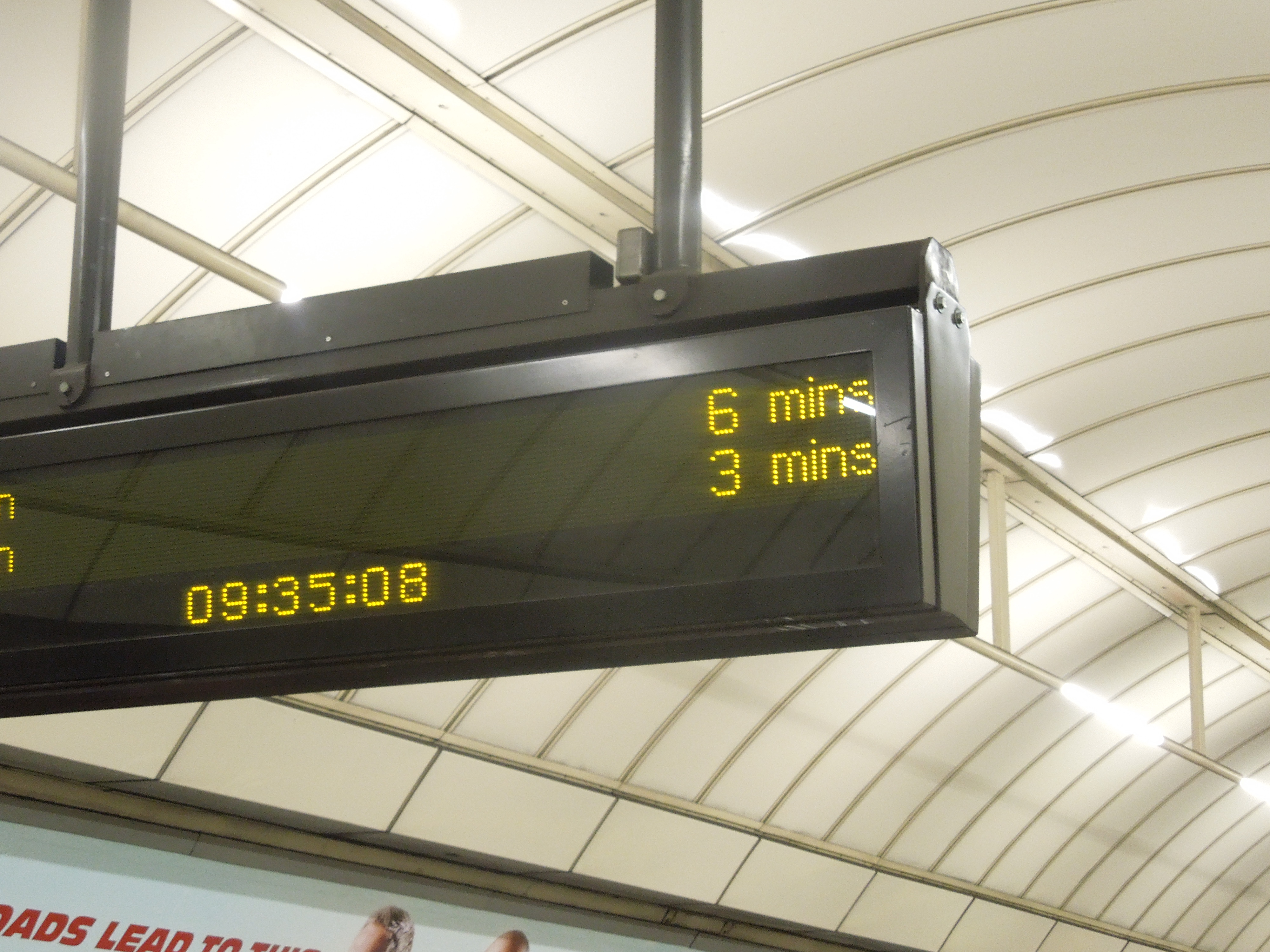
A Bug In The Software
How could the second train arrive before the first? Do they have an overtaking line to the north of the station?
In the end, it arrived in under three minutes.
Do We Need Big Arrows In Underground Stations?
Last night, as I was coming back from Burnley, I deliberately got to the front of the train and walked straight out through the gates at Kings Cross station. You can see how the square is coming together and soon, you’ll walk straight out and to either the buses or the Underground entrance on Euston Road.
There is a passageway, through the site and I used it to get to the Underground,down the steps and escalator to the Northern line platform for the Angel.
one of the peculiarities of the London Underground, is that unlike many metros in the world, trains don’t necessarily arrive on the platform in the same direction. For example Southbound trains on the Northern line at the Angel, arrive from left to right, whereas those on the Victoria line at Highbury and Islington station, arrive from right to left. I think the Victoria line is the most inconsistent, with Northbound trains at Highbury and Islington station, arriving from left to right.
At Kings Cross yesterday, I wanted to make sure I was in the rear section of the train, as this would mean I didn’t have to walk a long way back down the platform. I walk pretty straight these days, but I do think it is safer to get off the platform as quickly as possible.
There is no indication at Kings Cross to say from which direction the trains will arrive and i think it would be a good idea, if this was indicated on the platforms. Perhaps a big arrow above the adverts or a little sign saying from which direction the trains arrive.
It would have two effects.
Like with me yesterday, you’d probably be more likely to get in the right carriage for your home station.
But also because it would forewarn passengers of the direction of trains, it might be just that bit safer, and we got a few less accidents on the platforms.
Note that Transport for London already announce on the Victoria line, which side the doors open at each station to help passengers, so it wouldn’t be that radical.
The Jubilee Line Bites London Again!
According to this article in the Evening Standard, the Jubilee line is being shut by the wrong kind of water.
The Jubilee line is to be shut for more than 30 days over the next two years in central London because acidic water is eating into the cast iron linings of the tunnel walls.
Services will be halted in both directions between Finchley Road and Waterloo for major repairs costing £40 million.
Why has the Jubilee line got it in for London, as when a line goes berserk, it is often that line, which was opened for the Millennium? When I use the line, there seems to be a higher chance of trouble compared to the other lines.
It would appear that the problem is in the first section of the Jubilee line that was built in the 1970s. The tunnels seem to use iron linings and it is interesting that Crossrail is manufacturing all of its linings out of concrete.
I do wonder what other problems will turn up on London’s most troublesome Underground line!
At least on the BBC News tonight, they showed how the repair techniques were being tested in the old Charing Cross platforms, which were last used for Skyfall. So hopefully, they’ll find a way to cut the closure of the line to a minimum.
London’s Disliked And Loved Tube Stations
This report on the BBC web site talks about a survey of Londoners most disliked and loved Underground stations.
Bank came out as the most disliked and it is not one of my favourites. Having thought I’d cracked getting from the DLR to the 141 bus in an efficient way, this morning I found it was all change today and we had to use a lift, as another escalator was being replaced.
I suspect, it’ll be all right in the end! But when will that be?
The survey also ranks the most disliked stations as Bank, Acton Town, Oxford Circus, Aldgate East and Brixton. I’ve never been to Acton Town, but my five stations in this category with reasons would be
- Bank – It’s just a confusing maze.
- Green Park – So far to walk.
- Clapham North – Dangerous platforms
- Kings Cross – A massive labyrinth
- Euston – Tired and pokey!
The public’s most loved stations are Canary Wharf, Baker Street, London Bridge, Charing Cross and Victoria, which is a pretty nondescript bunch, except for the first. Baker Street isn’t very special except for the tiles, London Bridge is another maze, Charing Cross is rather dingy and Victoria at the moment is a building site.
I would make my list of five from these stations.
Canary Wharf – Just spectacular
Canning Town – Everything an interchange should be.
Farringdon – On completion of Crossrail and Thameslink, it could be the best.
Southgate – Charles Holden‘s masterpiece
Stratford – The Olympic hero!
I Meet The Underground Harpist Again
I met this harpist for the second time yesterday, in Oxford Circus Underground station.
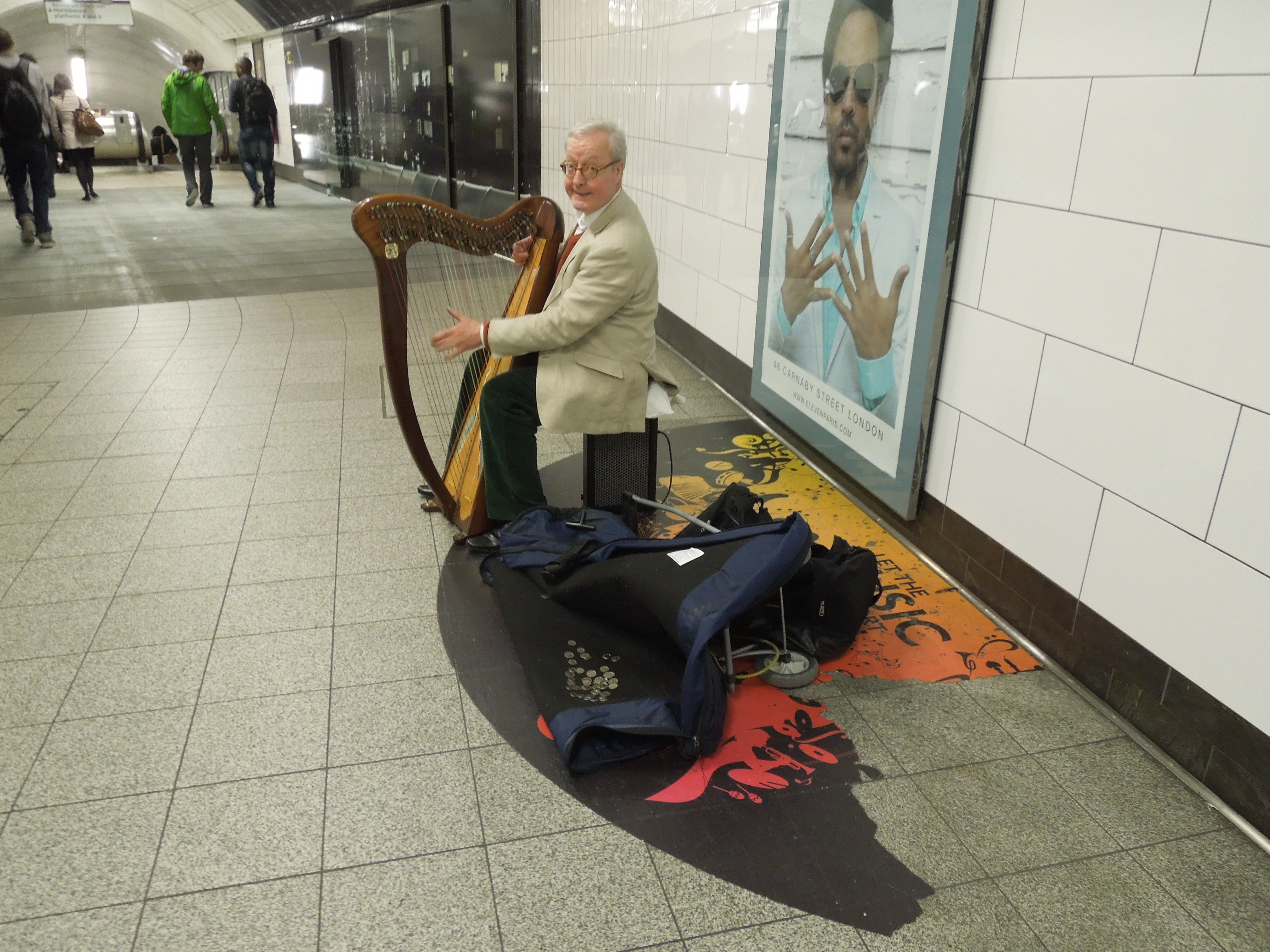
The Underground Harpist
The guy in the poster is showing an interesting expression!
It’s good to hear music, of any type of decent quality wafting through the tunnels. In fact, I don’t think, I’ve heard anything underground, that anybody would complain about.
There Are Mormons Everywhere!
Everywhere there are adverts for Mormons.
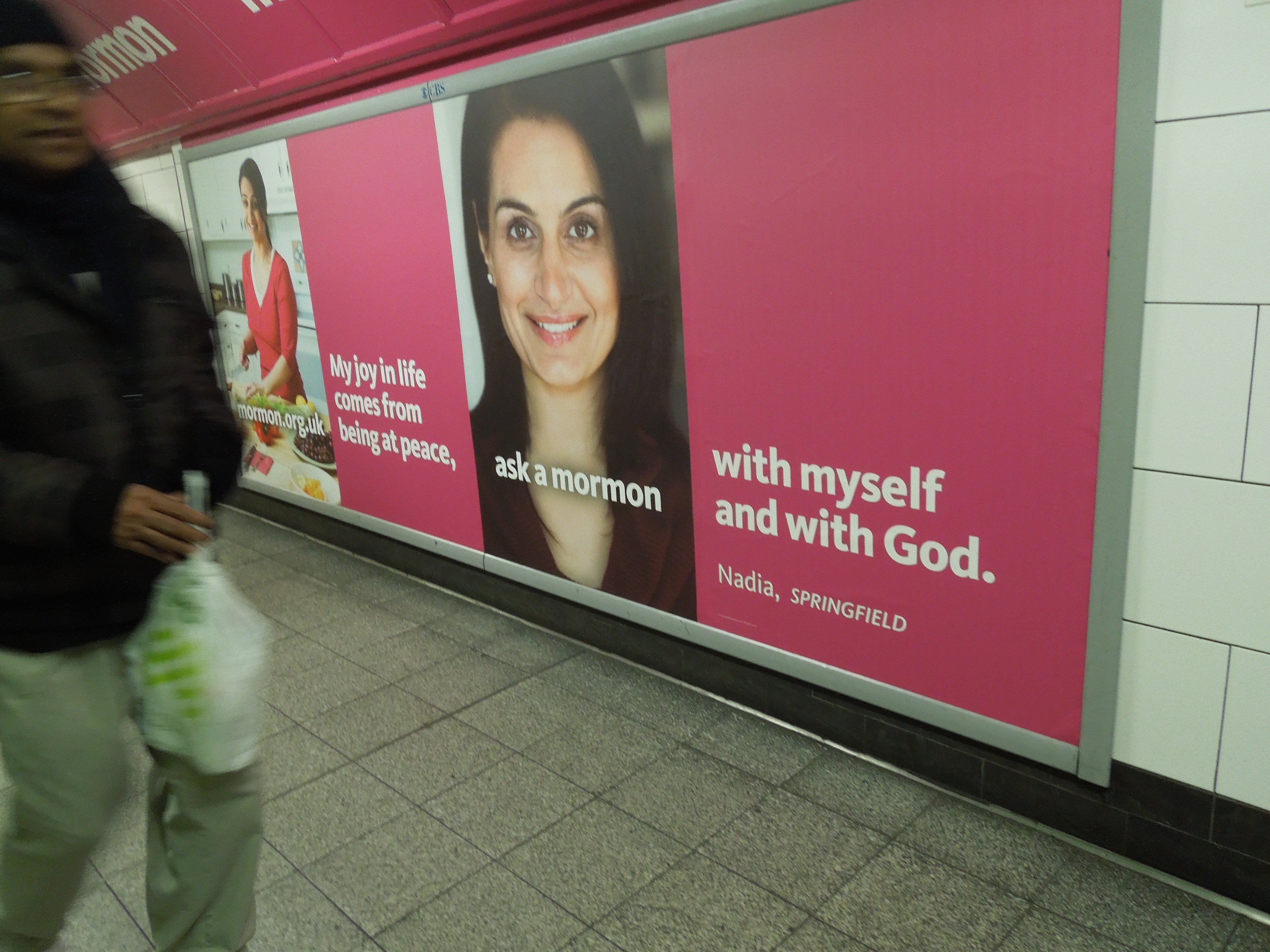
There Are Mormons Everywhere!
I suppose religious adverts on the buses follow the same rules as films. The more adverts there are. the worse the religion.
It gives me a bit of a problem in that I don’t travel on a bus advertising something I don’t like or disapprove of. Oxford Circus is also wall-to-wall with the adverts, so that gives me another problem, as that is a difficult station to avoid.
Don’t Use Highbury And Islington Station
This post is to remind me not to, until they finish the current works!
I used it on Tuesday and found that the down escalator was under maintenance, so I had to walk down.
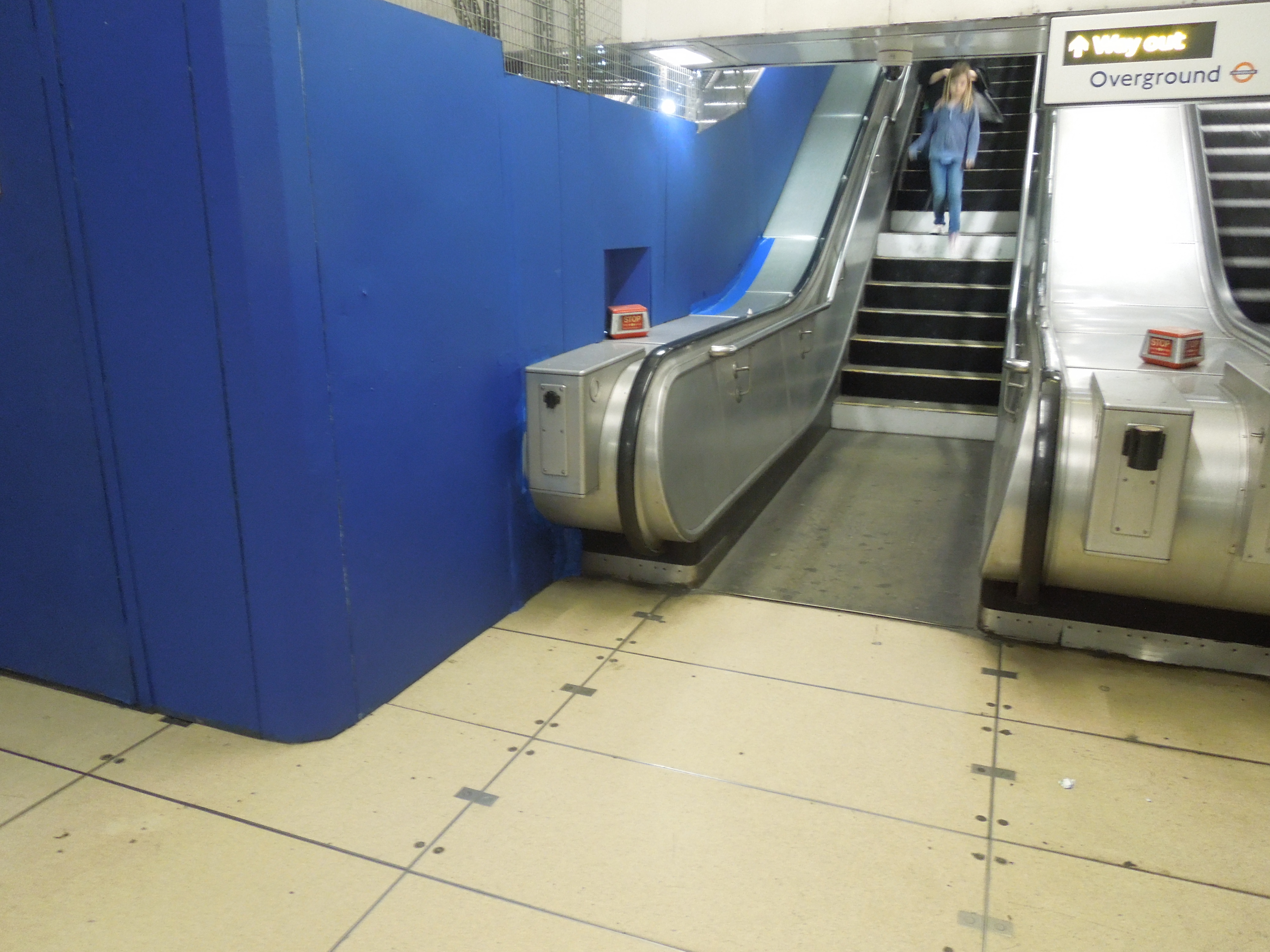
Highbury And Islington Down Escalator Under Maintenance
That wasn’t too much of a pain, but I like to avoid it if I can.
This morning, when I wanted to get to Oxford Circus, I found that the whole entry was choked and so I decided to walk to Holloway Road instead.
The latter was suggested by one of station staff, who obviously thought I could walk it.
So that must have been some sort of back-handed compliment.
incidentally, Highbury and Islington station is one of those with three escalator positions and only two escalators. I wonder if in the next few months, they do the sensible thing and install the third escalator.
If they do, surely they should have done that before taking the down escalator out of action for several months.
Countdown Comes To Hackney
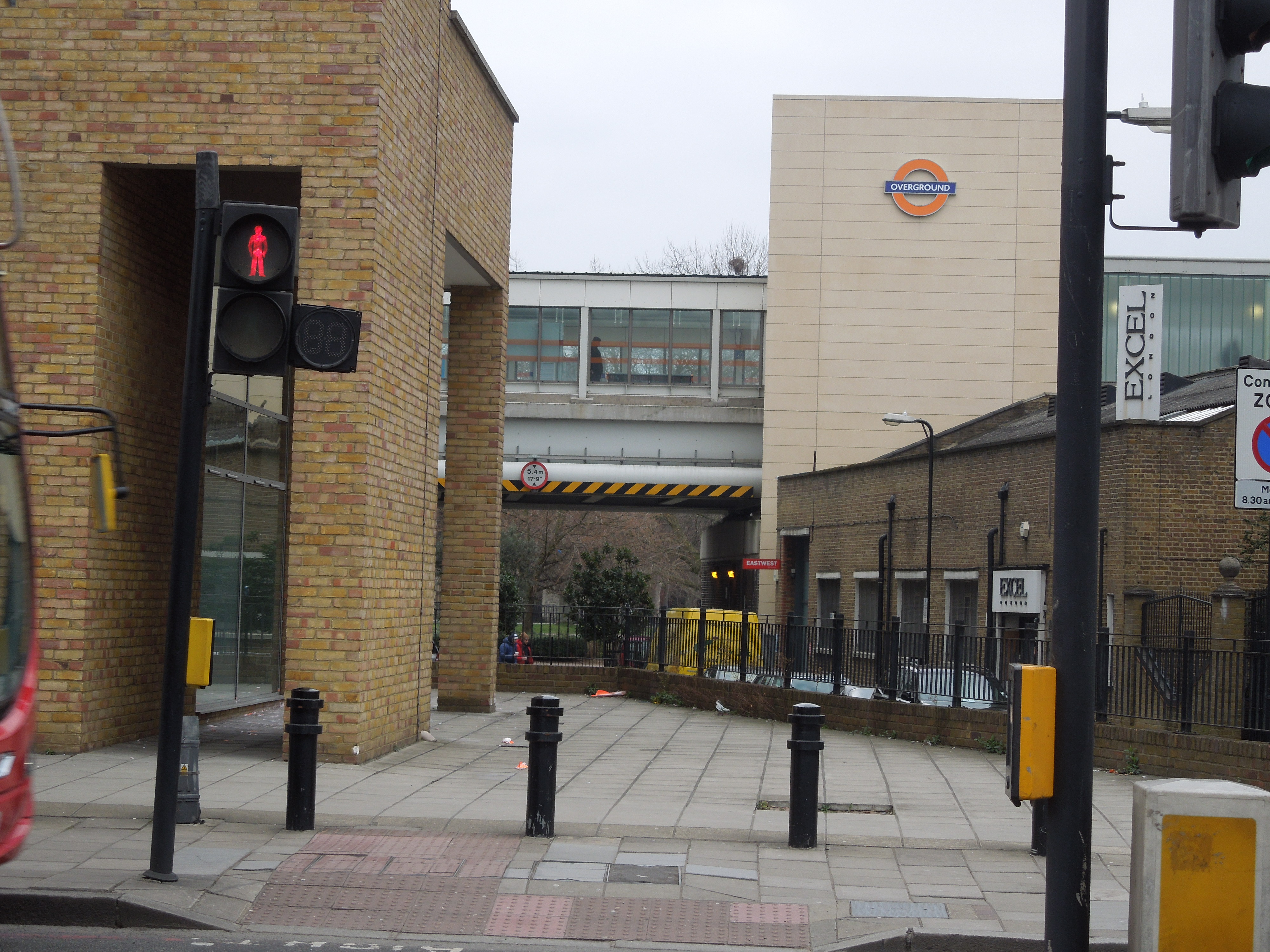
I don’t think it was working yet, but Pedestrian Countdown has arrived in Hackney, as this picture shows.
Countdown Comes To Hackney
I was on my way from my doctors to Paddington station, so I was going to Haggerston station, which you can see in the background.
It is not a simple journey and it requires two changes at Canada Water and Waterloo stations. The latter is a change to avoid.
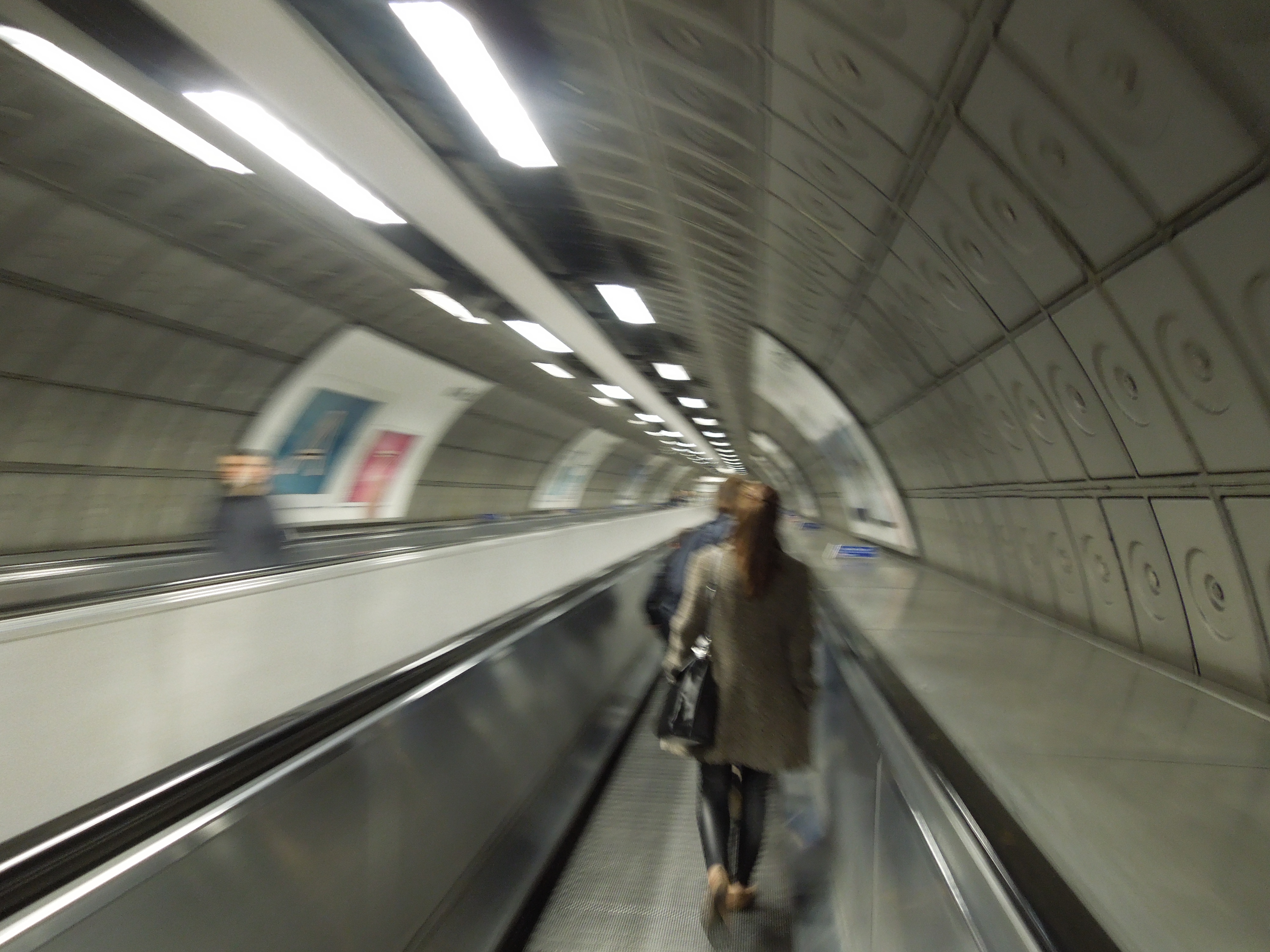
Waterloo Interchange
At least there is a moving pavement in the long tunnels. I think of all London’s main stations, Paddington is the most difficult to get to from Hackney and other parts of North East London.
Where Is The Lift At Highbury And Islington Station?
I have been impressed with some of the lifts put in at stations like Camden Road and Hackney Central recently.
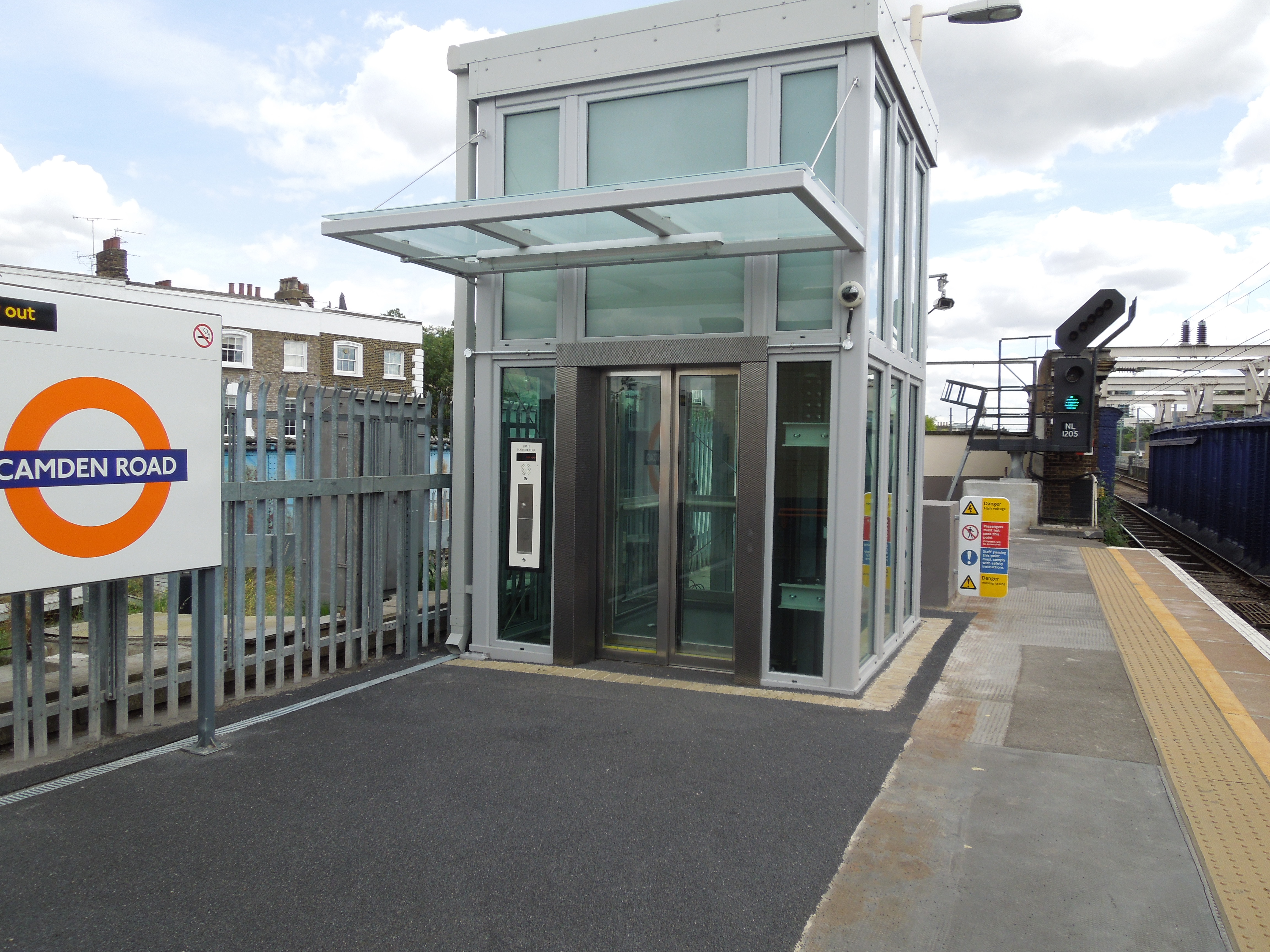
So I thought I’d have a look to see, if any stations, I use regularly were being updated with lifts or step-free access. Network Rail are managing the work across the rail network and the project is called Access for All.
I looked at all the stations to be upgraded and found an entry for Highbury and Islington. Click this link and then go down a bit.
The entry says that one lift is provided to the Great Northern and City line and that it was completed in Autumn 2010.
I’ve used the station extensively for the last few years and I’ve never found this mythical lift. To check, I asked the station staff tonight, when I came through the station on my way home. They’d not seen it and were a bit worried if someone turned up in a wheelchair looking for access to the deep lines.
As I said here, it is not the best station for step-free access, although that to the Overground is excellent. But the single lift mentioned on the Network Rail web site, would be a welcome addition.
1960s Architectural Failures
Yesterday, I went to or through four stations; Highbury and Islington, Euston, Manchester Piccadilly and Huddersfield.
Huddersfield is a Grade 1 Listed Building which means it is one of the finest buildings in the country. The others are three of the worst examples of how we designed and built stations in the 1960s.
So it got me thinking about what are the worst examples of 1960s architectural design, that I’ve seen. I’ll start with the three I’ve already named.
Euston station – I probably went to Liverpool a couple of times from Euston before the current station was built and I have vague memories of catching trains there during the building in perhaps 1965 to 1967. The design shows classic “Think Small” attitudes as it was deliberately built with foundations that couldn’t support development above. Only twenty or so years later, Liverpool Street station was remodelled, which shows how good design can be applied to old buildings. Since then St. Pancras and Kings Cross have been rebuilt using similar thought processes to those used so successfully at Liverpool Street. One does wonder what would have happened at Euston, if the rebuilding had been a few years later. Euston is now to be rebuilt for HS2 and I suspect they’ll get it right this time.
Euston has another big problem, that you don’t see on the surface. The Underground station is one of the worst in London, with no step-free access, innumerable staircases and escalators and a dingy cramped ticket hall. The only good thing about Euston station is that coming off a train, it’s easy to walk to a bus, as I did last night. But try taking a heavy case on the Underground.
In some ways, Euston’s problems with the Underground should have been solved, when they built the Victoria Line, which opened at around the same time as the new Euston station. It just showed how bad project planning was in those days. The fact that the Victoria line was built on the cheap didn’t help.
Highbury and Islington station – This suffers badly because of the decision to build the Victoria Line on the cheap. Again it is not step-free and it perhaps is one of the worst stations for disabled access in the Underground, as when you get down the escalator, you then have a tunnel and a staircase to get to the platforms. At least the Overground platforms have lifts to the surface. Since I have moved to the area, the station concourse has been opened up considerably and it is not dark and cramped like it was a couple of years ago. To be fair to Transport for London, I think they’ve achieved the improvement without using tons of money. But solving the problems of access to the underground platforms will be very expensive.
Manchester Piccadilly station – This suffers in that it doesn’t have enough platforms and lines. Additionally, of all the main stations in the country, it probably has some of the worst connections to other means of transport. It makes you wonder if it was designed as a cheap stop-gap solution to accept the new electric trains from London. They are spending a fortune on the Northern Hub, but will it get rid of all the hangovers from the 1960s and all the resulting layers of sticky tape? Only time will tell, but judging by the improvement of planning in recent years, it probably will. If you want to read about planning failures in the area, read this Wikipedia topic about the Ordsall Curve, which is a crucial part of the Northern Hub. It would appear that it had the go-ahead ( and money) in 1979.
So that’s dealt with yesterday’s examples, what others can be added to this list?
Kings Cross station – Although not specifically 1960s, but a few years later, this now virtually demolished extension was best described as a wart on the face of the Mona Lisa. The man who designed it, must have had the biggest conservation stopper of all time. I can’t wait until I see the new Kings Cross plaza in the autumn.
Various stations – There were a lot of stations built in the 1960s that I don’t like, although some are listed. I would start with a short list of Harlow Town, Stevenage, and Walthamstow Central. Railways have a lot to answer for, but some of their worst excesses were reserved for buildings like this signal box in Birmingham. Many reckon that Birmingham New Street station is another bad example, but at least the operation of the station seems to be pretty good. In fact the planned reconstruction of the station; Gateway Plus, is all about greater passenger comfort. So yet another 1960s monstrosity will bite the dust. Gateway Plus has this condemnation of 1960s thinking.
The current New Street station was built to cater for 650 trains and 60,000 passengers per day, which was roughly the same usage it experienced when it was first constructed. It was believed that demand for rail travel would decrease. However, it now caters for 1,350 trains and over 120,000 passengers – twice its design capacity. Passenger usage of New Street has increased by 50% since 2000.[2] It is predicted that passenger usage of the station will increase by 57% by 2020.
We do seem to have cut corners for decades and only now the chickens are coming home to roost.
 The Anonymous Widower