Countdown Comes To Hackney
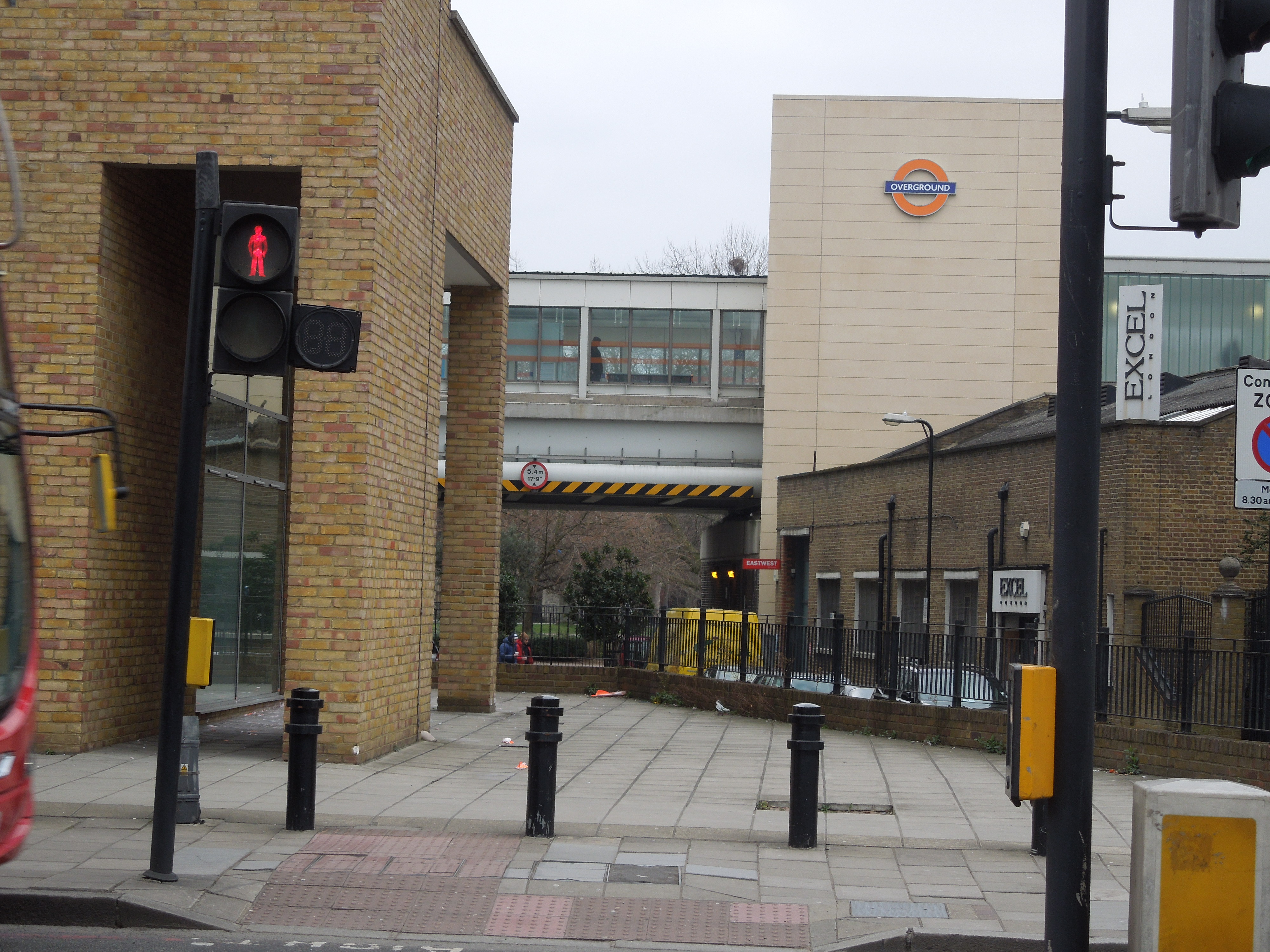
I don’t think it was working yet, but Pedestrian Countdown has arrived in Hackney, as this picture shows.
Countdown Comes To Hackney
I was on my way from my doctors to Paddington station, so I was going to Haggerston station, which you can see in the background.
It is not a simple journey and it requires two changes at Canada Water and Waterloo stations. The latter is a change to avoid.
Waterloo Interchange
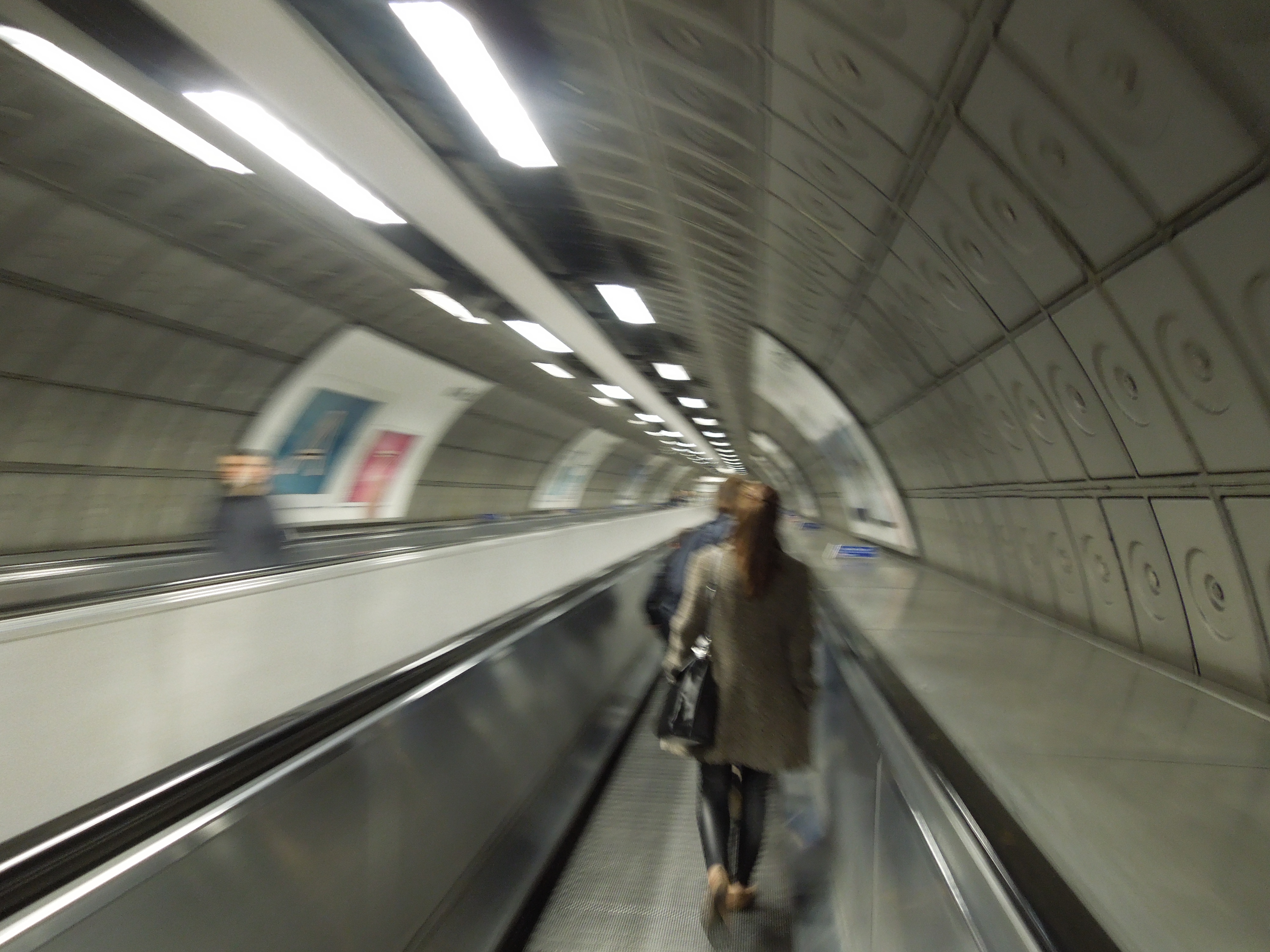
At least there is a moving pavement in the long tunnels. I think of all London’s main stations, Paddington is the most difficult to get to from Hackney and other parts of North East London.
Where Is The Lift At Highbury And Islington Station?
I have been impressed with some of the lifts put in at stations like Camden Road and Hackney Central recently.
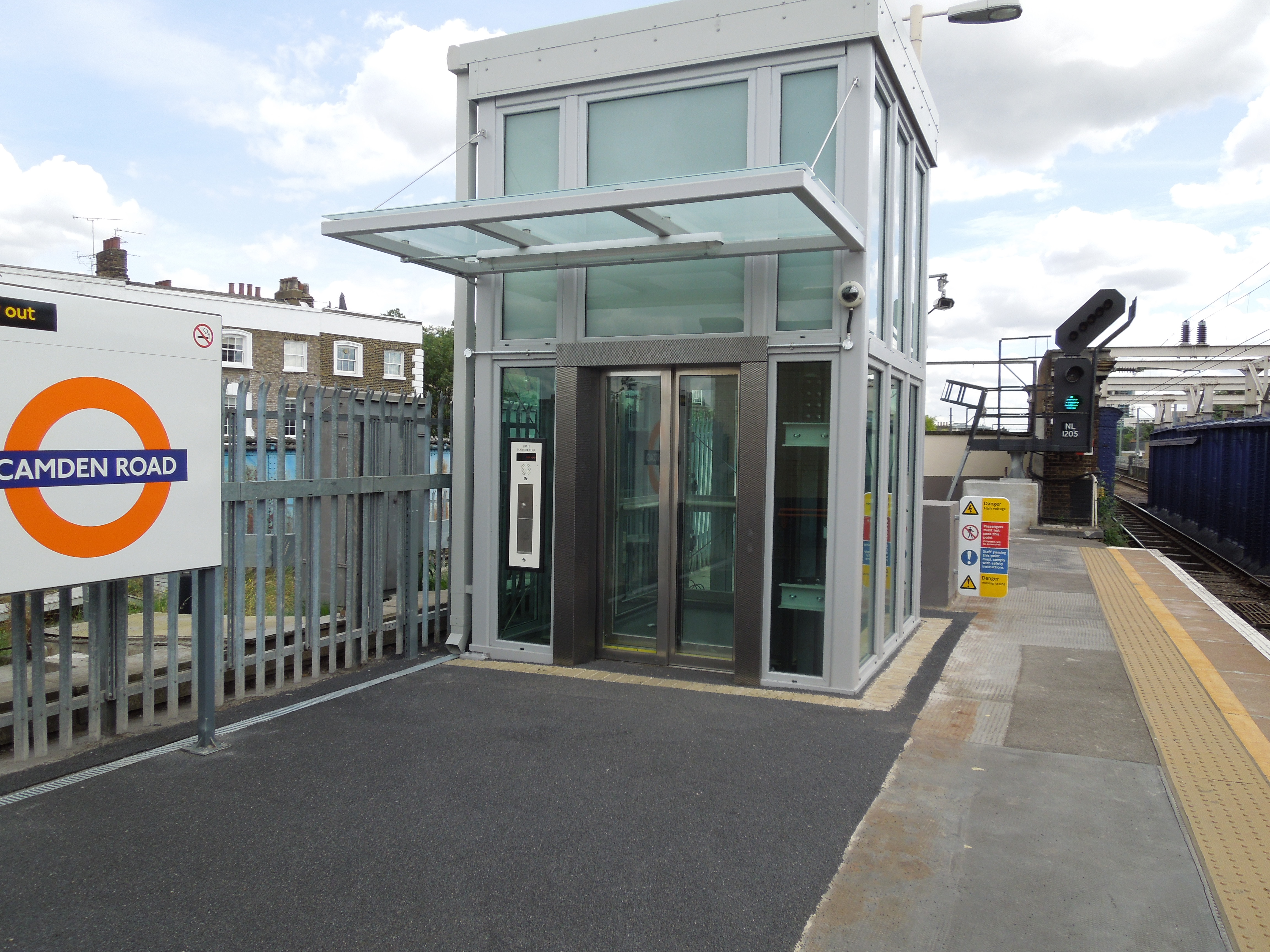
So I thought I’d have a look to see, if any stations, I use regularly were being updated with lifts or step-free access. Network Rail are managing the work across the rail network and the project is called Access for All.
I looked at all the stations to be upgraded and found an entry for Highbury and Islington. Click this link and then go down a bit.
The entry says that one lift is provided to the Great Northern and City line and that it was completed in Autumn 2010.
I’ve used the station extensively for the last few years and I’ve never found this mythical lift. To check, I asked the station staff tonight, when I came through the station on my way home. They’d not seen it and were a bit worried if someone turned up in a wheelchair looking for access to the deep lines.
As I said here, it is not the best station for step-free access, although that to the Overground is excellent. But the single lift mentioned on the Network Rail web site, would be a welcome addition.
1960s Architectural Failures
Yesterday, I went to or through four stations; Highbury and Islington, Euston, Manchester Piccadilly and Huddersfield.
Huddersfield is a Grade 1 Listed Building which means it is one of the finest buildings in the country. The others are three of the worst examples of how we designed and built stations in the 1960s.
So it got me thinking about what are the worst examples of 1960s architectural design, that I’ve seen. I’ll start with the three I’ve already named.
Euston station – I probably went to Liverpool a couple of times from Euston before the current station was built and I have vague memories of catching trains there during the building in perhaps 1965 to 1967. The design shows classic “Think Small” attitudes as it was deliberately built with foundations that couldn’t support development above. Only twenty or so years later, Liverpool Street station was remodelled, which shows how good design can be applied to old buildings. Since then St. Pancras and Kings Cross have been rebuilt using similar thought processes to those used so successfully at Liverpool Street. One does wonder what would have happened at Euston, if the rebuilding had been a few years later. Euston is now to be rebuilt for HS2 and I suspect they’ll get it right this time.
Euston has another big problem, that you don’t see on the surface. The Underground station is one of the worst in London, with no step-free access, innumerable staircases and escalators and a dingy cramped ticket hall. The only good thing about Euston station is that coming off a train, it’s easy to walk to a bus, as I did last night. But try taking a heavy case on the Underground.
In some ways, Euston’s problems with the Underground should have been solved, when they built the Victoria Line, which opened at around the same time as the new Euston station. It just showed how bad project planning was in those days. The fact that the Victoria line was built on the cheap didn’t help.
Highbury and Islington station – This suffers badly because of the decision to build the Victoria Line on the cheap. Again it is not step-free and it perhaps is one of the worst stations for disabled access in the Underground, as when you get down the escalator, you then have a tunnel and a staircase to get to the platforms. At least the Overground platforms have lifts to the surface. Since I have moved to the area, the station concourse has been opened up considerably and it is not dark and cramped like it was a couple of years ago. To be fair to Transport for London, I think they’ve achieved the improvement without using tons of money. But solving the problems of access to the underground platforms will be very expensive.
Manchester Piccadilly station – This suffers in that it doesn’t have enough platforms and lines. Additionally, of all the main stations in the country, it probably has some of the worst connections to other means of transport. It makes you wonder if it was designed as a cheap stop-gap solution to accept the new electric trains from London. They are spending a fortune on the Northern Hub, but will it get rid of all the hangovers from the 1960s and all the resulting layers of sticky tape? Only time will tell, but judging by the improvement of planning in recent years, it probably will. If you want to read about planning failures in the area, read this Wikipedia topic about the Ordsall Curve, which is a crucial part of the Northern Hub. It would appear that it had the go-ahead ( and money) in 1979.
So that’s dealt with yesterday’s examples, what others can be added to this list?
Kings Cross station – Although not specifically 1960s, but a few years later, this now virtually demolished extension was best described as a wart on the face of the Mona Lisa. The man who designed it, must have had the biggest conservation stopper of all time. I can’t wait until I see the new Kings Cross plaza in the autumn.
Various stations – There were a lot of stations built in the 1960s that I don’t like, although some are listed. I would start with a short list of Harlow Town, Stevenage, and Walthamstow Central. Railways have a lot to answer for, but some of their worst excesses were reserved for buildings like this signal box in Birmingham. Many reckon that Birmingham New Street station is another bad example, but at least the operation of the station seems to be pretty good. In fact the planned reconstruction of the station; Gateway Plus, is all about greater passenger comfort. So yet another 1960s monstrosity will bite the dust. Gateway Plus has this condemnation of 1960s thinking.
The current New Street station was built to cater for 650 trains and 60,000 passengers per day, which was roughly the same usage it experienced when it was first constructed. It was believed that demand for rail travel would decrease. However, it now caters for 1,350 trains and over 120,000 passengers – twice its design capacity. Passenger usage of New Street has increased by 50% since 2000.[2] It is predicted that passenger usage of the station will increase by 57% by 2020.
We do seem to have cut corners for decades and only now the chickens are coming home to roost.
Transport for London Improve Their Apologies
I’ve just received the usual e-mail from Transport for London informing me of the weekend closures on the Underground/Overground. They say this about the Metropolitan line.
There is no service this weekend between Baker Street and Aldgate due to Crossrail work at Farringdon.
There is also no service this weekend between Wembley Park and Northwood/Uxbridge while we carry out track replacement work at Preston Road.
More Bins Are Appearing On The Underground
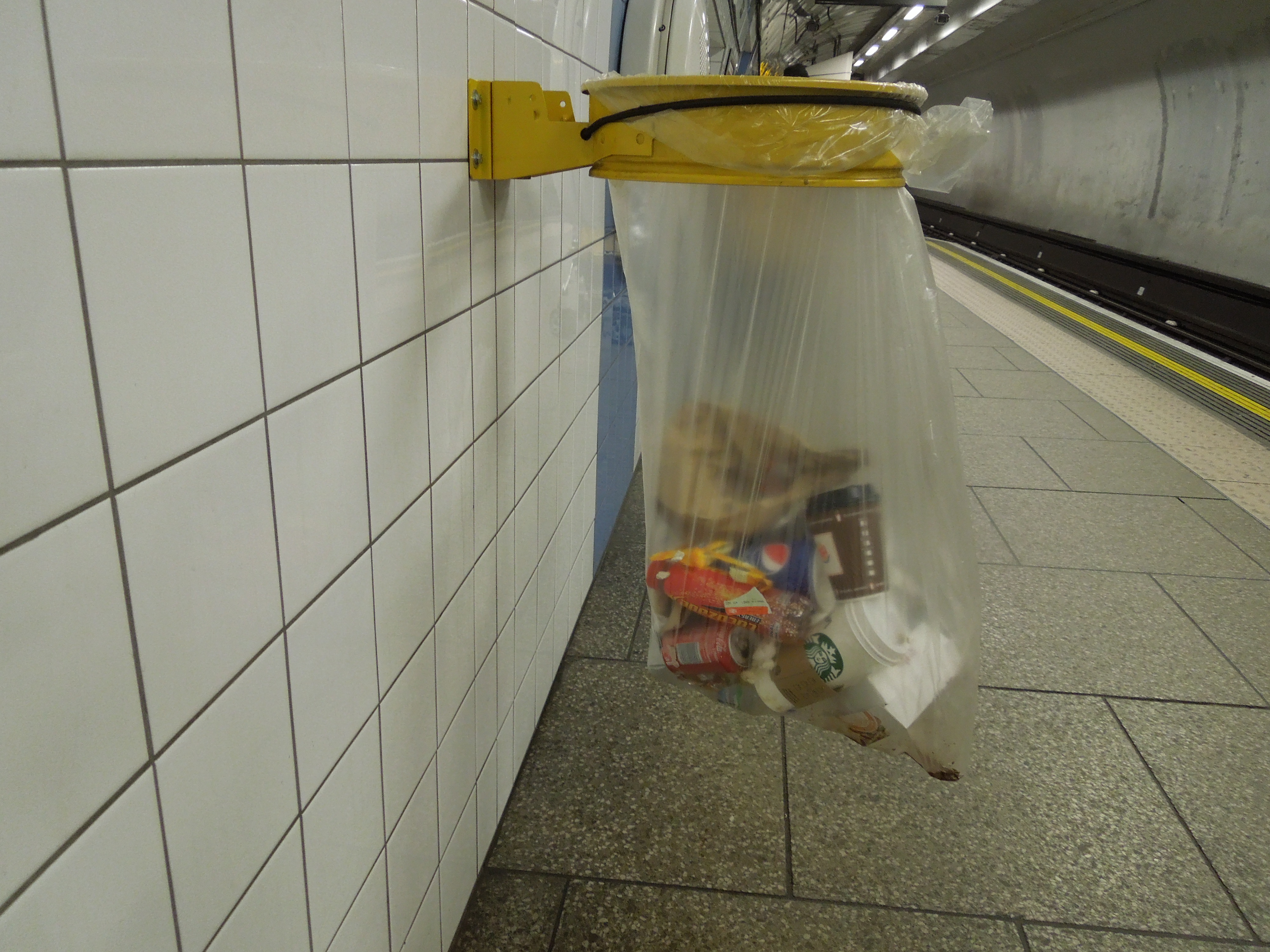
I took this picture today at Green Park station.
More Bins Are Appearing On The Underground
I know there are sound reasons for not having bins on the London Underground, but litter also causes its own problem. I also found this article about recycling on the Underground.
So we may be getting there!
Labyrinths In The Underground
To celebrate the 150th anniversary of the London Underground, each station is going to get a new artwork from Mark Wallinger. It’s here on the BBC. The first stations were unveiled yesterday.
The first stations to have the design are: Baker Street, Bank, Embankment, Green Park, King’s Cross St Pancras, Oxford Circus, St James’s Park, Tottenham Court Road, Victoria and Westminster.
I shall check them out today.
-

- Baker Street – 58
-

- Bank – 142
-
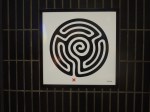
- Embankment – 63
-
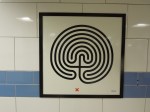
- Green Park – 232
-
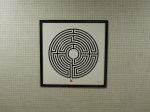
- Kings Cross St. Pancras – 172
-
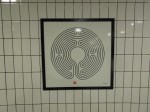
- Oxford Circus – 176
Baker Street was the first I found.
Where’s The Plaque Gone?
Although, I can’t ever remember seeing it, it may have cropped up in conversations at home.
But I’ve finally found proof on this page of the British Listed Buildings web site, that there was a plaque at Oakwood station, indicating that the first land you’d hit if you travelled east was the Urals. This is the paragraph from the web site.
The booking hall originally had a plaque claiming that the station occupied ‘the highest point in Europe in a direct line west of the Ural Mountains of Russia’, a reference to the site being 300 feet above sea level.
I would like to see the plaque restored.
Edgware Road Station Revisited
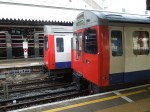
I had to go round to High Street Kensington today, so I went by the Circle line from Kings Cross St. Pancras station to Edgware Road station, where I changed across between Platform 4 to Platform 3 to the District line for Kensington High Street station. Coming back, I got a Circle line train back to Edgware Road, from where I got another Circle line train to Moorgate, by walking from Platform 2 to Platform 1. So they were two very easy step free changes. Here’s some pictures, which compliment those I took yesterday.


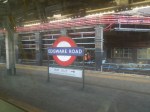


The station sign was is at Kensington High Street station. It advises you to get a Circle line train, if you are going onwards to the east at Edgware Road station.
Notice that at the eastbound end of the platforms at Edgware Road station, there is quite a bit of space. It is just a pity, that they have to allow for trains to run through between the two pairs of platforms, as if they didn’t then perhaps the two central platforms, 2 and 3, could be used as traditional terminal platforms, with the ability of passengers to walk across directly between the two pairs of platforms.
Perhaps something like Thomas Hetherwick’s rolling bridge could be used.
A set of rules should probably be used.
Going from east to south, you should get the first District line train on the opposite platform, changing to the Circle line if that is the one you want by getting off at either Paddington, Bayswater or Notting Hill Gate and taking the first Circle line train that stops. It’ll probably be the first train anywhere.
Going from west to south, is similar, except you get a Circle line train and change as before if you need to.
Going from south to east, you can either climb over the stairs or make sure you’re on a Circle line train, when you get to Edgware Road station.
Going from south to west, is similar, except you make sure you’re on a District line train. It looks like the trains on both District and Circle lines run at a frequency of six trains per hour.
It sounds complicated, but I suspect most of the regular users know the rules. There perhaps is a need for a bit more information to get the passengers going the right way!
I suppose too, that it’s all step free.
One point to note is that the new S-Stock trains are walk-through, and passengers will probably walk to their most convenient exit a lot of the time, just as they already do on the Class 378 of the London Overground. So this will probably make the turn-rounds at Edgware Road quicker.
The Operation Of Edgware Road Station
Edgware Road station has been changed dramatically over the last few years, by becoming the balance station in the Circle line. The platforms are organised this way according to Wikipedia.
The usual service pattern is: platform 1 for outer rail services to Kings Cross, Liverpool Street and beyond, platform 2 for circle line to High Street Kensington and Victoria, platform 3 for district line trains to Earls Court and Wimbledon, and platform 4 (inner rail) for Shepherds Bush Market and Hammersmith. This may vary in times of disruption – trains can go east from any of platforms 1 2 and 3 and to any of the westbound destinations from platforms 2 3 or 4.
As I came back from Paddington station, I got out of the station to get a newspaper and I also watched Circle line trains reverse on Platform 2. There actually waiting for a few minutes and cleaners were cleaning the trains before they returned back through Victoria. It was all very efficient.
It would appear that most of the transfers at the station, just involve a simple cross platform transfer, although not always.
But by adding lifts and sorting out the access between Platforms 1 and 2, and 3 and 4, would improve those travelling through the station, especially for those who need step free access or are travelling with heavy cases.
As an example, if you are coming north through Notting Hill Gate station on the District or Circle line and want to go west at Edgware Road station, you are best to get a District line train, but if you’re going east, a Circle line train is better.
The Rebuilt Metropolitan Station At Paddington
The Metropolitan station at Paddington is emerging from the extensive building works at Paddington station.


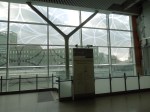

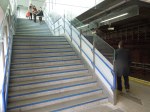
Note that there is still quite a lot to do, like installing the lifts.

