World-First Operation To Treat Rhino’s Broken Leg
The title of this post, is the same as that of this article on the BBC.
This is the sub-heading.
A rhinoceros with a broken leg is back on its feet after a world-first operation.
These are the first three paragraphs.
Amara, a southern white rhino at Knowsley safari park, was given keyhole surgery and had to wear a cast for four weeks.
Surgeons took what they knew about operating on horses and applied it to Amara because there was so little information about rhinos which had been injured in this way.
A team of 10 vets was involved in the operation, which they described as “unlike anything we’ve experienced previously”.
I bet it wasn’t like a horse, as equines in my experience don’t have a bodger on their bonce.
The BBC featured the story in BBC Breakfast this morning and I wouldn’t be surprised to see it turn up later or on the Internet.
Some may say, is the expense worth it to operate on a rhino.
But I would say, that the experience gained by the University of Liverpool, will be applied to the treatment of other large animals, like buffalo, bison, draught horses, elephants and hippotami.
Also, knowing Scousers as I do, I suspect that some of the techniques used, will be scrounged by Liverpool’s medics and applied to humans.
Prevalence Of Celiac Disease Among Blood Donors in SÃO PAULO – The Most Populated City In Brazil
The title of this post, is the same as that of this scientific paper from Brazil.
I am posting, so I can find the paper when I need it.
I will only point out one sentence.
Furthermore, an increase in the ingestion of wheat in the country in recent decades may have favored the increase in CD in our society.
I wonder if this statement can be confirmed, as this could explain the increase in coeliac disease in some countries.
The Crick Institute In The Evening Light
I took these pictures of the Crick Institute in the evening light tonight.
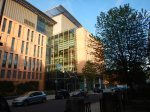
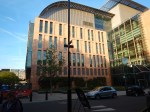
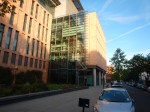
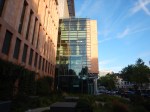

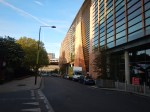
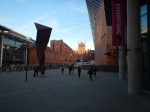
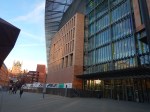
The colour of the stone comes through and matches that of the nearby St. Pancras station.
 The Anonymous Widower