Plymouth Gives Payday Lenders The Boot
Plymouth has banned the adverts for payday lenders from billboards and bus shelters, as is reported here in the Independent.
Perhaps they could use the space saved on bus shelters to provide user-friendly maps and bus information, to help visitors to the city.
Were The Pilgrim Fathers From Essex?
This story started in the Times yesterday and was repeated here in the Telegraph, which throws Grimsby into the mix.
So you can take your pick from any of a number of places!
The choice is yours!
Summing Up Plymouth
As I walked out of Plymouth to the station, I saw this pair of signs.
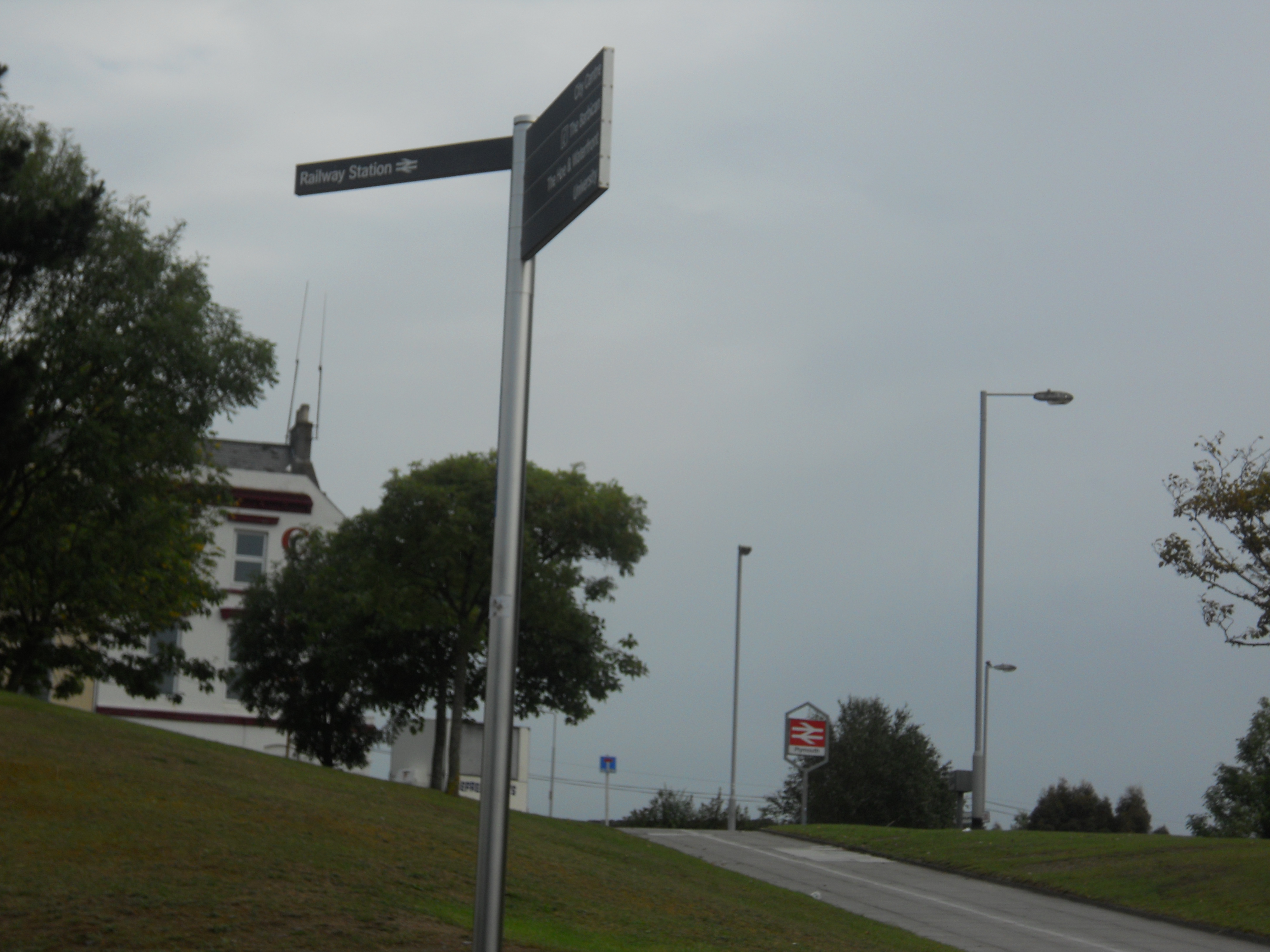
Confusing Signs in Plymouth
In most places to get to the station, you walk towards the sign shown all over the country. But in Plymouth to do that would take you on a more roundabout route, than following the fingerpost.
They just don’t do details very well.
But they did have a sign saying “Plenty to see and do. Positively Plymouth” at the station. And of course no maps!
Vehicle Unfriendly Plymouth
You may think I’m anti-car. But then I’ve never been anywhere with so many speed cameras.
These two were in one of the main shopping streets.
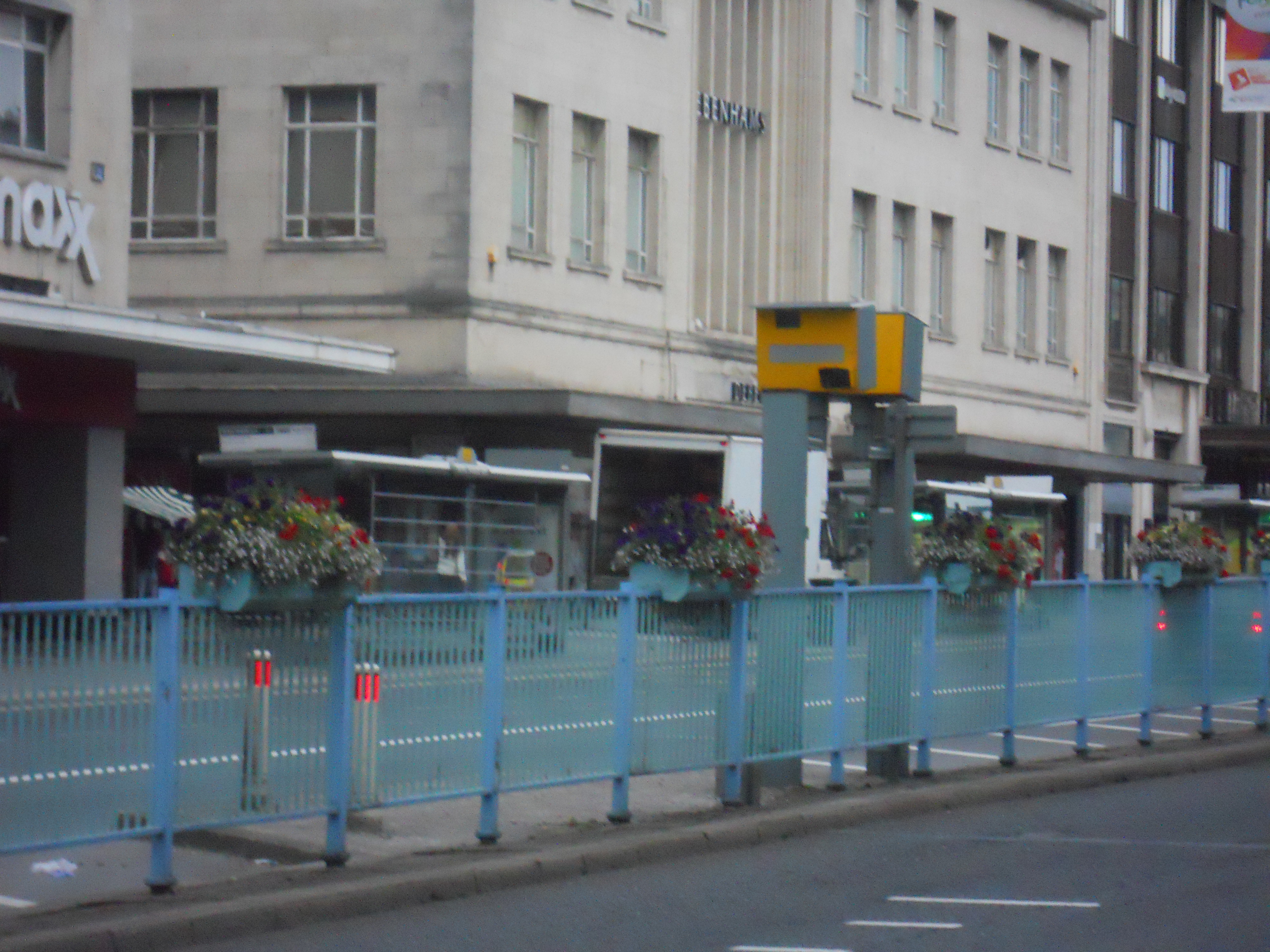
Speed Cameras in Plymouth
I don’t think I’ve ever seen them in such a position before.
An Imaginatively Named Restaurant
This picture sums up the centre of Plymouth
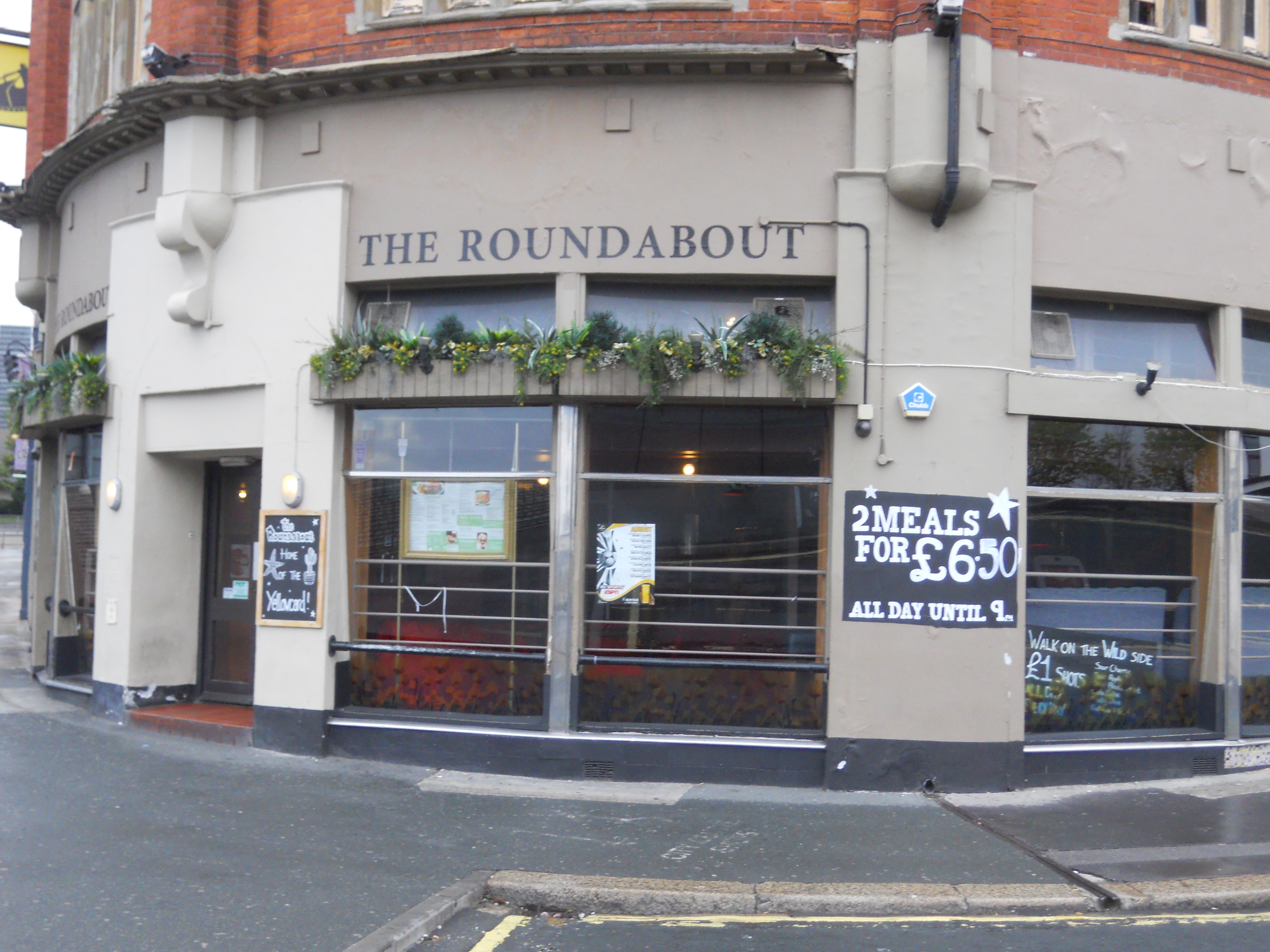
The Roundabout, Plymouth
And guess where it is!
The Clock Isn’t Ticking
This clock on the Royal Bank of UK Taxpayers could be said to sum up the city.
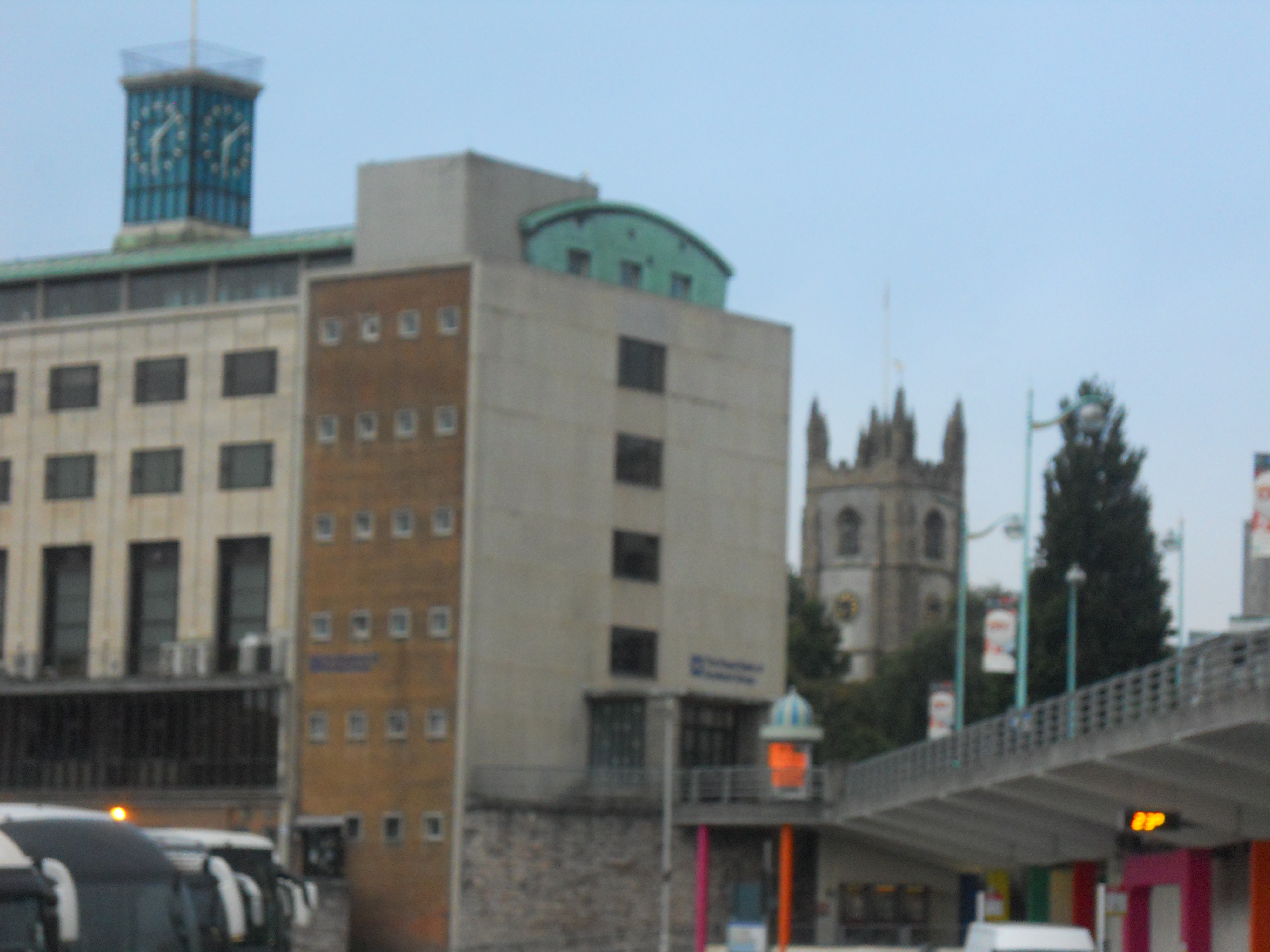
The Clock Isn't Ticking
If it’s working it is about half-an-hour slow. Or it was when I took the picture and you might be able to see the actual time on the church behind.
In my view the picture sums up the city. no-one believes in attention to detail.
Pedestrian Unfriendly Plymouth
If you like walking and you have to go to Plymouth for some reason, then don’t think that walking in the city will be easy. Good walking cities have three things in common; fairly flat terrain, lots of signs, well-thought out maps and if those fail a well signposted and logical public transport system. Obviously, I would say London has these, but then I know the place like the back of my hand and I know many of the short-cut bus routes. But then except for the terrain, Liverpool scores well, as does Leeds, Sheffield, Milan, Valencia, Berlin and even Naples.
For a start, the hotel porter couldn’t find me a map and when I started my morning constitutional to get a newspaper on Saturday, I only had a vague idea of the city’s layout in my memory. There were signs however, so I thought I might find my way to the Hoe. But try as I might, I could not find any maps. Not even on the bus shelters. I know that is rather a hobby-horse of mine, but every bus shelter should have a local map. Preferably, there should also be a spider bus map like London and some other cities. I can’t remember a time, when I went to a tube station and there wasn’t a local map of the area, so they must have been there well over fifty years. Now most London bus shelters have them and it makes travel around the city so easily. Especially if like London each stop is announced on the bus or train! All I tell my visitors is to take an xxx bus to a particular named stop and text me, when the bus passes another, so I can meet them when they arrive.
I did get to the Hoe and what a disappointment!
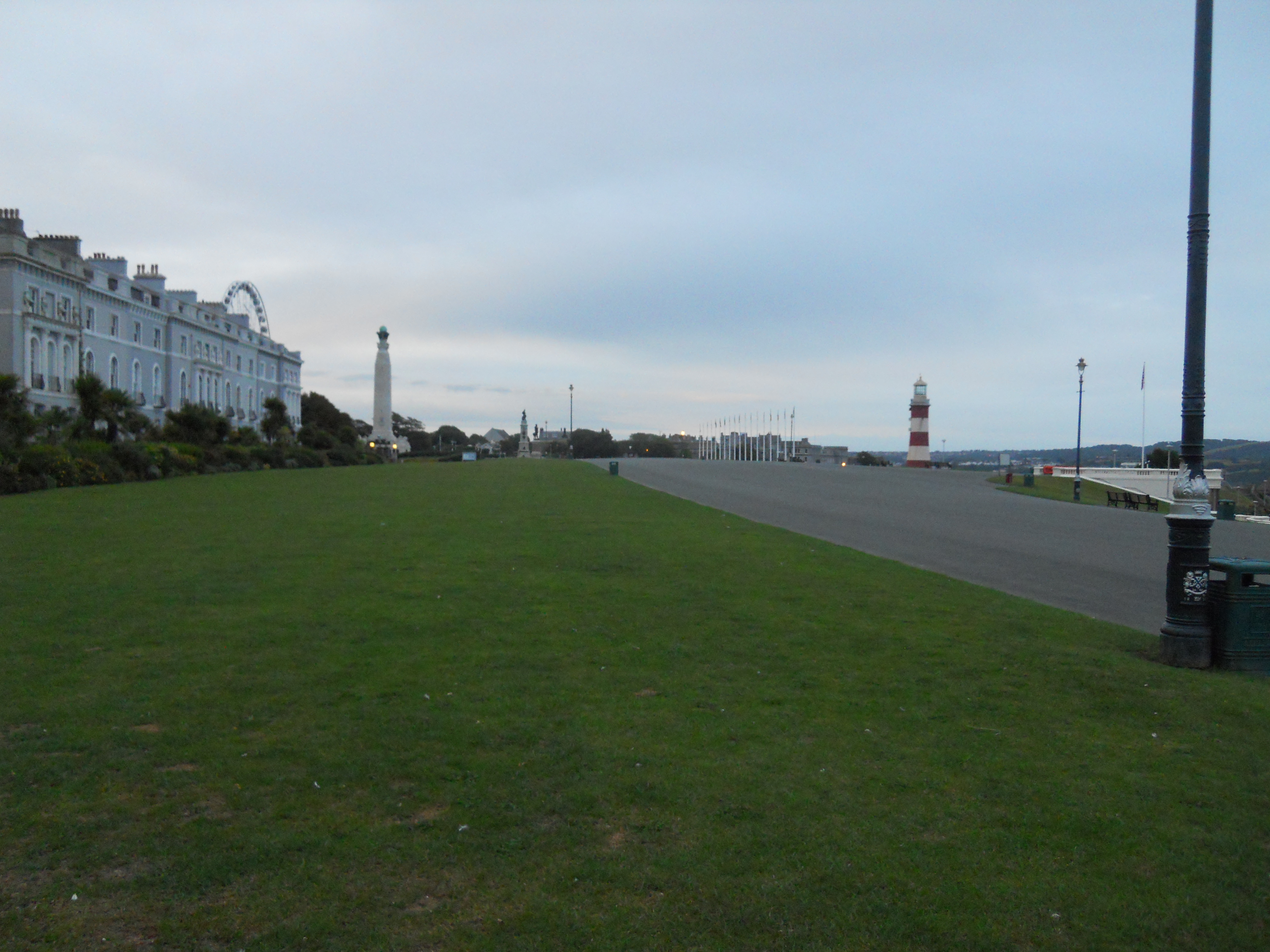
Plymouth Hoe
Information was bad and it was just vast expanse of asphalt, which gave the impression it was used as a car-park in busy times.
Wikipedia says this of the Hoe.
For forty years, there has been controversy about development on the edges of the Hoe green space. The erection of two discount hotel chain box buildings, at the southern end of Armada Way and the other at the Sound end of Leigham Street, contrast with their Victorian surroundings. The former Grand Hotel is being converted into luxury flats, and the long derelict yacht club site has now been filled by a modern block of flats. The Plymouth Dome, a turret and domed building, built into a small old quarry site above Tinside as an historical theme tourist attraction, failed to attract enough tourists or locals and closed in 2006. As of 2008, it may be demolished.
I just walked along it for a bit to admire the view and then walked back into the city.
I know it was only six in the morning, but I’m a bad sleeper away from my own bed, so very often I’ve found myself walking around deserted city centres. Usually, I’ll buy a paper and then perhaps find somewhere to sit and read it. But Plymouth was as dead as the proverbial dodo. Most city and town centres have a paper shop or a Tesco Express or a Sainsbury Local, where I can do the first and a cafe to do the second. I couldn’t find anywhere open to buy a paper, so I just walked in a wide circle, back to the hotel. I suppose if you live in the centre of Plymouth and need something urgently like nappies or a ready meal early in the morning, you have to get the car out and drive to the larger food stores on the outskirts. But then Plymouth is a city designed totally around the car and pedestrians are sad losers, who aren’t welcome. Look at this barrier for a start.

Anti-Pedestrian Barrier, Plymouth
Any sensible city would protect pedestrians, by building crossings along a main shopping street and imposing a low speed limit. But Plymouth just make you walk a few hundred metres in a direction you don’t want to. And then look at this light controlled crossing.
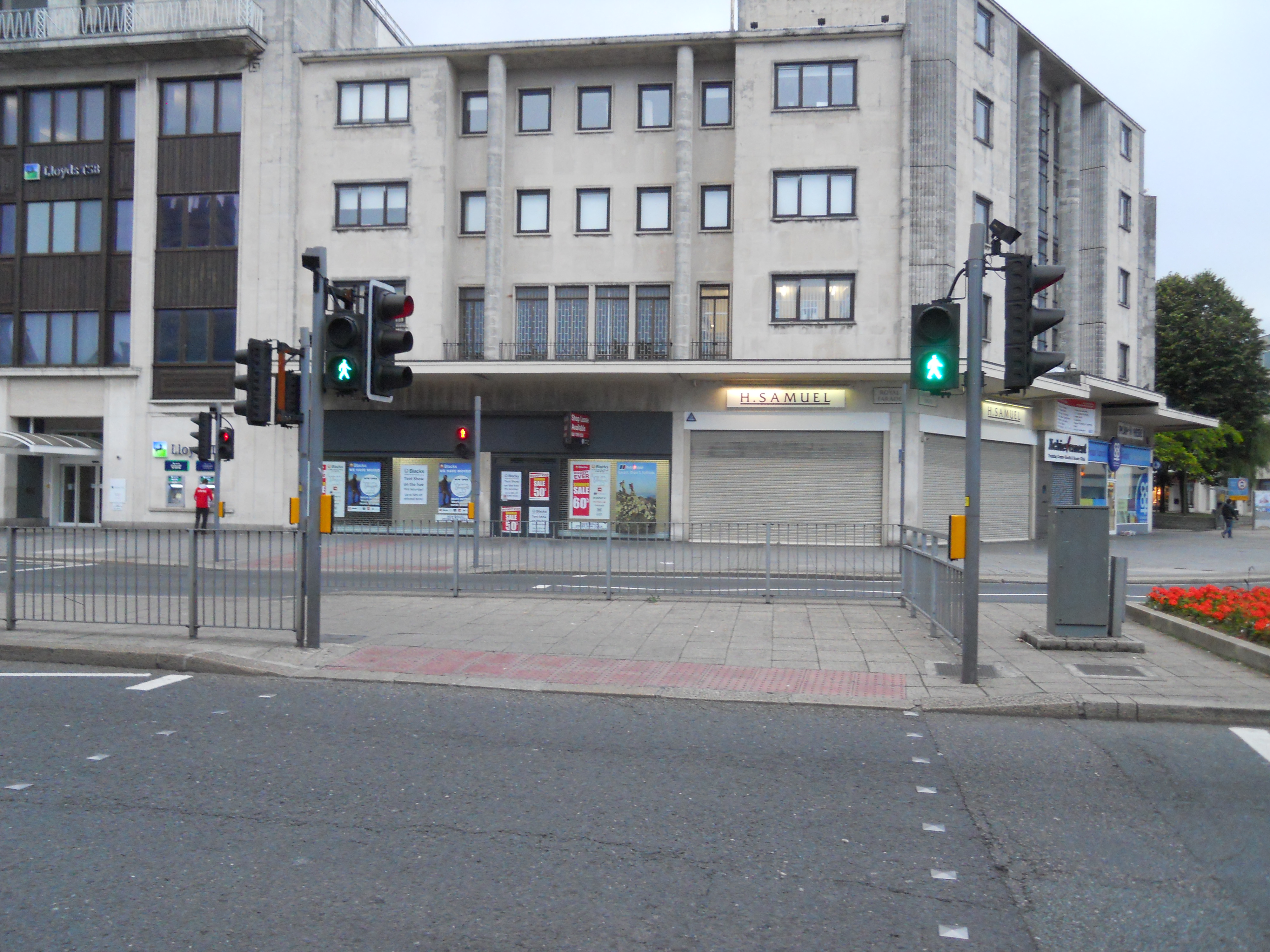
Unphased Pedestrian Lights, Plymouth
You have to wait for one set of green lights and then cross to the middle, then wait again. Locally in London, lights are often timed so that if you’re walk naturally, you can do the double crossing with ease. I checked too in Bristol and there they phased the lights more for pedestrians.
Cities need to attract visitors to bring money in. People may arrive in cars, but then they will become pedestrians. So it is very easy to hack your visitors off. Plymouth does this in spades.
One point they also miss, is that say you arrived in a Plymouth car park and walked to the Hoe, would the signage get you back to where you parked your car. I doubt it!
These visitors will never come back and will tell their friends why.
Two Bombed Out Churches
In the UK, we have several bombed-out churches from the Second World War. I have post about St. Luke in Liverpool before, which is generally known in the city as the bombed-out church.
On my weekend trip to Plymouth and Bristol, I came across two more. First was the Charles Church in Plymouth.
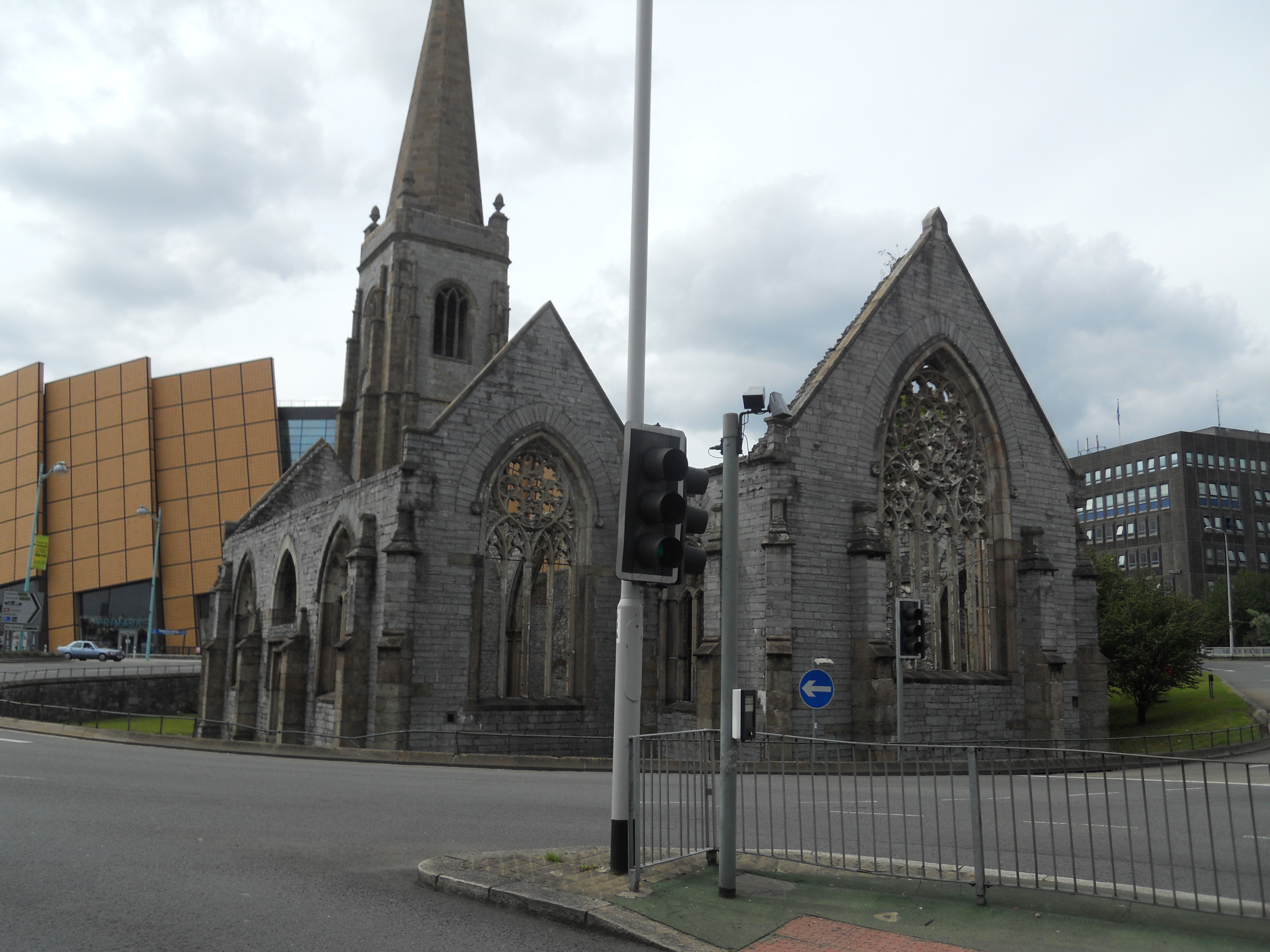
Charles Church, Plymouth
If ever there a badly situated ruin, that is a monument to the excesses of town-planning it is this. Surely, they could at least given pedestrians access, but it seems to be unfortunately left in the wrong place by the bombing of the Second World War.
In some ways, this church sums up Plymouth. Very disappointing!
And then there was St. Peter’s in Bristol.
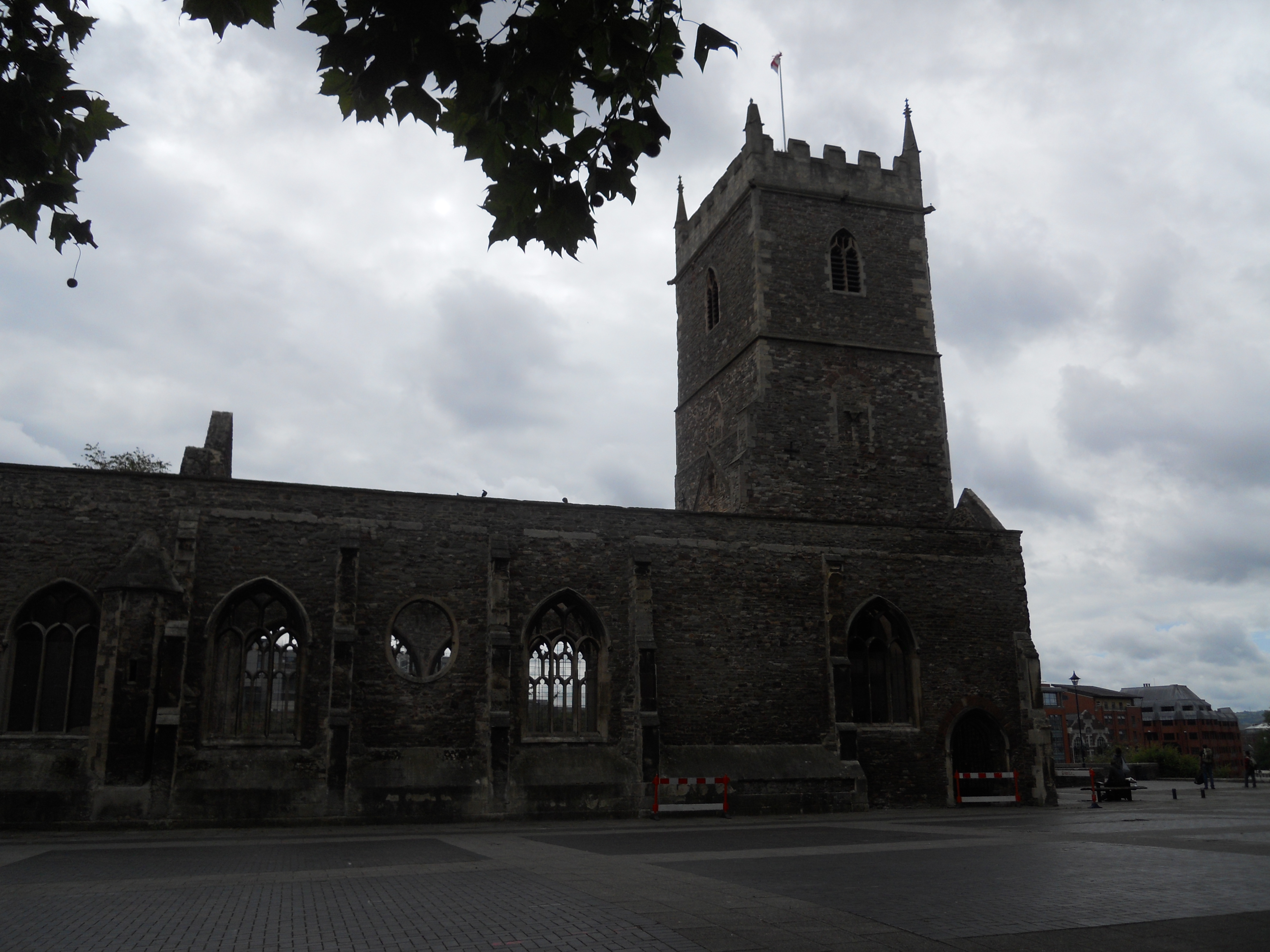
St. Peter's Church, Bristol
The surroundings have been left to show it off properly as a monument to those who died. It also had an information board.

Information on St. Peter's Church, Bristol
Plymouth could learn a lot from Bristol.
Staff and Passengers to Plymouth
One thing though that should be said about my trip to Plymouth. The train was crowded, but as the staff kept announcing, there were a few seats left. So why did people keep standing and moaning to the staff about it? From what I overheard many had bought expensive tickets at the last minute. No-one would fly on easyJet or Ryanair at the last minute and expect to get a good price, so why do they expect to have a cheap walk up ticket on a train.
After all, I booked a couple of weeks ago and did the journey for just over twenty pounds!
The staff though coped well and did a very good job. And I told them so at the time.
I’m not sure, but I think on some services in Europe, if there is no seat you don’t get a ticket. Surely on some of the more popular services in the UK, the same rule should apply! I think the staff would like it, as they wouldn’t have got the abuse, which seemed to come from those without booked seats.
One other point about the staff, was that in my carriage an elderly lady had turned up on the wrong day. As there was still the odd seat, it didn’t matter, so she wasn’t left behind. But those around me played a bit of musical chairs, so that everyone had a pleasant journey.
 The Anonymous Widower