Crossrail In The Home Straight
Crossrail’s opening dates are only just over a couple of years in the future and this article in Rail Engineer, which is entitle Crossrail – The Deadline Is looming, describes what is happening on the Eastern branch to Shenfield.
The article is a must-read and details how the project is organised, to make sure it is delivered on time and on budget. The last paragraph sums up the project.
In engineering terms, this project couldn’t be described as ‘cutting edge’ but, in railway engineering terms, it would be hard to find a more complex environment to work in with potential challenges at every step. Costain has reached almost two million man-hours on the project, and the team is confident that all of the deadlines will be met and train testing will be underway after November 2016 as planned.
East London and East Anglia have fed on scraps for decades and I think that meeting the target of November 2016, so trains can be tested, is highly likely.
Abbey Wood Station – 9th June 2016
I took these pictures at Abbey Wood station.

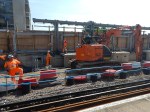


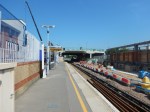
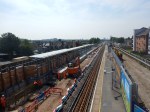

If you look at the various pictures I have taken over the past months of this station, the station is progressing and the builders seem to be managing to always have a working station amongst all the construction work.
Certain factors have helped in this important aim.
- The previous station was unloved by everyone and had absolutely no architectural merit.
- There are no heritage issues.
- Good design of a temporary step-free pedestrian bridge, that appears to be morphing into a permanent one, has aided passengers.
- There always seems to be cheery staff on hand for lost and puzzled passengers.
- Traffic is heavy in the area, but not unmanageably so.
But I think most importantly, the Crossrail portal is some distance away from the station, keeping the two projects effectively separate.
Compared to some station rebuilds, I’ve encountered in the past, so far it has been a textbook example of good project management.
Farewell To The Old Gospel Oak To Barking Line
Today is the last day, that you can ride the Gospel Oak to Barking Line to the East of South Tottenham station, until after the wires are erected in a few months time.
So I took some pictures.
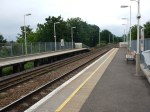
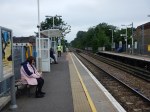
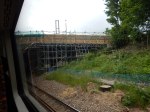
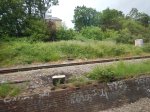


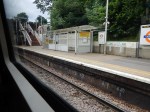

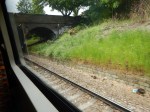
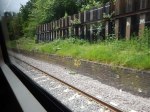


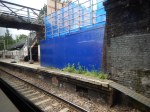

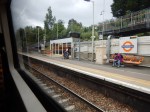
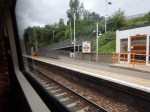

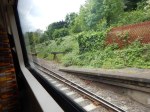
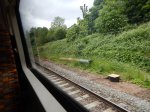
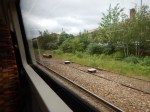
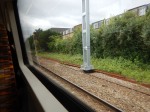
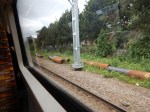
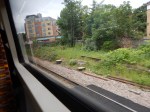

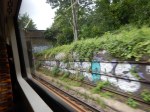


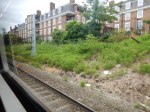

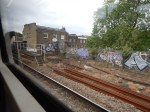

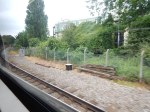

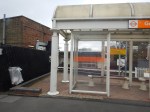
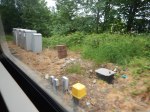
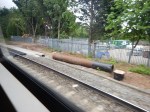
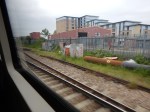
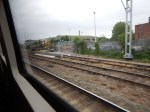
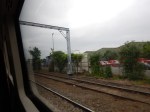
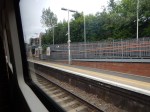


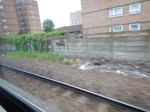
I must say I have not been impressed with progress so far.
- It looks like a large proportion of the piles are in the ground.
- If the piles are in the ground securely, why aren’t more masts erected?
- There would appear to be no start on clearing the platform extensions.
- Only in one place did I see a work-site.
- I didn’t see anyone actually working.
- There is masses of litter
- There’s no sign of how the stations will be electrified.
With my limited experience of looking at large projects that are in trouble, this project has the air of something not being up to scratch.
What has really puzzled me about this project, is that the information coming from Network Rail and especially TfL, has not been up to the usual standard.
Mutual Blogging
A reader of this blog, who used to be an old Artemis professional, is currently working on a large project, where there are a large number of sub-contractors and a difficult public relations problem with those, who live locally to the project.
They asked me, if a blog could solve some of his problems.
So here goes!
I would suggest, he starts a simple blog, probably using WordPress, as it is generally easily managed by an individual with average computer skills.
- Only a tight group of individuals would be allowed to add posts to the blog.
- Posts would be limited to so many a week.
- Anybody would be allowed to comment, but under a set of behavioural rules and moderation, If the project is controversial, you don’t want the blog to become the focus of discontent.
- I believe that with a difficult project, it could be a place for constructive discussion.
- Hopefully, each post would generate comments and discussion, that improved the original post.
- The blog would also point on its home page to useful sites concerned with the subject of the blog.
- There would be a contact form.
If you were having a blog like this for say a public infrastructure project like Crossrail, it could be public, but a project like perhaps trialling a new treatment for a controversial-to-some illness like HIV-Aids, might be password-protected.
I think on balance most project blogs would be public.
If a system like WordPress is used, all of what I said is possible. And a lot more too!
North of me, they are electrifying the Gospel Oak to Barking Line and there has been a bit of controversy over noisy piling in the middle of the night.
A simple post apologising for the noise and giving locations may have eased the problems. You might even get comments to the blog from those overlooking the piling, which show the details of the engineering and the generated noise.
You can never be sure, the way that such a blog will develop.
But I’m sure it will work, to improve the smooth running of a project.
What Is Happening On The Midland Metro?
I am looking forward to taking a train to Birmingham and then getting on a tram of the Midland Metro at New Street station.
This article in Construction Enquirer is entitled Balfour months late on £127m Birmingham Metro and gives some details of the delays.
But surely, this project should have been delivered some months ago?
The article also says that the trams will reach Centenary Square in 2019. As these will be battery operated trams, it does seem a rather long time to create just a few stops without any catenary.
Compare the progress of expansion in Birmingham to that in Manchester, where a much more complicated Second City Crossing is being built and you come to some interesting conclusions about Birmingham and the delivery of projects for the Midland Metro..
Thoughts On The Gospel Oak To Barking Electrification
The electrification of the Gospel Oak To Barking Line (GOBlin), is the closest I’ve been to an electrification project since the nineteen-sixties when I was travelling up and down between London and Liverpool, through the electrification on the West Coast Main Line.
Yesterday, I took a look at the start of work at Gospel Oak station. Thinking about what I saw, it strikes me that everything is much better organised than it has been in some places in the past.
Perhaps, they’re doing their project management in a lot better way.
Signalling
As an illustration of project performance, I have read that not knowing where signalling cables were buried, was a big problem on the electrification of the Great Western Railway. So out of curiosity, I searched the Internet for any reports about the state of the signalling on the GOBlin.
I found this web page on the Sweett Group web site, which is entitled Gospel Oak To Barking Electrification. This was a brief summary of the work they did.
Sweett Group was engaged by TfL to review and validate the Grip 3 estimate prepared by Network Rail in order to assist TfL in the determination of their funding contribution.
Reading the whole of the report, leads me to the conclusion that TfL wanted to make sure, that the only surprises they get on this project, will be positive ones.
As to signalling, very little is said, except this.
In addition, modifications to existing signalling had to be carried out in order to overcome conflicts with signal sighting caused by OLE support structures and to accommodate the introduction of longer freight trains.
So in answer to my original question on signalling, it looks like most of it is in good order.
Line Closures
Will planned closures of the line tell us anything? This web page from TfL details all their line closures for the next six months.
Those specific to the GOBlin are.
- Sun 10 Jan 16 – South Tottenham to Barking until 12:00
- Sun 17 Jan 16 – Gospel Oak to Barking until 12:00
- Sun 24 Jan 16 – Gospel Oak to Barking
- Sun 31 Jan 16 – Gospel Oak to Barking
- Sun 07 Feb 16 – Gospel Oak to Barking until 12:00
- Sun 14 Feb 16 – Gospel Oak to Barking until 12:00
- Sun 21 Feb 16 – Gospel Oak to Barking until 12:00
- Sun 28 Feb 16 – Gospel Oak to Barking until 12:00
- Sun 06 Mar 16 – Gospel Oak to Barking until 12:00
- Sun 20 Mar 16 – Gospel Oak to Barking until 12:00
- Sun 27 Mar 16 – Gospel Oak to Barking until 12:00
- Sun 03 Apr 16 – Gospel Oak to Barking until 12:00
- Sun 10 Apr 16 – Gospel Oak to Barking
- Sat 16 to Sun 17 Apr 16 – Gospel Oak to Barking
- Sat 23 to Sun 24 Apr 16 – Gospel Oak to Barking
- Sat 30 Apr to Mon 02 May 16 – Gospel Oak to Barking
- Sat 07 to Sun 08 May 16 – Gospel Oak to Barking
- Sat 14 to Sun 15 May 16 – Gospel Oak to Barking
- Sat 21 to Sun 22 May 16 – Gospel Oak to Barking
- Sat 28 to Tue 31 May 16 – Gospel Oak to Barking
There are also a few closures of the North London Line, that start at Gospel Oak.
- Fri 01 Jan to Sun 03 Jan 16 – Gospel Oak to Stratford from 22:00
- Sun 21 Feb 16 – Gospel Oak to Stratford
- Sun 28 Feb 16 – Gospel Oak to Stratford
- Sun 06 Mar 16 – Gospel Oak to Stratford
- Sun 20 Mar 16 – Gospel Oak to Stratford
The first is an interesting one, as it is this weekend, when the contractors are known to be piling for overhead wires, late into the night.
On all the other four Sundays, the GOBlin is closed all or part of the day.
Surely, you wouldn’t close both routes across North London, unless you wanted to work on both at the same time!
Could the contractors be wiring up Gospel Oak Junction and Platform 3 at Gospel Oak station?
These are my overall comments.
- Monday to Friday passengers won’t have to suffer many replacement bus services.
- Something is planned for the Spring Bank Holiday Weekend
- As there is no closures scheduled in June, it looks like May 31st will mark a natural break in the project.
- Someone has been doing some very good project management.
It will be fascinating to take a look on Mondays for the next few months, to see what has been completed.
Space To Work
I wonder if anybody has ever done any research on the performance of the amount of space available to building projects.
What surprised me yesterday, as my train trundled between Harringay Green Lanes and Gospel Oak stations, was how much space was available and it had all been cleared of vegetation.
I hope this is a sign that they mean to carry on as they’ve started.
Having looked at many large projects in the actuality, I strongly believe that a project with lots of space, that is kept tidy, is more likely to be delivered on time and on budget.
Today, I also followed the line on a Google Map and virtually all the way from Gospel Oak station to Leyton Midland Road station, there are green verges, several metres deep on both sides of the tracks.
Look at this section of the line from Crouch Hill to South Tottenham stations.
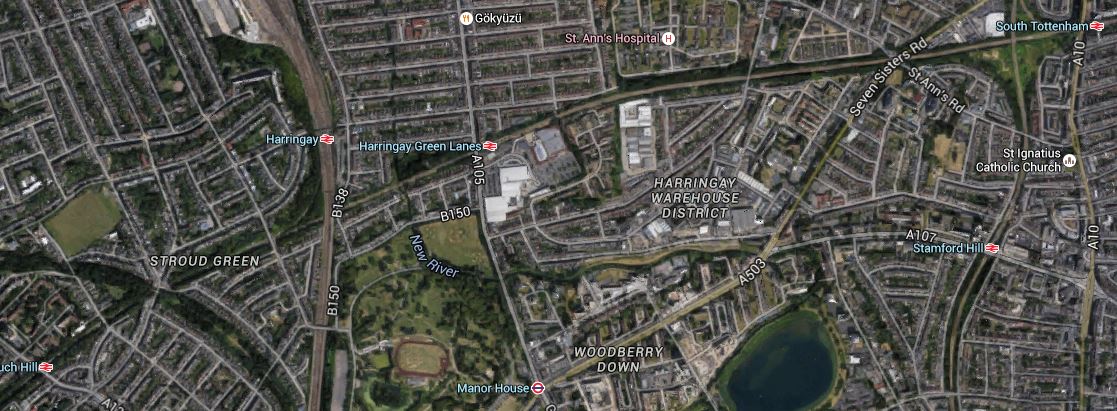
Crouch Hill To South Tottenham
Note all the green space, especially where the line crosses the East Coast Main Line, where a chord is to be electrified.
This space must contribute to a successful project.
Obviously towards the east, where the line is on a Victorian embankment is going to be more challenging.
Murphy’s Contract
A lot more detail on the GOBlin electrification is given in this article in Rail Technology Magazine, which is entitled J Murphy & Sons to carry out electrification of Gospel Oak-Barking route. This is said.
J Murphy & Sons Limited will carry out electrification works along the 12-mile line from Gospel Oak to Barking on the Anglia route, after winning the £56.9m contract from Network Rail.
The contract, which was awarded three months later than originally expected, will allow work to start on the ‘Goblin’ project in October.
In some ways, I was surprised, the contract was awarded to Murphy, as I didn’t think they were noted for doing rail electrification. I know them as a well-respected London contractor, who have been around since my childhood. Their premises are actually close to the line, which must help.
I know it said that the project would start in October and it just made a start in 2015, but at least it’s got going. The article says this about the project timeline.
The electrification contract runs until April 2017 but, if carried out according to the planned timeline, “major on-site works” will commence in June 2016 with services ready to operate a year later. Network Rail’s official classification of the works is for GRIP stages 4-8: ‘Main Works – Civils, Structure, Building, Track, & Bonding’.
This gives the intriguing prospect, that the electrification could take twelve months. This question has to be asked – Have major on-site works already started?
Even if they haven’t, judging by the noise at Gospel Oak something has started and that completion date of April 2017, is starting to look very feasible and just in time for the May 2017 timetable change.
Stations
Not all stations can accept the new four-car Class 710 trains or are to the standard passengers expect these days.
- Gospel Oak – Disabled access, lifts, coffee stall – Platform needs extending.
- Upper Holloway – Disabled access, ramps – Platforms need extending by reopening closed sections – Road bridge by station is being replaced by the end of 2017.
- Crouch Hill – Stairs-only access – Platforms need extending by reopening closed sections
- Harringay Green Lanes – Disabled access, ramps – Platforms need extending
- South Tottenham – Disabled access, lifts – Platform needs extending.
- Blackhorse Road – Stairs-only access – Disabled access in planning – Platforms need extending
- Walthamstow Queen’s Road – Disabled access, ramps – Platforms need extending by reopening closed sections
- Leyton Midland Road – Stairs-only access – Platforms need extending by reopening closed sections.
- Leytonstone High Road – Stairs-only access – Platforms need extending by reopening closed sections.
- Wanstead Park – Stairs-only access – Platforms need extending by reopening closed sections.
- Woodgrange Park – Stairs-only access – Platforms need extending by reopening closed sections.
- Barking – Disabled access, lift
So of the twelve stations on the line seven need platforms to be extended by reopening closed section, four need new extensions and six need improvements to the disabled access.
It will be interesting to see what is completed other than the necessary platform extensions, before the electric trains run.
Electrification
The Rail Technology Magazine article also details the scope of the electrification.
In addition to wiring from Gospel Oak to Barking and both the terminal platforms, the following will be electrified.
- Carlton Road Junction to Junction Road Junction – Connects to the Midland Main Line
- Upper Holloway Reception Line
- Harringay Park Junction to Harringay Junction – Connects to the East Coast Main Line
Note that there is no mention of the extension of the line to Barking Riverside.
Electrification work has obviously started at the easier Gospel Oak end of the line, so I think we can assume that Murphy and a lot of sub-contractors are pulling out all the stops to get this job finished on time.
One problem they don’t have is getting power to the new electrification, as it connects to several electrified lines.
There is also only twelve miles to electrify.
I think we could well be seeing, the electrification completed and the platforms lengthened, before the Class 710 trains are delivered.
Class 710 Trains
The Class 710 Trains ordered for the line are unlikely to arrive before May 2018. But I suspect that TfL will find something to run services.
They could even hire some of Porterbrook’s speculative build of Class 387 trains, or perhaps borrow some of the redundant and very ugly Class 319 trains.
After all, they only need eight trains of four-cars each.
Extension To Barking Riverside
It looks like, that this will be done, after the main project has been completed.
Conclusion
It looks like the following will happen.
- Due to some rather excellent project management, that finally the Gospel Oak to Barking Line will be electrified and capable of running four-car electric trains.
- It’s not the biggest of projects, that could be fairly straightforward.
- The completion of the electrification project could be as early as April 2017.
- The trains, unless they rustle up some from elsewhere, will probably be delivered later.
- There will be little if any interruption to the important Monday to Friday service of the line during electrification.
- More freight trains will be hauled by electric locomotives in the near future.
I can’t see anybody complaining about all that!
What Really Happened At Walthamstow Central
I heard a lot of complaints about the closure of the Victoria Line in August. So I was pleased to see this article in Rail Engineer entitled Life is not a rehearsal… but pumping concrete can be!
As detailed by Transport for London this is a summary of what needed to be done.
Improvement work planned this summer by London Underground (LU) will lead to the operation of 36 trains per hour. From April 2016, this will provide a train every 100 seconds during peak hours, making the Victoria line the UK’s highest frequency railway and comparable with the very best in the world. All peak-time trains will run the full length of the line from Walthamstow Central to Brixton, giving a 40% capacity boost for customers northeast of Seven Sisters.
But it wasn’t that simple to achieve and the Rail Engineer article explains the main problem of a crossing at Walthamstow.
The trackwork kept pace with the times, but wasn’t shiny and, of course, it was out of sight. At Walthamstow – the end of the line – the track arrangement ended in a scissors crossover. For the non-pway engineers, this is a compact and complex track arrangement where terminating trains arriving at the crossover from the south in the northbound tunnel can be routed into either of the two platforms at Walthamstow Central, then routed back from either platform into the southbound tunnel.
Changing it wasn’t simple and they used every trick in the book to do the project.
- A bespoke overhead crane was installed at the crossover, for ease of working, and after the job was completed it was left behind in the tunnel, so it could be used again if needed.
- A number of demolition techniques were used to remove the old track and its concrete base.
- They even wrapped the new track in polythene, so that no concrete got on the rails.
- They had actually rehearsed the major concrete pouring which required fifty truck-loads of concrete in the open at Acton Depot.
The major outcome is that the speed of trains through the crossing has been raised from 20 mph to 35 mph, which is necessary to achieve thirty-six trains an hour through London.
This is the sort of project that would make good television!
Except for one thing!
Nothing went wrong and the project was delivered thirty-six hours early.
Is Northern Electrification Going To Use Battery Trains?
This report on the BBC is entitled Network Rail to restart electrification of train lines. This is said.
The electrification of two railway lines is to be restarted after the projects were halted so a review could be carried out, the government says.
Work on the TransPennine Express Railway – between Manchester and York – and Midland Mainline – from London to Sheffield – was paused in June.
Sir Peter Hendy, chair of Network Rail, said the “temporary pause” had “given us the space to develop a better plan”
The Aventra IPEMU
Looking at the electrification of the two lines in posts over the previous few days, I have come to the conclusion that properly engineered battery trains built by Bombardier in Derby called Aventra IPEMUs (Independently Powered Electrical Multiple Units) could charge their batteries on existing sections of electrification and jump the gaps at speeds of up to at least 110 mph and possibly 125 mph, by running on batteries.
If that sounds like something that is too good to be true, I don’t believe it is! I was impressed when as a paying passenger, I rode the prototype train between Manningtree and Harwich.
For those who think that a battery train is just so-much Mickey Mouse-technology, note that the battery supplier; Valence is linked to Tessla; the electric vehicle manufacturer. A review of their latest car is on Autocar. The biggest problem with the car is not the power, range and performance, but the time it takes to charge the car from a typical supply. In addition to the overhead wire or third rail of the railway, an Aventra IPEMU has to charge the battery, the train will also charge the batteries using the regenerative braking system.
The TransPennine Line
On the TransPennine Line from Liverpool to Newcastle, the only gap in the electrification is the forty-three miles between Leeds and Manchester.
Aventra IPEMUs have a range of sixty miles, so Liverpool to Newcastle would be electric all the way and could be faster by up to thirty minutes on the current three hour journey.
Read Jumping The Electrification Gap Between Leeds And Manchester for full details on what it would entail.
The Midland Main Line
On the Midland Main Line, the electrification reaches from St. Pancras to Bedford.
As Corby, Kettering and Leicester are all within an Aventra IPEMU’s range from Bedford, these places could be served by these trains, once a certain amount of track and station work had been completed.
Read Thoughts On Midland Main Line Electrification for full details.
Delivering The Projects
The BBC article says this about the schedule.
The TransPennine upgrade is expected to provide capacity for six “fast or semi-fast trains” per hour between Manchester, Leeds and York , reducing journey times by up to 15 minutes.
The Manchester to York section of the work is now planned to be completed by 2022.
Once completed, the whole line from Liverpool to Newcastle will be fully electrified, the Department for Transport added.
The electrification of Midland Mainline north of Bedford to Kettering and Corby will now be completed by 2019, and the line north of Kettering to Leicester, Derby, Nottingham and to Sheffield will finish by 2023.
My project management knowledge and observations of Network Rail, say that to get electric trains to Kettering and Corby by 2019, would be a very tight schedule to perform on a working railway using conventional electrification!
But if it were needed to replace the current Class 222 trains with Aventra IPEMUs, it would just be a matter of certifying the line for the new Aventra IPEMUs and training the drivers and other staff.
There would be little or no work outside in the elements and all of the electrification would effectively be done in a comfortable warm factory at Derby!
I also feel that if say Network Rail said that the projects would be delivered on a particular date, that the risk of non-delivery would be very small.
Aventra IPEMUs can’t be delivered earlier, as the Derby factory will be jammed solid with production of Aventras for Crossrail.
On the other hand to prove the concept, would Bombardier modify a Class 387 train to create an IPEMU variant to run in passenger service between St.Pancras and Corby. Note that there have already been rumours of Class 387 IPEMU variants for Great Western Railway.
I wouldn’t be surprised if such a train is created, as it would be a superb way to identify any problems, train staff, prove the credibility of battery trains to a sceptical public and even deliver electric trains earlier.
A Cunning Plan
There are twenty seven Class 387 trains running on the Thameslink route at the moment, that will be replaced by Class 700 trains between 2016 and 2018.
As the Great Western Main Line won’t be electrified to Newbury, Swindon and Oxford until 2019 or whatever, there does seem to be the possibility of some very new Class 387 trains going into storage.
But as they are very similar to the Class 379 that was used for the IPEMU demonstrator, I do wonder if those clever engineers at Bombardier could convert some of these 110 mph trains into an IPEMU variant that could be used on services on TransPennine and the Midland Main Line.
If there were any spare Class 379 trains, I’m sure that other train companies would find a use for them! Especially, if Bombardier developed a plug-in battery system for the trains, so they could be used to prove if IPEMUs improved the lot of passengers on secondary lines.
You have to make your assets sweat.
Conclusion
I may be wrong, but I can’t see any other way to meet the schedule that has been published, unless some form of IPEMU is used to bridge the gaps in electrification..
It could be said that the North needs fast electric trains now and George Osborne needs them by 2020, as he has an election to win!
It might not matter much to most people if the trains didn’t run until say August 2020, but George Osborne would be unlikely to win an election in May 2020, if the trains were not delivered and running smoothly.
 The Anonymous Widower