In Future Will North Africa Be Providing Renewable Energy To Europe?
I believe it is likely that mainland Europe will be getting a considerable amount of renewable energy from Iceland, Ireland, Norway and the UK, and the seas to the North of Europe.
But what about the potential of providing Europe with renewable energy from North Africa?
I asked Google AI, the question in the title of this post and received this answer.
Yes, in the future, North Africa is expected to supply renewable energy to Europe, with potential exports of up to 24 GW through subsea interconnectors. This will be driven by North Africa’s vast solar and wind resources, a strong push for renewable energy in the region, and European demand for clean power. Major projects are planned, but challenges like supply chain constraints and financing hurdles need to be addressed for these projects to be successful.
These are interconnectors I can find.
ELMED
The ELMED interconnector, also known as the Tunisia-Italy interconnector, is a planned 200 km, 600 MW high-voltage direct current submarine power cable between Italy and Tunisia.
This map shows the route of the ELMED interconnector between Tunisia and Italy.
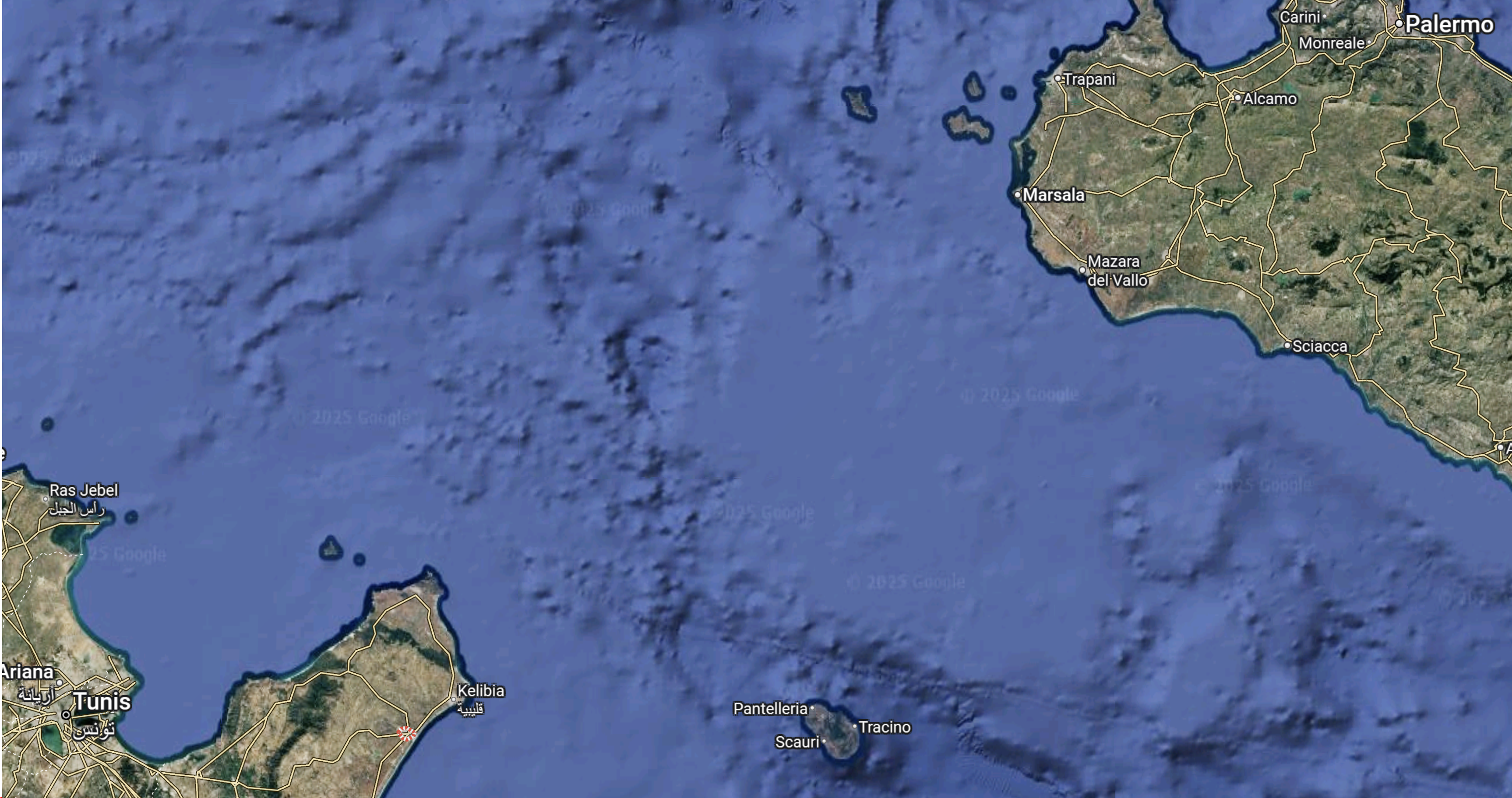
Note.
- Tunis in Tunisia, is in the South-Western corner of the map.
- East of Tunis on the coast is a red blob, which marks the town of Menzel Temime, where the interconnector will connect to a newly-built substation.
- Palermo in Sicily, is in the North-East corner of the map.
- West of Palermo on the North-West coast of Sicily is Trapani, where the interconnector will make landfall in Italy and connect to a substation at .
As with many things engineering designed by Italians, this seems to be an interconnector with a certain simplicity and style.
The Wikipedia entry for the ELMED interconnector gives these further details.
The total cost is budgeted at €850 million.
XLinks
XLinks is a project to build a 3.6 GW interconnector between Morocco and Devon, that appears to have been rejected by the current government.
XLinks shows what engineers think could be possible. More details are given in the Wikipedia entry for the project.
Crossing The Strait Of Messina
The Strait of Messina is the strip of water between Sicily and the Italian mainland. you don’t change trains, but they shunted it into a ferry for the crossing.


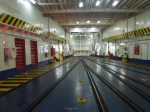
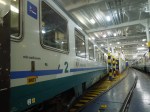
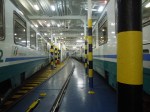


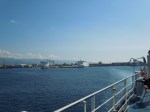


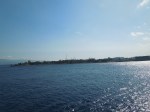
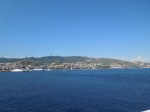


Unlike the crossing from Denmark to Germany, I took in my return from Stockholm, you can stay in the train if you like.
Along The Coast To Messina
The train didn’t get up great speed as it made its way to the port of Messina, where it would cross to the Italian mainland.


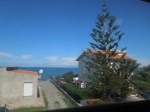

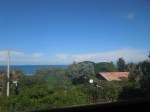


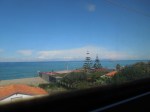


I was surprised that we could actually see the Aeolian Islands and at one point, I thought I made out the distinctive double-peaked shape of Salina, where the salt for my supper came from.
Would I Go Back To Palermo?
That is a stupid question to ask, as there is only one answer.
Yes!
I’d also try to get a good deal at the Palazzo Sitano and have supper at Gagini again.
The only thing that would improve Palermo, would be to go with a classy lady.
One thing that Palermo does seem to have is quite a few clocks. Could it be, that because of its unwarranted reputation, few people wear a watch in the city.
My Train From Palermo
My train from Palermo to Naples was an old-fashioned corridor train, the like of which we haven’t seen for years in the UK, as since the development of the Mk 3 coach in the early 1970s, we’ve not built any of this type.


The class E565 is unusual compared to the UK as it is an articulated electric locomotive. Usually this type of locomotive is used, where there are a lot of tight curves or they need to run large locomotives on regular lines.
Incidentally, there doesn’t seem to be many passenger trains left these days, which are effectively single-ended like this one. In the UK, we do have trains with an engine at one end only, but there is usually a cab from which the train can be driven at the other end. The one exception is the long-distance sleeper trains, like those that go from London to Scotland.
Leaving Palermo
I left Palermo by train just after ten for my trip to Naples, which was scheduled to take a few minutes over nine hours.




Palermo station is a typical Italian edifice, but it does have a chapel.
The catering facilities were basic, with no signs of anything gluten-free, that I could eat, but then I’d had a large breakfast in the hotel.
The cappucino was just €1.50, so I couldn’t complain about the price. It wasn’t too bad either!
Supper In Palermo
The hotel recommended a restaurant round the corner called Gagini.

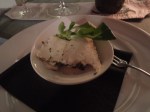

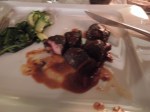
The food, staff and atmosphere were all excellent and of course gluten-free.
The starter was particularly good as it was three types of seafood blended with salt from Trapani on Salina and spices. I’ve actually been to that island in the Aoelian Islands.
Palermo Cathedral
Palermo cathedral isn’t as grand as some in Italy, but it’s worth a visit.
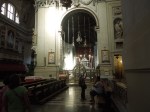
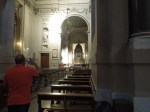
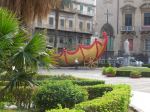

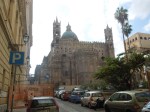
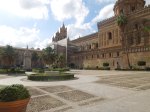
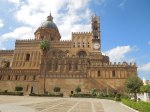
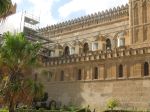
It was about five hundred metres from my hotel, so it was an easy walk, except for the dodging of traffic.
Carriages In Palermo
Palermo has lots of horse-drawn carriages for the tourists.
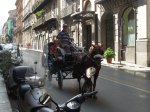
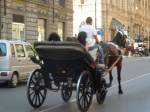
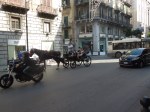
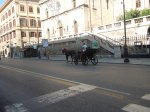

Not for me though a ride! I’ve only ever been in a horse-drawn carriage once and that was in Seville.
But unlike many places nearly all of the horses, looked to be in good condition.
Wandering Around Palermo
I spent most of the afternoon and some time before I left in wandering around Palermo.
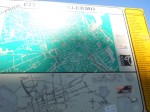

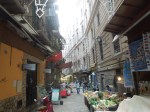

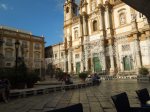
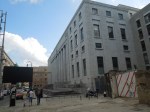


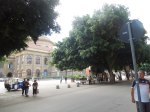

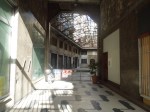
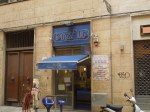
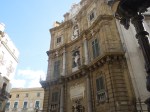

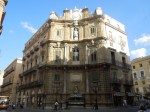
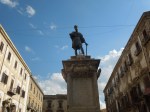
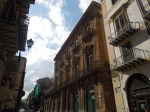
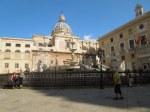
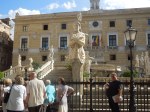
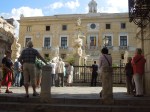
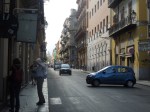
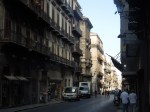
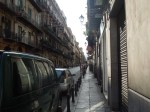


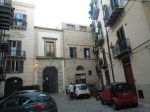
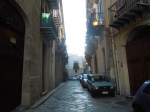
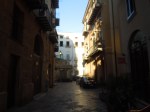
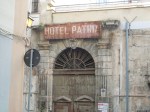
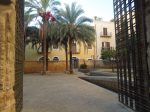

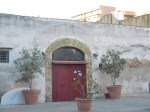

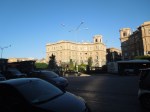
I like the buildings of the capital of Sicily, even if some parts are a bit run down. I wouldn’t stay in the Hotel patria, judging by the look of the outside.
 The Anonymous Widower