A Waste Of Space?
I took this picture, as I rode through Kentish Town station on a Thameslink train.
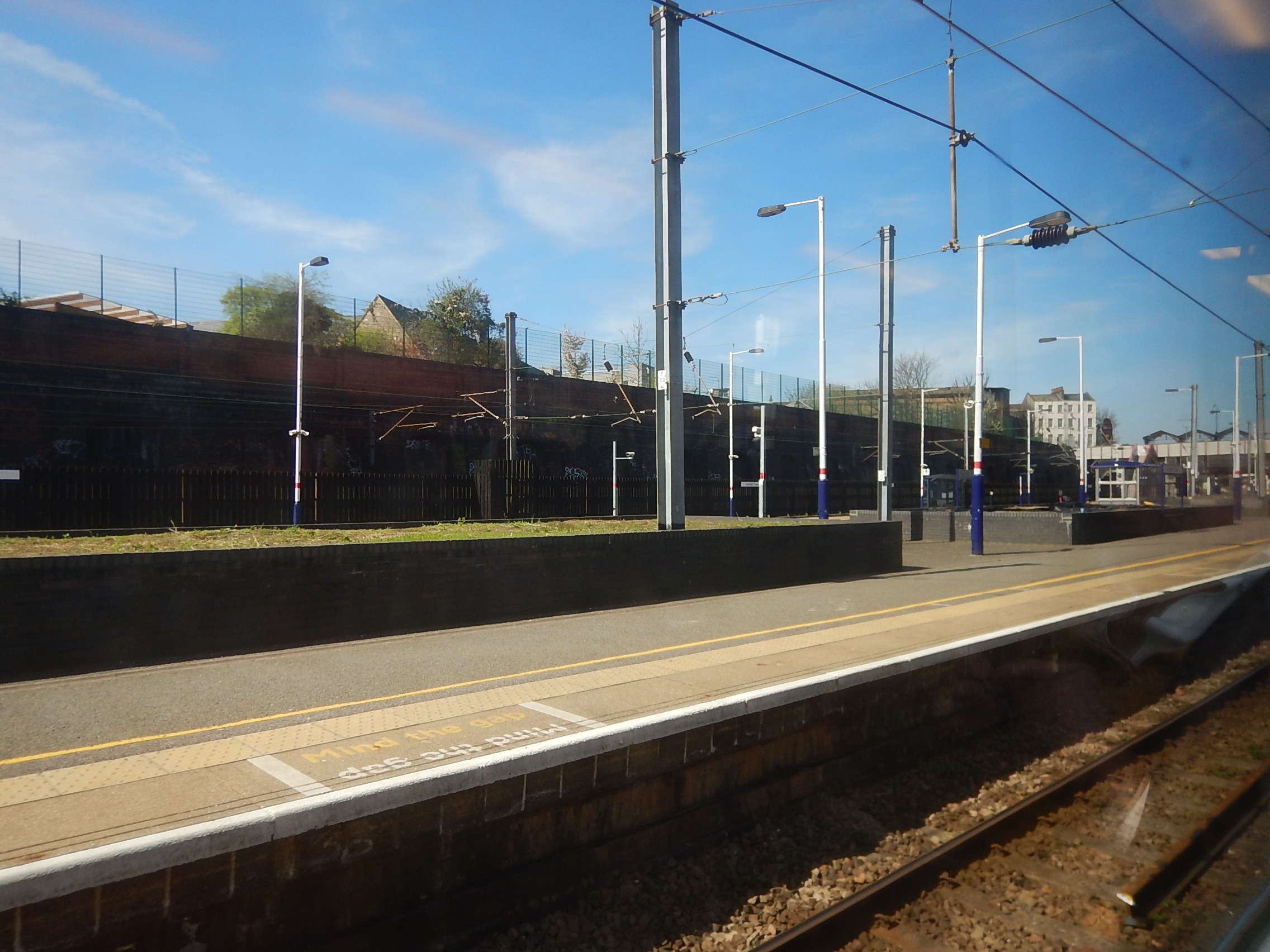
A Waste Of Space?
I’d never realised there was quite so much space.
This Google Map shows the Midland Main Line as it passes through the station.
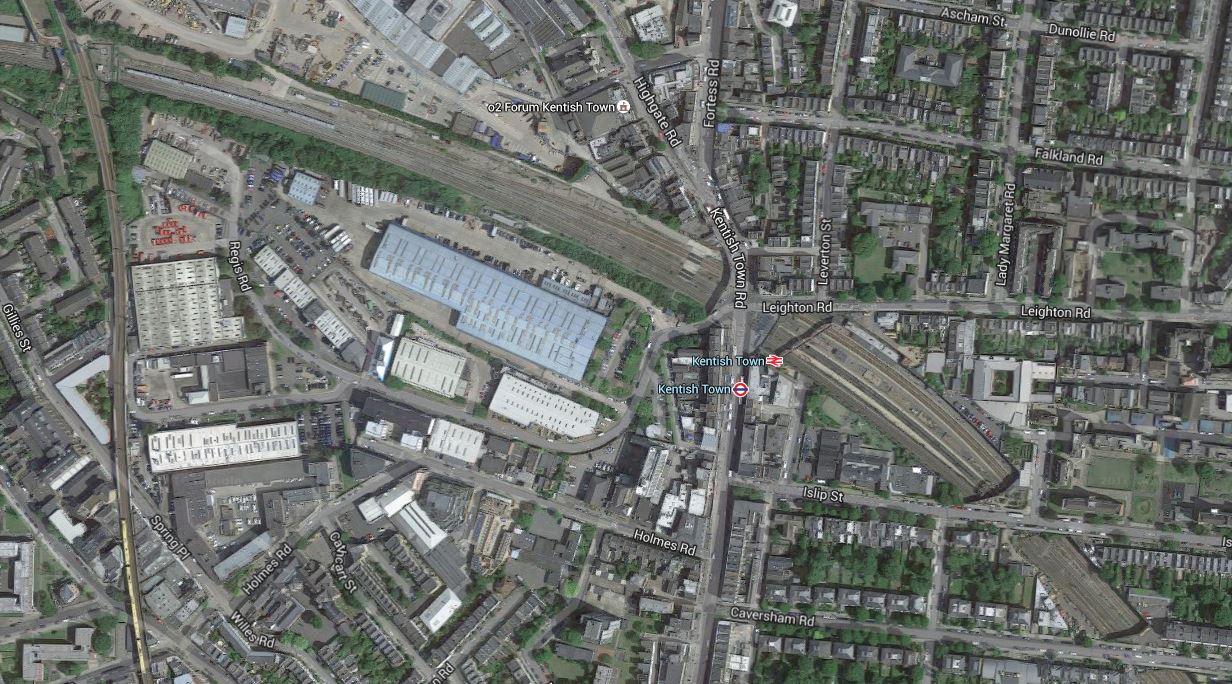
Midland Main Line Through Kentish Town
I do wonder, if this site would be one that could be used to create housing or other buildings above the railway.
- In a few years time, there will be upwards of eight Thameslink trains an hour through the station.
- After the rebuilding of Camden Town station, there is the possibility of upwards of thirty trains per hour on the Northern Line.
- Kentish Town West station on the North London Line is not far away.
- Just off this map to the West, is the large site, where J. Murphy and Sons have their offices and Central London base.
It would appear to be a well-connected place for homes, offices, schools, colleges or hotels, and I’m sure Camden Council are doing their best, to improve the area.
Where Are The Class 700 Trains?
According to the Class 700 entry in Wikipedia, the first train should have entered service on Saturday.
But it didn’t and there’s nothing on the Internet as to why!
Bermondsey Dive-Under – 10th April 2016
The Bermondsey Dive-Under is coming on and it’s looking to be a very substantial construction.


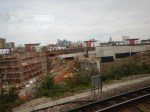



If you want to see it, take a train from New Cross Gate station to London Bridge station and it’ll be on the right of the train, just after you pass SELCHP.
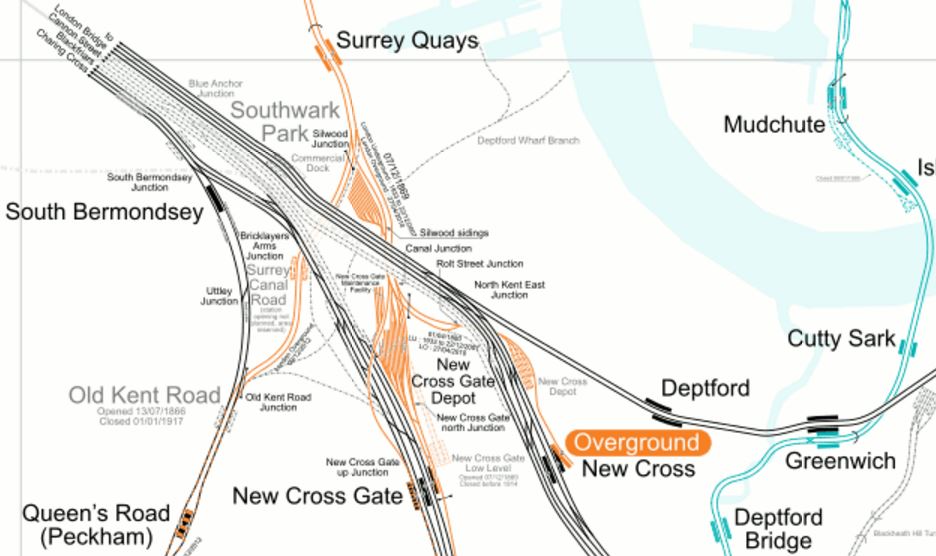
The map from carto.metro.free.fr shows the lines in the area.
The BermondseyDive-Under
Note the dive-under is all the dotted lines between South Bermondsey and Southwark Park stations.
From Whitechapel To Oxted
If you want to travel between Whitechapel and Oxted stations, it should be one of those journeys, where you get an Overground train to Croydon and then get a Southern one from Croydon to Oxted.
But the East London Line of the Overground was designed by a nincompoop, who did a course in transport system design at the Ryanair Business School.
So instead of going to East Croydon station, with all its connectivity to South London, Surrey, Sussex, Brighton and Gatwick Airport, and the London Tramlink to both East and West of Croydon, the East London Line goes to West Croydon, which just has a few odd services and the Tramlink to take you to East Croydon, which is where you should have gone in the first place, as you know, it generally connects to where you want to go.
This map from carto.metro.free.fr shows the layout of lines around Croydon.

West Croydon and East Croydon Stations
Surely something can be done to improve connectivity.
So my simple trip down the East London Line meant a change at New Cross Gate, which was an up-and-down change of platform.
At least, I got the Oxted train at East Croydon, by just waiting on the platform for a dozen minutes or so.
You’d think the uprated Thameslink will make this better, but it will actually make it worse, as it would appear, that there will be no simple way to get from Whitechapel to East Croydon, without going via Farringdon or St. Pancras. If this turns out to be the case, expect lots of complaints from those living on the East London Line.
Swapping the East London Line from West Croydon to East Croydon would probably solve the problem, but there probably isn’t enough paths or platforms at East Croydon station.
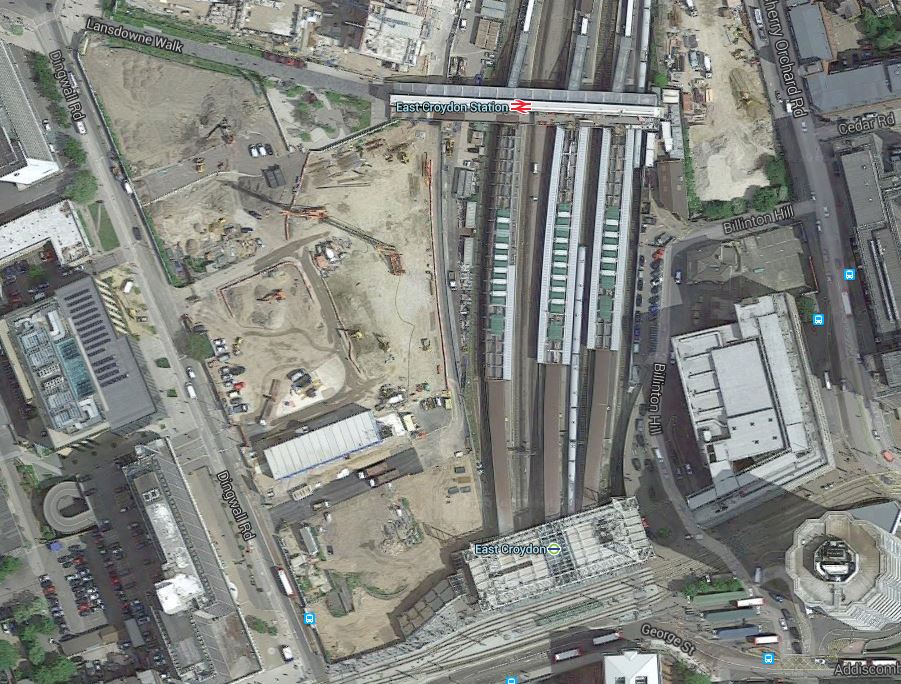
This Google Map shows the platform layout at East Croydon station a few years ago.
East Croydon Station
It would appear that, when this picture was taken, it might have been possible to squeeze another couple of terminal platforms under the tower blocks, that are now being built to the East and West of the station.
I believe, that it a real pity, that when the opportunity was available, nothing was done!
An intelligent remodelling at East Croydon station, would surely have delivered the following.
An Improved East London Line
The East London Line would have become a valuable North-South route between the following stations.
- Highbury and Islington for Victoria Line, Northern City Line and North London Line
- Dalston Junction for North London Line and Crossrail 2 (when built!)
- Shoreditch High Street for the Central Line (when and if interchange built!)
- Whitechapel for Metropolitan and District Lines and Crossrail,
- Shadwell for the DLR
- Canada Water for the Jubilee Line
- New Cross Gate for the Bakerloo Line (when extended!)
- Penge (A proposed hub station!) for the Chatham Main Line
Other connections would also be possible, such as reopening the Dalston Eastern Curve to give access to Hackney Central, Stratford, Lea Bridge, Walthamstow and Chingford.
It would also mean that many stations to the South of London, like Arundel, Brighton, Hastings and Southampton would have a single change journey to many places in the East of London.
Is this Thameslink 2?
Or as I prefer, the Brunel Line?
An Improved West London Line
The West London Line is an underused line that allows trains to run from Watford to East Croydon calling at stations including.
- Watford Junction for West Coast Main Line and Crossrail
- Wembley Central for Wembley Stadium
- Willesden Junction for Bakerloo Line and North London Line
- Old Oak Common (A proposed hub station!) for North London Line, Crossrail and HS2
- Shepherd’s Bush for shopping
- Kensington Olympia for exhibitions
- Clapham Junction for Main Line services, Northern Line and Crossrail 2
- Balham for Northern Line
- Streatham Common (A proposed hub station!) for Sutton Loop Line
At present there are two train operators using the line.
- London Overground provides services from Clapham Junction to Willesden Junction and Stratford
- Southern provides an hourly service from East Croydon to Watford Junction and Milton Keynes.
I think that because of the connectivity to the West Coast Main Line and HS2, that there needs to be at least four trains per hour from East Croydon to Watford Junction and possibly on to Milton Keynes.
This line is Thameslink 3.
A Proper Interchange At East Croydon
In an ideal world or where East Croydon station was in the middle of open countryside, the station would be very different.
It needs.
- Fast lines for trains not stopping in the station.
- Cross platform interchange between Thameslink and other services. At present many changes need a change of island platform.
- A better interchange to an expanded Tramlink
- Terminal platforms for the four trains per hour on both the East London Line (Thameslink 2) and West London Line (Thameslink 3)
In my view the station can either go wider or higher.
Wider is probably not possible any more, due to developments to the West and East of the station.
However, it would be possible to build a deck above the station for the terminal platforms needed for the East and West London Lines. The trams could cross on the Southern end of the deck and the area in front of the station could be released for pedestrians, taxis and buses.
Passengers from the South needing to go to say Whitechapel or Shoreditch High Street would get on an escalator or lift in the low-level platform to raise them to their Thameslink 2 train.
Passengers for the North needing to go to Gatwick or Brighton would use an escalator or lift to descend to their southbound train.
If all the trains were electric, then it would be possible for a good architect to design a station with plenty of space and lit by natural light.
I also think, that a station of this design, could be built from the current one in stages, where services were maintained during the construction.
Could West Croydon Station Be Closed?
If East London Line services moved from West to East Croydon station, the following services to Central London would be left.
- Four trains per hour to Victoria via Selhurst, Streatham Common, Balham and Clapham Junction
- Two trains per hour to Victoria via Norwood Junction, Crystal Palace, Balham and Clapham Junction
- Two trains per hour to London Bridge via Selhurst, Streatham Common, Tulse Hill, Peckham Rye and South Bermondsey.
I think there is scope for a sorting out of these services, given Transport for London’s plans for a major hub station at Streatham Common. I wrote about this in Puzzled Over Streatham Common Station and came to the conclusion a Streatham Common hub could be a masterstroke of an idea, for the following reasons.
- The station would connect the two lines crossing there; Brighton Main Line and Sutton Loop
- The station could be the terminus of a two train per hour local service around the Sutton Loop.
- The station could be a valuable interchange between Brighton Main Line and other services.
- The station could be a destination for Tramlink.
- The station could enable tram-trains on Tramlink.
- The station could be a terminus for a branch of the East London Line.
- The station could be an important hub, collecting passengers for HS2 and the West Coast Main Line, as it is on the West London Line.
- Crossrail 2
- Alternative routes for Croydon
One point to bear in mind, is that all of the land required is already owned by Network Trail/TfL and I doubt any demolition of other property would be needed.
I think there are various scenarios that will simplify train movements in the triangle of stations; Norwood Junction, Streatham Common and West Croydon.
It would be a great advantage to train companies, if there were no direct train services between West Croydon and Norwood Junction and all services went via the Streatham Common hub station, as this would simplify movements through the congested Windmill Bridge Junction.
But passengers would still want the service they’d used for years!
I do think though that there is some way to sort out services through West Croydon, perhaps by using tram-trains linking to Tramlink and running to Crystal Palace or Streatham Common, that could keep the functionality of West Croydon station and increase the capacity of the trains, but simplify the movements to Norwood Junction.
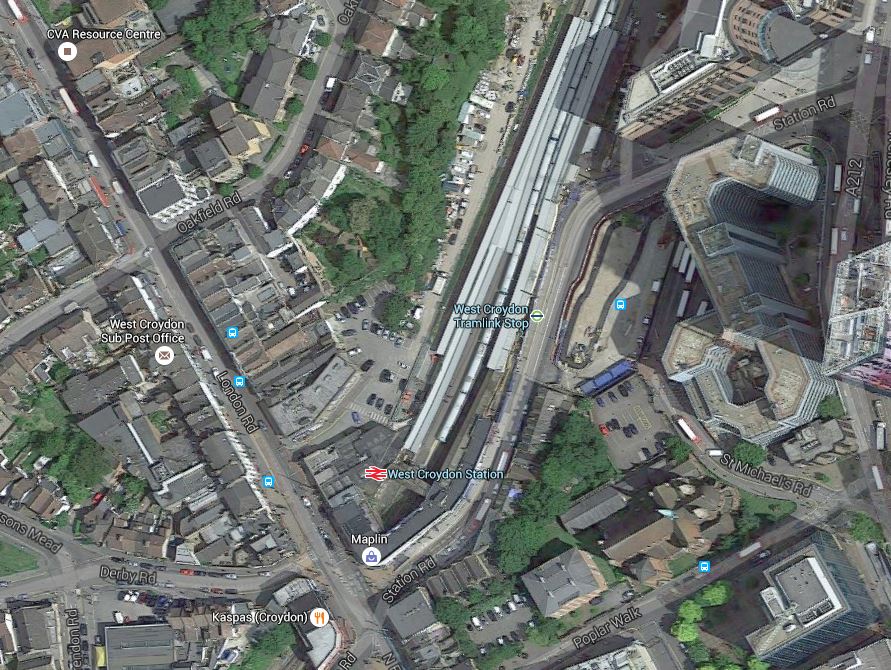
This Google Map shows the station with the Tramlink stop along the side.
West Croydon Station
Trams only go to East Croydon and to get one back, you have to walk halfway across Croydon. It’s another bit of connectivity straight from the Ryanair Business School.
This map is from carto.metro.free.fr and shows the rail and tram lines at West Croydon station.
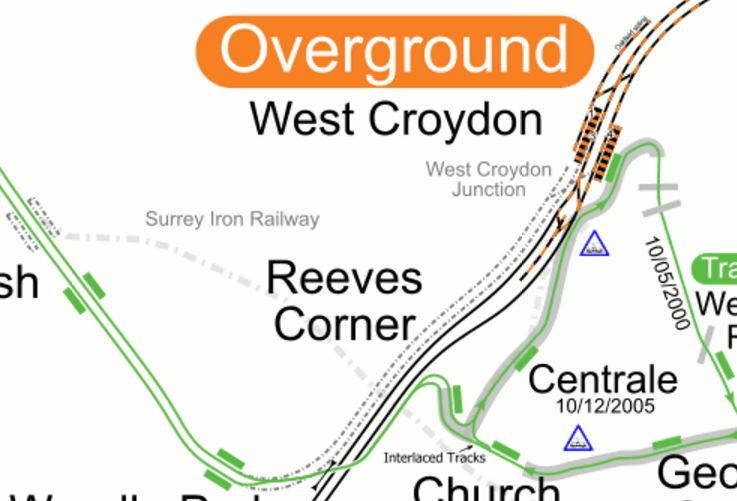
Lines Around West Croydon
I suspect that the layout is such that a connection could be made between Tramlink and the rail lines to enable tram-trains to run on both tracks.
It would certainly enable simplification of traffic through West Croydon station.
I think though, that this simplication can only happen if the Streatham Common hub station is developed and it is served by Tramlink.
I’ll be interested to see what Transport for London does in the next twenty years at West Croydon.
Sorting Out Windmill Bridge Junction
This junction to the North of East Croydon station, is often stated to be a bottleneck on the lines through the area.
This Google Map shows the junction and Selhurst station and depot.

Windmill Bridge Junction, Selhurst Station And Depot
There would appear to be a mass of railway lines, south of the depot, which makes Spaghetti Junction look positively simple.
But
- If the terminal platforms for the East and West London Lines were at a high level over East Croydon station, then surely, they could climb over the junction as well and enter the station at the right level.
- If there was a lot less traffic between the East London Line and West Croydon station, space would be released.
- Tram-trains could sneak through, using their better manoeuvrability.
I’m sure that if the services to the two Croydon stations are redesigned, then a better and more efficient junction could follow.
Conclusion
A rethinking of services through Croydon and on the East London Line is needed, otherwise thousands of Mr, Mrs. Ms. and Miss Angries will be steaming away at Transport for London.
TL would have appeared to sleepwalk into this train-crash, by not sorting out East Croydon station, when the site was clear and they were designing Thameslink.
The East-Facing Bay Platforms At Reading Station
This picture shows the east-facing bay platforms at Reading station.
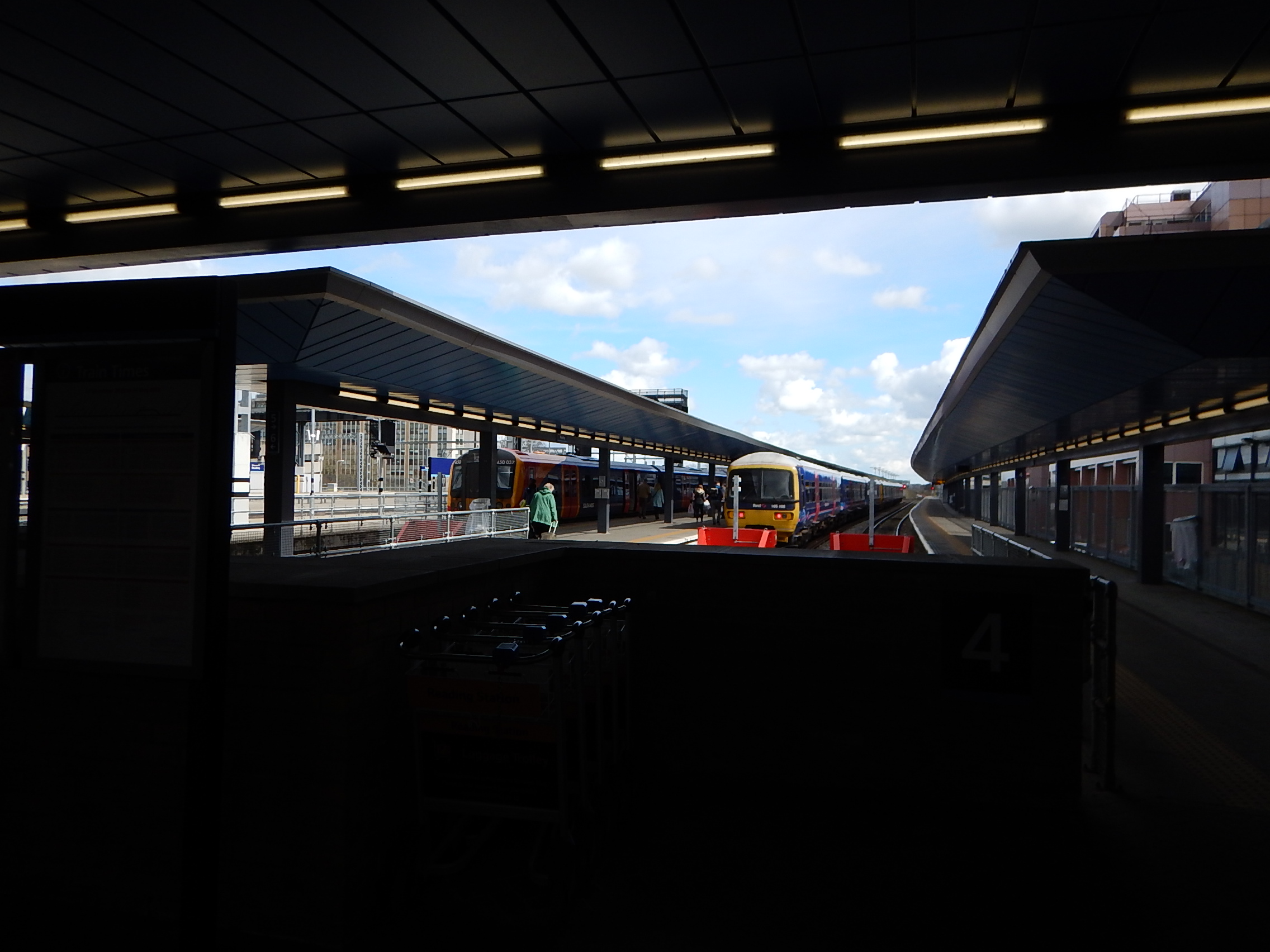
Bay Platforms 4, 5 and 6 At Reading Station
Note that they are numbered 4, 5 and 6 from the right. The train on Platform 5 is a Great Western Railway service for Gatwick Airport via Guildford. with a South West Trains service for Waterloo on Platform 6.
Gatwick Via The North Downs Line
Trains go to Gatwick using the North Downs Line, which is a double-track line effectively in five sections.
- Reading to Wokingham – electrified
- Wokingham to North Camp – not electrified
- North Camp to Shalford Junction – electrified
- Shalford Junction to Reigate – not electrified
- Reigate to Redhill and Gatwick – electrified.
According to Wikipedia, there needs to be work at Redhill and Gatwick Airport stations, but I believe that is underway.
Wikipedia also states that the line has an operative speed of 70 mph. The journey currently takes 76 minutes.
Once Crossrail and Thameslink are fully open, it would surely be quicker to change at Farringdon.
- The fastest journey between Farringdon and Gatwick Airport is now 54 minutes.
- The Crossrail route calculator says that Reading to Farringdon will take 57 minutes.
So that means that at 111 minutes, surprisingly the London route is thirty five minutes slower and needs a change of train.
Note these further points about the North Downs route.
- A well-driven electric train like a 110 mph Class 387 train might even be able to do the journey a few minutes quicker than the current 76 minutes, if the line were to be electrified.
- It is my belief, that the current piecemeal nature of the third-rail electrification would enable a Class 387 IPEMU to run between Reading and Gatwick Airport, using the batteries as required.
- I don’t think the batteries would need charging at the end of the journey, as both ends of the route are electrified.
- The line has ten level crossings, which must speed the trains, if some were removed.
- There must be other track improvements.
- Class 387 trains have also been fitted with an Airport Express interior for Gatwick Express.
- Can an Airport Express be battery-powered? Engineers like me, would say yes, but Marketing Departments would be sceptical.
I believe that ultimately a Class 387 train or an IPEMU with a similar performance could do Reading to Gatwick Airport in an hour, without further electrification.
Are The TOCs Arguing Over The Class 387 Trains?
The April 2015 Edition of Modern Railways has an article entitled Operators Vying For Class 387s.
Before discussing the article, I’ll describe the trains involved.
Class 387 Trains
At present there are twenty-nine new four-car Class 387 trains running Thameslink services for Govia Thameslink Railway (GTR).
- These are dual-voltage 175 kph (110 mph) versions of Electrostars.
- They can run on probably most of the electrified routes in the UK.
- They are about to be replaced by brand-new Siemens Class 700 trains, as these are delivered.
- They are closely related to the Class 379 trains, which were used for the IPEMU prototype in early 2015.
As they become available, they are supposed to go to the Great Western Railway (GWR).
But GWR only have the working electrification from Paddington to Hayes and Harlington station on which to run the trains. As I showed in Hayes and Harlington Station – 28th February 2016, work is progressing at the station and an extended bay platform is being created.
The finish of platform works at the station, will mean a service can be started between Paddington and Hayes and Harlington.
- It will replace the main-line portion of the service between Paddington and Greenford, which is soon to be discontinued.
- It can be used by GWR for driver training.
- Class 387 trains working in GWR livery will be good publicity.
But I can’t see this service needing more than a couple of Class 387 trains.
This picture shows the colour scheme of a Class 387 train, currently working on Thameslink.

The colour of those doors looks suspiciously like GWR green to me! So perhaps the transfer of operator would not require anything more than downloading new software for the passenger information screens and changing the adverts and notices.
In addition to the current twenty-nine trains on Thameslink, Bombardier have three further orders for Class 387 trains.
- Twenty-seven four-car Class 387/2 trains are being delivered for Gatwick Express.
- Eight four-car trains for GWR.
- Twenty four-car trains have been ordered by Porterbrook.
Bombardier are reported to be on the verge of finishing the Gatwick Express order and starting manufacture of more Class 387/1 trains.
Class 442 Trains
The Class 442 trains, which are being replaced on Gatwick Express by Class 387/2 trains are not the most loved trains in the UK’s train fleet.
It is very likely that despite being the fastest third-rail trains in the world, that they will go to the scrapyard as they are replaced.
The only reason some might be retained on Gatwick Express, is so that some Class 387/2 trains could work Thameslink to release a few of the Class 387 trains for other operators.
Class 700 Trains
The Class 700 trains, being built in Germany by Siemens, are replacing the last Class 319 trains and the new Class 387 trains on Thameslink.
So introduction of these trains is important to release Class 387 trains for other operators.
But these trains are only due to be introduced on the 16th April 2016 and there are inevitable questions.
- What is the introduction into service schedule?
- As with all new trains or car, bus or truck for that matter, will there be any teething problems?
- Will they replace the Class 319 or 387 trains first?
- Will the passengers like them?
The last question is the most important and expect lots of moaning about the lack of free wi-fi!
Class 360 Trains
The Class 360 trains, used on Heathrow Connect, have a peripheral role in the argument, as c2c were trying to sublease two of these trains to sort out their capacity problems.
But the well-documented problems of Heathrow Express, have probably meant that these trains are no longer available.
Summarising The Article
The first paragraph of the Modern Railways article entitled Operators Vying For Class 387s, says that several operators are vying for the Class 387/1 trains currently working on Thameslink.
To summarise.
- c2c, who are big Electrostar operators, are still looking for trains after failing to procure Class 360 trains.
- GWR is anxious to get 387s to start driver training.
- GTR wants to retain them, as there is problems with the new Class 700 trains.
- GWR have apparently suggested that GTR retain the Class 442 trains and use the new Class 387/2 Gatwick Expresses on Thameslink.
- GWR wants to start services to Maindenhead earlier than thought.
It looks like there’s a serious argument going on.
The final paragraph offers a solution.
It could be that the quest to find additional short term capacity at c2c may be solved by early delivery of the next batch of 387s, construction of which is to begin shortly at Bombardier’s Derby factory.
Perhaps, building some of Porterbrook’s trains before those destined for GWR, where they have nowhere to run, could happen!
Bombardier are probably being a bit bullish, as after all one of the reasons for the problems would appear to be the new Class 700 trains from Siemens.
Adding An IPEMU Capabilty To Class 387 Trains
Could it also be, that until this argument is settled, we will not be seeing any Class 387 trains converted into IPEMUs?
I believe that a proportion of trains with on-board energy storage could help some of our electrification problems.
Bombardier have stated that all their new Aventra trains will be wired to accept on-board energy storage if the operator desires it be added. This article in Global Rail News gives full details.
In the meantime, the only train that is available that can be given an IPEMU capability is the Class 387 train.
Electric Services To Maidenhead And Reading
The article says this about electrification to Maidenhead.
Whilst the completion date for wiring to Maidenhead is shown in the re-plan of Network Rail’s Enhancements Programme by Sir Peter Hendy as being June 2017, Modern Railways understands that work is ahead of the new schedule and this section may be completed by the end of 2016.
As electrification to Reading is Crossrail’s problem, this might help too, as different structures are being used.
In Rumours Of Battery Trains, I discussed an article in the September 2015 Edition of Modern Railways entitled Class 387s Could Be Battery Powered, which said that GWR’s eight additional Class 387 trains could be battery powered. This was said in Modern Railways.
Delivery as IPEMUs would allow EMUs to make use of as much wiring as is available (and batteries beyond) while electrification pushes ahead under the delayed scheme, and in the longer term would allow units to run on sections not yet authorised for electrification, such as Newbury to Bedwyn. The use of IPEMUs might also hasten the cascade of Class 16x units to the west of the franchise.
But thinking about electrification to Maidenhead in a practical manner, would a train operator want Maidenhead as the terminus of a new electric service.
Remember that the Class 387 trains are required to increase capacity and bring a whole new level of electric traction and modern comfort to services from Paddington to Bedwyn, Newbury, Oxford, Reading and other places in the Thames Valley, so having to change from your old diesel train to a new electric one at Maidenhead is something that will bring out the worst out of passengers.
If you look at train times between Maidenhead and Paddington, some services take up to thirty-six minutes, but the fastest scheduled journey I can find is probably by an InterCity 125 in nineteen. So you can understand, why GWR would like 110 mph Class 387 trains on the route. They could probably do the journey in a few minutes over twenty.
With Chiltern starting an Oxford to Marylebone in December 2016, GWR are probably preparing to lose a lot of their Oxford business. I know which service I’d choose.
But the Class 387 IPEMU would offer a viable alternative.
- Hayes and Harlington station is fully electrified to Paddington and is just under eleven miles from Paddington.
- Reading station is not electrified and is thirty-six miles from Paddington.
- A Class 387 IPEMU has a range of upwards of fifty miles on batteries.
The Class 387 IPEMU would seem to have been designed to handle Paddington to Reading. But I suspect that electric services will not be offered until the wires reach Maidenhead.
So when will GWR be offering an electric local service between Paddington and Reading?
- Trains would use overhead power to the end of the wires and batteries beyond.
- Enough Class 387 trains will have to be converted to IPEMUs
- Enough platforms at Paddington would have be able to accept electric trains.
Could this be why GWR appear to be so keen to take deliveries of Class 387 trains?
From Reading diesel shuttles would work the lines to Bedwyn and Oxford.
So how does this fit in with Modern Railways assertion, that electrification to Maidenhead will be complete before the end of the year?
If GWR take the IPEMU route to provide services between Paddington and Reading, it just means that the train will be less reliant on the batteries, as Maidenhead to Reading is only twelve miles.
To go to anywhere past Reading is probably difficult, as suitable places like Bedwyn, Didcot and Newbury are more than twenty-five miles from Maidenhead, which probably means the range is too much for an IPEMU, as it has to go both ways on battery power.
On the other hand, every extra mile of usable electrification would extend the reach from Paddington.
But there are three places, where Class 387 IPEMUs could operate without major additional electrification; the three branch lines.
- Henley is 11.5 miles from Maidenhead.
- Marlow is 5 miles from Maidenhead.
- Windsor is 2.5 miles from Slough.
There would probably need to be some short lengths of electrification where the branches join the main line, signalling upgrades and platform lengthening. But not electrifying the branches and using IPEMUs would probably be welcomed by Network Rail, as it would sidestep any legal challenges to the electrification on aesthetic and heritage grounds.
In the peaks there are direct services between Bourne End station on the Marlow Branch and London, which seem to take fifty-four minutes. I suspect that a Class 387 IPEMU could do the journey about twenty minutes faster, with electrification between Paddington and Maindenhead.
Onward To Oxford
Electrification to Maidenhead would not give advantages in providing electric services from Reading to Bedwyn, Newbury and Oxford. It’s just too far for a train powered by batteries.
Commercial common sense, would indicate that with Chiltern scheduled to serve Oxford station in December 2016, if there was one destination, where new electric trains must go, it is Oxford.
And by the end of 2016!
It sounds like an impossible dream!
Roger Ford in an article in the April 2016 Edition of Modern Railways, which is entitled GWEP Target Dates And Costs, says this about testing the Class 800 trains.
GWEP’s 16-mile ‘test track’is between Reading and Didcot; It was originally due to have been energised in September last year.
Energisation for test running is now scheduled for September this year.
He also indicated, and I can confirm it, that substantial amounts of the overhead structures have been installed. So I think we can assume that by September, the test track will probably be working.
As an aside here, I wonder if the test track will electrify and use one of the west-facing bay platforms at Reading station.
If we assume that the test track provides a fully-functioning electrified route between Reading and Didcot, it could surely be used by Class 387 IPEMUs to get to Didcot.
- They would use overhead electrification from Paddington to Maidenhead or the end of the wires.
- They would go to Reading on battery power.
- Reading to Didcot would be using the overhead wires put up for the test track.
- Batteries would be charged on both electrified sections.
Oxford is less than twenty miles from Didcot, so reaching Oxford with an electric service is possible before December 2016.
Onward To Bedwyn
Bedwyn is forty-two miles from Maidenhead and thirty from Reading, so it would appear to be another impossible dream, even if there was electrification all the way to Maidenhead from Paddington.
I do think that unless the Great Western Main Line is electrified to Maidenhead, that getting Class 387 IPEMUs to Bedwyn is impossible.
But there are three possibilities to get to Bedwyn from Paddington, if Maidenhead is electrified.
- A bigger battery to give a longer range.
- As the train stops at Reading, it could stop in an electrified platform and charge the battery.
- Electrifying the junction and a short length of the Reading to Taunton Line, perhaps as far as Reading West station.
I’m sure Bombardier, Network Rail and GWR are working on a solution.
It should also be noted that there are two west facing bay platforms used for services to Basingstoke, Bedwyn and Newbury. These could be electrified and Bedwyn could be served by a shuttle.
Onward To Basingstoke
Another possibility would be to use the Class 387 IPEMUs to provide a service along the Reading to Basingstoke Line, which is currently run using diesel multiple units.
It could be charged at Reading by electrifying the two west-facing bay platforms or even at Basingstoke using third-rail electrification in the bay platform.
Conclusion
I believe that all the Thames Valley services out of Paddington could be run by a fleet of Class 387 trains, some or all of which would be IPEMUs, It would be necessary to do the following.
- Electrify between Airport Junction and Maidenhead.
- Allow the use of the test track between Reading and Didcot by Class 387 services travelling past Didcot.
- Electrify selected platforms at Reading station.
The new trains would provide an increase in capacity, faster services and possibly extra routes.
I also believe that it would be possible to serve Oxford using Class 387 IPEMUs by the end of the year. This might persuade passengers not to desert to Chiltern.
Does this all explain GWR’s reluctance to lose the Class 387 trains, that have been earmarked for transfer from Thameslink?
But with other train companies looking jealously at the GWR’s Class 387 trains, it’s no wonder there’s an argument.
Does London Need To Get A Grip On Rail Connectivity?
This article in the Standard has a title of Old Oak Common regeneration scheme ‘risks being London’s worst cock-up in 50 years’. This is the first three paragraphs.
Boris Johnson’s flagship regeneration scheme at Old Oak Common is in danger of turning into London’s “worst cock-up in 50 years”, a leading government adviser warned today.
Urban planner Sir Terry Farrell said the £10 billion development, the biggest in Britain, is heading for disaster because of the rush to finish Crossrail.
He blamed politicians for ducking key decisions and said the Mayor was partly responsible for a shortsighted “pass the parcel” approach. Sir Terry said: “If a tenth of the energy he put into the Boris island airport idea had gone into Old Oak Common I feel sure it would have happened without a problem.”
Old Oak Common is going to be a major development of 25,000 homes and 55,000 jobs created over the next fifteen years. A major transport hub will be created at Old Oak Common station will be created, linking some or all of the following lines together.
- Bakerloo Line
- Central Line
- Crossrail
- Dudding Hill Line
- Great Western Main Line
- HS2
- North London Line
- Watford DC Line
- West Coast Main Line
- West London Line
This map shows the plans for Option C of TRfL’s Old Oak Common proposals.
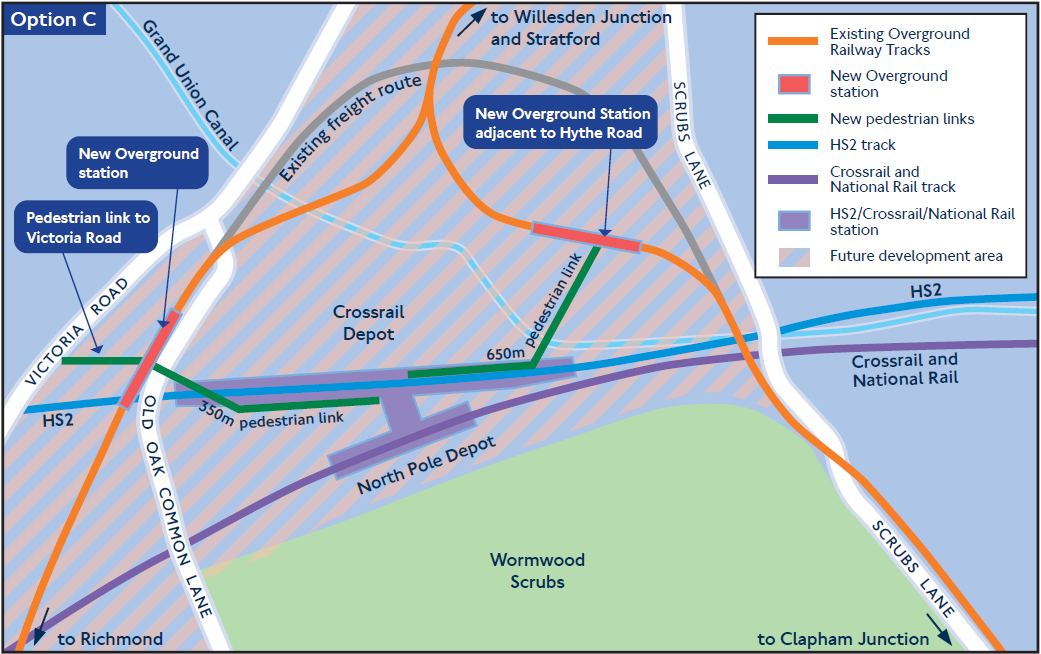
Option C Proposal At Old Oak Common
I wrote about this option in Should An Overground Station Be Built At Hythe Road?
Terry Farrell has said that there is no space between the rail lines to put the piling to support the homes, offices and other developments that will built over the top.
I also believe that the walking routes between the various stations will be far to long and tortuous.
The developers, Transport for London and the rail companies involved all seem to be planning their own parts in isolation.
It seems to echo what I documented in Searching For What Is Going To Happen On The East London Line After The Thameslink Programme Opens, where I was trying to find out how Thameslink will improve my journeys from Dalston Junction using the East London Line.
My correspondence on that issue, would seem to indicate that Thameslink and Transport for London don’t talk to each other and calmly go their own ways.
Someone needs to get a grip on all these big projects at a high level.
Searching For What Is Going To Happen On The East London Line After The Thameslink Programme Opens
My E-Mail To Thameslink On The 14th February
On the 14th February, I sent this e-mail to the Thameslink Programme.
At present when I go to Gatwick Airport, I get an East London Line train from Dalston Junction to New Cross Gate or Norwood Junction, from where I pick up a Gatwick Train.
Can you confirm, that the current service will be equally good or even better after the Thameslink Programme is completed?
A Reply From Thameslink On The 17th February
On the 17th February, I got this reply.
Thanks for your email.
The Thameslink Programme is transforming north-south travel through London. This infrastructure and new trains investment programme will increase capacity on one of Europe’s busiest stretches of railway. For more information on the benefits of the programme, you can visit our website here, and an interactive map of our improvement sites here.
We’ve already delivered longer, 12-car trains between Brighton and Bedford, platform lengthening at several stations, track work and upgraded stations including West Hampstead, Farringdon and Blackfriars. The most complex part of the programme is now underway; this includes rebuilding London Bridge station, and laying new track and signalling equipment around the station to create a spacious and better connected transport hub.
We are linking parts of the East Coast Mainline to the Thameslink network, allowing passengers from Cambridge and Peterborough to travel to Blackfrairs and beyond, relieving congestion on the Underground.
There will also be a link with Crossrail at our hub station at Farringdon, giving access to Gatwick, Luton and Heathrow airports and St Pancras International.
Dalston Junction is managed by TfL, and so any enquries about an improved link from this station to Gatwick should be directed to overgroundinfo@tfl.gov.uk.
I hope this is helpful, thanks for getting in touch.
Kind regards,
Jen Pattison, Thameslink Programme
My E-Mail To Overground Info On The 17th February
So I sent off a longer e-mail to Overground Info.
If say you want to go between Dalston Junction and Purley, you will certainly have to change trains.
Currently, it takes between fifty and sixty minutes and you sometimes change at New Cross Gate and at other times the suggested change is Norwood Junction.
It’s alright for me and others who know how to use the various journey calculators or apps, but what about people like my late wife, who never ever owned a smart phone or even sent a text message.
The full simple rule for Dalston Junction to Purley, seems to be something like take a West Croydon train from Dalston Junction to Norwood Junction and then get the first train to Purley from there.
Different rules apply to different stations
Thameslink is going to bring major changes to how we go places along the East London Line and especially, if we venture into any Thameslink territory.
My simple example of Dalston Junction to Purley might get a lot more complicated, as some documents and web pages, say that Thameslink services between London Bridge and East Croydon will not stop. So how do passengers on the East London Line catch these trains to places like Purley, Gatwick and Brighton?
To get to Thameslink, those on the East London Line, will have to go to Whitechapel and get a train to Farringdon or St. Pancras
That will be a pain for anybody, whose local station is anywhere on the East London Line and very much a degradation of the current service.
Those living near Norwood Junction have already lodged a petition with the London Assembly.
My Reply From OvergroundInfo On The 19th February
On the 19th February, I got this reply.
Thank you for contacting London Overground.
I am sorry however I am unable to help with the issue you raise. They will be best addressed by Thameslink.
As a result I have passed your comments to them. I am sure that you will hear from them soon, however if you want to contact them their details are:
You certainly can’t complain about the promptness of the replies but I’m back to square one.
All I want to know, is how the millions of us in East London will get to Gatwick Airport, as conveniently as we do now!
New Trains On Thameslink
I had breakfast at Kings Cross and then hopped across the city on Thameslink to Blackfriars to go for a walk through the Tate Modern. I came back to Farringdon, as because the East London Line is closed, a bus from Moorgate is the best way to get home.
These were pictures I took of new trains on Thameslink.
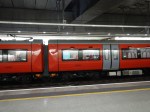
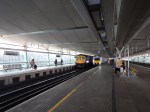
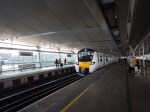
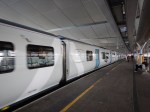
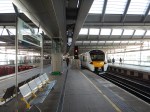
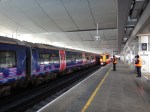
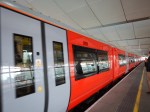

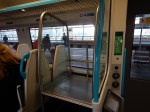
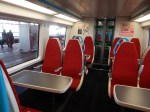
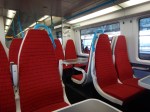
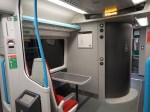
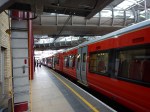
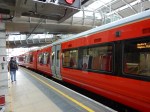

Note the following.
- The red trains with the grey doors are Class 387/2 trains destined for the Gatwick Express later this month.
- The interior shots were all taken in a Class 387/2 trains.
- The white train with the sloping front and the light blue doors, is a new Class 700 train, which will run on Thameslink.
The pictures were taken at St. Pancras International, Blackfriars and Farringdon.
The new Class 387/2 trains had a definite feel of the Class 387/1 trains about them, except they had sizeable luggage racks and possibly more tables.
There are better and more luxurious airport trains in the world, including probably the Class 332 trains of Heathrow Express. But as a train to speed you to the Airport in thirty minutes or so, with plenty of space for you and your luggage, they probably pass the first test by a good margin.
They would be very good on other Airport routes in the UK.
- Routes connecting Manchester Airport to Liverpool, Manchester, Crewe and Blackpool.
- A possible Gatwick Express route from Reading to Ashford International, which I think could happen, if an IPEMU variant were to be developed.
- To and from Airports like Cardiff, Stansted and Southend.
An IPEMU variant could be useful in developing spurs to airports like East Midlands, Luton and Glasgow, which would be built without wires from lines with full electrification. Bombardier has the technology, all they need is the orders.
Would this approach be an affordable way to create the much needed airport link at Glasgow Airport?
- A single-track spur leading from the Inverclyde Line to the Airport to a single platform station would probably have enough capacity for a two or three trains per hour service.
- No electrification would be needed, which would mean that there would be greater flexibility in the route of the line. It might even go in a single-track tunnel under taxiways.
- There would be some modification to the signalling.
- The trains would be bog standard Class 387/2 trains, except for the energy storage.
- Two trains would probably give a two trains per hour service to the airport, as Glasgow Central to Paisley \st. James takes around twenty minutes.
- The trains would just be more trains running between Glasgow and Paisley.
- It would be simpler than a tram-train and require no special rules or modified stations.
- I can’t think of any new regulatory issues, as it will be a train running on a railway.
- There would need to be some staff training.
The overall system would be no more complicated than running the demonstration Class 379 IPEMU on the Harwich branch, which seemed to work so well.
How much would it cost?
The creation of the new line to Ebbw Vale Town station and the single platform station is reported to have cost less than twelve million pounds.
According to this article in Railway Technology, Porterbrook have paid £100million for twenty Class 387 trains, so two trains would cost ten million.
I also think that provision of the track and trains in something like the Glasgow Airport Rail Link, is the sort of project that a company would provide and then lease to the train operator.
No wonder, that Bombardier have won an award for the technology and Porterbrook bought some Class 387 trains on spec.
 The Anonymous Widower