Road-Rail Services Inaugurated
The title of this post, is the same as that as this article on Railway Gazette.
This first paragraph tells all.
The start of regular road-rail services on the Asa Kaigan Tetsudo in southeast Shikoku was marked with a ceremony at Awa-Kainan-Bunkamura on December 25.
I have found this video of the vehicles.
I do wonder if there is a simpler way.
In Zwickau in Germany on the Vogtlandbahn, standard Stadler diesel multiple units, run through the streets from the main station to a tram-stop like station in the centre of the town.



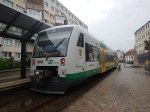
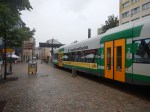
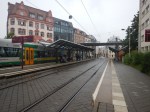
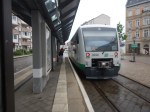

They are more of a train-tram, than a tram-train.
- The train is fitted with orange warning lights.
- The train shares the same corridor with a tram, that uses a different gauge, using three-rail track.
- Access between the train and platform is more-or-less level and as good as, if not better than most German trains.
- The platform at Zwickau Zentrum is an island platform, where the trams call at the other side.
- The concept would work with any independently-powered multiple unit.
I am sure, where there are places where this will work in the UK.
We almost do the same thing at some seaside stations like Saltburn, Sheringham and St. Ives.
Battery Rather Than Hydrogen Trains Suggested In Sachsen Study
The title of this post, is the same as that of this article on the Railway Gazette.
This is the first paragraph.
The use of battery rather than hydrogen traction is recommended in a study into options for replacing diesel multiple-units on regional routes around Dresden where electrification is unlikely in the short to medium term.
They give the reason that battery power is a better short term option, where electrification is envisaged in the long-term.
I also think, that in the case of the German hydrogen trains, which are hydrogen-power only, this means that the trains will have to be replaced, as the electrification is installed. Whereas, with battery-electric trains, they just get more efficient as the wires go up and don’t need to be replaced. Although, their batteries might be removed to improve acceleration.
Dresden, Leipzig and that area of Germany also has a lot of electrification already, so charging will not be a problem.
But battery power would also get around the problem at Zwickau, where diesel multiple units run through the streets as trams to a station in the town centre.
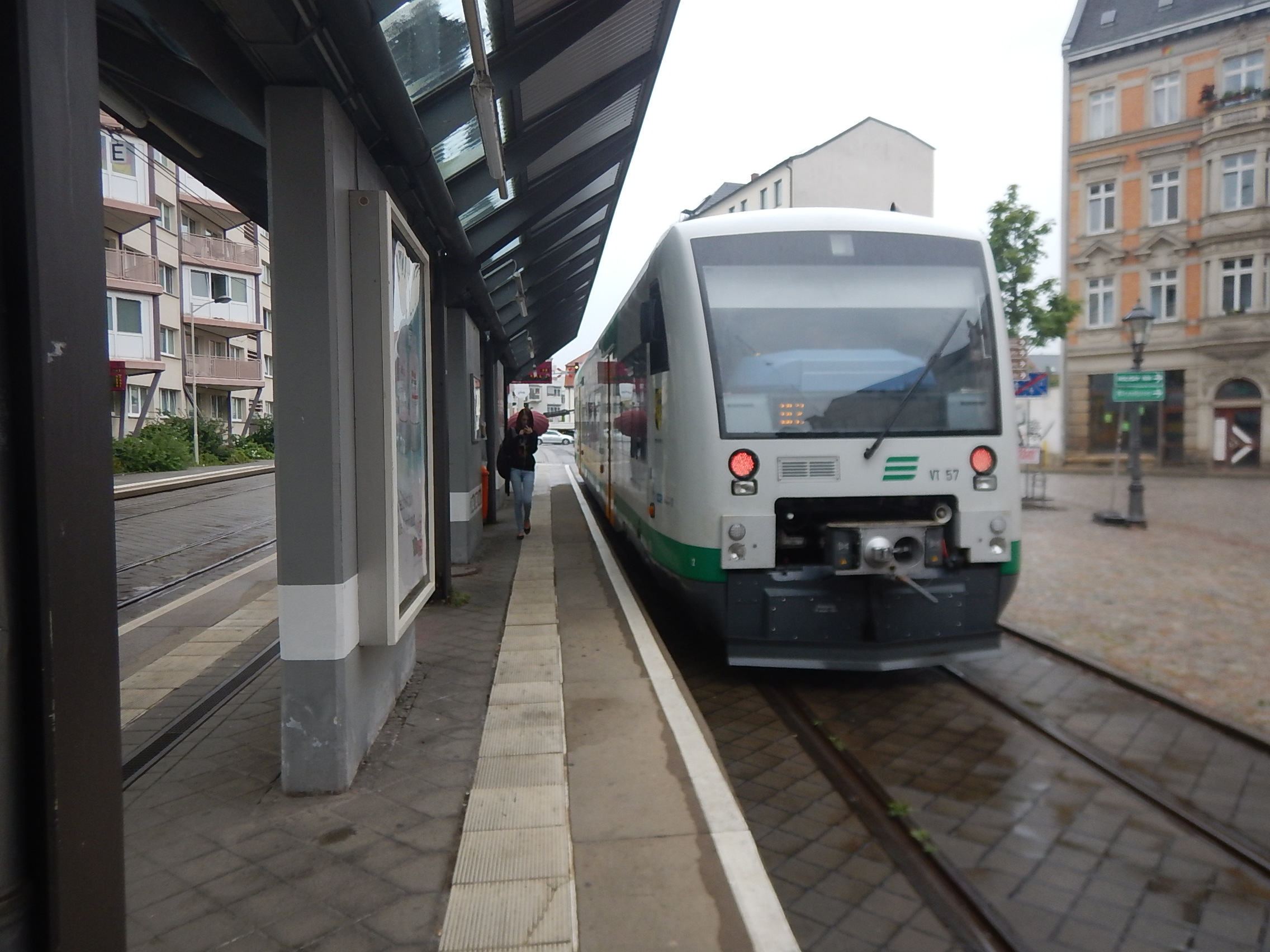
The picture shows a diesel multiple unit playing trams in Zwickau Zentrum station.
- Note the orange lights that flash on the train.
- Trams call at the other side of the platform.
- I wonder, if the Germans felt that battery-electric trains will be safer in Zwickau than hydrogen-powered trains.
It puzzles me, why this simple solution is not used more often to extend railways into town and city centres.
With battery-electric trains, there would be no need for any electrification.
Conclusion
The Germans seem to be going battery-electric train mad!
Perhaps, we should follow their example?
A Modern Branch Line For Leigh
There is a group called the Lowton East Neighbourhood Development Forum or LENDF, who are proposing to reinstate part of the Bolton and Leigh Railway, to create a branch line to from a reopened Kenyon Junction station on the electrified Liverpool and Manchester Railway to a reopened Leigh station.
This Google Map shows the Southern part of the route, where it connects to the Liverpool and Manchester Railway at the former Kenyon Junction station.
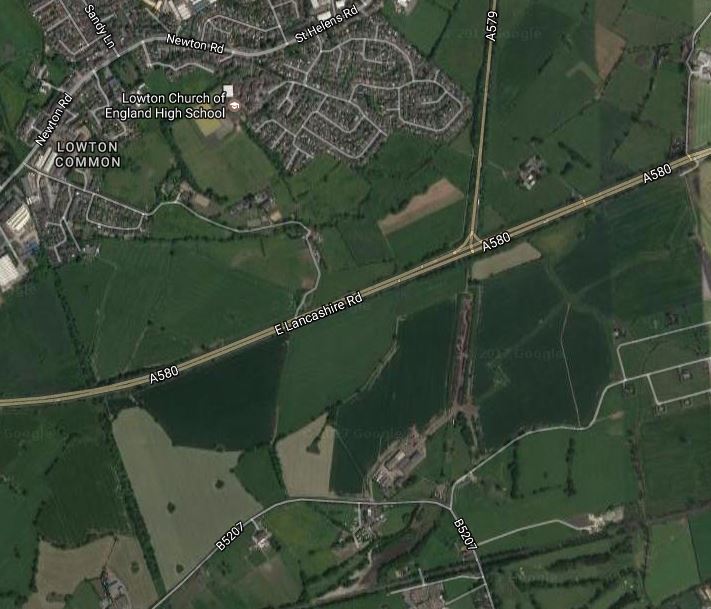
Note.
- The scar of the Bolton and Leigh Railway is clearly visible in line with the A579, which was built alongside the railway North of the A580.
- The Kenyon Junction station site can also be spotted and was recently used as a work site for the electrification of the line.
There is certainly enough space on the former station site to create a two platform station, with perhaps a bay platform to handle a shuttle train to Leigh.
This Google Map shows, where the line goes at the Northern end.
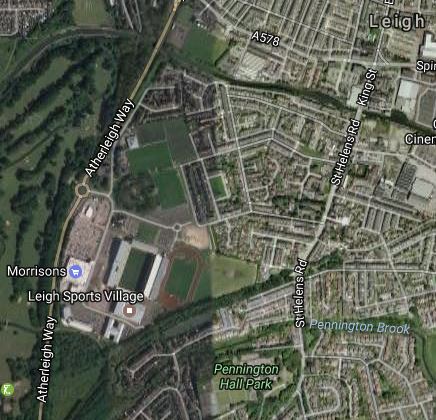
I would think that Amberleigh Way follows the route of the Bolton and Leigh Railway.
One major factor defines how far the line could go.
It would probably be prudent to restrict the length, so that the chosen train could do a round trip in under thirty minutes, thus giving a two trains per hour (tph) service with just one train and no passing loops or complicated operation.
Four tph would probably require two trains, a passing loop and some clever train scheduling.
And then you mustn’t blow the budget!
Building The Line
I would build the line as simply as possible.
- Single-track.
- Single-platform tram-style stations with no footbridges, as at say Galashiels station.
- Step-free access to the train.
- No electrification.
- No passing loop, as not needed with one train and 2 tph.
- One set of points to connect the branch to the main line for rolling stock transfer.
Kenyon Junction station would be more complicated, as it would need.
- Two long platforms for Liverpool and Manchester trains.
- A bay platform for the Leigh branch.
- A footbridge and other necessary facilities.
- Appropriate car parking.
Kenyon Junction station would be the most expensive part of the project.
Train Operation
Train operation would be under rules called One Train Working, bur probably also applying the sort of rules under which trams work.
- Lower speed.
- Warning systems
- Very visible trains
- Driver keeping a good look-out.
This picture shows a two-car diesel multiple unit working under similar rules at its terminus in the centre of the German town of Zwickau.
Note these points about the train and the infrastructure in the Zwickau Zentrum terminus of the Vogtlandbahn
- The train is more-or-less standard.
- The good driver visibility.
- The orange warning lights.
- The track laid like a tram track into the street.
- No electrification.
- The tram-style stop, designed to fit the trains using it.
- Pedestrians and cyclists cross the track in designated places after a good visual check for a train.
As this train goes about a hundred kilometres from this terminus, it still has visible couplings and other railway paraphernalia. These could probably be faired-in for safety and only exposed for recovery of a failed train.
Wikipedia calls this type of operation the Zwickau model, but I prefer to think of it as train-tram, as the train works as a train and then reverts to tram operation on the streets or perhaps through somewhere like parkland or moorland.
Note that in Zwickau, although the trains and the local trams have different gauges, they share tracks, using a unique three-rail track.
As there are no trams in Leigh and if they were, they would be the same gauge as the train, this is not a problem in Lancashire.
The Train
Any suitable and available self-powered train could be used.
- A diesel multiple unit like a Class 172 train.
- A fully developed Class 230 train
- A simple bi-mode train like a Class 319 Flex train.
- A train with onboard storage, perhaps charging using electrification in the bay platform at Kenyou Junction.
- One of Merseyrail’s new Stadler trains fitted with a pantograph and onboard energy storage.
I always think, that the train should be a quality unit to attract passengers.
Whatever train is chosen, the bay platform at Kenyon Junction station and all the other platforms on the branch must be sized to fit the train to ensure level access.
Conclusion
It is certainly possible to create a 2 tph service for this new branch line at an affordable cost using a standard train, working to the same rules as the Vogtlandbahn in Zwickau.
A Station For Leeds/Bradford Airport
When I wrote The Glasgow Airport Rail Link Will Be A Tram-Train, I put in a section about the rail link to Leeds/Bradford Airport.
I had just read this article on the BBC is entitled Leeds Bradford Airport railway station one of three planned.
This is said.
The proposed new station about one mile (1.6km) from the airport would also act as a park and ride for commuters to Leeds and Harrogate.
I wonder if the trains at Leeds/Bradford Airport will go the last mile?
Even if the link is not electrified, why can’t we imitate the train/trams in Zwickau, that I wrote about in Riding The Vogtlandbahn.
A diesel multiple unit like a Class 172 train, refurbished for Airport and Park-and-Ride duties could leave the Harrogate Line at the Park-and-Ride and then proceed under tram rules on a dedicated track to a tram-like station at the Airport.
The needed infrastructure would be simple, with no electrification and stations built like the simple affairs on the London Tramlink, with no bridges.
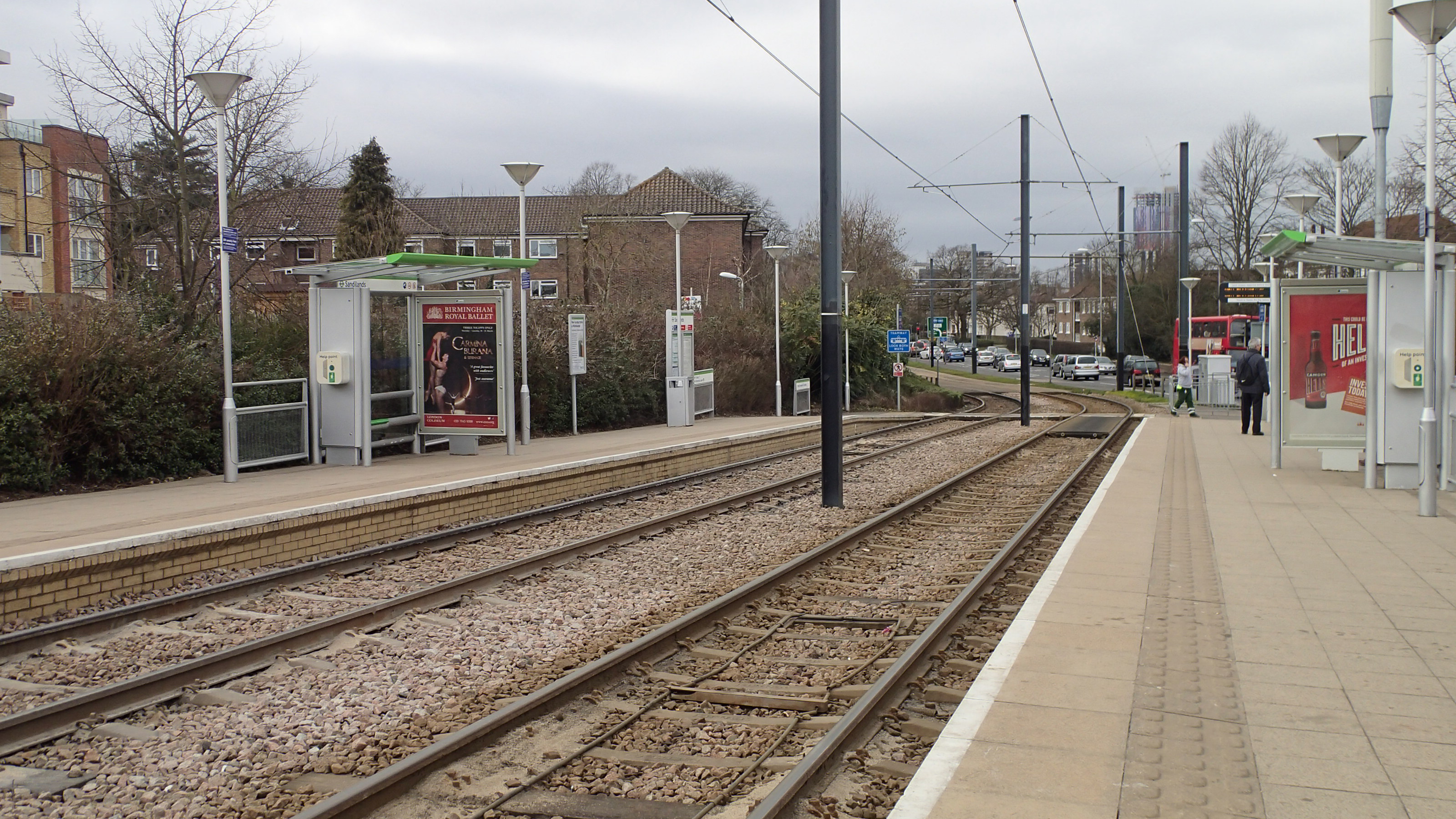
Why not?
Obviously, the ideal solution would be to electrify the Harrogate Line and have trains run into the airport using onboard energy storage.
My only worry about the concept is that of an Airport Link doubling as a Park-and-Ride.
It would need careful capacity planning and be designed so that more frequent and longer trains could be accommodated if the need for more capacity arose.
After all, we don’t know if Yorkshire will vote to exit England!
 The Anonymous Widower