What Train Is This?
I took these pictures of a train coming from Barnstaple to Exeter.
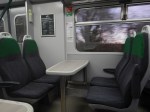
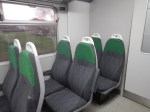
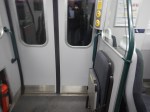
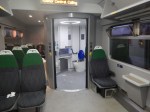
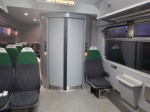
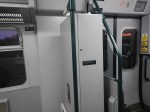
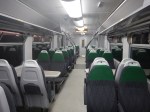
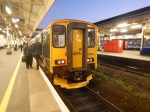
But what type if train is it?
The last picture shows it is Class 150 train built in the 1980s by British Rail.
It is certainly a high quality refurbishment of 150263.
I’d much rather travel in this train, than a new Class 700 train.
Consider.
- The seats were comfortable.
- There were several tables in each car.
- The toilet was one of the best I’ve seen.
- The information system, tip-up seats and grab handles were all excellent.
The train even had it’s own wheelchair ramp stowed away in a secure metal cupboard.
I can’t find anything on the web about who did the refurbishment of this train.
My only thought, is that it was an in-house job and came from Laira with love!
The Truth About The Refurbishment
The August 2017 Edition of Modern Railways has a long article entitled Great Western Improvement Imminent, where on page 75, this is said.
The Class 150/2s are going through a refurbishment and repaint at Wabtec’s Doncaster plant
If all the 137 trainsets end up like this no-one will complain.
Trains Between Barnstaple, Exmouth and Paignton
The trains work a triangular schedule with Barnstaple, Exmouth and Paignton stations at the points and most cross-Exeter services calling at Exeter Central and Exeter St. Davids stations,
Current times in the afternoon timetable for the various legs are
- Exeter St. Davids to Barnstaple – Minimum – 68 minutes – 6 stops
- Exeter St. Davids to Barnstaple – Maximum – 77 minutes – 11 stops
- Barnstaple to Exeter St. Davids – Minimum – 62 minutes – 6 stops
- Barnstaple to Exeter St. Davids – Maximum – 76 minutes – 10 stops
- Exeter St. Davids to Exmouth – Minimum – 29 minutes – 5 stops
- Exeter St. Davids to Exmouth – Maximum – 34 minutes – 9 stops
- Exmouth to Exeter St. Davids – Minimum – 26 minutes – 5 stops
- Exmouth to Exeter St. Davids -Maximum – 34 minutes – 9 stops
- Exeter St. Davids to Paignton – Minimum – 54 minutes – 8 stops
- Exeter St. Davids to Paignton – Maximum – 62 minutes – 8 stops
- Paignton to Exeter St. Davids – Minimum 48 minutes – 6 stops
- Paignton to Exeter St. Davids – Maximum – 62 minutes – 8 stops
From the timetable, the timings seem all over the place.
But consider.
- I was told that the trains aren’t very reliable and sometimes a Class 143 train turns up and struggles.
- So timings are probably worked out for a Class 143 train, which is a Pacer.
- Some trains skip several stops.
- The Exmouth and Paignton legs seem to have better performance, but then the terrain is not so hilly.
- Four-car trains are needed much of the time. At least platforms seem to be built for at least that length.
The people who devised the current timetable probably found it challenging.
It could probably be simplified, by more, better, faster and more powerful trains.
After I visited the Buxton Line I wrote Thoughts On The Buxton Line.
I said this.
The Buxton Line is very stiff for a railway in England. Wikipedia says this about the rolling stock.
Due to steep gradients on this line, Class 142 and Class 153 DMUs are banned from the section of line between Hazel Grove and Buxton. Therefore, services to Buxton are worked by Class 150 and Class 156 DMUs. Also Class 158 DMUs were once blocked from operating on the line to Buxton due to the possibility of the large roof-mounted air vents striking low bridges on the route.Piccadilly to Hazel Grove services used Class 323 electric multiple units up until 2008.
I went up in a Class 150 train and came down in a Class 156 train.
The Class 150 train definitely found the climb a struggle and it wasn’t even that full.
So why if Northern have stopped using Class 142 and Class 153 trains on steep hills, does it look like GWR are still doing it on the Tarka Line?
Probably, because it is all they’ve got!
If the electrification of the Great Western Railway had been going to the original schedule, the trains would have been replaced with some of the twenty two-car and sixteen three-car Class 165 trains or twenty-one three-car Class 166 trains, currently used between London and Reading.
Surely, these would be able to work as three or four car units on the lines out of Exeter!
As the trains are more powerful, perhaps they could work a faster and more passenger and operator friendly timetable.
The Tarka Line
The Tarka Line is a branch line in Devon that runs up from Exeter St. Davids station to Barnstable station.
I went to Barnstaple in the rush hour in a packed three car train, consisting of a Class 150 and a Class 153 train working together, asw a three-car unit.
The lady next to me, said she lived in Bideford, so she had a drive from Barnstaple.
Coming back down, the train was almost empty, so I took a pit stop at Yeoford station in a local pub called the Mare and Foal, before catching the next train back to Exeter. That train was a refurbished Class 150 train, that I wrote about in What Train Is This?
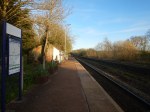
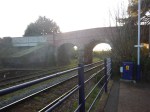
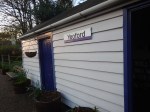
These pictures show Yeoford station to give a flavour of the line.


The Link To The Dartmoor Railway
This Google Map shows the section of the Tarka Line North from Yeoford station, which is in the South East corner.

At the village of Penstone, the Dartmoor Railway breaks off to the West to go to Okehampton station.
Under Future in the Wikipedia entry for Yeoford station, this is said.
The Dartmoor Railway plan to reopen the disused platform at the station in order to create an interchange with the Tarka Line (and thus the national network). Through running from Yeoford to Okehampton was intended to commence in 2009 but this was delayed pending the finalising of transfer arrangements with Network Rail. Accordingly, the “Sunday Rover” service run by Great Western Railway again operated on Sundays throughout the summer of 2009, although not calling here. Though the GWR summer trains have continued to operate since (running again each summer from 2013-16), agreement over the use of Yeoford as an interchange has still not been reached and it is unclear as to when (or if) this will be possible.
If this does happen, it could be the first step in opening up a second East-West route across Devon.
This page on the Dartmoor Railway web site is entitled GWR Sunday service to Okehampton and gives details of the GWR Summer Sunday service.
Reopening the old LSWR route across Devon will be driven by the following.
- New housing developments in the area.
- Tourism
- Creating employment.
- Bringing quarried materials to construction distribution depots and sites by rail.
- Creating a second route to Cornwall in case of disruption at Dawlish.
Murphy’s Law will of course apply and once the route is open, there will be no more disruption at Dawlish.
If the route is built, it will allow local trains to do a circular route from Exeter calling at the following stations in large towns.
- Crediton
- Okehampton
- Tavistock
- Plymouth
- Newton Abbott
The route would give connections to branches to Axminster, Barnstaple, Exmouth, Gunnislake, Paignton and Tiverton.
Onward To Bideford
The Wikipedia entry for Bideford station says this.
Recently, the station was included on the ATOC Connecting Communities report, that recommends closed lines and stations that should have a railway station. The report suggests the reopening of the Barnstaple – Bideford railway line.
This Google Map shows the centre of the town of Bideford.
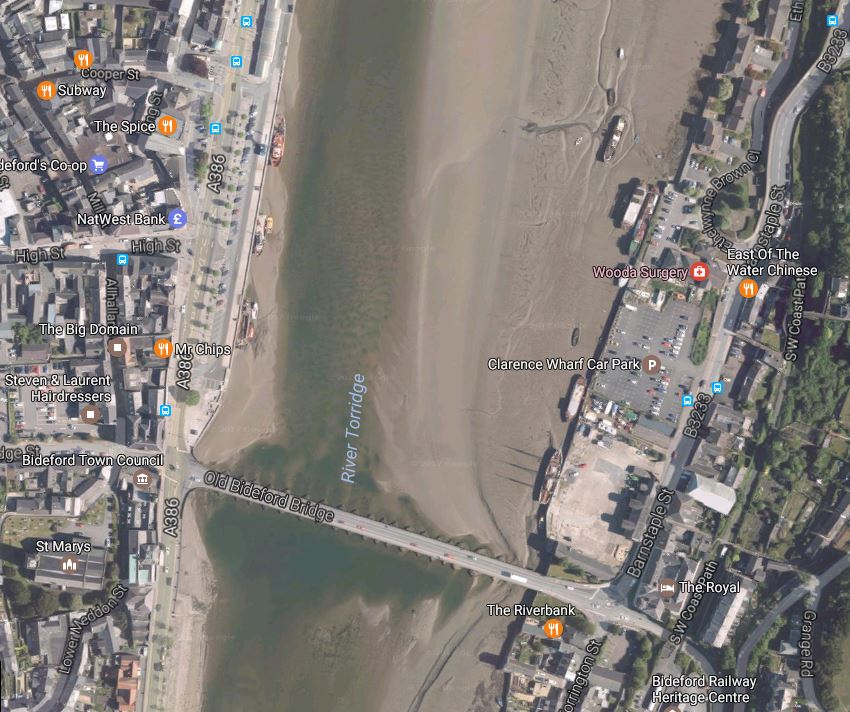
The old station was located at the site of the Bideford Railway Heritage Centre at the Eastern end of the Old Bideford Bridge.
So could the railway line between Barnstaple and Bideford be reopened?
This Google Map shows the other end of the line at Barnstaple.
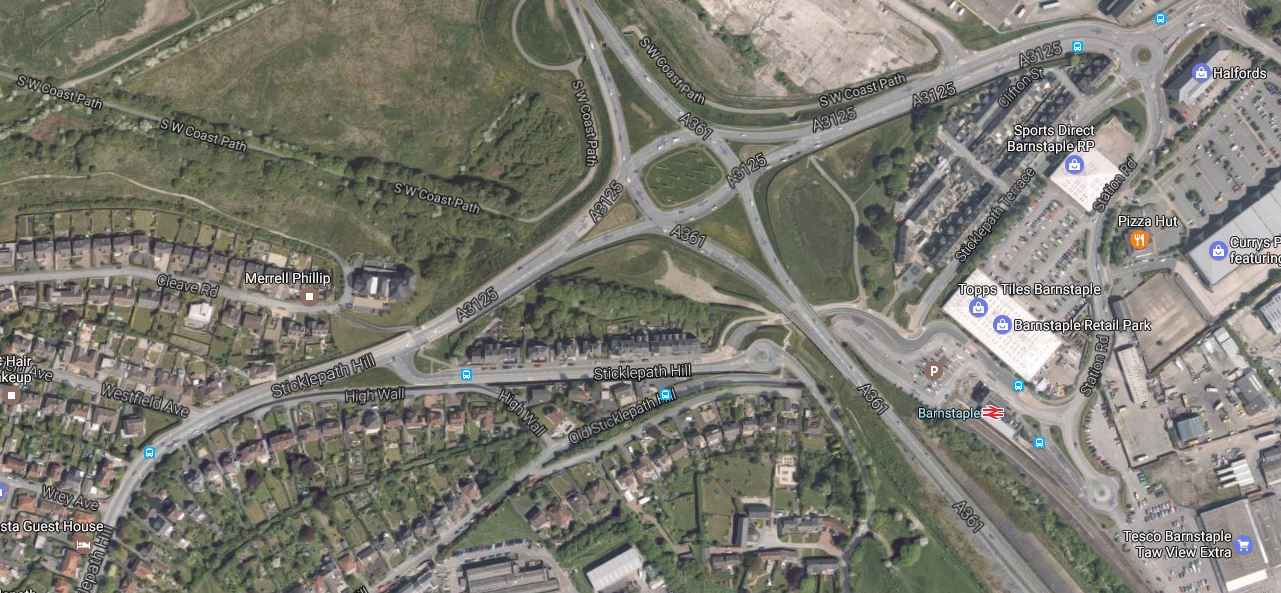
The old railway line is now used as the South West Coastal Path.
I think with traditional technology, it will be unlikely that the railway is rebuilt, as walkers and others will rightly object to noisy diesel trains or electrification of any kind, disturbing the countryside.
But as I wrote in No-Frills Mini Trains Offer Route To Reopening Lines That Beeching Shut, engineers won’t give up in providing solutions for difficult to serve places.
I believe that within ten years, a silent battery-powered train, will be ghosting its way along a single track railway between Barstaple and Bideford, that is shared with walkers and cyclists.
Remember engineering is the science of the possible, whereas politics is all impossible dreams.
Newcourt Station
Newcourt station is a new station on the Avocet Line that was opened in June 2015.
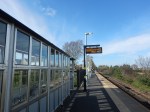
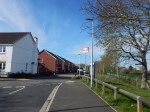
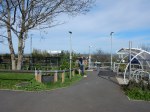
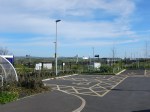
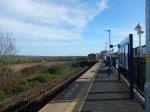
It is one of the simplest new stations I have seen.
- A single platform about to take four-car trains.
- A shelter for passengers.
- Ticket machine.
- Information display.
What surprised me was that the only parking is four disabled spaces.
As the station serves newly-built housing, I suspect that research has shown that most passengers will walk to the station.
It was certainly busy, when I passed through.
Handling The Next Generation Of Trains
The most modern train on order is the Aventra, which has been ordered by Crossrail, London Overground and Greater Anglia.
The smaller versions of these trains have the following characteristics.
- Four or five cars.
- Step-free platform-train access, if the platform is the right height.
- Wide doors and lobbies for quick loading and unloading.
- fast acceleration and powerful brakes.
- Walk-through
- Selective door opening.
I would expect trains from other manufacturers will have similar characteristics.
The platform at Newcourt station is 124 metres long, which should take most trains, but because of the selective door opening and the walk-through capability, passengers will not be too inconvenienced.
On the Avocet Line there are two trains per hour (tph), so Newcourt station should be able to handle the required four tph or one train in every fifteen minutes.
To help the driver more and more systems will appear that flag the precise speed and acceleration, so that a timetable is precisely kept.
Between Exeter And Paignton
When I got to Paddington in the morning, I found that my 10:00 train to Exeter St. Davids was going on to finish its journey at the resort of Paignton.
So as I had a few minutes, I bought myself a Devon Day Ranger ticket, from the Ticket Office at Paddington. It cost me £6.60 and meant I could start my Devon expoloration without wasting time buying a ticket in the county.
I took these pictures of my trip to Paignton.




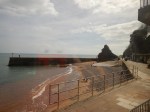

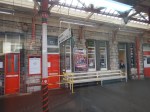

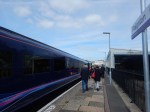
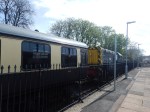
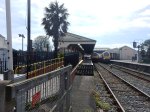


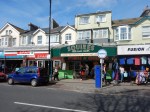

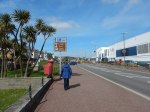
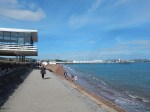
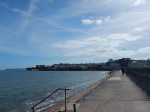



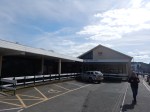
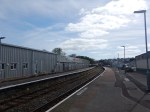
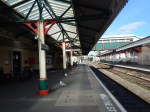

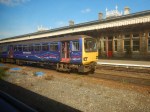

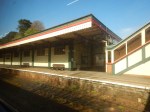
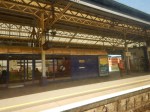
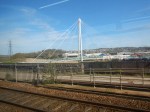
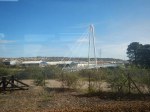
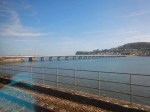
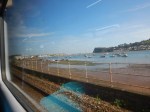
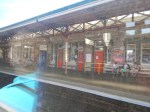
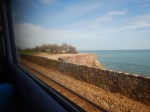
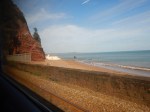
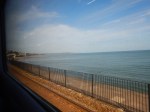
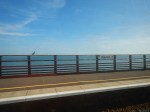
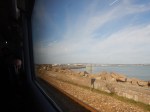
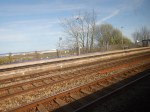
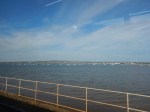
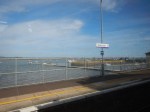
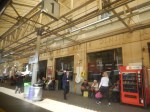
These are some thoughts on what I saw and did.
Paignton
This Google Map shows Paignton station and the road I walked down to the sea-front.
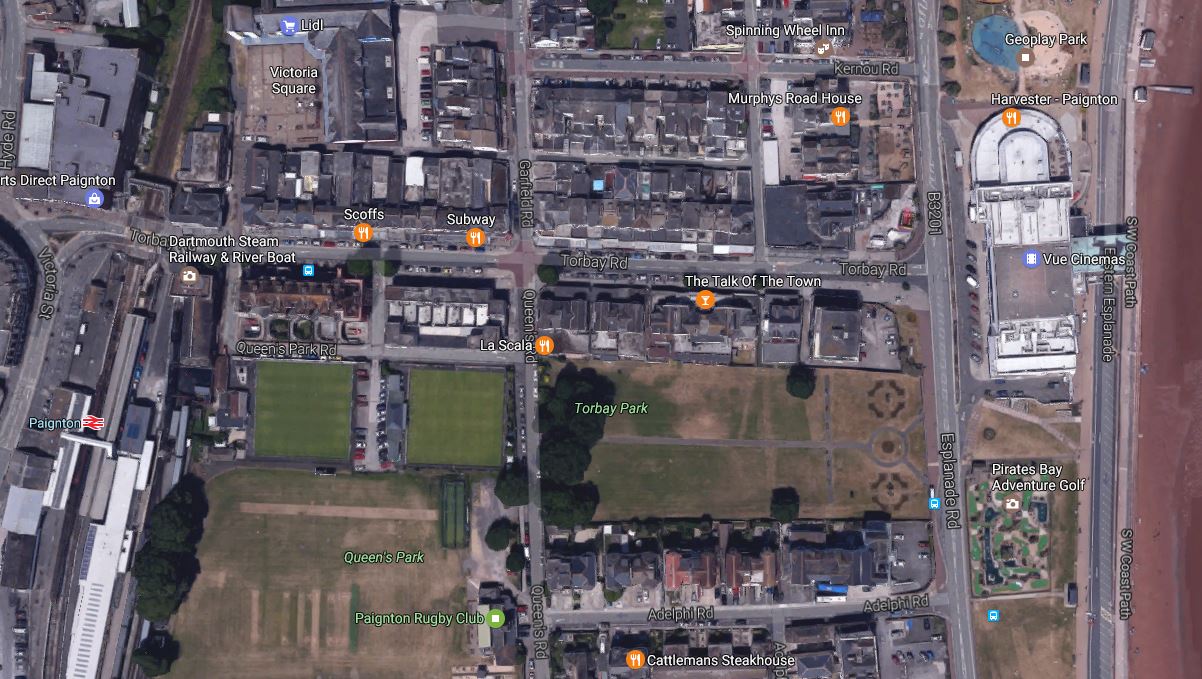
I remember that when I came in 1966, I took an open-topped bus To Brixham and back. It was a new Leyland Atlantean and it doubled as a tourist bus and local transport. In the winter they put a top on the bus.
I wonder, if they still do the same in Torbay.
The Starcross And Exmouth Ferry
There is a ferry between Starcross station and Exmouth.
Edginswell Station
Wikipedia has an entry for a new Edginswell station.
This is said.
Edginswell railway station is a proposed station in the Edginswell area of Torquay, Devon. The station would be located on the Riviera Line between Newton Abbot and Torre stations. Edginswell will be the location of employment and housing development and the new station will support this development. The station would also serve Torbay Hospital, The Willows retail park and the Torquay Gateway development area.
Plans for the station are being developed by Network Rail and Devon County Council.
Sounds good!
The Dartmouth Steam Railway
Paignton station is also the terminus of the Dartmouth Steam Railway, which goes a distance of nearly seven miles to Kingswear station for a ferry to Dartmouth.
When I visited in 1966, it would have still been part of British Rail.
Mainline rail tours still run between the National Rail network and the Dartmouth Steam Railway to travel down to Kingswear.
Developing The Riviera Line
The whole railway from Exeter to Paignton via Newton Abbott is called the Riviera Line and after the blockage of Winter 2014 at Dawlish and the subsequent rebuilding, the difficult bits are probably in the best condition that engineers could achieve.
Trains along the line from Exeter to Paignton are approximately half-hourly, but I do wonder if from Newton Abbott to Paignton more trains could be run in perhaps the summer months or at weekends.
But surely this biggest plan is this listed under Plans, in the Wikipedia entry for the Riviera Line. This is said.
In 2009 the Association of Train Operating Companies identified Brixham as one of fourteen towns for which the provision of a new railway service would have a positive benefit-cost ratio. This would be an extension of the Great Western Railway service beyond Paignton to Churston station on the Paignton and Dartmouth Steam Railway, which would then act as a railhead for Brixham. It would also serve other housing developments in the area since the opening of the steam railway, and may require the doubling of that line between Paignton and Goodrington Sands.
This Google Map shows the Goodrington Sands and Churston stations in relation to Brixham and Berry Head.
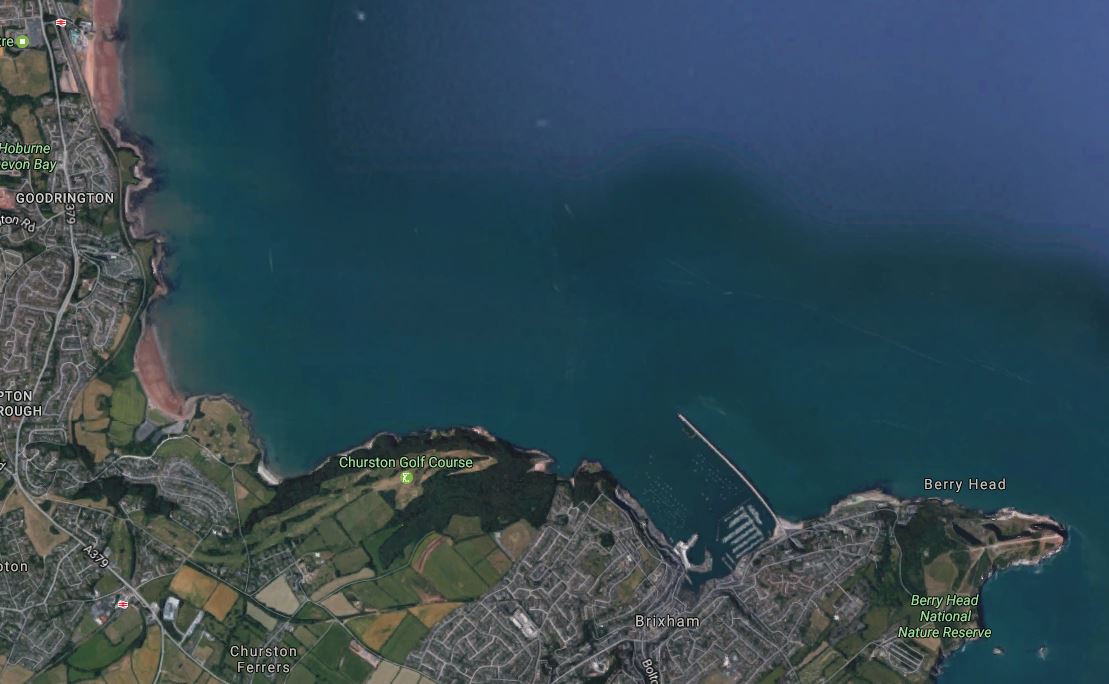
The stations are on the Western edge of the map, with Goodrington Sands at the North.
The ATOC report was written in 2009 and since then railway technology and attitudes have moved on.
- Signalling has improved, so mixing heritage services with schedule ones, isn’t as difficult as it used to be.
- Health and Safety have now developed rules that are based on risk and are less draconian.
- Train operating companies and heritage railways work together much better and realise that they’re all part of the same network and one company’s passenger is often another company’s too!
But the biggest development is trains that are used on the national network, that don’t look out of place on a heritage railway.
- Paignton is served by InterCity 125 trains. Could these be extended to Churston, as perhaps a short four-car formation?
- The unparalleled Mark 3 coach will soon be available in short rakes to be hauled by vintage diesel and steam locomotives.
- Some of the older diesel multiple units like Class 150 trains, could become available.
- There is also two rebuilt electro-diesel units; the Class 319 Flex and the Class 230.trains.
- Battery train technology would also be a serious option.
Rolling stock will not be a problem.
I would think, that if there was a proper meeting in a local hostelry, that the outcome could be that there was a local service of four trains per hour between Goodrington Sands to Exeter.
Labour Alienates The Jews And Drivers And Owners Of Diesel Vehicles
I come from mixed Jewish/Huguenot lines and my philosophy is probably humanist, although I’m a confirmed atheist.
But if I’m wrong, finding Heaven could be a bonus when I die!
This article on the BBC is entitled Labour ruling ‘fails Jewish community’, says Chief Rabbi.
Individuals, like Livingstone have no place in an inclusive political party.
This article on the BBC is entitled Date announced for London ultra low emission zone.
I am not against the ultra low emission zone, just the way that it is being brought in unilaterally in London.
We need ultra low emission zones all over the country and there is many things we can do.
- Cross-city railways and trams.
- More hybrid and electric buses when they are available at an affordable cost.
- Park-and-ride facilities.
- Trucks should be more environmentally and cyclist friendly.
- Grants will probably be needed to scrap older diesel vehicles and invest in new trucks and buses.
The one thing that is right is to bring in the zone in 2019, which will be just after the Central London section of Crossrail has opened.
There needs to be measures from Central Government, but as ever, staying in power comes first.
I have a feeling that London’s ultra low emission zone will not be good for Sadiq Khan in London, as it’s going to cause inconvenience for many in London.
Increasing Capacity On Waterloo Suburban Services
A new franchise is taking over the services out of Waterloo station to the South West.
There is an informative article in Rail Technology Magazine, which is entitled First MTR joint venture awarded South Western franchise.
I wrote about the suburban services in An Analysis Of Waterloo Suburban Services Proposed To Move To Crossrail 2.
The Services Proposed To Move To Crossrail 2
These suburban termini and their routes are proposed to be connected to Crossrail 2.
- Chessington South – 34 minutes – 9 stops
- Epsom – 37 minutes – 9 stops
- Hampton Court – 36 minutes – 9 stops
- Shepperton – 51 minutes – 14 stops
The times are for a typical one-way journey from Waterloo, which usually has a frequency of two trains per hour (tph).
But consider.
- The routes are probably timed for 75 mph Class 455 trains.
- The latest Class 707 trains are 100 mph trains and probably execute a station stop much quicker.
I would think it is highly likely that a Class 707 train could do a round trip to Chessington South, Epsom and Hampton Court stations, within an hour. For the purpose of this calculation, I’ll assume that trains to Shepperton take two hours for the round trip.
So this would mean that to execute the current 2 tph, would need the following number of five-car trains, which would work as a ten-car unit.
- Chessington South – 2×2 = 4 trains
- Epsom – 2×2 = 4 trains
- Hampton Court – 2×2 = 4 trains
- Shepperton – 4×2 = 8 trains
So a total of 20 new five-car Class 707 trains would be needed to run these four services at a frequency of 2 tph, stopping as they do now!
As they can’t do the round trip in an hour with the current stock, they need to use more trains. And drivers and depot space!
Services to Windsor and Eton Riverside
Services between Waterloo and Windsor and Eton Riverside stations currently take 54 minutes.
I don’t think it is unreasonable to expect that a Class 707 train could do the round trip in two hours.
So that means that just eight trains are needed to run the ten-car 2 tph service to Windsor.
Services On The Hounslow And Kingston Loop Lines
These seem to be timed as follows.
- Hounslow Loop – 85 minutes – 20 stops.
- Kingston Loop – 79 minutes – 22 stops
Consider.
- The services are probably timed for 75 mph trains.
- 100 mph Class 707 trains with a faster station-stop performance could save a minute at each stop.
- All the platforms on the loop have only recently been updated for ten-car trains.
I wouldn’t be surprised to see Class 707 trains, run round the Hounslow and Kingston Loop Lines in under an hour.
This would enable clockface services, simplify train scheduling and please passengers, signallers and the train operating company.
Other Services
There are other services that would benefit from Class 707 trains.
These are two examples of services out of Waterloo
- Weybridge via Hounslow and Virginia – 75 minutes – 20 stops.
- Guildford via Epsom – 71 minutes – 17 stops
Would a Class 707 train, bring these journeys under the magic hour including a turnback?
Waterloo Station
When the former International platforms at Waterloo station has been upgraded in the Summer, it will have five new Platforms 20-24.
To gain efficient access to the new Platforms, Network Rail are replacing the Eurostar tracks, with lines that enable trains to take a sneaky quick route in and out of Platforms 20-24.
These pictures show the lines going from Platforms 1 and 2 at Vauxhall station to the former Eurostar Platforms.
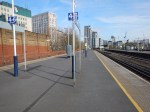

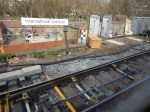
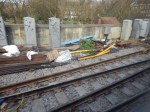
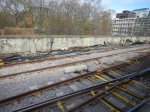
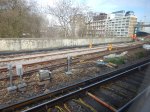
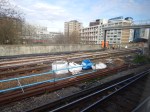
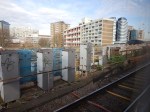
It looks like when it’s finished Platform 1 at Vauxhall will be the up platform towards Waterloo and Platform 2 will be the down platform.
Currently Platform 2 at Vauchall seems to handle services that come through Putney and Clapham Junction stations, with services going the other way using Platform 3.
According to Services in the Wikipedia entry for Putney station, typical off-peak service at the station is.
- 10 tph to London Waterloo
- 2 tph to Weybridge, calling at all stations via Hounslow.
- 2 tph fast to Windsor & Eton Riverside, calling at Richmond, Twickenham, Whitton, Feltham and all other stations.
- 2 tph taking the Kingston Loop Line via Richmond to return circuitously to Waterloo
- 2 tph in each direction round the Hounslow Loop Line to return circuitously to Waterloo
- 2 tph between Waterloo and Reading, which go through without stopping, but they stop on Sundays.
This means that there are 12 tph in both directions from Putney to Waterloo via Clapham Junction and Vauxhall.
It does look that after all the work is finished, these services will go into the rebuilt Platforms 20-24.
Will the various services be given their own platforms in Waterloo?
It would be a way of increasing passenger throughput in the station at busy times, as commuters would know that their trains always used the same platform. Simple and efficient!
It could be done with all services and I think this is done to a certain extent now.
Conclusion
South West Trains new fleet of thirty Class 707 trains is sized to run the services to Chessington South, Epsom, Hampton Court, Shepperton and Windsor and still leave a couple of spares for breakdowns and maintenance.
This calculation shows that you can sometimes replace a large number of 75 mph trains with a significantly smaller number of 100 mph units and still attain the same service frequency.
As they have just lost the franchise, I feel a little bit sorry for Stagecoach. But not that sorry!
An Overview Of Headbolt Lane Station
Headbolt Lane station is Merseyrail’s solution to connecting the single-track Kirkby Branch of the Northern Line to the double-track Kirkby Branch Line from Wigan Wallgate station in an efficient manner.
At present at Kirkby station, the following happens.
- The two lines meet head-on at Kirkby station, which is less than satisfactory, with a walk along a shared platform to change trains.
- The service between Liverpool and Kirkby is a Turn-Up-And-Go four tph.
- The service between Kirkby and Wigan Wallgate and Manchester is just one tph.
- Also, I’m also not sure of the quality of the facilities at Kirkby station.
, So hopefully a new station at Headbolt Lane would offer advantages.
- It would be a better-equipped station.
- Interchange would be cross-platform.
- The trains would be timed to be in the station at the same time.
- The trains can double as waiting rooms, whilst waiting for passengers.
- Ideally the frequencies on both branches would be the same at four tph.
I reckon that the current trains would take about the same four minutes to go from Kirkby to Headbolt Lane as they do between Fazakerley and Kirkby, as the distances are similar. So as the current trains seem to stop quickly at stations according to the timetable, perhaps a time of ten minutes between Fazakerley and Headbolt Lane is on the cards..
So given the need for the driver to change ends at Headbolt Lane station, it looks like the timings available with the current trains are not fast enough to allow the line to be extended to Headbolt Lane station and maintain the current four tph.
Four tph could probably be achieved if the line was made double-track or if a second turn-back platform were to be provided at Headbolt Lane station.
But all that would cost money.
But help would be at hand, in that the faster new Stadler trains,with their ability to stop and get going again very quickly, would probably be designed to execute the turnback fast enough to keep the four tph service.
So it might appear that the consequence of this, is that Headbolt Lane station can’t be served by Merseyrail at four tph, until the new Stadler trains are delivered, unless the Class 507 trains are faster than they appear and the drivers know how to squeeze out their maximum performance.
One complication could be that services to Skelmersdale will pass through the station.
But this would probably ease the provision of four tph to and from Liverpool, as Skelmersdale would offer another station, where trains could be turned back, if say two tph turned at Headbolt Lane and two tph at Skelmersdale.
It might be that extension to Skelmersdale and making Headbolt Lane the turnback station for Kirkby need to be done together to get four tph from Kirkby to Liverpool with the current trains.
Before I leave the subject of Headbolt station, the question has to be asked, if trains can run directly between Liverpool and Wigan Wallgate.
Some would argue, that if you were doing that route, you’d go from Liverpool Lime Street to Wigan North Western, but what if you live at Kirkdale and your mother lives in Wigan?
As I believe that lines like these need a Turn-up-And-Go four tph, and I believe Merseyrail think the same way, then the best solution is to provide four tph both ways from Headbolt Lane station and make sure that passengers can just walk across to continue their journey.
Conclusion
I have come to the conclusion, that four tph from Kirkdale to Manchester is possible with a cross-platform change at Headbolt Lane station.
Southport Station
Southport station is surprisingly large with six platforms, as these pictures show.

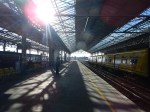
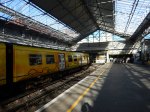
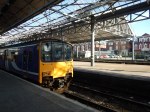
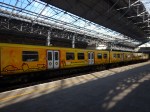
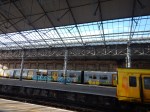
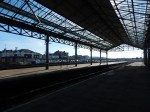
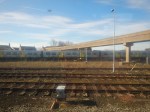
It would certainly have sufficient capacity, if Merseyrail decided to extend their Ormskirk services to Southport.
Interchange At Burscough
Burscough in Lancashire is a large village, where the Manchester to Southport Line and the Ormskirk Branch Line cross.
This Google Map shows the two stations; Burscough Bridge on the line to Manchester and Burscough Junction on the line through Ormskirk.
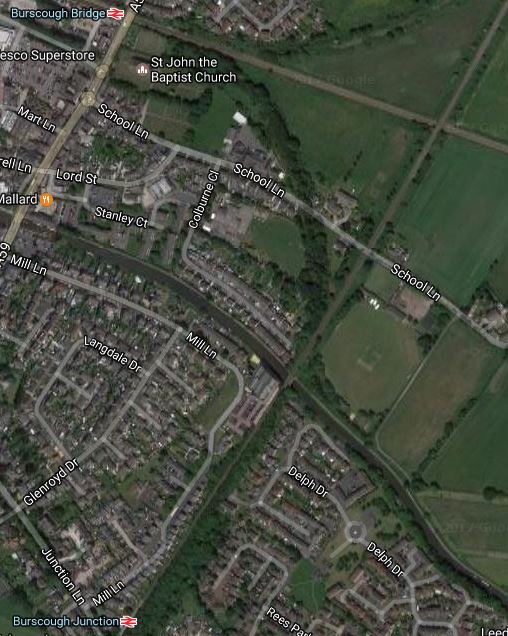
The maps show shadows of railway embankments, which are the remains of the Burscough Curves, that once connected Ormkirk station in the South and Preston station in the North to Southport in the West.
In Extra Services To Southport On Merseyrail’s Northern Line, my calculations brought me to the following conclusions.
Combining Merseyrail’s Northern Line services to Southport and Ormskirk in a loop via a reinstated South Burscough Curve, means the following.
- Southport gets eight trains per hour (tph) to and from Liverpool – 4 tph via Formby and 4 tph via Ormskirk.
- Ormskirk gets four tph to and from Liverpool.
- All stations on the Northern Line get four direct or single-change tph from Hunts Cross, Southport and Liverpool Central stations.
- Ormskirk to Southport and all intermediate stations get 4 tph in both directions.
- The service can be run by less trains than needed for independent operation from Liverpool to Southport and Otmskirk.
Southport to Ormskirk needs third-rail electrification.
There were a some subsidiary conclusions.
- Ormskirk station can be based on a single platform with a passing loop, which could allow Liverpool-Preston services.
- Ormskirk station could still run the current Ormskirk to Preston service.
- The third-rail electrification between Southport and Burscough Bridge stations could be used by Class 319 Flex train,.working services between Southport and Manchester.
- Southport could become an all electric station.
I suspect that others could do much better.
So it does show that British Rail dropped everyone deep in the doo-dah, by closing the South Burscough Curve to passenger trains in 1962.
Walking Between Burscough Bridge And Burscough Junction Stations
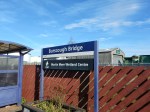
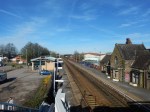
This set of pictures shows how I walked between to Burscough Junction station from Burscough Bridge station after arriving from Southport.

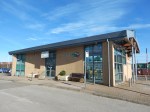

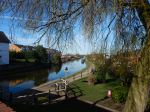
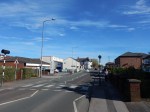

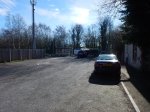
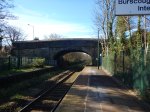
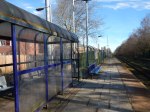
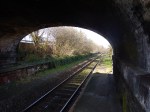
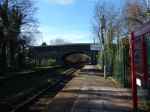
I did the walk in time, but with one tph between Ormskirk and Preston, I wonder how many people try it and then wait for nearly an hour to catch a train.
Pictures Of The Burscough Curves
From the train, I took these pictures of the Burscough Curves.




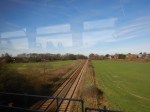



At least the bridges appear to be there.
Electrification Of The Burscough Curves
There are three bridges in the tangle of lines around Burscough, that could have electrified lines go underneath.
- The bridge at Burscough Bridge station.
- The bridge at Burscough Junction station.
- The bridge where the two rail lines cross.
Looking at the pictures of bridges 1 and 2, I think that they would have to be rebuilt for 25 KVAC overhead electrification, but only at great inconvenience to the local community.
I also suspect that bridge 3 is rather old but in good condition. Is it low as well?
Third-rail electrification around the South Burscough Curve to allow Southport to Ormskirk services, would be fine, if Health and Safety would allow it as an extension to Merseyrail’s Northern Line.
The Class 319 Flex Train
I must give a brief list of the characteristics of the Class 319 Flex train.
- Four cars
- Full dual-voltage electrical system, enabling running on 750 VDC third-rail or 25 KVAC overhead electrification.
- On-board rail-proven diesel engines for lines without electrification.
- The Class 319 Flex is a 100 mph train using electrification.
- The Class 319 Flex is a 90 mph train using diesel.
- It is probably reasonable that at each stop, they save at least a minute compared to a Pacer or a Class 150 train.
- They can deputise for electric Class 319 trains on electrified lines.
They are compatible with the West Coast Main Line and Merseyrail’s third-rail network.
Electrification Of Southport To Manchester
If Burscough Bridge to Southport were to be electrified using third-rail for Merseyrail, then it would probably be sensible to use it for the trains on the Manchester to Southport service, on the section of line they would share.
Currently trains take the following times.
- Southport to Burscough Bridge – 12 minutes.
- Burscough Bridge to Wigan Wallgate – 16 minutes.
- Wigan Wallgate to Bolton – 17 minutes
- Wigan Wallgate to Salford Crescent via Atherton – 34 minutes
By the end of this year, Bolton should be electrified to Manchester Piccadilly, Victoria and Airport stations.
Dual voltage Class 319 trains could probably work from Manchester to Southport with a voltage changeover at Burscough Bridge, if overhead electrification went that far.
But that is unlikely to happen in the near future.
Southport To Manchester By Class 319 Flex
But as Northern will have Class 319 Flex trains with a dual-voltage capability and on-board diesel engines to bridge any electrification gaps, we could be seeing Southport to Manchester services running as follows.
- Southport to Burscough Bridge – 750 VDC third rail.
- Burscough Bridge to Bolton or Salford Crescent – diesel.
- Bolton or Salford Crescent to Manchester – 25 KVAC overhead.
Hopefully, extra electrification in the future, will shorten the diesel leg.
Southport To Wigan Wallgate By Class 319 Flex
Before looking at times for the full journeys from Southport, I will look at the possible times that can be achieved by a Class 319 Flex train between Southport and Wigan Wallgate.
For this estimate, I will use or assume the following.
- Current timings betweens Southport to Wigan Wallgate are probably timed for a 75 mph Pacer.
- Fast services, which go to Manchester Airport, take 28 minutes and stop five times
- Slow services, which go to Manchester Victoria, take 36 minutes and stop eight times
- There is no electrification .
- The service will be run on diesel power.
- There are no other services between Southport and Wigan Wallgate.
I have taken a detailed look at the line on a map and it is a fairly straight double track railway with a couple of level crossings.
It is reasonable to assume that the Class 319 Flex train with its faster stops could save five and eight minutes for fast and slow services respectively.
This compares with five and six minutes if you adjust times by the speed of the trains.
So it would be reasonable to assume that a fast service between Southport and Wigan Wallgate will take perhaps between 22-23 minutes, with a slow service taking 28-29 minutes.
If Southport to Burscough Bridge were to be electrified for Merseyrail Northern Line services, I think it is reasonable to assume that these figures could be reduced by a couple of minutes.
Add in a few selective improvements and the removal of the level crossings and I would expect that Class 319 Flex trains could achieve the following times between Southport and Wigan Wallgate.
- A fast service with five stops in twenty minutes, which is a reduction of eight minutes.
- A slow service with eight stops in twenty-five minutes, which is a reduction of eleven minutes.
Would Northern be tempted to run four tph on the route?
Kirkby To Wigan Wallgate By Class 319 Flex
Can the same logic, that I have applied to the Southport to Wigan Wallgate route be applied to Kirkby to Wigan Wallgate?
For this estimate, I will use or assume the following.
- Current timings betweens Kirkby to Wigan Wallgate are probably timed for a 75 mph Pacer.
- Services take 24 minutes and stop four times
- There is only one tph, which after Wigan Wallgate goes on to Manchester Victoria.
- There is no electrification .
- The service will be run on diesel power.
- There are no other services between Kirkby and Wigan Wallgate.
I have taken a detailed look at the line on a map and it is a fairly straight railway with a mixture of single and double track, a longish tunnel and some stone overbridges. It could be difficult to electrify.
It is reasonable to assume that the Class 319 Flex train with its faster stops could save four minutes on the jorney.
This is the same, if you adjust times by the speed of the trains.
A time of twenty minutes between Kirkby and Wigan Wallgate, should be easy to attain.
Southport To Manchester Airport By Class 319 Flex
For this estimate, I will use or assume the following.
- On current timings Southport to Manchester Airport takes 88 minutes, which is probably timed for a 75 mph Pacer.
- Manchester to Preston electrification via Bolton is completed.
- The service goes via Bolton
- Southport to Bolton will be run on diesel.
- Bolton to Manchester Airport will use the wires.
- Southport to Wigan Wallgate can be done in twenty minutes.
From Wigan Wallgate to Bolton, consider the following factors.
- There will only be a maximum of two scheduled passenger trains between Southport and Bolton on any part of the route, if you include Kirkby services.
- There is just two stops.
- The current time is 17 minutes.
Dropping the time in proportion to the train speed gives about 14 minutes
But the biggest savings will come out of the 43 minutes from Bolton to Manchester Airport, which will be electrified.
Unfortunately, I can’t find any reliable estimate of the electrified timing between Bolton and Manchester Airport.
An estimate based on train speed, says that a Class 319 running using electricity could do the journey in 36 minutes.
Adding up the various legs gives 20+14+36=70
So we could be looking at a saving of a eighteen minutes or so from Southport to Manchester Airport.
Currently, the service takes 88 minutes, which means an out-and-back service is probably twenty minutes or more over three hours.
But knock a eighteen minutes off each leg and the out-and-back time could be well under three hours.
An hourly service between Southport and Manchester Airport could probably be achieved with just three trains in a time dropping around seventy minutes.
Northern would love that!
Southport To Manchester Victoria By Class 319 Flex
For this estimate, I will use or assume the following.
- On current timings Southport to Manchester Victoria takes 79 minutes, which is probably timed for a 75 mph Pacer.
- The service goes via Atherton
- Wigan Wallgate to Manchester Victoria takes 41 minutes with 8 stops.
- Southport to Salford Crescent will be run on diesel.
- Salford Crescent to Manchester Victoria will use the wires.
- Southport to Wigan Wallgate can be done in twenty minutes, which means that 61 minutes is possible for Southport to Manchester Victoria
There isn’t the scope for saving time because of electrification, as the wired area is short,
But consider.
- The Class 319 train was designed as a 100 mph commuter special, so it must be able to save at least a minute at most of the stops, by good driving making use of the train’s excellent brakes and acceleration.
- Southport to Salford Crescent via Atherton only carries two tph, if you include the Kirkby services.
Two estimates can be generated.
- Saving a minute a stop gives a time of 53 minutes.
- Applying a rough calculation based on the increased performance of the Class 319 Flex train gives a time of 54 minutes.
If I were the boss of Northern, I’d be dreaming of a journey time of sixty minutes between Southport and Manchester Victoria.
It’s not impossible, providing that the Class 319 Flex trains can cut the time on the Southport end of the line.
Why Not Electrify Both Routes To Wigan Wallgate From Manchester?
There are two routes between Manchester and Wigan Wallgate station.
- The soon to be partially-electrified route via Bolton.
- The Atherton Line from Salford Crescent.
If these routes were to be electrified, it would mean that all Southport and Kirkby services to and from Manchester would be electrified South of Wigan Wallgate.
This would mean various service improvements.
- All Southport and Kirkby services would be run by four-car Class 319 Flex trains.
- Southport to Manchester Airport would be under seventy minutes.
- Southport to Manchester Piccadilly would be under sixty minutes.
- Southport to Manchester Victoria could be around fifty minutes.
- Kirkby to Manchester Victoria could also be around fifty minutes.
- Extra services could probably be run to intermediate stations, to give a highly-desirable four tph.
I don’t known how much freight and other traffic there is on these routes, but as they are both electrified at their Manchester ends, I don’t think that electrification would be that difficult.
Electrification from Manchester to Wigan Wallgate and using Class 319 Flex trains might be a simpler and more affordable strategy than electrifying all the way to Southport and Kirkby.
As both routes connect Salford Crescent and Wigan Wallgate stations, there’s even scope to divert services during any blockades, needed for the electrification.
How Will Ormskirk To Preston Services Be Affected?
The first part of this section starts with a repeat of what I said in Could Kirkdale Station Become A Busy Interchange On Merseyrail?
The current service between Ormskirk and Preston, is an occasional hourly train along the line. Often it is just a single Class 153 train, although last time it was two.
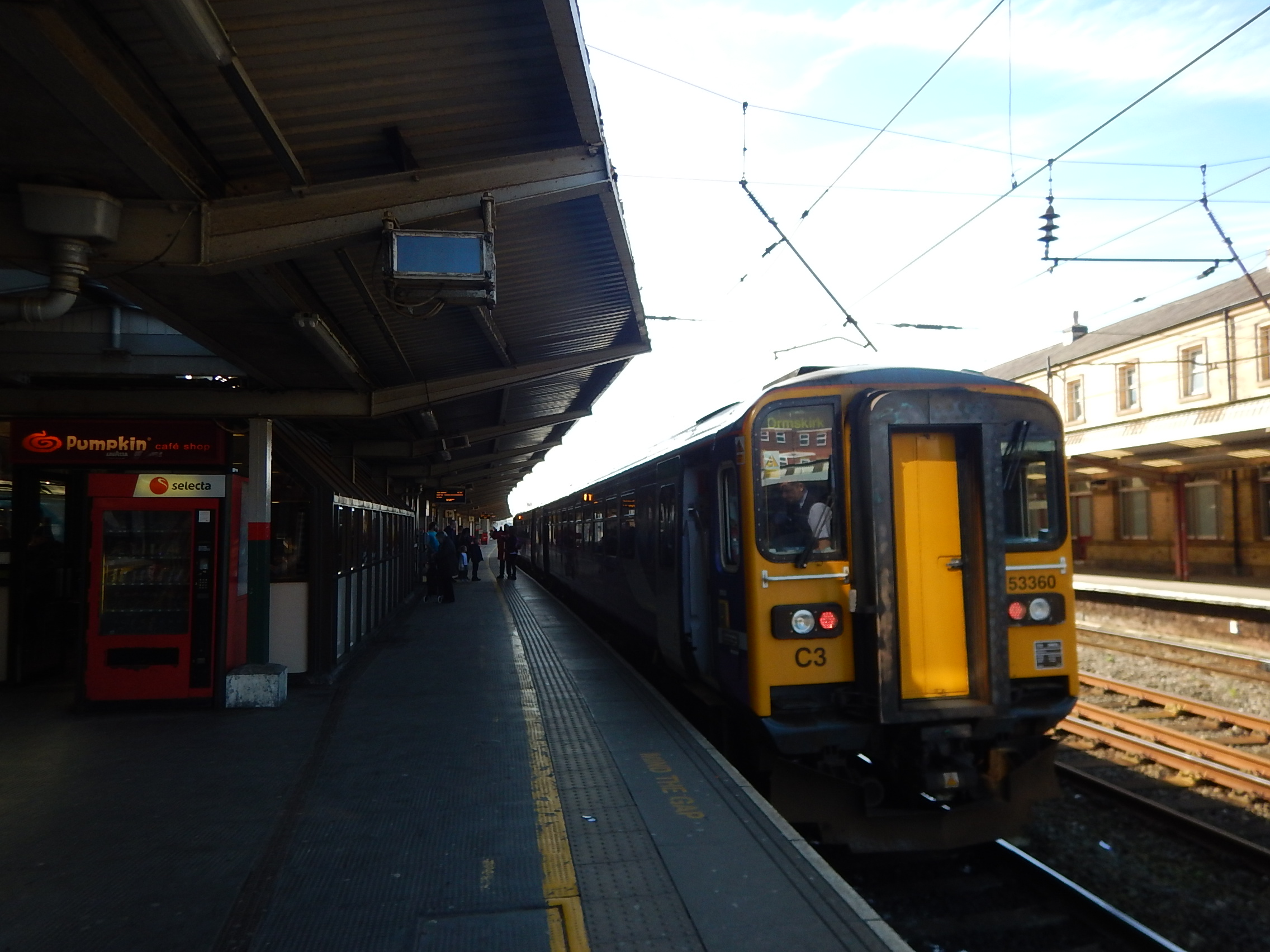
It was also surprisingly clean and full.
But the line deserves better.
- The frequency of trains should be at least 2 tph to Preston
- They should also connect better with trains to Liverpool and Southport.
- Could the trains go beyond Preston?
Perhaps the solution is to link trains between somewhere like Kirkdale and Colne or Blackpool.
I suspect that Merseyrail have their own ideas.
The current service takes 30 minutes between Ormskirk and reston and its likely with some track improvements, that a Class 319 Flex train could reduce this time to perhaps 20-22 minutes.
This time saving would be an advantage, as it would allow a train to shuttle between the two stations maintaining an hourly clockface schedule, which could be timed to arrive at a convenient point in the schedule of trains going between Liverpool and Southport.
There are probably three main patterns for the Preston train.
- They shuttle Preston-Ormskirk-Southport-Ormskirk-Preston using reverses at Ormskirk(2) and Southport.
- They shuttle Preston-Ormskirk-Southport-Preston using reverses at Ormskirk and Southport and a reinstated North Burscough Curve.
- They shuttle between Preston and Ormskirk as now.
Option 1 would just take longer than an hour to return to Preston and the driver would have to do a lot of walking.
Option 2 would probably have the problems of Option 1 and the expense of reinstating the North Burscough Curve.
Option 3 would probably work with perhaps a passing loop added to the current platform layout, as I proposed in Extra Services To Southport On Merseyrail’s Northern Line.
In the following consider that the long platform at Ormskirk is divided into two.
- The Liverpool platform is the part of the platform that handles trains to and from Liverpool
- The Preston platform is the part of the platform that handles trains to and from Preston
This could be the sequence of arrivals and departures.
- xx:00 – Train arrives from Preston into the Preston Platform and drops passengers for Liverpool and Southport.
- xx:04 – Train arrives from Southport and waits at the entry to the passing loop behind the train from Preston.
- xx:05 – Train arrives from Liverpool into the Liverpool Platform and departs for Southport after dropping and picking up passengers.
- xx:08 – Train from Southport uses the passing loop to move to the Liverpool Platform and departs for Liverpool after dropping and picking up passengers.
- xx:10 – Train departs for Preston from Preston Platform, after picking up passengers from Liverpool and Southport.
In this set of movements, the only driver who has to change ends, would be the driver of the Preston shuttle train and they would have ten minutes or so in which to do the walk.
Get the sequence right and passengers would only wait for a few minutes, whilst changing trains.
The only complication would be that the train from Liverpool would have to pass the train from Southport waiting to enter the station.
It would need some form of double passing loop, which is probably standard practice.
There are obviously other solutions, that use the current single platform at Ormskirk, without the need to add any new infrastructure at the station except for some appropriate track and signalling changes.
Conclusions
To my untrained eye, it looks like reinstating the two Burscough Curves wouldn’t be the most difficult of projects.
But electrifying through the area, could be tricky for the following reasons.
- Some of the bridges might need to be rebuilt for overhead electrification.
- Merseyrail would want third-rail electrification to allow Ormskirk and Southport services to be run as a loop for maximum efficiency.
- Health and Safety.
And critics wonder why Network Rail are so costly and slow with electrification.
But there is one place for more electrification.
Services to Southport and Kirkby would be improved, if the routes to Wigan Wallgate from Bolton and Salford Crescent were both both fully electrified.
This would bring Manchester Piccadilly and Victoria within an hour of both Southport and Kirkby.
To sum up the following should be done.
- Reinstate the South Burscough Curve.
- Electrify Ormskirk to Southport using third-rail electrification.
- Electrify Bolton to Wigan Wallgate using overhead electrification.
- Electrify Salford Crescent to Wigan Wallgate using overhead electrification.
- Northern would also need to acquire some more Class 319 Flex trains.
In the interim, it looks like that just running the services between Manchester and Southport using the Class 319 Flex trains will give Northern and its customers a lot of benefits.
In the future, Northern might like to replace the stop-gap Class 319 Flex trains with bi-mode versions of their new Class 331 trains.
 The Anonymous Widower