The Get You Home Ticket
This is very much a London problem, although there may be other places in the UK, where the problem occurs.
If I want to go to the football at Ipswich on a Tuesday night, I have three choices.
1. Go early before the rush hour restrictions apply. I can use a cheap day ticket and come back on any train after the match. The problem of this, is that I have over two hours to wait in the town and there is nothing there, that I want to visit. I can’t even have a meal, as there is no gluten-free restaurant in the town centre.
2. Book a seat on a rush hour train and pay more. I can though book a cheap return, if I nominate the train I want to return on. but this method can’t be used, if there might be extra time in a cup match. It also restricts me from having a drink or a snack after the match with friends.
3. Book a rush hour ticket and buy an off peak single for the return before I travel, as they are not available in Ipswich. It’s all due to the old Network south East regulations I’m told. Some London fans deliberately split the journey and use two tickets to get better prices.
It’s not just a football probem. Suppose you live and work in London and a relative in Ipswich is ill in hospital. Or perhaps you want to visit the town to have dinner with friends. In many cases you won’t know when you want to return, so you won’t be able to book a cheap return, if you have to travel in the rush hour.
Many will drive for an evening visit, but then there are also many like me who either can’t drive or don’t have a car.
As an example, I shall be going to Ipswich for the Northampton match on the 9th August. Prices are as follows.
Travelling up during the rush hour, second with a railcard will cost £19.80 or £26.95, if I want to go on the comfortable Norwich train with a seat reservation. Coming back after about 22:00, if I advance book it’s £5.30 on a specfic train or £22.30 if I don’t book a train.
I could of course travel up before the rush hour and use an off-peak return. But the problem here is that the last train is 22:43. There is a later one you can book on-line, but it gets into London at 05:55, so you wouldn’t use it anyway.
I think unless the mastch goes to penalties and there is a floodlight failure 22:43 is OK. I should add, that when Ipswich played Leicester in the snow, it appeared that National Express East Anglia put on a soecial train to mop up the stragglers because of the weather.
I think the solution might be an evening return with a get you home option! So if you needed to go to Ipswich for the evening in the rush hour, you would pay the current price for the journey out and you would pay an appropriate price for the return. A price of half the off-peak return, might be sensible. There might be some restriction, such as the return path was only valid after 21:30.
But whatever is offered is better than the cost of £22.30 that is currently the cheapest flexible fare. It would of course be a walk-up fare at the ticket office.
It may have marketing advantages, as no-one would book say a walk-up ticket to Ipswich returning that day for travel in the rush hour. But a ticket which was affordable on a spur-of-the-moment basis, might attract travellers.
I acknowledge that train companies aren’t charities, but I’m not asking for any discount on the outward rush hour journey and they might actually have more passengers on the rather empty late night trains.
What We’re Good At!
I was very pleased when I read the third leader in The Times today, entitled Capital Idea.
This was the first paragraph.
After the on-time and underbudget Olympic Stadium, yesterday brought the opening of the Hindhead Tunnel on the A3, on the main route between London and Portsmouth, on time, on budget and garlanded with awards for its safety record. Britain is in danger of getting a reputation for being good at large infrastructure projects.
I could add another couple of projects like the London Overground, where the engineers delivered quality at a price well under the budget.
New Platforms at Cambridge
I said in an earlier post, that I will use the Tottenham Hale route more to get to Cambridge, as it is only slightly slower and the trains are better and have wi-fi.
I think though I’ll give myself a bit of time for journeys, as new platforms are under construction at Cambridge and I was delayed slightly getting into the station.
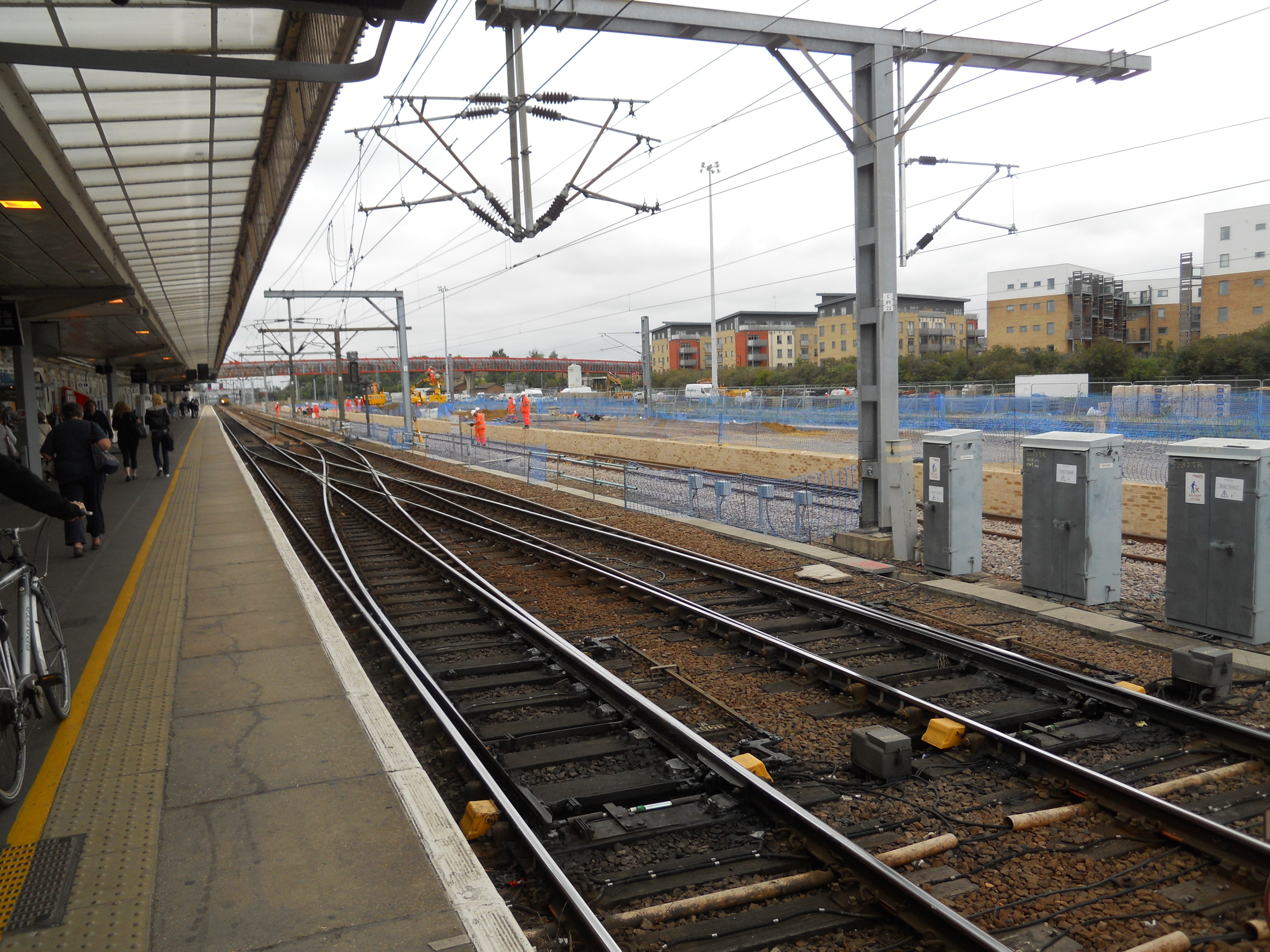
New Platforms at Cambridge
Hopefiully, when the platforms are completed before the end of the year, it will make things a lot easier. Although, there are rumours that the lifts to get to the two new platforms won’t take bikes, so getting across might not be the smooth up and down it should be.
The Train Ticket Nightmare
Yesterday I needed to go to Bury St. Edmunds from London for an appointment at 11:00. I booked on the Internet and the National Express East Anglia web site, sold me an Off-Peak Single with a Senior Railcard leaving at 08:10 for £23.50. For some reason, when I picked up my ticket, I asked an inspector and he said I couldn’t use the ticket, as Senior Railcards aren’t valid until 09:30. So I purchased an upgrade for £18.40, as I wanted to avoid the fine he promised me.
I got to Bury on time after a good journey and particularly liked the new Class 379 train from London to Cambridge.
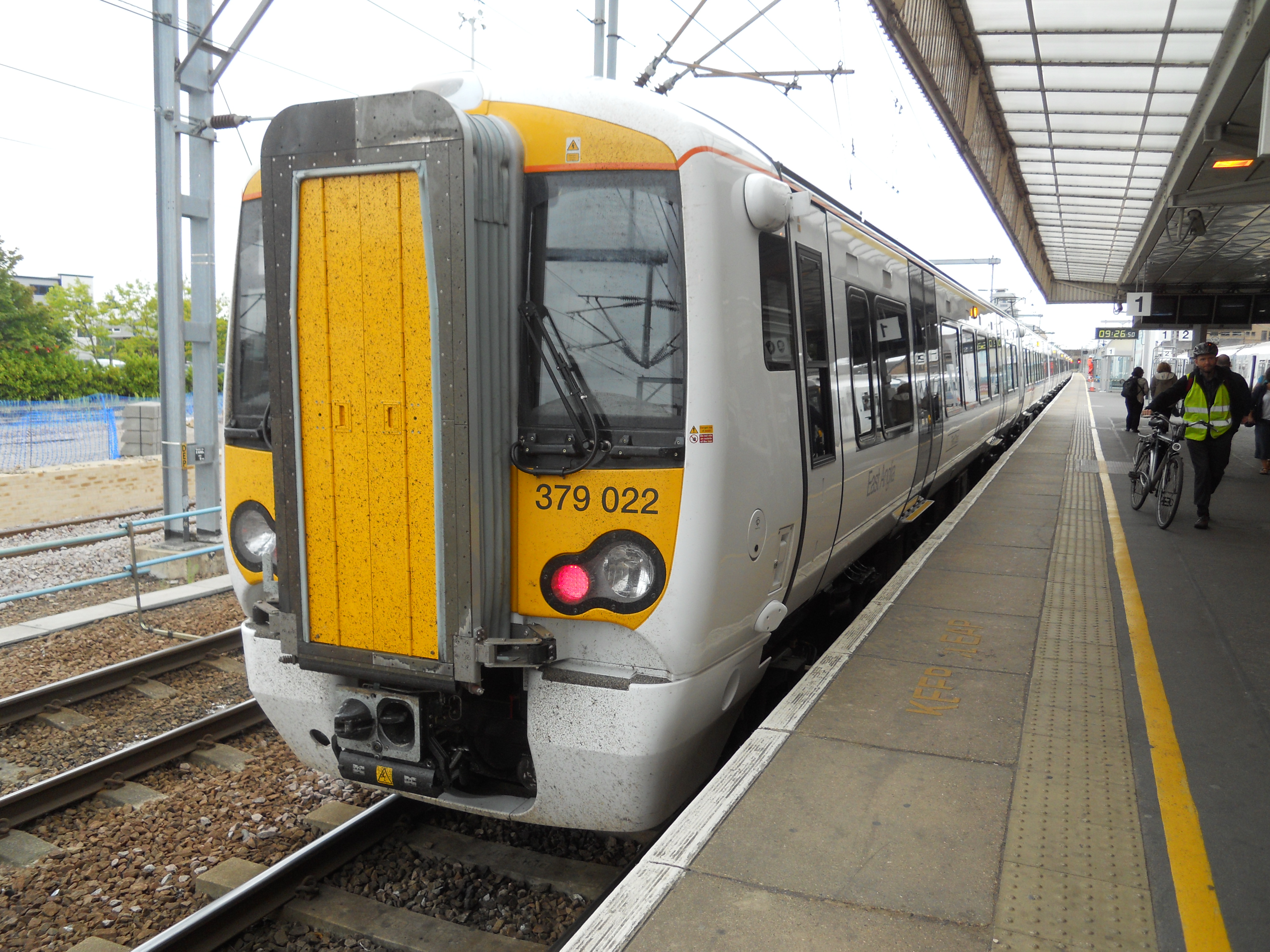
New Trains from Liverpool Street to Cambridge
The inspector though on the Cambridge to Bury train had told me that I had been overcharged £4.00 at Tottenham Hale.
So something is wrong. Either the web site gave me the wrong information and sold me a ticket I wasn’t entitled to or the National Express East Anglia rule book given to their inspectors doesn’t reflect the web site.
When I got home, I investigated buying the same ticket for today. It would have cost me £23.50.
I should say, that if they can get the pricing right, I will travel to Cambridge this way, as the trains may take longer than those from King’s Cross, but they are much more comfortable and have even have wi-fi. Although, I couldn’t use it yesterday, as I didn’t have my computer with me.
Who’d Want To Run A Railway?
We sometimes criticise train companies because of poor performance, but then who could run a reliable service with people like this around?
I hope that he at least gets prosecuted for being drunk in charge of a scooter.
More Bad News For Bombardier
Bombardier may think that as they’ve built the new Victoria line trains for London Underground, that getting the orders for the Picadilly and Bakerloo lines will be very much a follow on.
That was until I saw this proposal from Siemens. The trains would offer a bigger capacity, have a through walkway, be quite a bit lighter and use 20 percent less energy. They might even be air-conditioned. Incidentally this looks very much like a proposal I saw on the London Underground web site about seven or eight years ago, proposed by their own engineers.
Incidentally , Bombardier’s new trains for the Victoria line are not cracked up to what they should be, and I know quite a few passengers on the line, who prefer the old trains built in 1967.
So perhaps they lost the Thameslink contract because their proposal wasn’t technically as good as that of Siemens.
You have to remember too that the Thameslink contract was under PFI rules laid down by NuLabor. As the rating agencies reckon that Siemens are a better financial risk than Bombardier, the finance part of the deal was more expensive for Bombardier, so their proposal would have been more expensive. In fact their consortium would have been paying an extra 1.5% a year for financing the deal compared to Bombardier.
From London and Crewe to Dublin By Train and Ferry
Ireland has an economic problem, as is well known. Commentators will argue the various reasons, but something that doesn’t help is that getting from Great Britain to Eire is not as easy as to get from Birmingham to Scotland. There are lots of flights, but they are not convenient or acceptable for everyone who wants to travel.
If you go to Dublin by train and ferry there is one train at 9:10 in the morning from Euston, that gets you to Dublin at 17:15, which is a journey time of eight hours and five minutes. I looked for tomorrow and the fare is only £32 one way. But there is only one service during the day, with another overnight.
So how fast could a service be done if the line was electrified all the way to Holyhead? Crewe from Euston can be done in two hours quite easily and it is only 84 miles from Crewe to Holyhead. The fastest services now take just short of four hours. but the trains are not electric or have the smooth ride of an IC125. The fast ferries take two hours for the crossing, but the larger slower ones take three hours fifteen minutes.
If we assume that Crewe to Holyhead can be done at a similar speed as Liverpool Street to Norwich, it would appear that a time of about one hour ten minutes could be obtained on this part of the route. So this would mean a time from London of three hours ten minutes in a smooth modern electric train. If this could be paired with a fast ferry this could mean a time of under five and a half hours if the sea conditions were good enough.
But this is more than about electrifying the North Wales Coast line, which it would appear that the Welsh Assembly would probably like to do. It is about kick starting the Irish economy. And that of North Wales too!
So surely instead of spending billions of euros propping the Irish up, wouldn’t it be better to spend use of that money to connect Eire to Europe more efficiently. After all, railwise, despite what some might believe, the UK is actually part of Europe.
It would be 84 miles of electrification and perhaps a subsidy to the Holyhead to Dublin ferries to make sure that the fast service was every three hours or so. Surely, that would be a more affordable option, as it would also benefit North Wales, which is not one of the more prosperous parts of the EU.
But it is not just about London to North Wales and on to Dublin. Properly built the line would also connect Birmingham, Liverpool and Manchester to North Wales. As an example Liverpool to Holyhead would be under ninety minutes, which is the magic time that makes day trips easy. I also think it would make trips between North and South Wales quicker, but it would probably mean a change at either Chester or Shrewbury.
There are also other issues on the horizon. The major sources of employment on Anglesey, are the nuclear power station at Wylfa and the aluminium smelter. Who knows what will happen in the next few years? But if Holyhead and Anglesey had a first class electrified rail line to the rest of both Wales and the UK, it would help to attract long term jobs. It would of course help tourism and would probably make the University of Bangor even better.
We Can Build Affordable Rail Stations When We Have To!
There are plenty of places on the UK rail network, where it would be advantageous to build new or replace old stations. Around Newmarket and Cambridge there are a lot of places where stations used to be and proposals have been actively pursued at Soham and Cherry Hinton, although the latter is a bit tenuous. Now that the services have been upgraded with newer trains, it would seem logical that improved stations might increase the number of passengers.
The reason these improvements are not carried out is cost.
But have Network Rail created a precedent at Workington North station? Although it had to be built to meet a need created by tragic circumstances, it proved that a working station could be built quickly and affordably. Albeit it only was in use for a year and a supreme example of what could be build with scaffolding.
So should some of the lessons learned be applied elsewhere? Of course they should! Modern Railways are talking this month, about a proposal for a simple rebuilding of Fishguard & Goodwick station to create a transport interchange for the town.
The trains are coming, but there is no station, so they should go for it!
Another Non-Jobsworth
I had dinner with my son at Carluccio’s in Upper Street and we walked back to Highbury and Islington station to get our trains home.
I was intendimg to take the North London Line to Dalston Junction for a bus home and as I walked down the stairs to the platform, I noticed that the train doors were closed. But the driver waved me to open the doors and get on!
He was on time at Dalston Junction despite waiting for me.
Interchange at Stratford
Yesterday I took a friend down the North London line to take a train to her home in Ipswich. The interchange there is now very good and it is just down one set of steps, a short walk and a climb up between trains. Both climbs can be avoided by lifts, if you have limited mobility or heavy luggage.
The only problem is that the proper Ipswich trains have non-sliding doors and this is a slight problem for some with less than perfect hands. It’s exacerbated by the fact that no-one gets out of an Ipswich train at Stratford, so these trains need to have a better door mechanism, when they are refurbished next time.
Stratford is going to be a major interchange during and after the Olympics. If say I was travelling from Ipswich to say Oxford Circus on the Central line, then now it is better to change at Stratford rather than Liverpool Street. Other journeys may also be better with a change at Stratford. For example.
- Ipswich to Gatwick, by changing to the Jubilee at Stratford for London Bridge.
- N**wich to Southampton, by changing to the Jubilee at Stratford for Waterloo.
The interchanges are much better than using the Underground or buses in central London.
You can make a list of places, that are directly connected to Stratford, but not to Liverpool Street.
- London Bridge, Charing Cross and Waterloo
- Canary Wharf, Greenwich and the O2.
- Camden Town, Kentish Town, Hampstead and the Heath.
When Thameslink is completed at London Bridge, many more places will be easier to get to, after a short trip from Stratford.
Chiltern are also threatening to connect at West Hampstead to the North London line, so this would mean East Anglia or Essex to Birmingham or Oxford would be a simpler journey in new trains all the way.
And then in 2016 or thereabouts there’s CrossRail.
 The Anonymous Widower