Where Have All The Jobsworths Gone?
I’ve had a friend staying for the last few days and I accompanied her to Stratford to get her train back to Ipswich this morning on the North London Line. Changing from the North London Line to the main line at Stratford is particularly easy, as the platforms are virtually next to each other. And there are lifts, if you aren’t so good on your pins.
My friend had bought her tickets on the TrainLine, which is a company, I only use as a last resort, as I know the system and can often get a better deal elsewhere. Her tickets were actually to Ipswich via Colchester and I know that ticket inspectors can take non-compliance with rules seriously. So when the first train came, which was going to Colchester and then on to Ipswich, she took it. But to be fair to National Express East Anglia, the inspector on the train accepted her ticket without question.
Then when I got home, I found that my recycling had been collected. Nothing special about that, except perhaps that they’d done it an hour or so earlier than normal. But they had replaced one of my recycling bins with a brand new one, which they had clearly numbered.
So sometimes people do use a bit of initiative to do their jobs better! And of course make things more pleasant for their customers and clients.
There was slight downside this morning. A guy was cleaning the train between Stratford and Hackney Wick. In trying to remove one of the disposable newspapers, he inadvertantly touched someone. The guy mouthed him off in no uncertain terms.
Apologies To CrossRail
In a previous post, I accused CrossRail of not giving much information on the work they are doing.
But then I found these notes overlooking the new Canary Wharf station.
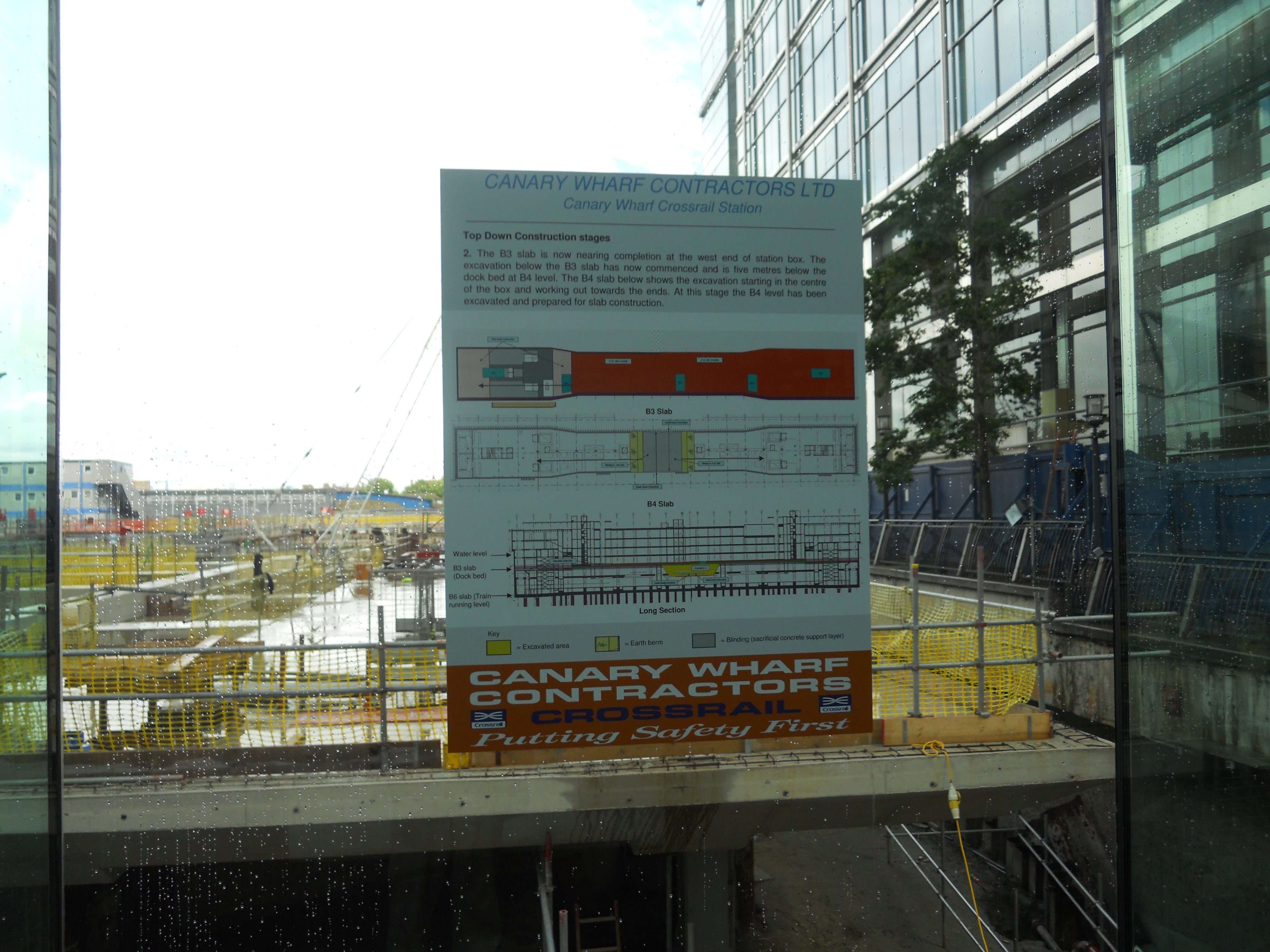
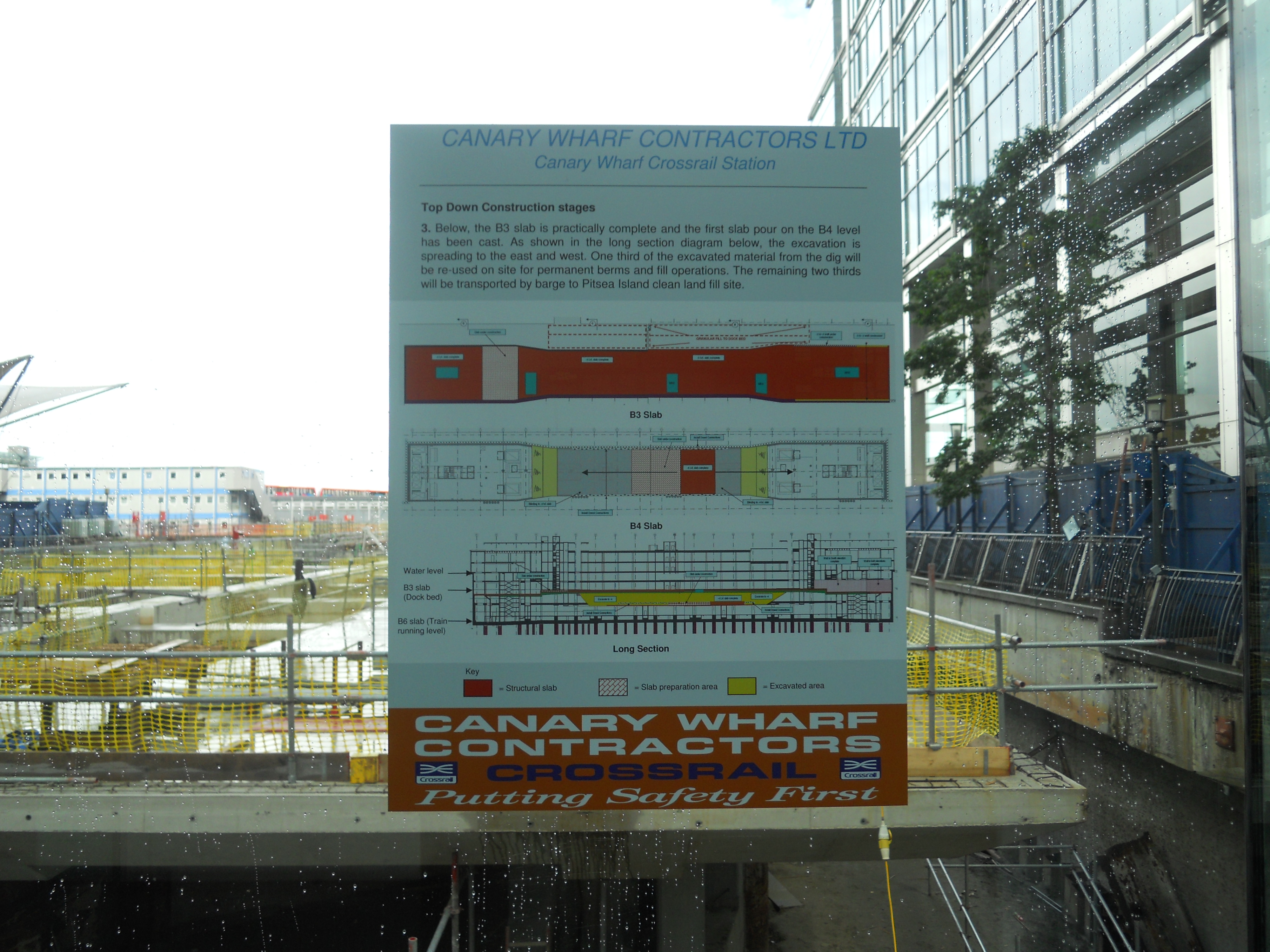
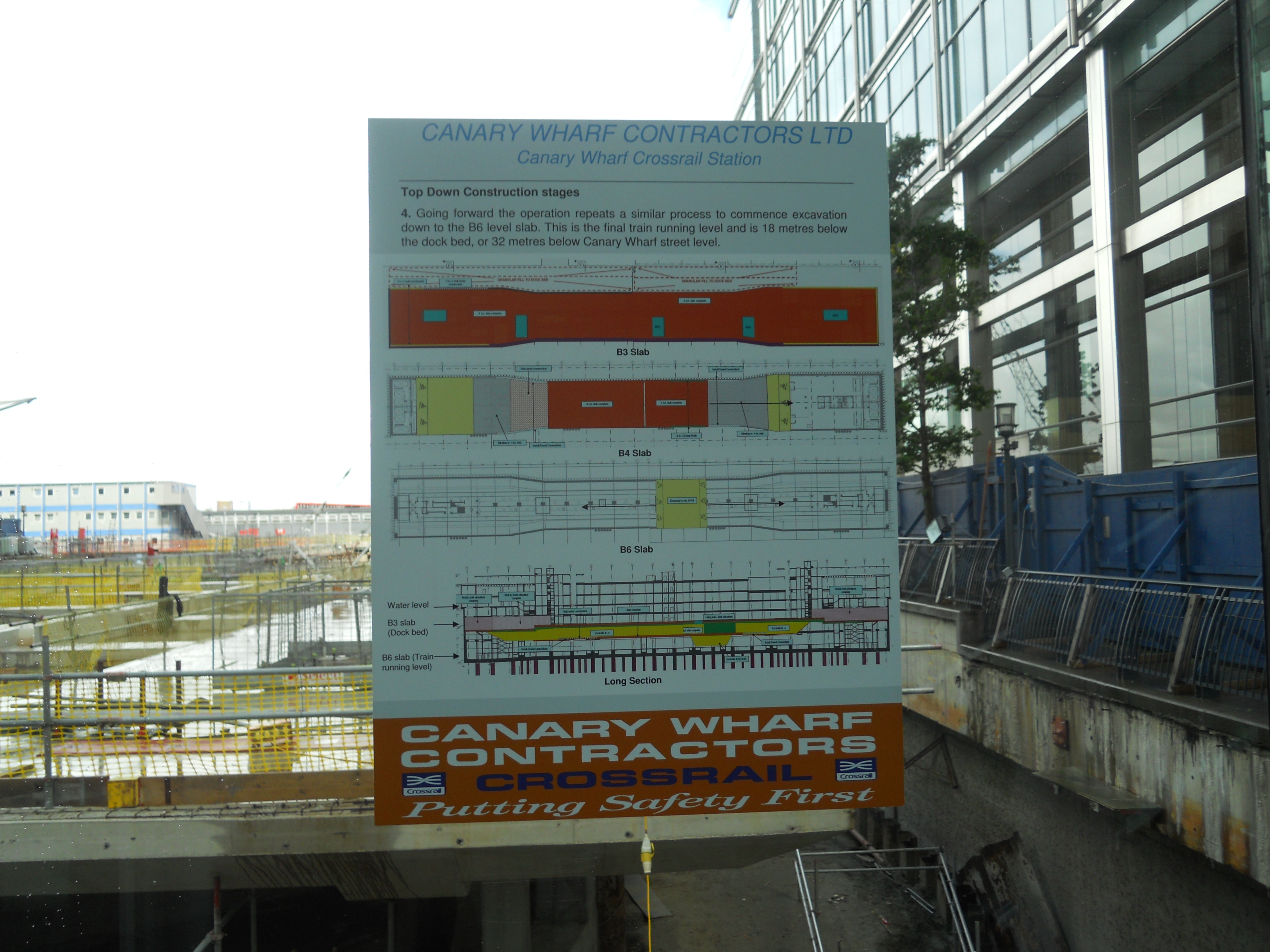
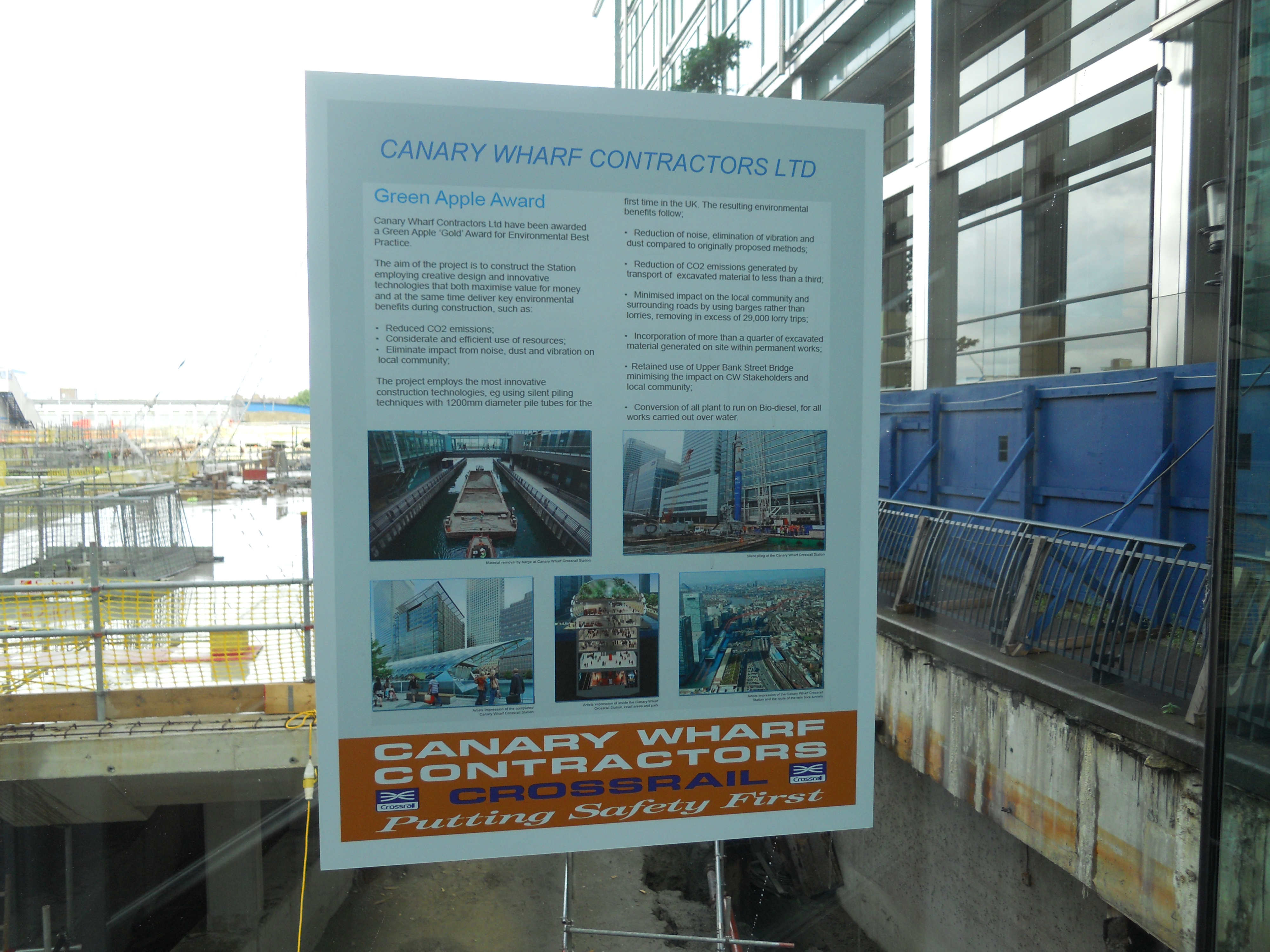
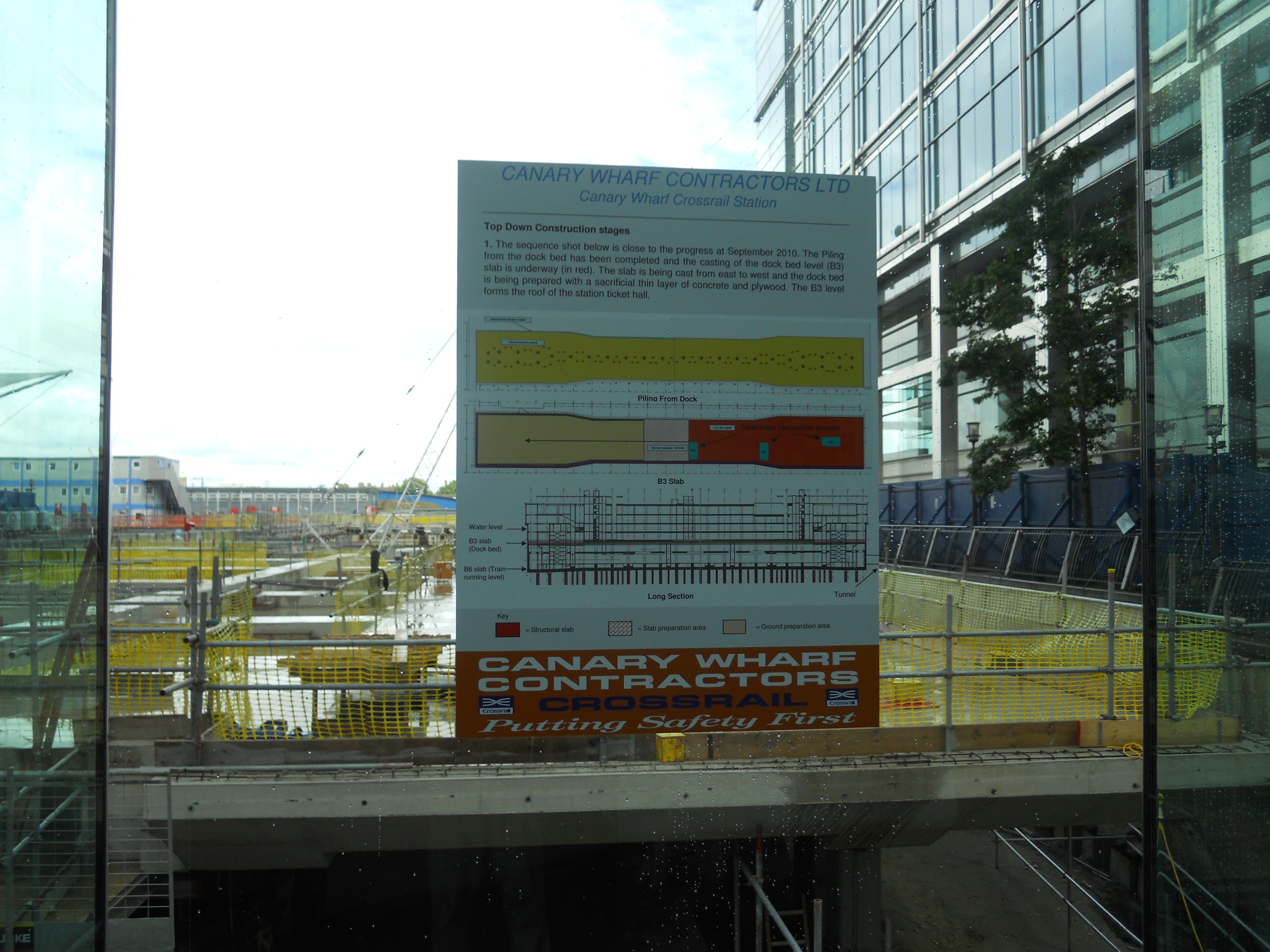
That is a lot better, so I apologise. But where is similar information at Bond Street and Tottenham Court Road stations?
Yorkshire Cannyness?
The railway between Leeds and York via Harrogate is severely overloaded and is run using the the dreaded Pacers.
Now it is being proposed that the line be electrified using a simple third rail system and reuse ex-London Underground, District Line trains.
It is an idea that might work and provide a better service.
Although I’m generally in favour of overhead electrification, there are lines like this where less intrusive third-rail electrification may be more suitable. On this line there is also a two mile long tunnel, Bramhope Tunnel, which would be prohibitively expensive or impossible to electrify using overhead wires.
Although this proposal is based around using London Underground D Stock, which are generally about thirty years old, there is no reason to believe that as CrossRail and Thameslink progress throughout London, that other suitable trains will be released.
London Bridge Is Nearly There!
A few months ago I showed a picture of the new railway bridge at London Bridge over Borough Market.
Here are some new pictures, that I took today.
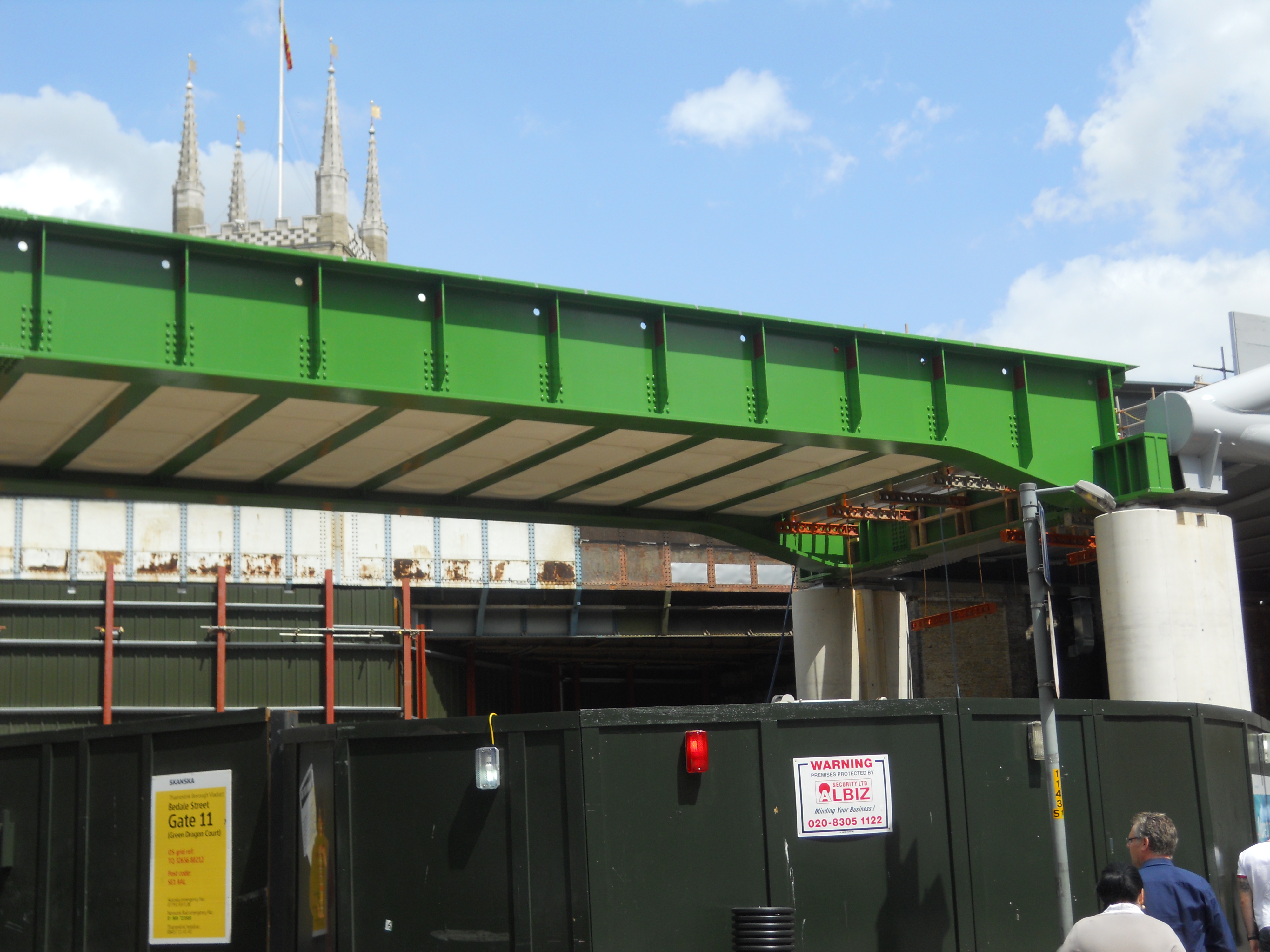
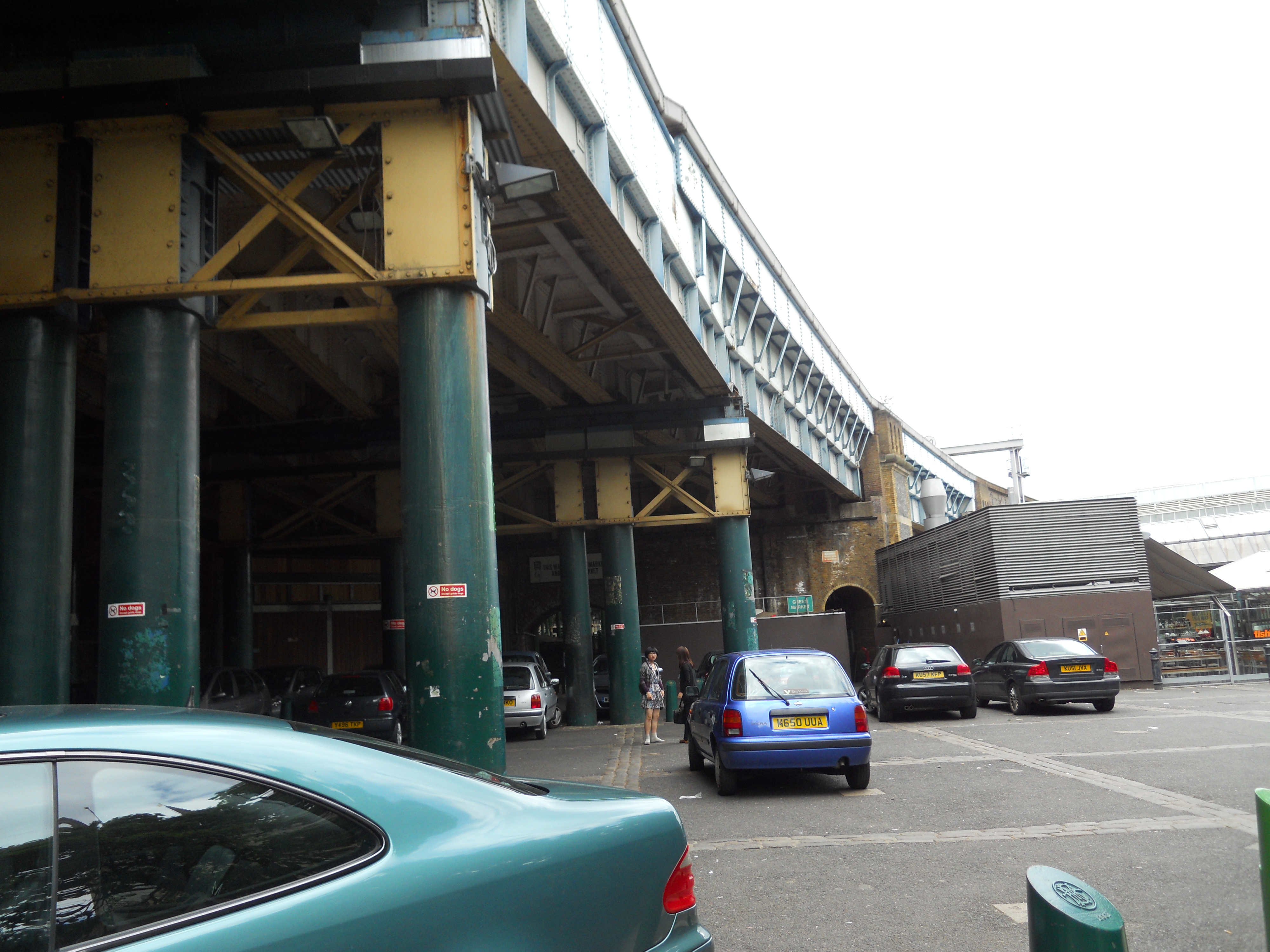
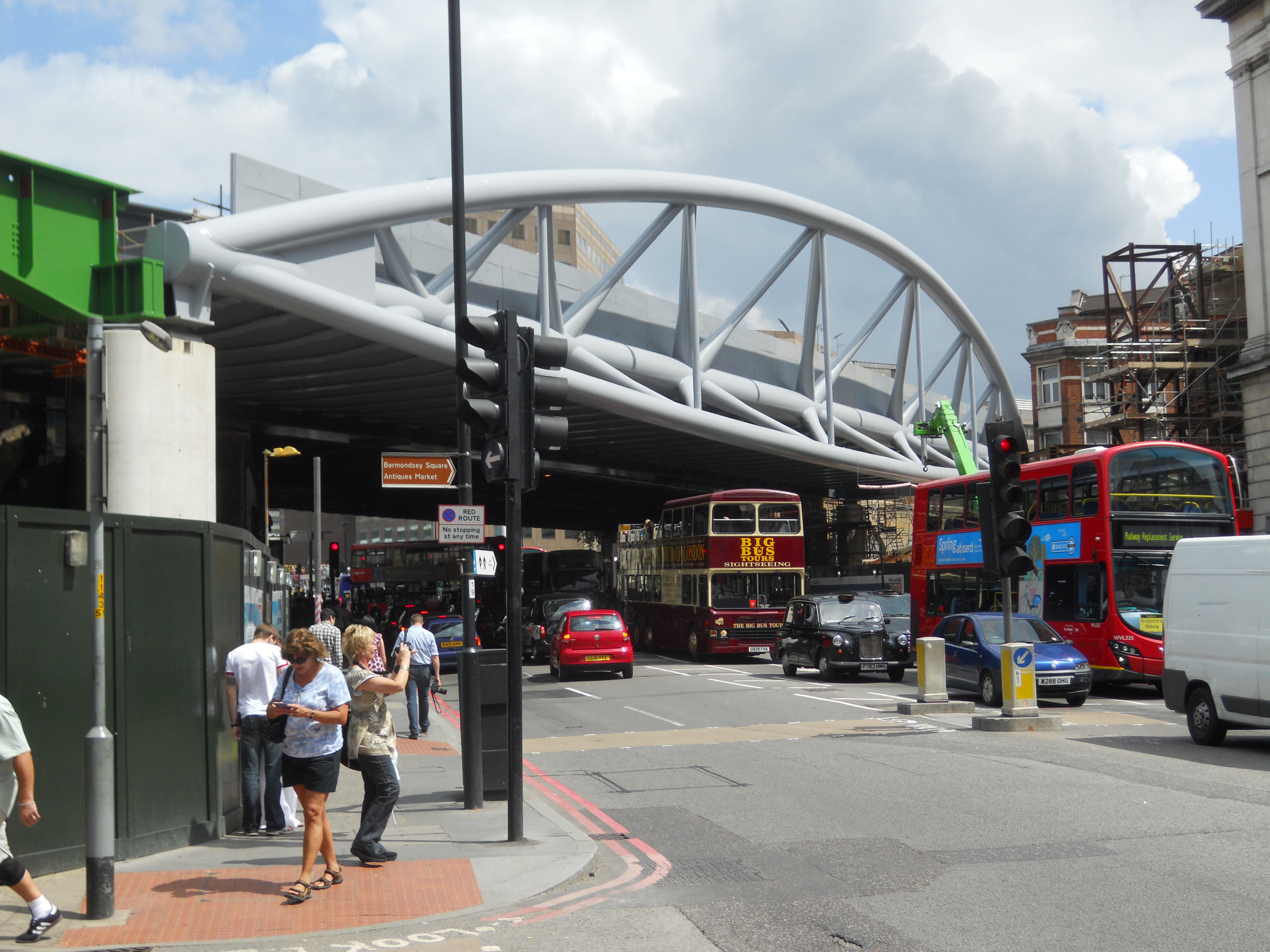
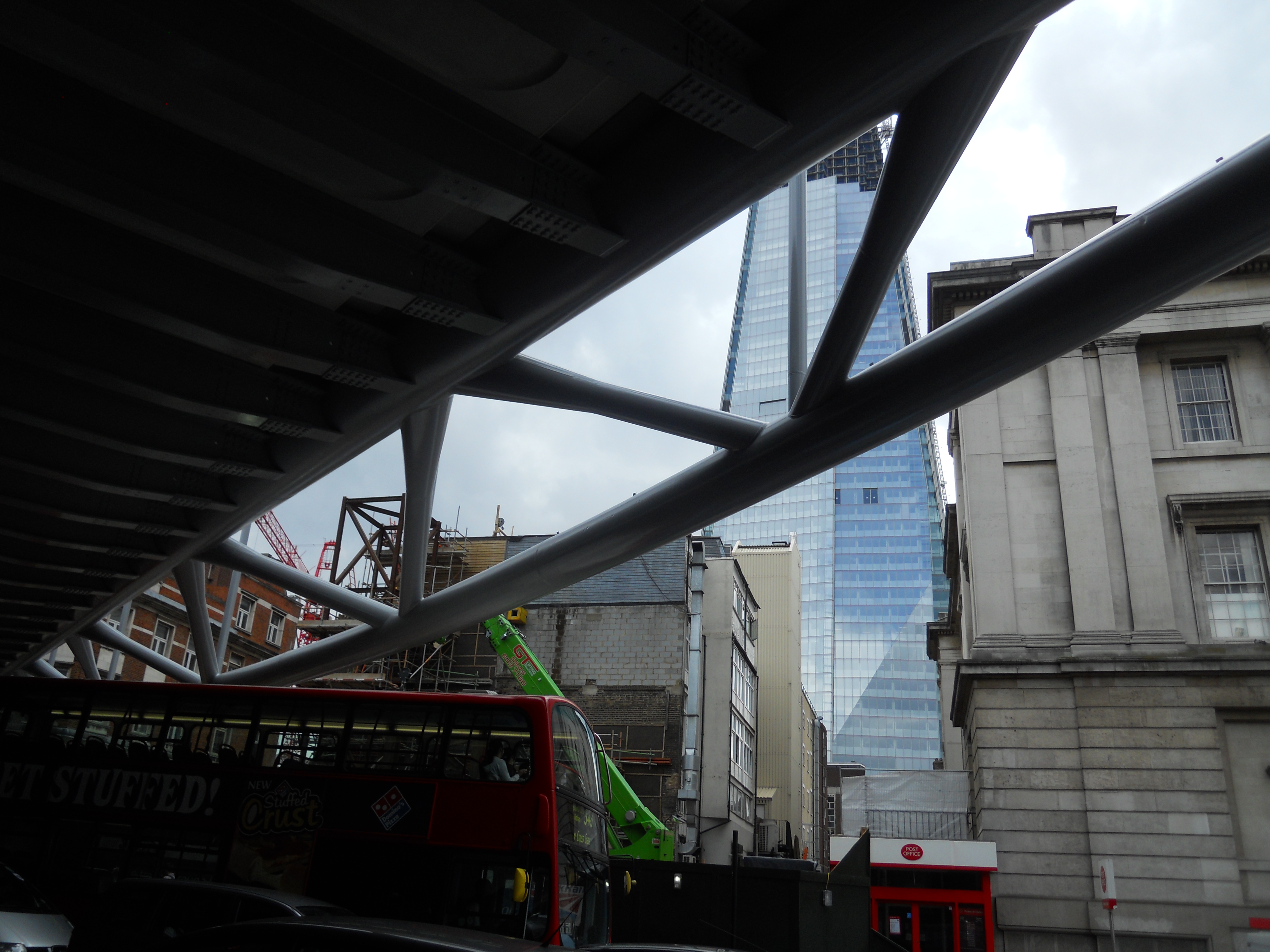
It looks like Thameslink will be on time.
Lopsided Timetables To Orpington
I went to Orpington this afternoon, by the easy route of an East London Line train from Dalston Junction to New Cross and then a stopping train to my destination.
Coming back at seven this evening, there were no trains from Orpington to New Cross, so I had to go via the chaos at London Bridge and get a bus.
I did notice several tents in the station car park at Orpington station. Were these people waiting ovenight and then getting the train back to New Cross in the morning?
It’s a whole new world south of the Thames. As an example at New Cross, the platforms are numbered A to D, rather than the more normal 1-4. According to Wikipedia, this is to differentiate the station from New Cross Gate. I would have thought that putting the station names up correctly, as they do, would have been enough, unless the purpose was to fool visitors from north of the Thames.
Is This The End of Train Building In The UK?
Does the loss of 1,400 jobs at the Bombardier factory in Derby mean the end of train building in Derby?
After all Alsthom has gone from Washwood Heath and the only light on the horizon is the news that Hitachi might be assembling the IEP in the North East. I say might be, as I have my doubts that the IEP will ever be built in it’s proposed bi-mode form, where an electric train hauls a diesel engine around the country for the places where there are no overhead wires. But then the IEP was always a creation of civil servants to avoid electrification, rather than a sound engineering proposal.
So what new trains do we need?
It would seem that at last we have got the message that every other country in the world got years ago and that is that trains should be powered by overhead wires carrying electricity. London to Bristol, Cardiff and Swansea now appears to be on track for completion in the next few years. It would also appear that Network Rail are developing a system to install the overhead wires using effectively a series of three factory trains. Wikipedia says this.
In an effort to minimise disruption during the electrification works, Network Rail is developing new “factory engineering trains” to facilitate the process of installing overhead lines. There will be three types of trains: the first train will be used to install pylons, followed by a train to hang the wires and finally there will be a train which will check the installation. The system is expected to be able to install 1.5 kilometres of electrification in one eight hour shift.
Why wasn’t this developed years ago, as it doesn’t seem to be the most difficult of technology to develop, especially, if you have lots of electrification to do? There is only one answer, politicians and civil servants like to do things on the cheap!
If the engneers get this right, then we should at last see a rolling program of electrification with the Midland Main line an obvious candidate.
So all of this will mean we will need more electric trains. And ones that go fast too! Wouldn’t it be a good idea if we had a unified fleet that could be run London to Swansea, London to Sheffield and London to Newcastle and Edinburgh, as surely economies of scale would mean cheaper trains, even if there are a lot of them. There is a precedent here in that the InterCity 125 ran on the same lines when it was built and because it was such a good and updatable design it still does.
We could almost be in a virtuous circle here, in that say the Great Western and Great Northern routes prove to be a great success, then there will be a clamour for more electrification, because it cuts carbon emissions and the customers like it. We might even see lines like Chester Holyhead electrified to improve connections to Ireland and Edinburgh to Aberdeen to improve links to the far north of Scotland.
Small pieces of fill in electrification will also open up possibilities. As a simple example, when I went from Liverpool to Edinburgh a few weeks ago, I went by two diesel trains, but the fill-in Network Rail are scheduled to do in that area, may mean that in a few years, it could be a new electric train.
So there will be a need for a lot of high speed electric trains, which at present will be satisfied by Hitachi and built in the North East. But it will only be an assembley job at best, with all design in Japan.
The next large batch of trains are the Thameslink and CrossRail trains for London. The first order has gone to Siemens and any sane person would use the same trains for both lines.
Other than that there are not too many orders in the pipeline.
There will be a need for more electric trains for the Liverpool, Blackpool, Wigan and Manchester services when they are electrified.
There is also a need to replace all of the ageing diesel trains, such as Pacers, all over the UK.
So looking at it sensibly, the fast electric trains will probably be built by Hitachi and the commuter electric trains will be built by Siemens.
There is just a significant number of scraps left.
One thing we’re good at though in this country is train refurbishment. We have to be as it’s the only way we can keep the railways running. But over the last year, I’ve had some memorable journeys in forty year old InterCity 125, where the standard of passenger comfort is up there with the best new trains.
So for example as the new trains arrive for Thameslink, there will be a large number of old ones that can be refurbished for the newly electrified services in the North West. If you doubt that refurbished trains are any good, just travel from London to Swansea and back in a day as I did.
Some respected commentators have argued that if you put good trains on old lines and improve the infrastructure, you create traffic and because people change from cars to trains, you cut carbon emmissions.
I’ll use two examples.
Cambridge to Ipswich was a Cinderella line with crap rolling stock and a frustrating timetable. It was given a modest improvement with some more comfortable hand-me-down trains and a better schedule and the investment was rewarded by an increase in passengers. They’ve even seen fit to put three-car trains on the line at busy times.
Where I live now, two lines, the North London line and the East London line have been upgraded and given new trains. The positive affects have been well documented and show that a not outlandish level of investment can bring a very high rate of return.
So it would appear that tactical investment can be positive.
Another scheme that is being brought forward is the improvement of the Ipswich to Lowestoft line, by putting in a passing loop at Beccles. This would mean an hourly service would be possible.
These last three schemes all use Bombardier trains, which are powered by electricity or diesel as appropriate.
Just as Ipswich to Lowestoft is showing improvement in passemger numbers, I don’t think it takes much thinking to know that there are many other lines in the UK, that could benefit from improvement.
A lot of the cross-country lines are very much overcrowded, but how many civil servants ever travel by train from say Ipswich to Birmingham? If they did they’d go from Ipswich to London and then get a Virgin train to Birmingham.
But if these lines are to be improved and the dreaded Pacers replaced, then we need more modern two, three and four coach trains. And Bombardier has the designs that work and they are available virtually off the shelf!
So perhaps we won’t see large numbers built, as after all the main UK fleet of trains is one of the newest in Europe, but we will see quite a few small orders for services that are not high speed or high density. But who’s to say that these won’t go to a cheap Chinese manufacturer as obviously a trip to Shanghai is more exciting that one to Derby.
We won’t see too many exports either, as our loading guage is so much smaller that to deliver trains even to Europe is a logistical nightmare.
So where does our future lie in the manufacture of trains?
We will probably make the high speed trains we need, but as I indicated above, will we really make any more than we need with extras for export?
One of our strengths is in the technology that goes on trains, as I indicated in this post. But then we have always been good at niche markets and in some ways there is more money in the design than the actual manufacture.
We are also very good at train rebuilding and you can argue that this has been one of the great successes of the last few decades.
So we will still be building trains, but the industry will be very different.
A Dent In The Olympic Rings
I took this picture yesterday at St. Pancras International station.
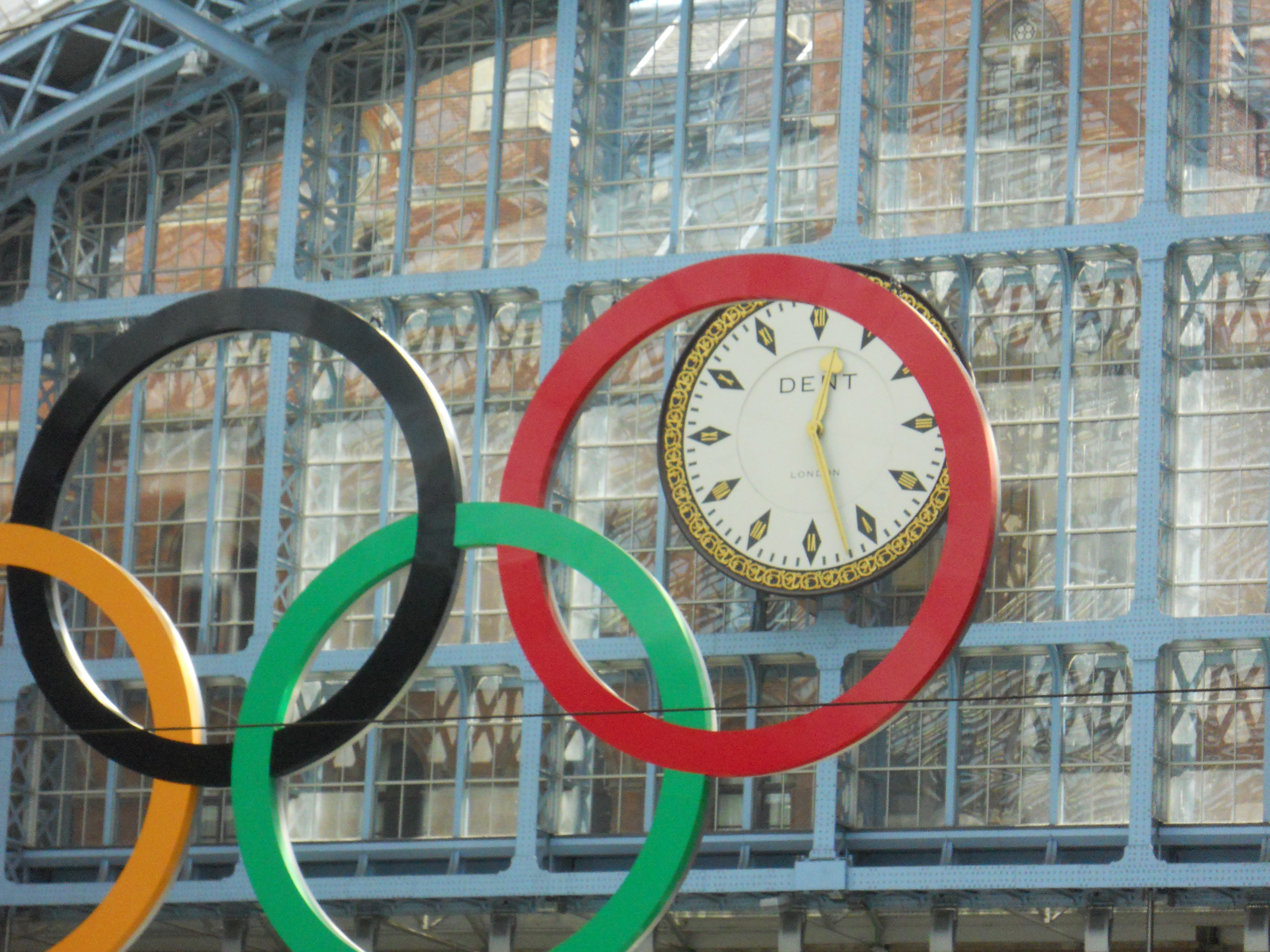
A Dent in the Olympic Rings
I wasn’t tall enough to get the clock in the centre of the ring.
King’s Cross Has Got Its Hat On!
I walked from King’s Cross to St. Pancras and the new roof can now be clearly seen and looks almost finished.
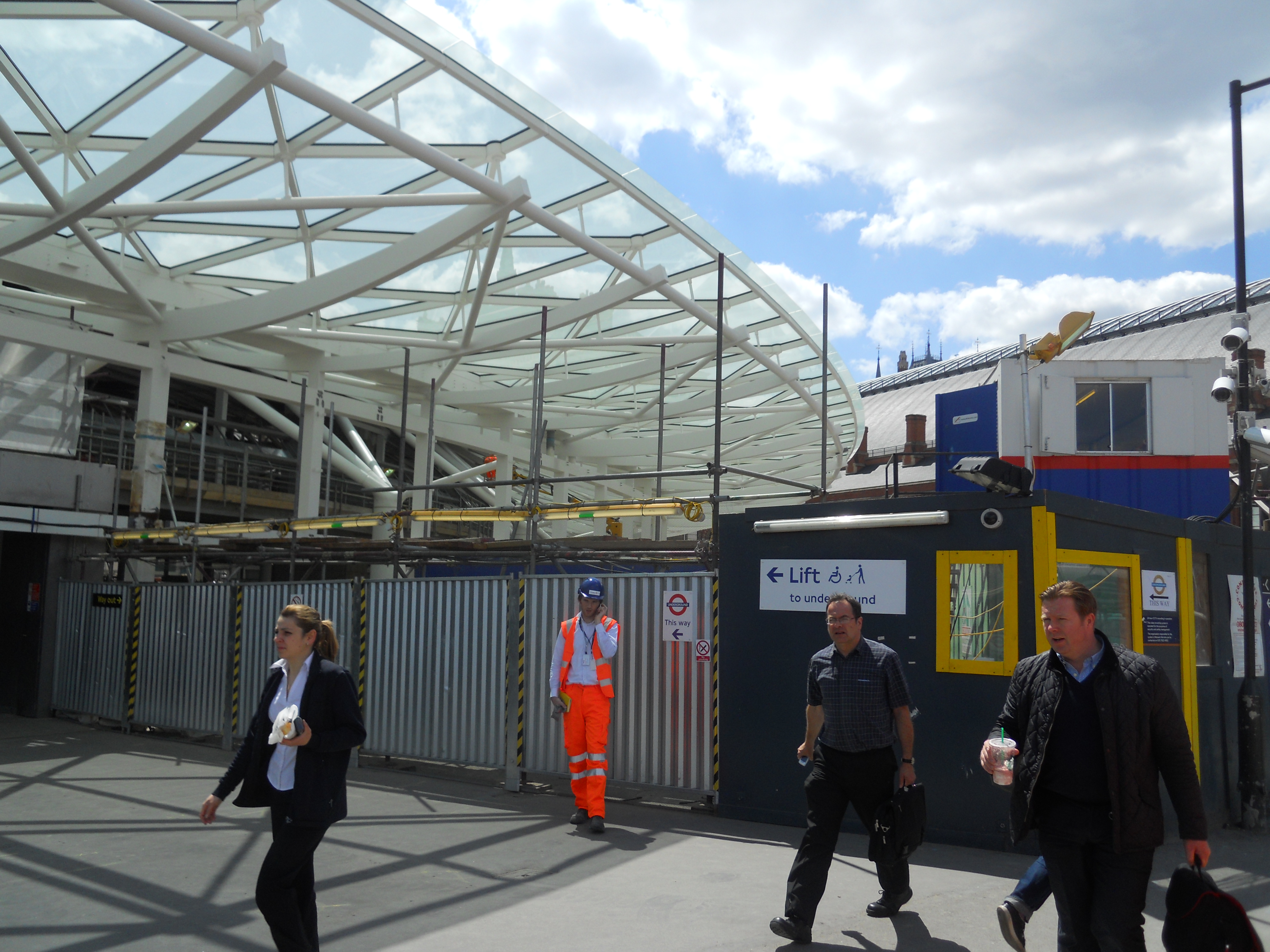
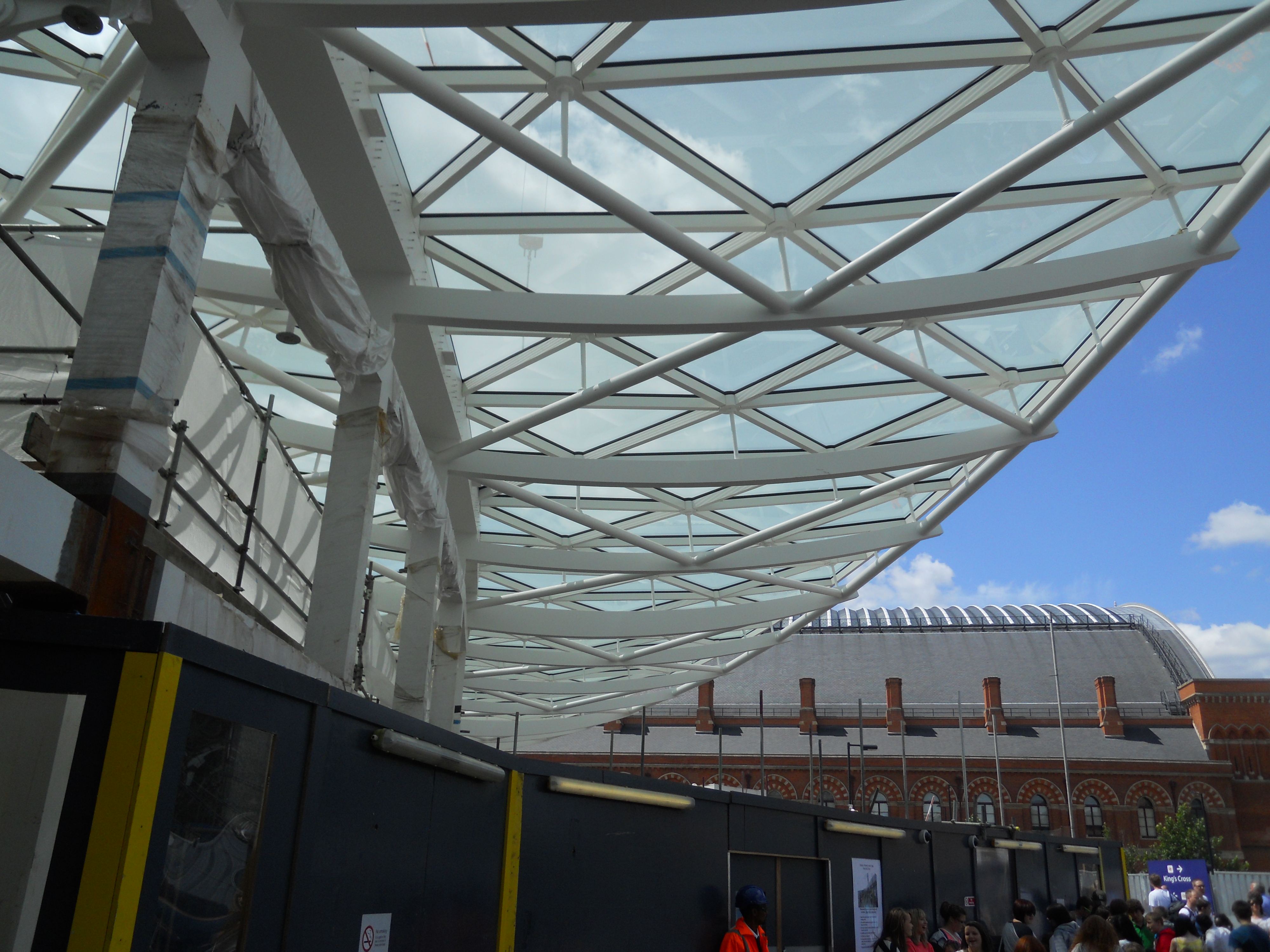
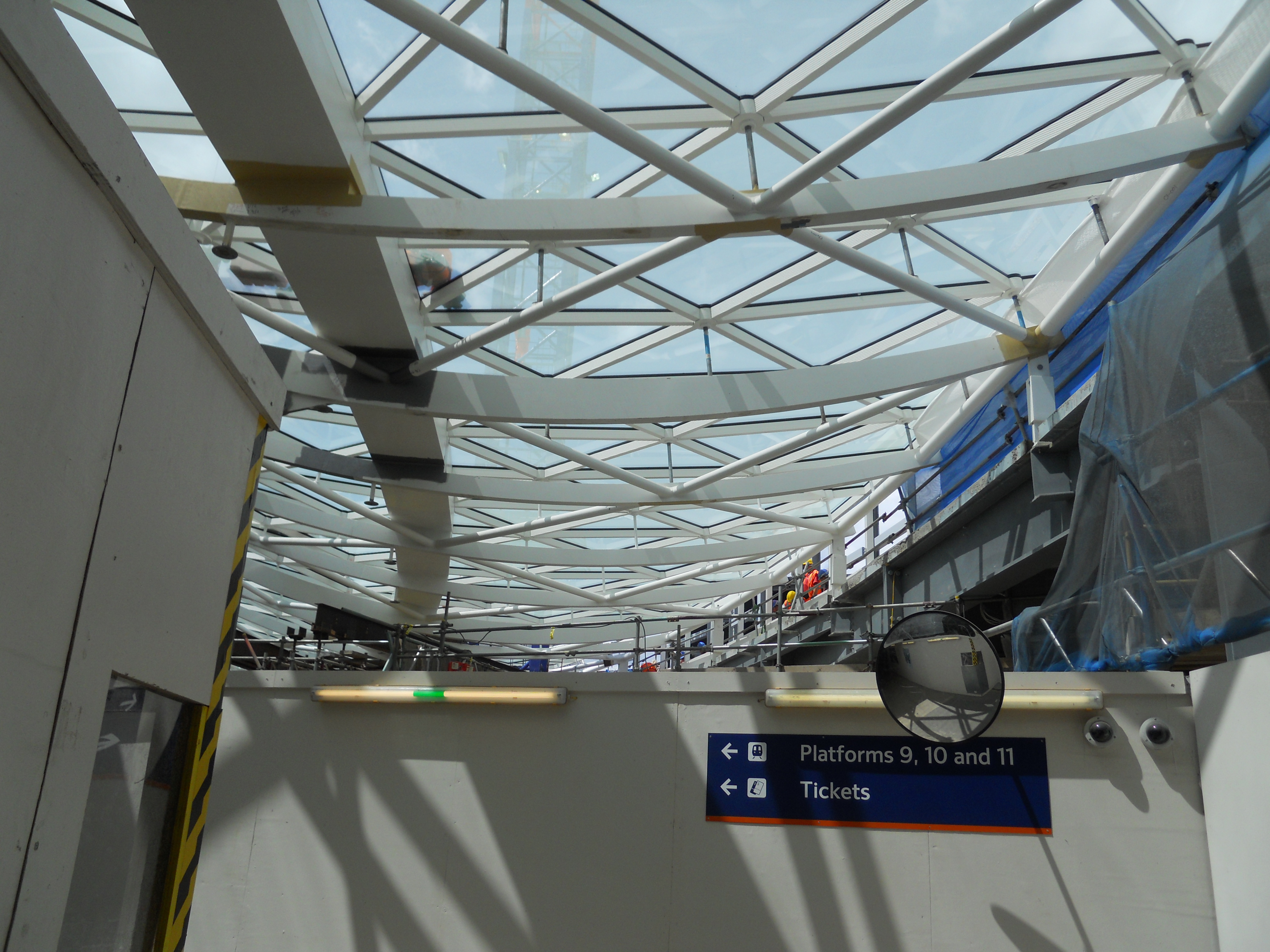
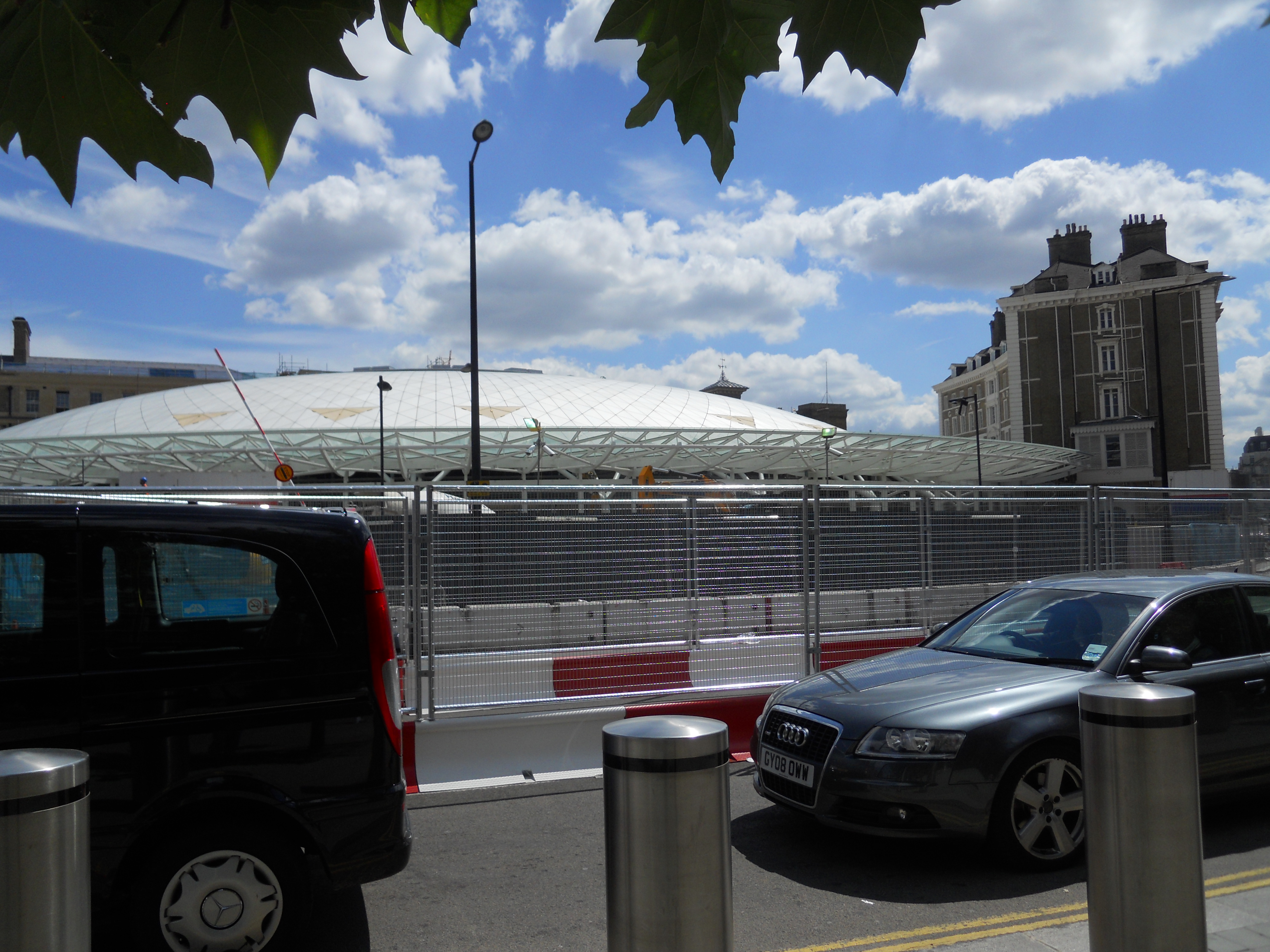
It’s certainly going to be much better than the old west facade damaged by German bombing in 1941.
Above The Connaught Tunnel
I mentioned that the old Connaught Tunnel in London’s Docklands is going to be reused as part of CrossRail.
I took these pictures above it today.
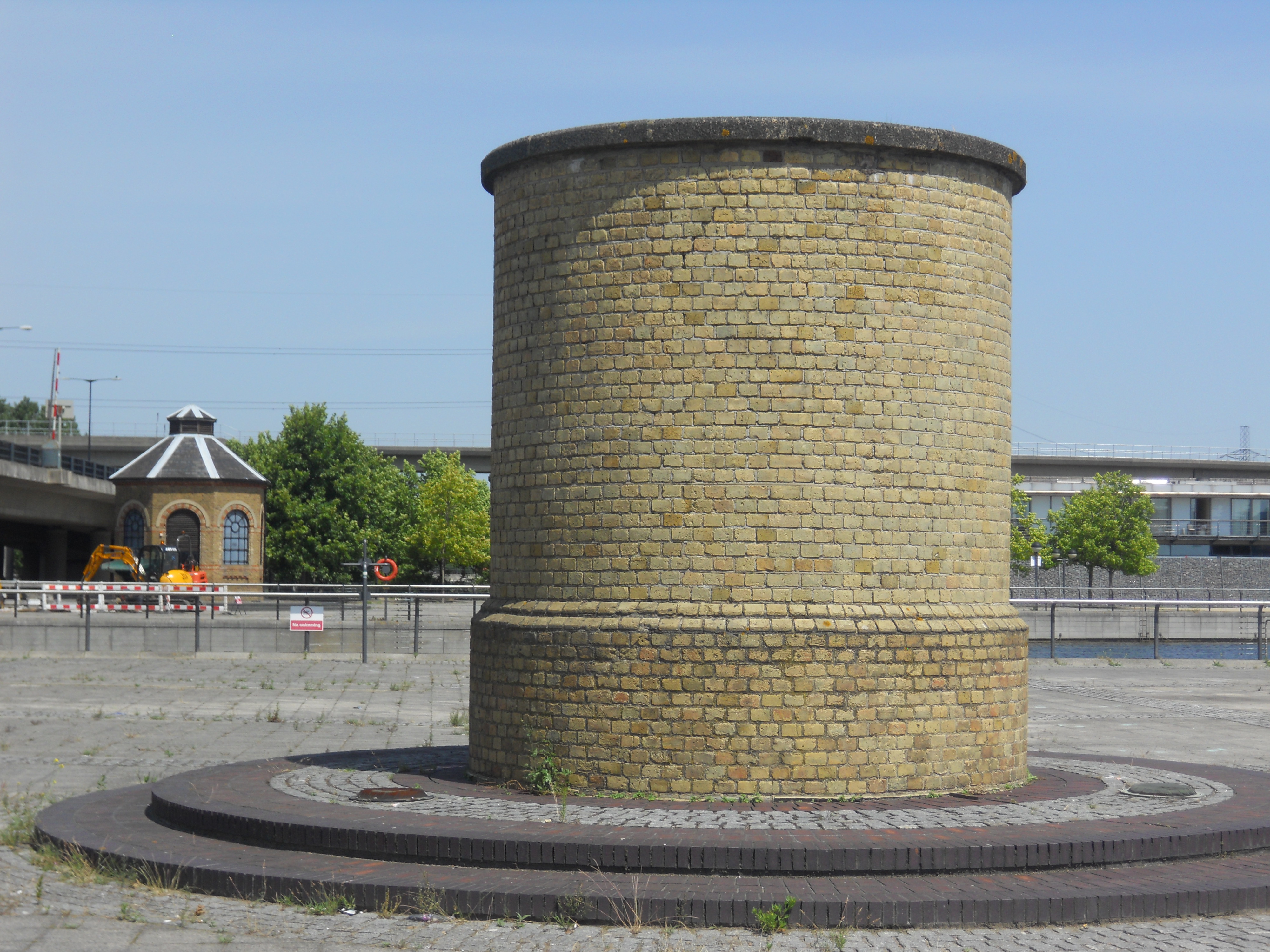
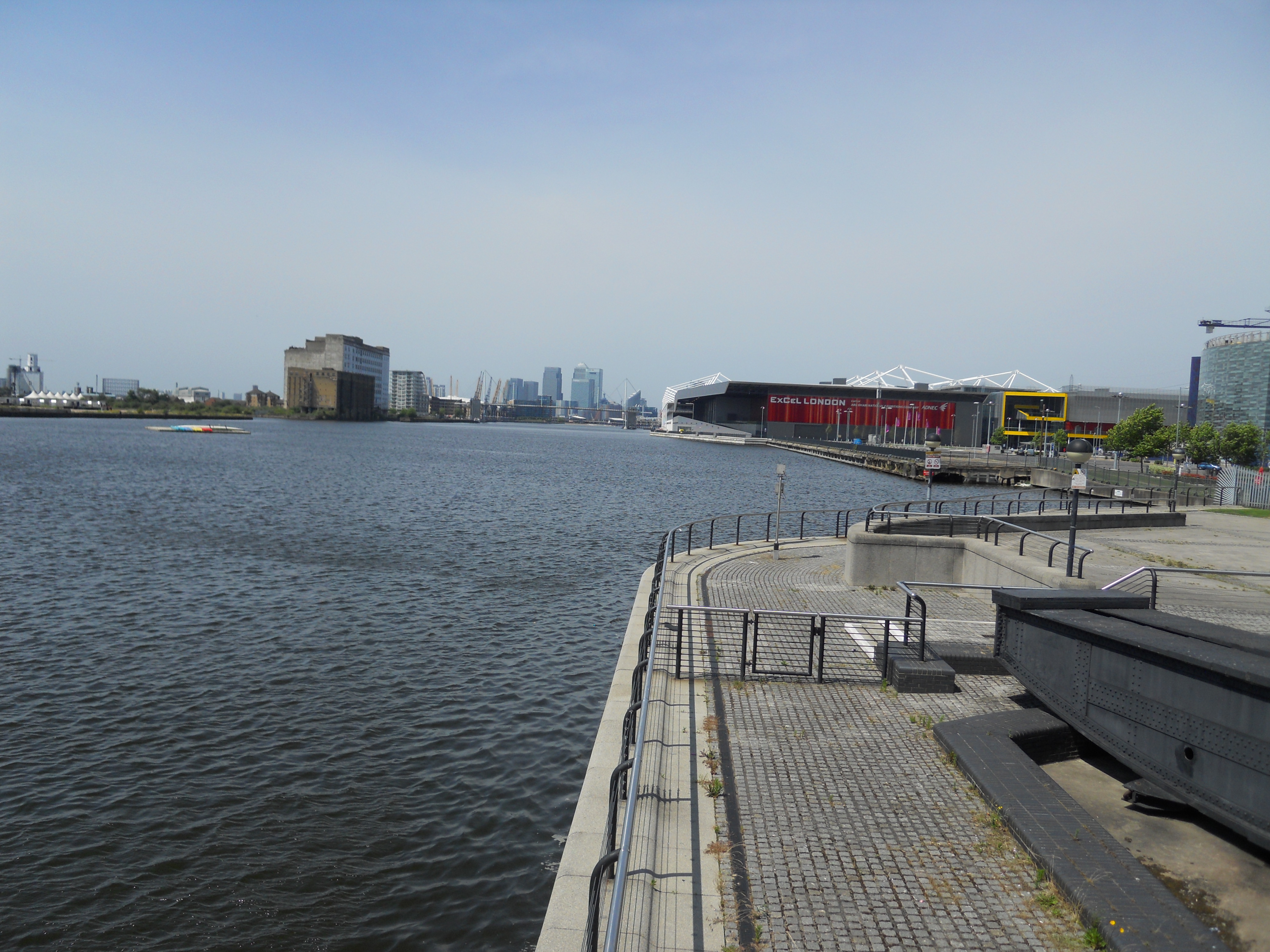
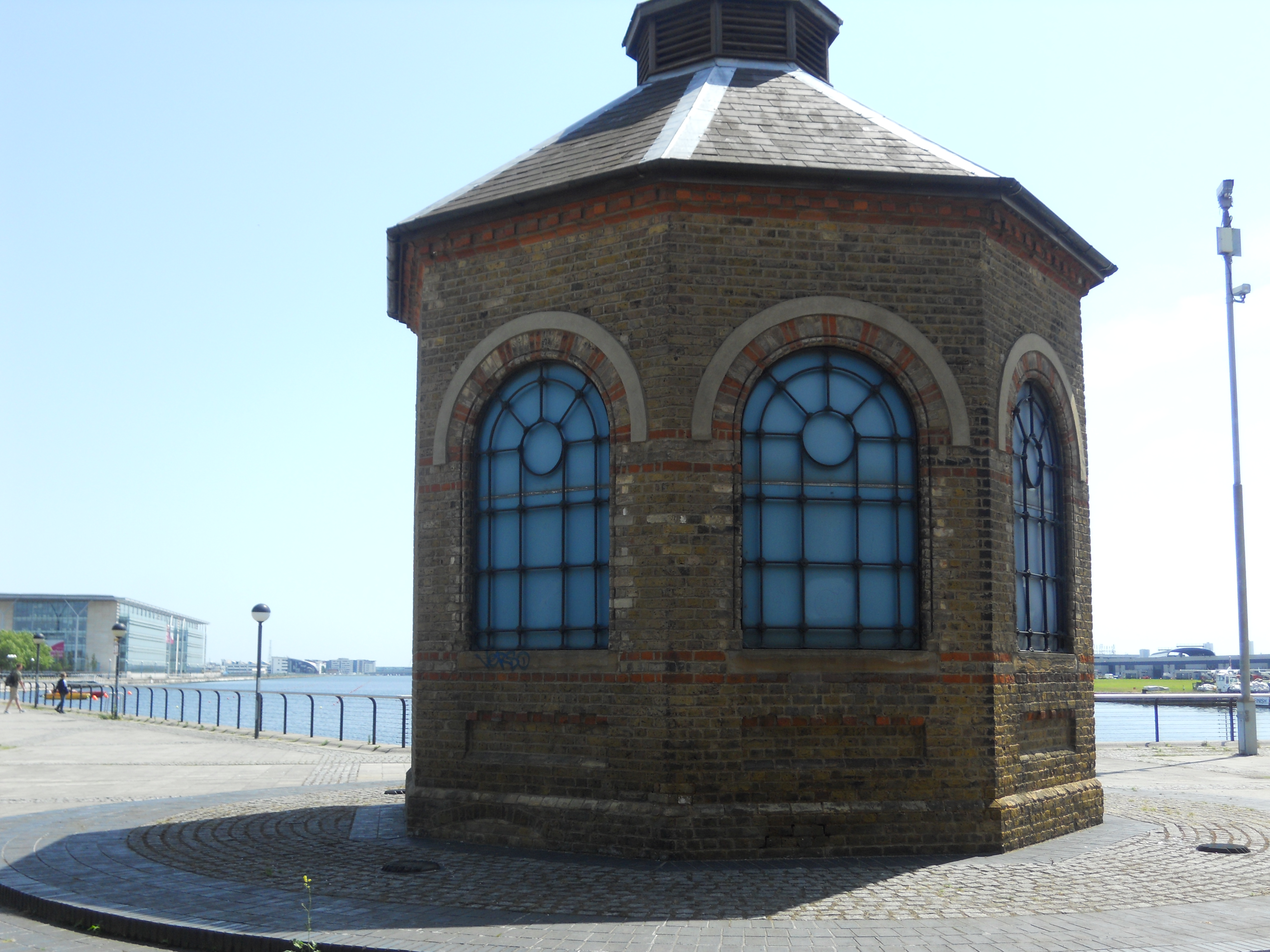
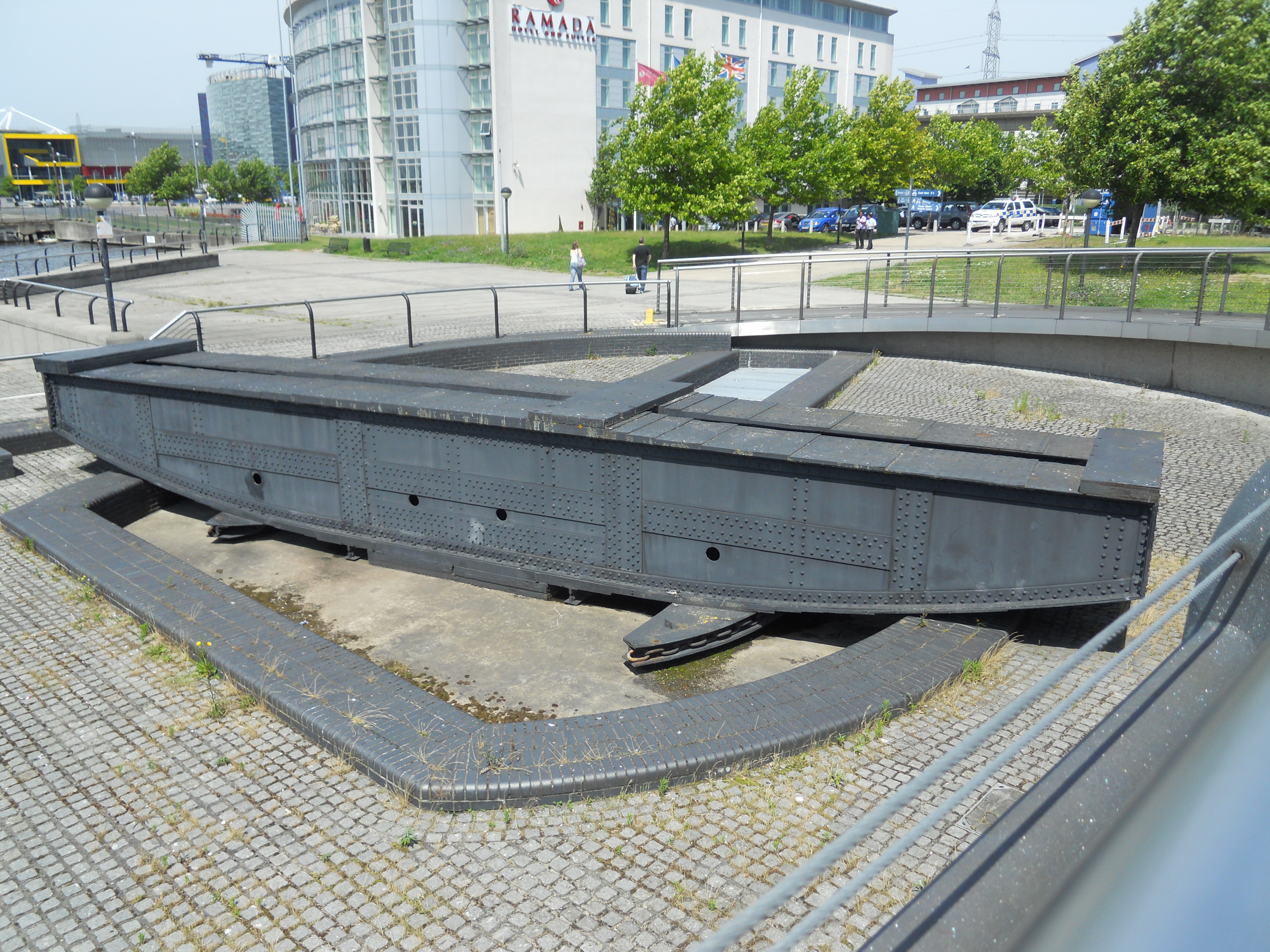
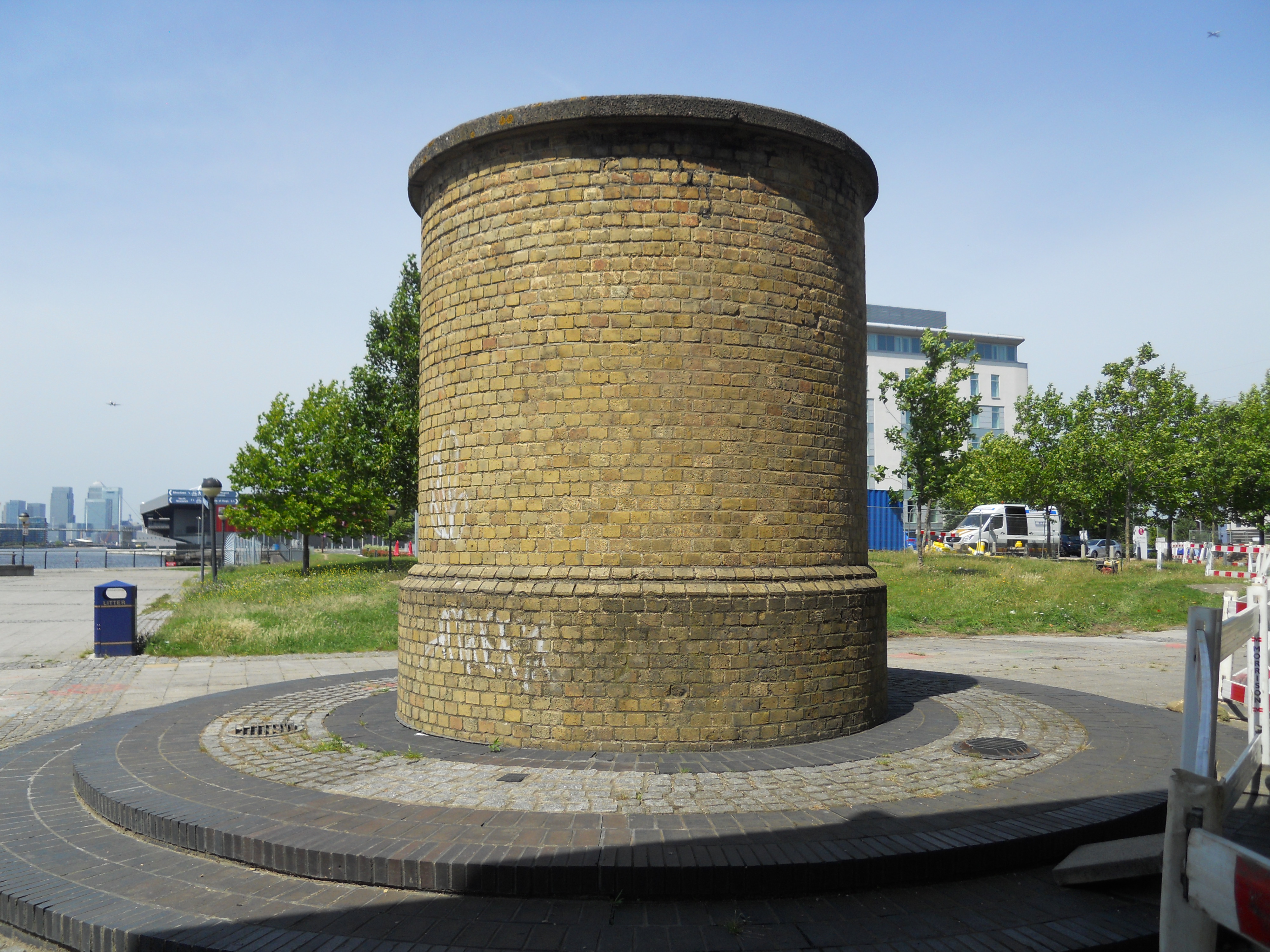
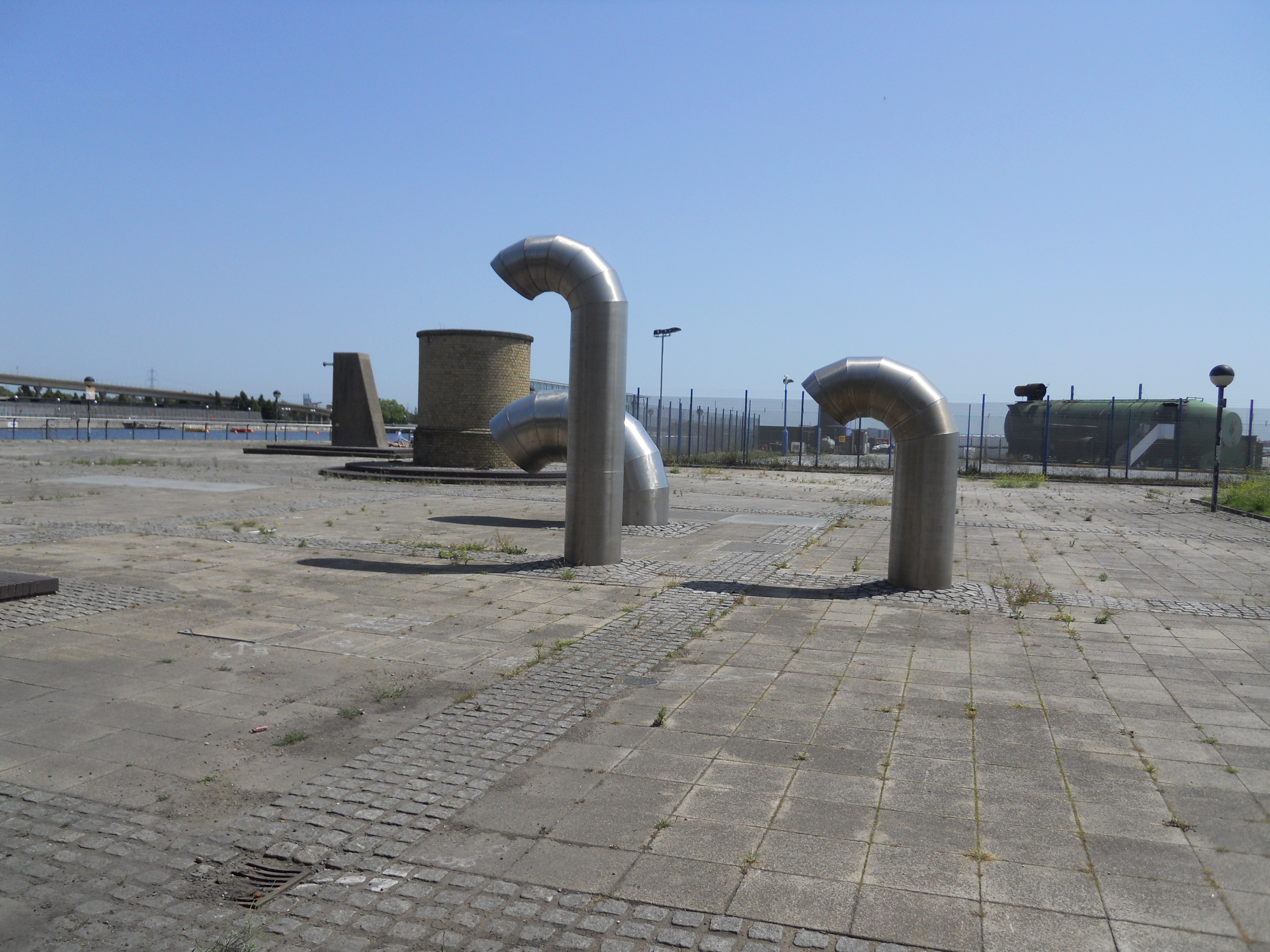
To get to the area you take the Docklands Light Railway to either Prince Regent or Royal Albert stations.
So How Good Is The Overground?
The London Underground is known all over the world and compares well with systems in many cities. It has its problems, but it doesn’t have some of those of say Rome or New York.
Now the Underground has an upstart little brother in the shape of the Overground, which has been in operation for the last couple of years.
Like their middle brother, the Docklands Light Railway, the Overground has been built on the cheap, by reusing old railway lines, tunnels and other infrastructure and then adding new trains and rebuilt stations.
But just as with the DLR, it has been a formula that has worked. The Overground has just one major tunnel, which for an urban railway must be a world record. But what a tunnel, with more history than many museums, as the Thames Tunnel is thought to be the first tunnel built under a navigable river and was built by Marc Brunel and his son Isambard Kingdom Brunel, in the first half of the nineteenth century.
The Overground currently consists of five lines, with a sixth due to open in late 2012. I use the North London Line and the East London Line often as much as seven or eight times a week, as Dalston Junction and Dalston Kingsland stations are within walking distance from where I live.
I like the lines, as the new trains are comfortable with plenty of space for parcels and bikes and they generally run to time. Only once have I had trouble and that was on the North London Line, where I suspect that a delay of twenty minutes or so was caused by a freight train, that shares that line was running late.
The lines also compare well with the previous lines, one of which I described here. But then those lines as I remember them were last upgraded in the 1950s or even earlier.
The Overground also reaches a lot further and in time it will reach all round London and to the lines to Southampton and Portsmouth and eventually HS2 to Birmingham and the North. In a few weeks the North London Line will have a new link at Stratford for HS1 and the London City Airport.
In some ways the Overground and especially the North London Line is unique in that it is a siteseeing railway, which links tourist sites like Kew Garden, Hampstead Heath, Brick Lane, Camden Market and Crystal Palace with a ride that in places gives superb views of the city.
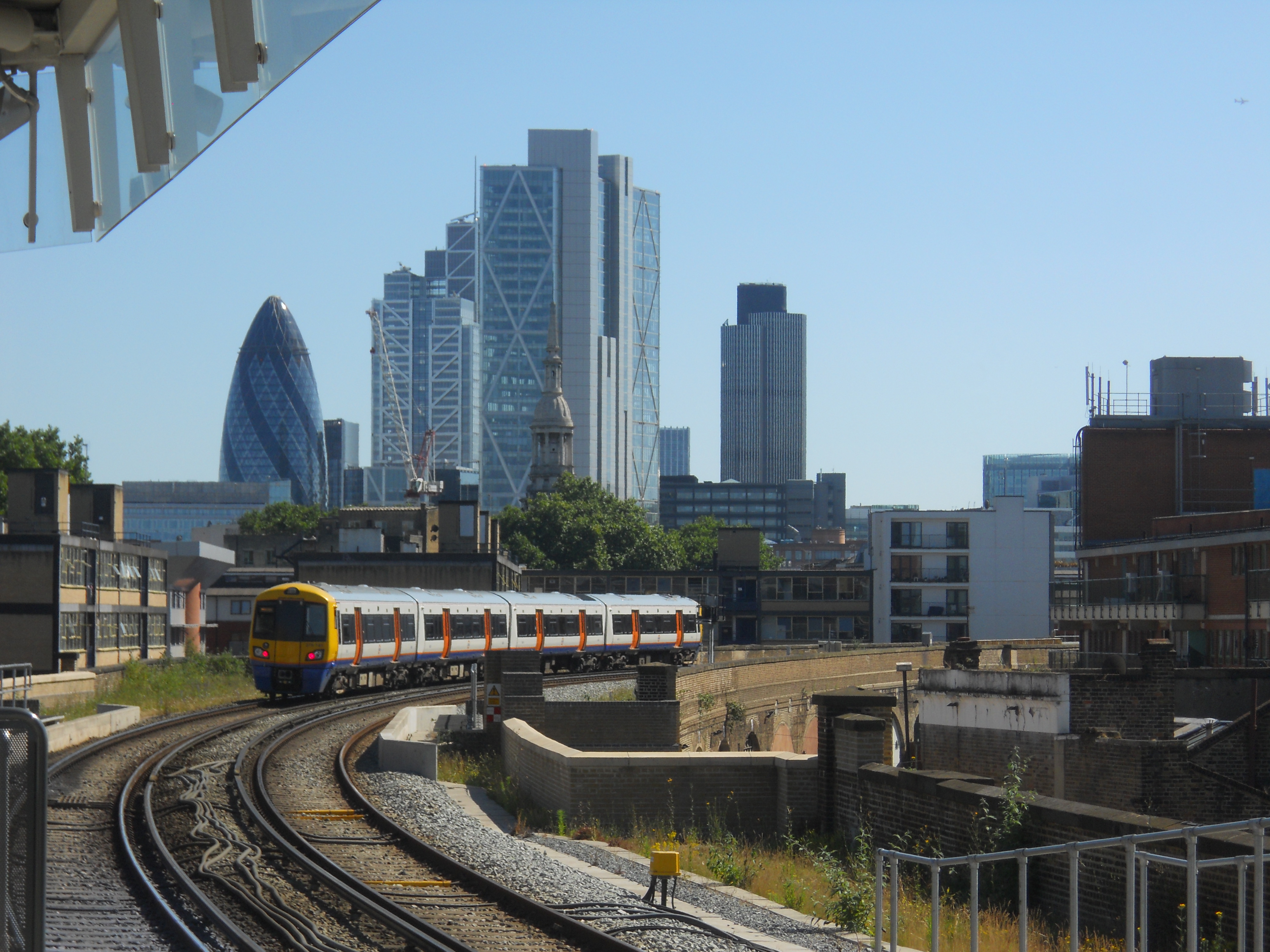
Overground Train on the Embankment South of Hoxton Station
This picture taken of a train on the embankment just south of Hoxton station, shows how the Overground is part of the city in a way that the Underground never can or will ever be.
Several people riding the line have told me has got them their first or a better job and reports have appeared showing that the Overground has improved job prospects and property prices, and even reduced crime. I’ve also heard the latter from a Police Sargeant.
But this is one of the reasons you improve the transport infrastructure, as properly done it makes peoples lives better.
But it is not all good.
The trains can get overcrowded at times and the platforms in places may not be capable of being lengthened, although adding more carriages to the trains might be fairly easy.
Connections to the Underground need to be better and the lack of a Central line connection at Shoreditch HIgh Street is the most glaring. Hopefully Crossrail at Whitechapel will resolve this problem, but will this new line put more pressure on the East London Line?
I do also think that the freight use of the North London Line might get to be a serious problem, especially if trains get larger and more frequent as more containers move off the roads to rail.

