Never On Sunday
There have always been things that were banned on Sundays or because of personal reasons, you never did on that day.
- A Welsh friend at Liverpool University called David Roberts didn’t use to drink on Sundays when I first met him. But we soon cured him of that!
- My late wife, who had been a Sunday school teacher in her time, wouldn’t go to the cinema on Sunday, as her mother thought it ungodly.
- For myself, I don’t think I went to a football match on a Sunday until I was about forty, as they were never staged on Sundays.
I also remember the first day, that C and myself went to the first 1000 Guineas at Newmarket on a Sunday. Now horse racing and most other sport on a Sunday is considered normal, just as it is in the rest of the world.
It also used to be that the Northern City Line didn’t run at weekends, despite having three stations that served The Emirates Stadium.
This morning before it rained, I took a trip to Harringay station to view the Wightman Road Bridge, by taking a 38 bus to Essex Road station and then going three stops to the North.
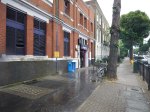


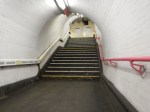

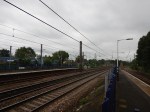
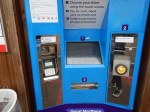
The line is getting new Class 717 trains, but I do feel that some work to improve the stations might not be a bad idea.
I actually wanted to buy a ticket on that dreadful machine from the Zone 6 boundary to Guildford, but unlike London Overground and some other companies ticket machines, it doesn’t sell such a useful ticket, which I wrote about in The Price Of Freedom.
More details of the Class 717 trains are given in this article in Rail Magazine, which is entitled New Govia Thameslink Railway trains to be Class 717s. This is said.
They are similar to the Class 700s being built by Siemens for GTR (of which 16 are in the UK), but they must have end doors as per safety regulations due to their operation in the Moorgate Tunnels. The design of this is at an advanced stage, with construction due to start this year.
I have felt that the Northern City Line, would be a classic application for an IPEMU for some time, as this would enable the Moorgate tunnels to be electrically-dead, as the trains would use batteries between Drayton Park and Moorgate stations. This would have the following effects.
- The third-rail electrification could be deactivated or even removed.
- The trains could also be 25 VAC only, if they wouldn’t be going into any other third-rail territory.
How would this impact tunnel safety regulations?
Whatever happens to this line, running a seven day a week service, will make the Northern City Line a valuable rail line in my part of London.
On a personal note, the line and Essex Road station in particular, will help me cut-out the dreaded Highbury and Islington station, with its long passageways and lack of lifts.
Common Sense Between Exeter And Plymouth
After the failure of the South Devon Sea Wall in 2014 and the cutting of the main line at Dawlish, something had to be done to make sure there was an alternative rail route between Exeter and Plymouth.
In the June 2016 Edition of Modern Railways there is an article entitled Cheaper Okehampton Route Proposed, which puts forward the latest thinking. The article starts like this.
The Peninsular Rail Task Force is advocating the reopening of the former Southern Railway route between Exeter and Plymouth via Okehampton as a secondary route rather than as a bypass for the existing line via Dawlish.
The Task Force has produced a 20-year plan for investment in the south west’s rail network. This link can access a draft summary report.
The old Southern Railway route between Exeter and Plymouth is described in Wikipedia as Partly Closed, but with much of the infrastructure intact, although the track has been lifted in places. It sounds that it has been left in a similar state to the Waverley Route and the Varsity Line, after cuts in the 1960s and 1970s. These two routes have been or will be partly or fully reopened.
Exeter to Plymouth via Okehampton is certainly in a better state with regard to trains than either the Waverley Route or Varsity Line were before work started.
- Trains run on the Tarka Line from Exeter to Crediton, before that line goes off to Barnstaple.
- The Dartmoor Railway also uses the route to take passengers between Exeter and Okehampton.
- From Okehampton to Tavistock, the track has been lifted.
- Tavistock is getting a new station and being connected to the Tamar Valley Line at Bere Alston.
- The Tamar Valley Line then takes passengers to Plymouth.
It may have the air of being assembled from Beeching’s left-overs, but it looks like it would work. Especially, as there should be no problem in the next few years in acquiring high-quality new or refurbished diesel trains for the line.
The Modern Railways article also says.
- The line’s function would be to provide a modest service serving local stations and to offer diversionary capability.
- Eight new stations would be provided.
- The line would be unlikely to be electrified.
- To help funding new housing would be built along the line.
A double-track railway with diesel trains would do the following.
- Improve the economy of Devon around the fringes of Dartmoor.
- Help in the development of much-needed housing in the area.
- Provide a much-needed freight route to and from the peninsular.
- Provide sufficient capacity in the event of problems at Dawlish.
But knowing Murphy’s Law, if the line were to reinstated, the sea at Dawlish would behave itself.
I also think that once the decision is made to reinstate the line, that it would be a project to build in a series of smaller related projects.
- Build the station at Tavistock and connect it to the Tamar Valley Line Line at Bere Alston, to create an hourly Plymouth to Tavistock service.
- Upgrade Okehampton station and the Dartmoor Railway to create an hourly Exeter to Okehampton service.
- Acquire some new or refurbished diesel trains for the routes and also for other local services in Devon. The trains would need to be weather-proofed for the Dawlish route.
- Build new stations at Okehampton East, North Tawton and Bow on the Okehampton to Exeter section.
- Reinstate the Tavistock to Okehampton route with stations at Lydford and Sourton Parkway.
Done in small stages, I think that other than getting a railway delivered at an affordable cost on an earlier date, it would have other advantages.
- Once the first two phases are complete, all but about sixteen miles of the route would be running trains.
- Hourly services at both ends of the line would give reliable forecasts as to expected passenger usage of the completed line.
- The hourly services would surely have a Borders Railway-style effect on tourism.
- Building in small stages could minimise heritage issues, that probably don’t come into play until the Tavistock to Okehampton section is designed and built.
Like the Borders Railway and the Varsity Line, it strikes me that this route from Exeter to Plymouth was wrongly closed in the 1960s and 1970s. But then Harold Wilson, that well-known friend of trains, flew to his cottage on the Scilly Isles.
I believe that this plan is a good one and I’m looking forward to exploring the complete line in the future.
Abbey Wood Station – 9th June 2016
I took these pictures at Abbey Wood station.

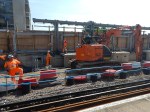


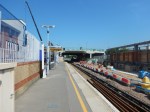
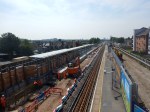

If you look at the various pictures I have taken over the past months of this station, the station is progressing and the builders seem to be managing to always have a working station amongst all the construction work.
Certain factors have helped in this important aim.
- The previous station was unloved by everyone and had absolutely no architectural merit.
- There are no heritage issues.
- Good design of a temporary step-free pedestrian bridge, that appears to be morphing into a permanent one, has aided passengers.
- There always seems to be cheery staff on hand for lost and puzzled passengers.
- Traffic is heavy in the area, but not unmanageably so.
But I think most importantly, the Crossrail portal is some distance away from the station, keeping the two projects effectively separate.
Compared to some station rebuilds, I’ve encountered in the past, so far it has been a textbook example of good project management.
From Victoria To Bromley South
I took this sequence of pictures to show the route of trains from Victoria down the Chatham Main Line to the first important station of Bromley South.
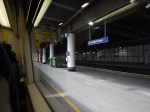
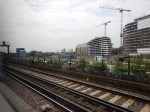
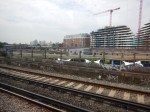
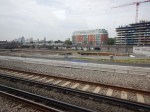
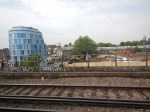

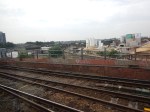

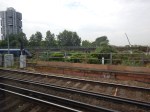
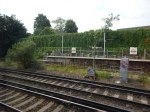
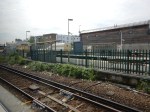
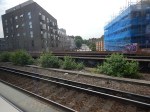
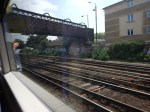
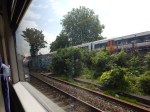
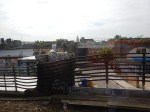
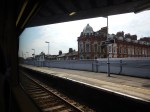
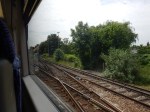
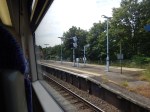
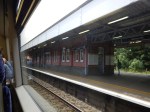
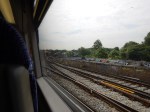
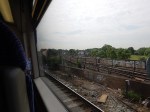
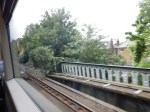
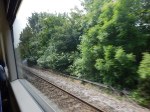
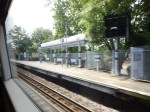
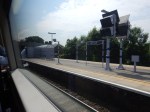
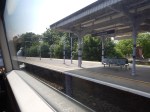
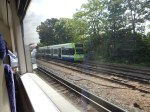
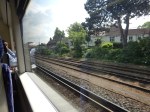
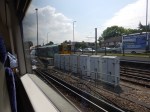
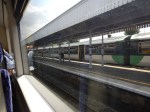
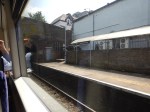
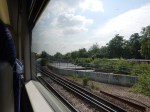
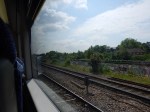
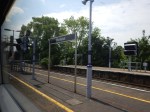
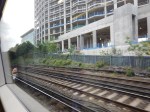
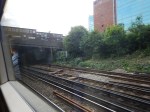
The route goes past or through these stations.
- Wandsworth Road
- Clapham High Street
- Brixton
- Herne Hill
- West Dulwich
- Sydenham Hill
- Penge East
- Kent House
- Beckenham Junction
- Shortlands
- Bromley South
The Brixton Tunnel proposed by the Centre for London report called Turning South London Orange, would start in the Battersea area and emerge before West Dulwich station.
This journey illustrates one of the benefits of the Brixton Tunnel.
Fast trains from Victoria to Bromley South and on to Kent down the Chatham Main Line, would have their own private express tunnel to keep them clear of all the lines through Battersea, Wandsworth, Clapham, Brixton and Herne Hill.
Note.
- Kent services will probably be a few minutes faster.
- There will be capacity for more trains between Victoria and Kent.
- Thameslink and other services that cross the Chatham Main Line will not have to wait for the fast trains to go through.
- There would appear to be plenty of space for a tunnel portal at Battersea on railway land.
- After West Dulwich station, the trains will run as now.
It will also have major positive affects on the lines across South London.
Bromley Junction
In the June 2016 Edition of Modern Railways in an article is entitled Turning South London Orange.
One of the proposals is to create A New South London Orbital Rail Route.
The writer of the proposal suggests that there would be a three kilometre tunnel between Norwood Junction and Kent House to connect the East and West halves of the route.
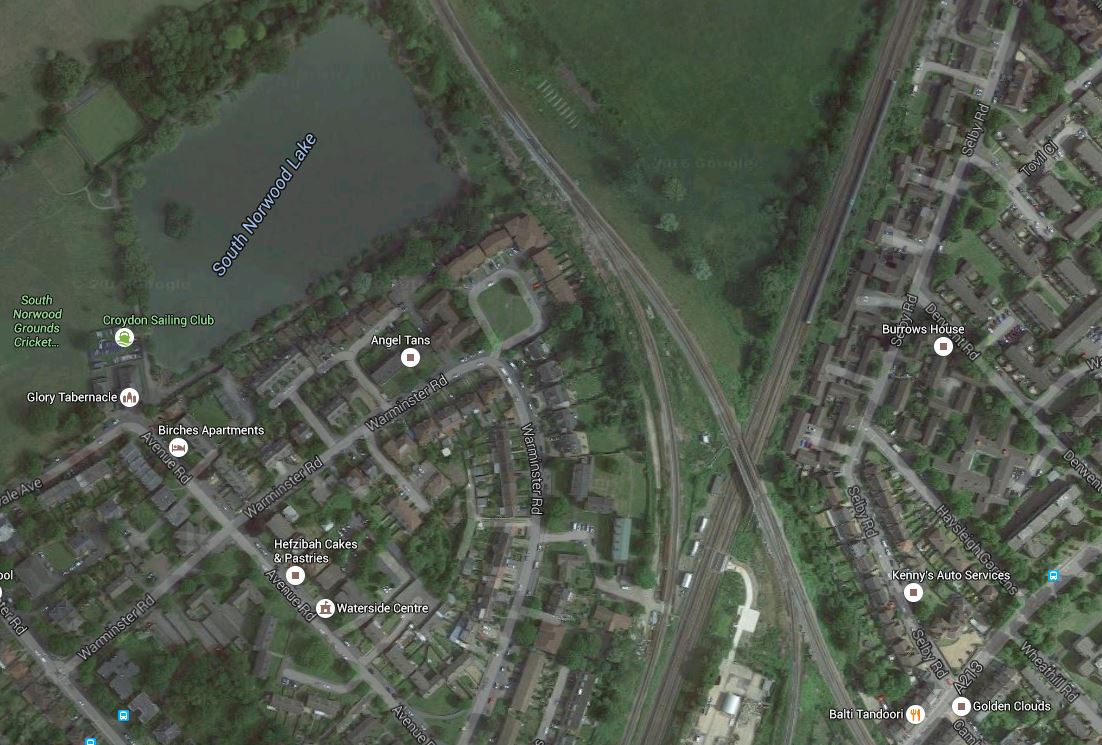
I believe that if the tunnel were to be built that the Southern portal would be located in the region of Bromley Junction, which is North of Norwood Junction station.
This Google Map shows the area.
Bromley Junction
The lines are as follows.
The line going North West goes to Crystal Palace.
The line going North East is the Brighton Main Line to New Cross Gate and London Bridge.
The East London Line to Whitechapel and Dalston Junction shares the tracks of the Brighton Main Line.
The continuation of the Crystal Palace line turns east to Beckenham Junction and Bromley South and Orpington.
The Brighton Main Line continues South to Norwood Junction, East Croydon and Brighton.
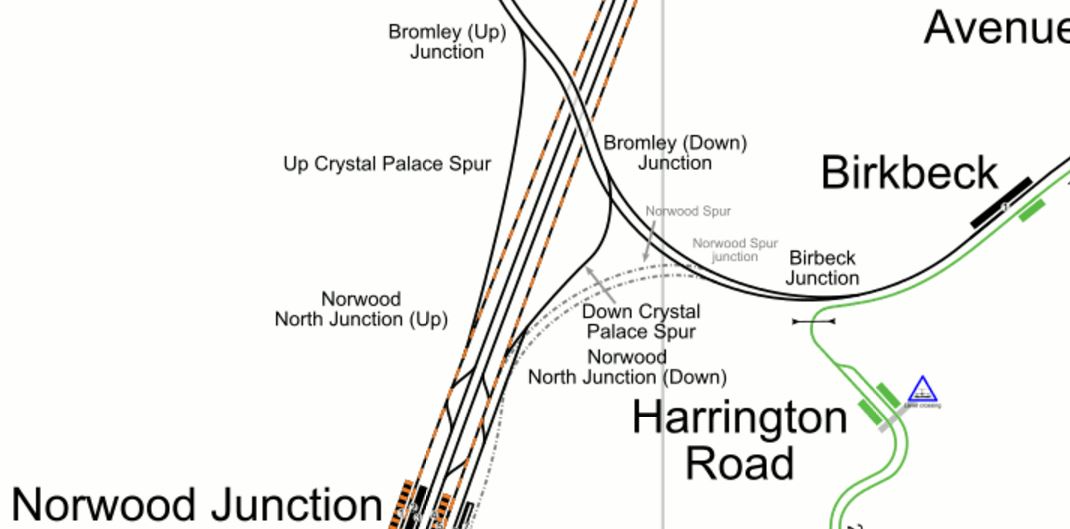
This map from carto.metro.free.fr shows the lines around the junction.
Lines Around Bromley Junction
Note how to accommodate the tram from Harrington Road to Beckenham Junction via Birkbeck, the route from Crystal Palace to Beckenham Junction has been single-tracked.
It would also appear that this line was once connected to Norwood Junction station by the Norwood Spur.
These pictures show the Bromley Junction.
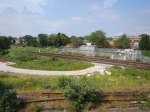
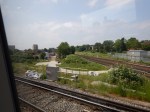
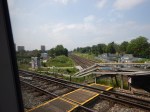
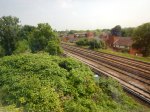
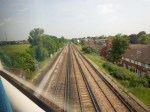
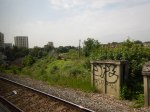
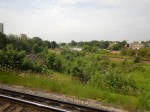
I wouldn’t believe it would be impossible to build a new connection between Birkbeck and Norwood Junction stations.
The traffic through Birkbeck station is as follows.
- 2 tph to Beckenham Junction (Southern)
- 2 tph to London Bridge via Crystal Palace and Peckham Rye (Southern)
As the line is single-tracked that works out as a total of 4 tph.
I believe that with modern signalling and better track layout, that this figure could be increased.
So would it be possible to run trains on a new South London Orbital Route through the area?
Four tph on both routes would mean that there would be up to sixteen trains through the single-track in every hour. Difficult and it would need to be well-signalled and well-driven and possibly under full automatic control, but as a Control Engineer, I don’t believe it would be impossible, given that the trains on the orbital route would not be stopping between Norwood Junction and Beckenham Junction stations.
Could Tramlink Use The Heavy Rail Lines In South London?
Look at these pictures, I took at Birkbeck station, where one track is for heavy rail and the other is for London Tramlink.
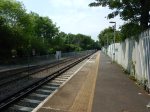
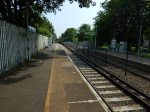


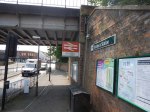
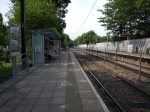

When I took these pictures, I wondered, if it would ease the expansion of the Tramlink network, if trains and trams could share lines.
I am not talking about tram-trains, but more a useful approach to benefit both types of transport.
So lets list the problems.
Rail And Wheel Profile
One of the problems in Sheffield with the introduction of tram-trains is that the rail profile needs to be changed to one that is compatible with the existing trams and the new Class 399 tram-trains.
But to be fair it is a trial and problems will be thrown up.
Platform Height
As someone, who has travelled all over Europe on trams, trains and tram-trains, one of the biggest problem is getting the platform height right, so that everybody including those in wheel-chairs can get on and off easily.
On a scale of five, we generally score about four, but we mustn’t be complacent and I think it will get better.
Some continental countries have problems as their trains have a low step and you step up into the train. This is because traditionally, they had low platforms, whereas for some time, we’ve been aiming for step across.
Karlsruhe has been running tram-trains on their Stadtbahn for over twenty years and are putting in a tunnel to take the tram-trains under the city.
This is said about platform height.
In addition, the platforms of the station’s tunnel will have pedestals that are about 15 metres long with a height of 55 cm above the rail so that the first two doors of Stadtbahn trains will have step-less entry. This will make possible stepless entrance on lines S 4 / S 41 and S 5 / S 51 / S 52 in Karlsruhe for the first time, reflecting a trend that has long been standard elsewhere. The platforms cannot consistently have a height of 55 cm, because the tunnel will be used by trams and DC services of the Stadtbahn, which have an entry level on the modern lines of 34 cm.
If the Germans have to go to that sort of solution, with all their experience, then platform height must be difficult to get right.
I have not heard anything about the platform design at Rotherham Central station, where the platforms must accept trains as different as Pacers and Class 399 tram-trains.
Power Supply
The current trams need overhead power, which with most tram systems is 750 VDC.
So if you want to run Tramlink trams on third-rail lines in South London, you’ll need to put up overhead wires or fit the trams with contact shoes.
It is my view, that for Health and Safety reasons and some design ones too, that running trams using third-rail power will not be practical.
Remember, passengers know they can walk across the tram lines and frequently do, so whatever happens, you don’t want live rails under the trams.
So any rail route, that will be running trams will have to have the 750 VDC overhead supply.
In the Sheffield trial, to extend the Sheffield Supertram, a freight route to Rotherham is being electrified at 750 VDC, rather than the main line standard of 25 KVAC.
Signalling Systems
Rail and tram signalling are different. But after a successful tram-trial in Sheffield, the problems of trams and train sharing the same track, should have risen to the surface.
Rules Of The Tracks
Trams and trains run under different rules.
One main difference is that trams have a maximum speed of 25 mph, whereas trains run at whatever speed the line permits.
So for safety and other reasons, if trams and trains were sharing a length of track, they would have to run under the same set of rules.
I suspect this would mean that the maximum speed would be 25 mph.
In some ways the problems are the equivalent of managing traffic at an airport like Southend, where light aircraft share the runways and airspace with Airbus-319s.
I don’t think it is an insurmountable problem, as two-car diesel multiple units have shared tracks with 125 mph expresses and hevy freight trains for years.
An Ideal Mix Of Trains
So is an ideal solution to use 750 VDC overhead wires for the trams and diesel trains?
Possibly!
But you could always use IPEMUs or EMUs with an on-board battery.
Supposing there is a chord or link line, that would be ideal to be used by trams and say the ubiquitous Electrostars that are popular in South London.
Wires would be put up and all Electrostars using the line, would have to have enough battery capacity to bridge the gap in the track with no electrification.
West Croydon Station
A possible application might be at somewhere like West Croydon station.
The map from carto.metro.free.fr, shows the heavy rail lines through the station and the tram lines around it.
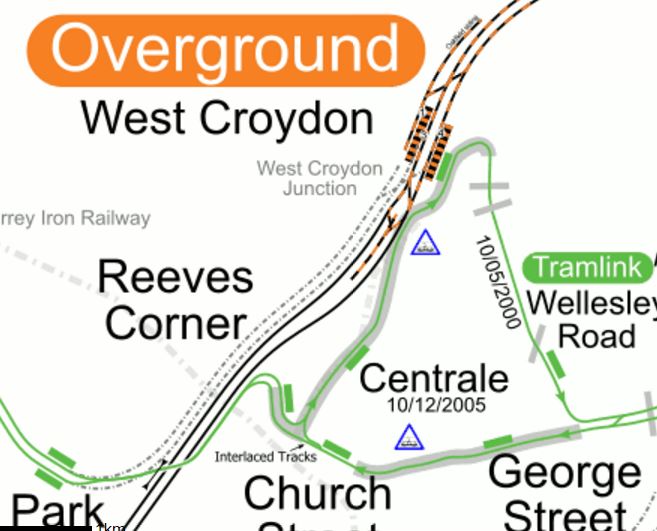
Lines Around West Croydon Station
I’m sure that the engineers in Karlsruhe would have had the trams going through the station to give same-platform interchange to and from trains.
Conclusion
Network Rail has a lot of tools in the box and I think that as technology develops, we’ll see some interesting ideas.
Do We Make The Assets Sweat At Crystal Palace Station?
Crystal Palace station is of a high standard, but given the amount of money spent, do we make the assets sweat?
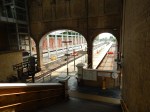
These pictures show the station.


This is a Google Map of the station.
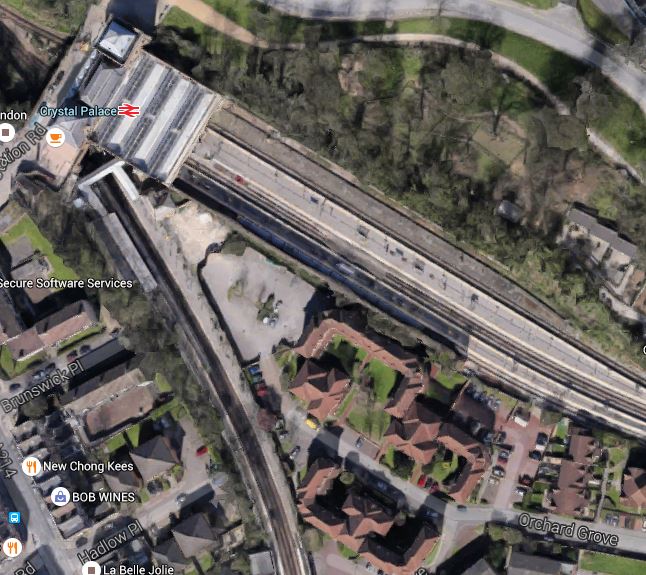
Crystal Palace Station
And this map from carto.metro.free.fr shows the platform and line layout.

Crystal Palace Platforms And Lines
Note.Platform 3, which is one of the terminating platforms for East London Line services is next to Platform 2, which is the platform for Beckenham Junction, West Croydon and Sutton.
- Unfortunately, the space between seems to have been used for new and expensive housing.
- At present most, if not all East London Line services seem to terminate in Platform 5 not Platform 3.
- Platform 3 would appear to have better walking connections to the two North-bound platforms 1 and 4.
So is this making the best use of the station?
In Increased Frequencies On The East London Line, I stated that from 2018, there will be two additional trains from Dalston Junction to Crystal Palace.
This will make 6 tph in total.
Let’s hope that these extra trains will connect to onward trains.
It would be so nice to go to Platform 3 at Crystal Palace every ten minutes, just walk across to Platform 2 and get a train a few minutes later to Beckenham Junction or even Bromley South and/or Orpington. In an ideal world, that would be followed a couple of minutes later by a train to West Croydon, Waddon, the new Bebbington station, Wallington and Sutton.
At the present time, only two tph from Dalston Junction give a reasonable connection, but you wait around fifteen minutes.
One point that the maps clear up, is that there would appear to be little space for a tram platform.
Was this why the proposal was dropped?
But if the frequency of trains between Crystal Palace and Beckenham Junction could be six tph, would a tram link be needed?
At present they are just 2 tph. But surely, once Thameslink is complete and there are more paths available to London Bridge, I’m certain that the frequency could be increased.
It needs to be at least 4 tph.
From Balham To West Croydon
This series of pictures show the first part of a journey I took to get to Leatherhead station from Balham station.




Note.
- The Victoria end of the Brighton Main Line going South from Balham.
- The simple nature of some stations like West Norwood and Gipsy Hill.
- Sainsburys 5p orange bags are everywhere. All others are crap!
- Bromley Junction and how the route crosses the London Bridge end of the Brighton Main Line to the North of Norwood Junction station.
This map from carto.metro.free.fr shows the route from Balham to Norwood Junction (Just off map!) via Streatham Hill, West Norwood, Gypsy Hill and Crystal Palace.
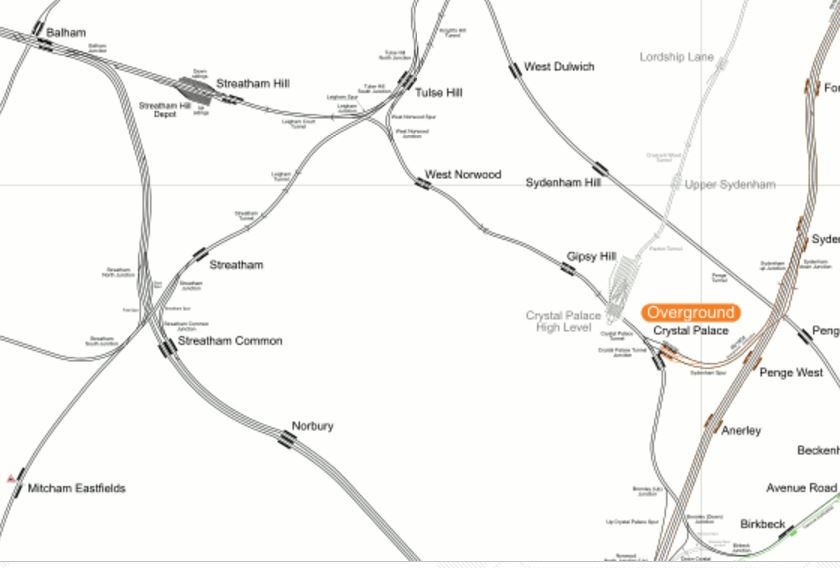
Balham To Norwood Junction
Note how the Brighton Main Line goes South from Balham via Streatham Common and Norbury.
There certainly seems to be a lot of space for more development of the railway and/or housing.
Cheam Station
Cheam Station is one of the stations on the route a proposed South London Outer Orbital, although I doubt the limited-stop service would call.
I took these pictures as we passed through.
It is a curious station, quite unlike any others you see on the electrified lines South of the Thames. The layout is explained in the History section in the Wikipedia entry.
The station is almost 16 miles (26 km) from London Bridge station. Over the years Cheam station expanded, and was rebuilt and the rail bed widened in preparation for the installation of AC overhead electric services, which would have included the building of an additional central platform island. Due to the outbreak of the First World War, the full planned expansion was cancelled and was never completed. Nevertheless, the through lines were still in place until the late 1970s when the Bognor Regis and Portsmouth express services were withdrawn from the Sutton and Dorking route to serve an expanding Gatwick Airport. The wide space between the tracks still remains and shows where the fast lines had been laid prior their removal. The brick main buildings are on the down side of the station.
How different would trains be South from London, if the electrification was overhead?
Leatherhead Station
Leatherhead Station is one of the stations on a proposed South London Outer Orbital
These are pictures of the station, with a couple of the town.
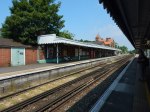
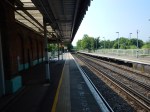
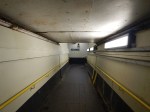

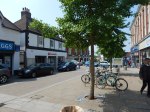
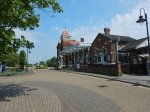
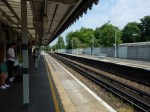
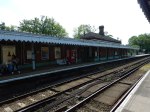
Note.
- It is not the best equipped station with respect to refreshments.
- There is rather a pleasant park between the station and the town centre.
- Trains go to Victoria, Waterloo, Dorking and Guildford.
- My Zone 6 to Leatherhead ticket with a Senior Railcard cost just £2.65.
There are probably many worse stations and towns to meet a friend or relative for lunch. At Leatherhead on a nice day, you could have a picnic, if you brought everything on the train.
 The Anonymous Widower