Tracing The New Borders Railway
A friend and I traced the new Borders Railway from it’s terminus at Tweedbank, back into Edinburgh.
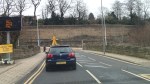
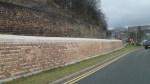
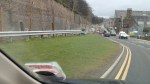



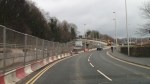






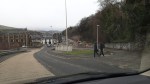

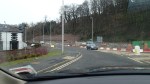



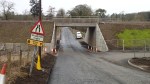
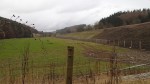


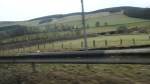



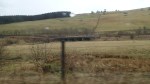





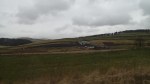

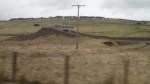
It certainly looks like the opening date won’t be far off the planned one of September 6th, 2015.
To my untrained eye, it looks like they’ve done a superb design and engineering job to squeeze the new railway through some of the places it serves like Galashiels. Especially, as the railway is being built ready for electrification and with a loading gauge that could take the largest freight. On the Borders Railway web site, they say they have no plans to carry freight at present, but in the future an important project may create a freight need, so it is wise not to rule it out.
In all the pictures you will not see any level crossings. The Borders Railway has been built without them, as they are too much of a safety risk.
Train Departure Information On The Go!
I took this picture of my Samsung S5 just before I left to get the connecting train to Leeds, before my scenic trip to Manchester Victoria.

Train Departure Information On The Go!
I just used the phone’s browser to access nationalrail.co.uk, chose Live Departures and then entered Leeds and Manchester Victoria. In the end I caught the 09:26. A god thing about this example, is that it shows all companies and routes for direct trains,
I also use it on a train, when I’m making a connection, to find out from which platform my next train is leaving. Or not as the case may be!
So simple and it works for every station and route in the country. To prove that, I’ve just found out that the 08:55 from Inverness to Kyle of Lochalsh is on time.
Who needs all the hassle of downloading an app for every train company you might need?
What A Difference A Small Length Of Track Will Make!
For some years it has been an ambition of Lancashire County Council to reinstate a short four hundred metre length of railway called the Todmorden Curve, which was lifted in 1972.
Northern Rail will provide an hourly service from Burnley Manchester Road and Accrington to Manchester Victoria from May 17th.
If I look at the timetables, there is one train an hour between Burnley Manchester Road and Manchester Victoria tomorrow that takes sixty-five minutes with a change at Hebden Bridge.
By comparison, on Monday, May 18th, the one-change service still runs but there is an additional direct train every hour taking fifty-two minutes.
That’s quite an improvement in service made by just four hundred metres of new railway line.
Hopefully, there will be another big improvement when the line is electrified, which should happen in the next few years.
Could Tram-Trains Be Used To Advantage In Blackpool?
Blackpool tramway is unique in the United Kingdom in that it runs a mixture of modern and heritage trams, which I’ve only seen done on a big scale in Lisbon, where like Blackpool, the heritage trams are a tourist attraction.
It may also be unique in that it is already tram-train ready in terms of dimensions, power supply and other details according to this report on the Sintropher web site.
Blackpool’s trams have two major problems.
The obvious one is that the trams do not serve the main railway station at Blackpool North.
The second is that the trams don’t connect well to any of the stations served by the Blackpool South to Colne service. The best connection is a two hundred metre walk between Squires Gate station and Starr Gate tram stop.
The branch to Blackpool North is being electrified and this should be completed in 2017. The final report of the North of England Electrification Task Force has also recommended that the lines from Burnley to Colne and Kirkham to Blackpool South be electrified in the Tier Two group of lines to be wired.
So it would be reasonable to assume that in a few years Blackpool will have two stations with electric trains to Preston, Liverpool and beyond.
This is a Google Earth image of the area between the two stations.
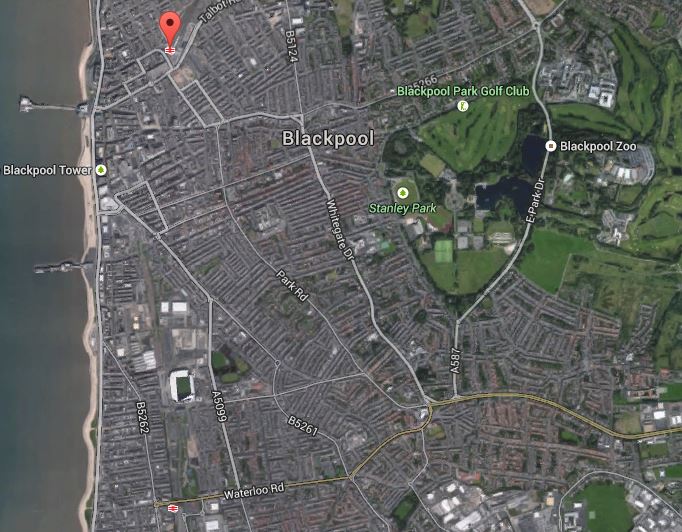
Blackpool North and South Stations
Blackpool North is indicated by the red arrow and Blackpool South at the bottom of the image, about five hundred metres or so from the sea front and a short walk south of the football ground and extensive car parking for visitors. Neither the football ground or the car parking are well served by the current tramway.
Blackpool South
This Google Earth image shows the area north of Blackpool South to the football ground to a larger scale.
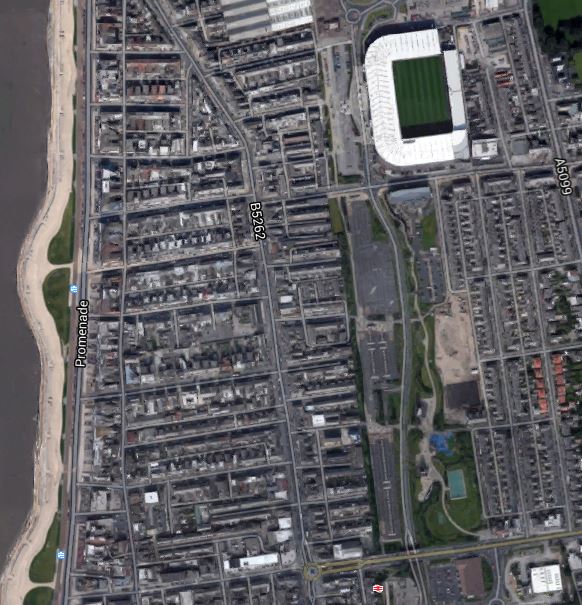
North of Blackpool South Station
I feel that it should be possible for a tram to start northwards from Blackpool South station, go past the car parks and the football ground and then thread its way through to the main tramway route along the sea front.
To the south of the station the rail line is single track all the way to Kirkham and Wesham station, where it joins the main Blackpool branch to Blackpool North.
As this line is now slated for electrification, there are probably cases to electrify it to either main line standard or make the line an extension of the tramway.
If tram-trains successfully pass their trial between Sheffield and Rotherham, then surely using tram-trains to work the services between Blackpool South and Colne, will be looked at seriously.
One factor that could come into the discussion about upgrading of the Blackpool South branch is the important golf course at Royal Lytham and St. Annes, as Ansdell and Fairhaven station is adjacent to the course and is used to transport spectators for important tournaments.
So when will the next Open Championship be staged at Royal Lytham?
Blackpool North
At Blackpool North station, the tram extension is now funded and is being planned.
But will the announcement of electrification to Blackpool South and hopefully successful trialling of tram-trains in Rotherham, add extra possibilities to how the extension to Blackpool North station is implemented?
This is the Google Earth image of Blackpool North station, which is indicated by a red arrow, to the sea front.
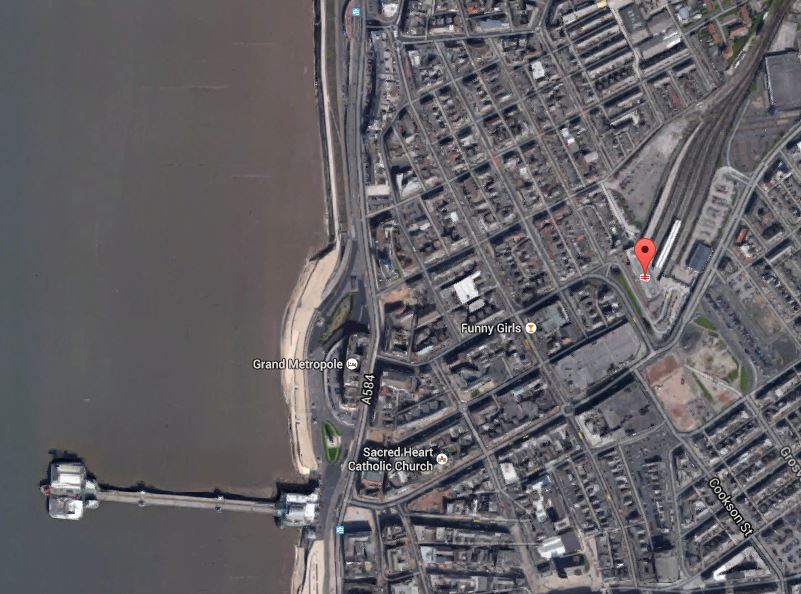
Blackpool North Station
Wikipedia also indicates that the spur to the station will join the main tramway north of the North Pier, which is the pier shown in the image.
One possible way of building the spur, would be to make it compatible with tram-trains so that some trains arriving at Blackpool North could transfer to the tramway.
The Karlsruhe Model
If both Blockpool stations were to be served by tram-trains that then ran between the two two stations, then would be an example of the classic Karlsruhe model that has been successfully working in the city since 1992.
Between the two stations, they would work as trams and once clear of the tramway, they would work as normal trains.
Advantages Of Using Tram-Trains Between The Two Blackpool Stations
The tram-train services would probably be on a simple loop between the two stations, with tram-trains turning back at either Kirkham and Wesham or Preston stations. Alternatively, services could be something more substantial serving the wider area. Certainly some tram-trains would go all the way to Colne to replace the current service.
But whatever is done, if tram-trains are used to link the two stations, various advantages will be seen.
1. Long distance services into Blackpool North would have easier access to the tram network, which would probably be step free.
2.As Preston would probably have more trains to Blackpool, this would give Blackpool better access to other long distance services to say Glasgow, Edinburgh, London and Birmingham.
3. Local services running tram-trains from perhaps Preston and Colne would have immediate access to some of the central tram stops in Blackpool, as these stops would be on the link between the two stations.
4. Blackpool South station would become a simple tram stop.
5. Space might also be released at Blackpool North station, depending on how much space was needed for the tram-train stop.
6. Extra trams would be running on the busiest central section of the tramway.
7.If the football ground and the main car parks were on the central loop, this would improve transport links to the town.
Probably the most difficult thing to get right would be the ticketing method, which London has shown must be based on a contactless bank card.
Implications Of Tram-Trains On Services To Colne
With the announcement that the East Lancashire Line is to be electrified to Colne, there would be no problem running tram-trains through both Blackpool stations and then through Preston and on to Colne.
The line from Rose Grove to Colne appears to be mainly single track, with some stations looking like tram stops, with a pile of bricks at the track-side.
If tram-trains were to run on the Colne Line as trams, this would actually be a service upgrade, despite the apparent downgrading of the line from trains to trams. If the powers-that-be thought that more stops were needed, these would be simple affairs, with a low platform on one or both sides of the track, with perhaps a simple shelter and a ticket machine. As on other tram lines in the UK, passengers would walk across the line rather than use an expensive footbridge. To see what is possible on a good tramway, look at this post about good stop design for trams and tram-trains.
But the two biggest improvements would be a much more frequent service, that probably ran at least twice an hour on weekdays and hourly on Sundays, that used new comfortable electric low-floor tram-trains something like the Class 399, being used for trials in Sheffield.
As to speed, the increased acceleration of the tram-trains would mean that stopping wasn’t as time-consuming as on say a Class 142 train. also outside of urban areas and some way from stops, they would be able to run at a more appropriate speed using the railway rules currently in force on the line. Incidentally, some UK trams like Croydon and Edinburgh go faster than you think when the track allows.
Tram-trains would appear at a cursory glance, to be a simple and affordable way to improve services in this neglected part of Lancashire.
Improving Transport In Burnley
Burnley is one of those places most famous outside the local area for football, but it is a market town of over seventy thousand people. The town probably needs improved transport connections, despite having four railway stations, the most important of which; Burnley Manchester Road has recently been rebuilt.
A big improvement will come by electrifying all of the lines, which will mean that Rose Grove and Manchester Road, will be on an important electrified artery between Leeds and Preston. The other line is the Colne Branch of the East Lancashire Line and this has three stations in the town; Rose Grove, Burnley Barracks and Burnley Central.
This Google Earth image shows the four stations as they relate to Burnley.
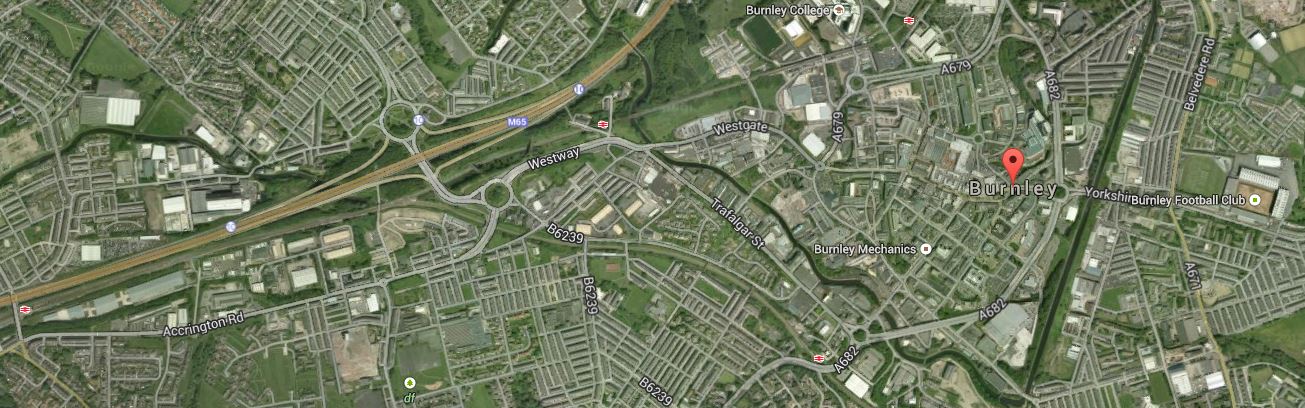
Burnley And Its Stations
Rose Grove is at the West, just to the south of the M65 motorway and is served by both lines. The Colne Line curves to the north with the two stations at Barracks and Central to the western end of the town centre, which is indicated by the red arrow. Manchester Road station is at the southern edge of the image, a steep walk up the hill from the town centre.
If the Colne Line were to be run by tram-trains, would this create a better and more accessible railway for Burnley.
As an example of what could happen, north from Burnley Central , the Colne Line follows the Leeds and Liverpool Canal, so are there possibilities to use a tram-train to give better access to the countryside above the town?
Using tram-trains on the Colne Line could improve public transport in Burnley and the other towns like Nelson and Colne, without laying a metre of new expensive railway.
But why stop the trains at Colne?
The final report of the North of England Electrification Task Force has also recommended that the lines from Skipton to Carlisle via Settle be electrified in the Tier Three group of lines to be wired.
The Skipton – East Lancashire Rail Action Partnership is also campaigning for the line between Colne and Skipton to be reinstated. This map of the missing part of the line is taken from the Wikipedia entry.
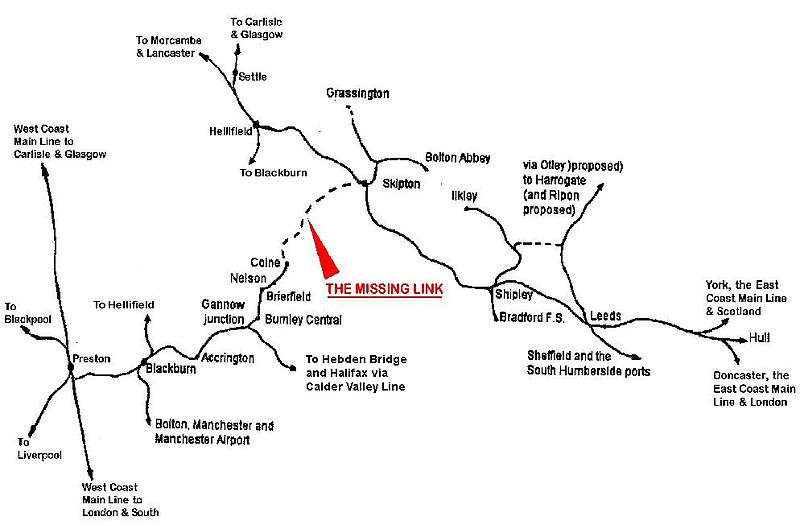
Skipton To Colne
Would the missing link be easier and more affordable to build, if it continued as a modern, single-track tramway?
This type of line would also be less visually intrusive, if it used 750 V DC overhead wires, which are all that would be needed for the Class 399 tram-train.
Building this link between Skipton and Colne would further connect the electrified lines in the Leeds area, with the soon to be electrified ones of North Lancashire. As the map shows, Skipton is on the iconic route through Settle between Leeds and Carlisle, which is also in the queue for electrification.
Skipton is the key to the success of any scheme to improve the Colne Line and link it to the town. The town is known as the Gateway to the Dales and already has direct services to London. This section in Wikipedia shows that there are impressive plans for services in the future.
But that was written before the North of England Electrification Task Force reported that Skipton to Carlisle through Settle was an electrification scheme for Tier Three. This was probably included more for freight reasons, as it creates a new route for electrified freight trains from Yorkshire, the East Midlands and the Electric Spine from Southampton to Scotland.
And to think that the line was nearly closed, but a certain Michael Portillo didn’t sign it off!
So will we see electrified passenger services from the South coming up via Leeds and Skipton to Carlisle? I think we will and if the Borders Railway is a success, then I think in perhaps 2040, these trains will reach Edinburgh.
So I think this all means that the tram-trains to Colne, should be used to create a link to Skipton.
Services Between Blackpool And Liverpool
Currently there is just a measly single train each hour between Blackpool and Liverpool.
Ormskirk to Preston is another line that could be chosen for electrification and it is likely that under the Liverpool rules it will be served by four trains per hour.
So I think it is reasonable to assume that when electrification to Blackpool North is complete, that the frequency of Liverpool-Blackpool services will be increased. After all when electrification is complete various routes via Ormskirk, Wigan, Newton-Le-Willows and St. Helens will all be possible.
But the possibility also exists for the use of tram-trains on this route, which will then go round the loop in Blackpool.
Obviously, passenger numbers will determine what services are worth trialling.
There is also the possibility of linking Royal Lytham and St. Annes with the other high-quality golf courses south of Southport.
Conclusion
The Blackpool tramway could use tram-trains to connect the electrified stations at Blackpool North and South, and over a wider network, especially over the Colne Line and its possible extension to Skipton.
A Marketing Success For UK Railways
This article on the Modern Railways web site reviews the first year of the Two Together Railcard. This is said.
The RDG says that the average cardholder has saved £127.48 on rail travel over the course of the year, including the £30 cost of the Railcard, a total saving of over £20 million.
Success is an overworked word, but this simple marketing promotion, seems to have been a big one.
I wonder how many other countries will copy this idea.
Could Tram-Trains Jump The Gap In Hertford?
One of the problems in the UK’s network is towns with two stations, that are badly connected. Often this is because two companies built competing rail lines to the town.
I went to Hertford to see how the town was laid out with respect to the stations.











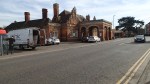




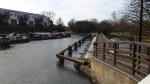




These pictures were taken as I arrived in Hertford North station and walked through the town centre to Hertford East station.
Apart from a nice walk, there was a serious point to my visit in that as part of the East-West Rail Link, the two stations could be connected. This section on the Hertford East station Wikipedia entry explains.
Some options of the proposed East West Rail Link involve reopening a route between Hertford East railway station and Hertford North railway station; however a 2009 discussion paper noted that while “the new connection appears technically feasible, doubts must be cast over its public acceptability and deliverability.
I don’t think it will happen, as it will stop all the development of expensive flats and houses at Hertford East station.
It is worthwhile looking at the Google Earth image of the town.
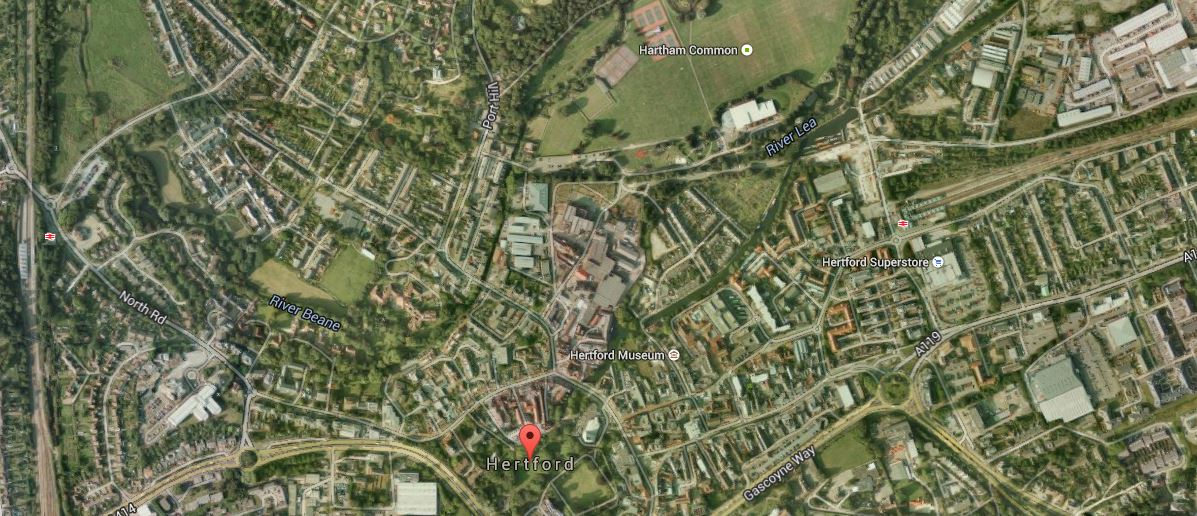
Hertford And Its Two Stations
The town centre is indicated by the red arrow and the rail icons can be seen at Hertford North on the Hertford Loop Line going north-south at the left of the image, and Hertford East at the right.
To answer my original question, I can’t imagine tram-trains ever be given permission to either run through the town-centre or across Hartham Common, but surely creating a connection to go north at Hertford North station, would need a rail engineer, with all the skills of Harry Potter, to lift the trains onto the viaduct.
At the east of the town, the train travelled under the A10 road as it crossed the Lea Valley on the Kingsmead Viaduct, which had to be built due to the nature of the terrain in the area. Any new rail line would have the same problem of both turning north and getting up the escarpment, which is heavily populated.
There used to be an extension of the Hertford East Branch, that appears to have left the branch before Hertford East station and then went across country to join the Hertford Loop Line north of Hertford. The line has been so built on, that Google Earth shows no trace. This is the Google Earth image of the land to the north of Hertford.
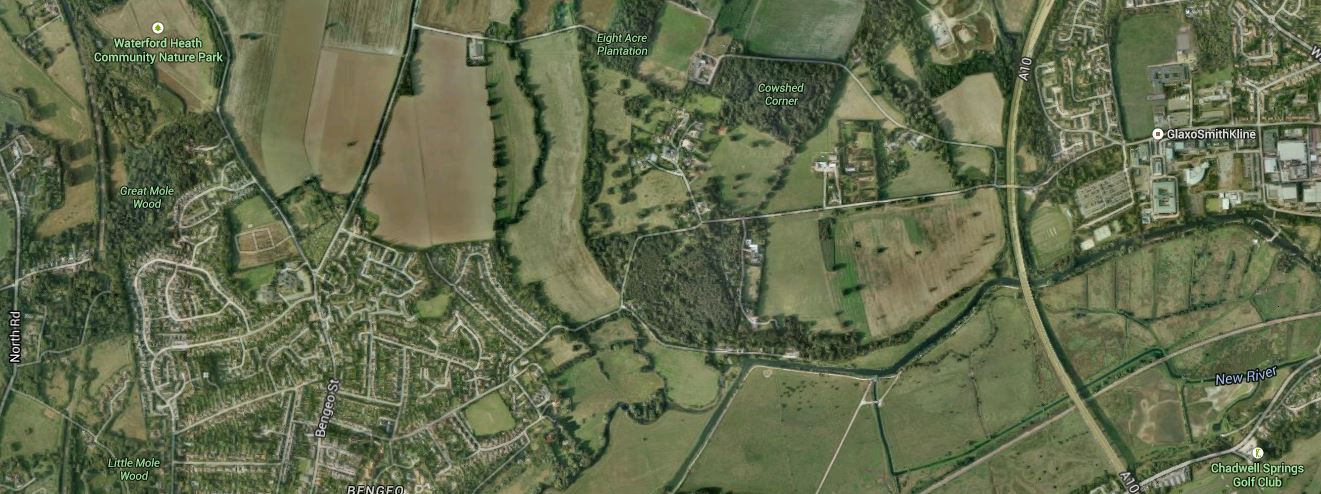
Across Hertford
You can see the Hertford Loop at the left of the image and you can also see the Hertford East Branch crossing under the A10 road at the right.
As the report says it would appear to be technically feasible to thread a railway between the two railways, but you can see why doubts on public acceptibility and deliverability have been raised. The only thing in the enginers’ favour is that you already have the ugly Kingsmead Viaduct across the Lea Valley, so perhaps you might be able to create a better solution.
Probably the only other way a connection could be made, would be to have a tunnel under Hartham Common, which then turned north underground before surfacing along the Hertford Loop Line north of the town. Even with advances in tunnelling technology and affordability, it would still be a very expensive project.
Investigating Warrington
Warrington with its two stations at Warrington Bank Quay and Warrington Central was flagged up as possible place for turning back Merseyrail trains on the Northern Line.
So on my way back from Leeds via Liverpool, I decided to visit for the first time.











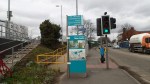





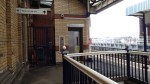

If you trace these images on a map you’ll see that I walked from Central to Bank Quay and back again.
I was very pleasantly surprised.
Instead of the rather second-rate Lancashire town I’d expected, I found a town that had been enlivened by lots of shops and quite a few restaurants including an Ask and a Nando’s.
It’s also a good idea to look at the two stations with Google Earth images, to see what possibilities exist for turning trains back to Liverpool.
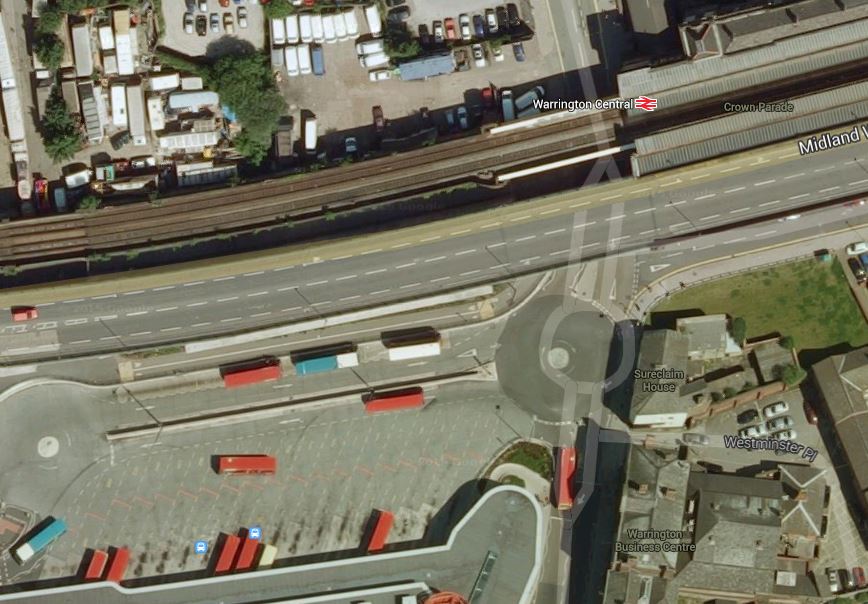
Warrington Central And Bus Stations
This image shows how the bus station is close to Warrington Central station, but as the station is close to the A57,which crosses the town, I doubt there’s any way a tram-train could access the Liverpool to Manchester Line on the viaduct.
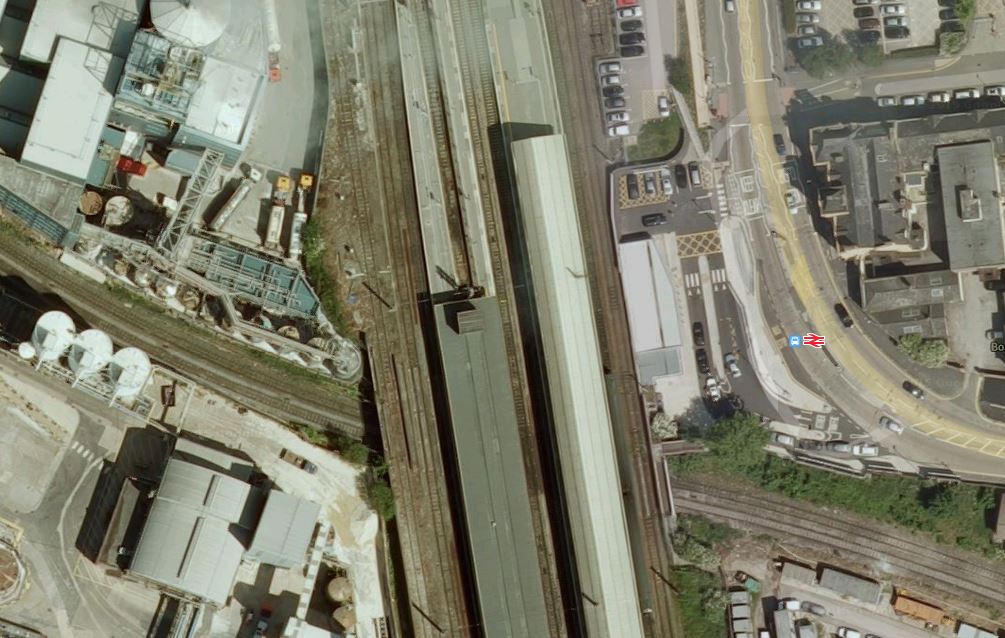
Warrington Bank Quay Station
You can clearly see the freight line passing under the West Coast Main Line in this image of Warrington Bank Quay station. A tram stop or low-level station on the freight line could easily be connected into the current high-level station and with lifts it could easily be a step-free interchange.
As I walked through Warrington town centre, I thought that an innovative tramway engineer could probably find a way to turn the tramway northward after Bank Quay station to perhaps finish its journey by Warrington Central station and the bus station. The route would probably be not more complicated than some of those in Manchester that I saw today.
But you could also go for a simple solution. There is probably space at the low-level Bank Quay station for a bay platform, where trains from Liverpool would turn back. That would not solve the problem of transfer passengers between the two rail stations and the bus station. They use a shuttle bus at present, so why not increase the frequency, perhaps power it by batteries and make it more visible!
Warrington got a boost today in that in this report on the Modern Railways web site, it was said that Liverpool to Manchester via Warrington is in the top group of lines that will be electrified.
That will also add to the possibilities of railway and tram-train layout in the Warrington area.
Will Manchester Victoria Station Be Promoted To The Premier League?
When I arrived at Manchester Victoria station, I expected the usual mess and a walk to pick up the tram to Piccadilly.
But I was greeted by a dry station, where the trams were now sheltering under an almost complete, but spectacular roof!
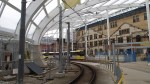


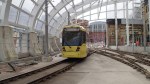
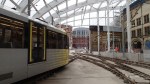







Victoria may date from the 1840s, but look at her now!
There was also today’s news on the Modern Railway’s web site, that the Class 319 trains had started working from Liverpool to Manchester Airport.
As my train went past Liverpool South Parkway later, I got several glimpses of smartly refurbished trains cascaded from Thameslink.
Soon, they will be running between Liverpool Lime Street and Manchester Victoria stations via Wigan.
Are one sprightly Victorian lady and a set of reliable British Rail-era electric trains finally going to give Manchester and Liverpool, the first class train connection they need and deserve?
The Scenic Route From Leeds To Manchester
As I had plenty of time to travel across the Pennines to get from Leeds to Manchester Victoria, I took the scenic route on the Calder Valley Line.




The line is slower than a direct train to Piccadilly, taking probably twenty minutes longer, but I sat in a comfortable Class 156 train across the table from several friendly;y passengers, watching the countryside go by.
By coincidence today this article on Modern Railways web site, entitled Calder Valley Tops Wires Wishlist was published.
It says that full electrification of the line is the top priority after the current electrification is completed.
After all, they’ve got to create some high-quality electric railways on which to run all those shiny refurbished Class 319 trains. Thirty years old they may be, but they have the heart and soul of someone at least ten years younger. And there are a battalion of eight-six of the trains, should the powers-that-be send them all to the North to dispatch a lot of Pacers to menial duties or the scrapyard.
The electrification will mean that four-car electric trains will be able to run from Leeds via Halifax, Hebden Bridge and the Todmorden Curve all the way to Manchester Victoria, Liverpool and Blackpool.
Kirkstall Forge – A New Station For Leeds
Kirkstall Forge station is currently being built on the line between Leeds and Bradford. I took this ratrher bad picture from a crowded train, as my train took me into Leeds.
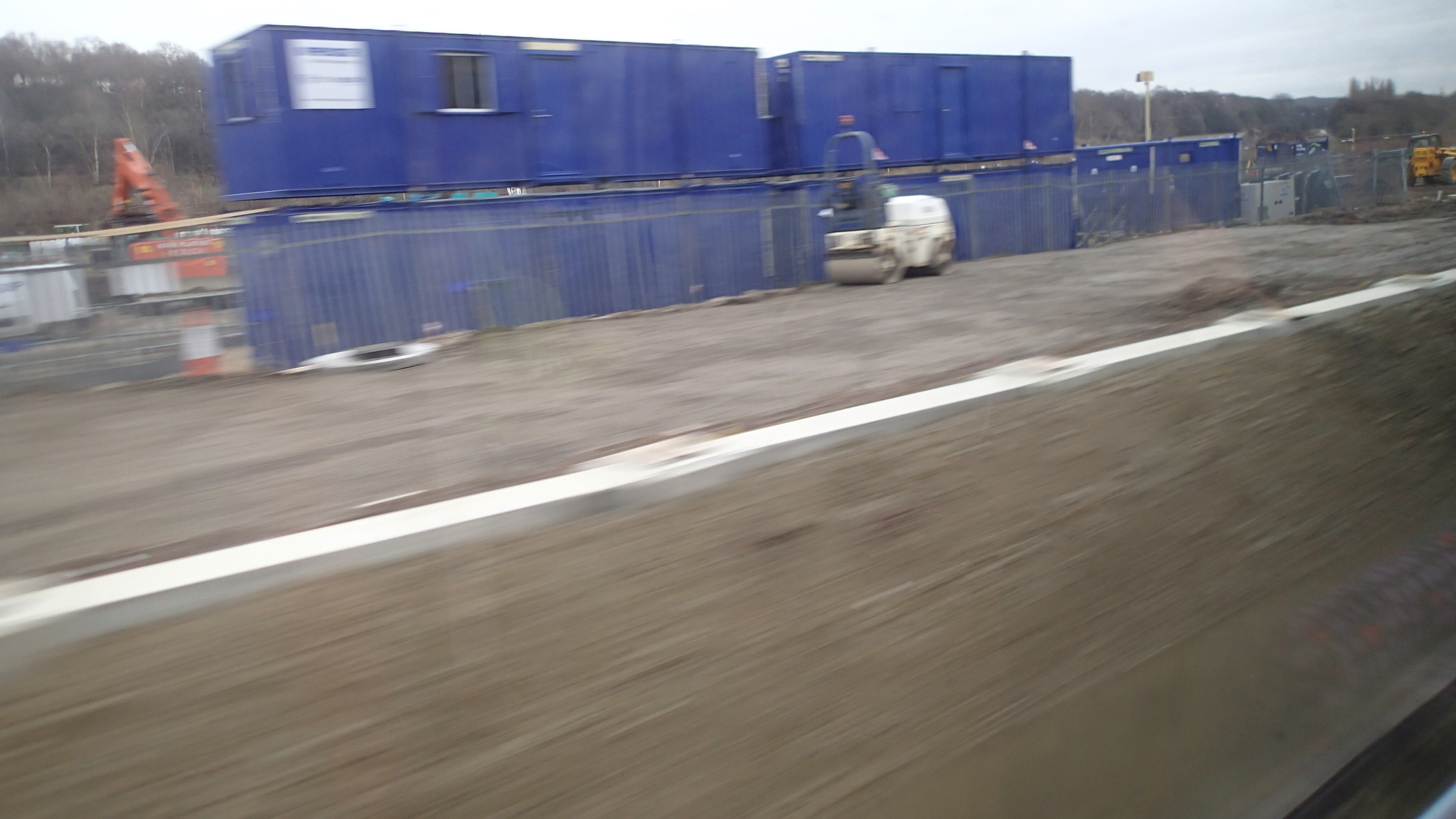
Kirkstall Forge – A New Station For Leeds
The station is being built to serve the large residential and business development at Kirkstall Forge.
Surely, every large development needs to be connected properly to the local public transport system. This would appear to be a good example, which is good for everyone. The property developers must have a big selling point to their properties, as frequent electric trains will take people to nearby city centres and business districts. We must not commit the mistakes of the 1960s, where we built large new towns or estates, like Skelmersdale and Thamesmead without a rail or rapid transit connection

