Is Waverley Station Good Enough For Edinburgh?
If you arrive in London Kings Cross station, the experience has been transformed over the last few years. Instead of entering a dark concourse crowded with tired retail outlets in a wood and asbestos shed designed in the 1960s, you now have two choices. You can walk to the front of the train, through the barriers and doors and into a large square with seats, buses and entrances to the Underground. Or if the weather isn’t good, you can take an escalator or a lift to the footbridge that spans all of the platforms and enter the covered Western concourse to make your way to onward transport or to one of many cafes, most of which are upmarket.
Other stations that I know well, like Birmingham New Street, Liverpool Lime Street, Manchester Victoria, Newcastle Central and Nottingham have also been transformed into impressive gateways for their cities. Next in line for substantial upgrading are London Euston and Waterloo, Glasgow Queen Street and Cardiff.
Edinburgh Waverley station has had a bit of a tidy up and it now has a set of escalators to get you up to Princes Street, but it is still a dark, cramped station, with no quality cafes in the station.
If I was to give Kings Cross five stars, Newcastle and Nottingham would get four and Waverley scarcely deserves one.
So to answer my original question. The answer is a definite No!
Waverley And The New Borders Railway
In some ways the new Borders Railway is going to make matters worse, as if it is successful, there will be pressure for more services on the line and there may not be enough terminating platforms at the East end of the station. But at least according to the Layout section in the station’s Wikipedia entry, things are being reorganised. This is said.
Former Platforms 8 and 9, which were substantially shortened for use as a Motorail terminus, the infilled area becoming a car park; since the demise of Motorail services these platforms are used only for locomotive stabling, although the numbers 5/6 were reserved for them in the 2006 renumbering. These are to be extended as full length platforms to accommodate terminating CrossCountry and Virgin Trains East Coast services with the taxi rank closed in June 2014 to make way for these works.
On the other hand, the Borders Railway has removed the need to use one of the worst train/bus connections in the UK.
Currently, if you arrive on a train from London and want to get an express bus to the South or the Borders, this necessitates a climb up flights of steps onto the North Bridge, which with heavy bags is impossible, unless you’re stronger and fitter than most.
Now you walk to the bay platform at the East end of the station and get one of the half-hourly trains to Galahiels, where there is a short walk to the bus station to get a convenient bus to all over the Borders and even to Carlisle.
But it is still a long walk from the bay platforms at the East (3 to 6) to the platforms that go West (12 to 18). And the tram is even further to walk.
Buses And Trams At Waverley
Like many main stations in the UK, no thought has been given at Edinburgh to how to efficiently organise the interface between trains and the buses.
I would have thought that when Edinburgh trams were built that they would have reorganised public transport in the city, so that the trams served the station properly. After all in Manchester, Croydon, Sheffield, Nottingham, Liverpool and Newcastle, local light rail, underground or trams serve the main train stations. Only in Blackpool is a walk needed, but that is being remedied.
In my view there are three places for tram stops at Waverley station.
- At the top of the escalators that take you between the station and Princes Street. But would this get in the way of the posh cars taking people to and from the Balmoral Hotel?
- On Waverley Bridge in front of the station. But where would the tourist buses go to clog up next?
- There also could be a Nottingham-style solution, where the trams cross over the station on a bridge at right angles to the train lines. But this would probably be an impossibly difficult project to design and implement.
The trams do serve Haymarket station and I wonder how many visitors to Edinburgh, use that station instead.
Waverley And Princes Street Gardens
After my trip to the Borders Railway, my friend and I went for lunch in a restaurant by the Royal Scottish Academy facing out onto Princes Street Gardens.
It was not an easy walk from the station as once we’d climbed up the escalators, it took several minutes to get across the busy Waverley Bridge in front of the station to get into the civility of the Gardens. This Google Map shows where we walked.
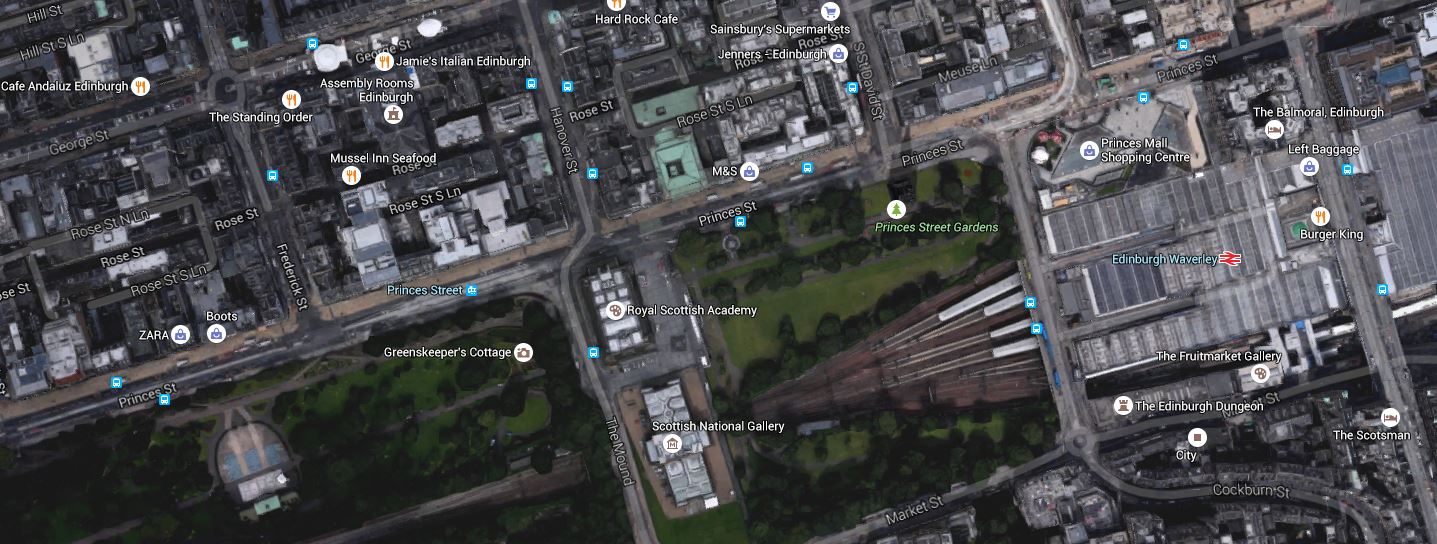
Waverley Station And Princes Street Gardens
Over lunch, I asked my friend, who’d lived in Edinburgh nearly all her life, , why there wasn’t a subway between the gardens and the station. She didn’t know and said there never had been! So as I walked back to the station, I took some pictures.



They show no evidence of a subway that might have been closed.
But they do show that if a subway could be built, then Edinburgh could have a World Class meeting place for when the weather was good.
Sorting The Trams
Seeing the map of Waverley station and the Princes Street Gardens, I have a feeling that if they were designing the Edinburgh trams now, they would be very different.
The difference is that in the last few years, tram-trains have come into general use in Germany. The Germans are getting enthusiastic about their use and large systems are being developed in cities like Karlsruhe, Kassel and Chemnitz.
In the UK, a test line is being added to the Sheffield Supertram, but how could tram-trains help solve the problems of Waverley station?
Trams coming from Edinburgh Airport and the West stop at Murrayfield Stadium tram stop and then move onto the street to call at Haymarket before going down Princes Street. New Class 399 tram-trains, as will be used in Sheffield, would follow the same route as the trams until Murrayfield. Passengers would find the only real difference would be that they had somewhere else on the destination board.
But at Murrayfield they would join the main railway lines and running as trains, they would call at Haymarket and Waverley stations.
The tram-trains could end their journey at Waverley or they could pass through the station and perhaps go on to further destinations like Dunbar or North Berwick. There would be no infrastructure modifications needed East of Waverley station, as the tram-trains would just appear to everything to be just another type of electric train.
If you look at the map in the Proposals for the Edinburgh tram network in Wikipedia, you’ll see this map.
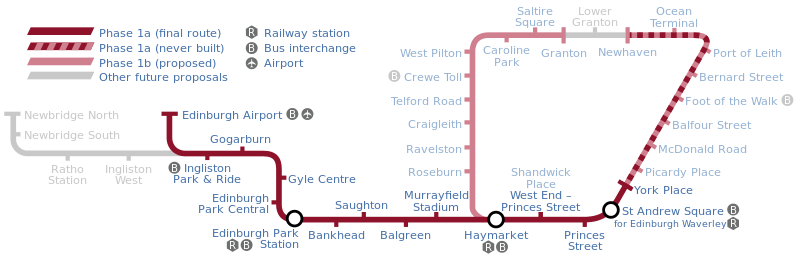
Edinburgh Tram Map
Note there is another Western destinations in addition to the airport and a loop to Newhaven and the Port of Leith. All come together at Haymarket. So services from the West could be run by trams or tram-trains as appropriate and those on the loop would probably be run by trams.
It should also be said, that the tram-trains could go anywhere to the East or West of the City, where there are electrified lines. Even Glasgow!
Edinburgh could have a lot of fun, without digging up the streets too much. Although, they’d probably need to do this, if they were going to extend the tram to Newhaven and the Port of Leith.
Phase Two Of The Nottingham Express Transit Opens Today
The Nottingham Express Transit is in my view one of our better tram systems.
As a regular user of tram systems in the UK and Europe and a Londoner, I actually think that the London Tramlink is the best, but that is because of the ticketing, which is based on the London contactless system and I just touch-in and go. Both Nottingham and Croydon systems are low-floor systems.
Nottingham Express Transit (NET) has also proved to be reasonably commercially successful. Wikipedia says this.
The new line proved successful, leading to an increase of public transport use for the Nottingham urban area of 8% in the five years to 2008, together with a less than 1% growth in road traffic, compared to the national average of around 4%. Nottingham has exceeded the most optimistic predictions, carrying 9.7 million people in 2005. This bolsters the case for the construction of new lines.
In my view other than the non-contactless ticketing, NET major problems are that it is not big enough, doesn’t connect properly to the rail station and doesn’t serve the two football and the major cricket grounds at Trent Bridge, which are all clustered together a twenty-minute walk south of the rail station.
The size problem is being rectified today with opening of Phase 2 of the system. According to this article on Global Rail News, it is happening today.
I think that this could turn out to be a significant day in the history of modern tramways in the UK, as if it proves out to be a successful extension to a proven system, it will be a wonderful advert for trams and light-rail in general.
It is just a pity, that the tram system still doesn’t serve the three sports grounds. Nottingham County Cricket Club, does at least say this about using trams to get to the ground on this page of its web site.
The nearest tram stop, Station Street, is a 20 minute walk from the ground, and anyone travelling from outside the city can take advantage of NET’s free park and ride facilities.?As an added incentive to take the tram, NET will be running a £2 return ticket for all match and season ticket holders.
Nottingham Forest give no information on how to use the tram, although Notts County would seem to run a similar scheme to the cricket.
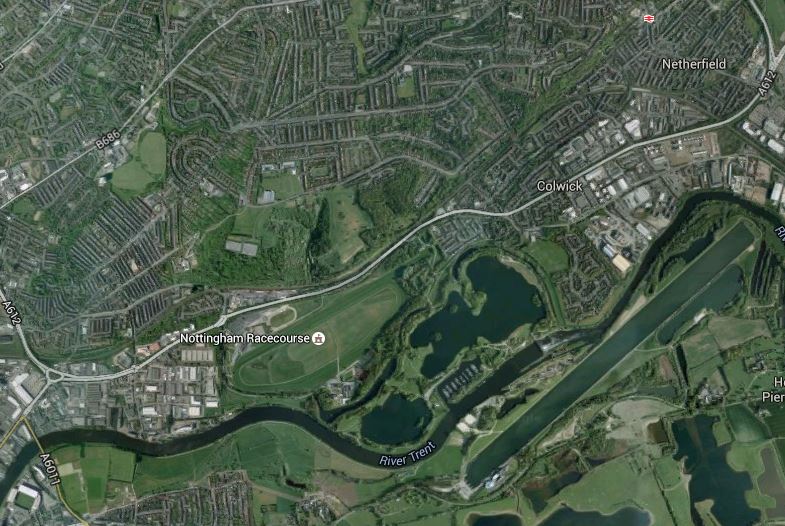
This Google Map shows the layout of the station, the River Trent and the three sports grounds.

Nottingham Station, The River Trent And Sports Grounds
Note the bridge at the left hand side of the map over the River Trent. This is the Wilford Toll Bridge, which the NET uses to cross the river.
I suspect though that many meetings about transport in Nottingham have concluded that crossing the River Trent is the biggest transport problem in the area.
When I used to drive to Nottingham from Suffolk to either see a client or watch football or racing, getting away from the city to the East was always difficult, as the river always seemed to get in the way.
The simplistic solution to solve the sports ground problem of running a tram route over Trent Bridge or Lady Bay Bridge, which are the two bridges near the grounds would probably be the sort of measure that would be terribly unpopular with motorists.
I have searched for stories about a possible new crossing across the Trent to the East of Nottingham and there is certainly a lot of studies and speculation. This report in the Nottingham Post talks about a fourth road crossing and this one in the same paper talks about a foot and cycle crossing.
My feelings are that this is a classic problem, that should be sorted locally by a local Nottingham-wide Mayor or Transport Commissioner, responsible to a lkocal electorate.
If the extension to the NET are successful and take traffic off the roads, this might give impetus to expand the tram to the east and south-east of the city coupled with a new route to get cars and trucks over the river. This is a Google Map of the East of Nottingham.
East Nottingham
Note Lady Bay Bridge and the City Ground in the bottom left-hand corner and the Holme Pierrepoint National Watersports Centre to the right. I bet the Watersports Centre would love a tram from the centre of Nottingham.
Also in this map in the top right hand corner is Carlton station on the Nottingham to Lincoln rail line. After what I’ve seen in Germany, this line would be one, they’d not hesitate to use for tram-trains. Little modification except for electrification would be needed outside of the city. At Nottingham station, the tram-trains would become trams and use the tram network to get to their final destination. I hope that Nottingham’s great and good visit their twin city of Karlsruhe and see how tram-trains working on the Karlsruhe model combine trams and trains in the city.
One thing that would make connecting tram-trains to the new tram stop at Nottingham station is that Nottingham station is not on a cramped site and a lot of the land surrounding the station is surface-level car parking.
I can envisage tram-trains arriving at Nottingham station from places like Grantham, Mansfield and Newark and then transferring to the NET tracks to go north or south from the station. You could even run tram-trains to Sheffield, so that the two tram systems are connected.
Compared to similar lines around Liverpool, Birmingham, Leeds and Cardiff, the frequencies on all these rail branches out of Nottingham are not high enough. Nottingham to Sheffield, as an example is only twice an hour, when four should be a minimum for cities of this size.
I suspect that Nottingham is watching the result of Sheffield’s tram-train trial to Rotherham with interest.
One way or other the Nottingham Express Transit will be key to solving the transport problems in Nottingham.
Midland Metro New Street Extension – 28th July 2015
I took these pictures as I walked the route of the Midland Metro extension between New Street and Snow Hill stations.
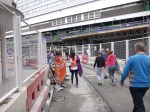


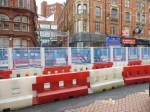




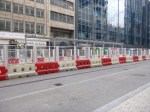
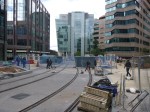
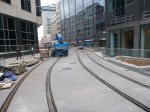
Unfortunately, the battery on my camera gave out, and I had to cut my walk short.
Krakow – A City Of Maps, Clocks, Trams And Gluten Free Food
Krakow is well-known for its buildings, but I found some other things equally fascinating in a delightful city.
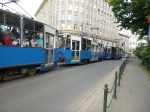
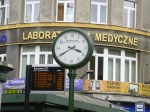


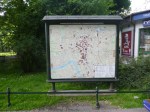
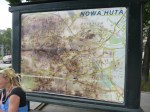
-
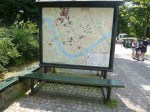
- A Large Map With Seats



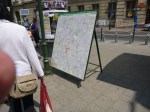
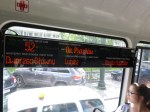
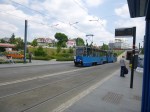
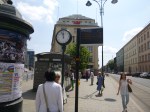
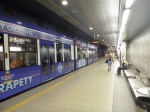
All of the maps, clocks, trams and excellent gluten-free food, made the city a real joy to explore and I would recommend the city to anybody.
To see all the posts for my Home Run From Krakow click here.
Where My Friend David Goes To Let Off Steam
I just had to take this picture of a tram destination in Dresden.
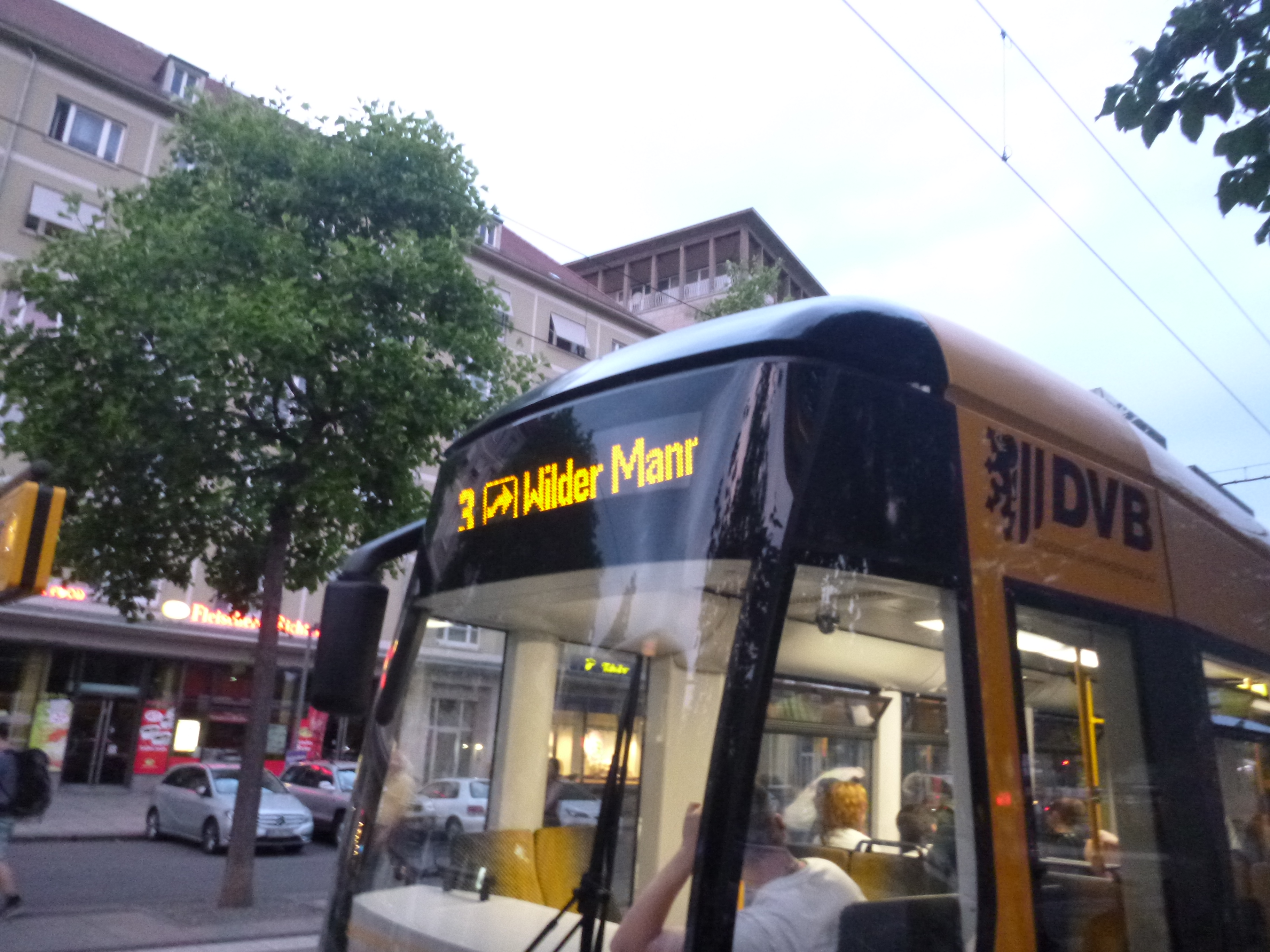
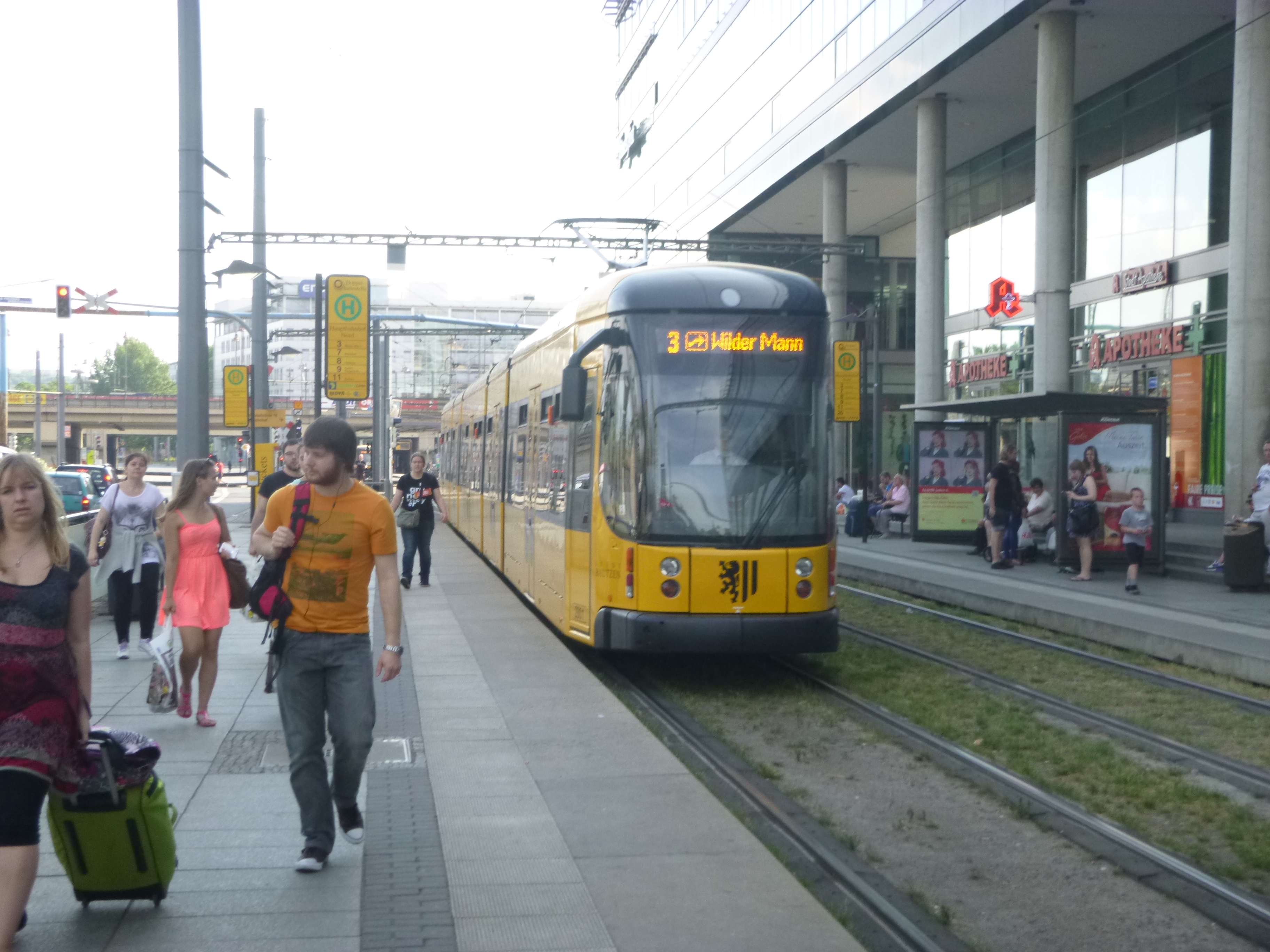
I’ve no idea what’s there! Perhaps it’s a Zoo?
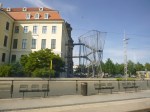
An Impressive Structure In Dresden
It may only be a shelter for a number of lines at a tram interchange in Dresden, but I like it.


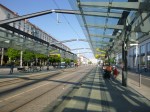
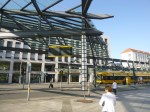

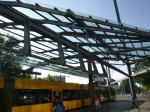

We should create more structures like this that combine engineering, art, beauty and practicality in suitable proportions.
Riding Dresden’s Trains
Dresden’s Trams are an impressive network.
I took these pictures as I roamed around the city.
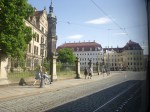
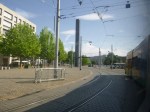

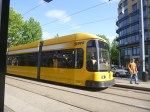
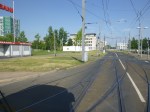
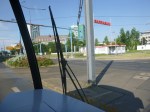
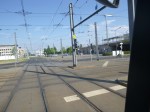

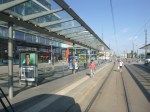
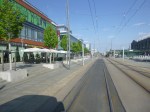
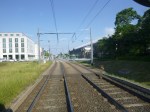
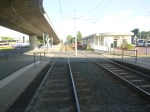
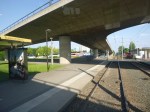
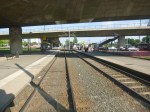
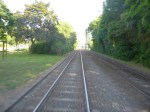
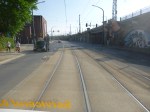
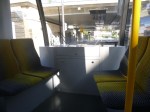
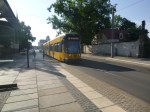
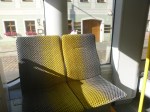
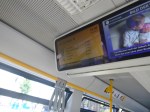
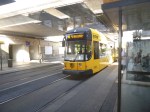
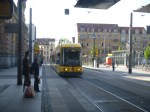
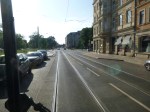
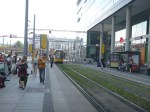
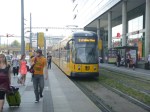
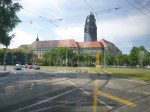
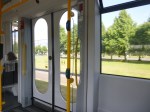





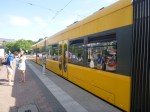
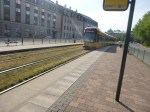





The trams are single-ended, with the rear of each tram configured so several people can sit in the tail. Many of these pictures were taken looking backwards.
I didn’t go to the end of a line, so do they go round in a loop or is each end of the tram convertible from driving position to four seats for tail-gunners? If it’s the latter, they would surely be ideal for somewhere like Blackpool, which runs another variant of Bombardier’s Flexity trams.
Note that nearly all Dreseden’s trams are low-floor models and unlike many other systems I have ridden, getting in and out is easy for all. I would say, that if you are in a wheel-chair and want to go to a historic city, then Dresden would be a place to put on your list. But make sure you check the arrangements, if you’re using the trains.
I didn’t see one, but Dresden’s tram network is possibly unique in allowing cargo trams to use the network. I think that we’ll see more developments around the world, where trams or even tram-trains are used to transport commercial loads. Look at a city like Manchester or Sheffield with an extensive tram netwqrk, that in future will call at major industrial parks and shopping centres. Would it be easier and cheaper to deliver goods for shops say to an outlying depot and then wheel them on to a low-floor tram for delivery to the shopping centre, where they are then wheeled off to the shop. This could be done at night, just as freight for shops and businesses is now delivered into Euston station.
Chemnitz Trams And The Chemnitz Model
Like most German cities Chemnitz has an extensive tram network, which even runs a few vintage trams.
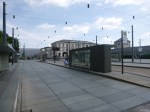
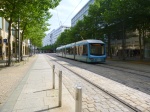
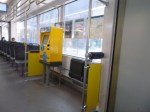

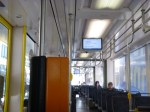
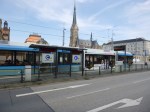


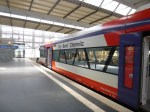
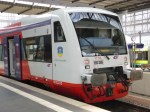
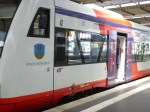
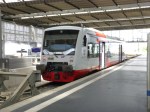
One of the reasons, I went to Chemnitz was that they are extending the system, by using tram-train technology in reverse. Normally in the Karlsruhe model, the city’s trams venture out into the surrounding area, by joining the heavy rail lines. I took pictures of this system, working in Karlsruhe, Kassel and Mulhouse. In Chemnitz, the City-Bahn Chemnitz allows trains to turn into trams at the Hauptbahnhof. In the pictures the red-and-white trams are train-trams.
In some ways the only difference between a train-tram and a tram-train, is whether the original vehicle is based on tram or train technology. But in the end the objective is the same and that is to have a vehicle that is capable of running on both tram and train tracks, with the crash-worthiness of a train. The Germans have ascribed the Chemnitzer model to what they are doing in Chemnitz. This is part of the first psaragraph of the article on the Chemnitzer model.
A special feature of the pilot line of the Chemnitzer model for Stollberg is the low platform height of 20 centimeters above the top of rail , while according to the Railway Construction and Operating Regulations (EBO) in new buildings and conversions actually at least 38 centimeters high platform are required. The vehicles ordered for the 1st stage of the CityLink family have doors with different entry heights, which both the inner city and the railway lines a barrier-free allows passenger access to platforms that are 38 or 55 centimeters high.
It illustrates the tortuous thinking that applies to some tram systems and it would appear tram-train systems. In Sheffield the Class 399 tram-trains will be low-floor , which will be compatible with the Sheffield Supertram, which is worked by trams that are 40% low-floor. But then in Sheffield, they have chosen to run tram-trains on a route where only one station will be shared with heavy rail. So will the trams have different door heights like Chemnitz or some other solution. This article from Rail Engineer explains.
Network Rail will also be building a turn back siding with a tram stop at Parkgate and low level platform extensions to Rotherham Central station.
So it sounds like one section of the platform will be used for trains and a lower one will be used for the tram-trains. It is an arrangement similar to the Clapham Kiss, where passengers walk down the platform to change trains.
Climbing To Prague Castle
These pictures document my journey from the station, where I dropped my bag, up to Prague Castle.
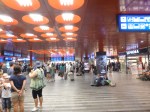
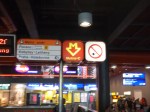
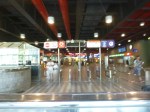
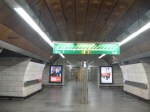
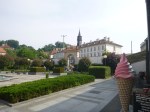
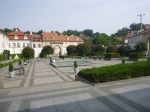
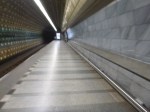
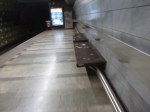
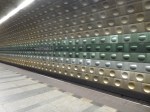
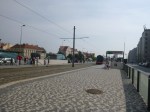

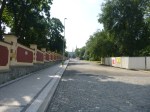
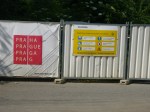
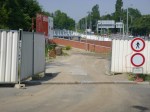
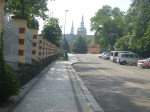
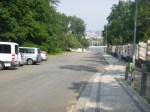
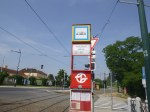
I had hoped to avoid walking up too many hills, but I did have to climb the last bit, only to find, that a 22 or 91 tram could have taken me right up the hill.
The Czech Republic has a real problem with its language, with lots of characters unfamiliar to visitors. But I didn’t have the same problems in Budapest, where the language is equally indecipherable.
In my view Prague could solve a lot of their transport problems, by adding some simple signs, which as I found a couple of years ago in Munich could be picture-based.
The Blanka tunnel being built appeared to be a road tunnel. And it is, if you look at Blanka Tunnel Complex in Wikipedia! Which says this.
The complex will connect the area west of Prague Castle with Trója district in the northeast. Its length is about 6.4 km and consists of three tunnels: Bubenečský, Dejvický and Brusnický. The tunnel complex was designed to relieve the historic centre of Prague from heavy traffic.
It’s just a pity, that some small change from the project, wasn’t used to improve the current system, with good maps and decipheral information.
An Excursion In Katowice
Katowice is one of those places that has stuck in my mind, because of a mining disaster in the 1950s or 1960s.
I took a walk around the station, followed by a tram trip for a short distance from the station, a relaxation in a park for half-an-hour or so and then a return to the station for my train to Prague.

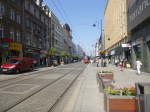


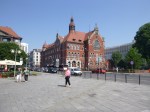
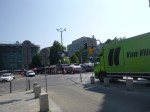

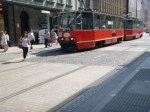
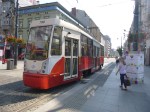
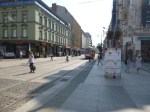
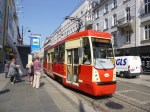


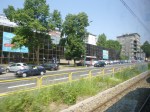


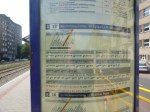
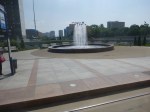
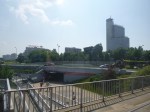

It is a typical modern city, that is like many you see over Europe. Unlike Krakow, there weren’t that many older buildings.
But like me, if you need to change trains in the city, there are many worse places to stretch your legs, perhaps take an excursion on a tram or get yourself something to eat and drink.
What helps in Katowice is that the well-equipped station is linked to the main street, where the trams run, by a very modern shopping centre. I struggled at first to find a ticket machine, but as in many countries, you buy tickets from the tobacconist. But as it’s Poland, the first younger person, I asked, gave me directions in perfect English.
 The Anonymous Widower