CMS – Back At The Surface
Back on the surface, we had another talk from a Liverpool University-educated Civil Engineer on the problems of building the CMS and other parts of CERN and the LHC.

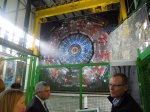


Civil Engineering is one of the major disciplines, that must be applied to a high level at CERN. The engineer had previously worked on tunnels under London.
To Greenwich Under The River
I’d never been through the Greenwich Foot Tunnel, when I used it to get from Island Gardens station on the DLR to Greenwich Pier, so I could get pictures of HMS Illustrious.
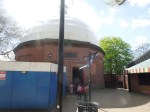

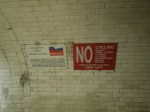


As the pictures show, I shared the lifts and the tunnel with a party of extremely well-behaved Primary School children. I mentioned to the teacher in charge, that I’m surprised Health and Safety let children into the tunnel. She said things were getting better and the children loved using the tunnel.
The Jubilee Line Bites London Again!
According to this article in the Evening Standard, the Jubilee line is being shut by the wrong kind of water.
The Jubilee line is to be shut for more than 30 days over the next two years in central London because acidic water is eating into the cast iron linings of the tunnel walls.
Services will be halted in both directions between Finchley Road and Waterloo for major repairs costing £40 million.
Why has the Jubilee line got it in for London, as when a line goes berserk, it is often that line, which was opened for the Millennium? When I use the line, there seems to be a higher chance of trouble compared to the other lines.
It would appear that the problem is in the first section of the Jubilee line that was built in the 1970s. The tunnels seem to use iron linings and it is interesting that Crossrail is manufacturing all of its linings out of concrete.
I do wonder what other problems will turn up on London’s most troublesome Underground line!
At least on the BBC News tonight, they showed how the repair techniques were being tested in the old Charing Cross platforms, which were last used for Skyfall. So hopefully, they’ll find a way to cut the closure of the line to a minimum.
All Lined Up And Ready To Go
According to this article on Crossrail’s web site, they are at full production of the lining segments for the tunnels at the Chatham factory.
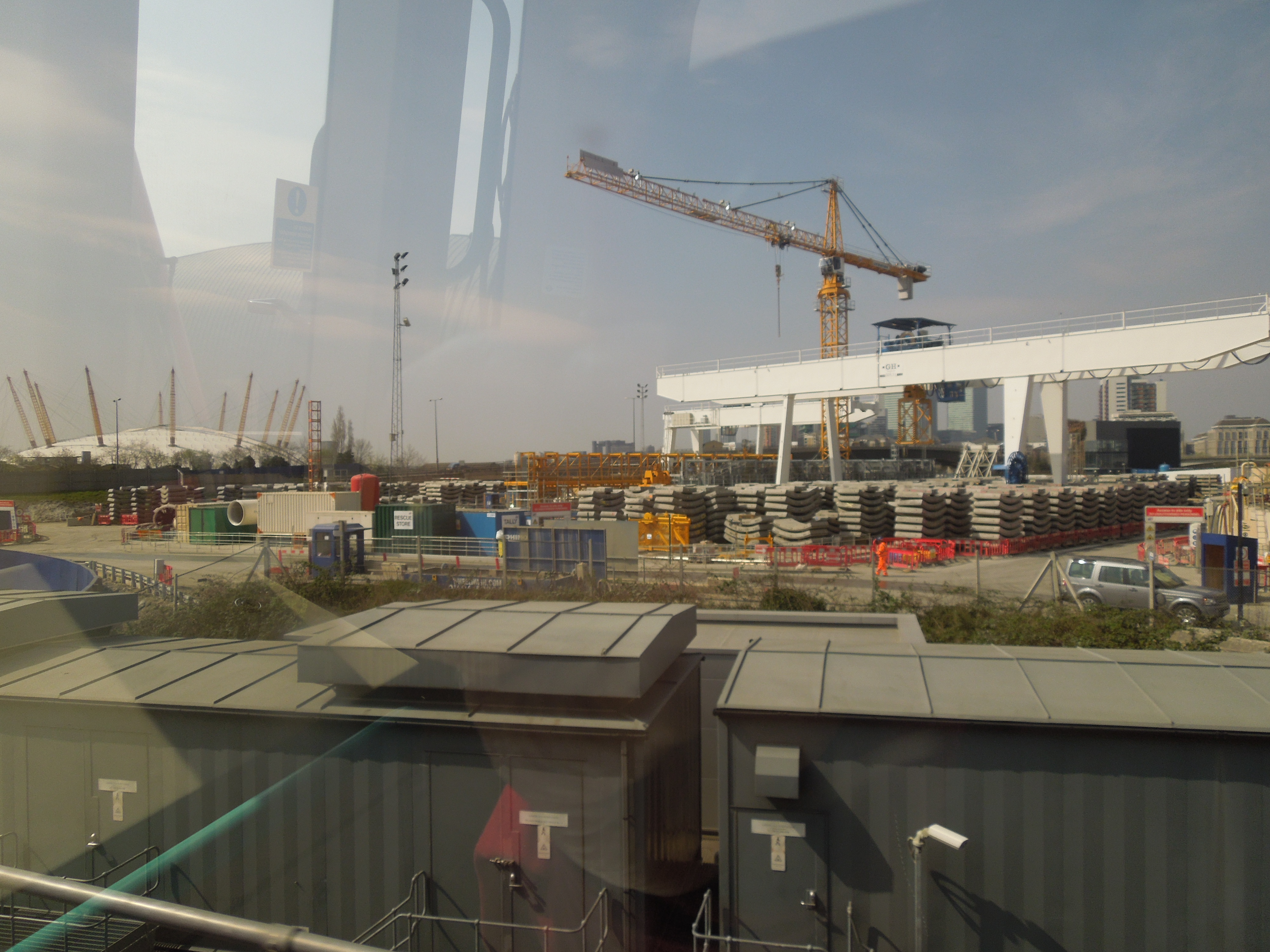
All Lined Up And Ready To Go
There are certainly lots of them at the Limmo site waiting to go underground, after being barged from Chatham.
When the Victoria and Jubilee lines were dug in the past, I don’t think that we saw such well-organised manufacture of tunnel linings and other components.
It all shows how our methods and especially the project management has improved.
When HS2 is built, who can predict accurately how much further improvement is possible?
Now This Is What I Call A Tunnel!
This story from the BBC web site is more significant than you think. Here’s the introduction.
The Norwegian government has backed an ambitious plan to create the world’s first ship tunnel. But why has nobody tackled this engineering feat before?
At 45m high (148ft) and 36m (111ft) wide, the Stad Ship Tunnel will be the only one of its kind – a passage through solid rock able to accommodate 16,000 tonne freight and passenger ships.
Ship canals have long been used to make journeys more direct and safer but the Stad peninsula is a mountainous divide, peaking at 645m, between the Norwegian Sea to the north and the North Sea to the south.
it may or may not go ahead, but it does show how confident engineers and tunnellers are in their hole digging.
And that is the significance of the story!
Crossrail in London is being dug in soft ground, but it shows how by-passes can be created under London with relative ease.
We shall be seeing a lot more tunnels in the next few decades, as the technology is just getting better every year.
The Crossrail Spoil Conveyors At The Limmo Site
The pictures show the conveyors to take spoil away from the tunnels being dug from the site on the Limmo peninsular.
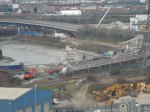
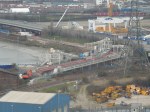
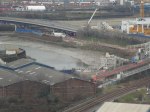
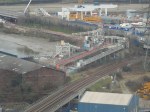
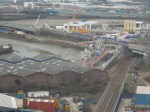
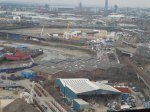
The pictures were of course taken from the Emirates Air-Line cable-car.
Engineering Open Heart Surgery
Not my words, but those of Linda Miller, describing on the Crossrail web site, the work being done to upgrade the Connaught Tunnel. The full article is here.
It may be an odd mix of words, but we all know what she means.
Exploring The Woolwich Station Box
Berkeley Homes had the excellent idea of having an open day to show those that wanted the inside of the new Crossrail station box at Woolwich.

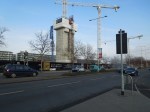
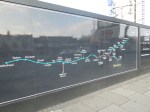

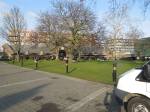

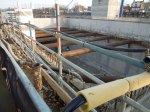


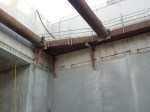
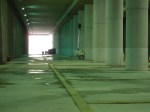

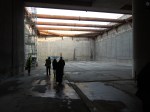
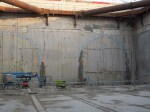


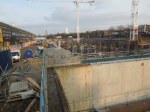

It was a very professionally organised visit and we had met in the Dial Arch pub and then walked down into where in a few years, trains will be either rushing through at up to 100 kph or stopping to drop off and pick up passengers.
I have called the two ends of the box, London and Kent. The former is the western end and the next station is Canary Wharf, whereas the other is the eastern end that leads to Abbey Wood.
There are going to be some stunning pictures here, when the tunneling machines break through on their way from Plumstead to Canary Wharf.
Work Starts On Crossrail’s Victoria Dock Portal
I went and had a look at this important work earlier in the week.

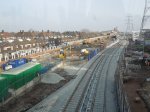

The Victoria Dock Portal will give access to a short length of tunnel connecting this part of Crossrail to the site at the Limmo Peninsular.
As the tunnel will be bored from Limmo to Victoria Dock and the site is alongside the DLR and overlooked by the bridge at Royal Victoria station, you might get a chance to view the tunnelling machine as it emerges.
There is a very good time-lapse video of the construction here.
Building A Station Like A Caisson
I was at the new CrossRail station at Canary Wharf today and took these pictures.

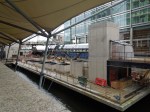

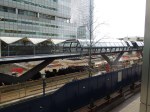
They show the enormous concrete block of a station and the walkway, that will connect it to the area of Canada Square and its offices.
Note how the main building looks almost like one of the giant caissons used for Mulberry Harbours, that were used in the Second World War to invade Normandy.
These giant Phoenix caissons, were actually built in these docks, after they had been drained and filled with sand. They were then floated out for the invasion. I’ve actually been in several of these amazing concrete structures in The Netherlands, where they were used to fill the last gap in the dykes after the North Sea Flood of 1953. They are now a museum, dedicated to the floods and those who perished.
It’s rather strange how history is repeating itself in a similar manner. I suppose though, that the engineers know that the ground is strong enough to take the weight of the station.
It does look from this web page on the Crossrail web site, that Canary Wharf Crossrail station is going to be worth the wait until 2018, although it will be substantially complete by the end of this summer.
The highlight of spring and summer will be the tunnelling machines passing through on their way to Farringdon station.
 The Anonymous Widower