Rail Access To The Port Of Felixstowe
This Google Map shows the Port of Felixstowe.
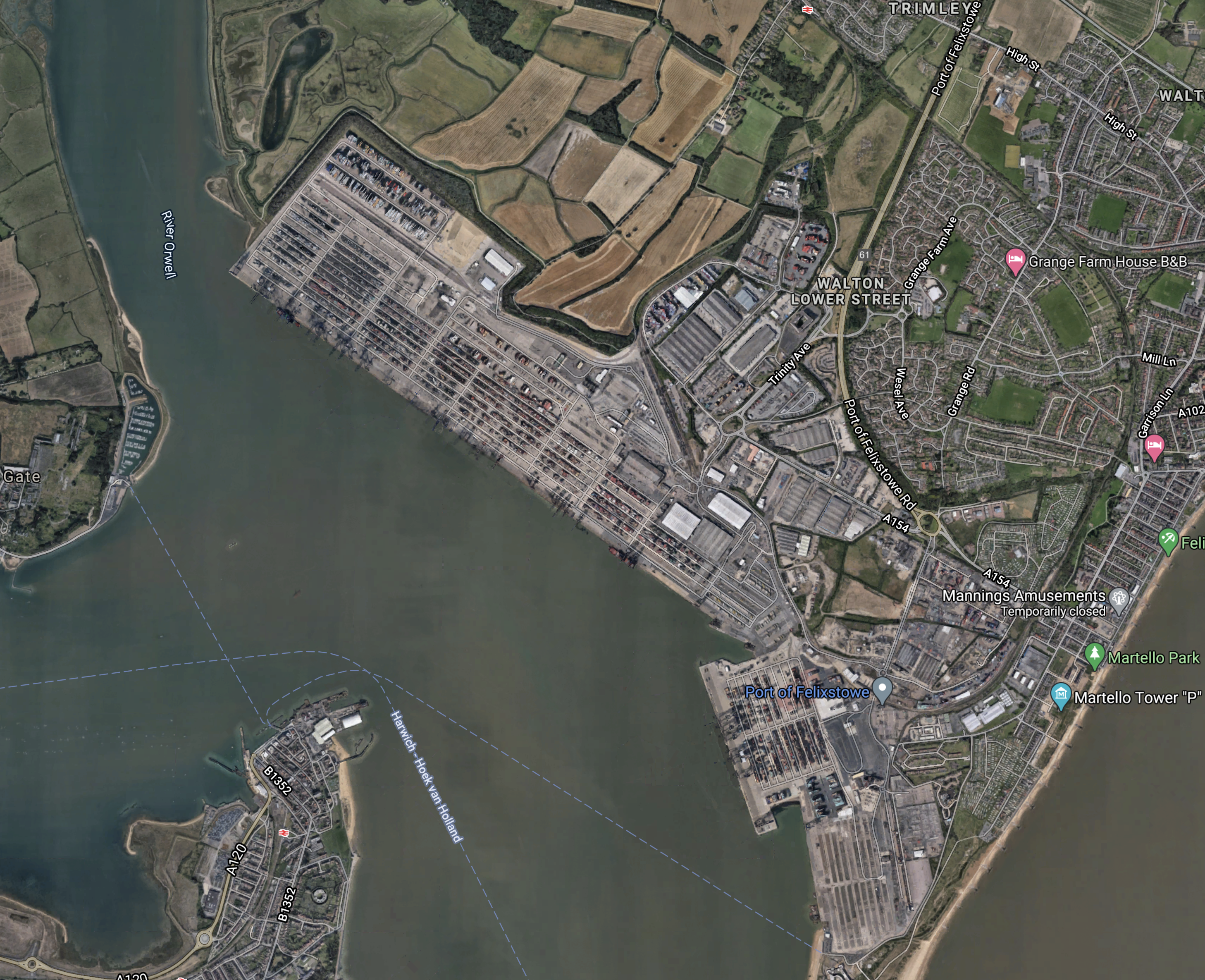
Note.
- Trimley station is at the top edge of the map.
- One rail line curves down from Trimley to the Southern side of the Port.
- Another rail line connects Trimley to the Northern side of the Port.
- A few miles of the route between Trimley and Ipswich, has recently been double-tracked and improved.
I will now describe the important parts of the rail network to and from the Port.
Trimley Station
This Google Map shows Trimley station.
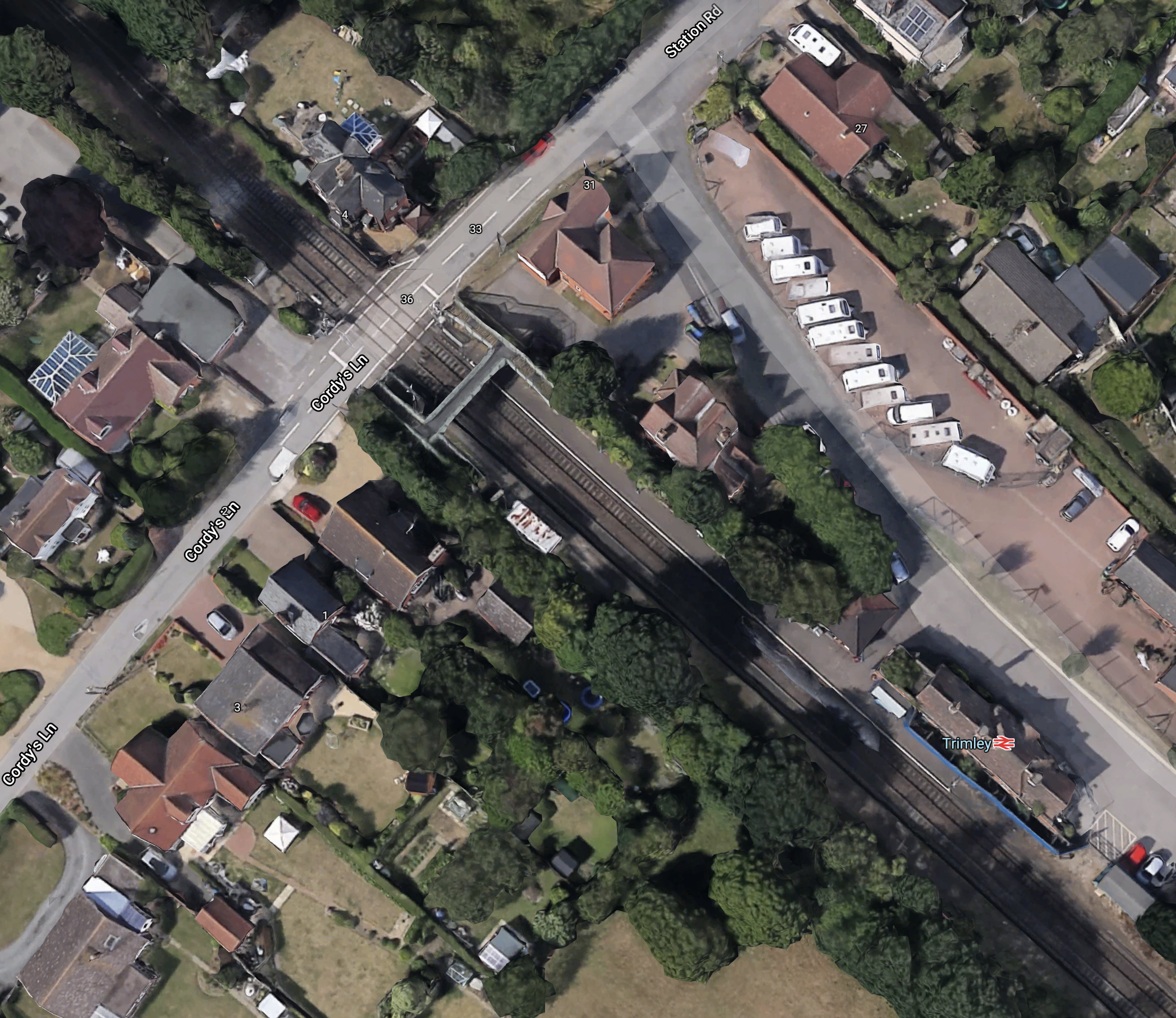
Note.
- Trimley station has two platforms. although only the Northern one, which is numbered 1 is in use.
- There are two tracks through the station.
- There is a footbridge over the tracks.
- Most people cross the lines on the level crossing.
The track through Trimley station has been improved and the improved is described in the Wikipedia entry for the Felixstowe Branch Line, where this is said.
In October 2017 final approval was given for a £60.4m project which includes doubling between Trimley station and Grimston Lane foot crossing. Work started on 7 April 2018 and was predicted to end in Autumn 2019.[29] However, the work was completed by May 2019 and saw changes to the infrastructure at Trimley station where trains from the Felixstowe direction could now access the disused platform road and the establishment of a double track as far as a new junction called Gun Lane Junction just over a mile west of Trimley station. Both lines can be worked bi-directionally and with the increase in freight traffic that resulted from the additional capacity a number of level crossings were either abolished or upgraded to improve safety.
This Google Map shows the section of line, that has now been dualed.
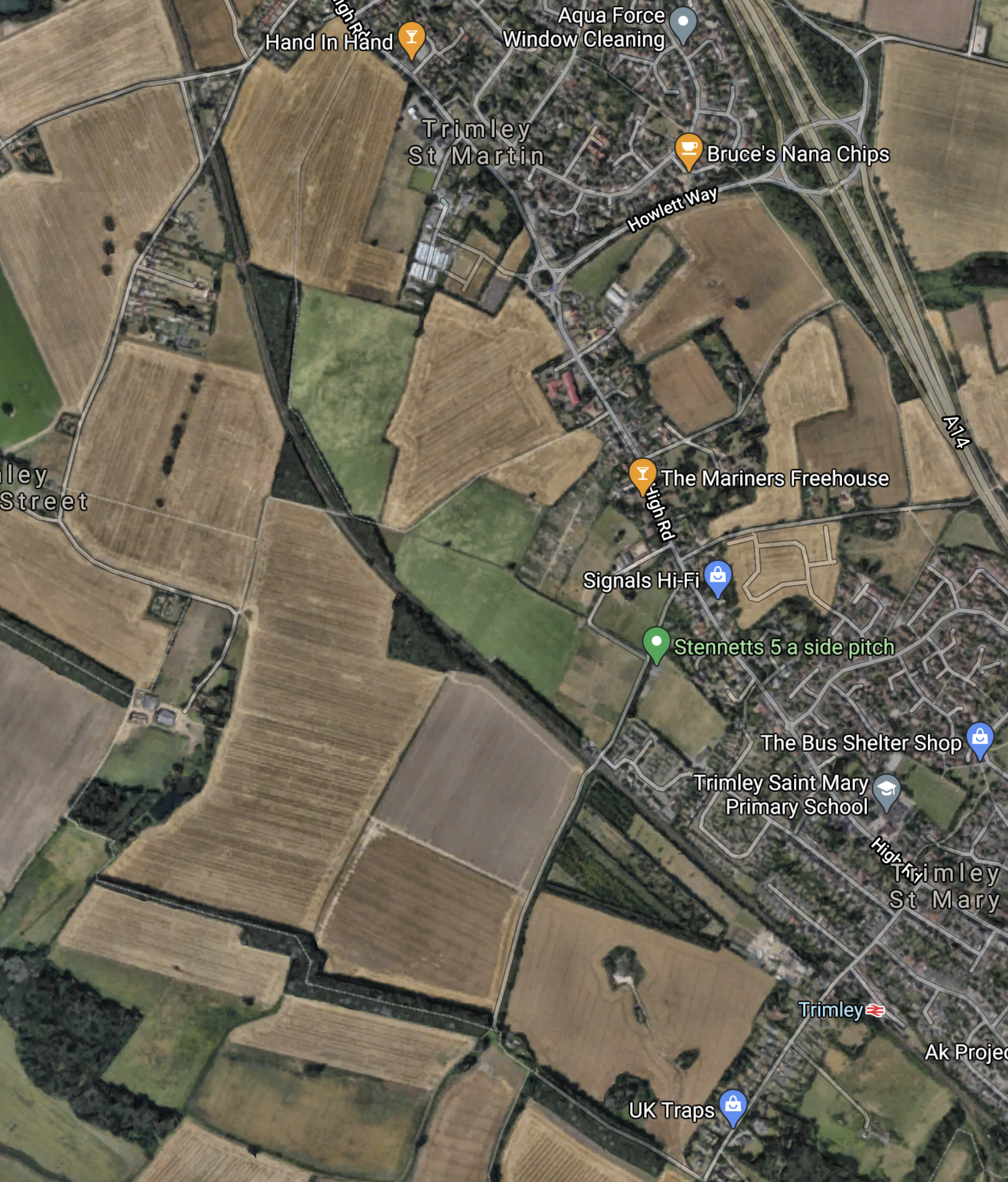
Note.
- Grimston Lane is the triangle of roads in the North-West corner of the map.
- Trimley station is in the South-East corner of the map.
This Google Map shows the track layout East of Trimley station.
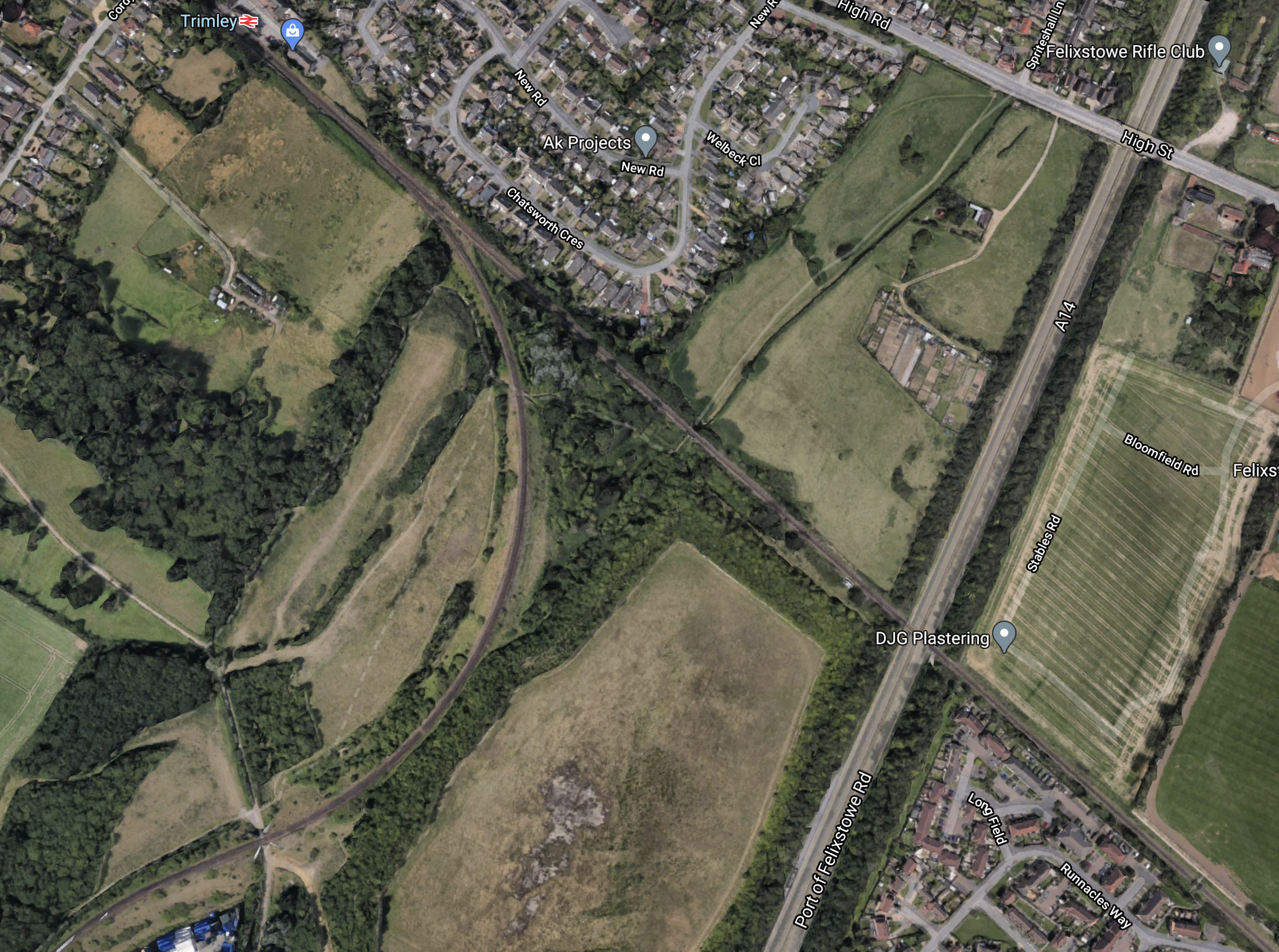
Note.
- Trimley station is at the top of the map.
- There is a junction to the South-East of Trimley station.
- The Northern track goes straight on to Felixstowe station and the Southern Terminal at the Port of Felixstowe.
- The Southern track curves South to the North Terminal at the Port of Felixstowe.
- Both branches are single track.
It would appear that all trains going to and from the South Terminal at the Port, take the Northern track through Trimley station and those going to and from the North Terminal at the Port, take the Southern track.
Southern Access To The Port
This Google Map shows how the trains go between Trimley station and the Southern entry to the Port.
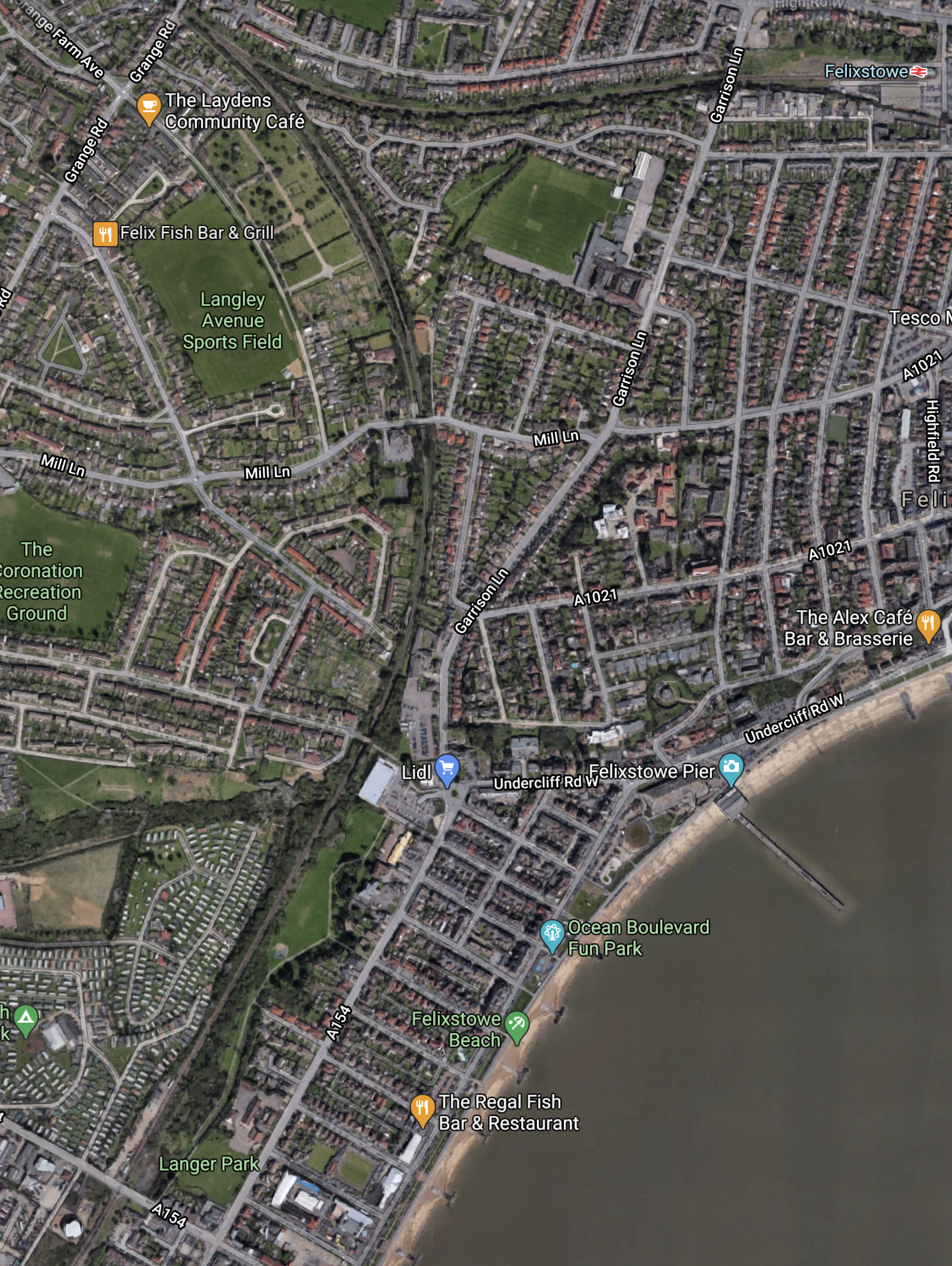
Note.
- Felixstowe station is in the North-East corner of the map.
- The single track from Trimley station splits into two in the North West corner of the map.
- One branch allows an hourly service between Ipswich and Felixstowe stations.
- The second branch goes South to the Port.
- The junction used to be a full triangular junction to allow trains to go between the two Felixstowe stations.
Do the residents of some houses in Felixstowe, get plagued by noise, pollution, smell and the diesel smoke of Class 66 locomotives going to and from the Southern access to the Port?
Felixstowe Beach Station
There used to be a Felixstowe Beach station on the railway to the Port.
This Google Map shows the location.
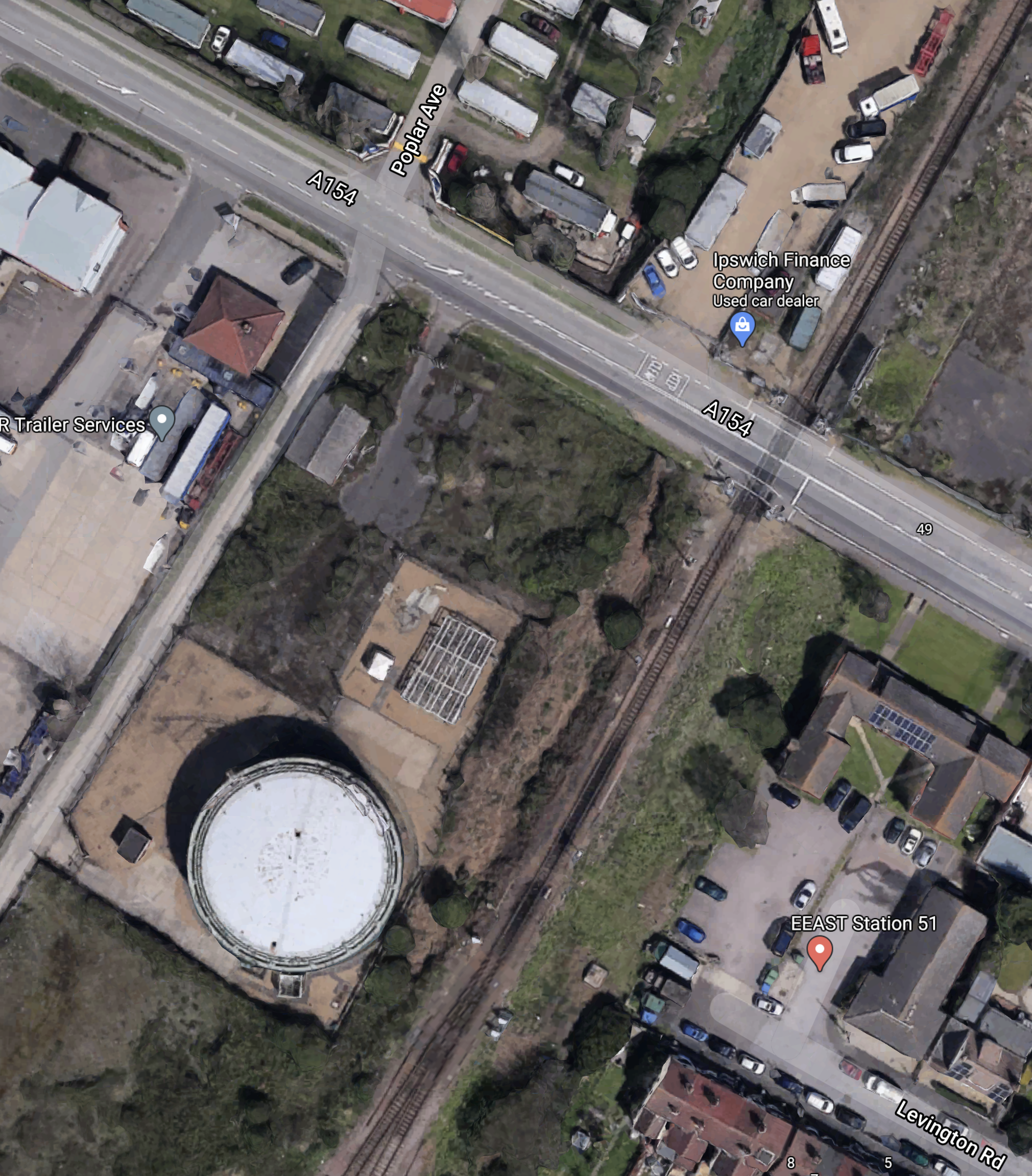
The station was to the North-East of the level crossing.
These pictures show the area as it was a year or so ago.
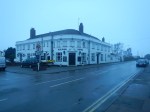
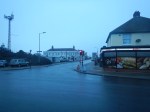
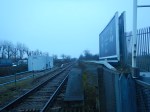
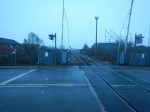
Is there a need for a new Felixstowe Beach station to allow workers and visitors to the Port to avoid the crowded roads?
Future Passenger Services Between Ipswich and Felixstowe
The passenger service between Ipswich and Felixstowe has for many years been a bine of contention between the Port of Felixstowe and passenger train operators.
The Port would like to see the passenger service discontinued, so that they could run more freight trains.
However, to increase both freight and passenger capacity, the East-West Rail consortium has proposed running a tram-train between Felixstowe and Ipswich.
- It would run through the streets of Ipswich to the forecourt of Ipswich station.
- It would serve important points in Ipswich, like the Hospital, Town Centre and Portman Road.
- It would have a frequency of four trains per hour (tph).
I wrote about the proposal in Could There Be A Tram-Train Between Ipswich And Felixstowe?
The Southern area of Felixstowe, along the beach is run down and needs improvement.
So why not run the tram-train all the way along the sea-front to Landguard Point?
This Google Map shows Landguard Point.
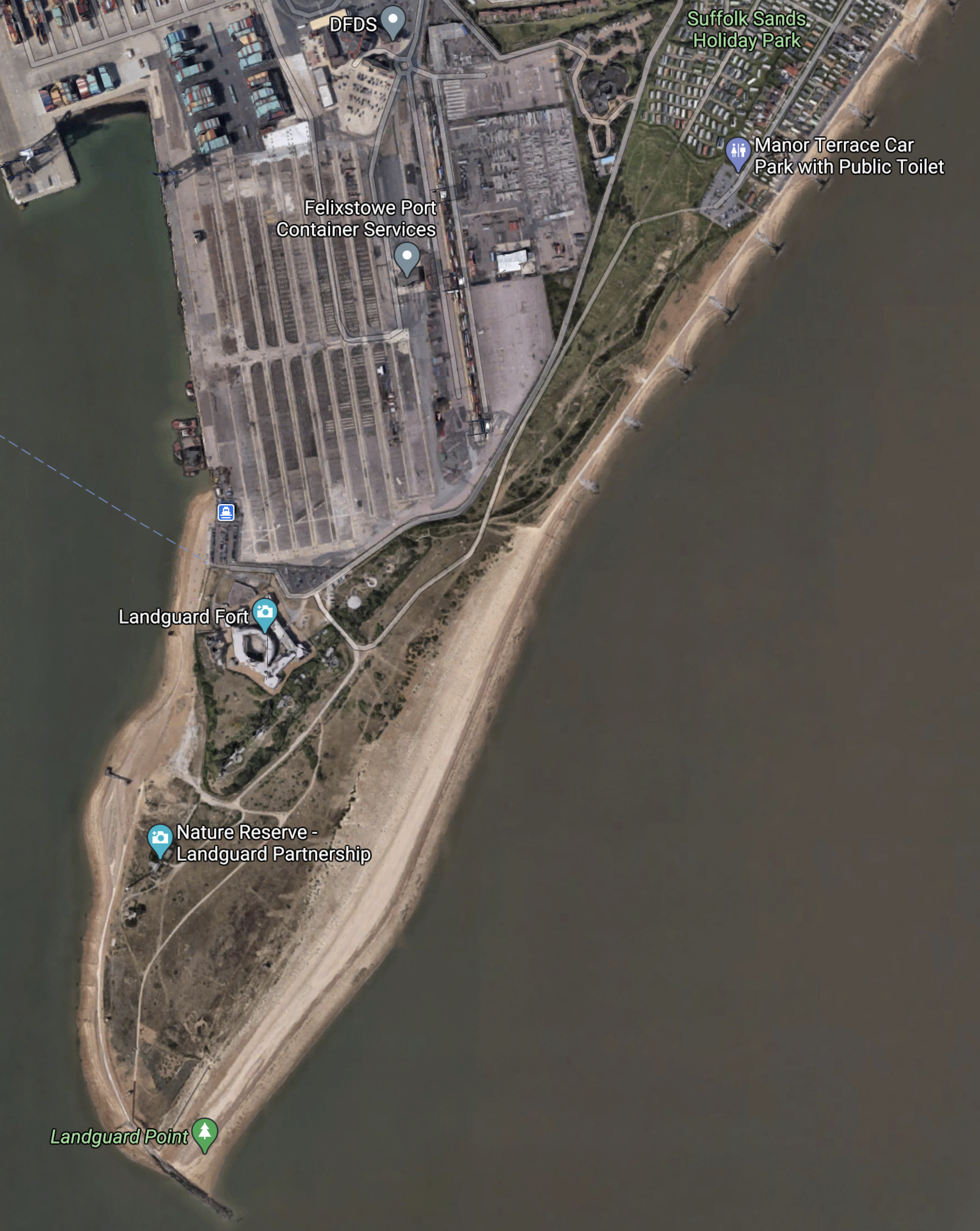
A tram-train going to Landguard Point would do the following.
- Provide a direct passenger rail service between the Port and Ipswich.
- Provide access to the Harwich ferry.
- Improve the economic prospects of the Southern part of Felixstowe.
- Bring visitors to the beach without using their cars.
But the main thing it would do is create decent access to the historic Landguard Fort.



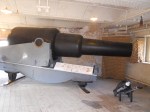
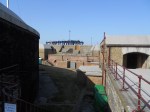


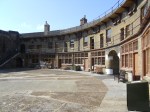
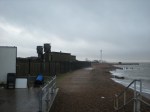
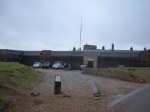
Landguard Fort was the site of the last invasion of the UK, when the Dutch were repelled on the 2nd of July 1667, at the Battle of Landguard Fort.
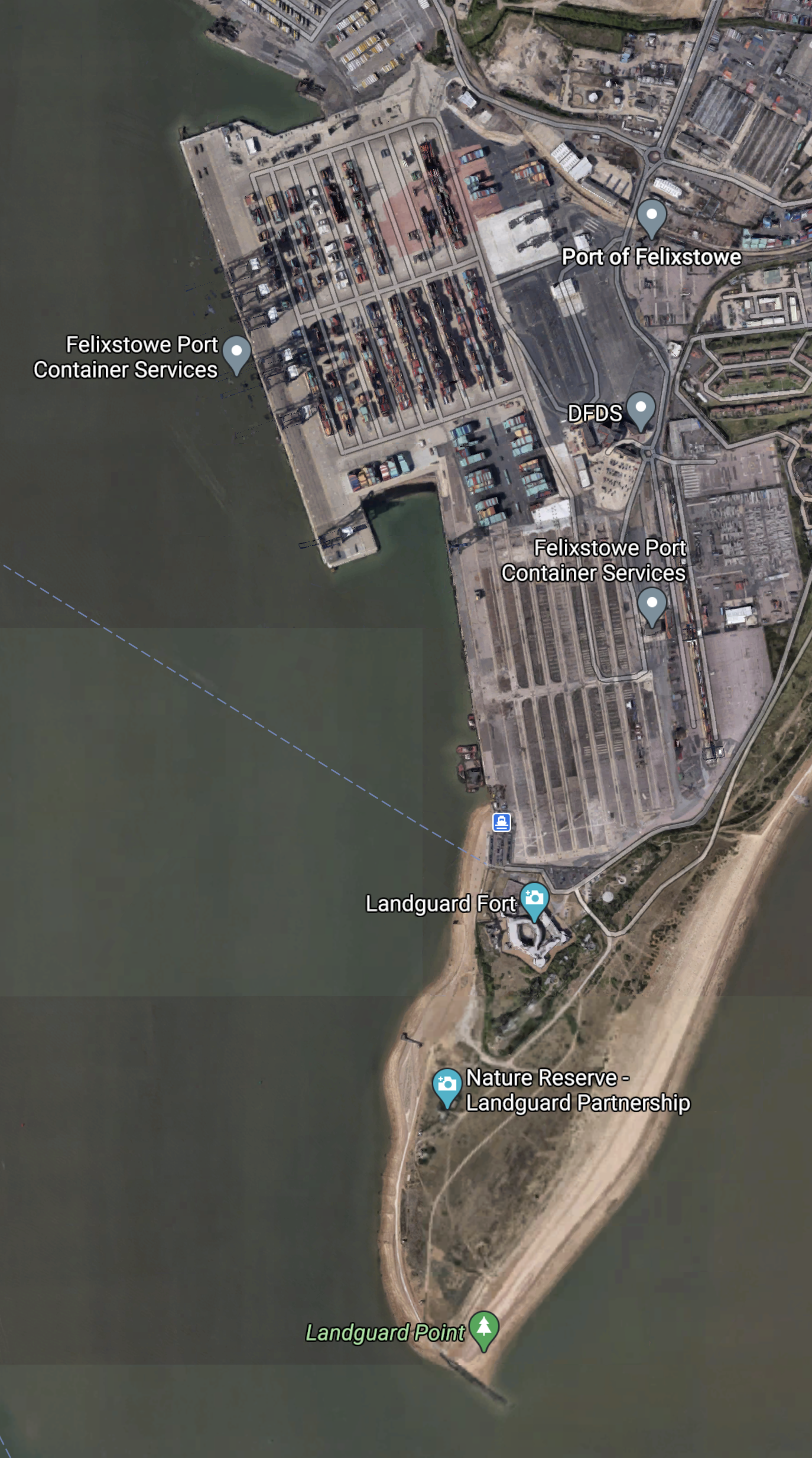
The Southern Terminal At The Port Of Felixstowe
This Google Map shows the Southern terminal of the Port.
This second Google Map shows where the rail line enters the Southern terminal.
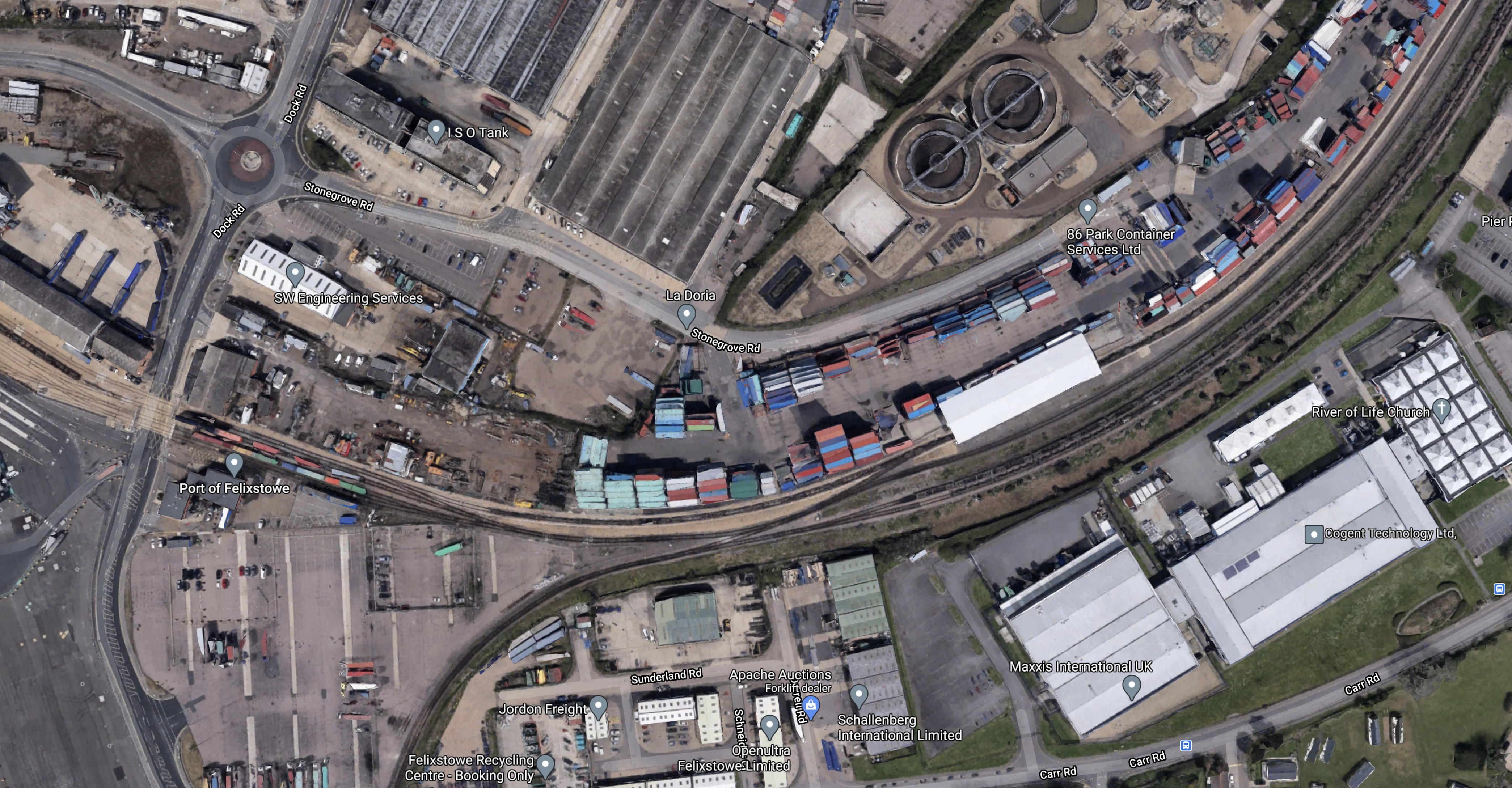
Note how the rail link enters in the North-East corner of the and curves towards the quays before it splits into two.
One branch goes straight on, past some sidings and gives a connection to the Trinity Terminal.
The second branch turns South to several sidings.
This Google Map shows these sidings.
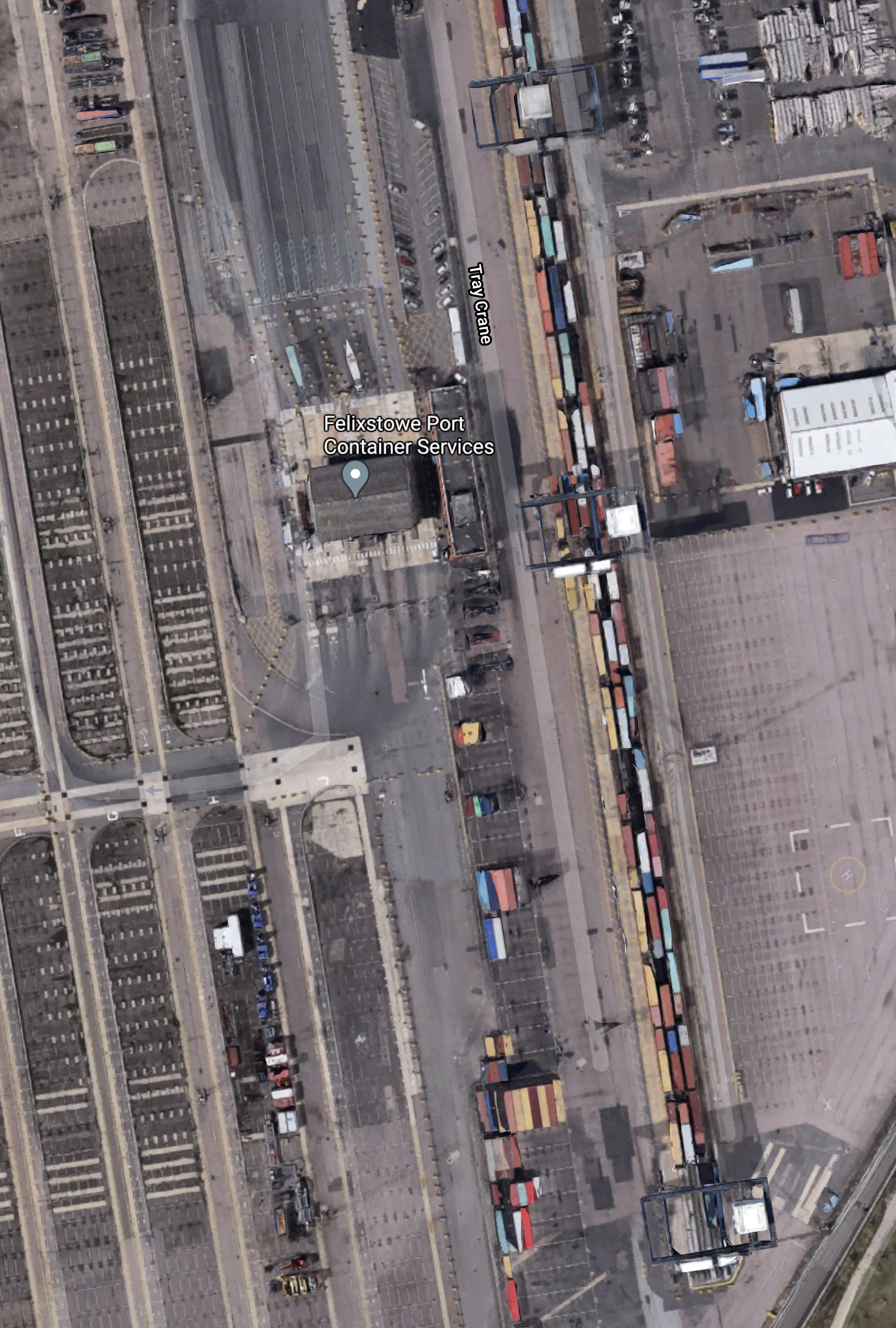
Note that the sidings are towards the right of the image and run North-South.
Northern Access To The Port
This Google Map shows the route taken by the rail access to the Trinity Terminal.
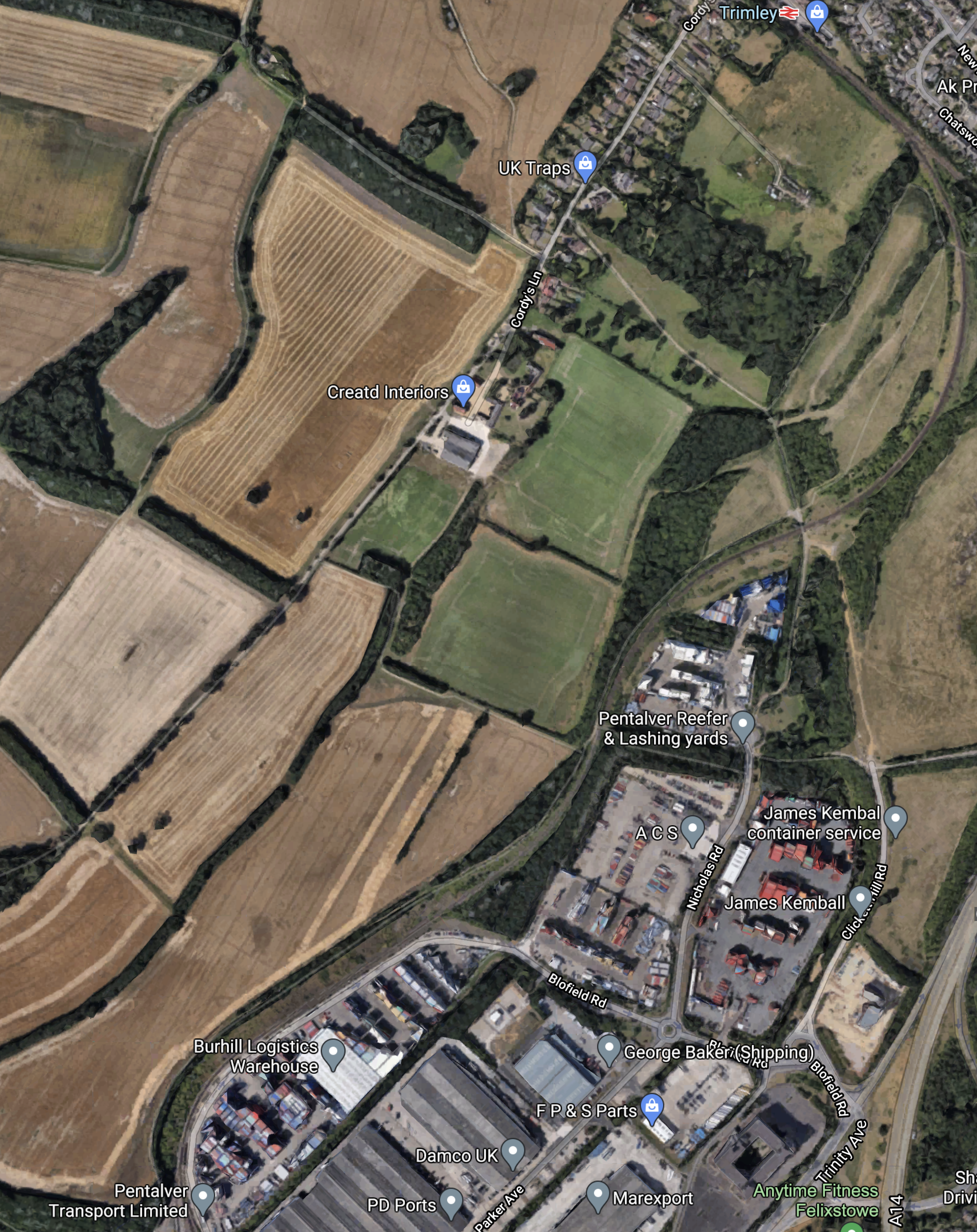
Note.
- The route branches off South just to the East of Trimley station.
- It curves its way South to the South-West corner of the map, where it enters the Port.
- It is single track.
This second Google Map shows where it enters the Port.
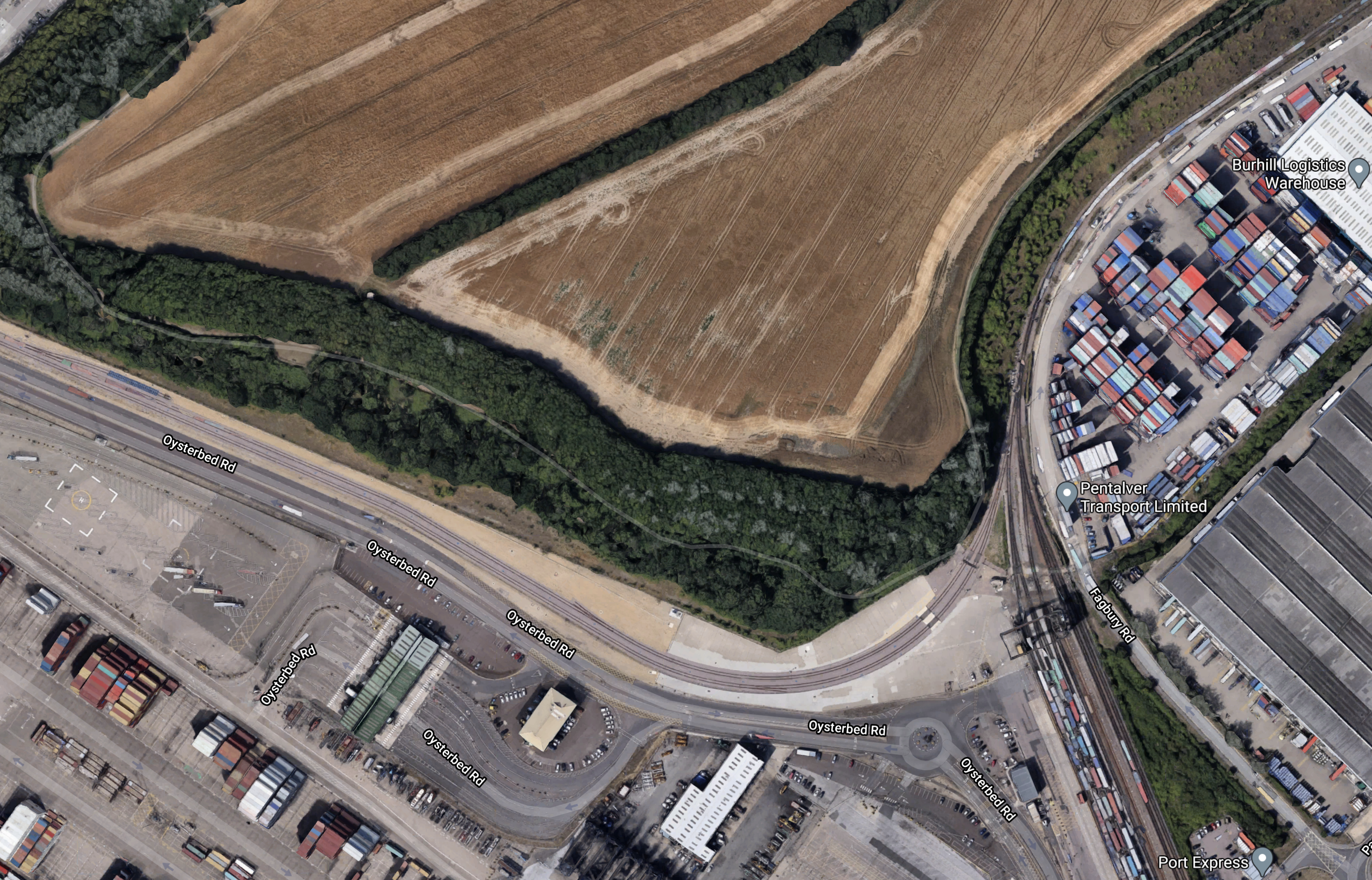
Note.
- The track enters from the North-West corner of the map.
- It then splits into two branches.
- One branch goes West to the Trinity Terminal.
- The second branch goes South into a set of sidings.
It looks to be a well-designed access, to the Felixstowe Branch Line at Trimley station.
The Trinity Terminal At The Port Of Felixstowe
This Google Map shows the Trinity terminal.
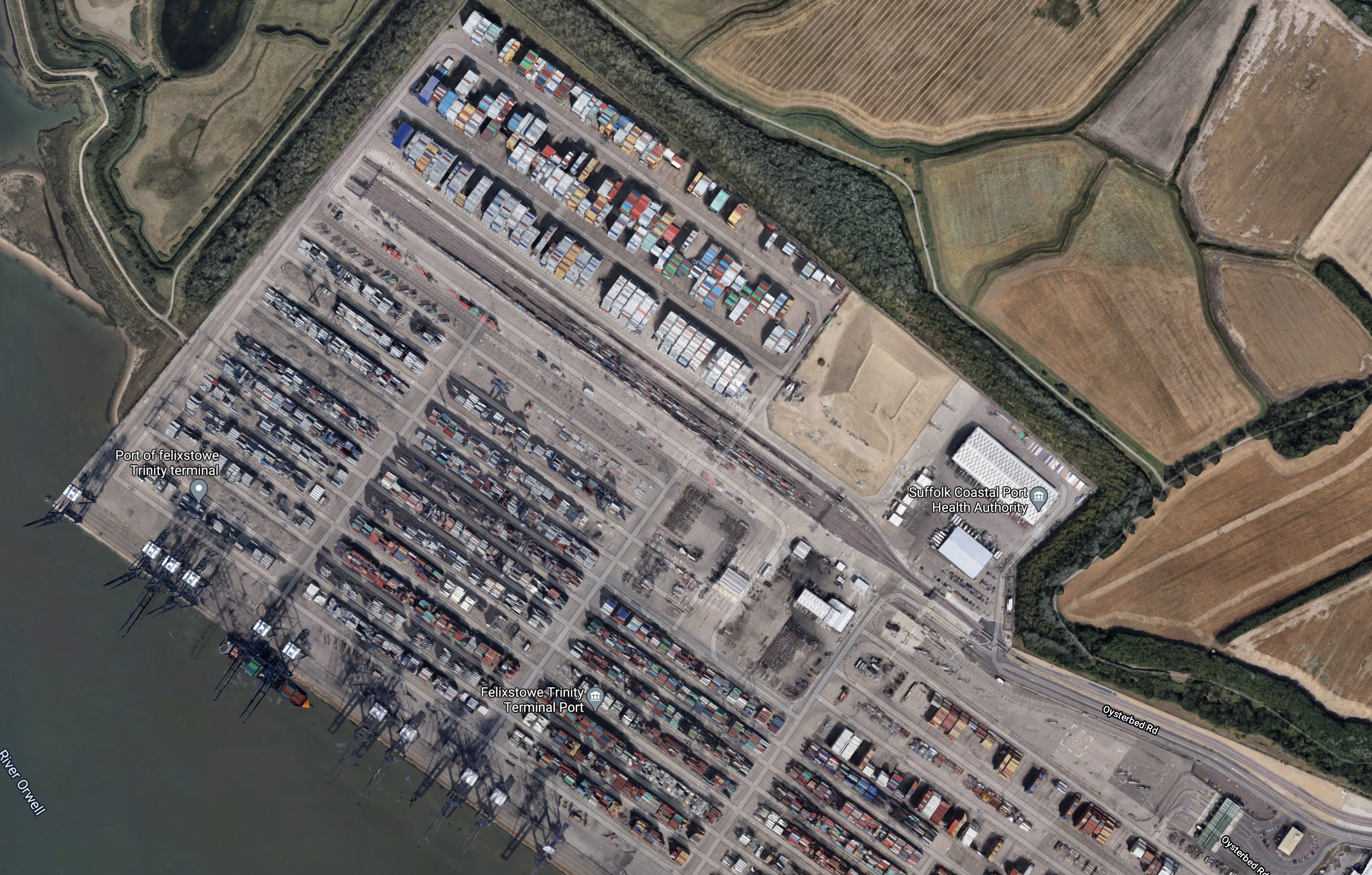
Note the rail sidings and the link to the East, which links to the previous map.
This Google Map shows the rail sidings in detail.
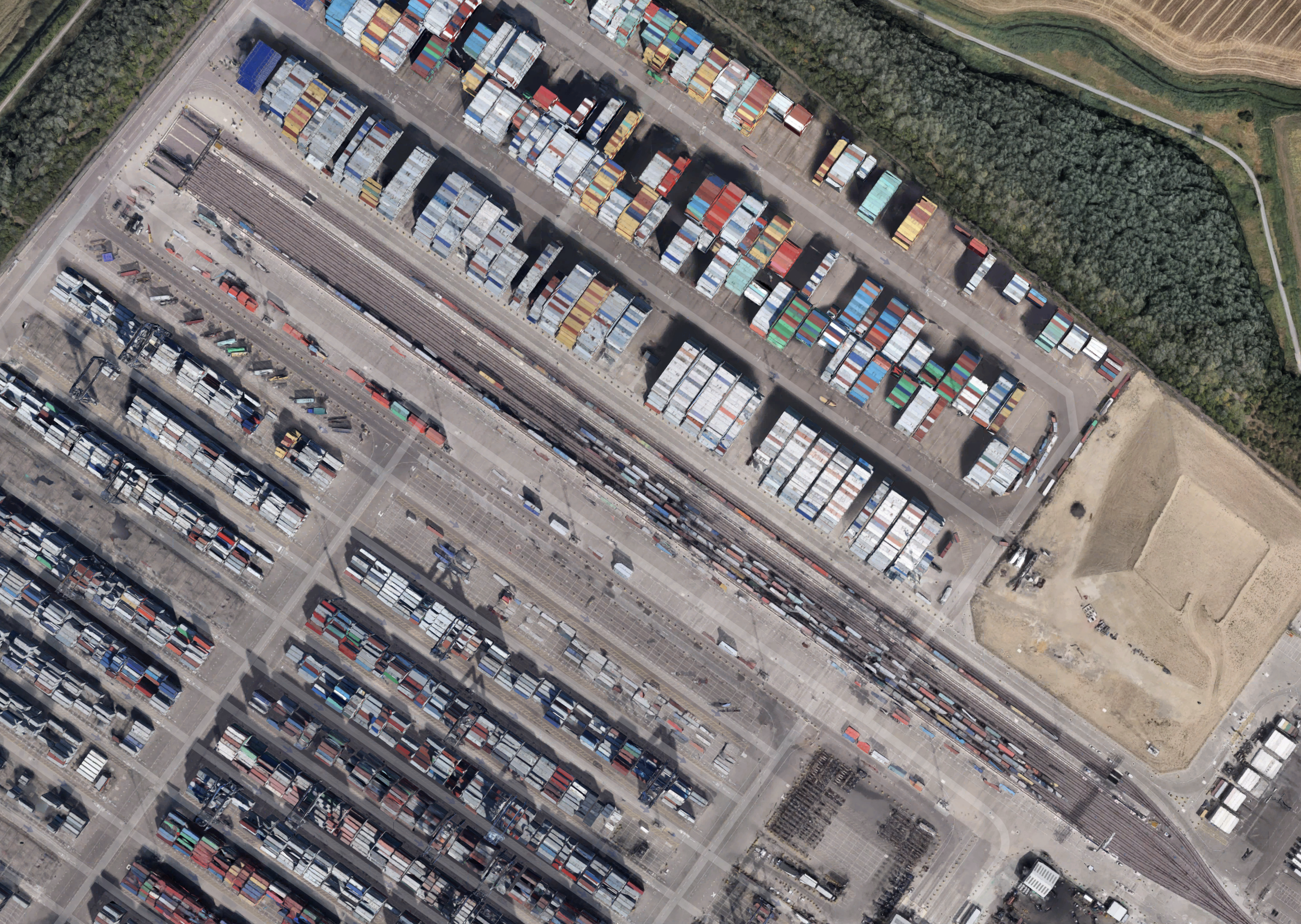
I hope the pictures give a clear impression of the size of the port, which in the next few years will probably need more trains to the rest of the country.
There is also a yard that appears to be connected to both the North and South train entrances to the Port.
This yard is shown in this Google Map.
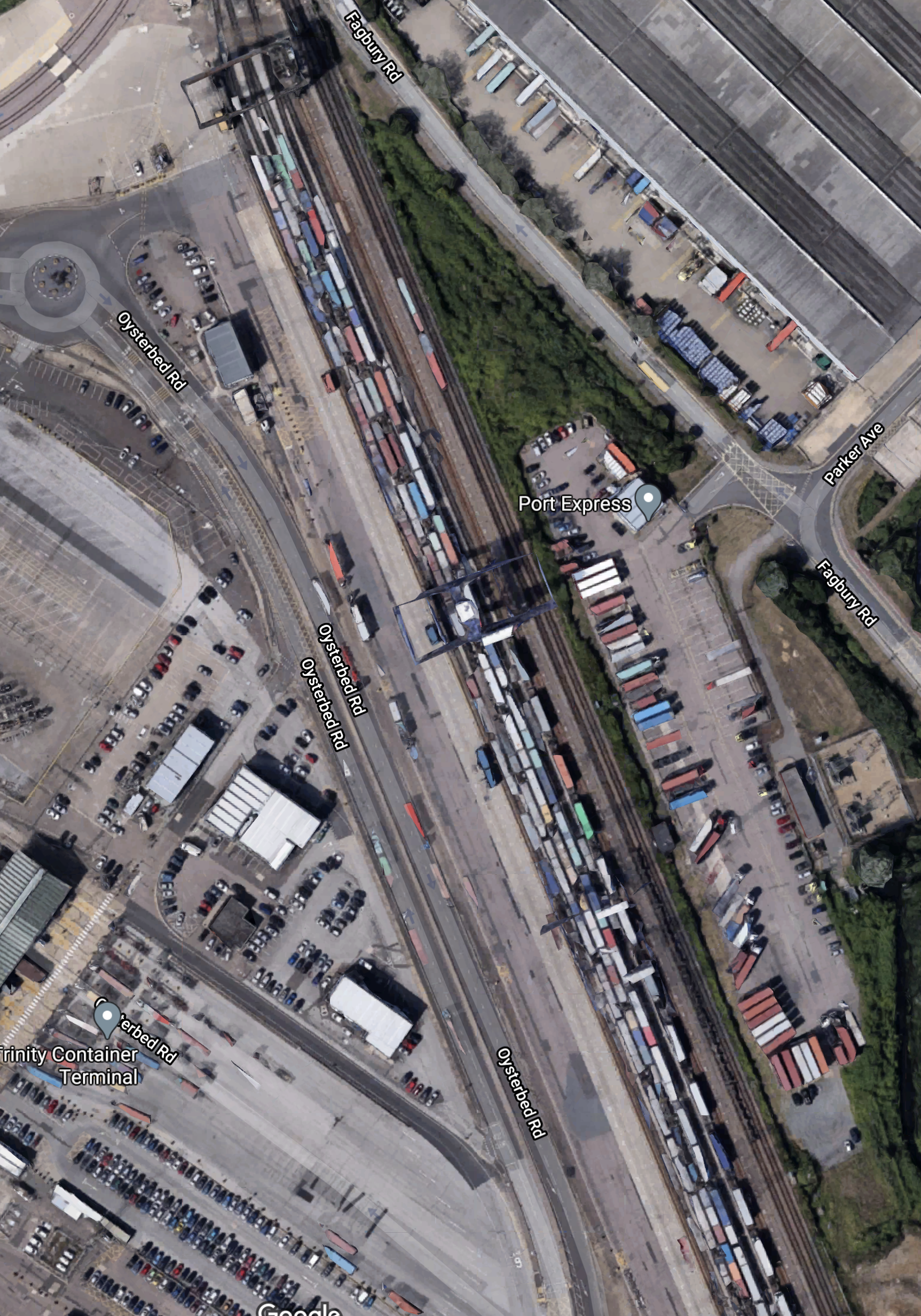
Note, the cranes to lift containers on and off.
Electrification In The Port
Note that there is no electrification in the Port or on the access links from Trimley station.
I once spent half-an-hour with a fellow Ipswich supporter before an away match. He turned out to be a crane driver at the Port of Felixstowe and we got to talking about why the trains weren’t electrified.
He told me that accidents to happen and that you you don’t want high voltage wires about, when you’re swinging containers on and off trains.
Especially, when the trains are close together, as they are in the previous image.
Class 73 Locomotives And The Port Of Felixstowe
The first Class 73 locomotives have now been ordered by Rail Operations Group (UK), and I wrote about the order in Trimode Class 93 Locomotives Ordered By Rail Operations (UK).
What surprised me about the order was that it was for thirty locomotives, whereas only ten were talked about two years ago. I know, that Rail Operations (UK) have received a big capital injection, as was reported in this article on Rail Advent, which is entitled Rail Operations Group Acquired By STAR Capital Partnership. but they must have ambitious plans for thirty locomotives.
Could it be that the specification of these locomotives is geared to operating out of ports like Felixstowe?
Consider.
- A locomotive probably needs a self-powdered capability to take a heavy train in or out of the Port of Felixstowe.
- Would a Class 73 locomotive have sufficient range and power to take the average train out of the port using bi-mode diesel and battery power until it arrived at the electrification of the Great Eastern Main Line?
- How would these locomotives handle a gap like Haughley Junction and Ely?
- A Class 73 locomotive could probably handle these container trains at 100 mph to and from London on the Great Eastern Main Line, which would keep them out of the way of Greater Anglia’s express trains.
- What speed would these locomotives be able to achieve under electric power on the West Coast and East Coast Main Lines?
- The two single-track access links between Trimley station and the Port could be electrified to charge the batteries both ways and to accelerate the train fast out of the Port.
I also feel that other ports would benefit.
Conclusion
I very much feel, that the specification of the Class 93 locomotive with its trimode capability is ideal for working to and from ports and freight terminals.
Just Look How The Port Of Felixstowe Has Grown
This article on Rail Engineer is entitled Felixstowe Branch Line Capacity Enhancement Goes Live.
This is the introductory paragraph.
Funded by the Strategic Freight Network, with a contribution from Hutchinson Ports UK (HP-UK), a £60.4 million investment to create a new 1.4km loop on the Felixstowe branch line in Suffolk was successfully brought into service on 29 May 2019, on time and on budget. It facilitates an increase from 33 to 47 freight train paths a day in each direction on this key artery, carrying the highest freight tonnage in the country and serving the largest container port in the UK.
High Speed Two it is not, but if you read the article, you’ll see that a substantial amount of work has been done, involving track, footbridges, level crossings and signalling.
I can remember the Port of Felixstowe, when it was a just a small basin, with the Little Ships Hotel, a couple of warehouses and the giant seaplane crane. A couple of times, I used the Harwich Ferry to cross the harbour to Harwich on the Brightlingsea.
In some ways Felixstowe has come a long way in those sixty years.
With the increase in capacity on the Felixstowe Branch Line, the rail link can handle the container traffic through the Port better!
Note this about trains between Ipswich and Felixstowe.
- 47 freight trains per day between Ipswich and Felixstowe is roughly two trains per hour (tph) in both directions.
- The current passenger service is one tph.
- In addition, there is an hourly Ipswich and Lowestoft train, which shares track between Ipswich and Westerfield Junction.
- The new Class 755 trains are faster and will have shorter dwell times than the current trains.
Between Ipswich and Westerfield, there are four tph.
- The route is double-track.
- Not all trains stop at Westerfield
- The level-crossing at Westerfield station has been improved and is now is a Manually Controlled Barrier with CCTV
- The signalling has been improved and moved to Colchester Power Signal Box.
Between Westerfield and Felixstowe, there are three tph.
- The route is single track with loops to the East of Derby Road and the West of Trimley stations.
- The level crossings have been improved and three have been converted to Manually Cntrolled Barriers.
- The signalling has been improved and moved to Colchester Power Signal Box..
It looks to my untrained eye, that these service pattern are possible.
So what will happen in the future?
In the next few sections, I talk about the future.
Could More Passenger Trains Be Run To Felixstowe And Lowestoft?
I suspect here, that the limiting factor will be platform capacity at Ipswich station.
Ipswich station will have at least four tph running between Stowmarket and Colchester (3 x London and Norwich and 1 x Peterborough and Colchester), that will use Plstform 2 at Ipswich station. I suspect that this means Lowestoft and Felixstowe trains will have to share the Bay Platform 1.
With good signalling and precision driving, I suspect that the single platform could handle 2 tph to both Felixstowe and Lowestoft.
There would only ever be one train in Platform 1 at Ipswich station, unlike now, where two trains share. The new Class 755 trains will be just too long.
Could Two tph Be Run Between Ipswich And Felixstowe?
The current timetable is as follows.
- Leaves Ipswich at XX:58 and arrives Felixstowe at XX:24
- Leaves Felixstowe at XX:28 and arrives Ipswich at XX::54
Note.
- The clock-face nature of the timetable.
- Both journeys are 26 minutes
- There is four minutes for the driver to change ends and have a break.
This service would need two trains and if there’s one thing that Abellio Greater Anglia aren’t short of, it’s three-car Cl;ass 755 trains.
If the trains had the branch to themselves, there could be a two tph service between Ipswich and Felixstowe.
But they have to share it with freight trains running at two tph.
This would mean the following.
- Five tph between Ipswich and Westerfield
- Four tph between Westerfield and Felixstowe.
As two tph between Ipswich and Felixstowe is likely to be on Greater Anglia’s wish list, I suspect the new track layout was designed with this service in mind.
Currently, there is one or two cars per hour between Ipswich and Felixstowe, but a two tph service would mean a minimum of six cars per hour or a massive increase in capacity.
Could Two tph Be Run Between Ipswich And Lowestoft?
The current timetable between Ipswich and Lowestoft stations is as follows.
- An almost clock-face hourly service in both directions.
- A journey time of just under one-and-a-half hours.
- There are nine stops on the route.
- There are several minutes for the driver to change ends and have a break.
When the new Class 755 trains are working the route, the following will apply.
- The Class 755 trains are faster and have a shorter dwell time in stations.
- There will be four London and Lowestoft services per day.
I think it is true to say, that journey times will be reduced.
I suspect that the following could be possible.
- A journey time of perhaps one hour and twenty minutes.
- Trains would leave Lowestoft at XX:07
- Trains would leave Ipswich at XX:37
This or something like it, would be an acceptable clockface timetable.
I strongly believe that an improved service will be possible between Ipswich and Lowestoft.
- I feel that two tph between Ipswich and Lowestoft might be difficult to achieve without extra works on the track.
- Extra capacity can be added by using four-car Class 755 trains on the route.
- Faster services will certainly be introduced, as the train’s faster speed and shorter dwell times will knock several minutes from the journey.
I also think, that it may be possible to introduce a second service on the Southern section of the route, which runs to perhaps Leiston or even Aldeburgh. This would give the busier Southern section of the route two tph.
So Platform 1 at Ipswich station could see the following trains.
- Two tph Ipswich and Felixstowe
- One tph Ipswich and Lowestoft
- One tph Ipswich and Leiston/Aldeburgh
I believe that timetabling of the route would not be a difficult task!
Four Trains Per Day Between Lowestoft and London
The London and Lowestoft service could be arranged as follows.
- Lowestoft station has three platforms., so one could be reserved for the London service.
- If the last service arrived back late or the first service needed to leave early, the dedicated platform could be used for overnight stabling.
- When running between Ipswich and Lowestoft it would take over, one of the Ipswich and Lowestoft paths.
- The trains will stop at all stations between Ipswich and Lowstoft, as there will be jealousy between users.
- It would call in the through platforms 2 and 3 at Ipswich station..
- The trains would make as few calls as possible South of Ipswich, as the Lowestoft train will be a fourth fast London service in the hour.
No new infrastructure would be required.
Could London And Lowestoft Services Be A Dedicated Shuttle Train?
This may have marketing advantages, as the train could have its own livery and perhaps a buffet or a catering trolley.
If you assume that the working day for a train is 0600-2400, then this means the following.
- A round trip must be performed in four and a half hours.
- A London and Lowestoft time of two hours and fifteen minutes,.
- The journey time would include the turnround time at the destination.
As Ipswich and London times of an hour are possible with a 100 mph trains, like the Class 755 train, Ipswich and Lowestoft would have to be run in a time as close to an hour as possible.
Consider.
- The only trains on the East Suffolk Line will be Class 755 trains between Ipswich and Lowestoft.
- Class 755 trains may be able to stop at stations in under a minute.
- Line speed could possibly be increased, as the route appears reasonably straight
- Some level crossings could probably be removed.
- The current average speed on the line is around 35 mph.
I also suspect that Greater Anglia have run tests with the current Class 170 trains, which are 100 mph trains to determine what times are possible.
I wouldn’t be surprised if using a single shuttle train to run the four trains per day between London and Lowestoft, is possible.
- Services could leave Lowestoft at 06:00, 10:30, 15:00 and 19:30
- Services could leave Liverpool Street at 08:15, 12:45, 17:15 and 21:45
The last service would arrive back in Lowestoft at midnight.
Tram-Trains Between Ipswich And Felixstowe
This report on the East-West Rail web site is entitled Eastern Section Prospectus and gives full details of their proposals for the Eastern section of the East-West Rail Link.
This is said in the report.
Introduction of a tram-train service on the Felixstowe branch, with doubling between Derby Road and Felixstowe and street running through
Ipswich.
It is also said, that there will be a frequency of four tph between Ipswich and Felixstowe.
It looks like the plan is to fully-double the branch line to the East of Derby Road station.
To the West of Derby Road, the line is mainly single track until it joins the East Suffolk Line close to Westerfield station.
The problem is that the single-track railway goes over the over the Spring Road Viaduct. Rebuilding the viaduct to add the second track, would be something that everybody would want to totally avoid, as how would the containers from forty-seven freight trains per day in both directions, be moved in and out of the Port of Felixstowe?
If the capacity can’t be increased, the demand will have to be reduced.
A Possible Tram-Train Proposal
The East West Rail report is proposing that the 1-2 tph passenger service between Ipswich and Felixstowe should be replaced by a four tph tram-train service.
- The tram-train service would start at Ipswich station, running as a tram.
- It would probably meander through Ipswich, serving places like Portman Road, the Town Centre< Christchurch Park, the new housing in the North, Ipswich Hospital and the Retail Parks in the East.
- If Ipswich gets a new Northern Ring Road, the tram-trains, might run on the original by-pass, that goes past Ipswich Hospital.
- It would then join the double-track section of the Felixstowe Branch Line on the Eastern outskirts of the town.
- Extra stops might be built between Ipswich and Felixstowe.
- At Felixstowe station, the tram-trains could revert to tram mode and might even go as far as the sea-front, using battery-power.
There are a lot of possibilities to give Ipswich and Felixstowe, one of the best local transport links in the world.
There will be some collateral benefits.
- Extra freight trains can probably be squeezed through.
- Ipswich Hospital will get the updated transport links, that it badly needs.
- Road traffic would be reduced.
I also believe that the tram-train could be added to the Felixstowe Branch Line without disrupting trains, freight or passengers.
Electrification
I can remember reports from the 1960s, which said that felt the Felixstowe Branch Line would be electrified.
- With a frequency of four tph, the route would surely be electrified for the tram-trains.
- It would probably be electrified at 25 KVAC, so that freight trains could take advantage.
- When street running in Ipswich and Felizstowe,, 750 VDC electrfication or battery-power could be used.
There would be no extra electrification needed to enable all freight trains going via London to be electric-hauled.
Freight Locomotives
I think it likely, that increasingly, we’ll see Class 93 locomotives and other electro diesel locomotives with a Last Mile capability taking freight trains into and out of the Port of Felixstowe.
These new breed of 110 mph locomotives will be able to take maximum-length freight trains on routes to, from and through London, but a new locomotive will be needed to take trains across East Anglia to Ely and Pryrtborough and then on to the Midlands and the Notth.
Conclusion
The Port of Felixstowe and the railways connecting it to the rest of the UK have come a long way in sixty years and they will expand more in the next decade or two!
 The Anonymous Widower