A Railway Station At Liverpool University
In Liverpool’s Forgotten Tunnel, I showed this map, which shows a proposed reopening of the Wapping Tunnel as a passenger route between Liverpool Central and Edge Hill stations.
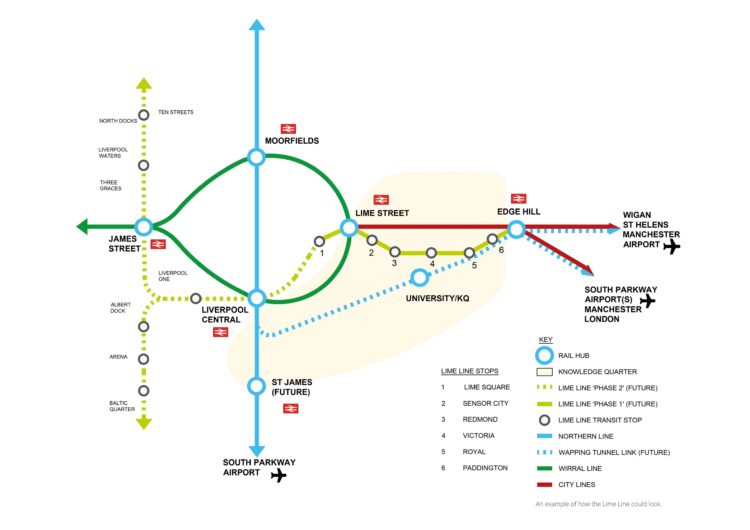
Note.
- The map shows a station at University
- The Wapping Tunnel is shown as a dotted blue line.
- Between four and eight trains per hour (tph) would be running through University station.
This Google Map shows the line of the tunnel.
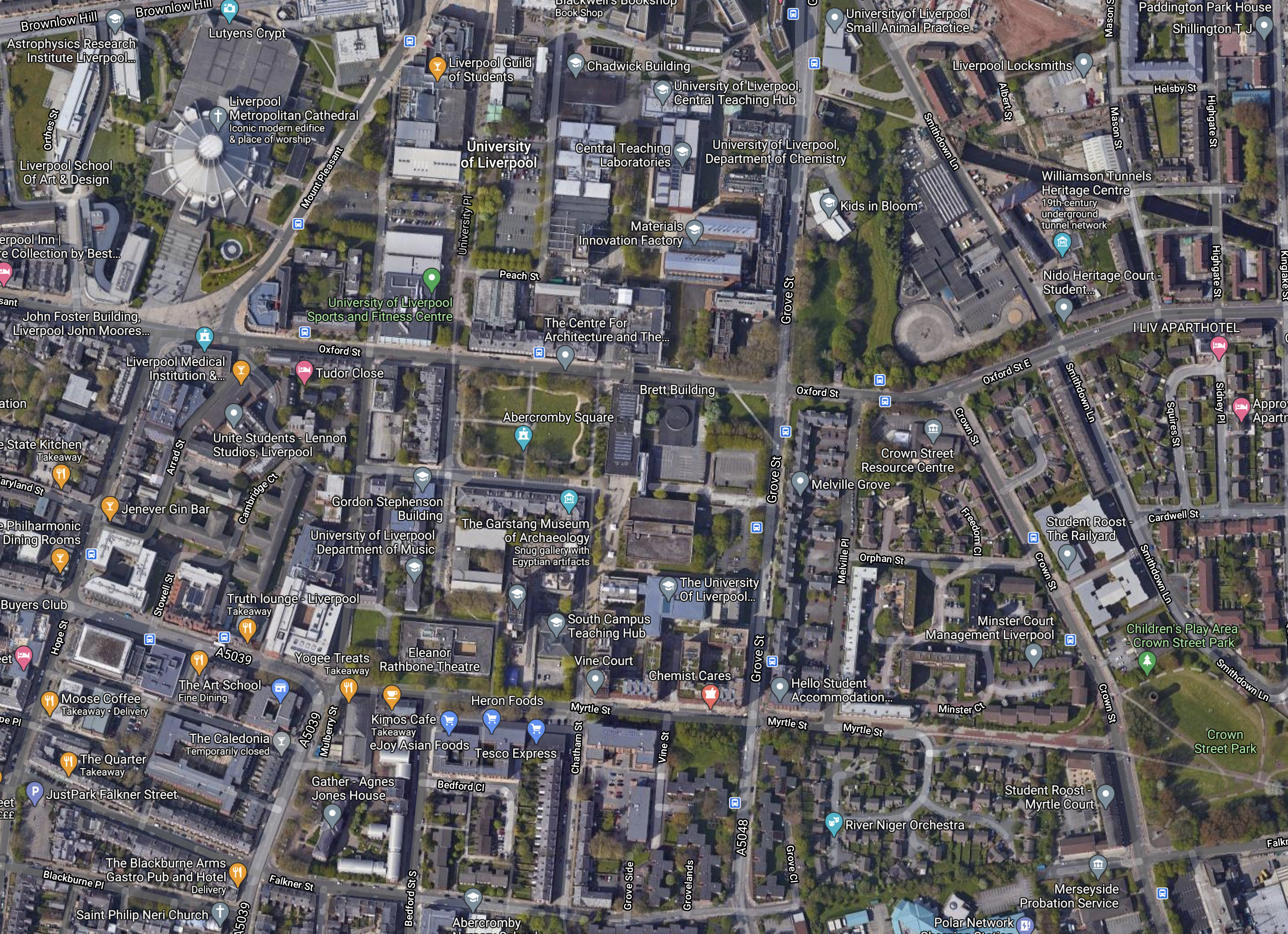
Note.
- Liverpool Metropolitan Cathedral is in the North-West corner of the map.
- Much of area of the map is taken up by buildings of Liverpool University.
- Crown Street Park is in the South-East corner of the map and contains one of the ventilating shafts for the tunnel.
- Blackburne Place in the South-West corner of the map contains another ventilating shaft.
The location of the shafts, probably means that the tunnel runs vaguely along Myrtle Street.
Not knowing that area of the campus well, it could be where Grove and Myrtle Streets intersect.
This Google Map shows the area.

It should be noted that this area of Liverpool is built on sandstone and tunnelling isn’t the most challenging operation, so it might be possible to create a very passenger-friendly station.
Passenger Services Through The Station
I think that my best estimate of passenger service through the station would be as follows.
Frequency
The frequency would be between four and eight tph. These are quite low frequencies for a modern railway and Merseyrail exceeds this frequency in several places.
Westbound
Currently, trains on the Northern Line branches to Ormskirk and Kirkby appear to turnback at Liverpool Central station. So it would appear, that it would be more likely, that Westbound services at Liverpool University station would terminate at Kirkby or Ormskirk.
Passengers wanting to travel to and from stations on the Wirral Line, would need to change at Liverpool Central station.
Eastbound
Currently, local services out of Liverpool Lime Street, that are run by Northern, are as follows.
- Half hourly service to Manchester Oxford Road (via Warrington Central, most local stations)
- Hourly service to Manchester Airport (via Warrington Central and Manchester Piccadilly, limited stop)
- Hourly service to Blackpool North (limited stop)
- Half hourly service to Wigan North Western (via St Helens Central, all stations)
- Hourly service to Crewe (via Newton-le-Willows, Manchester Piccadilly and Manchester Airport, all stations)
- Hourly service to Warrington Bank Quay (via Earlestown, all stations)
Note.
- The services actually add up to eight tph.
- As Merseyrail’s new Class 777 trains will have a pantograph for 25 KVAC overhead electrification and a battery capability, they could be used on all routes.
- But I do think that the trains may not be suitable for all routes because of their 75 mph operating speed.
- It might be better to serve Blackpool North station by extending an hourly Ormskirk service to Preston and Blackpool North, with stops at all stations.
So could the services Eastbound from Liverpool University station be as follows.
- Half hourly service to Manchester Oxford Road (via Warrington Central, most local stations)
- Half hourly service to Wigan North Western (via St Helens Central, all stations)
- Hourly service to Warrington Bank Quay (via Earlestown, all stations)
The services add up to five tph and I would expect selective increases would balance the services, so that eight tph ran through Liverpool University and Edge Hill stations.
Liverpool’s Forgotten Station
Edge Hill station is Liverpool’s forgotten station.
For instance, it could be the only train station in the UK, with a better than two trains per hour (tph) service in both directions, that doesn’t have any displays telling passengers, when the next train is arriving.
These pictures show the station.


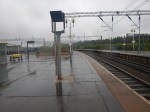

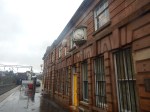
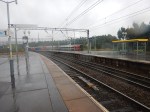



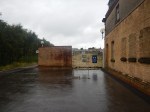

Note.
- The station is Grade II* Listed.
- It does have a good clock.
- There are four platforms on two islands.
- The only way to get to Platforms 3 and 4, is by one of the worst subways, I’ve seen in many years.
If ever a station needed a good makeover, it is Edge Hill.
This Google Map shows the station.
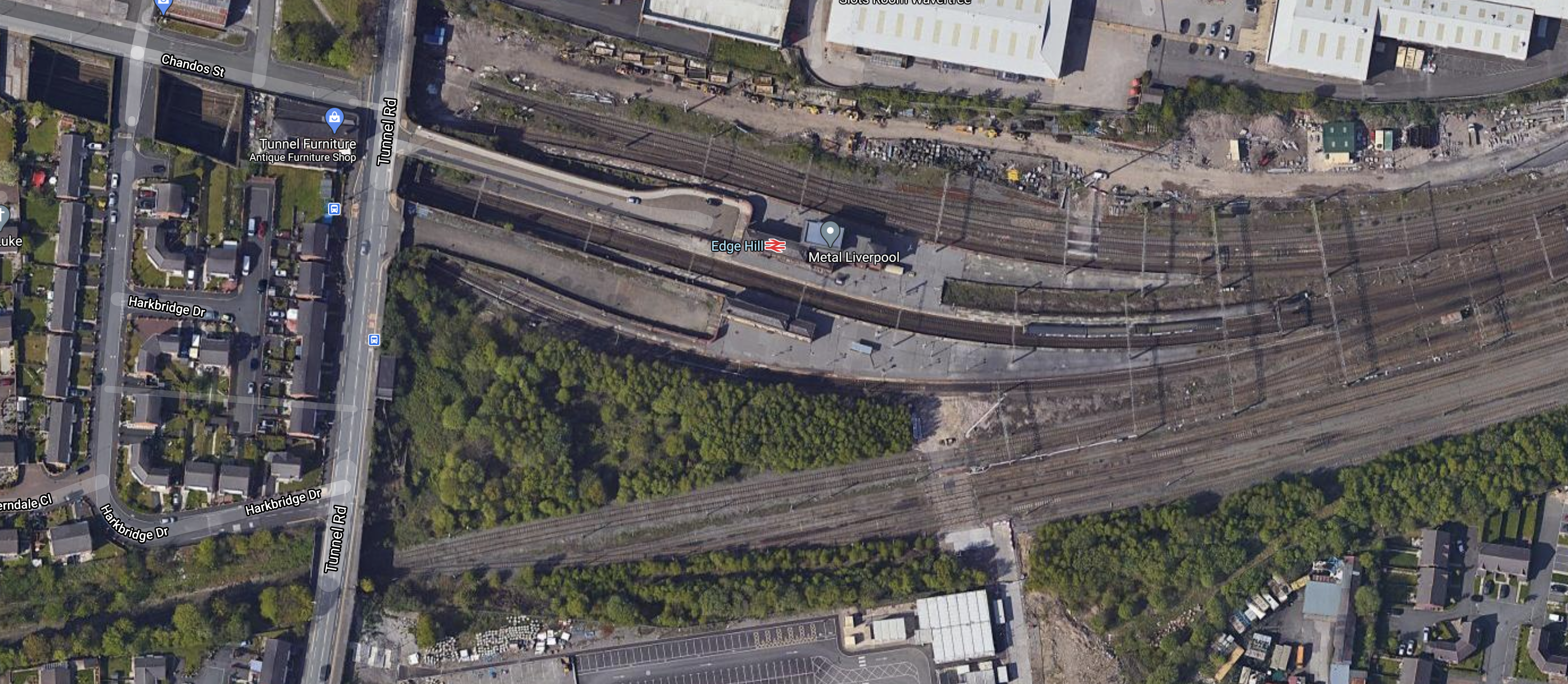
Note.
- The Northern island platform is 1 & 2. All trains using these platforms seem to use platforms 1 to 5 at Liverpool Lime Street station.
- The Southern island platform is 3 & 4. All trains using these platforms seem to use platforms 6 to 10 at Liverpool Lime Street station.
- The deep four-track cutting, that leads to Lime Street station can be clearly seen to the West of the station.
- The lines to the South of the station, that run to the West, lead to the disused Wapping Tunnel. Surprisingly, the tracks still seem to be in place.
- The lines to the North of the station, that run to the West, lead to the disused Victoria Tunnel, that used to take freight to and from Liverpool Docks.
There is certainly a lot of space around the station to put in extra platforms and a flyover or two.
Connecting The Wapping Tunnel To The Lines Going To The East
In Liverpool’s Forgotten Tunnel, I talked about a resurrected plan to use the Wapping Tunnel for passenger trains.
This was my opening sentences of the post.
The Wapping Tunnel in Liverpool was designed by George Stephenson and was the first tunnel in the world to be bored under a city.
It used to take goods trains between Liverpool Docks and the Liverpool and Manchester Line.
During the 1970s preparations were made to connect the Wapping Tunnel to Merseyrail’s Northern Line, so that trains could run between the Northern Line and the City Line, which would have connected the North and East of the City.
But the project was never completed.
I also included this recent map of the scheme.
The proposed line through the Wapping Tunnel, is shown as a dotted blue line.
Components of the scheme include.
- Four to eight tph instead of turning back at Liverpool Central station would use the Wapping Tunnel to access Edge Hill and then continue to Liverpool South Parkway, Manchester Airport, Manchester Oxford Road, St. Helens, Warrington and Wigan.
- A new station will be built at Liverpool University.
- A new station could be built at St. James. at a future date.
It looks to be a sensible scheme, providing the engineering isn’t too difficult.
New Platforms On The Wapping Tunnel Lines
This Google Map shows the lines leading to the Wapping Tunnel.
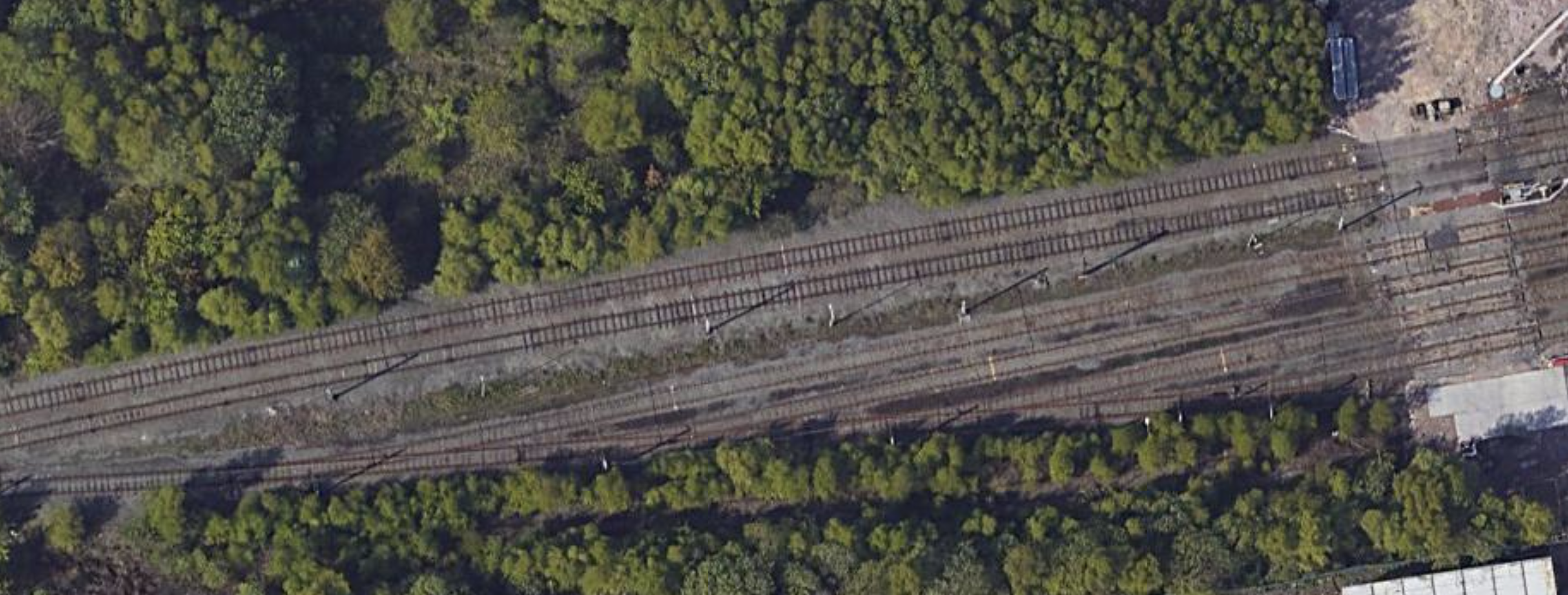
Note.
- Platform 4 is just off the Northern side of the map.
- There is a double track leading to the Wapping Tunnel.
- It looks like the other tracks are the entry to a marshalling yard, that used to serve the Docks, through the Wapping Tunnel.
I can see two platforms on either side or a single island platform between the two tracks being built, that is connected to the current station using a stylish step-free bridge, as at Leeds or Reading stations.
Connecting To The Liverpool South Parkway Route
This Google Map shows the Wapping Tunnel lines, as they pass to the South of the station.
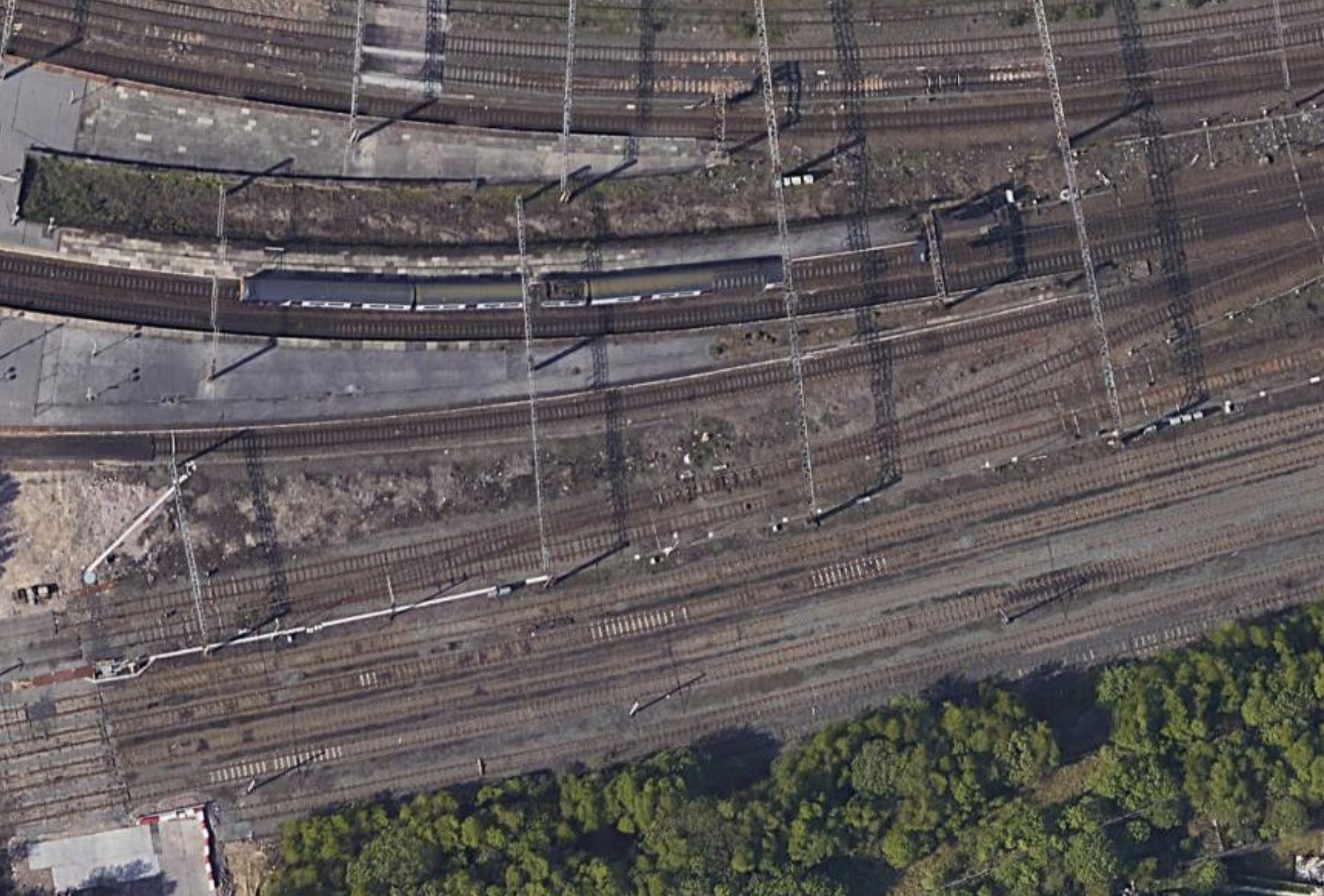
Note.
- The Eastern ends of the two island platforms are clearly visible.
- Platforms 1 and 2, which connect to Wavertree Technology Park, St. Helens and Wigan are the Northern platform.
- Platforms 3 and 4, which connect to Liverpool South Parkway, Runcorn and London are the Southern platform.
- The lines through the Wapping Tunnel, are the two closest lines to the station.
It does appear that connecting the Wapping Lines to those to Liverpool South Parkway would probably need a series of well-designed crossovers.
In fact they might already be in place and just need refurbishment or replacement.
Connecting To The Wavertree Technology Park Route
Trains needing to go between the Wapping Tunnel lines and the lines towards Wavertree Technology Park, St. Helens and Wigan would need to cross right over the busy lines into Liverpool Lime Street station.
So I suspect for efficient operation, a flyover or dive-under will need to be built.
Conclusion
I don’t think that the engineering to connect the Wapping Tunnel lines to the Eastern routes from Edge Hill station, will be too challenging, as there is certainly plenty of space.
I also feel, that an innovative architect can create an efficient station with character.
Liverpool’s Forgotten Tunnel
The Wapping Tunnel in Liverpool was designed by George Stephenson and was the first tunnel in the world to be bored under a city.
It used to take goods trains between Liverpool Docks and the Liverpool and Manchester Line.
During the 1970s preparations were made to connect the Wapping Tunnel to Merseyrail’s Northern Line, so that trains could run between the Northern Line and the City Line, which would have connected the North and East of the City.
But the project was never completed.
It now appears, the project is on the agenda again.
This article on TransportExtra is entitled Liverpool CR Develops Plan To Boost City Centre Rail Capacity.
The plan outlined is as follows.
- At present, as many as two thirds of trains on the Northern Line turn back as Liverpool Central station.
- Between four and eight trains per hour (tph) could be diverted into the Wapping Tunnel to serve places like St. Helens, Warrington Central and Wigan.
- This would free up platforms in Liverpool Lime Street station for Inter-City and Inter-Regional services.
It is also pointed out, that a 2016 study, didn’t find any serious technical problems with the project.
I do have my thoughts on this project.
Services That Could Be Connected
Local services running from Liverpool Lime Street station include.
Manchester Oxford Road Via Warrington Central
This service is run by Northern.
- It has a frequency of two tph.
- One service calls at Edge Hill, Mossley Hill, West Allerton, Liverpool South Parkway, Hunts Cross, Halewood, Hough Green, Widnes, Sankey For Penketh, Warrington West, Warrington Central, Birchwood, Irlam, Urmston and Deansgate.
- The other service calls at Mossley Hill, West Allerton, Liverpool South Parkway, Hough Green, Widnes, Warrington Central, Padgate, Birchwood, Glazebrook, Irlam, Flixton, Chassen Road (1tp2h), Urmston, Humphrey Park, Trafford Park and Deansgate
- Both trains appear to take the same route.
- Some stations like Liverpool South Parkway, Warrington West and Deansgate have lifts, but disabled access is patchy.
- The service has a dedicated terminal at Manchester Oxford Road, which is without doubt Manchester’s worst central station for location, access to the Metrolink, onward travel and step-free access.
- It takes seventy-two minutes. which is an inconvenient time for train operators.
- The route is electrified with 25 KVAC overhead electrification at both ends.
I’ve used this route several times and usually pick it up from Deansgate, as it has a convenient interchange to the Metrolink.
I am fairly certain that Merseyrail’s new Class 777 trains running on battery power in the middle could handle this route.
- They would charge the batteries at the electrified ends of the route.
- They would join the route at Edge Hill station.
- They would offer step-free access between train and platform.
- These trains are built for fast stops, so could all services call at all stations?
- On Merseyrail’s principles, the service would probably be at least two tph, if not four tph.
I estimate that these trains are fast enough to do the return trip between the Wapping Tunnel portal at Edge Hill and Manchester Oxford Road in under two hours.
- A two-four tph stopping service between Liverpool and Manchester City Centres, that took less than an hour, would be very convenient for passengers.
- The service would be well-connected to local tram, train and bus services in both City Centres.
- The service would also very easy for train schedulers to integrate with other services.
Liverpool and Manchester would have the world’s first battery-powered inter-city railway.
Other than the connection of the Wapping Tunnel no extra infrastructure works would be needed.
Wigan North Western Via St. Helens Central
This service is run by Northern.
- It has a frequency of two tph.
- The service calls at Edge Hill, Wavertree Technology Park, Broad Green, Roby, Huyton, Prescot, Eccleston Park, Thatto Heath, St Helens Central, Garswood and Bryn
- The route is fully-electrified with 25 KVAC overhead.
- It takes fifty-one minutes. which is a very convenient time for train operators.
Merseyrail’s new Class 777 trains could handle this route, if fitted with pantographs for 25 KVAC overhead electrification.
- They would join the route at Edge Hill station.
- They would offer step-free access between train and platform.
- On Merseyrail’s principles, the service would probably be at least two tph, if not four tph.
I estimate that these trains are fast enough to do the return trip between the Wapping Tunnel portal at Edge Hill and Wigan North Western in under two hours.
- A two-four tph stopping service between Liverpool and Wigan, that took less than an hour, would be very convenient for passengers.
- Wigan North Western has good connections using the West Coast Main Line.
- The service would also very easy for train schedulers to integrate with other services.
Other than the connection of the Wapping Tunnel no extra infrastructure works would be needed.
Blackpool North
This service is run by Northern.
- It has an hourly frequency.
- The service calls at Huyton, St Helens Central, Wigan North Western, Euxton Balshaw Lane, Leyland, Preston, Kirkham & Wesham and Poulton-le-Fylde
- The route is fully-electrified with 25 KVAC overhead.
- It takes seventy-seven minutes. which is a reasonable time for train operators.
This is a service that could continue as now, but would probably be timed to fit well with four Merseyrail trains between the Wapping Tunnel and Wigan North Western.
Manchester Airport Via Warrington Central And Manchester Piccadilly
This service is run by Northern.
- It has an hourly frequency.
- The service calls at Liverpool South Parkway, Warrington West, Warrington Central, Birchwood, Manchester Oxford Road, Manchester Piccadilly and Mauldeth Road
- The route is partially-electrified with 25 KVAC overhead.
- The service is operated by diesel trains.
- The service uses the overcrowded Castlefield Corridor.
- It takes sixty-nine minutes, which is an inconvenient time for train operators.
This is one of those services, which I think will eventually be partially replaced by other much better services.
- Northern Powerhouse Rail is planning six tph between Liverpool Lime Street and Manchester Piccadilly via Warrington South Parkway and Manchester Airport, which will take just twenty-six minutes.
- Two-four tph on the route between Liverpool Lime Street and Manchester Oxford Road via Warrington Central would be a better service for the smaller stations. Passengers going to and from Manchester Airport would change at Liverpool Lime Street, Deansgate or Manchester Oxford Road.
Continuing as now, would definitely be possible.
Crewe And Manchester Airport Via Newton-le-Willows And Manchester Piccadilly
This service is run by Northern.
- It has an hourly frequency.
- The service calls at Edge Hill, Wavertree Technology Park, Broad Green, Roby, Huyton, Whiston, Rainhill, Lea Green, St Helens Junction, Earlestown, Newton-le-Willows, Patricroft, Eccles, Deansgate, Manchester Oxford Road, Manchester Piccadilly, Mauldeth Road, Burnage, East Didsbury, Gatley and Heald Green.
- The route is fully-electrified with 25 KVAC overhead.
- The service uses the overcrowded Castlefield Corridor
- It takes eighty-five minutes, which is an inconvenient time for train operators.
This is one of those services, which I think will eventually be partially replaced by other much better services.
- Northern Powerhouse Rail is planning six tph between Liverpool Lime Street and Manchester Piccadilly via Warrington South Parkway and Manchester Airport, which will take just twenty-six minutes.
- Two-four tph on the route between Liverpool Lime Street and Wigan North Western would be a better service for the smaller stations. Passengers going to and from Manchester Airport and Crewe would change at Liverpool Lime Street or Wigan North Western.
Continuing as now, would definitely be possible.
Warrington Bank Quay Via Earlstown
This service is run by Northern.
- It has an hourly frequency.
- The service calls at Edge Hill, Wavertree Technology Park, Broad Green, Roby, Huyton, Whiston, Rainhill, Lea Green, St Helens Junction and Earlestown.
- The route is fully-electrified with 25 KVAC overhead.
- The service takes forty-three minute, which is a convenient time for train operators.
Merseyrail’s new Class 777 trains could handle this route, if fitted with pantographs for 25 KVAC overhead electrification.
- They would join the route at Edge Hill station.
- They would offer step-free access between train and platform.
- On Merseyrail’s principles, the service would probably be at least two tph, if not four tph.
Other than the connection of the Wapping Tunnel no extra infrastructure works would be needed.
Three Possible Routes Through Wapping
Summing up this section, these are possible routes that could be replaced by services through the Wapping Tunnel.
- Two tph – Manchester Oxford Road
- Two tph – Warrington Bank Quay
- One tph – Wigan North Western
Increasing the Wigan North Western service to two tph, would increase the frequency between Edge Hill and Huyton to a very passenger-friendly four tph.
If eight tph could be accommodated in the Wapping Tunnel, the frequency could also be doubled to Manchester Oxford Road.
This would give the following services through the Wapping Tunnel.
- Four tph – Manchester Oxford Road
- Two tph – Warrington Bank Quay
- Two tph – Wigan North Western
The only local services that would need to run into Liverpool Lime Street would be.
- One tph – Northern – Blackpool North via Wigan North Western.
- One tph – Northern – Manchester Airport and Crewe via St. Helens and Newton-le-Willows.
- One tph – Northern – Manchester Airport via Warrington Central.
- One tph – Trains for Wales – Chester via Runcorn
I can understand, why so many seem to be enthusiastic about using the Wapping Tunnel to connect the Northern and City Lines.
Echoes Of The Brunels’ Thames Tunnel
George Stephenson’s Wapping Tunnel may be the first tunnel under a city, but the Brunels’ Thames Tunnel was the first under a navigable river.
The Brunels’ tunnel was built for horses and carts, but today it is an important rail artery of the London Overground, handling sixteen tph between Wapping and Rotherhithe.
I would expect that the Wapping Tunnel could do for Liverpool, what the Thames Tunnel has done for East London.
Modern signalling techniques probably mean that the theoretical capacity of the Wapping Tunnel is way in excess of the planned maximum frequency of eight tph.
High Speed Two Between Liverpool And London
The latest High Speed Two plans as laid out in the June 2020 Edition of Modern Railways, say that there will be two tph between Liverpool Lime Street and London Euston.
- Both trains will call at Old Oak Common, Crewe and Runcorn.
- Both trains will be 200 metres long classic-compatible High Speed Two trains.
- One train will split and join with a similar service between London Euston and Lancaster.
Will these High Speed Two services replace the current Avanti West Coast services?
Northern Powerhouse Rail Between Liverpool And Manchester
In Changes Signalled For HS2 Route In North, I looked at Transport for the North’s report, which is entitled At A Glance – Northern Powerhouse Rail.
This report says that Northern Powerhouse Rail between Liverpool and Manchester Piccadilly will be as follows.
- Services will go via Manchester Airport.
- There could be a new Warrington South Parkway station.
- Six tph between Liverpool and Manchester via Manchester Airport and Warrington are planned.
- Journey times will be 26 minutes.
I would assume that several of the six tph will continue across the Pennines to Huddersfield, Bradford, Leeds, York and Hull.
Will these Northern Powerhouse Rail services replace the current TransPennine and some of the Northern services?
Northern Powerhouse Rail Trains
Nothing has been said about the trains for Northern Powerhouse Rail.
I suspect they will be versions of the 200 metre long classic-compatible High Speed Two trains.
I do wonder, if Avanti West Coast have already ordered a prototype fleet of these trains,
Look at the specification of the Class 807 trains, they have ordered to boost services on the West Coast Main Line.
- 7 x 26 metre cars.
- 182 metres long. Shorter than an eleven-car Class 390 train.
- All-electric, with no diesel engines or traction batteries. Are they lightweight trains with sparkling acceleration?
- 125 mph operating speed. All Class 80x trains can do this.
- 140 mph operating speed with ERTMS digital signalling. All Class 80x trains can do this.
- Ability to work in pairs. All Class 80x trains can do this, up to a maximum length of twelve cars in normal mode and twenty-four cars in emergency mode. I doubt fourteen cars would be a problem!
To be classic-compatible High Speed Two trains, they would need to be able to cruise at 205 mph, whilst working on High Speed Two. I suspect that Hitachi have got some higher-capacity electrical gear and traction motors with lots more grunt in their extensive parts bin!
If these are a prototype fleet of classic-compatible High Speed Two trains, they will certainly get a lot of in-service testing even before the order is placed for the trains for High Speed Two.
Northern Powerhouse Rail will need trains with a slightly different specification.
- As they won’t generally work on high speed lines, for most trains an operating speed of 140 mph will be sufficient.
- For serving some destinations like Cleethorpes, Harrogate, Hull, Middlesbrough and Redcar an independently-powered capability would be desirable. Sixty miles on batteries would probably be sufficient!
Nothing would appear to be out of Hitachi’s current capabilities.
Liverpool Lime Street Station After Remodelling
Liverpool Lime Street station has two groups of platforms.
- Platforms 1-5 on the Western side
- Platforms 6-10 on the Eastern side.
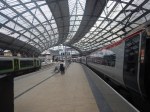
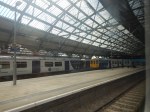
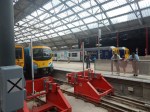
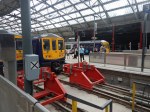
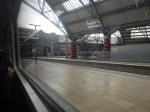
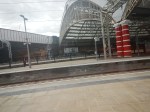
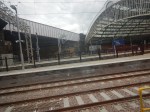
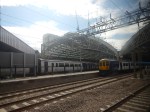
These pictures show some views of the platforms at Liverpool Lime Street station after the remodelling of 2017-2019.
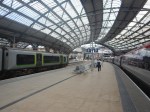



Note,
- The platforms are not narrow!
- It appears that the five platforms in the Eastern group are all long enough to take an eleven-car Class 390 train, which is 265.3 metres long.
- TransPennine Express trains can use the Western group.
I have looked at a whole day’s traffic on Real Time Trains and it appears that the new track layout allows almost all services to use any available platform.
This flexibility must make operation of the station much easily than it was!
Liverpool Lime Street Station As A High Speed Station
It would appear that the Eastern Group of Platforms 6-10 will all be capable of the following.
- Handling a 182 metre long Avanti West Coast Class 807 train.
- Handling a 200 metres long classic-compatible High Speed Two train.
- Handling a 130 metre long TransPennine Express Class 802 train.
- In the future, handling a Northern Powerhouse Rail train, which will probably be less than 200 metres long.
But they won’t be able to handle High Speed Two’s full-size trains.
Currently, these services capable of over 125 mph are running or are planned from Liverpool Lime Street station.
- 2 tph – Avanti West Coast – Liverpool Lime Street and London Euston
- 1 tph – TransPennine Express – Liverpool Lime Street and Newcastle
- 1 tph – TransPennine Express – Liverpool Lime Street and Scarborough
- 3 trains per day(tpd) – TransPennine Express – Liverpool Lime Street and Glasgow
This totals to four tph.
High Speed Two will add two classic-compatible High Speed Two trains.
Will these replace the two Avanti West Coast services?
- They will be run by the same company.
- They will take different routes.
- The current service takes 134 minutes.
- The High Speed Two train will take 94 minutes.
I can see Avanti West Coast running a one tph slower train via stations with difficult connections to Liverpool Lime Street. Think Watford Junction, Milton Keynes, Rugby, Stafford and Stoke-on-Trent.
This would bring the total to five tph.
Northern Powerhouse Rail will run six high speed trains to Manchester and beyond.
If they replaced the two TransPennine Express services, that would bring the maximum number of 200 metre long high speed trains to nine tph.
Could Liverpool Lime Street station handle nine high-speed tph?
Comparison With Birmingham Curzon Street Station
Birmingham Curzon Street station on High Speed Two will handle high speed trains from three directions, as will Liverpool Lime Street station.
The Birmingham station will handle nine tph on seven platforms.
As Liverpool Lime Street station will have ten platforms and also need to handle nine tph, I think it will be able to handle the trains.
Will There Be A Station In The Wapping Tunnel?
Just as London has its clay, which makes excavating for the Underground easy, the Centre of Liverpool has its sandstone, which has been honeycombed with tunnels. In addition to the Wapping Tunnel, there are two other tunnels from Edge Hill station to the Docks; the Waterloo Tunnel and the Victoria Tunnel.
Liverpool has plans for a Knowledge Quarter based on the Universities on Brownlow Hill.
As part of the development, it is intended to develop an area called Paddington Village.
Wikipedia says this about the village.
Paddington Village is a site at the eastern gateway to the city centre and has been earmarked as 1.8m sq ft of science, technology, education and health space.
This is also another paragraph.
Liverpool Mayor Joe Anderson announced that the council were looking into a new Merseyrail station to serve the site. A mention of a station is made in the October 2017 Liverpool City Region Combined Authority update to the Long Term Rail Strategy. Merseytravel commissioned a feasibility report into re-opening the Wapping Tunnel in May 2016 which found that it was a valid proposal which would allow for a new station to be built that could serve the Knowledge Quarter.
Someone has thought up a proposal for a Lime Line, which would be a tram or bus system, linking the Knowledge Quarter and the City Centre.
This map shows how their proposal fits in with all the other rail systems in Liverpool City.
Note the Wapping Tunnel is shown on the map, as a dotted blue line.
- It connects to the Northern Line to the South of Liverpool Central station.
- It connects to the City Line to the West of Edge Hill station.
- A station named University/KQ is shown.
A new St. James station is also shown
Conclusion
Using the Wapping Tunnel to increase capacity in Liverpool City Centre could be used if required to improve capacity for the high speed network in the city, by removing local trains from Liverpool Lime Street station.
 The Anonymous Widower