We Don’t Fight Wars Like That Anymore!
There is an obituary in The Times today of John Campbell, who won a Military Cross and Bar, whilst serving in Popski’s Private Army, which was officially the No 1 Demolition Squadron and a unit of British Special Forces in World War II.
I grew up just after the Second World War and just as newspapers today, use the actions of C-list celebrities, in those days, Sunday papers like the Express and Dispatch, were full of tales of derring-do, as the Nazis and the Japanese were eventually defeated.
As my next door neighbour, a sometime Colonel in the Engineers, once said, there’s only one rule in the British Army – In case of War, ignore the rule books.
Vladimir Peniakoff or Popski wrote them.
We probably can’t do what he did these days, when we’re trying to curb the atrocities of groups like Islamic State, but I’m sure he’d have had an innovative solution.
This paragraph from the Wikipedia entry for the PPA is informative.
PPA was unusual in that all officer recruits reverted to lieutenant on joining, and other ranks reverted to private. The unit was run quite informally: there was no saluting and no drill, officers and men messed together, every man was expected to know what to do and get on with it, and there was only one punishment for failure of any kind: immediate Return To Unit. It was also efficient, having an unusually small headquarters.
Isn’t that how you’d run a company to develop new technology?
Is My Life Going Round In A Curious Circle?
In the 1970s, my late wife; Celia and myself lived, with our then three sons, on the eleventh floor of Cromwell Tower in the Barbican.
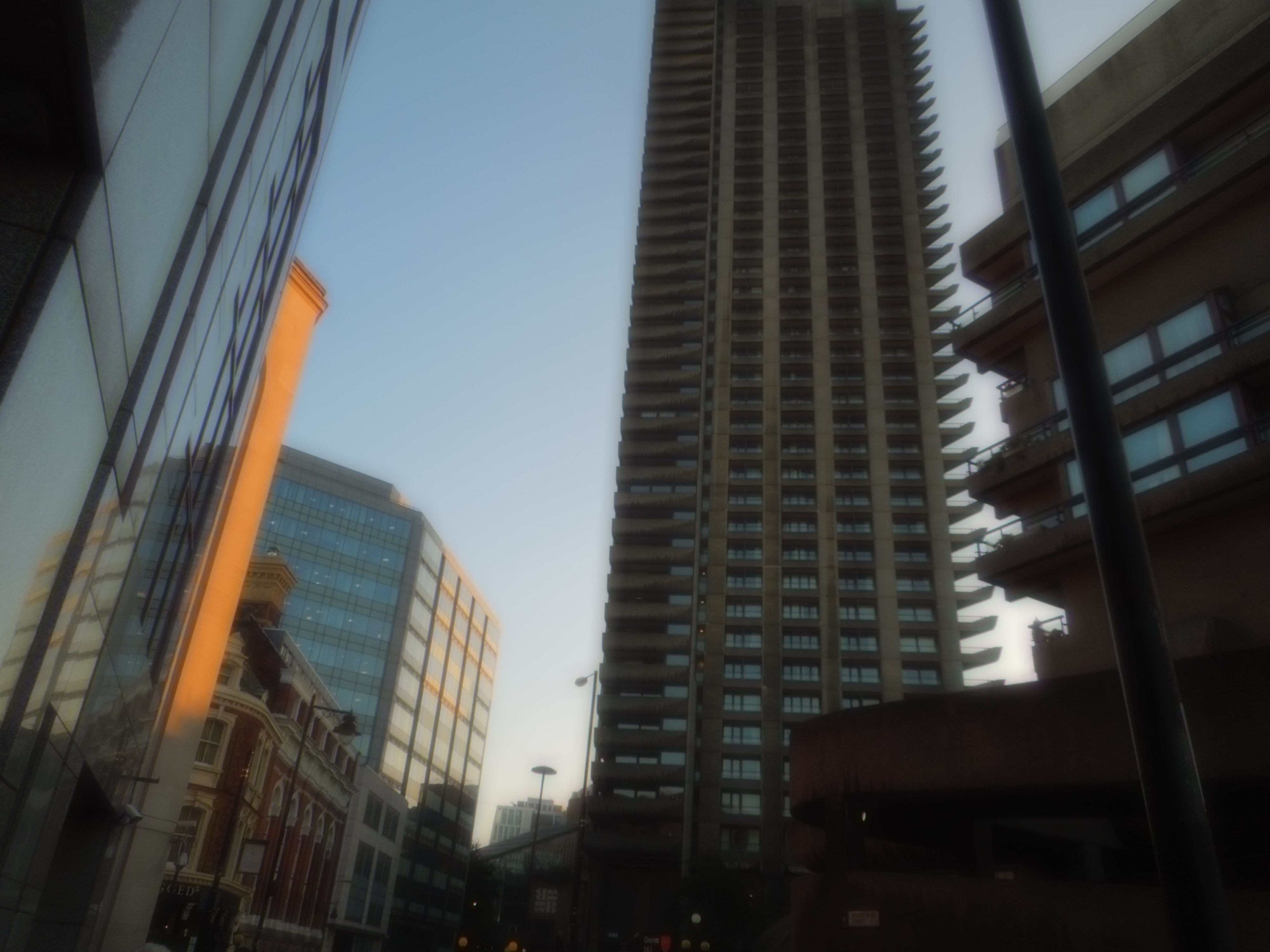
The shops in those days in the area were not very numerous and with the exception of the excellent market in Whitecross Street, getting everything we needed wasn’t easy. There was no supermarket, unlike today where there is a Waitrose in Whitecross Street.
So often on a Saturday, we’d take the boys up the hill to the Angel and shop in the Marks and Spencer and the Woolworths in Liverpool Road opposite the Underground station.
I’ve since found out that the Marks at the Angel is a long-established store and it may have been the one my grandmother spoke about, that she used around the time of the First World War, when she and her family lived just down from the Angel by the Regent’s Canal.
Woollies went a few years ago and much to the regrets of many of the locals is now a Waitrose.
My friends, who knew Celia, and myself often share a laugh over the fact that when I can get it, I drink a Czech gluten-free lager called Celia. A few weeks ago, I heard that the beer will be stocked in Waitrose, so I wrote to them asking where it will be stocked locally. This is an extract from their reply.
I’ve looked into this and I’m pleased to tell you that this should be available at both our Islington and Barbican branches from tomorrow.
As these are two branches, that we would have walked past together in the 1970s, long before they opened, I just can’t help thinking that life is truly strange!
Could anybody, who spots Celia lager in their local Waitrose please let me know?
Thanks!
Gluten-Free Food On The NHS
As a coeliac, I get no food from the NHS.
If you take bread as an example, I get through a couple of slices a day, usually spread with honey, in a sandwich or as something to eat with say hummus.
If I was to get this bread on the NHS, a month’s worth would leave me with no space in the freezer and I’d have to defrost each slice as I needed it.
Also, the bread from Marks and Spencer is far superior to anything available on the NHS.
I probably spend about a fiver on specialist gluten-free food every week, but mainly I eat the sort of food, that is naturally gluten-free, like meat, fish, vegetables and fruit.
A more cost-effective system would be that all coeliacs got a monthly payment to help with food costs. If they spent it on cigarettes, then that is their affair!
So what do I think are the best gluten-free foods?
Bananas – A snack in its own wrapper.
Beans
Black Farmer Sausages – Made for real men
Celia gluten-free beer
EatNakd Bars
Eat Natural Toasted Muesli With Vine Fruit – Not the Buckwheat!
Eggs
Fish – Always skinless and boneless
Goats Milk – It lasts forever in the fridge
Honey
Leeks
Marks & Spencer’s Beefburgers –
Marks & Spencer’s Bread – It’s all excellent
Marks & Spencer’s Calves Liver – All that B12
Marks & Spencer’s Still Lemonade – I use it to clear my throat of catarrh
Marks & Spencer’s Welsh Goats Cheese
New Potatoes – I use them as nibbles too!
Rachel’s Yoghurt with Honey – It doubles as a quick pasta sauce!
Rice
Strawberries
Tea
Tomatoes
Rump Steak – Always top quality
Waitrose Chicken Breast Chunks – So many simple meals start with these!
Waitrose Prepared Mango, Melon and Pineapple
Whisky – Scotch or Irish
I do tend to buy food that doesn’t need preparation, as my knife skills aren’t that good and being on Warfarin, I don’t want to cut myself. I also buy the Waitrose prepared fruit, as to buy a whole mango, melon or pineapple would mean I would waste a lot.
I should say I don’t need to live frugally, but if I had to, I could fund my energy, water, Council Tax, phone and daily food from well within my State Pension. Obviously, I get travel in Greater London free and I don’t have a car
From Walthamstow To Hackney
The space in the East of London up the Lea Valley between Walthamstow and Hackney is all grass, scrub, reservoirs, canals, rivers and railways.
These pictures were taken on a train between Walthamstow James Street and Clapton stations.





It is a very underused area and lies just to the south of the proposed Walthamstow Wetlands. The only development that will happen here is to reinstate the Hall Farm Curve to enable trains from Walthamstow and Chingford to join the Lea Valley Line to Lea Bridge and Stratford. It will probably end up though, ringed by high-rise housing, like you can see along the River Lea.
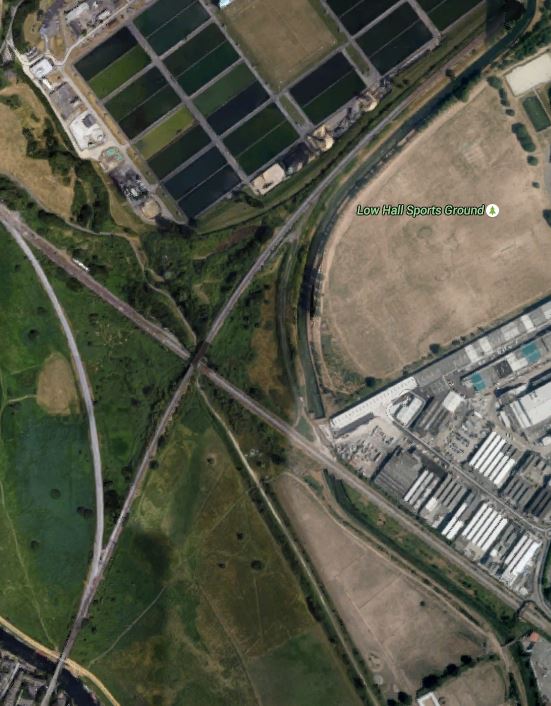
London is a surprising city. Soon it will be a City with a world-class nature reserve just a few minutes from the business heart of the City, This is a Google Map of the area.
Walthamstow To Hackney
Note the two rail lines crossing in the middle. The route of the Hall Farm Curve can be made out, as it hugs the boundary of the unmanaged area.
At the top of the picture you can see the filter beds of Thames Water’s giant water factory, that provide a lot of London with water using the massive reservoirs of the Lea Valley, some of which will form part of the Walthamstow Wetlands.
If you take a train from Liverpool Street to Stansted Airport or Cambridge, you’ll come over the River Lea and then take the curve to join the main line before passing through the Walthamstow Wetlands and stopping at Tottenham Hale.
 The Anonymous Widower