All Change At South Kensington Station
The title of this post is the same as that of this article in Rail Engineer, which describes the plan for developing South Kensington station.
The article gives a lot of insight into the expanding of the station and how it will be funded.
It is a busy station that in 2016 handled nearly thirty-four million passengers.
It was certainly busy today with visitors today, when I passed through as I went to and from the Victoria and Albert Museum, which has now been expanded.









Expanding the station will certainly test the skills of those managing the project. Especially, now that the V & A will be drawing more people to the area.
Funding Station Expansion
I said earlier that South Kensington station has a yearly traffic of just under 34 miilion.
These are figures for 2015/2016 for some important provincial stations in England.
- Bank – 94 million
- Birmingham New Street – 39 million
- Blackpool North – 2 million
- Brighton – 17 million
- Bristol Temple Meads – 11 million
- Camden Town – 23 million
- Dalston Junction – 5 million
- Dalston Kingsland – 6 million
- Euston – 42 million
- Liverpool Lime Street – 15 million
- Manchester Piccadilly – 26 million
- Newcastle – 8 million
- Nottingham – 7 million
- Peterbirough – 5 million
- Sheffield – 9 million
- Waterloo – 39 million
These stations were chosen pretty much at random, but I do think they show that London Underground stations seem to attract a lot of traffic near tourist attractions.
So perhaps we should built more stations near to major tourist attractions.
Are these the sort of projects that can be funded privately by property development?
It is proposed to use this model at South Kensington station.
I deliberately put in my two local stations of Dalston Junction and Dalston Kingsland.
Dalston Junction, is the bigger station, with twice as many platforms as Dalston ingsland.
It is also step-free with blocks of flats on top.
So is it surprising that it is not the busier station of the two?
I think it just goes to show, that predicting passenger numbers, is not an easy task.
Kent On The Cusp Of Change – Fawkham Junction Link
The Kent On The Cusp Of Change article in the July 2017 Edition of Modern Railways discusses the Fawkham Junction Link, which was originally used to allow Eurostar trains to get to Waterloo station. It is now used as a siding for old Eurostar trains, that are waiting for the scrapyard.
I wrote about this link in Connecting Ebbsfleet International To South London, which connects the Chatham Main Line to Ebbsfleet International station and High Speed One.
A quick look on Google Maps appears to show, that the third-rail electrification is still in place, which must make the link easier to reinstate.
Obviously, Network Rail and the TOCs (train operating companies) have a cunning plan to create extra services using the reinstated link and High Speed One.
Ebbsfleet International Station
Bear in mind, that Ebbsfleet Internation station is an important transport hub.
- Services to and from the Continent call.
- Highspeed services between St. Pancras and Thanet call.
- There is masses of car parking.
If Ebbsfleet Interbational has a problem, it is badly connected to the local area and only serves St. Pancras in London.
London Victoria To Thanet Services
At present, services between Victoria and Thanet services that go through Bromley South and Swanley stations are as follows.
- 1 tph – Victoria to Ramsgate via Longfield and Chatham.
- 2 tph – Victoria to Dover Priory via Longfield and Chatham
- 1 tph – Victoria to Canterbury West via Swanley and Maidstone East
- 1 tph – Victoria to Ashford International via Swanley and Maidstone East
Note that in all these services the first stop is Bromley South station.
Could the plan be as simple as this?
- Some services between Victoria and Broadstairs, Canterbury, Dover Priory, Ramsgate and Thanet Parkway stations would be run by Class 395 trains or similar trains with a 140 mph capability on High Speed One.
- Trains would go to from Victoria to Swanley, with just the single stop at Bromley South station, as they do now, and then join High Speed One via the Fawkham Junction Link.
- Once at Ashford, they take the routes to Thanet as used by the current Highspeed services.
I suspect this would give times from Victoria as follows.
- Broadstairs in ninety-seven minutes as against 111 minutes now.
- Canterbury West in seventy-two minutes as against 125 minutes now.
- Dover Priory in seventy-six minutes as against to 122 minutes now.
- Ramsgate in ninety minutes minutes as against to 124 minutes now.
Times could probably be improved further with a bit of work in Thanet and between Swnley and Victoria.
This could mean.
- Nearly all trains in Thanet are Class 395 trains., so tracks and stations could be designed accordingly.
- The Class 395 trains use the Thanet paths into Victoria from Swanley.
- Provision would have to be made for stations losing their services to High Speed One.
It could all be very efficient and a simple way to improve timings to Thanet.
Thameslink Services
Thameslink services serve Swanley station and could easily be extended to Ebbsfleet International, if that was desired via the Fawkham Junction link.
Bromley South Metro Services
The Southeastern Metro service on the Bromley South Line could use Ebbsfleet as an alternative terminal to Petts Wood station, by using the Fawkham Junction link.
Conclusion
There are lots of possibilities, with perhaps the most important being to create a second Highspeed terminus in London, to relieve the inadequate capacity at St. Pancras.
See Also
These are related posts.
- Abbey Wood Station
- Ashford Spurs
- Crossrail
- Elimination Of Slow Trains
- Highspeed Routes
- High Speed To Hastings
- Historic Routes
- Longfield Station
- Maidstone
- Reading To Tonbridge
- Thameslink
- Thanet Parkway Station
- Track Improvements
- Ultimate Class 395 Train
- Victoria As A Highspeed Terminal
To know more read Kent On The Cusp Of Change in the July 2017 Edition of Modern Railways.
Kent On The Cusp Of Change – Elimination Of Slow Trains
The Kent On The Cusp Of Change article in the July 2017 Edition of Modern Railways discusses the improvements that may be made by the new franchisee of the Southeastern franchise.
Southeastern‘s current fleet includes.
- 112 x Class 375 trains – 100 mph capable
- 36 x Class 376 trains – 75 mph capable.
- 8 x Class 377 trains – 100 mph capable.
- 29 x Class 395 trains – 140 mph capable.
- 147 x Class 465 trains – 75 mph capable.
- 43 x Class 466 trains – 75 mph capable.
The slower 75 mph trains are generally older and lack customer-friendly features like wi-fi and good information screens.
The article says that Class 465 trains are still used on the Maidstone East Line and possibly on Tunbridge Wells stoppers.
I can confirm in my trip to Longfield Station, that they are still used on that route.
Running these slow trains in with the faster 100 mph units like the Class 375/377 trains, is like allowing milk-floats on motorways.
It could be that the reason, stations on the Maidstone East Line only get two trains per hour (tph), is because some services are or could be run by the slow Class 465 trains.
Implications For The Maidstone East Line
Currently, Maidstone East to Ashford International station takes about thirty minutes.
Given that modern trains like Southeastern’s Class 375 and Class 377 trains and Thameslink’s Class 700 trains are also very much better and faster at carrying out a station stop, could it be that even if the train stopped everywhere on the Maidstone East Line, that substantial savings in time could be made?
Could this mean, that Thameslink’s future Cambridge to Maidstone East service could be extended to the much better connected Ashford International?
I think it could be mathematically possible and it would mean that all the intermediate stations on the Maidstone East Line would have a doubling of service frequency to 4 tph.
This is a simple example in the Southeastern area, but in how many other places on their network, do the 75 mph trains cause timetabling problems.
It is my belief, that all trains incapable of operating at 100 mph, should either be modified so they can operate at 100 mph or be scrapped.
The Minimum Train Specification
A minimum electric train specification should probably be something like this, to satisfy passengers and train operating companies.
- 100 mph capability
- Designed for a fast station stop with minimum dwell-time
- Regenerative braking
- Efficient traction motors
- Wi-fi in all classes
- The capability to fit boosters for 4G signals.
Southeastern’s Class 465 trains fail on all points.
Metro Operations
But surely, they are OK when running a Metro service like Victoria to Dartford?
Currently, this service takes 49 minutes with eleven stops.
This means that a train takes two hours to go from Victoria and Dartford and back, so to achieve the required service frequency of 2 tph, four trains will be needed.
But supposing a modern train is used on this route. Train manufacturers will claim that a modern train saves about two to three minutes a stop.
So if two minutes a stop is saved, modern signalling is used to advantage and the driver uses the extra speed and acceleration with alacrity, I feel that the forty-nine minute journey could be brought down sufficiently, so that the round trip would be under an hour.
Not only would passengers see a faster service of under thirty minutes in a much better equipped train, but the operator could run the 2 tph service with just two trains instead of four and a big saving in electricity.
The operator may have to alter staff practices because of the faster journey, but I doubt it would be anything controversial.
Could Class 707 Trains Be Used On The Southeastern Franchise?
The Class 707 trains, which are unwanted by South Western Railway are 100 mph units and are probably up-to-scratch for the train operator.
But they may need to be retrofitted with wi-fi.
I suspect, that one of the conditions of the new Southeastern franchise, is that free wi-fi is offered. Now that Crossrail is throwing in 4G access, I suspect all bidders will offer this too!
Conclusion
All trains incapable of running a service at 100 mph should be eliminated, just as the two operators;Greater Anglia and South Western Railway, are planning to do.
There’s going to a lot of slow trains going cheap!
See Also
These are related posts.
- Abbey Wood Station
- Ashford Spurs
- Crossrail
- Fawkham Junction Link
- Highspeed Routes
- High Speed To Hastings
- Historic Routes
- Longfield Station
- Maidstone
- Reading To Tonbridge
- Thameslink
- Thanet Parkway Station
- Track Improvements
- Ultimate Class 395 Train
- Victoria As A Highspeed Terminal
To know more read Kent On The Cusp Of Change in the July 2017 Edition of Modern Railways.
Kent On The Cusp Of Change – Highspeed Routes
The Kent On The Cusp Of Change article in the July 2017 Edition of Modern Railways talks about the Southeastern Highspeed routes through Kent.
Some principles are laid down.
- All six-car services would be extended to twelve-car services.
- Trains could be divided at Ashford International station to serve multiple destinations.
- Maidstone West station would get an hourly Off Peak service.
The article gives an estimate that at least another twenty Class 395 trains are needed of which perhaps three would have batteries for operation along the Marshlink Line between Ashford International and Ore stations.
The new timetable proposed in the article is similar to that now, with the following changes in each hour.
- All Day – A St. Pancras – Ashford – Dover Priory service runs once per hour and splits at Ashford with one six-car train going to and from Hastings and the other six-car train going to and from Dover Priory.
- Off Peak – A new St. Pancras – Ashford – Canterbury West service runs once per hour.
- All Day – A new St. Pancras – Ebbsfleet service runs twice per hour.
- Off Peak – A new St. Pancras – Gravesend – Strood – Maidstone West service runs once per hour.
In addition all trains passing Thanet Parkway station will stop after it opens.
The Fawkham Junction Link
The article talks about reinstating this link , which connects the Chatham Main Line to Ebbsfleet International station and High Speed One.
I wrote about this link in a related post called Fawkham Junction Link, which shows how it can be used to create additional Highspeed services between London and Thanet.
- Victoria becomes a second terminal for Highspeed services.
- Victoria gets a Highspeed connection to Ebbsfleet International and Ashford International stations for Eurostar.
- Most if not all of the Thanet services become Highspeed services.
- Thanet services are faster with more capacity.
Obviously, Network Rail and the TOCs (train operating companies) have some cunning plan to use the Fawkham Junction Link.
Should All Victoria To Thanet Services Be Run By Highspeed Trains?
In my trip to Longfield Station, I came back iat a leisurely pace in a Class 465 train, that had started at Dover or Ramsgate.
As the routes to Thanet from Victoria can all be run by twelve-car trains and the platforms in East Kent are accessible to twelve-car Class 377, Class 395 and Class 465 trains, I wonder if Class 395 trains or a train with a similar performance, should run all these routes in an identical manner to the slower trains.
Consider.
- Calls at many stations would only be made by twelve-car Highspeed trains, which must make station design simpler and station stops easier and faster.
- Highspeed trains would be able to take advantage of any line speed improvements on the route.
- Highspeed trains are fitted with modern signalling systems including ERTMS, which would allow more capacity on busy sections of the routes. Between Victoria and Swanley could benefit.
- Crossrail and Thameslink trains already have ERTMS, so this must give advantages, on shared routes.
- A single unified fleet to Thanet must ease servicing and maintenance, which is done currently at Ashford and Ramsgate.
- High Speed One could be used as a diversion route if required.
- Victoria could be used as a diversion for Highspeed services, if there were problems on High Speed One to the West of Ebbsfleet station.
The outcome would surely be that even the Victoria to Thanet stoppers would be several minutes faster.
What would faster services be worth to the new train operating company?
Conclusion
Highspeed services could be increased in frequency and developed to a second terminal at Voctoria.
I wouldn’t be surprised to see all services to Thanet run by a single uinified fleet of Highspeed trains.
See Also
These are related posts.
- Abbey Wood Station
- Ashford Spurs
- Crossrail
- Elimination Of Slow Trains
- Fawkham Junction Link
- High Speed To Hastings
- Historic Routes
- Longfield Station
- Maidstone
- Reading To Tonbridge
- Thameslink
- Thanet Parkway Station
- Track Improvements
- Ultimate Class 395 Train
- Victoria As A Highspeed Terminal
To know more read Kent On The Cusp Of Change in the July 2017 Edition of Modern Railways.
Will London Build Any More New Tube Lines?
In this post, by Tube, I mean one of London’s narrow-bore Underground lines like the Bakerloo, Central, Jubilee, Northern, Piccadilly and Victoria Lines.
Tube Lines And Crossrail
Yesterday, I rode a Jubilee Line train and after The 10:35 From Liverpool Street To Shenfield, it struck me as a cramped experience.
As I got up to leave from one of the areas of the train with metro-style seating along the train sides, I tripped all over everybody else’s feet.
Compare this to the Class 345 train on Crossrail.
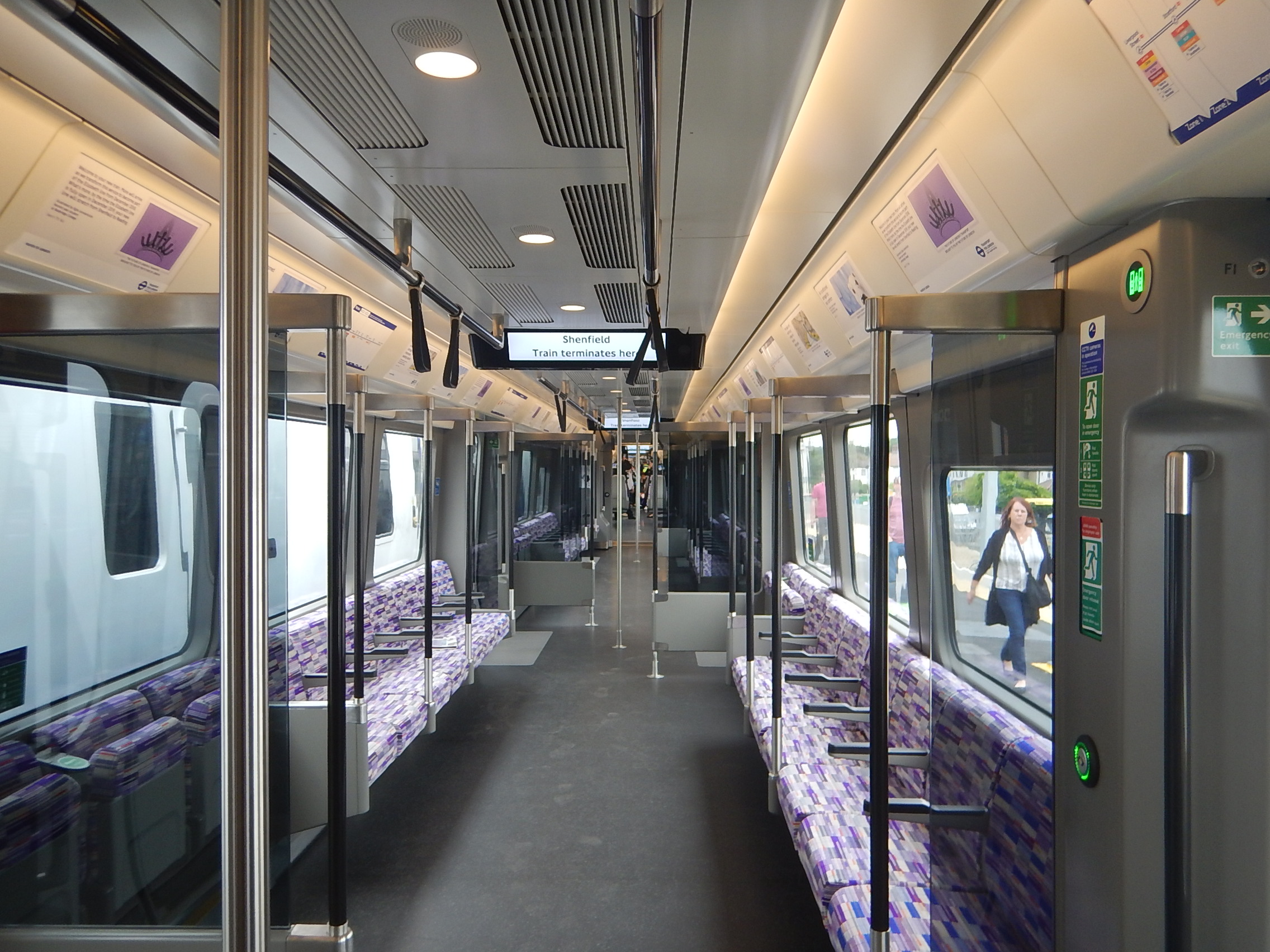
You could seat basketball players either side and they’d have difficulty playing footsie, given the width of the train.
Note too the space under the seats for their kit.
And then there is the air-conditioning, which of course the Tube lines don’t have.
So what is the point of building new narrow-bore Tube lines under London? Especially, as I doubt the cost of a line is much less than the wider-bore Crossrail on a per kilometre basis.
Build extensions to existing Tube lines, by all means, as these probably have a better economic case.
The Bakerloo Line Extension
This is a portion of London’s famous Tube Map.
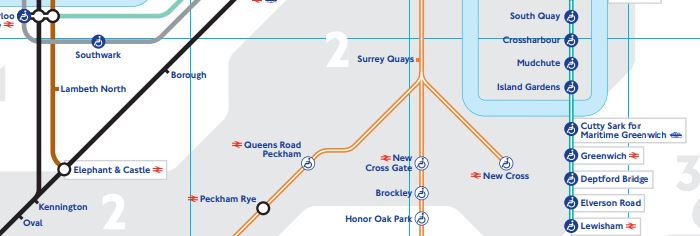
The Bakerloo Line Extension runs between the following stations.
- |Elephant and Castle
- Burgess Park
- Old Kent Road
- New Cross Gate
- Lewisham
It is a simple scheme to put new transport infrastructure into South-East London.
Conclusion
I doubt, we’ll see a complete new Underground line in London, built to the narrower-bore of the Tube.
Kent On The Cusp Of Change – Historic Routes
The Kent On The Cusp Of Change article in the July 2017 Edition of Modern Railways talks about the historic routes through Kent.
The existing fleet is being enlarged and updated.
- Class 375 trains are being refurbished.
- More Class 377 trains are arriving and will probably be refurbished.
- Class 465 trains will be transferred to Metro services.
- The Class 707 trains, unwanted by South Western Trains may arrive.
But there are problems, with issues like.
- Depot space,
- The lack of wi-fi.
- Crossrail’s Aventras have 4G and passengers will expect it.
- The Class 465 trains are only 75 mph units.
If we take a quick look at Greater Anglia, they are replacing all their fleet to increase capacity and they are having to build a new depot about half-way from London.
So expect to see a new depot, somewhere in Kent to accommodate the increased fleet.
More Highspeed Trains
I believe that for reasons of better services and efficiency, that a new batch of Class 395 trains or similar will take over some or all historic routes to Thanet.
If this happens, it could also mean, that because Highspeed trains are serviced at Ashford and Ramsgate, depot space was released at the London end of the routes.
A New Fleet Of Trains
I wouldn’t be surprised to see a new fleet of trains joining the fleet for the new South Eastern franchise.
If we look at the characteristics of Bombardier’s new Aventra we see the following.
- Up to 100 or even 125 mph capability.
- Superb interiors.
- Wi-fi and 4G capability.
- Wide doors and lobbies for fast entry and exit.
- Automatic coupling and uncoupling – Hitachi trains do it, so why not other manufacturers?
- Regenerative braking – Is it handled by on-board energy storage?
- Remote train warm-up!
- Improved automation for the driver.
- Less energy usage.
- Modern signalling systems including ERTMS, which is used by Thameslink and Crodssrail.
Judging by my journey on The 10:35 From Liverpool Street To Shenfield, the customer experience is Jaguar to the successful Electrostar’s Ford.
The fast station stops of these modern trains from the major manufacturers means the following.
- Less trains are needed for the same frequency of service.
- The frequency of services can be improved.
- Extra stops can be added with less of a time penalty.
In some cases semi-fast trains can be replaced by trains calling at all stations with no journey time penalty.
The Modern Railways article also hints that we’ll see more joining and splitting of trains to make sure capacity and frequency is tailored to the needs of a particular route.
Terminal Capacity In London
This could become a problem for Southeastern, but certain things can be done.
- Increasing Crossrail and Thameslink capacity.
- Extending Crossrail to Ebbsfleet and/or Gravesend.
- Splitting and joining services.
- Improve signalling to allow trains to run at higher frequencies.
- Cascade or scrap any train that can’t operate at 100 mph to create more paths.
In the long term, the solution is probably to rebuild Charing Cross station across the Thames, so that the platforms can accept three five-car trains working as one unit.
Higher Frequencies On Busy Routes
The North Kent Line from Abbey Wood station eastwards to Ramsgate will get increasingly busy through the Medway towns.
The East Kent Re-Signalling Project will help, but if all trains east of Abbey Wood were modern trains equipped with ERTMS, it would probably be easier to manage the trains, so that frequencies as high as ten trains per hour ran on a substantial part opf the route between Abbey Wood to Rainham stations.
There are probably several places where better signalling and modern trains can increase the frequency of trains.
Conclusion
The historic routes will be improved.
See Also
These are related posts.
- Abbey Wood Station
- Ashford Spurs
- Crossrail
- Elimination Of Slow Trains
- Fawkham Junction Link
- Highspeed Routes
- High Speed To Hastings
- Longfield Station
- Maidstone
- Reading To Tonbridge
- Thameslink
- Thanet Parkway Station
- Track Improvements
- Ultimate Class 395 Train
- Victoria As A Highspeed Terminal
To know more read Kent On The Cusp Of Change in the July 2017 Edition of Modern Railways.
Kent On The Cusp Of Change – Thameslink
The Kent On The Cusp Of Change article in the July 2017 Edition of Modern Railways talks about Kent and Thameslink.
This is said.
Under the Thameslink plans, due to come in next May, are two trains per hour (tph) Maidstone East to Cambridge and 2 tph Rainham to Luton, while the longstanding Sevenoaks via Bat & Ball to Blackfriars service will be extended to Welwyn Garden City in the peaks.
The Rainham to Luton service effectively creates a four tph service through the Medway towns to Abbey Wood, Greenwich, London Bridge and beyond.
The Maidstone East to Cambridge service, also creates four tph between London and Otford.
Onward From Maidstone East
I do wonder if the powers that be, looked at extending the service to Maidstone East station to the well-connected Ashford International station.
Consider.
- With the opening of the Ashford Spurs in Spring 2018, South East London and a lot more of Kent would have good access to Continental services.
- Thameslink would have a Southern access to Thanet to complement the Northern access at Rainham.
- Stations on the Maidstone Line could get four tph.
As Maidstone East to Ashford International takes thirty minutes, I suspect the extra time needed, makes scheduling trains difficult.
On the other hand, the Class 700 trains, probably execute stops faster than the current trains.
Could Thameslink Serve Ebbsfleet International Station?
If the Fawkham Junction Link is reinstated, this is a possibility.
Could A Catford Interchange Improve Thameslink?
The Maidstone East and Sevenoaks services both go through Catford station, which is close to Catford Bridge station.
Transport for London have said several times, that they would like to create a consolidated Catford Interchange station.
If one were to be created, could there be a bit of tidying up of services through the area, in much the same way as Gatwick Airport station acts as an important interchange on the Brighton Main Line?
Could Thameslink Capacity Be Increased?
I feel that Thameslink’s decision to serve Maidstone East and Rainham stations is a good one, but I suspect there are strips of paper on the Timetabling Room floor with other Kent and Sussex stations on them, like Ashford International, Canterbury, Dover, Hastings and Uckfield.
I also think too, that there may be stations, where additional trains could be desirable.
So could the current twenty-four trains through the central core of Thameslink be increased?
I think the answer is probably in the affirmative, as signalling, driver aids and the drivers themselves will get better, as the system develops.
In this article in Rail Engineer entitled Crossrail – approaching the final stages, this is said.
When the new Elizabeth line opens, 24 trains per hour will operate in each direction through the centre of London. The new signalling system will incorporate Automatic Train Operation to support this service, with the capacity for higher frequency of 30 trains per hour in the future. As a consequence, Siemens is installing the Communications-Based Train Control system (CBTC). It is similar to one already successfully installed in Copenhagen, so expectations are high.
So could similar techniques be used in Thameslink to create another six paths an hour.
That would still only be one train every two minutes.
I suspect too, capacity could be increased by lengthening some trains from eight to twelve cars.
Conclusion
Thameslink is very tied up with the Southeastern franchise.
See Also
These are related posts.
- Abbey Wood Station
- Ashford Spurs
- Crossrail
- Elimination Of Slow Trains
- Fawkham Junction Link
- Highspeed Routes
- High Speed To Hastings
- Historic Routes
- Longfield Station
- Maidstone
- Reading To Tonbridge
- Thanet Parkway Station
- Track Improvements
- Ultimate Class 395 Train
- Victoria As A Highspeed Terminal
To know more read Kent On The Cusp Of Change in the July 2017 Edition of Modern Railways.
Kent On The Cusp Of Change – Crossrail
The Kent On The Cusp Of Change article in the July 2017 Edition of Modern Railways talks about Kent and Crossrail.
This is said.
In December 2018, the Elizabeth Line is due to reach its south-eastern terminus at Abbey Wood, where there will be interchange with the North Kent line.
A wide range of new journey opportunities will open up, which over time will influence many choices over work and home locations. A train every five minutes from Abbey Wood to Canary Wharf and central London is expected to have a dramatic effect in North Kent.
The article goes on to say that a working group called Crossrail Gravesend is pushing to extend the Elizabeth Line to Ebbsfleet International station for High Speed One.
Current Services Between London, Abbey Wood And The Medway Towns
Adding together current services at Abbey Wood station as given in Wikipedia with the proposed Thameslink service between Rainham and Luton, which I wrote about in Thameslink To Rainham, gives the following service level at Abbey Wood station.
Westbound;
- 6 trains per hour (tph) to London Cannon Street via Greenwich
- 2 tph to London Charing Cross via Lewisham
- 2 tph to Luton via Greenwich.
All trains will call at London Bridge station, which after rebuilding for Thameslink is complete, will be a formidable interchange to other services, such as the Underground, buses and Shank’s pony.
Londoners tend to think of Crossrail, as London’s most important rail project, but I do think that the rebuilding of London Bridge station in a few years time will be considered the second most important.
In addition, as Abbey Wood will be connected to Crossrail, there must be few places in Central London, to which travel is difficult from Abbey Wood station.
Eastbound;
- 2 tph to Barnehurst via Slade Green returning to London via the Bexleyheath Line
- 2 tph to Dartford
- 2 tph to Gillingham (Kent)
- 2 tph to Rainham (Kent)
- 2 tph to Crayford via Slade Green returning to London via the Dartford Loop Line,
This map from carto.metro.free.fr shows the lines around Dartford station.

Note.
- Barnehurst is on the Bexleyheath Line.
- Cayford station is on the Dartford Loop Line.
- The North Kent Line goes East from Datford station to Gravesend , the Medway Towns and Thanet.
In addition at Abbey Wood station, using their separate platforms and separate tracks to the Crossrail tunnel, 12 tph will be providing the Crossrail service.
Future Services From London To The Medway Towns
Looking at the Southeastern services to Gillingham and the Thameslink services to Rainham, the following can be said
- These are the only services, that go more than a few miles past Abbey Wood station.
- The Gillingham service is a Southeastern Metro service, so probably needs to be run by faster modern trains, rather than the current Class 465 trains.
- The combination of the Gillingham and Rainham services will hopefully give a very passenger friendly train every fifteen minutes between Abbey Wood and Gillingham, via Dartford, Gravesend, Rochester and Chatham.
- The Gillingham service calls at Lewisham, Blackheath, Charlton and Woolwich Arsenal between London Bridge and Abbey Wood.
- The Rainham service calls at Greenwich between London Bridge and Abbey Wood.
I do wonder, if it would be better if the Southeastern service from Charing Cross to Gillingham were to be extended to Rainham and always run by a twelve-car train.
- Rainham is only four minutes further from London than Gillingham.
- Rainham has a twelve-car bay platform.
- Gillingham’s bay platform may not be able to take a twelve-car train.
- Four tph can be handled in a single bay platform.
This would give a high-capacity four tph service between Abbey Wood and the Medway Towns, with two tph from Thameslink and two tph from Southeastern.
But the major factor would be that passengers would surely find it a very easy service to use.
Service Frequencies East Of Dartford
Note that of the eastbound trains, only 6 tph go through Dartford, as the other 4 tph loop back to London.
Between Dartford and Rochester, there is only the 4 tph to Gillingham/Rainham, although they are joined by 2 tph Highspeed trains between Gravesend and Rochester.
It would thus appear that the maximum frequency between Abbey Wood and Rochester is probably 6 tph.
When you consider that the trains through the area, will all be modern trains fitted with the latest ERTMS signalling, handling these numbers of trains and perhaps 4-8 tph for Crossrail between Abbey Wood and Gravesend in the future, will be well below the 24 tph handled by Crossrail and Thameslink in their central tunnels.
The New Track Layout At Abbey Wood Station
Looking at the new track layout at Abbey Wood station, it appears to be very simple with just a reversing siding to the East of the two Crossrail platforms 3 and 4.
Cross-overs appear to be provided so that the following is possible.
- Trains from Crossrail can continue towards Dartford after calling at Platform 4.
- Trains from Dartford can continue towards Crossrail after calling at Platform 3.
It looks to me, that the track layout is designed, so that Crossrail trains can easily run to and from Dartford or any other station that the planners decide is the terminus.
Capacity Between Abbey Wood And Rochester
As the double-track line between Abbey Wood and Rochester with modern signalling can probably handle up to probably 24 tph, there is capacity for a lot of Crossrail trains to go past Abbey Wood.
Suppose Crossrail is extended to Gravesend with 4 tph extended to the new terminal and trains stabled at a new depot at Hoo Junction to the East of the town.
The following frequencies to and from London would apply at various stations.
- Abbey Wood – 10 tph + 12 tph Crossrail
- Belvedere – 10 tph + 4 tph Crossrail
- Erith – 10 tph + 4 tph Crossrail
- Slade Green – 10 tph + 4 tph Crossrail
- Dartford – 6 tph + 4 tph Crossrail
- Stone Crossing – 4 tph + 4 tph Crossrail
- Greenhithe – 4 tph + 4 tph Crossrail
- Swanscombe – 4 tph + 4 tph Crossrail
- Gravesend- 4 tph + 4 tph Crossrail + 2 tph Highspeed
North Kent is going to get a better train service.
Hoo Junction
Hoo Junction, which is a few miles to the East of Gravesend station, has been identified by Crossrail planners, as a suitable area for a depot to serve an extended South-Eastern branch of the line.
Chris Gibbs, in his extensive report on GTR’s performance, suggests that the Hoo Junction area , be used as a depot for Thameslink services to North Kent. I wrote about this in Gibbs Report – Hoo Junction Depot.
In addition, Southeastern are running short of space in Slade Green Depot.
But that’s just the railways.
This report on the BBC indicates that the new Lower Thames Crossing will cross North-South between Gravesend and Hoo Junction.
Should there be a Park-and-Ride station at Hoo Junction?
It would have a four tph service between London and the Medway Towns with a stop at Abbey Wood for Crossrail.
In Gibbs Report – Hoo Junction Depot, I came to the following conclusion.
Crossrail, the Department of Transport, Kent County Council, Network Rail, Southeastern, Thameslink and all other stakeholders and residents should sit round a large table and agree a common long-term philosophy that is in all their best interests for the future.
What happens at Hoo Junction, will be tremendously important to transport infrastructure in the South East of England in general and Kent in particular.
Crossrail To Ebbsfleet International Station
The article talks about extending Crossrail to Ebbsfleet International station, by adding two new tracks through Slade Green and Dartford stations, serving existing stations.
As I showed in the previous section, I think extra tracks are not necessary, as modern signalling can handle the required number of trains with ease. I suspect though, that the 75 mph Class 465 trains will need to be retired from the North Kent Line, as their performance is just not good enough.
The report says this about the connection at Ebbsfleet.
There would be a new station that would have pedestrian access with Ebbsfleet HS1 station and Northfleet on the historic line – this could be the terminus, or the new line might reach as far as Hoo Junction on the east side of Gravesend.
I’ve always felt that Ebbsfleet International station was a logical South-Eastern destination for Crossrail, mainly because of the space at the station for platforms, depots and car parking.
Consider.
- St. Pancras station may have too few platforms for Continental services in the future, so Ebbsfleet International may end up being a terminus for some of these services.
- Southeastern is developing the Highspeed commuter services to East Kent and East Sussex, which probably need a connection to Crossrail and/or Thameslink.
- The Fawkham Junction link connects Swanley and Ebbsfleet International stations, and it could be used by extra Highspeed services or Thameslink.
I’ve always felt that there’s a simple solution in there, but vested interests and politicians seem to stop railway planners from finding it.
So why not use upgrade Northfleet station with the following features?
- The ability to accept the services along the North Kent Line – 4 tph + 4 tph Crossrail
- The ability to accept twelve-car trains.
- A pedestrian link to Ebbsfleet International station based on something a bit sexy. Perhaps a fast travelator or some other form of people mover.
This Google Map shows that there is plenty of space between the stations.
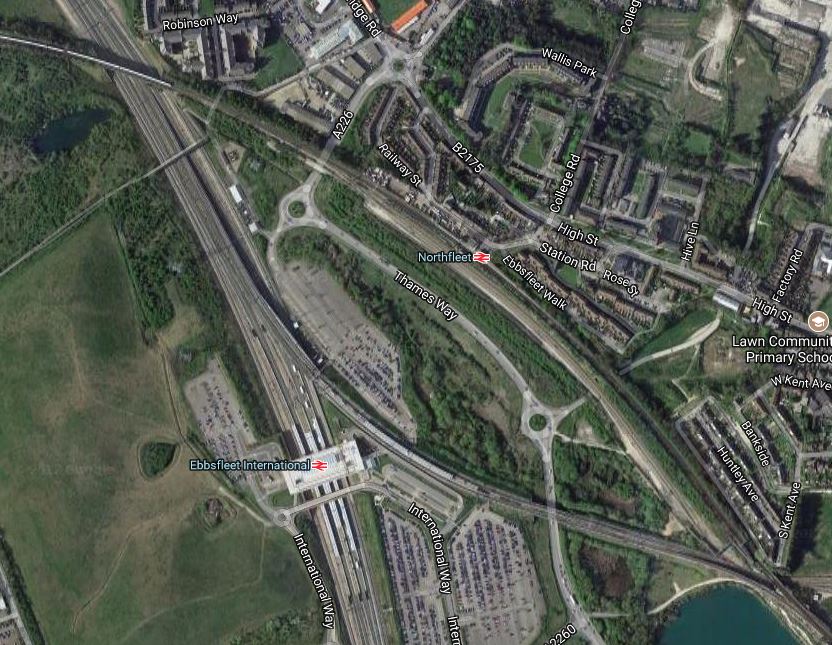
Northfleet station is to the North-East of Ebbsfleet International station.
Could it be that a simple solution would work?
- Belvedere, Erith, Slade Green, Dartford, Stone Crossing, Greenhithe and Swanscombe become Crossrail and North Kent stations.
- Northfleet station is connected to Ebbsfleet International station in a passenger-friendly way.
- The four tph service through the Medway towns to London Bridge continue and are better-integrated with Thameslink at London Bridge.
- The Swanley link to Ebbsfleet is reopened to allow more service opportunities.
But then what do I do know?
Is Abbey Wood Station A Cross-Platform Interchange?
One thing that the Modern Railways article says, is that Abbey Wood station has been designed with cross-platform interchange, in such a way that any delays to Kent services don’t have any knock-on effects on the new services.
The Modern Railways article says that Abbey Wood station is a cross-platform interchange, as do other articles.
This map from carto.metro.free.fr shows the layout of lines at Abbey Wood station.
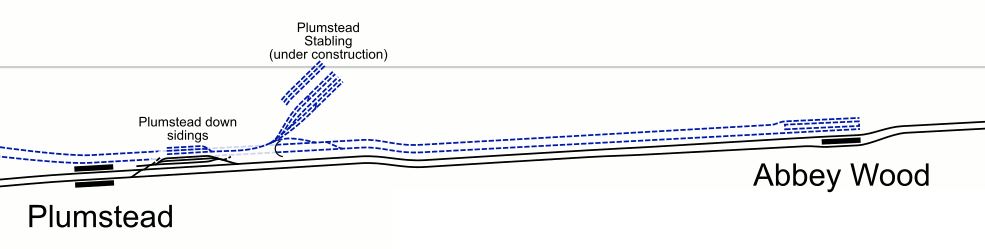
Compare this with this track layout, that I posted in Abbey Wood Station – 29th August 2016.
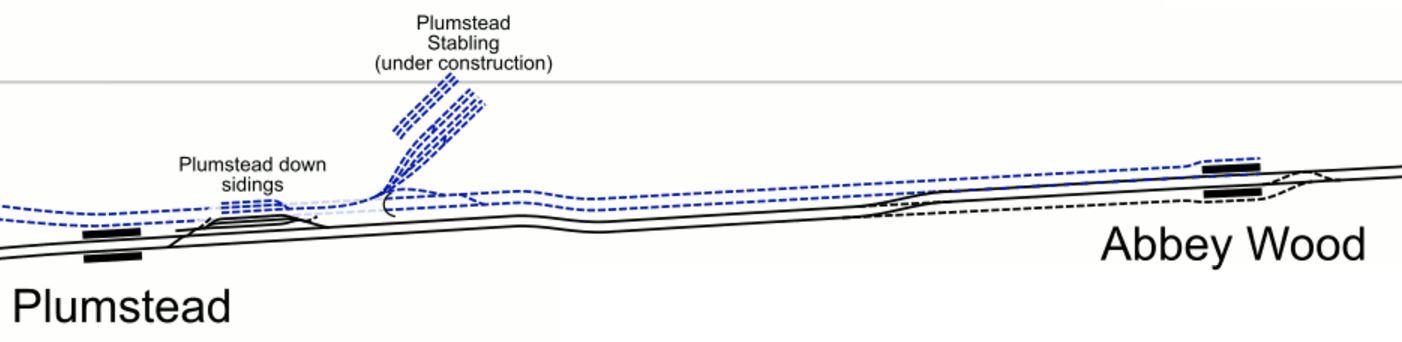
Note the following.
- The older layout shows cross-platform interchange.
- The current one has two pairs of platforms, with Platforms 3 and 4 for Crossrail and Platforms 1 and 2 for other services.
- The current layout probably connects better to the existing lines to Dartford.
These pictures were taken on the 28th June 2017.

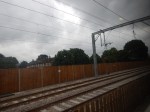

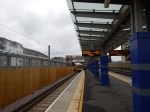

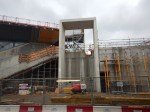
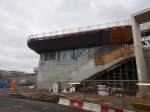

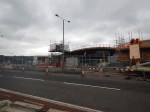

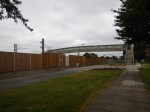


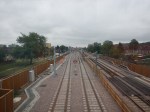


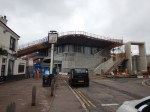
They show a similar layout, of two Northern platforms (3 & 4) for Crossrail and two Southern platforms (1 & 2) for all other services.
Note.
- The two cross-overs to the West of Abbey Wood station to get the Crossrail trains to and from the right platforms.
- The station building and the two footbridges over the lines.
- The solid wooden fence between the two pairs of lines.
- The robust nature of the overhead wiring.
I suspect, that if they had wanted to have Eastbound and Westbound lines each share an island platform, it would have required a flyover, which would have been a large expense.
But at least with this layout, Crossrail trains can have their own pair of lines to the East, running to the North of the current tracks. The Modern Railways article says this.
Mindful of this, the working group is proposing two new dedicated tracks for the extension, running alongside the line through Slade Green and Dartford, with platforms serving the existing stations.
This Google Map shows the route through Dartford.

In some places putting in two extra tracks would be very difficult and extremely expensive and very disruptive to local residents.
Given the capabilities of modern signalling, now being demonstrated on Thameslink in Central London, I believe that something practical for the train companies and friendly for the passengers will emerge.
But one thing is certain. There will not be cross-platform interchange between Crossrail and other services at Abbey Wood station.
Interchange Between North Kent Services And Crossrail
I have a feeling, that this will come down to personal preferences.
After the opening of Crossrail to Abbey Wood in 2018 and the opening of Thameslink to Rainham, passengers will probably have to use Abbey Wood, where it will be an up-and-over via escalators, lifts or stairs.
If and when Crossrail is extended to Gravesend, any of Abbey Wood, Dartford and Gravesend, could be used as a same-platform interchange.
It would also be possible to take a Highspeed service from Ramsgate and change to Crossrail at Gravesend. Would this avoid the extra charge for High Speed One?
I think that Gravesend could become the interchange of choice, as it could have the following London-bound trains, if Crossrail is extended.
- 2 tph – Thameslink to Luton
- 2 tph – Southeastern to Charing Cross
- 2 tph – Highspeed to Ebbsfleet International, Stratford international and St. Pancras.
- 4 tph – Crossrail
There could be a need to improve the platforms to cope with the increase of passenger numbers.
Conclusion
Crossrail will get very involved with the new Southeastern franchise.
See Also
These are related posts.
- Abbey Wood Station
- Ashford Spurs
- Elimination Of Slow Trains
- Fawkham Junction Link
- Highspeed Routes
- High Speed To Hastings
- Historic Routes
- Longfield Station
- Maidstone
- Reading To Tonbridge
- Thameslink
- Thanet Parkway Station
- Track Improvements
- Ultimate Class 395 Train
- Victoria As A Highspeed Terminal
To know more read Kent On The Cusp Of Change in the July 2017 Edition of Modern Railways.
The 10:35 From Liverpool Street To Shenfield
I took these pictures on the untimetabled 10:35 TfL Rail service between Liverpool Street and Shenfield stations and on the return to Liverpool Street.


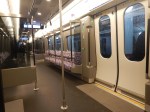
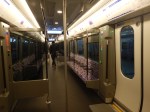


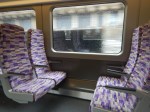
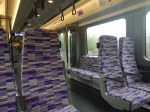

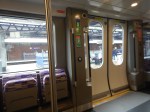


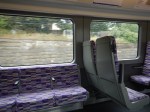
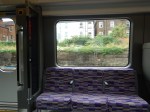


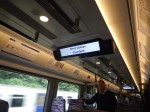


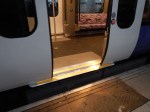

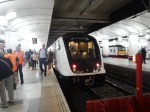
As you can see it is a new Class 345 train.
There were a lot of Crossrail and Transport for London staff about, talking to passengers.
These are my thoughts on various issues.
Ride Quality
This is up with the best or the legendary British Rail Mark 3 coach, which was designed in the 1960s.
One of the Crossrail staff was wearing stiletto heels close to four inches and she was walking up-and-down with no difficulty.
For someone who suffered a bad stroke, my balance is good and I had no difficulty walking along the seven-car train.
Cabin Height And Width
I don’t know how Bombardier have done it, but the cabin seems higher and wider than any other train I’ve ridden in the UK.
Next time, I ride one, I’ll take a couple of tall guys and a tape measure.
Information
The current on-train information is simple, but then as I suspect the screens are software driven, any degree of required complication can be added.
I don’t know whether it is deliberate but everything is large and easy to read. There is also no maps or exhortations about security.
Long may it stay that way!
Simple is efficient!
Seats
Not everybody was completely satisfied with the seats, but I found them much more comfortable than those in the Class 700 trains on Thameslink.
There were some good points.
- The sets of four seats were arranged as they were in the original InterCity 125 around a large window.
- The metro-style seating had a wide aisle in the middle, that would satisfy a basketball team.
- An amply-proportioned man, thought the seats comfortable.
- Most seats had well-designed armrests.
- There was plenty of space under the seats for airline-size carry-on baggage or a labrador.
On the other hand, there were no cupholders, tables or litter bins. But there aren’t any on the Class 378 trains or London Underground‘s S Stock.
Entry And Exit
I feel that trains should be a level step across from the platform.
This train wasn’t as good as a Class 378 train on many Overground stations, but it was better than some.
As many Crossrail stations will be one train type only there is probably scope to get this better.
I regularly see a lady in a simple wheel-chair on the Overground and I feel she would probably be able to wheel herself in and out, which she does at Dalston Junction station with ease.
It should be noted that each coach has three sets of wide double doors and a large lobby, so perhaps a mother with triplets and a baby in a buggy would find entry easier than any train on the Underground.
Walking Up And Down The Train
I found this very easy on a train that was no more than a third full, as it was an extra service to introduce the train to passengers.
There were numerous hand-holds and vertical rails in the centre of the lobbies. Unlike on some trains in France, Italy or Germany, the rails were very simple. They also borrowed heavily from the Overground’s Class 378 trains.
Wi-Fi And 4G
I didn’t try the wi-fi, as it is not something I use very often.
But I was getting a strong 4G signal all the way to and from Shenfield. Was this direct or was I picking up a booster in the train? I suspect it was the latter at some points close to Liverpool Street.
Windows
The windows on the train are large and well-positioned.
The simple seat and window layout, seems to appeal to all classes of rail user.
A Train For Families
When Celia and I had three children under three, with two able to toddle-along (they had too!) and the youngest in his McClaren, I could imagine us taking a train from Barbican station to perhaps go shopping on Oxford Street, sitting in one of those set of four seats by that large window.
A Train For Commuters
The Class 378 trains of the Overground cram them in and the metro layout of much of the Class 345 train will accommodate large numbers of commuters.
I would question, if there are enough seats, but the proof should be apparent by the end of the year, as eleven of the current seven-car trains will be in service between Liverpool Street and Shenfield.
For the full Crossrail service, they will be lengthened to nine cars and there is a possibility of adding a tenth.
A Train For Shoppers
If say, I’d been to Eastfield at Stratford and was coming back to Moorgate heavily loaded with shopping to get a bus home, I could probably put some bags under the seat. Try that on the Underground!
A Train For The Not-So-Young
From what I saw today, I couldn’t make too many observations, as the train wasn’t crowded, but the few older travellers that I did see were smiling at the experience.
A Train For The Disabled
As I’m not disabled, I can’t comment and would love to hear from those who are.
A Train For The Tall
Compared to other trains in London, the headroom seemed to be generous, but then I didn’t see anybody who was much more than six foot.
A Train For The Airport
Class 345 trains will serve Heathrow Airport. I feel they will cope, as the metro layout of the Class 378 trains, seems to accommodate large cases well!
Comparison With A Class 700 Train
The Thameslink Class 700 trains are designed for running over a longer distance at a higher speed and they have toilets.
But for a thirty minute journey through a busy part of London, there is no doubt in my mind, as to which train I would choose.
The Class 345 train, with its large windows, more comfortable seating, space for bags, uncluttered views and the appearance of more space, is undoubtedly in my view a better designed train.
Incidentally, for every metre of a nine-car Class 345 train, 7.31 passengers can be accommodated, as opposed to 7.07 in an eight-car Class 700 train.
I think we can put all this comparison down to Derby 1 – Krefeld 0!
Comparison With A Class 387 Train
The trains will be compared with Bombadier’s last Electrostar, the Class 387 train, which will be in service with GWR between Paddington and Reading, alongside the Class 345 train.
Passengers will be able to take whichever train they want on this route.
Will they choose the Class 387 train, with its tables, very comfortable seats and toilets or the Class 345 train?
I’d choose the Class 387 train, as I like to lay out my newspaper for reading.
No matter what happens Derby wins again.
Moving Forward On Approach To Liverpool Street
I was surprised how many people walked to the front as we approached Liverpool Street.
But were they only demonstrating the Londoners’ ducking and diving ability of getting to the right place for exit.
Regular passengers on regular routes will anticipate their stops and I will be interested to see how much passenger behaviour increases the capacity of the train.
Conclusion
This first Aventra feels like it is a very good train.
Consider how Bombardier improved the Electrostar since it was first produced in 1999.
So what will an Aventra be like in 2035?
 The Anonymous Widower