Vivarail Spearheads Development Of Green Fuel Technologies
The title of this post is the same as that of this press release from Vivarail.
The press release describes and shows visuals of their new hydrogen-powered Class 230 train.
These are a few points from the press release.
A Four-Car Train
This is said about the basic philosophy of the design.
Vivarail’s on-going success in launching new technologies to the UK market means it is the only train manufacturer with a fully approved base train to work from. The hydrogen train will follow the design of the Transport for Wales fleet with two driving motor cars powered by Hoppecke batteries, the only difference being that instead of a diesel genset beneath the intermediate car the hydrogen train will have two carriages housing the fuel cells and hydrogen tanks.
Building on an approved base train must be the way to go.
Underfloor Power
This is said about the position of the hydrogen tanks and the fuel cells.
Unlike other trains the Vivarail Class 230s will store all the equipment beneath the floor making a much more stream-lined and efficient vehicle able to carry more passengers and deliver faster journey times.
I would suspect that Vivarail have designed tanks and fuel cells, that take up less space.
Modular Design
The design appears to be modular from this extract.
Vivarail’s standard modular power pack designs allow easy transition from one power source to another – in this case simply adapting a genset to a fuel cell. Both sit in the same space envelope beneath the train and indeed a train built as a diesel unit could be converted to run with hydrogen if required.
Would you design it, any other way?
Range Of 650 Miles
This is a thousand kilometres and seems to be the design range of most hydrogen trains.
Class-Leading Acceleration
It is a good idea to look at the ratio of weight to length of a basic trains, that will be converted to hydrogen power.
- Alstom – The Class 321 train has a figure of 1.72 tonnes/metre.
- Vivarail – The D78 Stock train has a figure of s 1.32 tonnes/metre.
The difference is probably because the D78 Stock is built from aluminium.
Keeping the weight down is a good way to increase the rate of acceleration.
Regenerative Braking
Why would you design a train without it?
Conclusion
The only supplier mentioned in the press release is Hoppecke, who will be making the batteries.
It looks to me that Vivarail have looked at every component for a hydrogen train and chosen the best ones with respect to performance, size and weight.
I shall be looking forward to taking a ride!
Spark Energy Supply Switch To Ovo Energy Going ‘Smoothly’
The title of this post is the same as that of this article on the BBC.
If the article is true, which as it is on the BBC, I feel there is a high chance that it is, I think that this means, that OFGEM has now got a backstop for those customers, who choose an energy company that fails.
It probably means that there is less risk in changing to an energy company, that you don’t know, but was recommended by a trusted friend or a reputable consumer affairs program or magazine.
As to OVO, I have used them for several years now, as have several of my friends.
Pan Up And Pan Down At Drayton Park Station
The years and decades go by and the new Class 717 trains, just like their predecessors; the Class 313 trains, continue to change between 25 KVAC overhead and 750 VDC third rail electrification at Drayton Park station.

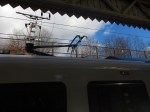
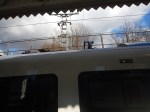


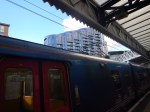

There appears to have been little noticeable development in the forty years since the Class 313 reains were introduced. But the operation of the Class 717 trains appears smoother and quieter.
I would have thought, that for safety reasons, the new trains would have used battery power between Drayton Park and Moorgate stations.
After all it’s only two and a half miles, that is run using third-rail electrification.
I’d be very interested to see how much power is used by the new Class 717 trains South of Drayton Park.
In Weight And Configuration Of A Class 717 Train, I showed that the kinetic energy of a jam-packed Class 717 train at 85 mph is 56.15 kWh.
- I doubt that this sort of speed is achieved in the tunnels.
- At 60 mph, the energy would be 28 kWh
- At 40 mph, the energy would be just 12 kWh.
Obviously, hotel power for air-conditioning and lights will be needed for the train, but even at 5 kWh per car per mile, that would only be 150 kWh.
To carry 200 kWh of batteries on a six-car train is a very practical proposition.
- Vivarail have done it in a three-car train.
- There could be a short length of third-rail electrification to top up the batteries at Moorgate station, if required.
- Battery power could be used in depots to move trains, which would mean depots could have less electrification.
- Trains could be moved to the next station, if the electrification should fail.
The route between Moorgate and Drayton Park stations, is probably one of the best and easiest in the UK for battery operation.
 The Anonymous Widower