Beeching Reversal – St Anne’s Park Station
This is one of the Beeching Reversal projects that the Government and Network Rail are proposing to reverse some of the Beeching cuts.
This Google Map shows the proposed site of St. Anne’s Park station, between British Temple Meads and Keynsham stations.
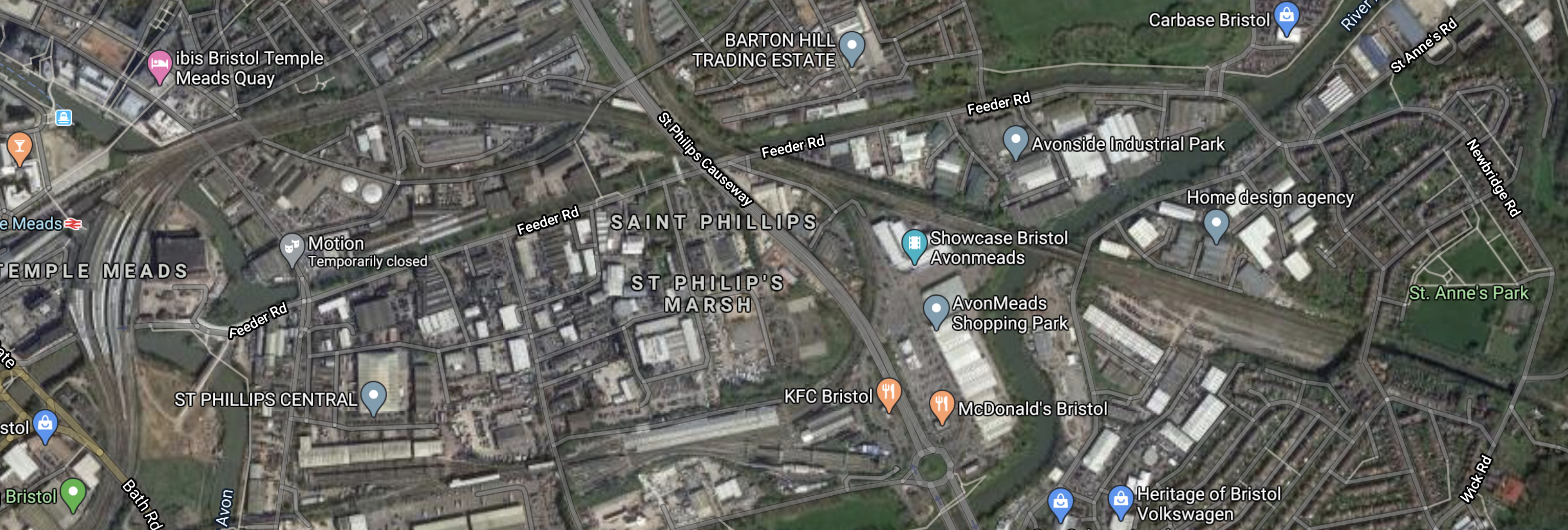
The station is about four-five miles from Bristol Temple Meads station.
- Bristol Temple Meads station is to the West of the map.
- St. Anne’s Park station will be to the East of the map.
- The station has up to two stations per hour.
The Great Western Main Line between Bristol Temple Meads and Bath runs through the site of St. Anne’s station.
Conclusion
There are quite a few stations like this that councils want to reopen.
Beeching Reversal – Primrose Line
This is one of the Beeching Reversal projects that the Government and Network Rail are proposing to reverse some of the Beeching cuts.
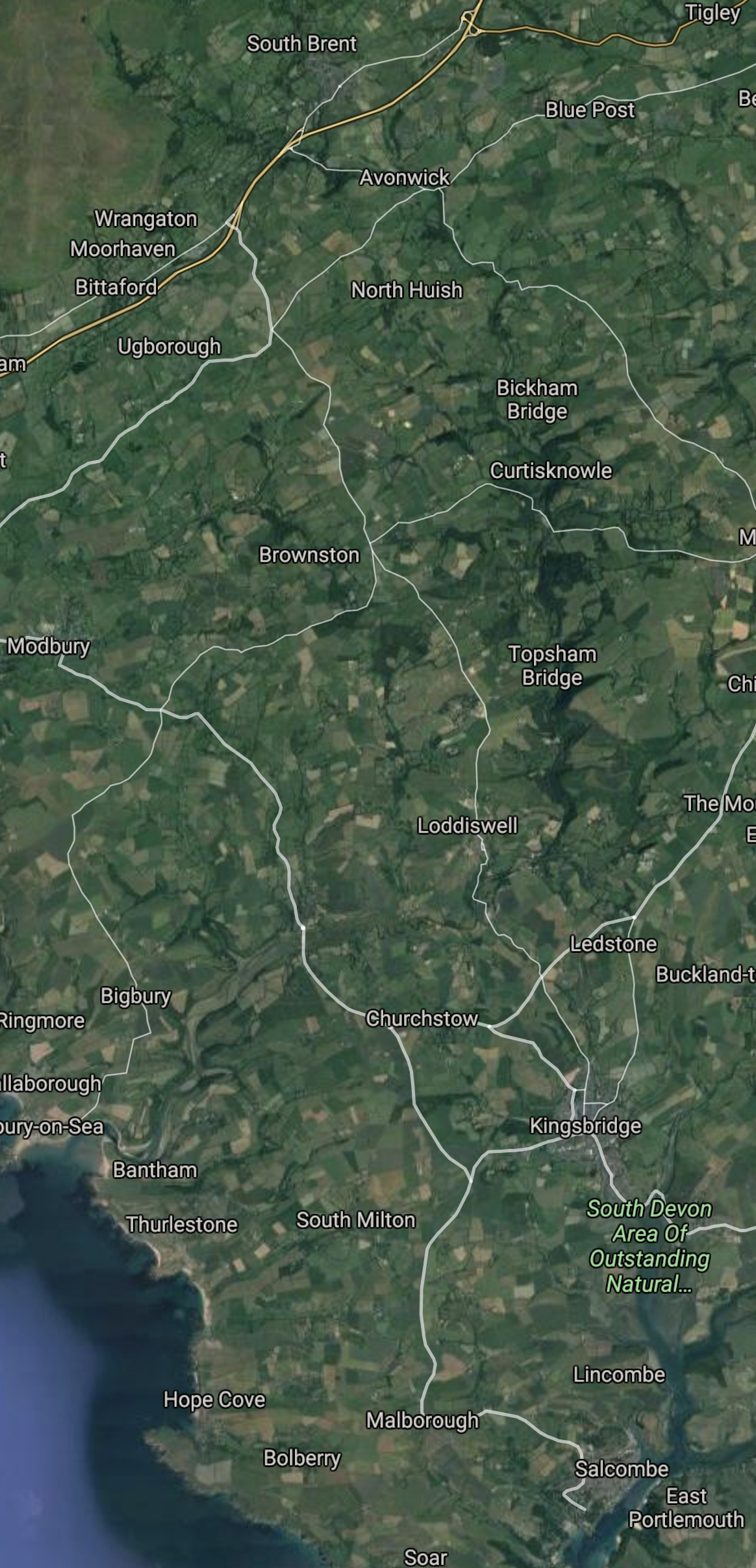
This Google Map shows the area of South Devon, where the railway is proposed to be reopened.
And this diagram from Wikipedia shows the line.
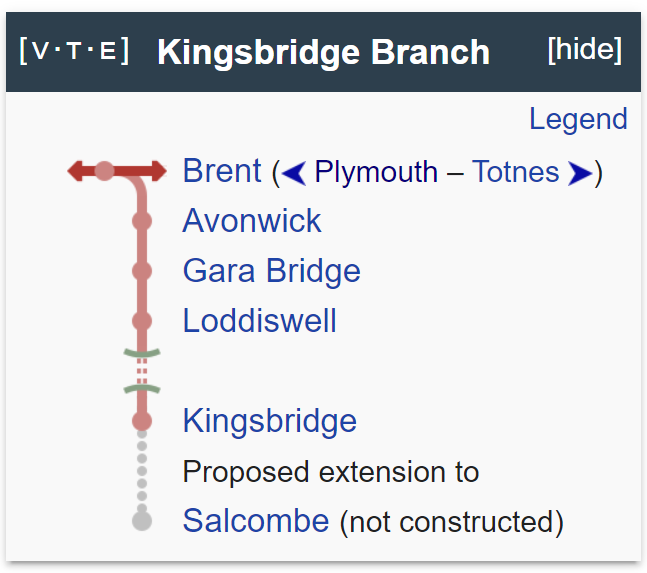
Note.
- The railway runs between South Brent and Kingsbridge stations.
- It connected to the double-track Pymouth and Exeter Line.
- There were originally stations at Avonwick, Gara Bridge and Loddiswell.
- It was single track.
- It was twelve miles long.
- There was also a planned extension to Salcombe, that was never built.
The Connection At Brent Station
This Google Map shows the former position of Brent station.
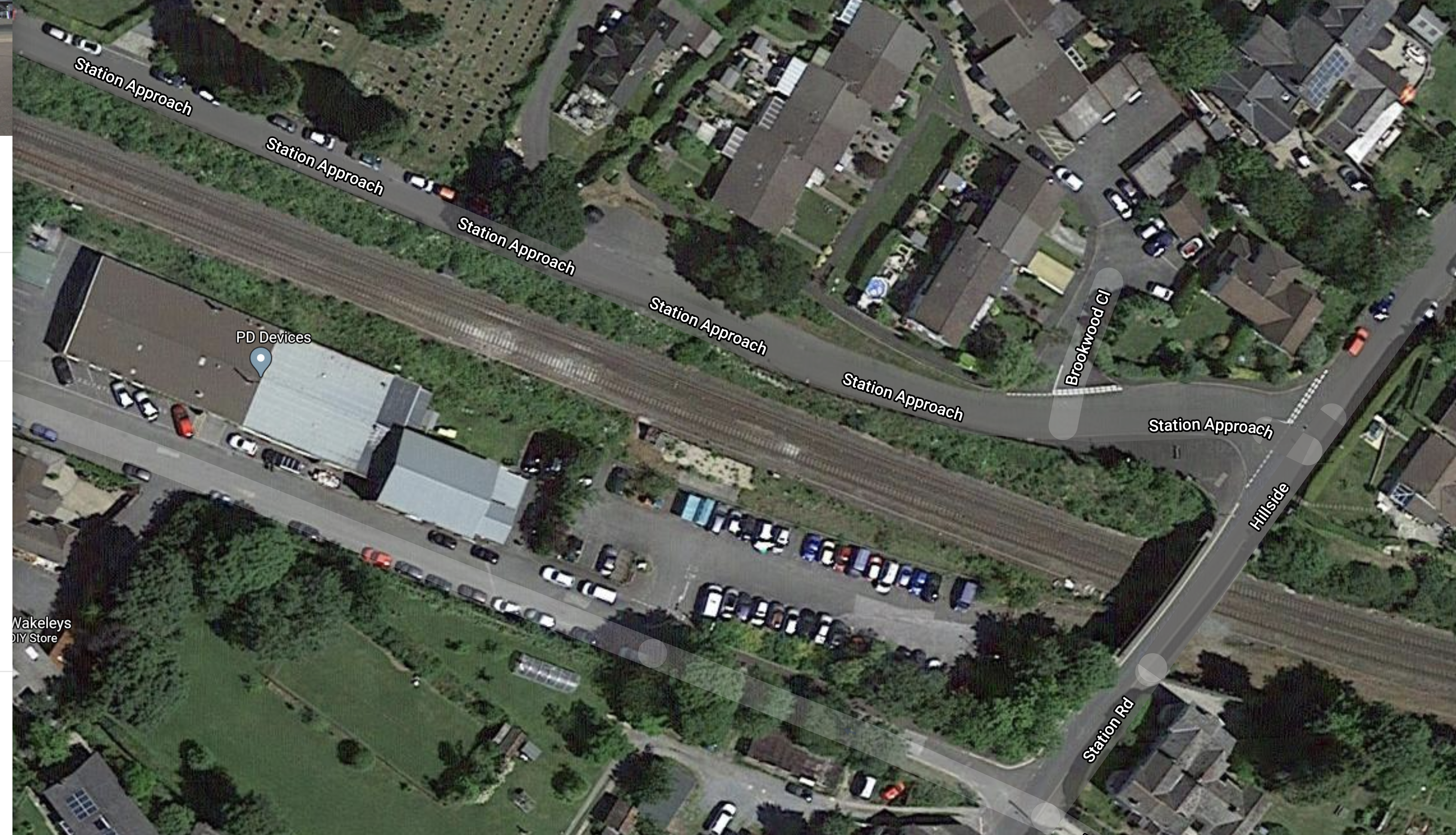
There does appear to be plenty of space for two through platforms and one for the branch line on the South side of the main line.
Trains
I suspect that this route will probably be capable of being run by two or three of Vivarail’s Class 230 trains.
Conclusion
This looks a simple scheme, that could be worthwhile, for commuters residents, shoppers and tourists.
Battery Electric Class 800 Trains Between London Paddington And Bristol Temple Mead Stations
Hitachi have changed the rules on electrification, by the announcement of the development of battery electric trains in collaboration with Hyperdrive Innovation, which I wrote about in Hyperdrive Innovation And Hitachi Rail To Develop Battery Tech For Trains.
The proposed train is described in this Hitachi infographic.

It will have a range on battery power of 90 km or 56 miles.
Currently, services between London Paddington and Bristol Temple Meads stations are as follows.
- The frequency is two trains per hour (tph)
- Services call at Reading, Didcot Parkway (1tph), Swindon, Chippenham and Bath Spa.
- Services use the electrification between London Paddington and Chippenham.
- Services use diesel power between Chippenham and Bristol Temple Meads.
- Chippenham and Bristol Temple Meads are 24.5 miles apart.
It looks to me that a well-driven Class 800 train with Hyperdrive Innovation’s clever batteries replacing some or all of the diesel engines could run between Chippenham and Bristol Temple Meads stations and back without using a drop of diesel.
It might be a bit tight, but it would certainly be possible, if there were more electrification between Bath Spa and Chippenham stations.
- From this article on the BBC, which is entitled Box Tunnel Reopens After Network Rail Electrification Work, it appears that a lot of the pre-electrification work has been completed.
- This would reduce the distance without wires to perhaps 18-20 miles.
As the Class 800 trains have agile pantographs, I’m sure that it will be possible for battery electric Class 800 trains to run between London Paddington and Bristol Temple Meads stations.
Electrification At Bristol Temple Meads Station
This will surely happen and with full electrification, the following will be possible.
- Trains would be able to recharge before returning to Chippenham.
- Trains would be able to extend the service using battery power to Weston-super-Mare, which is only twenty miles away.
- Trains would be able to use the power whilst waiting in the station.
It appears that trains that run between London Paddington and Bristol Temple Meads station, use a selection of platforms in Bristol.
Would it be sensible to reduce the number of platforms used and electrify them first, so that battery electric trains could charge their batteries?
Could A Battery Electric Train Run Between Bristol Temple Means And Taunton Stations?
Consider.
- These two stations are 46 miles apart via Weston-super-Mare, so if there was charging at Taunton, this service might be possible.
- The direct route is a couple of miles shorter.
- A train with full batteries at Taunton, would reach well past Exeter.
Could a battery-electric service be of use in creating Great Western Railway’s timetable, as in the Peak services are extended to Weston-super-Mare and Taunton stations?
It would certainly be lower carbon. than a current journey.
Would The Railway Through Bath Need To Be Electrified?
This would depend on three main factors.
- There is a certain amount of opposition to electrification in the centre of Bath.
- Can all passenger trains through the city be made zero-carbon without electrification?
- Can all freight trains through the city be made zero-carbon without electrification?
I would feel that all passenger trains could be run by appropriate trains, but freight would be a problem under existing technology.
I wouldn’t be surprised, if no electrification was ever erected through Bath!
Eversholt Rail And Alstom Invest A Further £1 Million In Breeze Hydrogen Train Programme
The title of this post, is the same as that of this press release from Alstom.
The major point made is that the train will be called a Class 600 train.
 The Anonymous Widower