Plans For Powering Trains And Details Of Our Upcoming Consultation
The title of this post, is the same as that of a news item on the East West Rail web site.
This is the sub heading.
We’re pleased to share plans for how we’ll power trains on East West Rail, as well as information and dates of our public consultation on latest proposals for the project.
These are the first two paragraphs.
As part of our latest proposals, which we’ll be sharing for public consultation from 14 November, we’re providing information on our preference for green traction power in the form of discontinuous electrification with hybrid battery-electric trains, after the Chancellor confirmed government support for the project in yesterday’s budget.
As well as reducing carbon emissions, discontinuous electrification would mean overhead lines would only need to be installed along some sections of the route, which would reduce disruption to existing structures and potentially reduce visual impacts in more sensitive locations on the new railway between Bedford and Cambridge. This option would also cost less than full electrification and would need less land for things such as mast foundations.
There is also a short video, which explains discontinuous electrification.
I feel that to use discontinuous electrification and hybrid battery-electric trains is the way to go on this railway between Oxford and Cambridge.
- It is a zero-carbon solution.
- There is electrification at Reading. Didcot, Bletchley, Milton Keynes, Bedford and Cambridge along the route, so grid connections will be already available.
- Sandy, where East West Rail crosses the East Coast Main Line, is fully electrified and must have a grid connection.
- A small article in the November 2024 Edition of Modern Ralways, says that Hitachi are developing a smaller battery for commuter and suburban trains.
- Didcot to Oxford could be electrified and there is already a grid connection at Didcot.
Discontinuous electrification could be used to extend East West Rail to Norwich, Ipswich and Colchester.
These are my detailed observations and thoughts.
Existing Electrification
This OpenRailwayMap shows the electrification between Oxford and Bedford.
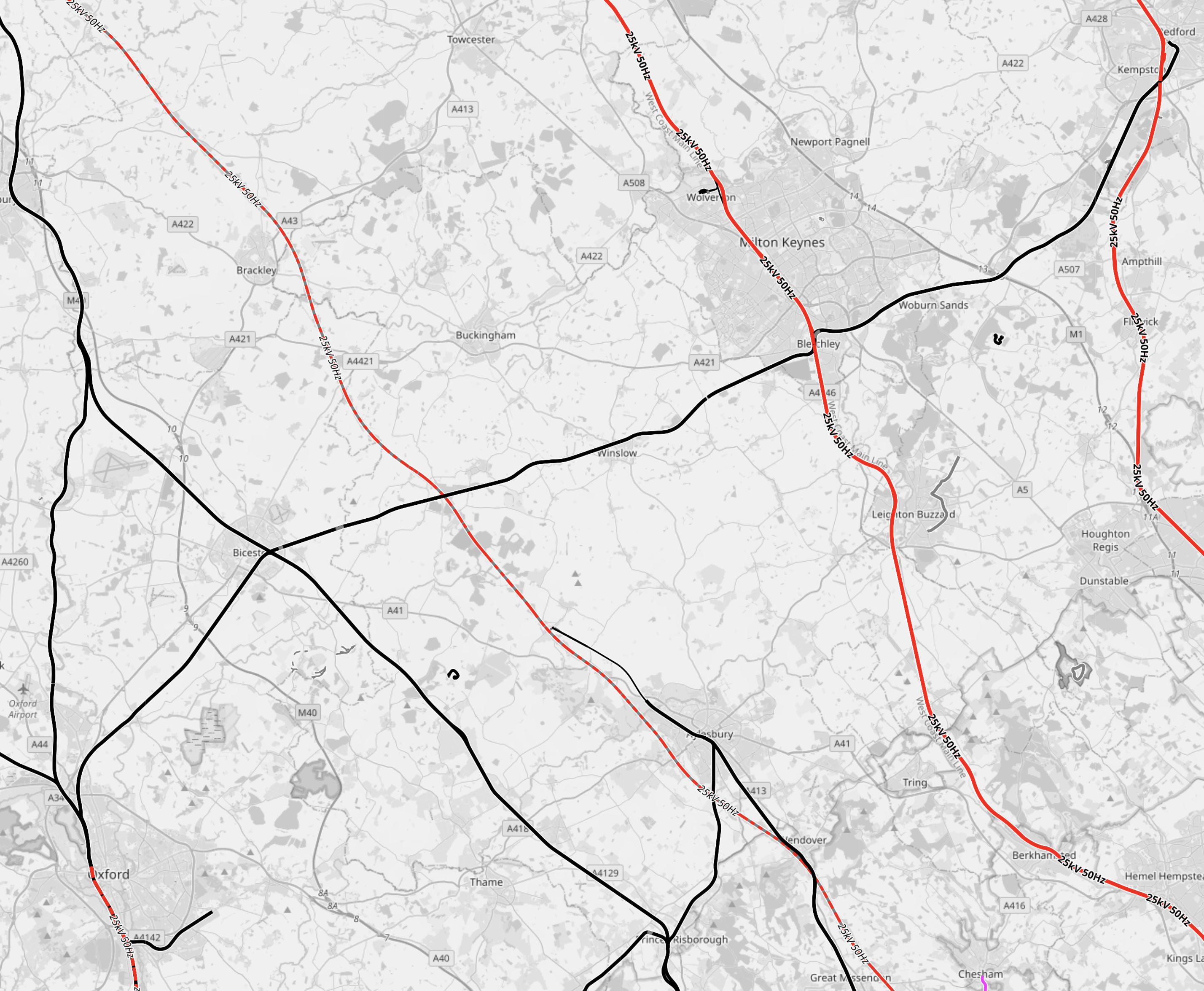
Note.
- Bold red lines are tracks electrified at 25 KVAC.
- Bold black lines are tracks without electrification.
- Oxford is in the South-West corner of the map.
- Bedford is in the North-East corner of the map.
- The bold black line of the Western section of the East West Rail connects the two cities.
- The lines through Oxford are shown as being electrified. The black stub pointing East to the South of Oxford is the Cowley Branch.
The rail lines crossing East West Rail from West to East are as follows.
- Chiltern Main Line – Not Electrified
- High Speed Two – Will Be Electrified
- West Coast Main Line – Electrified
- Midland Main Line – Electrified
I suspect all lines, except for the Chiltern Main Line, will be able to provide a grid connection for East West Rail.
This second OpenRailwayMap shows the electrification between Bedford and Cambridge.
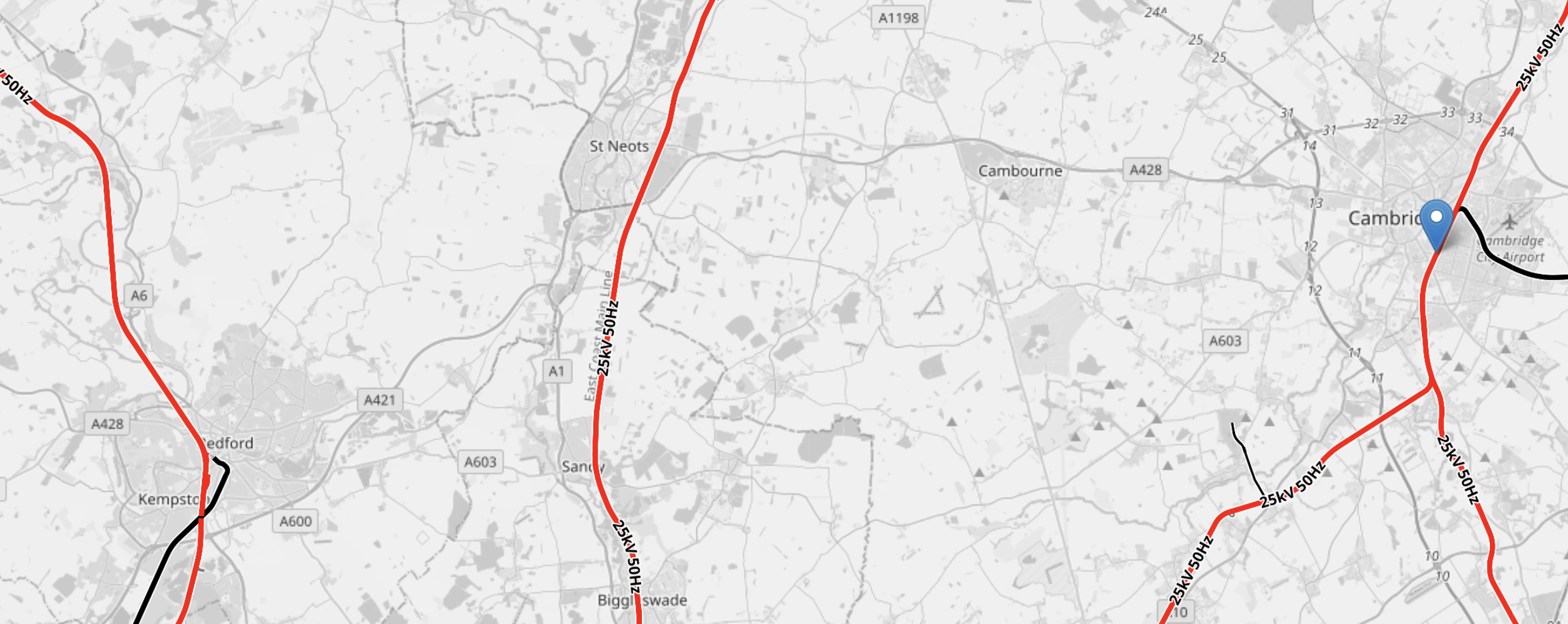
Note.
- Bold red lines are tracks electrified at 25 KVAC.
- Bold black lines are tracks without electrification.
- Bedford is in the South-West corner of the map.
- Cambridge is in the North-East corner of the map.
- The Eastern section of the East West Rail connects the two cities.
- Both maps are to the same scale
The rail lines crossing East West Rail from West to East are as follows.
- Midland Main Line – Electrified
- East Coast Main Line – Electrified
- West Anglia Main Line – Electrified
I suspect all lines will be able to provide a grid connection for East West Rail.
Distances Without Electrification
These sections are not electrified.
- Oxford and Bletchley – 47.2 miles
- Bletchley and Bedford – 16.5 miles
- Bedford and Cambridge – 29.2 miles
- Ely and Norwich – 53.7 miles
- Norwich and Great Yarmouth – 18.4 miles
- Cambridge and Haughley Junction – 41.3 miles
I am assuming that the East West Rail could extend past Cambridge on these two routes.
- Ely, Thetford, Norwich and Great Yarmouth.
- Newmarket, Bury St. Edmunds, Stowmarket, Ipswich, Manningtree and Colchester.
All sections have electrification at both ends, if Didcot Junction and Oxford is electrified, as is expected to happen.
Train Battery Range Needed
The route layout, I have proposed means that if you go for the battery-electric train with the longest battery range you can afford and it can’t handle Ely and Norwich, the existing electrification can be extended to bridge the gap.
Application Of Discontinuous Electrification To Greater Anglia And Chiltern Railways
If discontinuous electrification can be applied to East West Rail, it can surely be applied to Greater Anglia and Chiltern Railways, given the fact that the route networks of all three companies overlap and share tracks.
Greater Anglia already have a fleet of Class 755 trains, which are designed to be converted to battery-electric operation.
With batteries fitted, I believe that these trains could handle most of the current routes they do now.
The other routes would be handled with selective lengths of overhead electrification in terminal stations to charge the trains before return.
Electrification Between Oxford And Bicester Village Stations
Oxford station has two North-facing bay platforms, that are used by Chiltern and other services terminating at the station from the North.
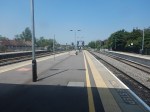
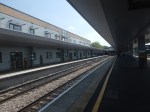
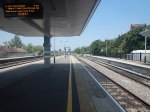
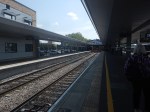
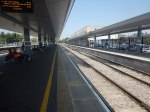



Note.
- Chiltern Railways already run two trains per hour (tph) between these platforms and Marylebone.
- I would assume the platforms will be used by East West Rail services, that terminate at Oxford station.
- If discontinuous electrification is to be used, then these two platforms could be electrified to charge trains before they return.
- East West Rail have not published their proposed services yet, but it could be one tph to both Milton Keynes Central and Bedford stations.
I can see Chiltern buying battery-electric trains to run services between Marylebone and Oxford, and some other routes.
Marylebone and Oxford is 66.7 miles, which is probably two far for even Stadler’s remarkable battery-electric trains, but if say between Oxford and Bicester Village station were to be electrified, would it make it possible to run battery-electric trains between Marylebone and Oxford with charging at both end of the route.
In Chiltern Sets Out New Fleet Ambitions, I talk about Chiltern’s possible new fleet, as proposed by their MD in September 2023.
 The Anonymous Widower
Oxford isn’t electrified should have been but got cancelled. Milton Keynes/Bletchley only 25kV access. So would need some charging infrastructure at Oxford although just completing the project from Didcot would be sensible as most of the foundations were done.
Comment by Nicholas Lewis | November 1, 2024 |
At last, a project in England that’s giving serious thought to battery trains. I’ll be very interested to see exactly how much they plan to electrify and on what grounds.
I agree with Nicholas that it would be better if the electrification to Oxford were completed. It is a bit odd that trains to Cambridge are electric, but those to Oxford aren’t!
Comment by Peter Robins | November 1, 2024 |
Greater Anglia’s 755 trains were designed to be developed into battery-electric trains.
They have been in service for over five years now and it was always the intention to replace one or more of the diesel engines with batteries.
I don’t think there will be performance problems, but it will be interesting to see what happens to passenger numbers.
I believe as the trains will be quieter, we could see a rise in numbers.
Comment by AnonW | November 1, 2024 |
Well they are in use on Merseyrail. Their aim is to extend the network using battery electric hybrid 777s. No doubt they looked at Merseyrail with great interest. Also the west London setup.
https://www.youtube.com/watch?v=rVM_XzkLXRo&t=1s
Comment by John | November 2, 2024 |
True. Lumo is also planning to use them in a limited way. But these both make their own decisions, like Scotland and S Wales, and are not part of the main train procurement process. Which raises the question of why EWR are deciding what trains to order. My understanding was that GBR would be making these decisions for the network as a whole. ???
Comment by Peter Robins | November 2, 2024
With GBR, it depends, who comes up with the largest suitcase of brown envelopes or nice clothes.
Comment by AnonW | November 2, 2024 |
I see Louise Haigh has been giving more details on the government’s plans https://www.railwaygazette.com/uk/long-term-rolling-stock-strategy-aims-to-end-supply-chain-boom-and-bust/67678.article Proof of the pudding and all that, but this looks very promising. Such a detailed long-term plan for electrification and rail infrastructure in general is long overdue.
Comment by Peter Robins | November 7, 2024 |
The first test train ran recently, 22 October 2024. A Chiltern class 168.
So maybe you could use the Chiltern fleet short term.
Perhaps longer term a common fleet for East West and Chiltern.
Are there any options on buying more Stadler 755s?
Whatever is bought should be level access boarding like the 755 and 777 as now that these are in service there is no legal case for step access trains.
Comment by chilterntrev | November 3, 2024 |
link is https://eastwestrail.co.uk/news/latest-stories/first-train-completes-test-run-between-oxford-and-milton-keynes
Comment by chilterntrev | November 3, 2024 |
[…] detailed these in Plans For Powering Trains And Details Of Our Upcoming Consultation.This post was based on an East-West Rail news item with the same […]
Pingback by Bicester Village Station – 28th May 2025 « The Anonymous Widower | May 28, 2025 |