The Monster That Is AquaVentus Is Waking Up
I have written about AquaVentus for some time, but inh the last couple of days, ten references have been found to the project by my Google Alert.
What Is AquaVentus?
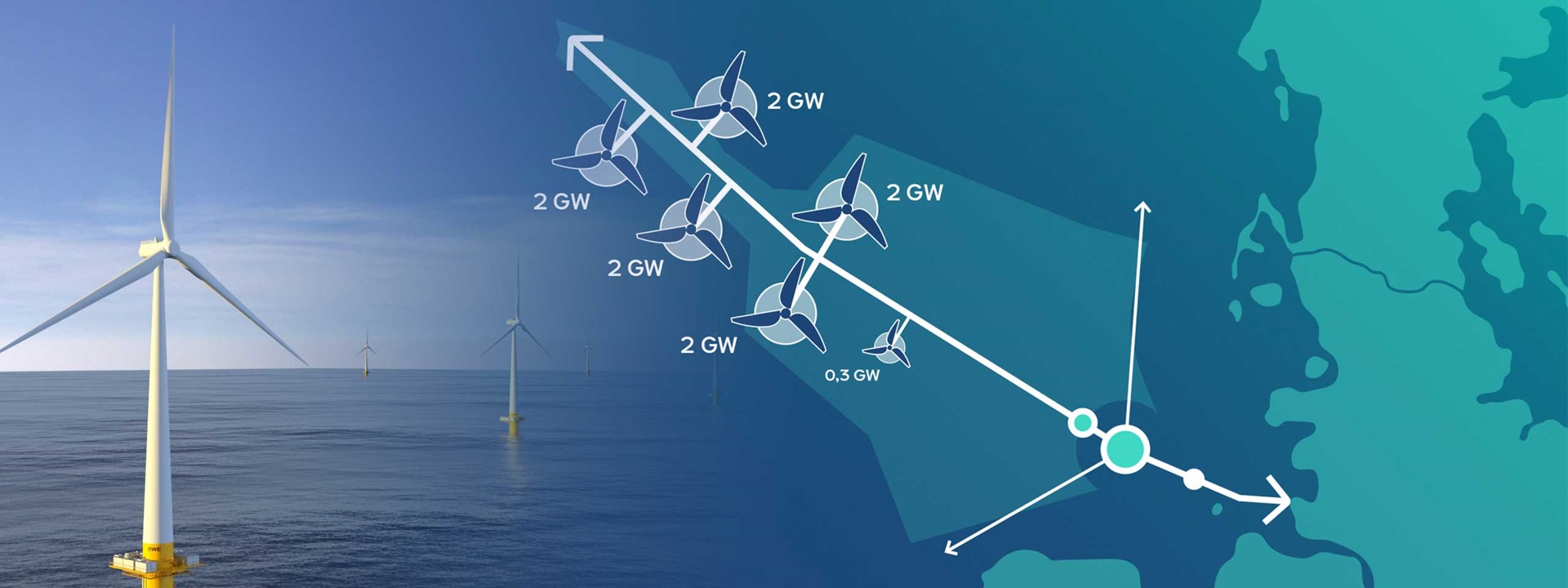
AquaVentus has a web page on the RWE web site, from where I clipped this image.
Note.
- The spine of AquaVentus is a pipeline called AquaDuctus to bring hydrogen to Germany.
- This image shows 10.3 GW of hydrogen will be generated and brought to near Wilhelmshaven in North-West Germany.
These two paragraphs introduce AquaVentus.
Hydrogen is considered the great hope of decarbonisation in all sectors that cannot be electrified, e.g. industrial manufacturing, aviation and shipping. Massive investments in the expansion of renewable energy are needed to enable carbon-neutral hydrogen production. After all, wind, solar and hydroelectric power form the basis of climate-friendly hydrogen.
In its quest for climate-friendly hydrogen production, the AquaVentus initiative has set its sights on one renewable energy generation technology: offshore wind. The initiative aims to use electricity from offshore wind farms to operate electrolysers also installed at sea on an industrial scale. Plans envisage setting up electrolysis units in the North Sea with a total capacity of 10 gigawatts, enough to produce 1 million metric tons of green hydrogen.
It is not an unambitious project.
North Sea Hydrogen Co-operation: AquaVentus And Hydrogen Scotland
The title of this section is the same as that of this page on the Hydrogen Scotland web site.
This is the introduction.
Hydrogen Scotland signed a comprehensive Memorandum of Understanding (MoU) with AquaVentus at Offshore Europe in Aberdeen. The partnership aims to unlock the North Sea’s vast potential for hydrogen production and establish Scotland as a key supplier to European markets through the development of shared infrastructure.
Both partners are committed to intensifying research activities and advocating for the rapid scale-up of a European hydrogen economy.
By joining forces, members of AquaVentus and Hydrogen Scotland can help advance the development and deployment of technologies along the entire value chain – from production through transport and storage to the use of hydrogen for decarbonising the energy system. In addition, both organisations intend to intensify their supporting activities and jointly advocate for the accelerated ramp-up of a European hydrogen economy.
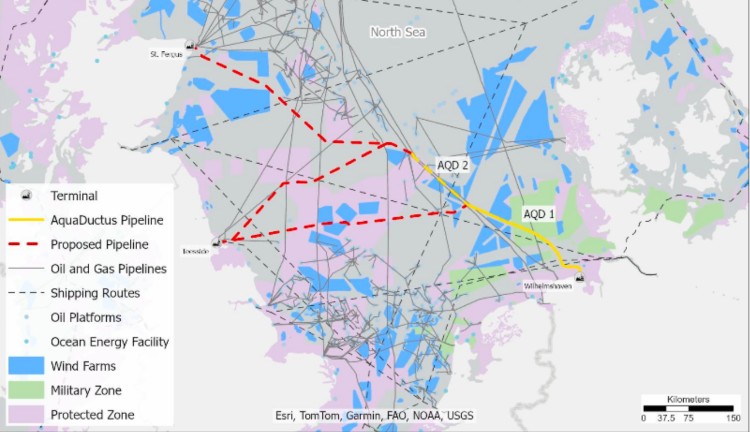
This map of the North Sea, which I downloaded from the Hydrogen Scotland web site, shows the co-operation.
Note.
- The yellow AquaDuctus pipeline connected to the German coast near Wilhelmshaven.
- There appear to be two AquaDuctus sections ; AQD 1 and AQD 2.
- There are appear to be three proposed pipelines, which are shown in a dotted red, that connect the UK to AquaDuctus.
- The Northern proposed pipeline appears to connect to the St. Fergus gas terminal on the North-East tip of Scotland.
- The two Southern proposed pipelines appear to connect to the Easington gas terminal in East Yorkshire.
- Easington gas terminal is within easy reach of the massive gas stores, which are being converted to hold hydrogen at Aldbrough and Rough.
- The blue areas are offshore wind farms.
- The blue area straddling the Southernmost proposed pipe line is the Dogger Bank wind farm, is the world’s largest offshore wind farm and could evebtually total over 6 GW.
- RWE are developing 7.2 GW of wind farms between Dogger Bank and Norfolk in UK waters, which could generate hydrogen for AquaDuctus.
This cooperation seems to be getting the hydrogen Germany needs to its industry.
These five paragraphs outline a position paper by AquaVentus.
This opportunity for German-British cooperation on hydrogen is highlighted in a position paper presented by AquaVentus alongside the signing of the MoU. This paper addresses how the requirements of German-British cooperation – as outlined, for example, in the July 2025 Kensington Treaty between the UK and Germany and the European Commission’s Common Understanding published in May 2025 – can be met.
The position paper highlights the significant potential of hydrogen production in Scotland, the necessity of imports for Germany, and references transport infrastructure already under planning. It thus lays the foundation for cross-border hydrogen trade between Germany and the United Kingdom, and for deeper European cooperation in the hydrogen sector, with three essential prerequisites:
Firstly, the networking of producers and consumers across national borders is critical for a successful market ramp-up
Secondly, beyond this synchronised production and transport infrastructure, regulatory frameworks must also be harmonised. Hybrid connection concepts (pipes & wires) that integrate both electricity and hydrogen networks provide the necessary flexibility for future energy needs, enable efficient use of renewable energy and ensure cost-effective grid expansion
Thirdly, the development from a national core network to a European Hydrogen Backbone is emphasised. Projects such as AquaDuctus can serve as a nucleus for building a pan-European hydrogen network that will shape Europe’s energy infrastructure in the long term. For the authors, strengthened cooperation with the United Kingdom is not only a sound energy policy and economic decision, but also a key contribution to European energy resilience.
Note.
No comments yet.
 The Anonymous Widower
Leave a comment