Welcome To The Corbyn Comedy Channel
The leaking of the Draft Labour Manifesto is to my mind, proof, if it were needed, that the current Labour Party can’t be trusted to organise a piss-up in a brewery.
I have only read summaries, but most of the policies show such a disregard for the rules of economics, taxation and politics, that it could have been written by someone with Monty Python’s grasp of comedy.
The New Platform 6 At Shenfield Station
These pictures show the new double Platform 5 and Platform 6 at Shenfield station, which opened a few days ago.
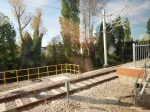


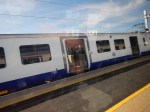
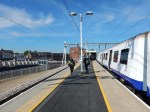


I think that it is a good design.
- Platform 5 is a through platform, where trains can go through the station to and from the sidings to the East of the station.
- Platform 6 is a new bay platform.
If these two platforms are for the exclusive use of Crossrail services, that means that in the Peak, they will be handling sixteen trains per hour (tph) or eight tph on each platform. The Victoria Line handles over twice as many trains on each of its four terminal platforms at Brixton and Walthamstow Central, so the more modern Crossrail should handle the number of trains with ease.
There has also been a major restructuring of the other lines through the station. But as services terminating at Shenfield are not now handled by Platform 4, I would assume that it is a much more operator-friendly layout.
These could be platform assignments.
- Southend Branch to London trains
- Great Eastern Main Line to London trains
- London to Great Eastern Main Line trains.
- London to Southend Branch trains
- Crossrail
- Crossrail
As there is more platform capacity, it will be interesting to see how Greater Anglia use their share of the extra capacity.
Current and Crossrail times between Liverpool Street and Shenfield are as follows.
- Shenfield Metro – Current – 43 minutes
- Single-Stop at Stratford – Current – 24 minutes
- Crossrail – 41 minutes.
The interesting time will be what will be achieved by Greater Anglia’s Aventras, with just a single-stop at Stratford. I wouldn’t be surprised to see a sub-twenty minute time.
I think passengers between Shenfield and London will choose a route appropriate to their journey.
Crossrail will be a line for the duck-and-divers.
Could The Romford To Upminster Line Handle Four Trains Per Hour?
If you look at the current version of this page on Transport for London’s web site, which is entitled Track Closures Six Month Ahead, you will notice that there are the following closures on the Romford to Upminster Line.
- Sunday May 28th to Monday May 29th 2017.
- Sunday Aug 27th to Monday August 28th 2017.
- Saturday Oct 21st to Sunday October 22nd 2017.
It could be a periodic closure for track or station maintenance as the three closures are three months apart, but I’ve noticed closures on this line before.
I’ve also searched the Internet and can find no references to any ongoing work or improvements on the line or the intermediate station at Emerson Park..
But the entries got me thinking about whether services could be improved on this line.
Various factors will come into play.
The Crossrail Affect
From May 22nd 2017, the new Class 345 trains will start running through Romford station on Crossrail‘s initial service between Liverpool Street and Shenfield stations.
How will Crossrail affect usage of the Romford to Upminster Line?
A lot of journeys from c2c territory in South East Essex will be quicker or easier using Crossrail and the Romford to Upminster Line.
I’ll give Southend to Heathrow as an example.
c2c’s Ambitions
It should also be pointed out that c2c are an ambitious company with new Italian owners and I think they will add new destinations and routes to their network.
I can see a lot of commercial and residential property being built along the North Bank of the Thames at Tilbury and London Gateway.
But if c2c have a problem, it is that it has good connections to the City of London at Fenchurch Street station, but getting to some parts of London like Euston, Kings Cross, the West End and Heathrow Airport is not easy.
There are good onward connections across the City at Barking, Limehouse and West Ham stations, which will be improved with the electrification of the Gospel Oak to Barking Line.
c2c To Liverpool Street
c2c use Liverpool Street station at occasions on Saturdays and Sundays and I have read that they would like to open a second London terminal at Liverpool Street, as this would also allow services to serve Stratford station with the Eastfield Shopping Centre and the Olympic Park.
But I can’t see Greater Anglia and London Overground allowing another operator into the crowded Liverpool Street station.
Could c2c Have Direct Access To Romford?
In an ideal world, where the Romford to Upminster Line would be double-tracked feeding into adequate bay platform or platforms at Romford station, c2c would be able to run a direct service between Romford and Grays stations via Upminster, Ockendon and Chafford Hundred Lakeside, if they felt the service would be worthwhile.
It is one thing to run a four-car shuttle between Romford and Upminster, but look at this Google Map of Upminster station.

Note.
- The c2c lines are South of the District Lines.
- The Romford to Upminster Line goes off to the North-West.
A c2c train going between Romford and Grays would have to cross the busy District Lines, that terminate at Upminster station.
It would probably be possible, but only with the great expense of a massive fly-over or dive-under.
c2c’s Best Access To Crossrail
I would think that c2c’s best access to Crossrail would lie in a frequent service along the Romford to Upminster Line. The current two trains per hour is not enough, so could the branch handle three or even four trains per hour?
The Current Service On the Romford To Upminster Line
The single Class 315 train, that I saw today trundles along at 60 kph and takes a total of nine minutes to go between Romford and Upminster. Turnroumnd at Romford and Upminster take eight and four minutes respectively.
The single train does a round trip in thirty minutes, so it easily does two round trips in an hour.
Emerson Park Station
I went to Emerson Park station this afternoon to see if there was any evidence of improvements.
I found the following.
- The catenary appears to have been given a good refurbishment.
- The station has been tidied up.
- The station is now staffed.
- CCTV is being installed.
- An office is being built.
- New hand-rails are being fitted.
- The station couldn’t accept a train longer than four-cars.
I got the overall impression that London Overground are expecting a lot more passengers to be using Emerson Park station. Wikipedia says this about passenger usage at the station.
It has relatively low but fast-growing patronage for a suburban railway station, with 260,000 passenger entries/exits in 2015/16, compared to 82,000 five years prior and just 32,000 ten years prior.
Given the platform length restriction and the convenience of passengers, I am led to the conclusion that a higher frequency of trains would be beneficial to passengers and operator alike.
How Fast Could An Aventra Travel Between Romford And Upminster?
If you look at a typical three station run on the Overground, such as Dalston Junction-Haggerston-Hoxton, it can tqke between three and five minutes in a Class 378 train, which is probably marginally slower than the new Aventra.
But that is only part of the time, as the driver of the train has to change ends between trips. I walked the length of a Class 378 train today and it took me a minute, so with a well-designed cab and some degree of automation, I suspect that a driver could safely change ends in under two minutes.
As the Aventra will be optimised for fast trips like these, I can see no reason, why a train can’t travel between Romford and Upminster in seven minutes.
Conclusion
A seven minute trip would mean the train could perform the required four trips per hour.
One major problem would be if say there was an incident on the train, like a passenger becoming seriously unwell. The driver would call the emergency services and proceed to the next station. After dealing with the emergency and perhaps seeing the passenger safely in the care of paramedics, the driver would resume the timetable. As there is only one train on the line at all times, service recovery is just a matter of restarting.
Stephen Fitzpatrick On May’s Energy Cap
Stephen Fitzpatrick is the chief executive of OVO Energy, so you could expect a well-thought out response to Theresa May’s proposed cap on energy prices.
This article on Sky is entitled May vows to cap energy bill increases if Tories win election.
This is reported as comments by Stephen Fitzpatrick in the article.
He described the policy as a “bold and ambitious move” – and argued that a cap on standard variable tariffs would not harm consumers or competition.
“It will be painful for some companies, especially those currently taking advantage of customer disengagement, but it will offer consumers a safety net, protecting them from some of the worst practices of the industry whilst still allowing innovative suppliers to compete,
I just wonder, if the energy cap is more targeted than we think.
Options For High Speed To Hastings
The May 2017 Edition of Modern Railways has an article entitled Kent Capacity Constraints Highlighted.
One sub-section is entitled High Speed To Hastings and it lists options as to how high-speed services could be run to Hastings via Ashford International station and the Marshlink Line.
Before I list the options, I’ll list a few facts and questions about the current service to Hastings, the various lines and stations.
Ashford International Station
This Google Map shows Ashford International station.
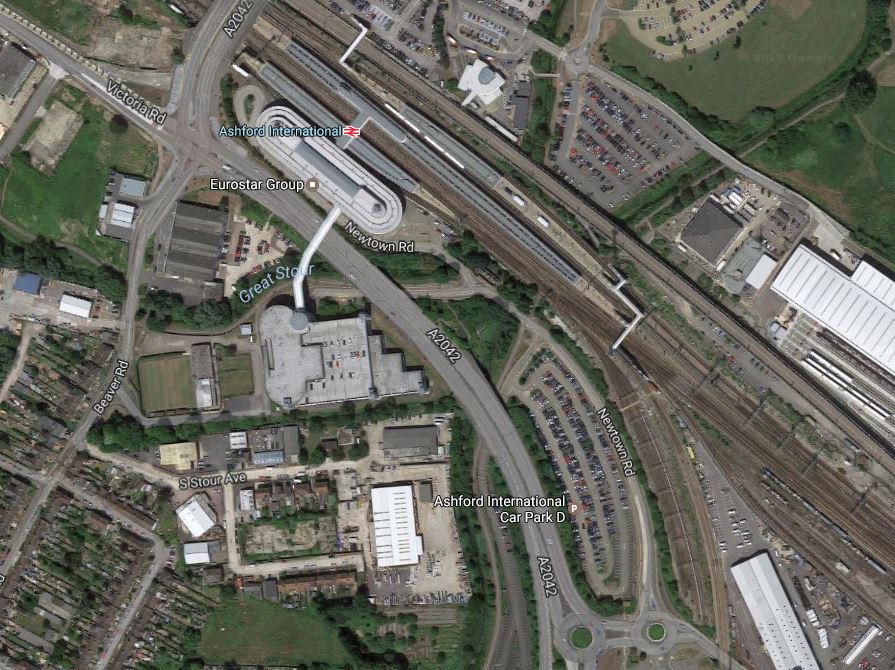
Note the Marshlink Line goes off the map to the East of the two small roundabouts at the bottom.
The biggest factor that needs to be considered is that some form flyover or dive-under may be needed so that trains can run between the Marshlink Line and the two platforms on the North side of the station, where Highspeed services to and from St. Pancras International call.
Will All Highspeed Services Using The Marshlink Line Stop At Ashford International Station?
Consider the following.
- Passengers might like to go between places on the South Coast, like Hastings and Brighton, and Europe, by changing at Ashford International station
- If a voltage change were needed, Ashford International station is already used for this purpose.
I would think it unlikely that services would not stop at Ashford International station.
Class 395 and Class 80x Trains
The Class 395 trains and the various forms of Class 800 trains are all members of Hitachi’s A-Train family.
The Class 395 trains have the following features.
- Dual voltage
- 6-car sets.
- 140 mph on HS1
- 100 mph on DC Lines
- Automatic coupling and uncoupling.
The Class 800 and Class 802 trains have the following features.
- Electro-diesel
- 25 KVAC only.
- 5- and 9-car sets.
- 140 mph on HS1 (Stated in Modern Railways)
- 100 mph on diesel power only.
- Automatic coupling and uncoupling (assumed)
The only difference between Class 800 and Class 802 appears to be the size of the full tanks and manufacturing site.
I would think it unlikely, that Hitachi could not produce a Class 80x train with the following features.
- Electro-diesel
- Dual voltage
- 6-car sets
- 140 mph on HS1
- 100 mph on diesel power only.
- 100 mph on DC Lines
The trains could even have a Class 395 style interior.
Looking at the Class 395 and Class 80x trains, I suspect that these trains could be built, so that they could automatically couple and uncouple with each other.
This coupling ability would be important.
- Hastings and Thanet services could couple and uncouple at Ashford International.
- Class 80x trains could be used instead of Class 395 trains for operational reasons.
- It would make it easier to rescue a stalled train.
There is also this document on the IEP Trains web site, which is entitled Technical & Build Specifications Of The IEP Trains, contains a lot of useful information.
- Five-car electro-diesel trains have three power units.
- Nine-car electro-diesel trains have five power units.
- Electric trains have a small generator that can be used to slowly move a train stranded by overhead power failure to a safe place for passengers to disembark.
Nothing is said about batteries, but Hitachi have run battery trains in Japan.
I would be very surprised, if the A-train family was not designed, so that it could incorporate batteries, when the technology has been sufficiently developed
The Current London To Hastings Timings
Fastest timings I can find are as follows.
- London Cannon Street to Hastings – 1 hour 48 minutes
- London Charing Cross to Hastings – 1 hour 51 minutes
- London St. Pancras to Hastings – 1 hour 36 minutes, which a change at Ashford International
- London Victoria – 2 hours 1 minute.
I think the surprising time is the one with a change at Ashford International.
It takes 37 minutes between St. Pancras and Ashford International and 40 minutes from Ashford International to Hastings, but passengers are allowed nineteen minutes to change trains.
Could Timings On The Marshlink Line Be Improved?
The Marshlink Line has a maximum operating speed of just 60 mph, whereas the East Coastway Line between Hastings and Brighton has an oiperating speed of 90 mph.
Other improvements are needed to improve the timings and oiperation of the line.
- Removal of a couple of level crossings.
- Provision of a passing loop at Rye.
- Some platform lengthening to handle the longest trains that would use the line.
It doesn’t appear impossible to reduce St. Pancras to Hasting timings by several minutes.
Are More Class 395 Trains Needed For Other Routes?
I ask this question, as if they are, then surely a combined order for new trains would be better value.
The Various Options
I shall now look at the various options mentioned in the article in turn.
Option 1 – Electrify Ashford To Hastings At 25 KVAC
This would cost between £250million and £500million.
It would allow the current Class 395 trains to work through to Hastings and as far as Brighton or even Southampton if required.
Voltage changeover would take place at a convenient station, such as Ore.
But how would various groups react to 25 KVAC catenary being strung up all over Romney Marsh?
Option 2 – Electrify Ashford To Hastings At 750 VDC
This would cost between £100million and £250million.
As with Option 1, it could use the current Class 395 trains.
Option 3 – Use Class 802 Electro-Diesel Trains
Class 802 trains could be an interesting option.
Consider.
- According to the Modern Railways article, Class 802 trains would have the same 140 mph performance, as the Class 395 trains on HS1.
- Both trains are Hitachi A trains.
- Class 802 trains would run on diesel between Ashford International and Hastings.
- Class 802 trains would probably be fitted with third-rail equipment to work onward from Hastings.
- No electrification of the Marshlink Line would be required.
- St. Pancras to Hastings could be under seventy minutes.
- Three trains would be needed to provide an hourly service to Hastings.
- A crude estimate gives that one six-car Class 802 train would cost around £12.5million.
I think this option has a big advantage in that if it were possible to run twelve-car trains from St. Pancras to Brighton via Eastbourne, Hastings, Ebbsfleet International and Stratford International stations, the route might offer valuable alternative routes.
Option 4 – Use Class 395 Or Class 801 Trains With Batteries
Either of Class 395 or Class 801 trains could probably be fitted with batteries with sufficient range to take the train between Ashford and Hastings.
Consider.
- Both trains would have 140 mph performance on HS1.
- Trains would run on batteries between Ashford International and Ore.
- The Marshlink Line is not the most taxing of railways, with only six stops.
- Trains would probably be fitted with third-rail equipment to work onward from Hastings.
- No electrification of the Marshlink Line would be required.
- St. Pancras to Hastings could be under seventy minutes.
- To ensure sufficient battery power to bridge Hastings to Ashford, trains could if necessary reverse at Seaford or Brighton.
As with Option 3, it has the advantage of providing an alternative London to Brighton service.
Conclusions
All options require the following to be done.
- Create an efficient connection between HS1 and the Marshlink Line.
- Improve the operating speed on the Marshlink Line.
- Remove a couple of level crossings on the Marshlink Line.
- Create a passing loop at Rye.
- Perform some platform lengthening.
As Options 1 and 2 require electrification and cost more, I would feel they are unlikely to proceed.
The choice between Options 3 and 4 would depend on what Hitachi offer and what the required number of trains cost.
Option 3 based on a Class 802 train would definitely work and could probably be proven with a test run of one of the GWR or VTEC Class 800 prototypes.
But these Class 800/801/802 trains are designed so that the diesel engines can be removed, when they are no longer needed. So could Hitachi replace the diesel engine with a battery pack charged at either end of the route on the 25 KVAC of HS1 or the 750 VDC of the East Coastway Line between Hastings and Brighton.
It’s all about selling trains and a company that had a 140 mph or 225 kph high-speed electric train, that could do perhaps 25 miles or 40 kilometres on batteries, would have a valuable addition to their product range.
The £20million Station Car Park
This article in the Oxford Mail is entitled Work begins on £20m multi-storey car park at Didcot Parkway.
Didcot Parkway station is a major Park-and-Ride station on the Great Western Railway, so the economics of spending £20million on car parking must be an investment, that the company thinks is worthwhile.
This Google Map shows the station and the existing car park in Foxhall Road.
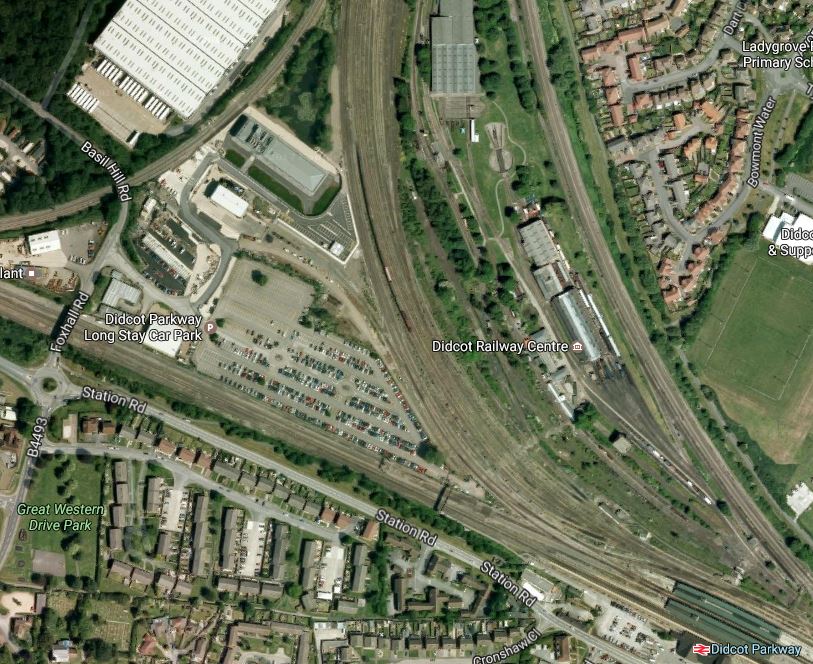
Note that Oxford is to the North, with the Great Western Main Line going across from London in the East to Swindon in the West.
This visualisation shows the new car park, which will be built on the site of the existing car park.
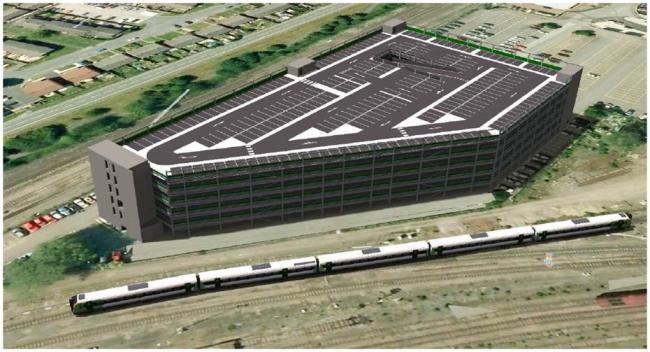
The Didcot to Oxford Railway is in front, with Oxford to the right and Didcot Parkway station to the left.
The Economics
If you go up from Didcot Parkway to Paddington, the return fares are as follows.
- Anytime Day Return – £82.40
- Off-Peak Day Return – £25.70
Consider.
- Parking will probably cost from £3/hour.
- The Internet reckons that Didcot to London is about 60 miles and it will take about one hour thirty-eight minutes to drive.
- On the other hand, the fastest trains take 41 minutes with a stop at Reading.
- From December 2019, interchange for the City and Canary Wharf wil be possible at Reading and Paddington.
I have a feeling that another large Park-and-Ride will be needed.
This Google Map shows Swindon station.
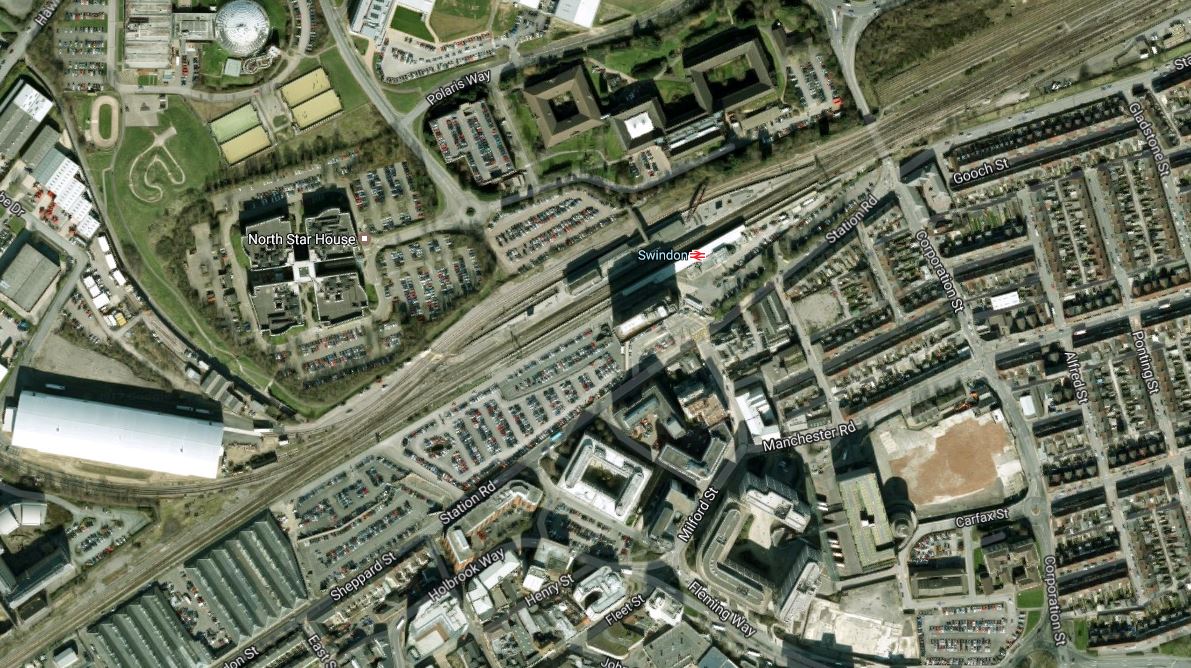
It would surely be a station, where the existing car parks could be multi-storied.
But there are probably lots of others. This article in the Wantage Herald mentions Grove, Corsham and Royal Wooton Bassett, as possible parkway stations.
Hybrid Trains In The Former East Germany
In my travels from Göttingen, most of the local trains were diesel multiple units as local lines like the South Harz Railway are not electrified. On the other hand, the main lines through Göttingen, are all electrified.
In September 2016, I wrote German Trains With Batteries, which indicated a project in Germany to create hybrid trans, based at technical universities in Chemnitz and Dresden.
As some of the journeys I took in diesel trains, were under electrification, it would certainly appear that the German’s approach is sensible.
There would also appear to be lots of lines without electrification and diesel passenger services all over the area.
- Annaberg-Buchholz–Flöha Railway
- Bautzen–Bad Schandau Railway
- Chemnitz–Adorf Railway
- Flöha Valley Railway
- Gera Süd–Weischlitz Railway
- Glauchau–Wurzen Railway
- Heidenau–Kurort Altenberg Railway
- Herlasgrün–Oelsnitz Railway
- Karlovy Vary–Johanngeorgenstadt Railway
- Löbau–Zittau Railway
- Mid-Germany Railway
- Vejprty–Annaberg-Buchholz Railway
- Zwickau–Schwarzenberg Railway
If the universities can come up with an economic and practical solution, there are certainly a lot of places to use these hybrid trains.
I think it is interesting to compare the German approach with that of Porterbrook/Northern with their development of the Class 319 Flex train.
- The Germans are starting with a diesel Desiro Classic, whereas the British are starting with an electric Class 319 train.
- Batteries are an important part of the German solution, but may not be part of the British one.
- The German trains are nowhere near as old as the thirty-years-old British ones.
But the objectives of the two projects are to improve passenger services without doing a lot of expensive electrification.
Unlimited Energy Is More Than A Pipe Dream
This is the title of a comment in Friday’s Times from Ed Conway, who is economics editor of Sky News.
He says how energy storage will eventually solve our energy supply problem, by storing the energy generated from solar, tidal, wave and wind.
He mentions a storage idea from a company called ARES or Advanced Rail Energy Storage, which uses trains to store energy by pushing weights up hill.
This article from Interesting Engineering is entitled These Cool Energy Storage Trains Simply Work With the Power of Gravity.
This is said.
- Trains are loaded with concrete blocks.
- Trains are powered by third rail electrification.
- Energy is released using the regenerative braking, when the trains come down.
- Very little environmental damage is sustained.
- No water is used.
I have a feeling that in the right place, this idea could be made to work.
Consider the following facts and thoughts.
Dinorwig Power Station
Dinorwig Power Station in Snowdonia colloquial known as Electric Mountain is the UK’s largest pumped storage hydroelectric scheme.
Wikipedia says this about the power of Dinorwig.
From standstill, a single 450-tonne generator can synchronise and achieve full load in approximately 75 seconds. With all six units synchronised and spinning-in-air (Water is dispelled by compressed air and the unit draws a small amount of power to spin the shaft at full speed), 0 MW to 1800 MW load can be achieved in approximately 16 seconds. Once running, the station can provide power for up to 6 hours before running out of water.
So Dinotwig can effectively store about 6 x 1800 or 10800 MwH of electricity.
How Much Energy Would A Train Store?
If we took a 100 tonne wagon and raised it through a thousand metres, it would acquire 0.272 MwH of energy.
On a rough calculation, you would need to raise 40,000 wagons to have the capacity of a Dinorwig.
That would need a very large marshalling yard at the top and the bottom.
How Powerful Is A Locomotive?
A modern electric locomotive like a Bombardier TRAXX can be as big as 6 MW.
This locomotive doesn’t come with third-rail electrification, but that could easily be arranged.
If it took the train with say four locomotives, two hours to climb from the low to the high yards, this would expend 48 MwH of electricity.
So this energy would be enough to raise about two hundred wagons to the top.
Making All The Numbers Bigger
The numbers seem challenging and I think the idea is only possible with larger numbers.
- The trains would need to be raised through a much greater height – Say 2,000 metres
- The wagons would need to be very heavy – Say 2,000 tonnes
- The locomotives would need to be more powerful – Say 10 MW.
These give the following.
- The wagon would acquire 10.88 MwH of energy.
- Each train would expend 80 MwH of energy.
- A Dinorwig-sized facility would need about a thousand wagons.
Making the components bigger certainly reduced the numbers.
Could A Heavy And Powerful Self-Powered Wagon Be Designed And Built?
Concrete has various attributes including heavy weight, ease of use and affordable cost.
Boat builders have even built high-performance yachts from concrete.
Could it be possible to create a self-powered wagon with the following characteristics?
- A number of powered bogies, with a total power of perhaps 20-30 MW.
- Third rail power collection.
- Regenerative braking to generate power on the way down.
- A weight of 10,000 tonnes.
I suspect that the engineering exists to do it.
It would also need a very robust railway to carry it.
The potential energy acquired by the wagon at 1,000 metres would be 27.2 MwH.
If the time to get up the hill and the power of the wagon were balanced, I could see an efficient design being created.
Conclusion
This project might just be possible in an area like Nevada, where it could be coupled to massive solar farms, but I believe there are few other places in the world, where it would be as feasible.
Level Crossings And Signal Boxes
As I travel around Germany on trains, I am surprised at the number of level crossings and signal boxes.
Level Crossings
On the South Harz Line, there must have been half a dozen between Northeim and Nordhausen.
I don’t know if the Germans have a similar policy to Network Rail of aiming to remove all crossings, but if they do, they have a lot to do.
But the area did suffer the serious Langenweddingen Level Crossing Disaster in 1967.
Signal Boxes
Every station seemed to have a signal box.
Although, I did find this in the Wikipedia entry for the South Harz Railway.
Signalling on the South Harz line will in future use electronic interlockings that are remotely controlled from a centre in Göttingen.
So it does seem there is a certain amount of ongoing modernisation.
Conclusions
I’m very much of the opinion, that there is still a lot of technical modernisation to be done on German railways.
 The Anonymous Widower