Arriva Rail North’s New Trains
Arriva Rail North have announced a deal for a future fleet of new trains from privately-owned Spanish manufacturer; CAF.
Class 333 trains from this manufacturer, are already running in the North, so I suspect that Arriva Rail North know a lot about their quality and reliability. As a mere passenger, I’ve found the trains around Leeds to be very acceptable.
In the UK, CAF’s trams run on the Midland Metrolink and in Edinburgh, so CAF is not a manufacturer unknown to the UK.
CAF are proposing their Civity train, which comes in various modules, as summed up by Wikipedia.
The Civity is a modular concept which can be delivered as an Electric multiple unit, Diesel multiple unit, Diesel-electric or Dual mode. This family of trains is designed for 4 different power supplies: 1500 V DC, 3000 V DC, 15 kV AC and 25 kV AC. Each unit has shared motor bogies and a low floor of 860 mm. The design was launched in 2010.
So it would appear that, as a modular design, where DMUs and EMUs will share components and characteristics, it may offer cost savings to an operator.
This data sheet from CAF describes the Civity range. Points to note.
- It has been designed for standard gauge.
- There is a UK version called Civity UK.
- There is a cold-weather version called Civity NORDIC.
- There is a Russian gauge version. As CAF have sold to Ireland, I suspect there’s an Irish gauge version.
- Top speed is 160 kph, but 200 kph is available.
- The list of interior options is wide.
Reading the data sheet, I get the impression that Arriva Rail North are getting standard trains with the features they want.
I don’t know the answer, but I suspect that like the Class 378 trains of the London Overground, the Civity trains can be lengthened or shortened, by adding or removing trailer cars between the two driving cars. This concept has worked so well on the Overground, I doubt that a train manufacturer wouldn’t copy it.
Thus you could have four car DMUs on a route like the Calder Valley Line. When the line gets electrified, you do a bit of swapping and add two electric driving cars and get four-car EMUs and two-car DMUs.
The trains are already in service in three countries; Italy, Latvia and Montenegro, with an order for 120 trains for The Netherlands in the pipeline.
Reading the various articles about the purchase, some worries surface in comments.
One is that do CAF have the capacity to build all the trains required? I think they do for two related reasons.
They are a private company based in the Basque country and it will be a matter of pride on the part of the owners and the region to not fail. This section from Wikipedia about the countries history is interesting.
Since 1958 the company has modernized and enlarged its Beasain plant and expanded its activity to include all kinds of rolling stock. In line with this, in 1969 CAF created its Research and Development Unit, which increased the company’s competitiveness and intensified the focus on in-house technology.
CAF gives the impression, it is an ambitious, technology-led company and I believe the Arriva Rail North and Dutch orders are just steps up the ladder.
Worries are also raised that there aren’t enough trains ordered by Arriva Rail North and that the new trains will not be built in the UK.
On the number of trains, I would tend to agree, but if Arriva Rail North’s business plan is successful, then there will be money to purchase more trains and lengthen the existing ones, just as happened on the London Overground. People seem to forget we live in the New Age of the Train and Tram and the days of inadequate rolling stock orders to please the Treasury are hopefully over.
The fact that the trains will be built in Spain rather than the UK, is not that significant, if you look at what has happened in the motor industry, where a dead industry is now thriving on exports. We may not see any more train factories in the UK, but we do produce good railway technology in certain areas and as trains revive all over the world, there will be opportunities for the best companies manufacturing in the UK.
I would add a question about the order.
Over the next few years, the North will gradually develop a network of electrified trunk lines, which Arriva Rail North will exploit with the Northern Connect sub-brand.
Ever since, I rode the prototype IPEMU at Manningtree, I have believed that the technology has a place in the UK’s rolling stock and especially on routes in the North.
So I do wonder, if CAF have an IPEMU in their stable, as it would be ideal for say the Windermere and Barrow services.
But CAF did have a large hand in the creation of the Seville tram. This is said about the tram’s movement without catenary in Wikipedia.
From the start it was envisaged that part of the Metrocentro system should be able to run free from using the overhead contact wire for power. On several occasions the City of Seville administration had to dismantle the overhead wires to allow, at Easter, processions to pass without restriction; the builder of the rolling stock paid the extra cost for this.
The final system, which is now in use commenced from Holy Week 2011, the system uses advanced technology ACR (Acumulador de Carga Rápida) fast charging batteries -developed and patented by the Spanish company CAF.
As an electrical and control engineer by training, I feel that the modular design of the Civity train, which does include dual-mode trains, could possibly lead to an IPEMU.
Lets face it, Bombardier probably haven’t got much unique IPR in their IPEMU design and batteries and other energy storage devices are used in all sorts of vehicles from racing cars, to hybrid and electric cars and buses.
It’s all about putting the right modules together, to create a fleet of trains that fits the services you want to run.
If you look at the various Northern Connect routes, some could use EMUs, some DMUs and others like Windermere to Manchester Airport could use dual-mode trains.
This is said in an article in Rail Magazine.
The contract is for 31 three-car and 12 four-car electric multiple units, and 25 two-car and 30 three-car diesel multiple units. The carriages will be owned by Eversholt Rail, and all will be in traffic by December 2018.
Using the diagrams on this page on CAF’s web site, this translates into the following.
- 86 EMU cabs
- 110 DMU cabs
- 85 Trailers
Which rather unsurprisingly adds up to 281 cars, the figure given in the article.
The question has to be asked, how many, if any, of the trains will be dual-mode variants, which can run on either overhead wires or on-board diesel engines.
It should be noted that the installed diesel power on a three-car dual-mode train is 200 kW or about the same as that of a single-car Class 153 train, so it might be fine when trundling Between Oxenholme and Windermere, but it is no long-distance charger.
Until we see the full fleet running a full service, we won’t see the actual mix of trains.
I think, that we’ll see other orders for the Civity family of trains in the near future.
Some will be in the UK.
Birmingham, Bristol, East Anglia and South Wales are all places, where a flexible fleet like Arriva Rail North seems to have ordered, will go down well.
If you look at the latest offerings from Alsthom, Bombardier, Hitachi and Siemens, they lack the flexibility of the Civity design.
I think that Arriva Rail North’s order could be more significant than anybody thinks!
The Saga Of The Ordsall Chord Goes Into Extra Time
If there is one railway project that sums up one of the worst problems often faced by rail planners in this country it is the endless saga of the Ordsall Chord. Wikipedia describes the chord and the reason for building it in this paragraph.
The Ordsall Chord is a proposed short railway line in the Ordsall area of Greater Manchester. It will link Manchester Piccadilly and Manchester Victoria and it is expected to increase capacity in the region and reduce journey times into and through Manchester.
Sadly, the endless fights, that this worthy aim, which would be to the good of millions of rail travellers, could have been avoided if history was different.
The Picc-Vic Tunnel was one of three major tunnels under Northern cities to improve rail services. The other two in Liverpool and Newcastle were built, but Manchester’s solution was cancelled by that very bad friend of trains in the North; Harold Wilson.
And then, the Ordsall Chord was proposed as an alternative to the tunnel. Wikipedia says this.
The chord was first proposed in the late 1970s. Parliamentary powers for its construction were received in 1979, but the project was cancelled. Network Rail revived the proposal in 2010 as part of its Manchester Northern Hub proposal. Funding for its construction was announced in the 2011 United Kingdom budget. It is scheduled to be completed by December 2016, and will cost around £85 million to construct.
So the proposal has been around a long time and since 2011, there has been the money to build it.
In A Single Objector Holds Up The Ordsall Chord, I expressed my despair at the delay and said this.
I will not judge this case one way or the other, but one of the reasons for bad economic progress in the North is poor and outdated rail infrastructure. So surely, it would have been better to have got this argument out of the way a couple of years ago.
I do wonder in this country, how many projects don’t ever get started because organisations like Network Rail feel it is better not to have a fight and leave the inadequate status quo alone.
So now according to this article in Rail Magazine, which is entitled Whitby issues new challenge to Ordsall Chord, the original objector is taking his challenge to a higher court. This is said in the article.
That High Court ruling also refused Whitby the right to appeal. However, Whitby has appealed this refusal, and on January 11 the Court of Appeal granted Leave to Appeal. Thus the former President of the Institution of Civil Engineers is set to launch his third attempt to derail the Ordsall Chord project, on a date to be set later this year. “The grounds of appeal raise important points and have real prospects of success,” the Court of Appeal said.
Comments from Council leaders in the area are less than pleased.
In another article in Manchester Confidential, there is this user comment.
If Mark Whitby is so right why did he lose the Judicial Review? The judge who heard the hearing Mrs Justice Lang who is no pushover in these matters. Ruled that the Public Enquiry was legally flawless and agreed with the planning inspector that the common good over ruled the objections to the Chord.
I don’t think its about historic buildings more Mr. Whitby’s dented big ego because his route was rejected.
Hopefully if he loses he should be made to pick up the bill for all the public money he’s wasted.
I think a lot of people feel that way about Mark Whitby.
What worries me is that if the Court of Appeal turns down the appeal, will the case go to the Supreme Court and then an appropriate European one.
The only winners in this sad saga are the lawyers.
But there are millions all over the North, who just want to get about their business, who are very big losers.
And that doesn’t count, all taxpayers from Lands End to John O’Groats, who are eventually footing the bill, for one man’s stubbornness.
Whitechapel Station – 23rd January 2016
These pictures show the changes that have happened at Whitechapel station in the last week.

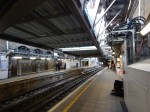


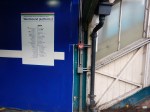
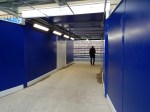

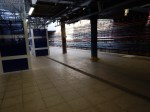

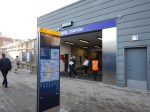
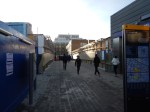


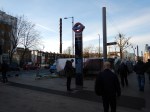


It is now possible to change direction on the wide platform between the Eastbound and Westbound lines of the District and Metropolitan Lines.
The escalators to the Crossrail lines will also be located in this wide platform. So changing between Crossrail and the \district and Metropolitan Lines will be very straightforward.
What surprised me was the quality of the temporary station. It’s actually a lot better and far more spscious than the one that was used previously, with several more gates.
A Trip To Barking
In A Story And A Rumour About The Gospel Oak To Barking Line, I reported on a rumour that an LO staffer had said that the electrification will be complete by June.
I think this is impossible, as according to this document on the TfL web site, the bridge at Upper Holloway station will only be completed before the end of 2017. I don’t think I’m alone in thinking that the bridge must be completed before the electrification.
Surely,if the electrification is to be completed by June, then there will be evidence of construction all along the line.
Today, I went to Barking station and had a look around.
- The GOBlin terminates in Platform 1 at Barking station and there is no evidence of any construction there.
- There was no evidence of piling between Barking station and the short length of electrification between Barking and Woodgrange Park station.
- There was also no evidence of any work tro create supports for the catenary on the elevated section of the line between Woodgrange Park and Leyton Midland Road stations.
On a quick look too, there didn’t appear to be any construction cabins, that would be normal for such an undertaking, as electrifyimg a dozen miles of railway..
I then had a think about the objectives of all the work on the Gospel Oak to Barking Line.
- Replace the two car Class 172 diesel multiple units with four-car Class 710 electric multiple units.
- Allow freight trains to be hauled by electric locomotives.
- Extend the line to Barking Riverside.
This map from carto.metro.free.fr shows the lines at Barking station.
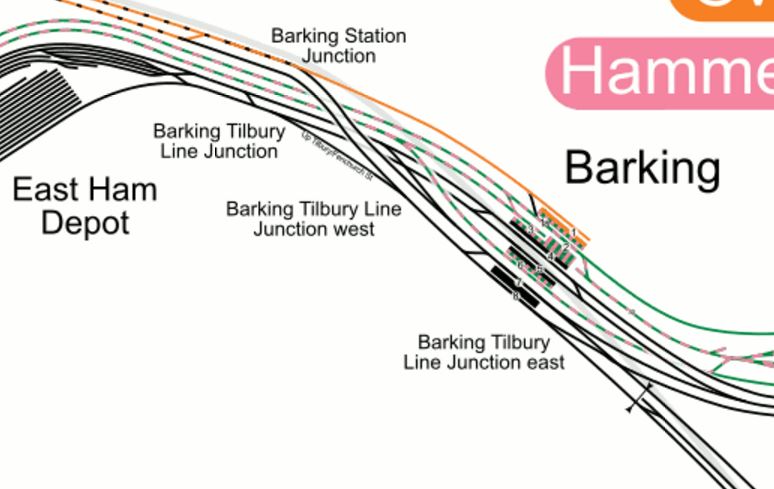
Lines At Barking Station
Note the following.
- The GOBlin (orange) terminates in the bay platform 1, on the North side of the station.
- Freight trains to and from London Gateway, Tilbury and the East, go through the two Barking Tilbury Line junctions and then access the GOBlin using a flyover and the Barking Station junction.
- Barking Riverside station is on a spur off the Tilbury Line to the South East.
So I asked myself, what electrification needs to be done to get electric-hauled freight trains off and on the GOBlin.
As c2c runs electric services in and out of Liverpool Street at certain times, I suspect that the wiring to get electric-hauled freight onto the GOBlin is already there.
So we’re left with the only electrification at Barking being platform 1 and the extension to Barking Riverside. The total length is probably under ten kilometres.
According to Bombardier, all Aventra trains like the Class 710 will have an energy storage capability.
So could we be seeing an extension to Barking Riverside like this?
- Between Barking Station junction and Barking Riverside station, the Class 710 trains run on their batteries.
- Eastbound and westbound services both use Platform 1, so the GOBlin has its own single-platform at Barking. Recently, Network Rail has built several single-platform stations.
- Platform 1 is not electrified.
- The line through Platform 1 is extended under the station to give a direct connection to Barking Riverside. This might need another flyover or some extra points and crossings.
- The branch line to Barking Riverside and the station are not electrified.
Effectively, using the IPEMU capability of the Class 710 trains, has simplified the project and reduced the length of electrification required by a large amount.
Whilst I was at Barking station, I took this picture.
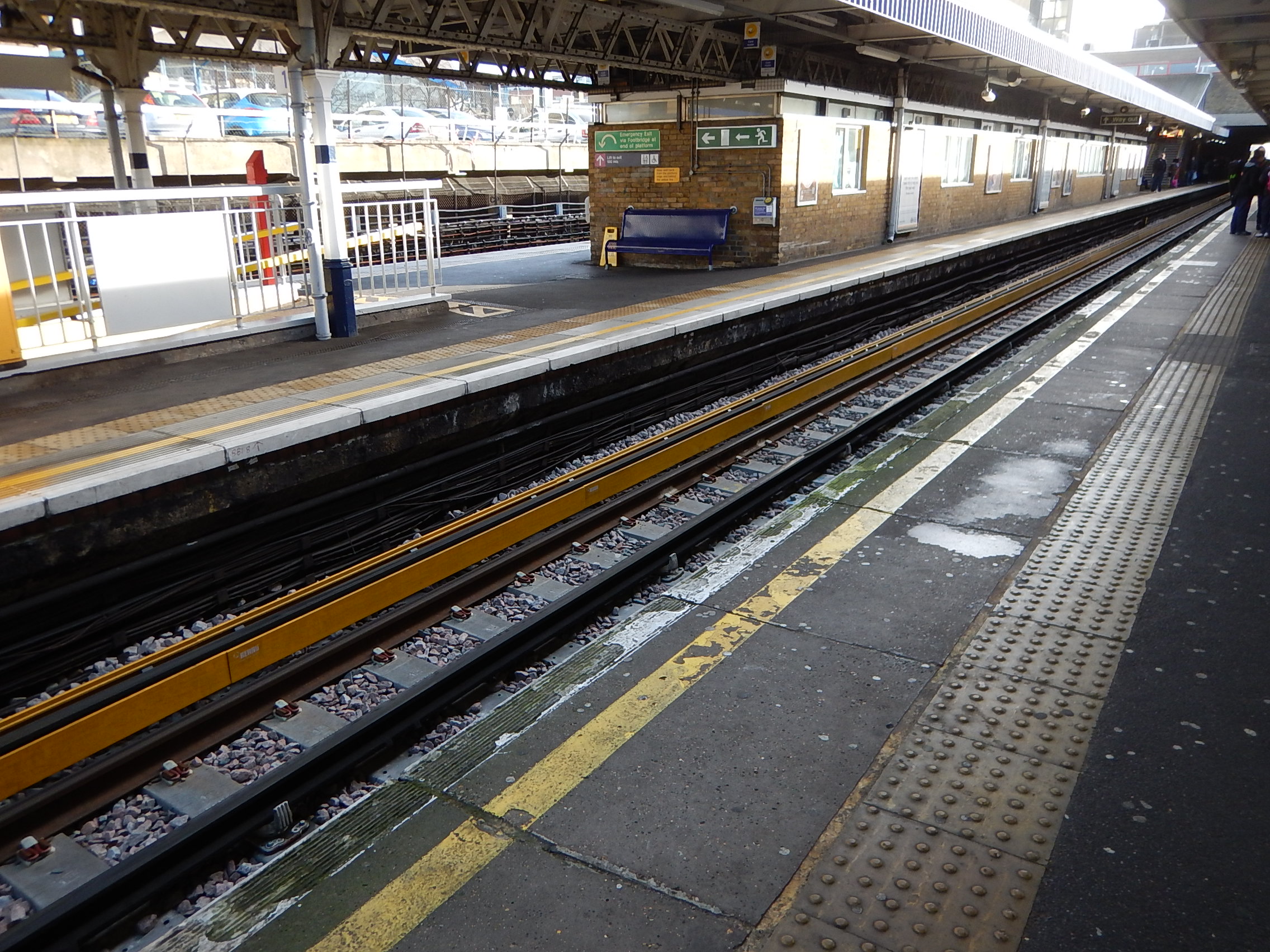
A Protected Conductor Rail At Barking Station
Note how the conductor rail is protected by a yellow wooden shield.
Why?
Is it to protect passengers or the work-force?
My Least Favourite Roundabout Gets Pedestrian Lights
When you go to Birmingham City to watch a match from Bordesley station, you take your life in your hands to cross the road. I reported the bad roundabout in A Pedestrian Crossing From Hell.
But look what’s happening!
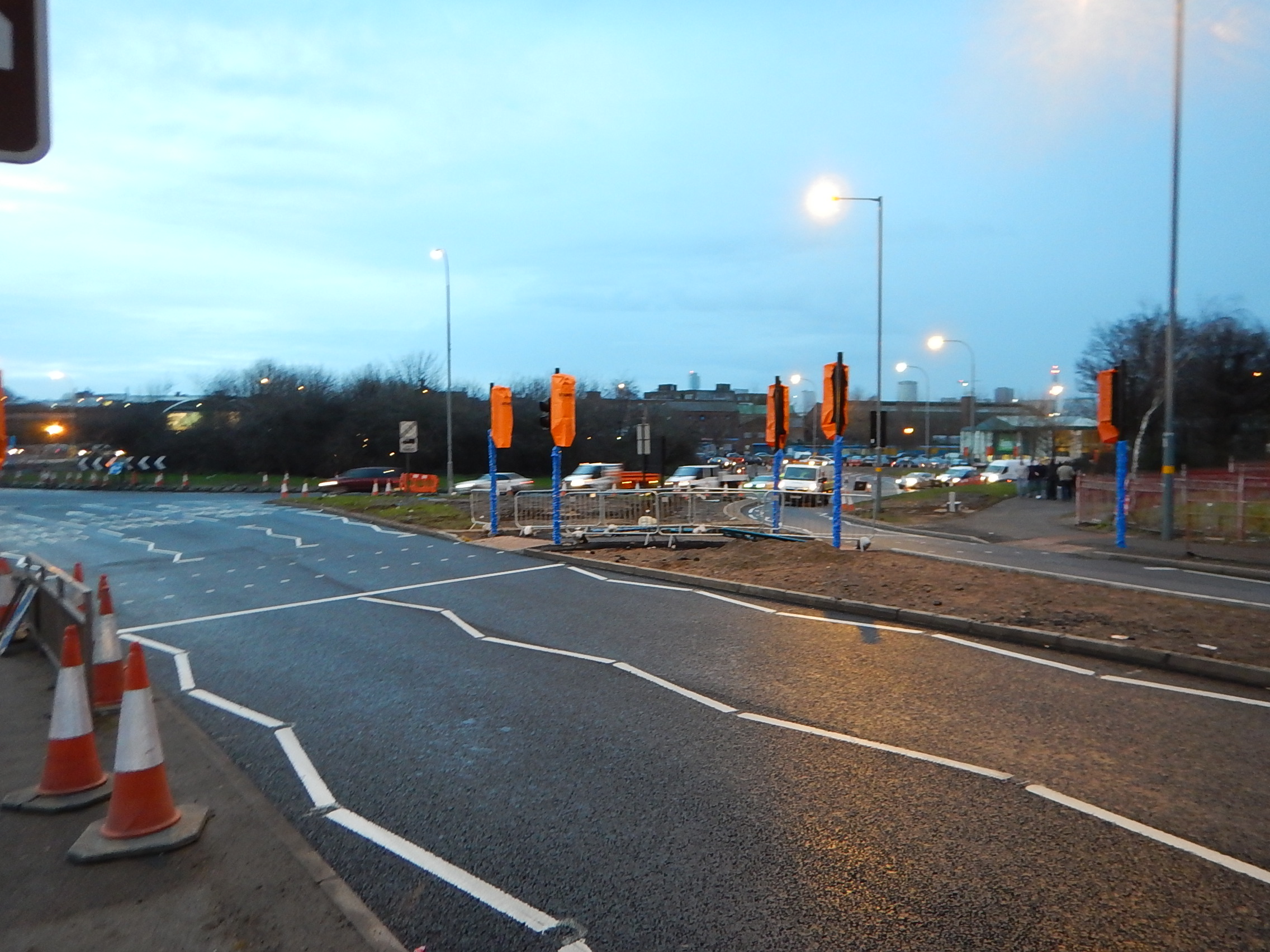
My Least Favourite Roundabout Gets Pedestrian Lights
Hopefully, the lights will be working before someone gets killed.
Crossrail Trains Will Have Auto-Reverse
I am a control engineer and I have worked in industrial automation on and off since I was sixteen, when I had a summer job in the electronics laboratory at Enfield Rolling Mills at Brimsdown.
One of the problems of running a railway to a high frequency, is that when you get to the terminus, the driver has to get off the train, walk to the other end and then step-up into the other cab. So a couple of minutes or so is wasted. On some lines, where drivers change over, there are delays and extra costs. It is one of the reasons, why train lines sometimes have reversing loops, like the Piccadilly Line at Heathrow and the Wirral Line underneath Liverpool.
It is also why, there has been talk of extending the Victoria Line in a large loop to a single platform at a new station under Herne Hill. I wouldn’t be surprised if when they extend the Northern Line Extension to Clapham Junction or the Bakerloo Line to Lewisham, that they use loops with single platform stations. The layout has the following advantages.
- The driver stays in his seat and drives the train normally.
- Stations are more affordable as they only have one platform.
- Passengers always go to the same platform and get the first train.
- It might be possible to dig the reversing loop with a single tunnel boring machine.
It is such a simple concept, I can’t understand why it isn’t used more.
Crossrail has a different problem in that all branches, except Heathrow, end on the surface and the Class 345 trains are two hundred metres long. So running a train every two minutes or so, means that drivers have a lot to do in the turn-round including a 200 metre walk.
The Class 345 trains are designed to incorporate auto-reverse. This extract from this article in Rail Engineer, which is entitled, Signalling Crossrail, explains the concept.
A new facility called ‘auto reverse’ is being provided at Westbourne Park (no station) for turning the 14 trains per hour in the reversing sidings. The driver selects ‘auto reverse’ on leaving Paddington station and walks back through the train, obviating the need for drivers to ‘step-up’. By the time the train gets back to Paddington (about a mile) the driver should be in the other cab ready to form the next eastbound departure.
The facility has the capability to turn round a full 30 tph service. There is just time for the driver to walk back through the train whilst in the reversing siding but doing so on departure at Paddington gives that extra time that will also help recover from perturbation.
Essentially, the driver does his walk whilst the train is travelling to the reversing siding. It must have other advantages.
- The driver can check the train as he walks.
- Cleaners can get on at the actual terminus and then get off again with the usual rubbish.
- Someone who goes to sleep, just gets an extra ride into the reversing siding and out again.
It’s a very simple piece of automation, which as the extract says, enables a full 30 tph service and makes recovery from delays easier.
The only problem, I can see is that the drivers’ unions could insist that a driver is in the cab at all times.
It would appear that the system will be used by Crossrail at Abbey Wood and Paddington.
I also suspect that the driver will have a rudimentary train controller to stop the train in an emergency.
Warsaw In The Snow
I took these pictures of Warsaw, as we wandered around the Old City.












I visited this area in April 2014 and wrote about it in Walking Around Warsaw.
Along The Tsar’s Road
I took these pictures as we drove along the Tsar’s Road to return from the far North-East of Poland towards Warsaw.















A few points.
- There is no Wikipedia entry to the Tsar’s Road, but as I understand it, it was built through the marshy land, so that Russia could move their troops easily.
- The memorial is to Kazimierz Glinka – Janczewski. I think this page gives more details in English.
- The lunch stop was excellent and is called Dwor Dobarz.
- The only wildlife we saw was a few shy moose.
- As ever in Poland, there was quite a bit of information.
We visited in winter, where conditions are challenging and different, but if you’re thinking about a summer visit to the area, start planning.
 The Anonymous Widower