Could The Various Lines At Brixton Be Connected?
In their Transport Infrastructure Plan for 2050, Transport for London are proposing a Brixton High Level station.
As they have also proposed interchanges at also Brockley and Penge in the plan, I suspect they have found expertise and equipment to create multi-level stations, where lines cross, in an affordable manner.
The problem at Brixton is best explained in this Google Map.
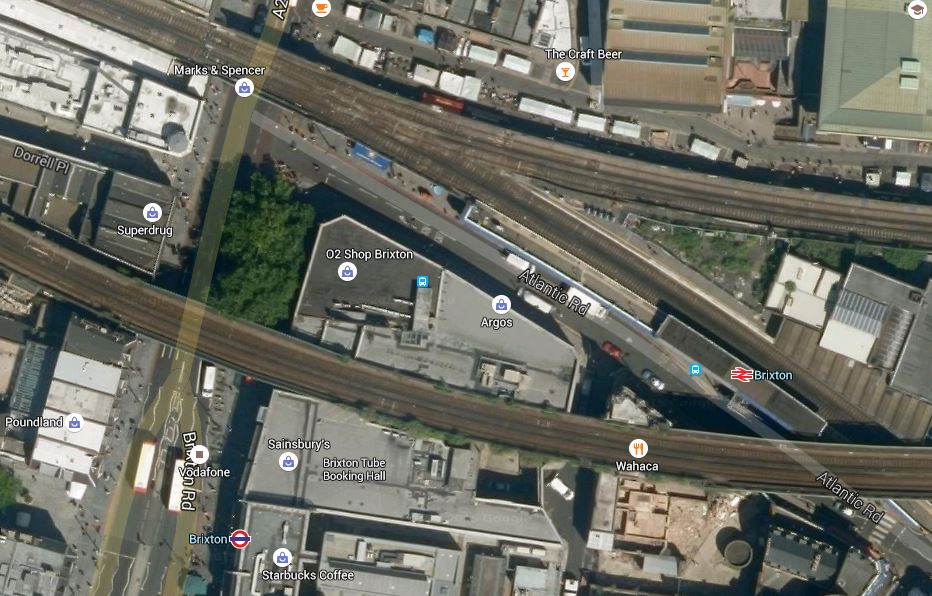
Brixston Station
The line across the middle of the map carries Overground services to and from the terminus at Clapham Junction, whereas the two merged lines go off roughly north-westerly towards Victoria. The southerly of the branches goes south towards Herne Hill, whilst the northernly branch going towards Loughborough Junction. This schematic from Wikipedia may explain it better.

Lines Through Brixton
The Overground, Thameslink and the Victoria Line are shown in orange, pink and blue respectively.
The only conclusion that is worth saying is that it’s all very complicated. The big advantage that they now have compared to a few years ago, is that much better 3D design software is available.
In TfL’s plan a rough estimate of £25million is given for each of these interchange stations. Some will cost less and some will cost more.
I think Brixton will not be one of the more affordable stations, although it could be one with a high return.
There are various options for connections at Brixton and TfL will probably limit the interchanges to the ones that are most used.
For instance, would there be much point in linking the Victoria Line to the services between Victoria and Orpington, as they both serve Victoria?
Also, as after this summer, the big constraint on frequency on the Victoria Line will be the reversing of trains at Brixton. Under Future Projects for the Victoria Line, Wikipedia says this.
For many years there have been proposals to extend the line one stop southwards from Brixton to Herne Hill. Herne Hill station would be on a large reversing loop with one platform. This would remove a critical capacity restriction by eliminating the need for trains to reverse at Brixton. The Mayor of London’s 2020 Vision, published in 2013, proposed extending the Victoria line “out beyond Brixton” by 2030.
I would suspect this will be done in the near future, as it both increases Victoria Line capacity and it gives an alternative link between the Victoria Line and services between Victoria and Orpington.
Brixton Underground station has recently been refurbished and is pretty-much step-free from the street.
So it would appear that substantial improvement at Brixton could be achieved by creating a High Level station linking the various lines together and perhaps using an iconic lift tower to the ground.
Brixton needs an iconic creation to go with the vibrancy of the area, that doesn’t destroy everything. This could be the High Level station. Having seen the way that the walkway was threaded through at Hackney, I think there are at least one set of engineers and architects up to the challenge.
Brixton doesn’t need a boring station, but one that is exciting, bold and supremely practical for passengers and staff.
The Importance Of The Victoria Line
In an ideal world, Crossrail 2 would be a follow-on to Crossrail 1, but there is not enough money to do that.
So in the time before Crossrail 2 is built, we must make the most of other lines.
The Victoria Line is by some measures one of the most heavily used Underground lines in London and this summer a bottleneck is being removed at Walthamstow Central to increase the frequency of trains on the line.
After this wirk, the big constraint on frequency on the Victoria Line will be the reversing of trains at Brixton. Under Future Projects for the Victoria Line, Wikipedia says this.
For many years there have been proposals to extend the line one stop southwards from Brixton to Herne Hill. Herne Hill station would be on a large reversing loop with one platform. This would remove a critical capacity restriction by eliminating the need for trains to reverse at Brixton. The Mayor of London’s 2020 Vision, published in 2013, proposed extending the Victoria line “out beyond Brixton” by 2030.
I would suspect this will be done in the near future, as it both increases Victoria Line capacity and gives the line a new station at Herne Hill, which has good interchange possibilities.
Although the Victoria Line is important to London, I do find it strange, that it has no interchange with Crossrail.
Hopefully, during the wait for Crossrail 2, improvements to the Victoria Line will soothe some of the problems.
Haggerston – A Simple Viaduct Station
Haggerston station is on the East London Line. It sits on top of the Kingsland Viaduct that used to take the line between Dalston Junction and Broad Street.
The platforms and the access are about as simple as you can get, but they are not of a low quality and standard.

Hoxton station which is the next one south on the line is similar.
I must have gone through the old Hoxton and Haggerston stations several times, when in the 1980s, I took the East and North London Lines to get to Stonebridge Park, where Metier’s offices were situated.
I can remember slam-door trains smelling of urine, but that could have been from earlier times.
New Tracks And Platforms At Abbey Wood Station
These pictures show construction work going on, mainly on the Southern side of the North Kent Line at Abbey Wood station.
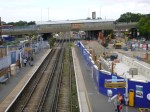

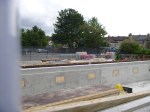
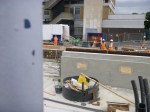

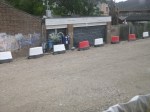
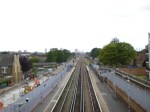
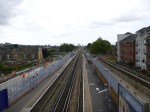
The current southern platform, which is numbered 1, will become an island platform for the North Kent Line between the two tracks., The current Up line will become the Down line , with the new Up line being created to the South side of the platform. As the pictures show work is progressing well on creating a concrete channel for the track.
Crossrail Works Between Plumstead And Abbey Wood Stations
Work seemed to be in full flow between Plumstead and Abbey Road stations, as I went to Abbey Wood.
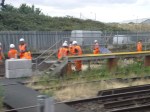


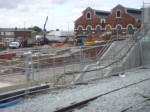



There will be depot at Plumstead for Crossrail, but most of the work shown is for the two new tracks that will be on the northern side of the North Kent Line
They’re Just A Load Of Snobs In Chelsea
That should be the headline on this report from the Evening Standard about the posh people not wanting the plebs to go to Chelsea.
It’s the last time, I buy any of Grossman’s sauces!
Seriously though, look at this Google Map of the area from Fulham Broadway station to the possible proposed site of the station.
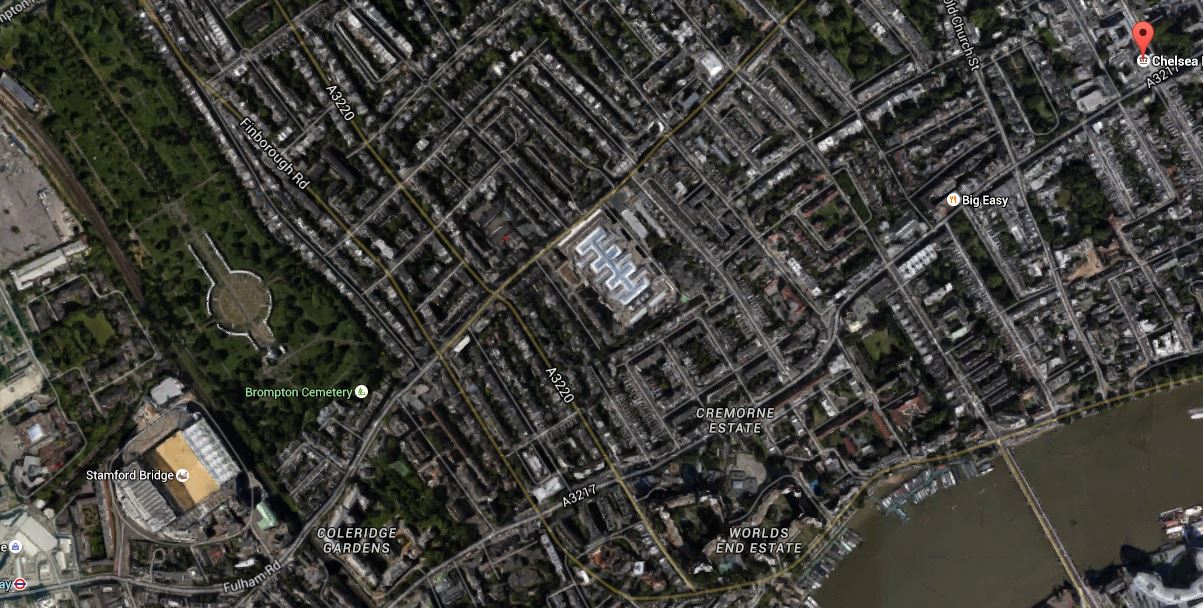
Chelsea Station And Stamford Bridge
If the new Chelsea station is where the red arrow is, it will be very convenient for going to the football. Especially for one of my mates who supports Chelsea and lives in Dalston.
But where I live, I’m close to Highbury and could walk there to see a match. The only trouble you get is a lot of traffic on match days, which is getting better year on year as the public transport improves.
I suspect that if the new Chelsea station opens, that on match days, it will actually improve the traffic in Chelsea, as more supporters will use public transport.
Those who are protesting are just a load of snobs, who would prefer to live in a gated community, where others are only let in under permit and after CRB checks!
I took a few photographs from the top of a virtually empty number 11 bus, as it progressed up the King’s Road from Fulham Broadway to Sloane Square.


It was surprisingly quiet.
Having seen the site, I suspect if they do put a station at the Chelsea Fire Station site, they’ll use the same technique as at Moor House for Crossrail.
At some point in the next few years, a developer will put up a stylish building in place of the fire station, which will have a core that will have provision for Crossrail 2 to pass through and connect up later. This later connection will be done without any action from the surface, but totally from the tunnels.
I suspect the probably bland high-rise residential property, they will get on the fire station site, will cause more degradation than Crossrail 2 ever will. Look at the monstrosity that has replaced the much-loved Middlesex Hospital.
A Four-Poster Station
When most railways in the world were built, no-one bothered about the disabled, the elderly and people pushing prams or trailing heavy cases, so station design was based around able-bodied people.
There were examples, like Caledonian Road, where the step-free access is up with the best of modern practice, but stations like that are a rarity.
In my visits around the country, I’m increasingly finding stations where there are several lifts, often made by the same company who made the stairlift advertised by Dame Thora Hird. I don’t know the cost of lifts but it strikes me that they must make all of these lift installations value for money.
Over the last few weeks, I’ve come across several places in this country, where two lines cross at an angle on different levels, where a connection might be of value to passengers.
The link between Hackney Downs and Hackney Central stations, is such a connection and it would appear to be successful. I’ve certainly not read any criticism in the media on either operational or aesthetic grounds. I’m sure if an incident as small as a child dropping and losing a ten pence piece had happened, there’d be headlines all over the place blaming Boris.
In Birmingham, there is the Cross-City Line, which conveniently passes in a cutting under Birmingham Moor Street station after stopping at New Street station. But there is no connection.
Then today, I was at Brockley, where in their Transport Infrastructure Plan for 2050, Transport for London are proposing a Brockley High Level station.
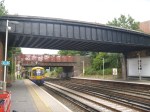
Brockley station sits underneath and is crossed by the Bexleyheath Line and these pictures show the station and the line crossing above.
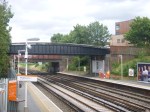
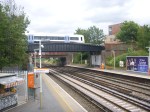
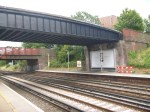
This Google Map shows the two lines crossing.
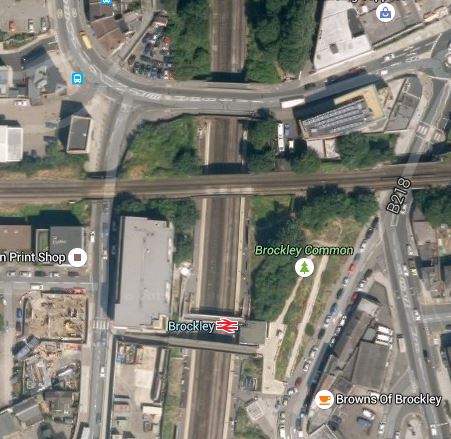
Brockley Station
There was a station called Brockley Lane on the Bexleyheath Line, but it closed in 1917.
I believe that modern structural engineering would allow the addition of two platforms to the sides of the rail bridge carrying the Bexleyheath Line. From the look of the bridge, it seems to be in very good condition.
In the case of Brockley station, the current platforms already reach under the bridge and to connect the two pairs of platforms. There would be four lifts with one in each corner. So there would be a lift between both North-South platforms and both East-West platforms! At Brockley, because the height between the two levels isn’t too great, stairs could also be provided if it felt passenger traffic required it. Some form of alternative way of getting off the high level platforms would be needed for emergency reasons.
The advantages of this approach are.
1. There is no serious track changes necessary at Brockley, as the new platforms are built alongside an existing rail line, but obviously there would need to be some signalling work.
2. The lifts would be the standard structures we see all over the UK rail network, modified to fit the application.
2. All interchanges will be step free.
3. As much station infrastructure can be provided on each platform, as it felt the passengers would need, thus keeping costs to a minimum. At Brockley, perhaps a shelter and a refuge for the staff, would be sufficient.
4. If gated access was not provided to the two high-level platforms on the Bexleyhealth Line, a safe Emergency Exit would probably meet the needs of evacuation.
The only disadvantage I can see, is that the two high-level platforms would need to be well-sheltered, as I suspect, it could be very cold and blowy up there at times.
In all my travels, I’ve never seen a station designed like this. Although some of the stations on the Docklands Light Railway like Deptford Bridge feature platforms suspended alongside the railway with access at both ends. But the budget there didn’t stretch to four lifts! That station incidentally is suspended on a bridge across a major road.
A Station That Needs Its Lifts
Crystal Palace station is an architectural gem, although it has no Listed status.
It has been restored sympathetically by Transport for London to comply with modern disability access routines, but the station does not seem to have lost the Victorian persona that would have been obvious, when it opened in the mid-1850s.
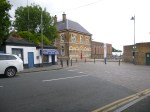
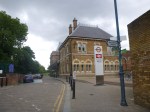
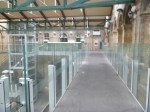

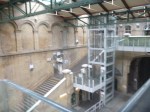
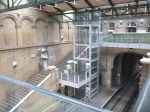
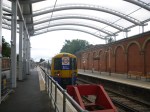
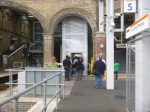
The pictures don’t do it justice.
But they do show the height that modern free-standing lifts can handle. Even if, as was happening today, the lifts are rather busy.
Certainly, Crystal Palace station is one that needs its lifts.
It makes you wonder how ladies in full Victorian dress with long wide skirts, tightly laced into corsets coped with the stairs.
It looks like the way the station has been restored would allow an appropriate film with a Victorian theme to be filmed without getting the modern lifts into shot.
Herne Hill Station
The more I read about Herne Hill station, the more I’m fascinated with its problems. The Wikipedia entry starts with these two paragraphs.
The station building on Railton Road was opened in 1862 by the London, Chatham and Dover Railway. Initial service was only to Victoria, but by 1869 services ran to the City of London, King’s Cross, Kingston via Wimbledon, and Kent, including express trains to Dover Harbour for continental Europe. The arrival of the railways transformed Herne Hill from a wealthy suburb with large residential estates into a densely populated urban area.
In 2011, Network Rail recommended terminating all northbound Thameslink trains from Herne Hill at Blackfriars from 2018, freeing up capacity on the Thameslink cross-London section for trains via London Bridge. The Department for Transport announced in January 2013 that services from Herne Hill would continue travelling across London after 2018.
The first paragraph illustrates one of the problems at Herne Hill. To my mind, the real problem is that we have Victoria towards the west of London acting as a terminal for trains from Kent and the Eastern part of Surrey, which then have to cross major North-South services like Thameslink and the London Bridge to Sussex services. It’s a crazy mess that has been well over a hundred years in the making, because successive rail management has sidestepped the problem.
Network Rail’s design for Thameslink was probably the best they could do in this pressure cooker, but it annoyed too many civil servants and politicians, so it couldn’t be allowed. I’ve seen this so often in major projects, where engineers, designers and other professionals have recommendd one course of action, but polticians have said you can’t do that, as my gardener will lose his allotment.
In Improving the East London Line about Herne Hill station, I said this.
It has problems, as it would appear a gallon is being squeezed into a gill pot! If you read this article in London Reconnections, you’ll see that it is not just a serious problem, but an almost impossible one.
To make matters worse, Network Rail’s proposed solutions have seemed to be hindered by the Dulwich Estate retaining significant planning powers, which only an Act of Parliament can resolve.
With all my scheduling experience,I can’t help feeling that Thameslink is going to be a disaster unless something is done to sort out the knitting in the Herne Hill area or the number of trains through the area, is matched to the capacity.
This extract from Wikipedia explains why capacity is low at Herne Hill.
The four tracks are served by two island platforms; northbound trains call at the western platform and southbound trains the eastern platform, providing cross-platform interchange between the two routes.
There are flat junctions at each end of the station: Herne Hill North Junction, where the lines to Loughborough Junction and Brixton diverge; and Herne Hill South Junction, where the lines to West Dulwich and Tulse Hill diverge. Thameslink and Southeastern services cross each other’s paths at the junctions, constraining capacity on both routes. The station also has a turnback siding on its eastern side, adjacent to Milkwood Road.
Imagine two roads crossing at an angle, where there were traffic signals letting through a few vehicles at a time. Slow isn’t it?
The only solution would be to have a flyover, but there are too many local objectors to this.
We could always dig the guys up who designed this mess and hang them. But although we might feel better, it wouldn’t help the problem.
So I just thought I had to go and look at this troubled station and pour my four-pennyworth of burning oil on the problem. I took these pictures.
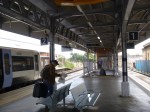
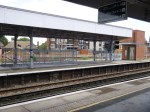
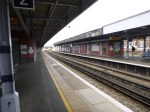
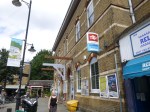
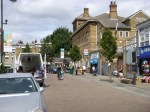
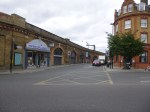

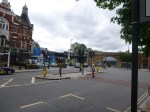
The pictures show the station is in good condition with good disabled access. There are also four bakeries and lots of cafes and restaurants for those who jump train at Herne Hill because of the slow progress.
Orpington Station – 3rd August 2015
After An Exploration At Penge, took a train from Penge East station to Orpington station.
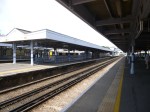
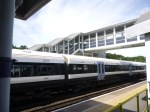
These pictures I took, show a well-appointed station with full step-free access and a selection of long through and bay platforms.

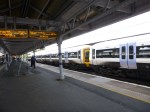

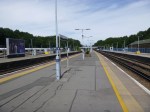
Could Orpington be one of the extra destinations that are needed by the East London Line?
It takes thirty four minutes of travelling time to get to Whitechapel changing at New Cross at the moment, so it is actually closer than West Croydon, which takes forty minutes.
The route passes through a series of important and busy stations like New Cross, Lewisham and Petts Wood. It could either be via Beckenham Junction and Bromley South or via Hither Green and Chislehurst.
Using Opington as a destination for the East London Line would appear to connect a lot of South East London to Crossrail at Whitechapel and the Jubilee Line at Canada Water.
It would also fit in well with Transport for London’s desire to take over services in South East London. The Wikipedia entry says this.
However, since taking over the West Anglia services, TfL have once again proposed to take over the suburban routes, currently operated by Southeastern after their franchise ends. The opposition to TfL taking over routes from Kent County Council have softened after a London Assembly meeting, which Kent County Council attended. Kent have set out “red lines” to its support, stating no Southeastern Mainline service should be negatively affected by a take over by TfL.
So bringing an uprated East London Line to Orpington might appear on the surface to fit in well with TfL’s ambitions.
It certainly seems that they have big ambitions in South East London.
Could it be Borough Jealousy?
Councils like Bromley have seen the improvements in transport and the related benefits in Northern boroughs like Hackney, Islington and Brent and want a piece of Orange action themselves.
 The Anonymous Widower