Riding On A Battery-Electric Double-Deck Bus
This morning I rode on a battery-electric double-deck bus.
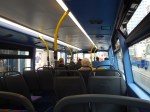
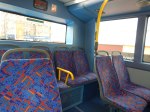


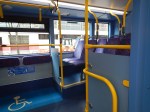



Some of these buses are russing on route 98 between Holborn and Willesden Garage, which includes a run down Oxford Street.
There’s more on the buses in this page on the Metroline web site.
I went upstairs and the experience was little different to that of a normal hybrid bus.
My Thoughts
My thoughts in various areas.
Design
It is a well-designed bus, that is easy to use for this seventy-year-old.
Passenger Experience
Travelling along Oxford Street, the passenger experience was equal to that of a New Routemaster, without the occasional low noise of the engine.
Performance Of The Bus
As we proceeded along Oxford Street, the performance of the bus, was very much in line with current hybrid buses.
The bus wasn’t full on the upper deck, but I suspect that the total weight of the passengers is very much lower than the weight of the battery, so this might mean that a full bus performs well compared with an empty bus.
Limited Space On The Lower Deck
There is one obvious problem and that is that the size of the battery reduces the number of seats downstairs.
As I said earlier, I doubt the weight of the passengers is a problem, but the available space, where they sit and stand could be.
Economics Of The Bus
The bus will obviously be expensive to purchase and to run, as batteries are expensive and need to be replaced every few years.
Coupled with the fact that capacity is smaller than current hybrid buses, which probably means more buses are needed to perform the required service, the economics of the buses may not be suitable for many routes.
I also wonder, if a battery-electric double-deck bus has better economics than a single-deck bus, as the extra weight of the top deck and the extra passengers is small compared to the weight of the battery.
But the economics will get better with improved battery technology.
The Marketing Advantages
BYD and Metroline could be big winners here, as corporate videos and marketing material showing buses in Central London, can’t be a bad thing!
The Competition From Diesel Hybrid Buses
I believe that one competitor to the battery-electric bus will be the next generation of diesel hybrid buses.
Take the current modern hybrid buses like a New Routemaster or any other hybrid bus built in the last couple of years. These have a battery that can power the bus for perhaps a couple of miles.
As the battery is smaller, it can be squeezed into an unlikely space. On a New Routemaster, the diesel engine is under the back stairs and the battery is under the front stairs.
A technique called geo-fencing can be retro-fitted, which forbids the use of the buses diesel engine in sensitive areas, based on GPS technology.
So a route like London’s route 98 could work through the ULEZ on battery power and charge the battery between Edware Road station and Willesden Garage.
The Competition From Hydrogen Hybrid Buses
This will surely be similar to that from diesel hybrid buses.
- Battery size will probably be as for a diesel hybrid bus.
- As hydrogen doesn’t give out noxious emissions, this will be an advantage and you won’t need the geo-fencing.
- But you will need to store the hydrogen.
As hydrogen technology improves, I feel that the hydrogen hybrid bus could become a formidable competitor.
The Competition From Converting Old Diesel Buses To Diesel Hybrid Buses
I talked about this in Arriva London Engineering Assists In Trial To Turn Older Diesel Engine Powered Buses Green.
Never underestimate good engineers with a good idea, that has a good financial payback.
Conclusion
There is going to be a lot of competition between the various technologies and the passengers, bus operators, London and London’s air will be big winners.
As all of this technology can be applied anywhere, other parts of the UK will benefit.
Is Hydrogen A Viable Fuel For Rail Applications?
Perhaps a good place to start is this article on Global Rail News, which is entitled In depth: What you need to know about Alstom’s hydrogen-powered Coradia iLint.
The article starts with this summary of where we are at present.
The global rail industry’s major players are competing to establish an affordable and green alternative to diesel.
Electric traction has been rolled out extensively but electrification can be very expensive – as the UK has learned – and a large part of Europe’s network remains unelectrified. In countries where the provision of electric services is patchy, bi-mode trains are a popular alternative.
I certainly believe that all trains should be powered by electricity, but then we have had diesel-electric locomotives in regular use pn the UK network since the 1950s.
The article mentions two alternatives to diesel.
Bombardier’s modified Class 379 train, which is now called an IPEMU, which I rode in public service in early 2015 is mentioned. I found this train impressive, as I reported in Is The Battery Electric Multiple Unit (BEMU) A Big Innovation In Train Design?. This was my conclusion.
Who’d have thought that such a rather unusual concept of a battery electric multiple unit would have so many possibilities.
I think I’ve seen the future and it just might work!
I still agree with that conclusion.
The second alternative has just arrived in the shape of the Alstom Coradia iLint, which is powered by hydrogen and just emits little more than steam and condensed water.
The Coradia LINT is a family of one and two car diesel trains.
Wikipedia has a section on the Coradia iLint and this is said.
The Coradia iLint is a version of the Coradia Lint 54 powered by a hydrogen fuel cell.[6] Announced at InnoTrans 2016, the new model will be the world’s first production hydrogen-powered trainset. The Coradia iLint will be able to reach 140 kilometres per hour (87 mph) and travel 600–800 kilometres (370–500 mi) on a full tank of hydrogen. The first Coradia iLint is expected to enter service in December 2017 on the Buxtehude-Bremervörde-Bremerhaven-Cuxhaven line in Lower Saxony, Germany. It will be assembled at Alstom’s Salzgitter plant. It began rolling tests at 80km/h in March 2017.
That sounds impressive.
The Global Rail News article gives a bit more detail, including the following.
- The train has no need for overhead catenary.
- The train has lithium-ion batteries to store generated energy.
- The train has a intelligent energy management system.
- Alstom propose to use wind energy to generate hydrogen in the future.
It also includes this promotional video for the Caradio iLint.
Some points from the video.
- The train has similar performance to comparable regional trains. Do they mean the Lint 54 on which it is based?
- The train captures regenerative braking energy.
- The train has been developed in co-operation with a Canadian company! Do they mean Ballard?
So what are my views about trains hydrogen power?
Hydrogen Power In Road Transport
London bus route RV1 has been run by hydrogen-powered buses since 2010.
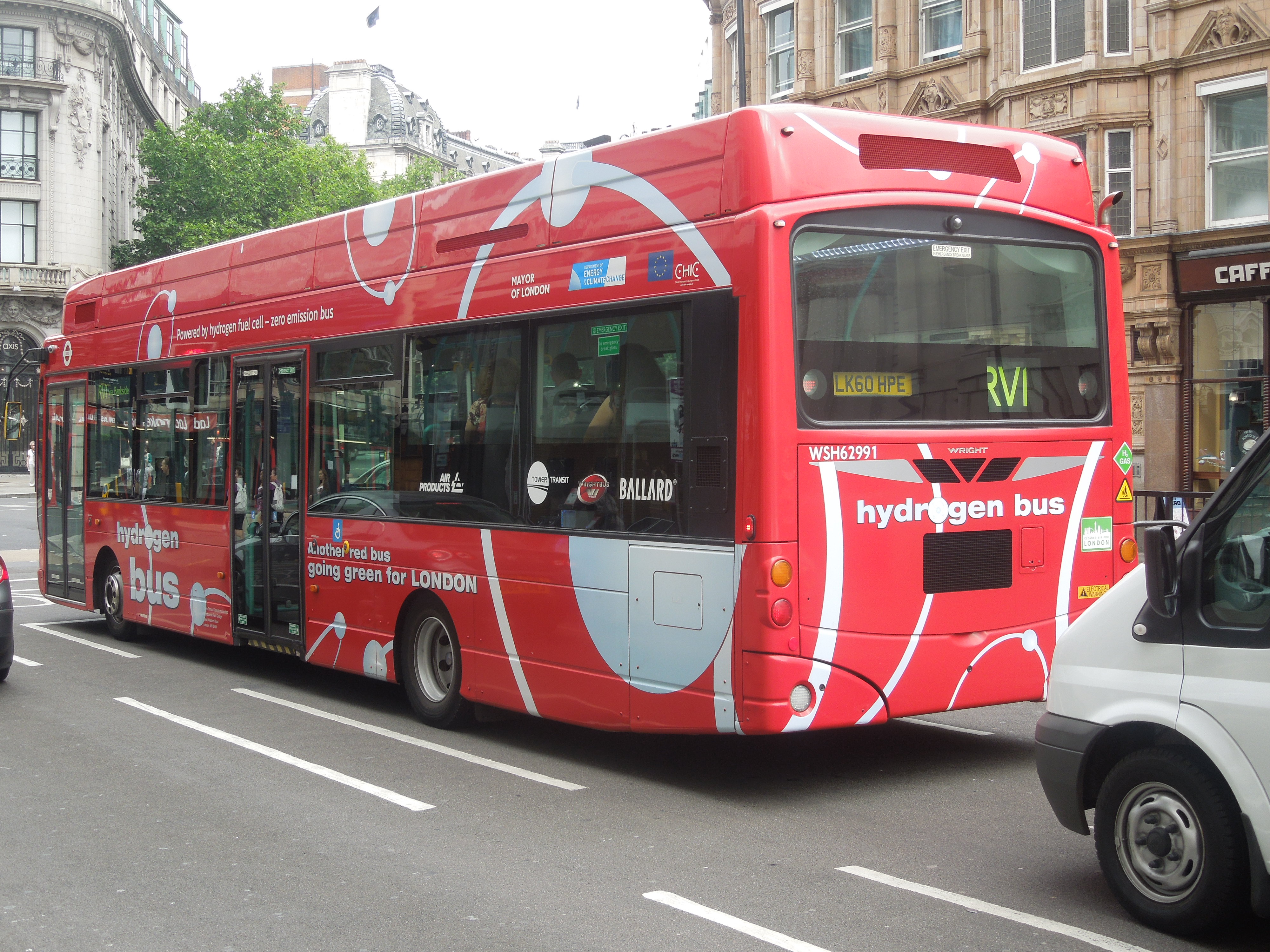
Note Ballard on the side of the bus!
There are also a number of hydrogen-powered cars including the Honda Clarity.
The latest Clarity has these characteristics.
- 4-door saloon.
- 366 mile range.
- 130 kW electric motor.
That seems very reasonable. But the car is only available in California, costs a lot and refuelling points are not everywhere.
The competition for the Honda and other hydrogen-powered cars is the electric car powered by batteries, where charging is getting much faster and easier and the price is getting more competitive.
I think that on the current technology, you’d have to be a very special individual to invest in a hydrogen fuel-cell car.
But use of hydrogen on a city-centre bus is more suitable.
- Pollution is often a problem in city-centres.
- Politicians like to show off their green credentials.
- Buses run fixed routes.
- Bus working schedules can be arranged, such that after a number of trips, they can return to a nearby garage for refuelling.
According to this fuel-cell bus entry in Wikipedia, there have been several trials with varying degrees of success.
My view is that with the current technology, there may be a niche market for hydrogen fuel-cell buses in city centres and environmentally-sensitive areas on defined routes, but that practically and economically, hydrogen fuel-cell cars are a non-starter.
There will be, improvements in current technology in the following areas.
- Vehicle design will result in lighter-weight vehicles and better aerodtnamics.
- Charging systems for electric vehicles will get more numerous and innovative.
- Batteries or energy storage systems will get smaller, lighter and will hold more energy.
Although these developments will also help hydrogen fuel-cell vehicles like buses, they will also help battery-powered vehicles a lot more.
So I would not be surprised to see hydrogen fuel-cell buses not being very successful.
The Advantage Of Rail Over Road
You can’t disagree with the laws of physics, although you can use them to advantage.
Rolling resistance is well described in Wikipedia. This statement starts the third paragraph.
Any coasting wheeled vehicle will gradually slow down due to rolling resistance including that of the bearings, but a train car with steel wheels running on steel rails will roll farther than a bus of the same mass with rubber tires running on tarmac. Factors that contribute to rolling resistance are the (amount of deformation of the wheels, the deformation of the roadbed surface, and movement below the surface. Additional contributing factors include wheel diameter, speed, load on wheel, surface adhesion, sliding, and relative micro-sliding between the surfaces of contact.
Also, as a tram or train system has control of the design of both the vehicle and the rail, it is much easier to reduce the rolling resistance and improve the efficiency of a rail-based system.
One factor; wheel load, is very important. Increasing the load on steel wheels running on steel rails can actually reduce the rolling resistance. So this means that a rail vehicle can better handle heavy components like perhaps a diesel engine, transformer, battery or hydrogen fuel-cell and tanks.
Hydrogen Power In Rail Transport
As Alstom appear to have shown, hydrogen fuel-cells would appear to be able to power a train at 140 kph. Although, there are no reports, that they have actually done it yet! But there has been an order!
The Coradia iLint
I will attempt to answer a few questions about this train.
How Much Power Will The Train Need?
The train is based on a Lint 54.
This document on the Alstom web site, is the brochure for the Coradia Lint.
This is said about the Lint 54.
Ideal for regional or suburban service: The two-car diesel multiple unit with four entrances per side combines all the advantages of its smaller brothers while offering space for up to 170 seats. The vehicle measures 54 m in length. Thanks to its powerful engines, the Lint 54 reaches a maximum speed of up to 140 km/h. With its three powerpacks, the vehicle has a performance of about 1 MW.
Does the iLint have a similar power of about 1 MW?
Could Ballard Power The Train?
If Ballard are Alstom’s Canadian partner could they power the train?
Searching the Ballard web site, I found a product called FCveloCity-HD, for which this document is the data sheet.
The data sheet shows that a 100 kW version is available.
I also found this press release on the Ballard web site, which is entitled Ballard Signs LOI to Power First-Ever Fuel Cell Tram-Buses With Van Hool in Pau, France.
The press release says that 100 kW versions of the FCveloCity-HD, designated FCveloCity-HD100, are used on the tram-buses.
All these applications lead me to believe that Ballard could meet the requirements of enough power for the train.
The video appears to show, that the fuel-cell charges the battery, which then drives the train.
This is not surprising, as most diesel-powered hybrid buses work the same way.
How Big Is The Fuel-Cell?
A Ballard FCveloCity-HD100 is 1200 x 869 x 506 mm. in size and it weighs 285 Kg.
The hydrogen tanks are probably bigger.
Would The Fuel-Cell Provide Enough Power For The Train?
Not on its own it wouldn’t, but adding in the lithium-ion battery and intelligent power management and I believe it would.
- The fuel-cell would generate a constant 100 kW assuming it’s a FCveloCity-HD100.
- The generated electricity would either power the train or be stored in the battery.
- The battery would handle the regenerative braking.
- Air-conditioning and other hotel functions for the train would probably be powered from the battery
The intelligent power management system would take the driver’s instructions and sort out how the various parts of the system operated.
- Moving away from a station with a full train would mean that the train used fuel-cell and battery power to accelerate up to line speed.
- Stopping at a station and the regenerative energy from braking would be stored in the battery.
- Running at 140 kph would need an appropriate power input to combat wind and rolling resistance.
- Any excess energy from the fuel-cell would go into the battery.
- Whilst waiting in a station, the fuel-cell would charge the battery, if it was necessary.
That looks to be very efficient.
How Big Would The Lithium-Ion Battery Need To Be?
I don’t know, but given the appropriate figures, I could calculate it. So Alstom have probably calculated the optimum battery size, based on the routes the train will serve.
Is The Coradia iLint A Battery Train With A Hydrogen-Powered Battery Charger?
I think it is!
But then many hybrid buses are battery buses with a diesel-powered charger.
In Arriva London Engineering Assists In Trial To Turn Older Diesel Engine Powered Buses Green, I wrote about a diesel-hybrid bus, that with the use of geo-fencing, turns itself into a battery bus in sensitive or low-emission areas.
How Would The Train Be Refuelled With Hydrogen?
The video shows a maintenance depot, where the train is topped up with hydrogen, probably after a day’s or a shift’s work.
The first iLint trains have been ordered for the Bremerhaven area, which is on the North Sea coast. So will the depot make its own hydrogen by electrolysis using local onshore or offshore wind power?
Some of that wind power could be used to charge the battery overnight in the depot.
It’s an excellent green concept.
What About The Hindenberg?
But then the very explosive use of hydrogen in the Space Shuttle External Tank never gave any trouble.
Does Alstom Have Any Plans For The UK?
This article on the Engineer web site is entitled Alstom Eyes Liverpool Hydrogen Train Trials.
It would appear to be a good chjoice for the following reasons.
Location
Alstom’s UK base is at Widnes, which is in the South-East of the Liverpool City Region.
Test Partner
Merseyrail have shown in recent years, that they can think out of the box, about using trains and would be a very able partner.
Test Route
The article suggests that Liverpool to Chester via the Halton Curve could be the test route.
- The route is partly electrified from Runcorn to Liverpool.
- The route passes close to Alstom’s base.
- The section without electrification from Runcorn to Chester is probably about twenty miles long, which is a good test, but not a very difficult one.
There would also be good opportunities for publicity and photographs.
Availability Of Hydrogen
Hydrogen is available locally from the various petro-chemical industries along the Mersey.
Incidentally, I used to work in a chlorine plant at Runcorn, where brine was split into hydrogen and chlorine by electrolysis. There were hydrogen tankers going everywhere! Does the industry still exist?
Where’s The Train?
Are Alstom going to build a new train as the Coradia iLint is not built for the British network? Or are they going to modify an existing train, they manufactured a few years ago?
Conclusion
Hydrogen would appear to be a viable fuel for rail applications.
Why Not Hydrogen-Powered Trains?
I regularly use the London bus route RV1 which runs along the South Bank between Tower Gateway and Covent Garden.
This article on the Rail Engineer web site is entitled And now Hydrogen Power – Alstom’s new fuel cell powered train.
The article is worth reading and gives a good review of what might be possible with a hydrogen-powered train.
I have a couple of reservations about hydrogen-powered vehicles.
- In the late 1960s, I worked at ICI Plastics. The Division had had a serious accident with a polythene plant a couple of years previously and there was a distinct lack of enthusiasm for highly-compressed flasmmable gases, that I share to this day.
- I also feel that, if the technology is so good, why aren’t all city buses and taxis hydrogen-powered?
Hydrogen could be the fuel of the future, but we’re possibly nowhere near its time.
This is an extract from the article.
The efficiency of the system relies on the storage of energy in the lithium-ion batteries. Fuel cells tend to work at their best if they are run continuously at reasonably constant performance. The battery stores energy from the fuel cell when not needed for traction and from regenerative braking when the train’s motors turn kinetic energy into electrical energy. In short, the batteries store the energy not immediately required, in order to supply it later, as needed.
So wouldn’t it be better to have a decent charging system for the batteries?
- Overhead electric
- Protected third rail electric
- Small diesel engine.
A system appropriate to the location could be used.
 The Anonymous Widower