Will Some Word Processing Software Object To Someone Typing Battersea Power Station Station?
It is quite likely, that someone will need to type “Battersea Power Station Station” into a document.
I’ve just tried to type it into Word and it objects!
When Does The First Train Run To Battersea Power Station Tomorrow?
This paragraph from Wikipedia describes the opening of the Victoria Line.
The line opened from Walthamstow Central to Highbury & Islington on 1 September 1968. There was no opening ceremony; instead the normal timetable started. The first train left Walthamstow Central for Highbury & Islington at 7:32 a.m. The line proved to be popular; more than 1,000 tickets were purchased at Highbury & Islington within its first hour of opening.
When I went to the opening of Whitechapel station in August, it was very much a low-key opening that had been flagged-up on the Internet. I wrote about it in Whitechapel Station – 23rd August 2021. The only thing out of the ordinary was extra staff and cups of teas and biscuits, that could be purchased.
Surely, that is the way to do it! No fuss! No long boring political speeches and no keeping the plebs out of the way of the Great and Good!
Everybody just gets on with using the station or the line.
But I can’t find any information on what is happening tomorrow about the opening of the Northern Line Extension to Battery Power Station station.
Does this mean that there’s a big do with all the Great and Good?
As with the Victoria Line in 1968, there must be people who want to use the new extension.
Kennington Green Head House – 19th September 2021
I took these pictures this morning.








Note.
- The actual head house is the lighter modern building in the corner of Kennington Green.
- The external works appear to be almost complete.
This certainly looks to be a more stylish building than some I’ve seen.
Kennington Park Head House – 19th September 2021
I took these pictures this morning.








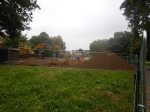
Note.
- It looks like a garden is being created, where major works were done.
- The head house appears to be at the other end of the site away from the digger.
The head house doesn’t appear to have been completed yet.
Is Kennington Station Ready For The Extension?
As I passed through Kennington station, this morning, I took these pictures.
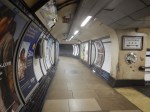




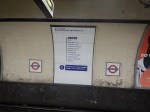

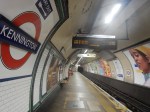
Note.
- Trains turning at Kennington in the loop are signed as not in service.
- Some of the signage has been updated.
- It does appear that there is some need for some decorators.
But the biggest problem is that if you need to change direction , at the station, it’s up one steep staircase and down another. The step-free route would mean changing at London Bridge or Waterloo, as these stations have the platforms between the tracks.
Rolls-Royce’s All-Electric ‘Spirit of Innovation’ Takes To The Skies For The First Time
The title of this post, is the same as that of this press release from Rolls-Royce.
This is the first paragraph.
We are pleased to announce the completion of the first flight of our all-electric ‘Spirit of Innovation’ aircraft. At 14:56 (BST) the plane took to the skies propelled by its powerful 400kW (500+hp) electric powertrain with the most power-dense battery pack ever assembled for an aircraft. This is another step towards the plane’s world-record attempt and another milestone on the aviation industry’s journey towards decarbonisation.
Rolls-Royce also published an album of photographs, of which this is one.
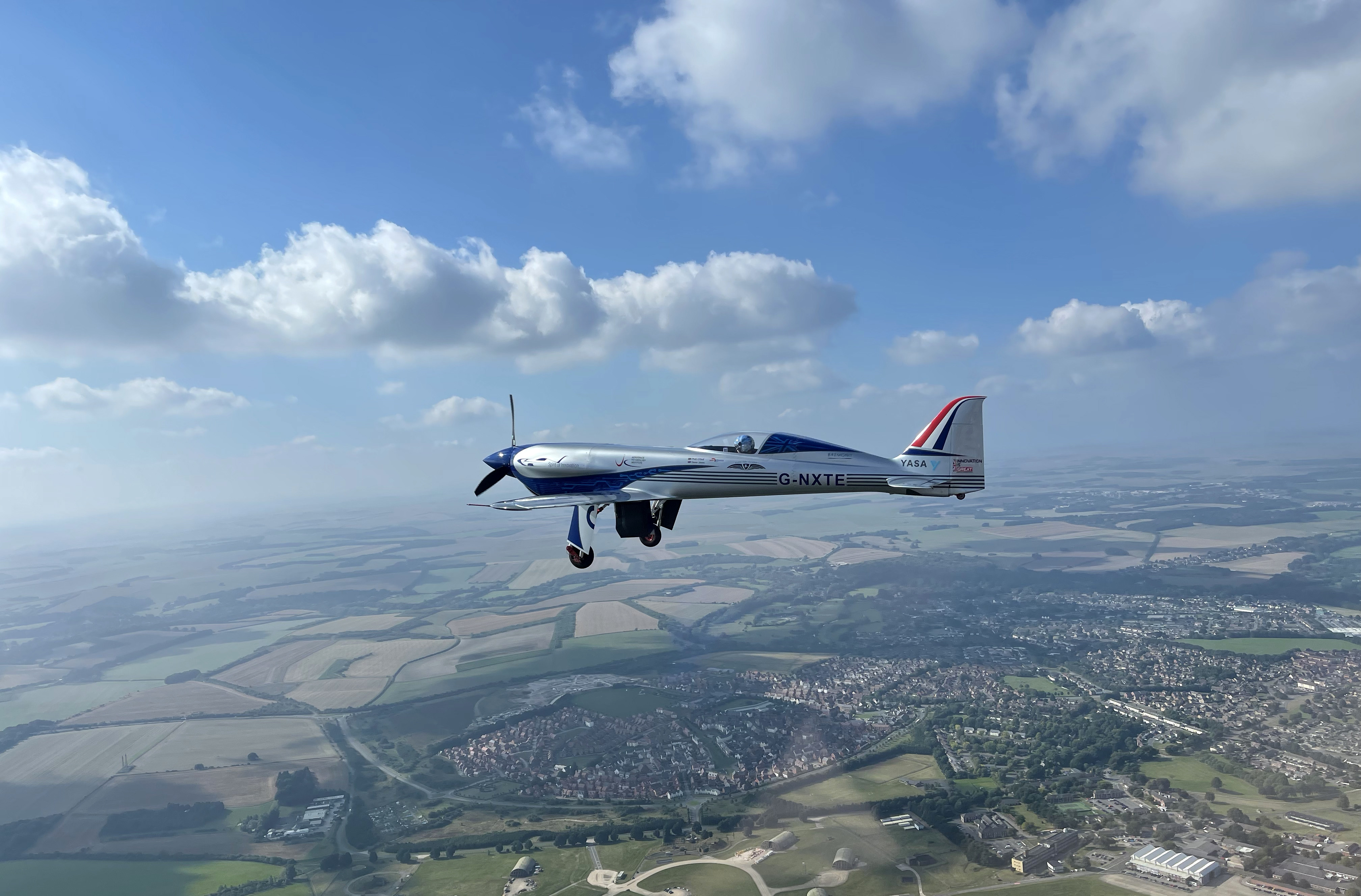
Note that the motor was designed and made by Yasa.
Stratford Station Secures Funding For Plans Set To Relieve Overcrowding
The title of this post, is the same as that of this article on Rail Technology Magazine.
These are the first two paragraphs.
Reduced congestion at London’s Stratford station is on the table as Network Rail secure a £2m boost from the Department for Transport.
Stratford Station has seen a surge in demand – despite the impact of the pandemic – ever since the 2012 Olympics, and the forecast for this is set to grow even more as the area continues to regenerate.
Something needs to be done as it is he busiest non-terminal station in London, that before the pandemic was handling over 42 million passengers per year.
Nothing specific is said, except that more space will be created for passengers with better wayfinding.
Although the article says that this could be a five year project.
The Current Station
This is an extract from It’s Time To Detopsify Stratford Station, which was a previous look at Stratford station in May this year.
This map from cartometro.com shows the Topsy-like nature of the platforms at Stratford.
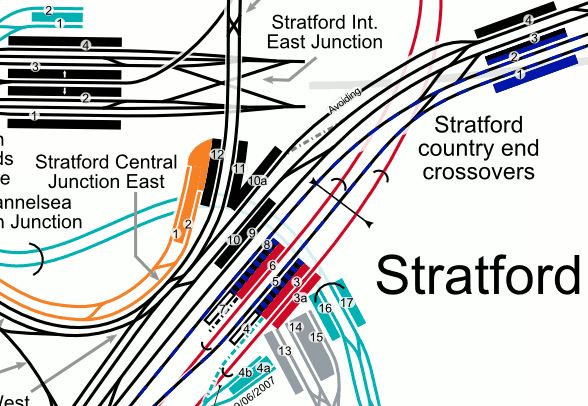
Note.
- The Docklands Light Railway is shown in turquoise.
- The DLR platforms in the North-West corner of the map are those of Stratford International station.
- High Speed One and the four platforms of Stratford International station are shown in black.
- The North London Line of the London Overground is shown in orange.
- The North London Line terminates in Platforms 1 and 2, which have a level link to Platform 12.
- Platform 12 is on the anti-clockwise platform for the High Meads Loop and has step-free access to the subway system underneath the station.
- Platform 11 is on the clockwise platform for the High Meads Loop and has level access to Platform 10a and full step-free access,
- Platform 10a is used by some services to East Anglia.
- Crossrail is shown in blue.
- The Central Line is shown in red.
- The Jubilee Line is shown in silver.
It is not the best passenger-friendly station layout.
What Would I Do?
These are what I would like to see.
Better Information on the Overground Platforms
If I am returning from Stratford after doing some shopping at Eastfield, I will often climb up the stairs or rise in the lift to the two Overground platforms 1 and 2. I will often find two trains there, but there is no indication to say which will be the first train to leave.
Use Of The High Meads Loop
The High Meads Loop is a double-track loop at the Southern end of the branch of the West Anglia Main Line that leads to Stratford.
- It is mainly underneath the Eastfield shopping centre.
- It serves Platforms 11 and 12 in Stratford station.
As the single-track loop of the Wirral Line under Liverpool can handle up to sixteen trains per hour (tph), I believe that the High Meads Loop could be used as the Southern terminus for an improved service to Cambridge, Stansted Airport and up the Lea Valley to Cheshunt, Chingford, Harlow and Hertford East.
The signage from when Stratford had a Stansted Express service is still there and shown in this picture.

This is almost symptomatic of the chaotic nature of the station.
I get the impression from this sign, that one of the original design criteria of the High Meads Loop and the Overground platforms at Stratford for the North London Line was to create an easy route for the whole of North London to Stansted Airport and Cambridge.
Or is it just a symptom of Too Many Cooks Syndrome, where everybody had their own ideas and no-one took charge and designed Stratford station properly?
Let’s hope Network Rail are fully in charge, as this is not a project to interest Sadiq Khan, as it’s not in South London and that area of London won’t benefit.
A Better Connection Between Stratford Station And Southeastern HighSpeed Services
I have just looked up how it is recommended you might travel between Richmond and Faversham.
The timetable recommends a double-change at Clapham Junction and Victoria.
I would take the Overground to Stratford and then change to the Southeastern HighSpeed services.
- This route is a single change.
- The change is step-free.
- The change involves passing the best station stop in the UK; Marks and Spencer’s large store in the Eastfield Shopping Centre, where takeaway food is well placed for passing trade.
But the change is badly signposted and could be a long walk with a heavy case.
There is probably a need for some form of people mover that connects all the platforms at Stratford station to the platforms at Stansted International station.
Conclusion
Sort it!
Skelmersdale Railway Station Could Finally Happen – If Government Says Yes
The title of this post, is the same as that of this article on Lancs Live.
The article is a good summary of why Skelmersdale needs a station.
But it doesn’t mention that any service to Skelmersdale will probably go via Merseyrail’s new station at Headbolt Lane.
‘Dramatically More Powerful’: World’s First Battery-Electric Freight Train Unveiled
The title of this post, is the same as that of this article in The Guardian.
It is a good article about Wabtec’s new FLXdrive battery train and is very positive about it coming from a typical Guardian direction.
The article is a must-read.
I am beginning to feel that what Wabtec has done is to create a practical and affordable solution, that will cut carbon emissions in a difficult area, that produces the figures and also is understandable by diverse groups, like journalists, politicians and environmentalists. And they are backing it with academic research from a good university.
I also believe that the technology can be applied to existing locomotives as I outlined in Could Class 66 Locomotives Be Converted Into Battery-Electric Locomotives?.
Could this be another example of positive environmental change brought about by when the big beasts play their cards in the jungle?
Going green is a way of company survival! And Wabtec are going in that direction.
Could Class 66 Locomotives Be Converted Into Battery-Electric Locomotives?
This picture shows a Freightliner Class 66 locomotive passing through Stratford with a multimodal freight train.
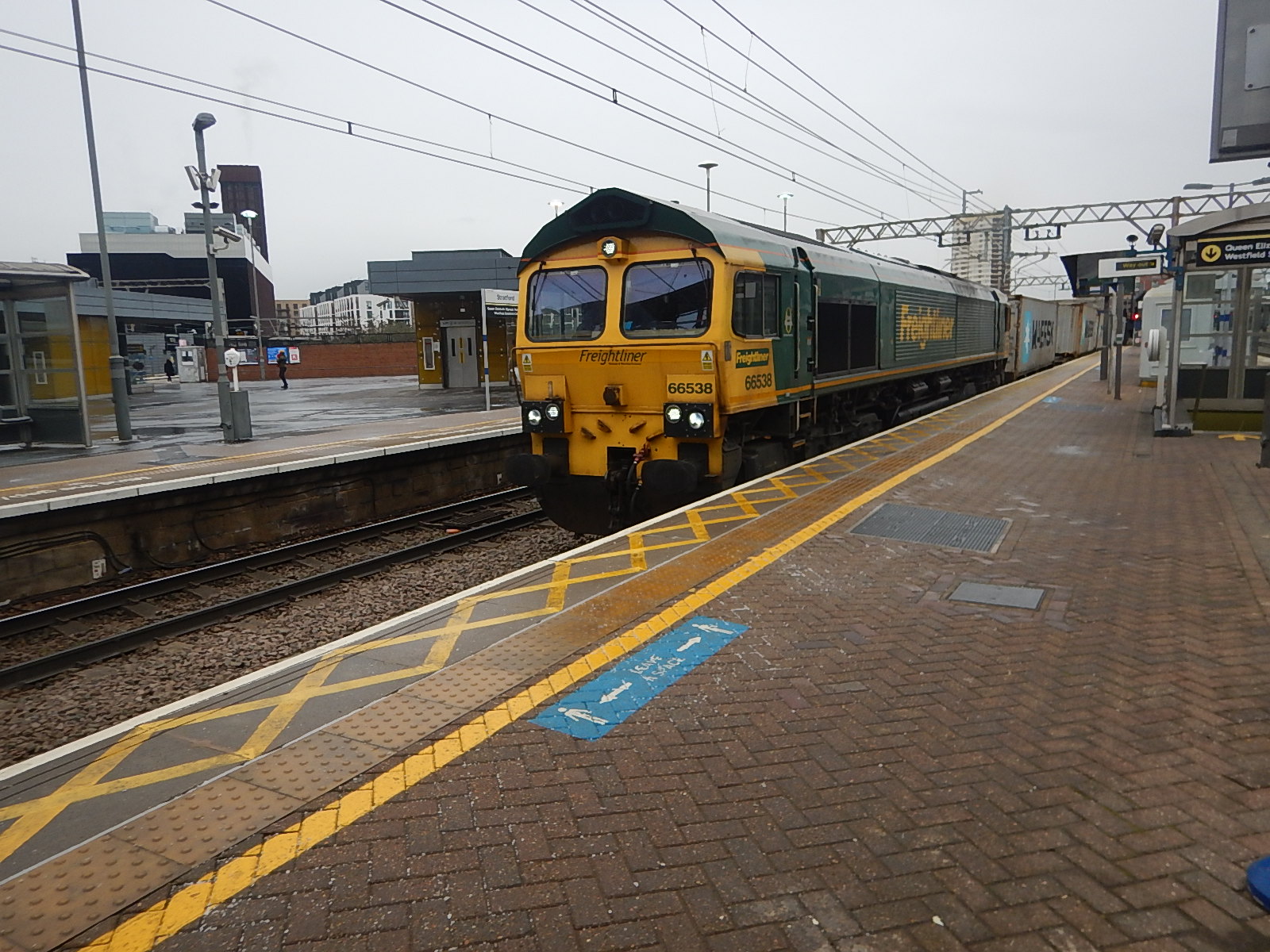
These are a few thoughts on converting some of the four hundred and eighty Class 66 locomotives into battery-electric locomotives.
An Estimate Of Performance Of A Battery Electric Class 66 Locomotive
In Iron Ore Miner Orders Heavy-Haul Battery Locomotive, I said this about a UK-sized locomotive based on Wabtec’s FLXdrive battery-electric technology.
I could envisage Wabtec designing a UK-sized battery-electric locomotive with these characteristics.
- 2.5 MW power output, which is similar to a Class 66 locomotive.
- A battery size of perhaps 1.8 MWh based on Wabtec’s FLXdrive technology.
- A pantograph to charge the batteries and also power the locomotive where electrification exists.
- 75 mph operating speed.
- Ability to work in tandem with a Class 66 locomotive.
All technology is under Wabtec’s control.
This locomotive could have a range of at least fifty miles on battery power, doing the sort of duties that Class 66 locomotives do!
So it would be able to take a multimodal container train out of the Port of Felixstowe to the electrification at Ipswich.
The Class 66 Locomotive Is Diesel-Electric
The Class 66 locomotive is a diesel-electric locomotive, where the diesel engine drives an alternator, which generates electricity, which then powers the six traction motors, which are arranged, so that there is one on each of the six axles.
This should make conversion easier, as the heavy lump of the engine and the alternator would be replaced with a large number of lithium-ion batteries.
Wabtec Has A Modular Battery System
This article on Railway Age gives a lot of detail and several pictures of the modular FLXdrive battery system.
- Each module is a 4.9 kWh battery, that weighs 72.6 Kg.
- Batteries are arranged into strings, which feed the traction motors.
- There is a sophisticated control system, which ensures that a module failure doesn’t disable the locomotive.
- The battery system is air-cooled.
I would expect that Wabtec could arrange a number of modules in the stripped out body of a Class 66 locomotive.
The FLXdrive Battery System Handles Regenerative Barking
The Railway Age article says this.
Battery charging while the FLXdrive is operating occurs through regenerative dynamic braking.
This will certainly improve efficiency.
Could A Pantograph Be Fitted To A Class 66 Locomotive?
This picture of a Class 66 locomotive was taken at Peterborough.

Note the 25 KVAC overhead electrification and the gap between the wires and the roof of the locomotive.
I don’t think it would the toughest job to design a pantograph for a Class 66 locomotive.
What Would Be The Use Of A Battery Electric Class 66 Locomotive With A Fifty Mile Range?
I believe that a surprising number of duties currently handled by Class 66 locomotives could be performed by a battery-electric Class 66 locomotive.
- The locomotives would effectively be electric locomotives with a last fifty mile capability.
- The number of possible duties will increase as electrification increases.
- They would be ideal to support track maintenance activities.
- They would be a zero-carbon locomotive with a low noise footprint.
As I said earlier, they should be able to haul a heavy intermodal train out of the Port of Felixstowe.
Would A Battery-Electric And A Diesel-Electric Class 66 Locomotive Working As A Pair Be Able to Handle The Heaviest Trains?
As the Americans and Canadians have shown with more than one locomotive, where one is a battery-electric locomotive can reduce the carbon-emissions, the same rules must apply in the UK.
Conclusion
I am not a lover of the smelly, noisy and polluting diesel Class 66 locomotives, but it does look it could be possible to convert some into battery-electric locomotives.
I wouldn’t be surprised to see Wabtec convert some Class 66 locomotives into battery-electric locomotives.
I also believe, that conversion of Class 66 locomotives to battery-electric operation could be the most affordable way to help decarbonise rail freight.
 The Anonymous Widower