Class 710 Trains And Regenerative Braking
The new Class 710 trains for the London Overground, will be a next generation train, which could set new standards of energy efficiency. This is from a Bombardier Press release, that the company released when they received the order from London Overground.
The new trains will have similar features to the existing London Overground fleet (also manufactured by Bombardier), including walk-through carriages, air-conditioning and improved accessibility. These next-generation AVENTRA trains will feature an innovative design with optimised performance, including reduced weight, energy consumption, maintenance costs and high reliability, providing substantial benefits to both TfL and its passengers traveling on key London Overground routes, including the newly acquired West Anglia Inner Metro Service.
Note that there is no mention of regenerative braking, but this is mentioned in relation to the other Aventra trains on order; the Class 345 trains for Crossrail.
The Aventra has a slightly unusual and innovative electrical layout.
This article in Global Rail News from 2011, which is entitled Bombardier’s AVENTRA – A new era in train performance, gives some details of the Aventra’s electrical systems. This is said.
AVENTRA can run on both 25kV AC and 750V DC power – the high-efficiency transformers being another area where a heavier component was chosen because, in the long term, it’s cheaper to run. Pairs of cars will run off a common power bus with a converter on one car powering both. The other car can be fitted with power storage devices such as super-capacitors or Lithium-Iron batteries if required.
This was published six years ago, so I suspect Bombardier have improved the concept.
Could it be that the Class 710 trains consists of a two-car power unit sandwiched between two indentical driving cars.
The train could have a formation defined by something like.
DMSO+PMSO+TSO+DMSO or DTSO+PMSO+MSO+DTSO
The cars are as follows.
- DMSO – Driving Motor Standard Open
- PMSO – Pantograph Motor Standard Open
- DTSO – Driving Trailer Standard Open
- TSO – Trailer Standard Open
I’ve assumed there are a lot of powered axles as there are with the Class 345 train, but an appropriate number of trailer instead of motor cars can be used according to the demands of the route.
Search the Internet for “Class 710 train regenerative braking” and you find nothing official of with provenance.
I don’t believe that the Class 710 trains are not fitted with regenerative braking, as if you want to save energy on an electric train, it is one of the must-have features in the design.
But you need to be able to handle the electrical energy generated under braking.
Normally, the electricity is fed back into the overhead wires or third rail, so that it can be used by another train nearby. This technique is used extensively on the London Underground and third-rail electrification systems. Although, it is used on some 25 KVAC overhead systems like c2c, it means that the braking energy has to be converted to a high voltage to feed the electricity back.
So on the Aventra are Bombardier taking an alternative approach of using onboard energy storage to handle the energy generated by the braking?
Consider.
- Braking energy generated at a station stop, is immediately available to accelerate the train back to line speed.
- The onboard energy storage is designed to work with the traction motors.
- It is irrelevant to the drive system, if power comes from 25 KVAC overhead or 750 VDC third-rail.
- The overhead or third-rail power supply doesn’t need to be able to handle return currents.
- The train probably has enough onboard power to get to the next station at all times, should the power supply fail.
But the biggest factor is the amount of energy needed to be handled.
In How Big Would Batteries Need To Be On A Train For Regenerative Braking?, I calculated that the energy of a fully-loaded Class 710 train travelling at 100 kph is around 15 KwH.
So when a train stops, this energy will be released.
To get a better handle on how much energy is involved let’s look at these specifications for a Nissan Leaf car.
Nissan talks about 24 and 30 kWH versions of the car, So if this is the battery size, then one of Nissan’s batteries could store all the braking energy of a four-car Class 710 train.
This sounds absolutely unbelievable, but you can’t argue with the Laws of Physics. or the performance of modern automotive battery technology.
There are five lines, where the new Class 710 trains will run.
- Gospel Oak to Barking
- Chingford Branch
- Liverpool Street to Cheshunt
- Romford to Upminster
- Watford DC Line
How many of these lines are setup with the capability of accepting the return currents of regenerative braking?
The question is irrelevant if the Class 710 trains handle their own braking energy.
Conclusion
As the energy of a laden Class 710 train going at line speed is around 15 kWh, which is well within the capability of an automotive battery from a quality electric vehicle, I feel very strongly, that the Class 710 trains will handle regenerative braking using onboard energy storage.
Up And Down The Gospel Oak To Barking Line
Over the last couple of weeks, I have been taking photographs of various parts of the Gospel Oak to Barking Line (GOBlin).
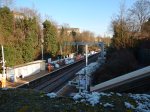
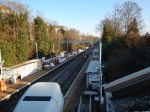
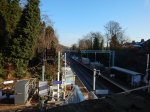
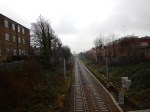
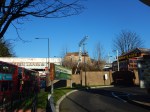
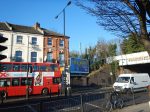
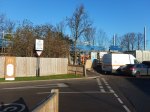

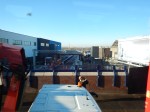
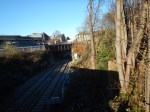
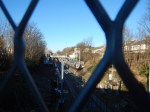
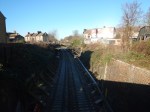
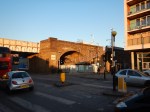
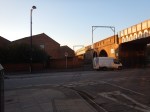
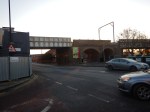
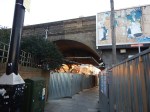
There would still seem to be a lot to do to restore the railway to operation as a non-electrified railway.
However, the National Rail on-line timetable is showing that from Monday, the 13th of February, 2013, a four trains per hour (tph) service will be working.
It is also worthwhile looking at Transport for London’s Track Closures Six Months Look Ahead. This is usually reliable and states the following.
There is no London Overground service between Gospel Oak and Barking until late February 2017. Replacement buses are running.
It also lists no substantial closures on the GOBlin in the next six months.
There is also this article on Global Rail News, which is entitled Electrification of London Overground’s Gospel Oak-Barking line 80% complete.
These various statements and my pictures could point to a coherent interim set of objectives.
An Interim Set Of Objectives
Both Transport for London and Network Rail will want to get the line open for the following trains as soon as possible.
- Engineering trains to support the finish of the electrification and station works.
- Diesel-hauled freight trains.
- Restoration of the four tph passenger service using the two-car Class 172 trains.
It could be that from the point of view of the electrification, the engineering trains are the most important.
So what will need to be done to meet these interim objectives.
- Full reinstatement of the track, with all track lowering and bridge raising complete.
- Rigorous testing of track and signalling systems.
- Completion of the road bridge at Upper Holloway station.
- Completion of the pedestrian bridge at Blackhorse Road station.
- Completion of the rebuilding of Walthamstow Queen’s Road station.
- Ensure other stations are safe to use for a two-car train.
Hopefully, the line will reopen to passenger traffic before the end of February 2017. But no-one would complain, if it happened earlier.
Finishing The Project
Once the limited objectives are met and trains are running, the following will need to be done to complete the modernisation.
- The completion of platform lengthening, as at Harringay Green Lanes station.
- Erection of the missing gantries.
- Installation and testing of the overhead wires.
All of these tasks , can probably be done alongside of the working railway, as similar work has been done on the North and East London Lines and Crossrail.
The contractors will have the following advantages.
- The track and signalling will be complete.
- It can probably be arranged that overnight very few trains will use the line.
- They will have a working double-track railway to bring in supplies and specialist rail-mounted equipment.
- No electric trains will need to run on the line.
- They will soon have light evenings in which to work.
If they can fit construction around the passenger service, everybody will benefit.
Handling Regenerative Braking
Little has been said about regenerative braking on the GOBlin.
I think, it will be likely, that the Class 710 trains will be able to use regenerative braking on the line, as it typically saves around 20% of the energy required to drive a train.
In Class 710 Trains And Regenerative Braking, I discussed the issues.
I came to the conclusion, that it is highly likely, that onboard energy storage will be used to handle regenerative braking on the Class 710 trains and thus the method would be used on the GOBlin.
As the prototype Aventra is now being tested, any design issues of handling braking energy will probably be resolved soon.
But prudence probably dictates that regenerative braking with batteries must be shown to work before the electrification design is finalised.
So could this explain, the delay in putting up the overhead wires?
Handling Regenerative Braking For Freight Trains
This is more complicated, as the freight locomotives on the UK network are not the most modern units.
- The Class 86 locomotives are vacuum and air-braked.
- The Class 90 locomotives aren’t fitted with regenerative braking.
- The Class 92 locomotives are fitted with regenerative and rheostatic braking.
I’m not sure, but the Class 92 could probably work the route using rheostatic braking.
Conclusion
I think that this project has been planned to open up a non-electrified railway before the end of February 2017.
This probably gives least disruption to all of the stakeholders.
- Passengers get a four tph service.
- Freight operators can run trains through under diesel haulage.
- A route for engineering trains is maintained to assist in the finishing of the line.
But also by delaying the electrification, they can make sure they incorporate all of the lessons learned by the test running of the Class 345 trains.
Some might think it’s a bit of a dog’s breakfast, but in truth, it could be some very clever project management, which has minimised the closure of the line.
Laura Kuenssberg On The Southern Rail Dispute
This article on the BBC by Laura Kuenssberg is entitled The politics behind the Southern rail dispute.
It is a must-read for everyone who uses trains to get to and from work or for important journeys.
This is said.
One former senior minister tells me that “successive secretaries of state” in charge at Transport have wanted to “get rid of guards on trains”. The ambition is to bring down the cost of rail travel for the tax payer and the train passenger.
With that considered to be a long term ambition, it’s no surprise that the RMT, the only union that represents guards, wants to fight this every step of the way. Union sources deny it, but it’s suggested that they have dug in in this dispute, because if they lose it, they also lose a big chunk of their industrial muscle.
If there have to be guards on trains, a strike works if they walk out. If services can run with drivers on their own, their power to disrupt would be reduced. It’s worth noting that the RMT has more than 80,000 members, nearly ten times as many as the drivers’ union, ASLEF. It’s ASLEF that has agreed to meet Southern for talks tomorrow.
So like it or not the traditional guard is going the way of the dinosaurs.
Can rail passengers and hard-pressed tax-payers afford to pay for a vanity job, which if abolished would result in no loss of employment, but as Laura points out, a considerable loss of industrial muscle.
It is interesting to look at the future in the shape of Merseyrail’s new trains, that I wrote about in Thoughts On Merseyrail’s New Trains.
- The trains will be designed to fit the platforms for step-free entry and exit for all passengers.
- The trains will be designed for as high a level of passenger safety as possible.
- The trains will have a high degree of automation.
- Automatic Train Operation may be implemented in the Loop Line under Liverpool.
The trains will be designed for Driver Only Operation. This article on the BBC, which is entitled Merseyrail driver-only trains: RMT sets guards decision deadline.
This is said.
A train operator has two weeks to give “cast-iron” assurances that guards will be retained or risk dispute, rail union RMT has said.
I have a feeling that Merseyrail have been cunning here and that as it is three years before the trains run, natural wastage and other factors, will mean that the second men and women on the trains by 2020, will be running under new contracts.
Liverpudlians like a good fight and I have a feeling that in this dispute the RMT and its guards will be severely outnumbered.
Lothbury
In Taxis And Bank Junction, I mentioned that the Northern City Line was originally authorised to Lothbury station .
These pictures were taken at the junction of Lothbury, Moorgate and Prine’s Street.
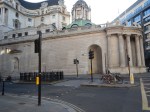

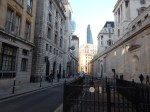

It strikes me, that a station here would have been a good Edwardian addition.
This map from carto.metro.free.fr shows the lines North of Bank station.

The interesting thing is the dates on the lines.
- Northern Line – 25/02/1900
- Central Line – 28/07/1912
As the Northern City Line opened in 1904, there would have been a lot of construction going on in the area.
Around 1913, plans were made to connect the Northern City Line with the nearby Waterloo and City Line.
The Bank of England Building is relatively modern dating from the 1920s.
So probably all of this building meant that the extension to Lothbury just got in the way.
But interestingly note, how the two lines of the Northern Line cross over in probably the area where the new station would have gone. This would surely have made more tunnelling difficult.
So was it just too complicated as well?
I don’t know!
But it is probably true to say that if we wanted to extend the line today, we could probably do it.
Especially, as the Northern Line tunnels are being realigned when Bank station is rebuilt in the next few years.
But I doubt we will do it, as the new massive Moorgate-Liverpool Street for Crossrail will finally give the Northern City Line, the connectivity it needs.
Between Bank And Cannon Street Station
The City of London is creating a new walking route between Bank and Cannon Street stations, along Walbrook.
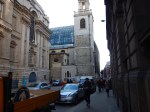
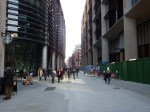

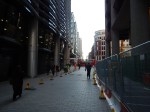
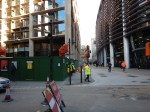
It doesn’t reach to the Thames yet, as there is some 1980s development and the dual-carriageway of Upper Thames Street in the way, but I suspect it will, at some point in the future.
On the Western side of the walk is Walbrook Square being developed by Bloomberg, which underneath which are both the London Mithraeum and the new step-free entrance to the Waterloo and City Line and Bank station.
On the Eastern side is the historic church of |St. Stephen Walbrook, where I once met Chad Varah; the founder of The Samaritans, who for personal and wider reasons, I nominated at Man of the Noughties.
This Google Map shows the area.
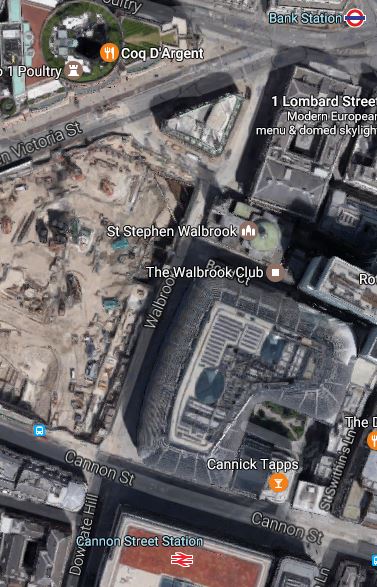
It looks like this walking and cycling route will come with a prestigious office development, an important Roman site and a transport interchange.
I have a feeling there’s a deep agenda in pedestrianising Walbrook in this way.
Commuters arriving in the City at Cannon Street station or the Waterloo and City Line will be able to come out of the stations onto the spacious thoroughfare of Walbrook , from where they could walk to their place of work. A pedestrianised Bank Junction would give a traffic free route for commuters to the East side of the junction.
Could we see other routes around Bank Junction also given over to pedestrians and cyclists? Roads like.
- Cannon |Street
- Cornhill
- Dowgate Hill
- King William Street
- Lombard Street
- Lothbury
- Old Jewry
- Prince’s Street
- St. Swithin’s Lane
and a few others, must all be being considered for full or partial pedestrianisation.
In addition, there will be beloe-ground routes through Bank station.
Hastings Station
Hastings station was only built in 2004 and it is effectively a new building on the existing platforms, which have been made step-free.
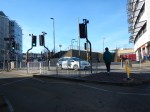
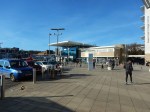
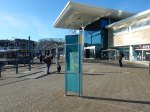
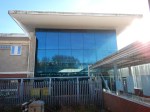

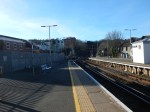
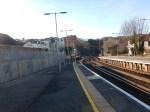
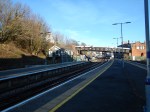
What surprised me though, was that trains going East are still controlled by semaphore signals, although there appeared to be new LED signals at the Western end of the station.
I wanted to go back via East Croydon and unfortunately, I just missed that train, so as there is only one direct train per hour (tph), I had to fiddle about and go via Eastbourne and Brighton.
In an ideal world, there would be four tph at all stations on the line between Ashford and Brighton, with stations like Hastings, St. Leonards and Eastbourne having better direct services to London.
The current services on both the East Coastway and West Coastway Lines seem to be designed to discourage passengers to turn-up-and-go.
If you look at the Off Peak services through the Medway towns from Gravesend to Gillingham, it is four tph, whereas Hastings to Brighton is only two tph.
But then Southern seem to have a very focused business model, where passengers are someway down the list!
St. Leonard’s Warrior Square Station
I’d never been to St. Leonard’s Warrior Square station, but I went today to enjoy a walk in the sun.
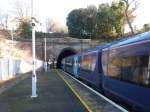
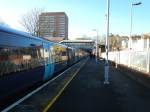
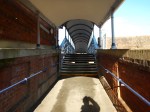
-
- St. Leonard’s Warrior Square Station
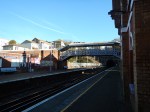
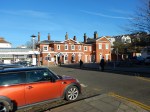
The station is a fairly simple affair, with unusually tunnels at both ends of the station. According to Wikipedia, this means that the number of carriages that have access to the platforms is restricted.
This oogle Map shows the station, with the tunnel portals clearly visible.
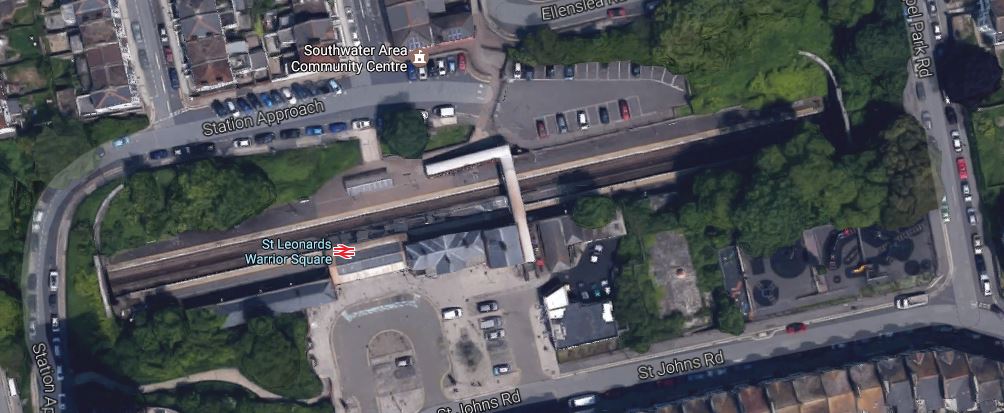
Although, the bridge across the tracks is not step-free, it has an unusually low number of steps on each side.
As the main Hasting station is new and step-free, I suspect this station will not be updated for step-free access, unless a developer had a plan to create a new station and make a lot of money with perhaps an appropriate over-site development.
China To The UK By Freight Train
This article in the Railway Gazette is entitled First China to UK rail freight service arrives in London.
The article describes in detail how 34 containers came all the way to Barking by train.
It is very much a route-proving exercise at the moment and the UK shipment was effectively part of a larger shipment that was split at Duisburg
in Germany.
The trip can be summarised as follows.
- The trip took seventeen days, which was faster than container ship.
- The trip is slower, but a lot cheaper than air-freight.
- The trip is 12,000 kilometres.
- There were two changes to gauge and transshipment of the containers on the route.
It is intended to run the trains for three or four months to assess demand.
The article finishes like this.
The project supports the Chinese government’s One Belt, One Road trade connectivity initiative to create a modern-day Silk Road. According to DB around 40 000 containers were transported by rail along the routes between China and Europe in 2016, with journey times of between 12 and 16 days. Annual traffic is expected to increase to 100 000 containers by 2020.
If these figures are achieved, it certainly looks like the route could be approaching viability.
In How To Move 100,000 Containers A Year Between Germany And China, I wrote about German plans to create a standard gauge railway from Germany to China via Georgia, that would avoid Russia and all the gauge-changing.
Without the gauge-change, this would surely be a faster route, thus increasingly viability.
There’s going to be an interestimg commercial battle in the next bfew years between the various metods of getting freight between Europe and China.
Taxis And Bank Junction
The City pf London is proposing to make Bank Junction accessible to only buses and cyclists.
On a personal note, I’m in favour, as my normal route to and from the area of Bank station is to take a 21 or 141 bus. I also use the 141 bus to get to and from London Bridge station, as the terminal stop is on the staion forecourt. They are extremely convenient buses for me as the Northbound stop is perhaps fifty metres from my house over a zebra crossing. Going South, the walk is a little further, but it is no more than a hundred and fifty metres.
However, not everyone is in favour of restricting traffic at Bank Junction.
This article in the Standard is entitled Cycling campaign groups slam black cab protest over traffic ban at Bank station.
This is said.
Cycling campaign groups have slammed a taxi protest over plans to close Bank junction off to most traffic, saying drivers are supporting “the right to poison Londoners”.
Black Cab drivers brought traffic to a standstill on Monday evening as they protested plans to close off the notorious junction to all traffic apart from bikes and buses.
Union members have argued that the proposals to only allow cyclists and buses at the junction are an example of TfL dodging the problem of congestion.
So it would be cyclists on one side and black cabs on the other.
The RMT union blames Uber on their web site.
This is said in the article.
The union claims the congestion is caused by Uber cars which, in turn, leave people turning to cycling out of “desperation”.
RMT General Secretary, Mick Cash, said: “The decision to close Bank Junction to traffic is a comically inept one, made exceptionally bitter as the Mayor promised greater access to road space for black cabs.”
As I said earlier, all I want is this vital junction to run smoothly for buses.
I don’t use a taxi very often, except on say a busy, wet day to bring my shopping home, as the rank is outside Marks and Spencer, Waitrose and Sainsburys. How convenient is that?
The taxi drivers are not happy, but then London’s black cab drivers have rarely been happy in the years I’ve used them, since the 1960s.
- Getting to my house has caused a new moan, which is caused by the work that I wrote about in Why I’m In Favour Of Cycling Superhighways.
- Cyclists are always good for a moan.
- But their biggest ire is usually reserved for Uber and their lack of regulation.
Surprisingly, I’ve had no moans about moving to low-emission or electric vehicles.
So how do I think the situation will improve in the next few years?
Crossrail
Crossrail doesn’t serve Bank Junction directly, but I will be surprised if the massive double-ended Crossrail station at Liverpool Street and Moorgate, doesn’t attract a lot of passengers travelling to and from the City of London.
Bank Station Upgrade
Under Future Developments, Wikipedia says this.
- A new entrance on Walbrook, near Cannon Street station, will provide new escalators and lifts to the Waterloo and City line platforms.
- TfL is also consulting on retunnelling and widening the Northern line platforms.
- Adding lifts and new entrances on King William Street and Cannon Street.
- A new tunnel could be built to relocate the southbound Northern line platform.
The work could be completed by 2021 and will boost capacity by 40%, with 12 new escalators and 3 new lifts.
A well-designed Bank Underground station must relieve surface traffic of all types in the area.
Waterloo And City Line
When the new entry at Wallbrook to the Waterloo and City Line, opens hopefully in late 2017, it will dramatically improve the usefulness of the Waterloo and City Line.
But improvements are also needed at the Waterloo end of the line.
- Better connections to the new platforms 20-24 at Waterloo will be needed. Are they being provided in the current works.
- Better connection to Waterloo East station, so passengers can get access to Charing Cross services.
- Direct access to the street.
- Step-free access.
The line should at least run seven days a week, if not all the time under automatic control.
It could be a much more important line in London’s transport system.
It could even be renamed the City and South Bank Line.
The Northern City Line
The Northern City Line is London’s forgotten suburban line, as it terminates in a two-platform station under Moorgate station.
One of Crossrail’s collateral improvements will be to give the Northern City Line excellent connections to the following.
- Crossrail
- Liverpool Street station
- Central Line
The deep and dingy station will also have much better connection to the various walking routes in the area.
But connectivity would be nothing without trains and the Northern City Line is getting new Class 717 trains, which could run at up to twelve trains per hour all day.
The original plans for the Northern City Line envisaged the line running to Lothbury station, which would be just to the North of the Bank of England.
If this extension had been built, it would have surely proved to have been a valuable part of London’s railways. But it wasn’t and probably to build it now would be too expensive and impossible.
Walking Routes
The actual City of London is compact and this Google Map shows the Northern part of the City between Bank, Moorgate and Liverpool Street stations.
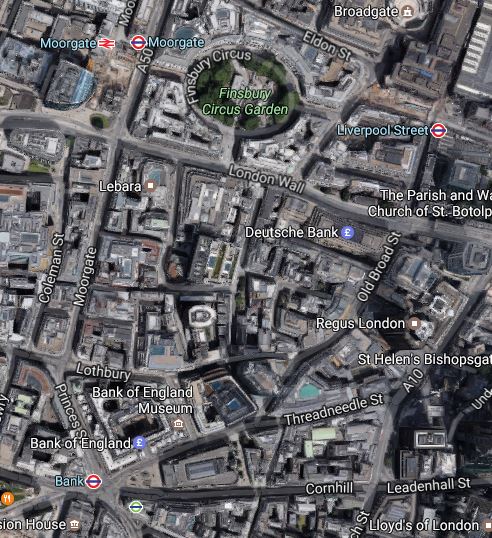
Note.
- How one of the three main stations is within reach of much of the area.
- I would reckon that the three stations are about eight hundred metres apart.
If you don’t fancy walking, there are bus routes between the stations and the Central and Northern Lines also provide connections.
Uber
Uber is the fox in the hen coup.
It is disruptive technology and I don’t like it for various reasons.
- I like to pick up my cab from a rank or by hailing it on the street.
- I feel that apps with credit card details in them will be the next big fraud opportunity.
- I like a properly trained and regulated driver, who understands the intricacies of London’s streets.
I took an Uber cab once from Walthamstow to home and the driver came from West London and managed to get lost twice. As I wasn’t paying, I didn’t bother.
I can’t help feeling that Uber is very inefficient for the driver and only works if they have a monopoly of taxis on the streets.
Conclusion
I have given alternatives to the use of taxis around Bank Junction.
Taxi drivers will protest, but that area is one, where for most people, public transport will increasingly be the best way to travel.
Changing Between The Circle/District Lines And Victoria Line At Victoria Tube Station
This is not a change, I do regularly, as I have direct access to the Circle/District Lines at Whitechapel station, but it must be a change that some passengers need to do.
For example.
- Sloane Square to Kings Cross St. Pancras
- Temple to Kings Cross St. Pancras
- Monument to Pimlico
In these journeys a good interchange at Victoria could speed up the journey.
One thing that helps is the upwards of thirty trains per hour on the Victoria Line, where you only have to wait under three minutes for a train on that line.
I did this the District/Victoria change this morning and took these pictures.
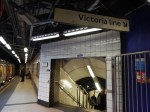
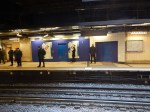
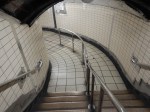
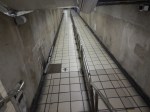
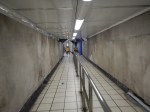
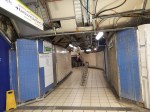
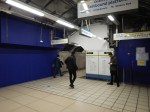
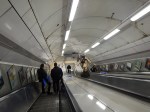
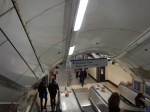
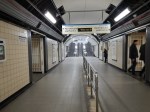
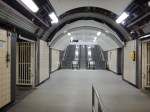
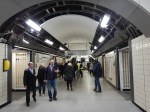
The new passages and escalators certainly speed up the change.
The position of the passages may be more obvious from this map from carto.metro.free.fr.

Note that the escalators to the Cardinal Place entrance are the more Northerly of the three sets and I think it is reasonable, that they start between platforms 3 and 4 and rise to the surface in line with the platforms.
The divided passage connecting the two lines would appear to be underneath the Circle/District platforms and lines and after aligning Northwards it links up with the middle set of escalators between the two platforms of the Victoria Line.
In some ways it looks like the space underneath the Circle/District Lines has been dug in a similar manner to the traditional mining method of room and pillar. There certainly seems to be tunnels going everywhere, but I suspect the methods used were more sophisticated than the traditional mining ones. I suspect that there may even have been a fair bit of hand digging.
At the top of the escalators connecting the Cardinal Place entrance to the Victoria Line, there would appear to be another blocked off passageway leading off to the west.
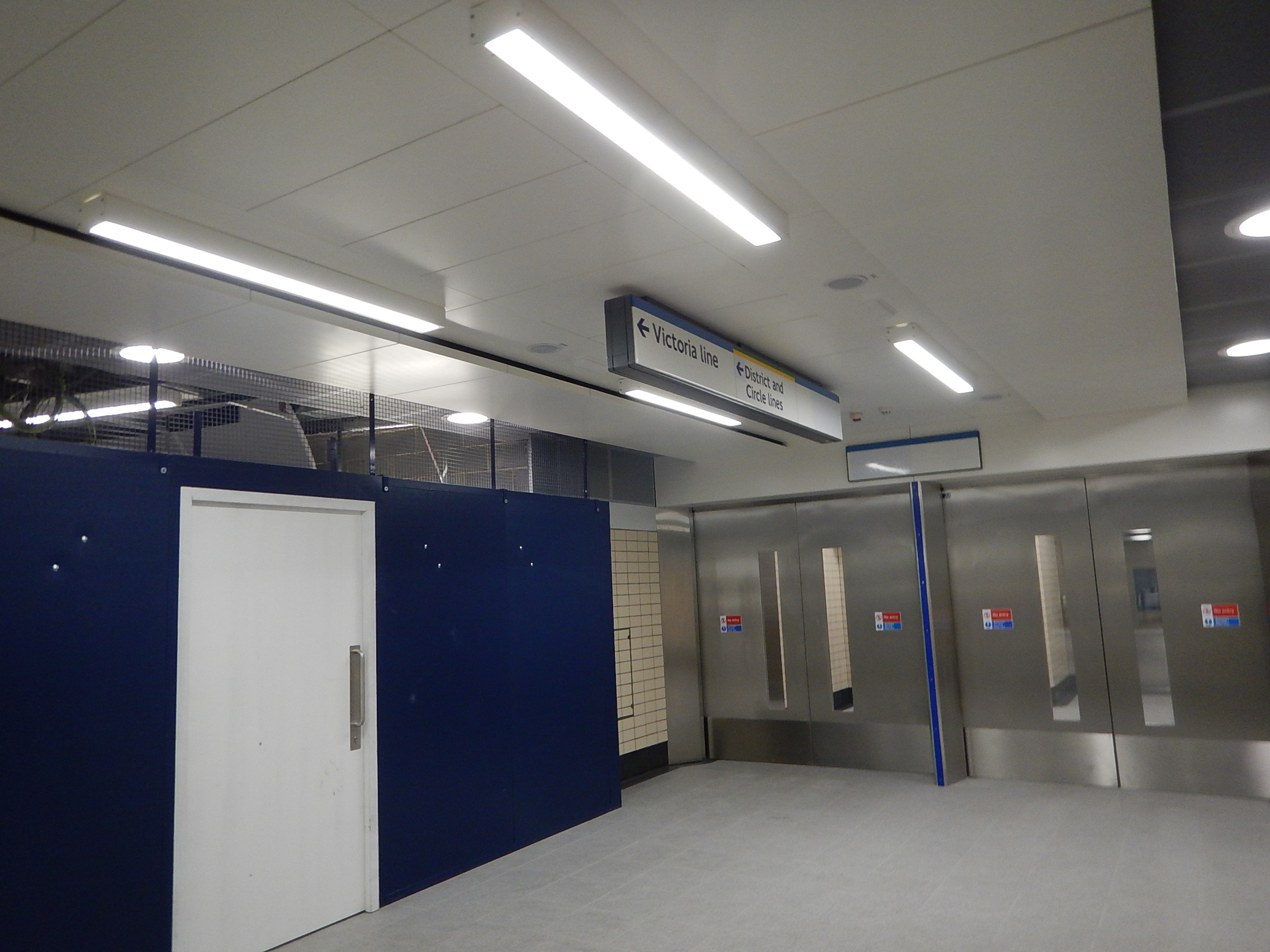
Could behind the blue be future-proofing for another exit on the West side of Bressenden Place close to the Victoria Palace theatre?
I have found this visualisation on the Internet in this PDF document on the TfL web site.
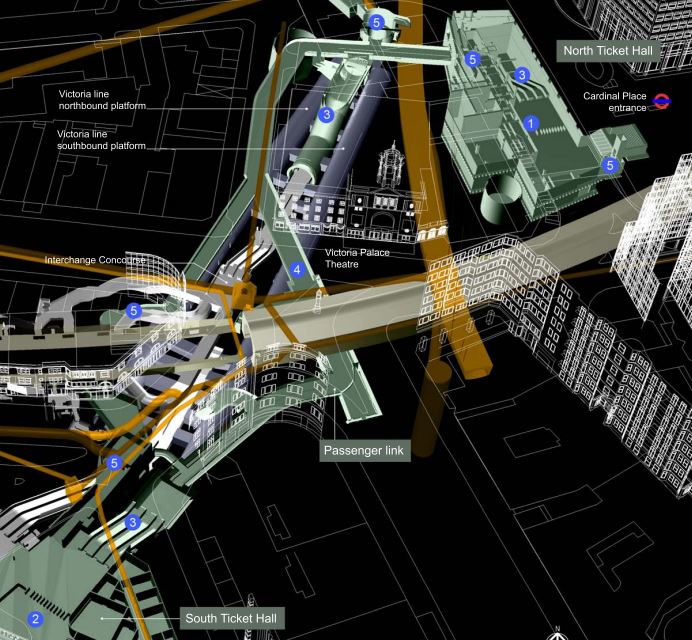
The Passenger Link Between North And South Ticket Halls At Victoria Tube Station
So it would appear to be a passenger link, allowing passengers to enter the station at the Cardinal Place entrance walk underground to the South Ticket Hall and from there into the main line station.
Passengers entering the station at the Cardinal Place entrance, in the top right of the visualisation,would take the following route.
- Go down the escalators after the ticket gates.
- Take the cross passage, that also leads to the second set of escalators for the Victoria Line.
- Go straight on into the connecting passage.
- The passage turns left and goes over the Victoria Line platforms and under the Circle/District Line platforms.
- After crossing the platforms, the passage turns right to run parallel with the Victoria Line platforms.
- A set of new escalators, then brings passengers to and from the South Ticket Hall.
It’s a bit round the houses, but I suspect it was the best that can be done in the grand scheme of things.
- The Terminal Place entrance, has its own routes to all four Underground platforms.
- The Cardinal Place entrance, has direct access to the Victoria Line platforms and indirect access to the Circle/District Line platforms.
- There is a short route between the Circle/District and Victoria Lines.
- There is a walking route in the dry between the Cardinal Place entrance and the main line station.
I wonder when the scheme opens will there be other features to improve routes and accessibility.
 The Anonymous Widower