Exploring The Route Of The Midland Metro Extension To Victoria Square
The extensions at both ends of the Midland Metro in Birmingham and Wolverhampton City Centres will be a first for the UK, in that they will be catenary-free and the trams will run on battery power.
This Google Map shows the area, where the initial extension will go in Birmingham City Centre.
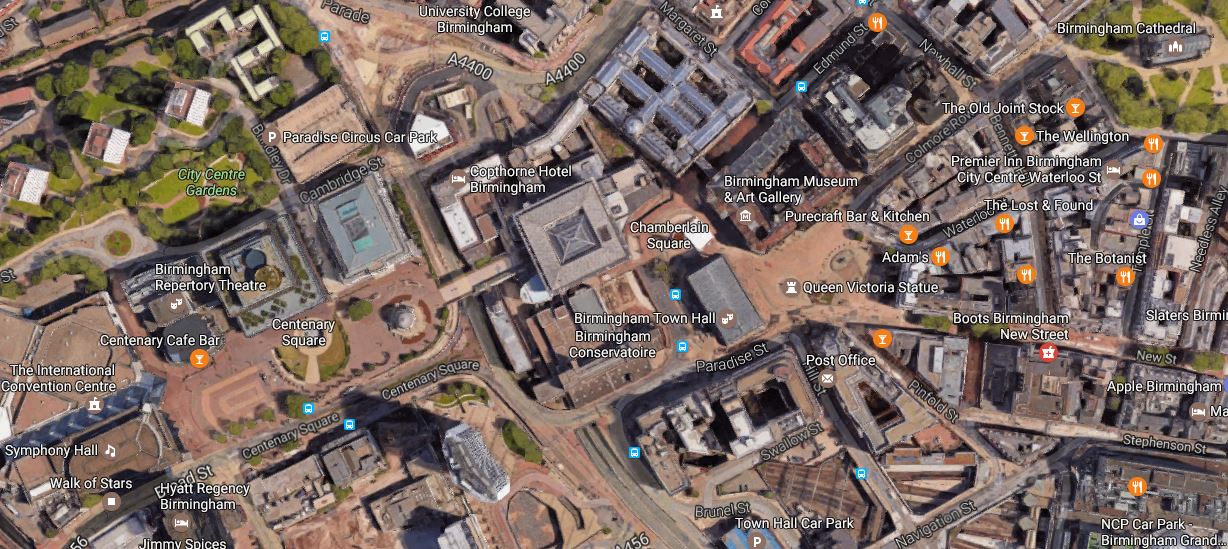
Places of interest are.
- The cathedral is in the North-East corner.
- New Street station is in the South-East corner.
- Victoria Square and the Town Hall are just to the East of the middle.
- Centenary Square is towards the West side.
This description comes from this page on the Metro Alliance web site.
840m of twin track from Birmingham Grand Central at Stephenson Street, up Pinfold Street through Victoria Square, Paradise St, past Paradise Circus into Centenary Square at Broad St.There will be an intermediate stop outside the Town Hall in Victoria Square, and we will interface with the Navigation Street link.
One of the problems at the moment, is that the development of Paradise Birmingham, seems to sit in the middle of the route.
These pictures show the area of Victoria Square and the route up from New Street station.






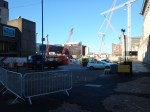


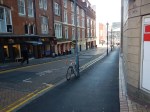


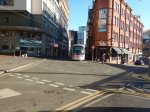

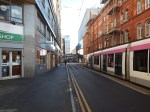

Note.
- The steep hill of Pinfold Street.
- The route seemed to have been prepared ready for the track to be fitted into the road surface.
- Utilities seemed to have been moved.
- When I took the pictures, the Midland Metro had parked a tram at the limit of the current track at the bottom of Pinfold Street.
Climbing The Hill
You can’t accuse Birmingham of lacking ambition, as Pinfold Street is a proper hill.
But then!
- It is the only steep hill on the route to Centenary Square.
- The tram will start the ascent with full batteries.
- There will be no problems coming down.
- This extension is only 840 metres in length.
- The MetroCentro in Seville has used similar technology on a 1.4 km. route since 2007.
- CAF have technology that charges batteries fast.
- Battery technology has moved on in the last ten years.
If in practice, it does prove a difficult climb, overhead wires could be put on sufficient of the lower part of the up-track on Pinfold Street.
These wires wouldn’t be visible from Victoria Square, so wouldn’t effect the architectural integrity pf the area.
Onward to Edgbaston
According to this article in Rail Technology Magazine, the further four kilometre extension to Egbaston, is also intended to be catenary-free.
As the trams could be charged at Edgbaston, I think this could be possible.
But I doubt CAF would propose the use of batteries, if they hadn’t already proven the range, which is not outrageous.
The Next Step
I looked at a lot of the route of the first section to Victoria Square today, and it would appear that the roadway has been prepared for fitting the track.
So could we see an accelerated development of the first part of the extension?
It would be a good test of the technology, with little risk to the Midland Metrolink!
If the trams can’t make the hill on baqtteries, it would need to be wired, but you could always blame Spanish engineering.
Conclusion
It is a very well-designed scheme.
I wonder, if we’ll see Edinburgh batteries on their CAF trams?
Work Has Really Started At Hackney Wick Station
This article in the Hackney Gazette is entitled Hackney Wick Overground station and surrounding streets on track for £25m redesign.
This is said.
Work is underway on a £25 million scheme for east London’s new Hackney Wick Overground station complex with major improvements in the surrounding streets.
So I went along to take some pictures.

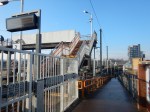
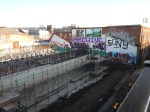


The article says that there will be a subway under the railway by the Spring and the station will by completed next January with new stairs and two lifts.
According to this article on Ian Visits, the tunnel will be built alongside and pushed under the railway. This was done successfully at the new Rochester station.
That certainly fits with what i saw!
Maghull North Station Gets Approval
This article in Rail Technology Magazine is entitled Green light given to Merseyrail’s new Maghull North station.
The following are points from the article about the new Maghull North station.
- The new station forms a key part of the Sefton Council’s Local Plan.
- The new station offers relief to Maghull station.
- The new station will support development in the area.
- The new station will have 156 car parking spaces.
- The station has all the facilities passengers need.
- The station design probably needs little work to the track and a few new signals.
- Construction will start in August 2017, with opening expected in May 2018.
- Visualisations show the station has two platforms outside the double-track, with lifts and stairs to both platforms.
- The main station building is separate from the platforms and has level access to the footbridge.
The whole scheme is costing £13million.
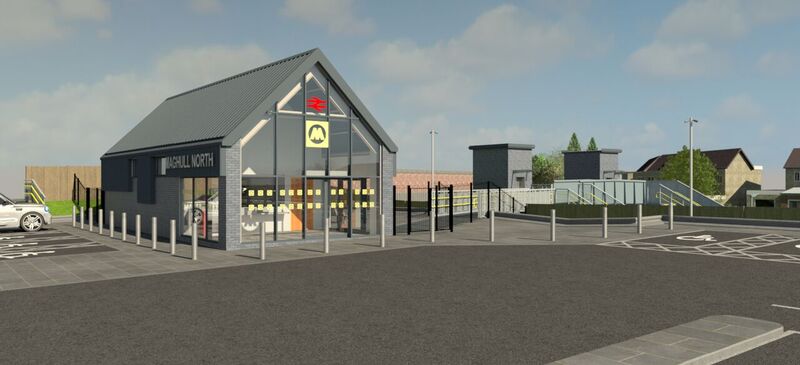
I shall be looking forward to visiting the station, when it opens in sixteen months.
Thoughts On Revenue And Costs
It is interesting to note that Maghull station handles about 1.8 million passengers a year, who probably spend about an average of three pounds on a ticket, so the station could generate about £5million a year.
It is probably, a valid assumption to say that Maghull North station will generate a couple of million pounds a year in revenue.
But as it towards the end of the line and as the only station to the North with substantial traffic is Ormskirk, I suspect that the current four trains per hour service will handle the extra passengers from Maghull North station.
So after a quick look, I feel that Maghull North station could be paid for by the extra passengers and their revenue.
It should be born in mind, that a lot of things will and could happen to trains between Liverpool and Ormskirk.
- From 2019, the line will see new Stadler trains, which will cut journey times and speed up station stops.
- Trains may go from Liverpool to Skelmersdale via Ormskirk.
- Trains may go direct from Liverpool to Preston, without a change at Ormskirk.
- The Burscough Curves may be reinstated giving access from Ormskirk to Southport and Wigan.
All developments will generate passengers at both Maghull stations.
I hope the station design has left space to add more car parking.
Lessons For Other Station Proposals
I suspect for those, who took the decision to build Maghull North station, found it an easy decision to take.
- The passenger demand is there.
- The station can be built without a major blockade of the line.
- New trains will be serving the station.
- Related developments could increase the train frequency.
But most importantly, the station could be paid for from extra revenue.
How many other proposed stations fit these criteria?
Has Work Stopped On The Met Line Extension?
This question is asked in the title of this article in the St. Albans Review.
The full title is.
Has work stopped on the Met Line extension? TfL worker says work is suspended.
TfL say the project is just being examined in detail.
I think, that when the Croxley Rail Link is built, it will be very different to what Hertfordshire planned.
I gave my view in TfL Seeks New Procurement Plan For Metropolitan Line Extension
I proposed a simpler design.
- Watford station would remain open.
- A four tph link would run all day between Watford Junction and Amersham stations.
- Trains could be Class 710 trains or similar.
- Stops would be at Watford High Street, Vicarage Road, Cassiobridge, Croxley, Rickmansworth, Chorleywood and Chalfont & Latimer.
- No new electrification.
- Single-track in places to reduce costs.
No-one would get a worse service than currently and the new stations of Cassiobridge and Vicarage Road, would make rail an alternative for many travellers.
The Cost Of Tram Batteries
This article in Rail Technology Magazine is entitled Midland Metro tram shipped to Spain for battery fit-out ahead of OLE-free operation.
One Midland Metro tram has been sent back to the factory in Zaragoza to be fitted with two roof-mounted lithium-ion cells and after testing it will be returned to the West Midlands in the Autumn, where more testing will be performed, prior to starting running on the catenary-free streets of Birmingham and Wolverhampton.
After a successful completion of testing on the first tram, the other twenty trams will be converted.
This is said in the article about costs.
The total cost to the WMCA of fitting out the fleet will be £15.5m, but the authority says that it will save £9.24m on infrastructure costs on the first four extensions to the Metro network alone, with further infrastructure savings planned as future extensions take place.
So the savings can go a long way to help pay for the trams to run on the four extensions.
The cost of the modifications to each tram is £738,000, but if the infrastructure savings are factored in, the modifications cost just £298,000 per tram.
I also wonder if the layout of the Midland Metro, with a fairly long wired central section and a catenary-free section at either end is ideal for battery operation, as the trams will have a long section to fully charge the batteries.
But it looks like trams will reach Victoria Square and Wolverhampton station in 2019, Edgbaston in 2021 and the Eastside extension to Curzon Street will be completed in 2023.
Perhaps, the most interesting section in the article is this paragraph.
The WMCA is also evaluating a proposed Wednesbury to Brierley Hill extension to identify the viability of catenary-free sections.
Could this mean that the South Staffordshire Line, which will be used for the extension will be without catenary? As the tram does small detours into Dudley and at the Merry Hill Shopping Centre, then these sections could be wired to charge the batteries, leaving the South Staffordshire Line without any wires. I estimate that the distance the tram would travel would be about seven miles each way.
As Network Rail want to run both trams and freight trains on the South Staffordshire Line, this might allow both to share an unelectrified line, if they have the right wheel and track profiles.
There certainly seems to be some very innovative ideas around, when it comes to using trains and trams in City Centres.
A Look At New Station Projects
If as I wrote in Government Focuses On New Stations And Trains, the government is going to promote more stations, how are the various current station projects progressing?
- Aberbeeg has been proposed for reopening on the Ebbw Valley Railway. See Developing The Ebbw Valley Railway.
- Abercarn has been proposed for reopening on the Ebbw Valley Railway. See Developing The Ebbw Valley Railway.
- Aberdeen Airport is a possible new station on the Aberdeen to Inverness Line. See A Crossrail for Aberdeen.
- Aberdeen Exhibition And Conference Centre is a possible new station. See A Crossrail for Aberdeen.
- Abertillery has been proposed for reopening on a new branch of the Ebbw Valley Railway. See Developing The Ebbw Valley Railway.
- Abington is a possible reopened station on the East Coast Main Line in Scotland.
- Abronhill is a possible new station near Cumbernauld.
- Addenbrookes has been proposed as a third station for Cambridge.
- Admaston is a possible reopened station on the Shrewsbury to Wolverhampton Line. See A Plea For A Shropshire Metro.
- Aldridge on the freight-only Sutton Park Line has been proposed for reopening.
- Allander is a possible new station on the North Clyde Line.
- Alconbury is a possible new station on the East Coast Main Line in Cambridgeshire.
- Alne is a possible reopened station on the East Coast Main Line in North Yotkshire.
- Alrewas is a possible reopened station on the South Staffordshire Line.
- Amblecote is a possible new station near Stourbridge.
- Amlwch is a possible reopened station on a reopened Anglesey Central Railway. See Reopening The Anglesey Central Railway.
- Ampthill is a possible reopened station on the Midland Main Line in Bedfordshire.
- Anfield is a possible reopened station on a reopened Canada Dock Branch in Liverpool.
- Anglesey Airport is a possible new station on the North Wales Coast Line on Anglesey.
- Anston is a possible reopened station on the South Yorkshire Joint Railway. See A Station For Maltby And Other Villages.
- Appledore Parkway is a possible new station in Devon.
- Arthington is a possible reopened station on the Harrogate Line.
- Ashby-de-la-Zouch is a possible reopened station on the Ivanhoe Line.
- Ashington has been proposed for reopening to provide a new service to Newcastle. See Reopening Newcastle To Ashington.
- Ashley Hill has been proposed for reopening as part of the Bristol Metro.
- Ashton Gate has been proposed for reopening as part of the Bristol Metro.
- Askern is a possible reopened station in South Yorkshire.
- Avon Meads is a possible new station in Bristol.
- Baguley is a possible reopened station on the Stockport and Altrincham Railway.
- Bagworth is a possible reopened station on the Ivanhoe Line.
- Bakewell is a possible reopened station in Derbyshire.
- Ballsall Heath is a possible new station in Birmingham.
- Bannockburn is a possible new station in Scotland.
- Barcombe Mills has been proposed for reopening on an extended Wealden Line.
- Barking Riverside is being planned and is planned to open in 2021.
- Baschurch is a possible reopened station on the Chester to Shrewsbury Line. See A Plea For A Shropshire Metro.
- Bathampton is a possible reopened station on the Great Western Main Line and the Heart of Wessex Line.
- Battersea Power Station is on the Northern Line Extension and is planned to open in 2020.
- Beal is a possible reopened station on the East Coast Main Line close to Lindisfarne.
- Beam Reach has been proposed as a new station by the London Borough of Havering.
- Beattock is a possible reopened station on the West Coast Main Line in Scotland.
- Beaulieu is a planned station on the Great Eastern Main Line to support a housing development.
- Bebside has been proposed for reopening to provide a new service between Newcastle and Ashington. See Reopening Newcastle To Ashington.
- Beddington is a possible new station between Wallington and Waddon stations in South London.
- Bede Island is a possible new station on the Leicester to Burton-on-Trent Line or Ivanhoe Line in Leicester.
- Bedford North is a possible new station in Bedford.
- Bedfont is a possible new station South of Heathrow.
- Bedlington has been proposed for reopening to provide a new service between Newcastle and Ashington. See Reopening Newcastle To Ashington.
- Bedlinog is a possible new station on a reopened branch of the Rhymney Railway. See The South Wales Mountain Railway.
- Beechdale is a possible new station.
- Beechwood has been proposed as a new station on the Borderlands Line, by Merseyrail.
- Beighton is a possible reopened station on the Derbyshire/Yorkshire border.
- Belford is a possible reopened station on the East Coast Main Line, to the South of Berwick-upon-Tweed.
- Bideford is a possible reopened station in Devon.
- Bilston is a possible new station.
- Bilston Glen is a possible new station in Scotland.
- Bilton is a possible new station on the Harrogate Line.
- Birmingham Interchange will be a station on HS2 , that is planned to open in 2026.
- Birtley is a possible new station on the East Coast Main Line in Gateshead.
- Blaby is a possible reopened station on the Birmingham to Peterborough Line.
- Blackford is a possible reopened station on the Scottish Central Railway.
- Blackford Hill is a possible reopened station on a reopened Edinburgh Suburban and Southside Junction Railway.
- Blackhall Rocks is a possible reopened station in County Durham.
- Blackpool/Nanpean is a possible new station in Cornwall.
- Blunham is a possible reopened station on the East West Rail Link.
- Blyth has been proposed for reopening to provide a new service between Newcastle and Ashington. See Reopening Newcastle To Ashington.
- Bodmin Town is a possible new station in Cornwall.
- Bollo Lane is a possible new station in Action.
- Bonnybridge is a possible reopened station in Central Scotland.
- Bootle is a possible new station in Bootle on the Canada Dock Branch.
- Bordon has been proposed as a new station by the Association of Train Operating Companies.
- Bow Street has been proposed as a reopened station on the Cambrian Line by the Welsh Government.
- Bowland is a possible reopened station on the Borders Railway.
- Brackla is a possible new station in South Wales.
- Bracknell Parkway is a possible new station in Bracknell.
- Braintree Parkway is a possible new station in Braintree.
- Bramley has been proposed for reopening on a reopened Cranleigh Line, between Guildford and Cranleigh.
- Brent Cross Thameslink is a planned station for a new development at Brent Cross Cricklewood.
- Brentford (Transport Avenue) is a possible new station on a reopened Brentford Branch Line.
- Bricknell is a possible new station in Hull.
- Bridge of Earn is a possible reopened station on the Edinburgh and Northern Railway to the South of Perth.
- Bridle Road (Bootle) is a possible proposed station on the Canada Dock Branch in Liverpool.
- Brinsford Parkway has been proposed as a new station on the Rugby-Birmingham-Stafford Line.
- Britannia Stadium is a possible new station on the Stoke Loop of the West Coast Main Line.
- Brixham is a possible new station, on an extension of the Riviera Line.
- Brixton High Level is a possible new station to provide better interchange at Brixton.
- Broadway is being reopened by the heritage Gloucestershire Warwickshire Railway, with a planned opening in 2018.
- Broad Clyst is a possible reopened station on the West of England Main Line.
- Brockley Lane has been proposed for reopening as an interchange with Brockley by Transport for London.
- Broughton Airbus is a possible new station on the North Wales Coast Line to serve the Airbus factory.
- Brownhills has been proposed for reopening on a reopened South Staffordshire Line.
- Bucksburn is a possible reopened station in Aberdeen.
- Burn Naze is a possible reopened station in Thornton Cleveleys.
- Burpham is a possible new station in Guildford, is listed under Merrow
- Burscough Bridge is a possible station to rebuild into a full interchange.
- Burton Latimer is a possible reopened station on the Midland Main Line.
- Bushbury is a possible reopened station in Wolverhampton.
- Caerleon is a possible reopened station on the Welsh Marches Line near Newport.
- Camberwell has been proposed for reopening by Transport for London.
- Cambois has been proposed for reopening to provide a new service between Newcastle and Ashington. See Reopening Newcastle To Ashington.
- Cambridge North is planned to open on the 21st May 2017.
- Cambus is a possible reopened station near Stirling.
- Canary Wharf is a new Crossrail station and is planned to open in 2018.
- Cann Hall Road is a possible new station on the Gospel Oak To Barking Line.
- Canton is a possible new station in Cardiff.
- Capel Llanilltern is a possible new station in Cardiff.
- Cardiff Parkway has been proposed near St. Mellions.
- Cardiff Rover Way is a possible new station in Cardiff.
- Carno is a possible reopened station on the Cambrian Line.
- Carr Mill has been proposed as a reopened station in St. Helens by Merseyrail.
- Cassiobridge is a planned station on the Croxley Rail Link.
- Castle Bromwich has been proposed for reopening in Birmingham on the Birmingham to Peterborough Line.
- Castle Donington is a possible station in Leicestershire.
- Castleton is a station that could be relocated.
- Cefn is a possible reopened station on the Shrewsbury to Chester Line. See A Plea For A Shropshire Metro.
- Chalford is a possible reopened station on the Golden Valley Line.
- Chalvey is a possible reopened station on the Slough to Windsor and Eton Line.
- Chapel-en-le-Frith Central is a possible reopened station in Derbyshire.
- Chard Junction is a possible reopened station on the West of England Main Line.
- Charfield has been proposed for reopening on the Bristol-Gloucester Line.
- Chatterley Witfield is a possible reopened station on the Stoke to Macclesfield Line.
- Cheadle is a possible reopened station on a reopened Cheadle Branch Line.
- Chelternham is a possible redevelopment of the station and a link to the Gloucestershire-Warwickshire Railway.
- Cherry Hinton has been proposed for reopening by Cambridgeshire County Council.
- Chineham is a possible new station on the Reading to Basingstoke Line.
- Chingford Hatch has been proposed for a new station on the Chingford Branch Line by the London Borough of Waltham Forest.
- Chipping Campden is a possible reopened station on the Cotswold Line.
- Chipping Sodbury has been proposed for reopening on the South Wales Main Line.
- Churchbridge is a possible reopened station in Staffordshire.
- Churchdown is a possible reopened station in Gloucestershire.
- Clapham East is a possible new station on the East London Line.
- Clay Cross is a possible reopened station on the Midland Main Line.
- Cleckheaton is a possible reopened station in West Yorkshire.
- Cliffe is a possible reopened station on a developed Hundred of Hoo Railway.
- Clowne is a possible reopened station in an area of Derbyshire, where a lot is happening.
- Clyst Hayes is a possible reopened station on the West of England Main Line.
- Coalville is a possible reopened station on the Ivanhoe Line.
- Cockett is a possible reopened station on the West Wales Line. See A Station For Morriston Hospital.
- Coldwaltham is a possible new station in West Sussex on the Arun Valley Line.
- Copmanthorpe is a possible new station in North Yorkshire
- Copnor is a possible new station in Portsmouth on the Portsmouth Direct Line.
- Corby Rockingham Stadium is a possible new station in Corby.
- Cornholme is a possible reopened station on the Copy Pit Line in West Yorkshire.
- Corringham is a possible reopened station on a reopened Corringham Light Railway in Essex.
- Corsham has been proposed for reopening on the Great Western Main Line.
- Corwen is a new station on the heritage Llangollen Railway.
- Cottam has been proposed as a new station to the West of Preston.
- Coundon Road is a possible reopened station on the Coventry to Nuneaton Line.
- Cove Bay is a possible new station on the being-developed Aberdeen Crossrail. See A Crossrail for Aberdeen.
- Coxbench is a possible reopened station on a possible reopened Ripley Branch Line in Derbyshire.
- Craiglockhart is a possible reopened station on on a reopened Edinburgh Suburban and Southside Junction Railway.
- Craigmillar is a possible reopened station on on a reopened Edinburgh Suburban and Southside Junction Railway.
- Cranbrook East is a possible second new station for Cranbrook in Devon.
- Cranleigh has been proposed for reopening on a reopened Cranleigh Line from Guildford.
- Crawford is a possible reopened station on the West Coast Main Line in South Lanarkshire.
- Creigiau is a possible reopened station in South Wales.
- Crosshills is a possible reopened station in the Leeds/Bradford area.
- Crumlin is a possible reopened station in South Wales.
- Crwys Road is a possible new station in Cardiff.
- Culloden is a possible reopened station on the Aberdeen to Inverness Line.
- Cullompton has been proposed for reopening on the Bristol to Exeter Line.
- Curzon Street will be the Birmingham terminus of HS2 and is currently being designed and is planned to open in 2026.
- Cwm has been proposed for opening on the Ebbw Valley Railway. See Developing The Ebbw Valley Railway.
- Dalcross on the Aberdeen to Inverness Line has been proposed as a new station, which could open in 2019.
- Dalkeith is a possible new station in South-East Edinburgh.
- Dalston has been proposed as a new Crossrail 2 station.
- Darlaston is a possible reopened station on the South Staffordshire Line.
- Deepcar is a possible reopened station in Sheffield.
- Deeside Business Park is a possible new station on the Borderlands Line.
- Denby Pottery is a possible new station on a possible reopened Ripley Branch Line in Derbyshire.
- Denby South is a possible new station on a possible reopened Ripley Branch Line in Derbyshire.
- Derby South Parkway is a possible new station in the Derby area.
- Desborough is a possible reopened station on the Midland Main Line.
- Desford is a possible reopened station on the Ivanhoe Line.
- Devizes Parkway is a possible new station between Pewsey and Westbury stations on the Reading to Raunton Line.
- Diggle is an unlikely reopened station on the Huddersfield Line.
- Dinnington is a possible reopened station on the South Yorkshire Joint Railway. See A Station For Maltby And Other Villages.
- Ditton has been proposed for reopening in Widnes by Merseyrail.
- Dobb Brow is a possible new station in Bolton.
- Doncaster Sheffield Airport have ambitious plans for a new station. See A Station At Doncaster Sheffield Airport
- Donington Parkway is a possible reopened station between Spalding and Sleaford in Lincolnshire.
- Dornoch is a possible station on a branch of the Far North Line.
- Droylsden is a possible reopened station on the Hudderfield Line in Greater Manchester.
- Dudley (Newcastle) is a possible reopened station on the East Coast Main Line in Newcastle.
- Dunblane North is a possible new station in Scotland.
- Dundee West is a possible reopened station in Dundee.
- Dunfermline West is a possible new station in Dunfermline.
- Dunragit is a possible reopened station on the Glasgow South Western Line.
- Durham Belmont is a possible station on a reopened Leamside Line.
- Durham Tees Valley Airport needs development of Durham Tees Valley Airport.
- Dussindale/Broadland Business Park is a possible new station on the Bittern Line in Norfolk.
- Easington is a possible reopened station in North Yorkshire.
- Eastbourne Parkway is a possible new station on the East Coastway Line.
- Eastchurch is a possible reopened station on the Isle of Sheppey.
- Eastlands is a possible new station to serve the Etihad Campus in Manchester.
- Eastriggs is a possible reopened station on the Glasgow South Western Line.
- East Goscote is a possible new station on the Birmingham to Peterborough Line.
- East Leeds Parkway has been proposed for opening in Leeds. See Two Options For East Leeds Parkway Station.
- East Linton has been proposed for reopening on the East Coast Main Line in Scotland.
- East Midlands Hub has been proposed as an HS2 station between Derby and Nottingham.
- Ecclefechan is a possible reopened station on the West Coast Main Line near Lockerbie.
- Edge Lane is a possible reopened station on the Canada Dock Branch in Liverpool.
- Edginswell has been proposed for opening on the Riviera Line as part of the Devon Metro.
- Edwinstowe is a possible reopened station on a possible branch of the Robin Hood Line.
- Elland has been proposed as a new station to serve the town of Elland.
- Ellon is a possible reopened station on a reopened Formartine and Buchan Railway.
- Elstow is a possible reopened station on the East West Rail Link.
- Ely Bridge is a possible new station in Cardiff.
- Eton Wick is a possible new station on the Slough to Windsor & Eton Line.
- Evanton is a possible reopened station on the Inverness and Ross-shire Railway
- Ewood Park is a possible new station on the Ribble Valley Line.
- Exeter Business Park/Monkerton is a possible new station on the Devon Metro.
- Exminster is a possible reopened station on the Exeter to Plymouth Line.
- Exmouth North is a possible new station on the Avocet Line.
- Filton North has been proposed for reopening as part of the Bristol Metro.
- Faraday Road is a possible reopened station on the Robin Hood Line. See The Robin Hood Line In Nottingham.
- Farlington is a possible reopened station in Portsmouth
- Fawley is a possible reopened station on a reopened Fawley Branch Line. See Reopening The Fawley Branch Line.
- Fencehouses is a possible station on a reopened Leamside Line.
- Fernhill Heath is a possible reopened station on the Oxford, Worcester and Wolverhampton Railway.
- Ferryhill is a possible reopened station on the East Coast Main Line with connections to a reopened Leamside Line.
- Finningley has been proposed for reopening to serve Robin Hood Airport. is listed under Doncaster Sheffield Airport.
- Fladbury is a possible reopened station on the Oxford, Worcester and Wolverhampton Railway.
- Flaxby is a possible new station on the Harrogate Line.
- Fleetwood has been proposed for a new station by the Association of Train Operating Companies.
- Foleshill is a possible reopened station on the Coventry to Nuneaton Line.
- Forest Farm is a possible new station in Cardiff.
- Forest Road has been proposed for a new station on the Chingford Branch Line by the London Borough of Waltham Forest.
- Forres on the Aberdeen to Inverness Line is being relocated and is planned to open in Winter 2017.
- Fort Parkway has been proposed as a new station in Birmingham on the Birmingham to Peterborough Line.
- Foryd is a possible reopened station on the North Wales Coast Line.
- Fowey is a possible new station in Cornwall.
- Fradley is a possible new station near Lichfield.
- Frankley is a possible new station in Birmingham
- Fulbourn has been proposed for reopening by Cambridgeshire County Council.
- Furness Abbey is a possible reopened station near Barrow-in-Furness.
- Gabalfa is a possible new station in Cardiff.
- Gaerwen is a possible reopened station on the North Wales Coast Line on Anglesey.
- Galley Common is a possible new station on the Birmingham to Nuneaton Line.
- Gamesley is a possible new station on the Glossop Line.
- Gamston is a possible new station on the East Coast Main Line to the North of Retford.
- Gedling is a possible new station or tram stop in Nottingham.
- Gedling Village is a possible new station or tram stop in Nottingham.
- Gilsland is a possible reopened station on the Tyne Valley Line.
- Girdle Ness is a possible new station on the being-developed Aberdeen Crossrail. See A Crossrail for Aberdeen.
- Glasgow Airport is a possible new terminal station on the proposed Glasgow Airport Rail Link.
- Glasgow Cross is a possible reopened station in Glasgow.
- Gloucester (Barnwood) is a possible new station on the Golden Valley Line between Gloucester and Cheltenham.
- Gloucester South is a possible new station in the area of Quedgeley.
- Gloucestershire Parkway has been proposed as a new station to serve Gloucester and Cheltenham.
- Glyne Gap is a possible reopened station on the East Coastway Line.
- Golborne is a possible reopened station on the West Coast Main Line in Wigan.
- Golcar is a possible reopened station on the Huddersfield Line.
- Gorbals is a possible reopened station in Glasgow.
- Gorgie is a possible reopened station on on a reopened Edinburgh Suburban and Southside Junction Railway.
- Gorseinon is a possible new station in Swansea.
- Grampound Road is a possible reopened station on the Cornish Main Line.
- Grange Lane is a possible reopened station in Sheffield.
- Grangemouth is a possible new station in Falkirk.
- Great Blakenham is a possible new station in Suffolk.
- Great Cornard is a possible new station on the Gainsborough Line in Suffolk. See A Station At Great Cornard.
- Greenbank Park is a possible new station in Liverpool. See Stations Between Mossley Hill And Edge Hill In Liverpool.
- Greenfield is listed under Holywell Junction.
- Greenloaning is a possible reopened station on the Stirling to Perth Line.
- Gresley is a possible reopened station on the Ivanhoe Line.
- Grove is a possible reopened station on the Great Western Main Line in Oxfordshire.
- Gwaun-cae-Gurwen is a possible new station on a possible new Amman Valley Branch Line near Swansea.
- Gwaun Mesgwyn is a possible new station near Pontypridd.
- Hackney Wick is being rebuilt.
- Hadley is a possible new station in Telford. See A Station For Hadley.
- Hadnall is a possible reopened station on the Welsh Marches Line in Shropshire.
- Haddington is a possible new station on a reopened Haddington Line to Edinburgh.
- Halbeath is a possible new station at Halbeath Park-and-Ride on the Fife Circle Line.
- Halewood South is a possible new station in the South East of Liverpool. See Tarbock Island Or Halewood South Station?
- Halkirk is a possible reopened station on the Far North Line.
- Hallen is a possible reopened station on a reopened Henbury Loop Line.
- Hampton is a possible new station on the East Coast Main Line, South of Peterborough.
- Harlington Parkway is a possible new station on the Midland Main Line.
- Hart is a possible new station in the North of Hartlepool on the Durham Coast Line.
- Haxby has been proposed as a reopened station on the York to Scarborough Line.
- Hawick is a possible new station on an extended Borders Railway.
- Hawthorne Road (Bootle) is a possible new station near Kirkdale station on Merseyrail.
- Haywards Heath South is a possible new station in Haywards Heath.
- Hazelwell has been proposed as a reopened station on a new passenger service on the Camp Hill Line in Birmingham.
- Headbolt Lane has been proposed for the Kirkby Branch Line.
- Heathfield (Ayr) is a possible new station on the Ayrshire Coast Line.
- Henbury has been proposed for reopening as part of the Bristol Metro.
- Henwick is a possible reopened station in Worcester on the Cotswold Line.
- Hethersett is a possible reopened station on the Breckland Line.
- Heyford Park is a possible new station on the Chiltern Line.
- Hill Barton is listed under Monkerton.
- Hinksey is a possible reopened station in Oxfordshire.
- Hipperholme is a possible reopened station on the Caldervale Line.
- Hirwaun has been proposed for reopening on a reopened branch of the Vale of Neath Railway.
- Holmes Chapel Road is listed under Middlewich.
- Holywell Junction is a possible reopened station on the North Wales Coast Line.
- Horden is a possible new station, North of Hartlepool to serve Peterlee on the Durham Coast Line.
- Horfield has been proposed for reopening in Bristol.
- Horsforth Woodside has been proposed for opening in Horsforth in West Yorkshire on the Harrogate Line.
- Horsham North Parkway is a possible new station on the Brighton Main Line.
- How Mill is a possible reopened station on the Tyne Valley Line.
- Hull (KC) Stadium is a possible new station in Hull.
- Hythe has been proposed for reopening on a reopened Fawley Branch Line. See Reopening The Fawley Branch Line.
- Hythe Road has been proposed as a new London Overground station at Old Oak Common.
- Ibrox is a possible reopened station in Glasgow.
- Ilkeston is planned to open on the 2nd April 2017.
- Irchester is a possible reopened station on the Midland Main Line.
- Isfield has been proposed for reopening on an extended Wealden Line.
- Johnstown is a possible reopened station on the Shrewsbury to Chester Line. See A Plea For A Shropshire Metro.
- Jordanhill College is a possible new station on the North Clyde Line.
- Junction Road is a possible reopened station on the Gospel Oak to Barking Line.
- Kelso is a possible new station in the Scottish Borders.
- Kempston is a possible reopened station on the East West Rail Link.
- Kenilworth is planned to open in December 2017.
- Kensal is a possible but unlikely, extra station on Crossrail.
- Kenyon Junction is a possible reopened station in Lancashire on the Liverpool and Manchester Railway. See A Modern Branch Line For Leigh
- Keswick is a possible reopened station on a reopened Cockermouth, Keswick and Penrith Line.
- Ketton is a possible reopened station on the Birmingham to Peterborough Line.
- Kew (Southport) is a possible reopened station on the Manchester and Southport Railway.
- Kibworth is a possible reopened station on the Midland Main Line.
- Kidderminster Parkway is a possible new station on the Birmingham to Worcester Line.
- Kidlington has been replaced by Oxford Parkway.
- Kilmardinny is listed under Allander.
- Kilnwood Vale is listed under Horsham North.
- King Power Stadium is a possible new station on the Ivanhoe Line in Leicester.
- Kingsbury is a possible reopened station in Warwickshire.
- Kings Dock is a possible new station in Liverpool. See Stations Between Mossley Hill And Edge Hill In Liverpool.
- Kings Heath is a possible reopened station on the Camp Hill Line in Birmingham
- Kings Road Chelsea has been proposed as a new station on Crossrail 2.
- Kington is a possible new station in Herefordshire.
- Kinmel Bay is listed under Foryd
- Kinnaird is a possible new station in Edinburgh on the Borders Railway and the Edinburgh Suburban and Southside Junction Railway to serve the large Ford Kinnaird Retail Park.
- Kinross is a possible new station on the Edinburgh to Aberdeen Line.
- Kintore has been proposed as a reopened station on the Aberdeen to Inverness Line.
- Kirby Muxloe is a possible reopened station on the Ivanhoe Line.
- Kittybrewster is a possible new station in Aberdeen on the being-developed Aberdeen Crossrail. See A Crossrail for Aberdeen.
- Knaresborough East is a possible new station on the Harrogate Line.
- Lache is a possible new station in Chester on the Wrexham to Chester Line.
- Landore is a possible new station in Swansea.
- Langport is a possible reopened station on the Reading to Taunton Line.
- Law is a possible reopened station on the Argyle Line.
- Ledsham has been proposed as a reopened station on Merseyrail’s Wirral Line.
- Leeds/Bradford Airport Parkway is a possible station on the Harrogate Line. See A Station For Leeds/Bradford Airport.
- Leeds East Parkway is a proposed station on the Selby Line. See Two Options For East Leeds Parkway Station.
- Leicester Forest East is a possible new station on the Ivanhoe Line in Leicester. See A Station At Leicester Forest East.
- Leigh is a possible reopened station on a reopened branch line from Kenyon Junction. See A Modern Branch Line For Leigh
- Leiston is a possible reopened station on the Aldeburgh Branch Line. See A Station For Leiston.
- Lenton is a possible new station on the Robin Hood Line. See The Robin Hood Line In Nottingham.
- Leven is a possible new station on a reopened Levenmouth Rail Link. See A Reopened Levenmouth Rail Link.
- Lightcliffe is a possible reopened station on the Caldervale Line.
- Lindal is a possible reopened station on the Furness Line.
- Little Eaton is a possible reopened station on a possible reopened Ripley Branch Line in Derbyshire.
- Littleworth is a possible reopened station on the Peterborough-Lincoln Line.
- Liverpool Airport is a possible new station on Merseyrail.
- Liverpool St. James has been proposed as a new station on Merseyrail’s Northern Line.
- Llandre is a possible reopened station on the Cambrian Line.
- Llangefni is a possible reopened station on a reopened Anglesey Central Eailway. See Reopening The Anglesey Central Railway.
- Llantarnam is a possible reopened station on the Welsh Marches Line near Newport.
- Llanwern is a possible reopened station on the Gloucester to Newport Line.
- Loanhead is a possible station on a possible reopened Edinburgh, Loanhead and Roslin Railway.
- Lockleaze has been proposed for reopening in Bristol.
- Long Ashton has been proposed as a reopened station in Bristol, on the Bristol to Exeter Line.
- Low Moor is planned to open in May 2017.
- Ludgershall is a possible reopened station on a reopened Ludgershall Branch Line. See A Branch Line For Ludgershall.
- Lydford is a possible reopened station in Devon. See Exeter To Plymouth Via Okehampton
- Lymington Hospital is a possible new station on the Lymington Branch Line
- Madeley is a possible reopened station in Telford.
- Maesglas has been proposed for a new station near Newport.
- Magor Walkway has been proposed between Newport and Severn Tunnel Junction stations.
- Maghull North will be a new station on Merseyrail’s Northern Line, that is planned to open in 2018.
- Maidenbower is a possible new station on the Brighton Main Line in Crawley.
- Maiden Lane has been proposed for reopening by Camden Council on the North London Line.
- Maltby is a possible new station on the South Yorkshire Joint Railway. See A Station For Maltby And Other Villages.
- Manton is a possible reopened station on the Oakham to Kettering Line.
- Marchwood is a possible reopened station on a reopened Fawley Branch Line. See Reopening The Fawley Branch Line.
- March Elm Road has been proposed as the Southern terminus of the Bramley Line.
- Margam is a possible new station on the South Wales Main Line.
- Market Weighton is a possible reopened station on a reopened York-Beverley Line in Yorkshire.
- Marlborough is a possible new station in Wiltshire. See A Station For Marlborough.
- Marsh Barton has been proposed for opening on the Riviera Line as part of the Devon Metro.
- Mayfield is a disused station in Manchester, that should be developed for other purposes or demolished to make space for other developmemts, like the expansion of Manchester Piccadilly station.
- Meole Brace is a possible new station in Shrewsbury. See A Plea For A Shropshire Metro.
- Meridian Water is planned to replace Angel Road on the Lea Valley Lines
- Merrow is a possible new station in Guildford. See Two Stations For Guildford.
- Middle Quinton is a possible new station for the possible eco-town of the same name.
- Middlewich is a possible reopened station on a branch of the Mid Cheshire Line. See Looking For Holmes Chapel Road Station.
- Midge Hall is a possible reopened station on the Ormskirk Branch Line.
- Miller’s Dale is a closed station in the Peak District. See Derby To Manchester The Midland Way.
- Millerston is a proposed station on the Cumbernauld Line.
- Millhouses is a possible reopened station on the Midland Main Line in Sheffield.
- Milton Malsor is a possible new station on the Northampton Loop of the West Coast Main Line.
- Minster Parkway is listed as Thanet Parkway.
- Minworth is a possible new station to support development in Birmingham.
- Moira is a possible reopened station on the Ivanhoe Line.
- Monkerton has been proposed for as a new station on the Avocet Line as part of the Devon Metro.
- Monsal Dale is a closed station in the Peak District. See Derby To Manchester The Midland Way.
- Moorends is a possible new station on the Hull and Do9ncaster Branch.
- Moorside has been proposed as a new station on the Cumbrian Coast Line to serve the proposed Moorside Nuclear Power station.
- Moorswater is a possible reopened station in Cornwall.
- Morningside is a possible reopened station on a reopened Edinburgh Suburban and Southside Junction Railway.
- Morriston is listed as Cockett.
- Moseley has been proposed as a reopened station on a new passenger service on the Camp Hill Line in Birmingham.
- Mostyn is a possible reopened station on the North Wales Coast Line.
- Napsbury is a possible reopened station on the Midland Main Line.
- Nelson is a possible new station on a reopened branch of the Rhymney Railway. See The South Wales Mountain Railway.
- Ness could be a station on Loch Ness. See Will Trains Enable Chinese And Other Tourists To Invade Loch Ness?
- New Bermondsey is planned to be built on the London Overground, by Millwall Football Club.
- Newbiggin-by-the-Sea has been proposed for reopening to provide a new service between Newcastle and Ashington. See Reopening Newcastle To Ashington.
- Newburgh is a possible reopened station on the Edinburgh and Northern Railway to the South of Perth.
- Newnham is a possible new station on the East West Rail Link in Bedford.
- Newport West has been proposed for opening on the South Wales Main Line at Coedkernow, by Newport City Council.
- Newsham has been proposed for reopening to provide a new service between Newcastle and Ashington. See Reopening Newcastle To Ashington.
- Newtonhill is a possible new station on the being-developed Aberdeen Crossrail. See A Crossrail for Aberdeen.
- Niddrie is a possible new station on a reopened Edinburgh Suburban and Southside Junction Railway.
- Nine Elms is on the Northern Line Extension and is planned to open in 2020.
- North Filton has been proposed as a reopened station in Bristol, on the Henbury Loop Line.
- Old Oak Common will be a station on HS2 and Crossrail, that is planned to open by 2026.
- Park Farm has been proposed as a new station on the Marshlink Line.
- Paulsgrove is a possible reopened station in Portsmouth to serve the new stadium for Portsmouth FC.
- Pelsall has been proposed for reopening on a reopened South Staffordshire Line.
- Pill has been proposed for reopening as part of the Bristol Metro.
- Portbury has been proposed for reopening near Bristol.
- Portishead has been proposed for reopening in Bristol.
- Portway has been proposed for expansion from a Park-and-Ride to a full station in Bristol.
- Primrose Hill has been proposed for reopening in North London.
- Reading Green Park has been proposed as a new station on the Reading to Basingstoke Line, to serve developments in the area.
- Reston has been proposed for reopening on the East Coast Main Line in Scotland.
- Robroyston is a planned new station in South East Glasgow, that could open in 2019.
- Rugby Parkway is a planned new station on the Northampton Loop Line.
- Rushden Parkway has been proposed as a new station on the Midland Main Line.
- Saltford has been proposed for reopening in Bristol.
- Seaton Delaval has been proposed for reopening to provide a new service between Newcastle and Ashington. See Reopening Newcastle To Ashington.
- Seghill has been proposed for reopening to provide a new service between Newcastle and Ashington. See Reopening Newcastle To Ashington.
- Silvertown has been proposed as an additional station on Crossrail to serve London City Airport.
- Soham has been proposed for reopening on the Ipswich to Ely Line.
- Skelmersdale has been proposed as an additional destination for Merseyrail’s Northern Line.
- St. Anne’s Park has been proposed for reopening as part of the Bristol Metro.
- Stonehouse (Bristol Road) is a possible reopened station on the Bristol and Gloucester Railway.
- Thanet Parkway is a possible new station near Manston Airport in Kent.
- Thornhill has been proposed for reopening on the Glasgow and South Western Railway.
- Town Meadow has been proposed as a new station on the Wirral Line.
- Trelewis is a possible new station on a reopened branch of the Rhymney Railway. See The South Wales Mountain Railway.
- Vauxhall has been proposed as a new station on Merseyrail’s Northern Line.
- Wantage Road has been proposed as a reopened station in Oxfordshire on the Great Western Main Line.
- Warrington West is an under-construction station to serve development and it is planned to open in 2019.
- Watford Vicarage Road is a planned station on the Croxley Rail Link.
- West Hampstead Interchange has been proposed to connect Chiltern, Underground and Overground Lines.
- Winsford is a planned station on the East West Rail Link.
- Wixams is a planned station to serve the Wixams new town development.
- Woodchurch has been proposed as a new station on the Borderlands Line, by Merseyrail.
- Woolwich is a new Crossrail station and is planned to open in 2018.
- Wootton Bassett has been proposed for a new station.
- Worcestershire Parkway Regional Interchange h will be a new station to improve services to Worcester.
This list of stations is not complete.
But I can make a few simple conclusions.
Some Regions Have More Stations In The Pipeline Than Others
There are probably several reasons for this.
- Some regions like Manchester, Newcastle, Nottingham and Sheffield have gone the light-rail route.
- Some regions like East Anglia, East Midlands, Kent, Sussex and Teesside haven’t got their plans fully together.
- Some regions like Bristol, London and Merseyside have got very detailed plans together.
- Some regions like Cardiff, Edinburgh and Glasgow have already got extensive heavy rail networks.
I think Merseyside is the interesting region.
- Merseyrail is very much an independent franchise strongly controlled by the region.
- It runs a frequent four trains per hour (tph) to most destinations.
- It seems to be run very professionally.
- It is proposing at least seven new stations.
In lots of areas, it appears that Merseyrail and London Overground are singing the same tune.
I have a feeling when other regions get their acts together, we’ll be seeing a lot more plans for new stations.
Several New Passenger Routes Are Being Created
In the list of stations, the same new routes arise.
- Aberdeen Crossrail
- Anglesey Central Railway
- Borderlands Line
- Bristol Metro (MetroWest)
- Camp Hill Line
- Canada Dock Branch
- Coventry to Nuneaton Line
- Devon Metro
- East West Rail Link
- Edinburgh Suburban and Southside Junction Railway
- Harrogate Line
- Ivanoe Line
- Leamside Line
- Newcastle And Ashington Line
- Ripley Branch Line
- South Staffordshire Line
- South Wales Metro
Birmingham, Bristol, Exeter and Merseyside have obviously been planning.
New Trains Stop At A Station Faster
The UK’s most frequent rail line is the Victoria Line, which is gearing up to a frequency of 36 tph or even more.
Crossrail and Thameslink will be running 24 tph through their central tunnels.
Trains like these and Bombardier’s new Aventras and Stadler’s new trains for Merseyrail will be optimised for fast stops.
- Driver Only Operation
- Wide doors and lobbies for easy access.
- Optimum braking and acceleration.
- Roll across step-free access for wheelchairs, buggies and large cases.
- Automatic Train Operation as has been working on the Victoria Line since the 1960s
Trains like these will mean that new stations can be inserted on existing lines without degrading the service.
Thoughts On Batteries
As a Control Engineer, I have a lot of thoughts about making the World a more efficient and safer place.
As a simple example of what Control Engineering is all about, do two hundred mile drives in your car.
- One is a route you don’t know.
- The other is one you know very well.
In both journeys drive as carefully as you can to try to do both journeys using the minimum amount of fuel.
Inevitably, in most cases, you will do the second route on less fuel, because you will adjust speed and anticipate possible problems from previous knowledge.
A well-designed control system for a self-driving car should be able to outperform a manually-driver car because it has better knowledge.
Control Engineering is all about taking all the knowledge you can, processing it in a control system or computer and doing the job to the ultimate best.
Batteries Will Get A Higher Charge Density Per Cubic Metre And Per Dollar
There are a lot of clever engineers and scientists out there in countries like China, Germany, Japan, Korea and the USA, working on battery technology and increasing the charge density will be one of their key objectives.
The smaller and more affordable a battery becomes, the more will be sold.
With several large companies out there investing heavily in the production of batteries, there can only be one ultimate wuner – the individual, company, government or organisation, who eventually pays for the product in which the battery is installed.
So How Will Control Engineering Be Involved?
In some ways, it already is!
Control Engineering In Personal Devices
In your smart-phone, laptop or personal device, you can set parameters to get the maximum minutes for one charge of the battery.
You are effectively, tweaking the device and the battery control system is doing the best it can with the lkimited energy resources of the battery of the device.
Control Engineering In Transport Systems
One of the problems with personal devices, is they need to be plugged in to be charged.
But as transport systems are larger and often have access to other forms of energy, recharging is not such a problem.
- Batteries in hybrid vehicles can be charged by an onboard engine.
- Some battery and hybrid cars can be plugged into the mains.
- Braking energy can be recovered and used to charge the battery.
- Trains, trams and trolley-buses can use overhead wires or third-rail systems to charge the battery.
It is the major task of the vehicle’s control system to balance the needs of traction and the onboard systems, by pulling in energy from various sources.
A Typical Hybrid Bus
A hybrid bus like a Routemaster, has a very different transmission system to your bog-standard diesel bus.
- It is actually driven by a Siemens ELFA2[4]electric traction motor.
- Braking is regenerative.
- The Cummins diesel engine is mounted under the rear stairs.
- The 75 KwH battery is mounted under the front stairs.
Effectively, the diesel engine tops up the battery to a high enough level and the wheels are driven from the battery.
The control system manages the energy starting and stopping the engine as required.
The Ultimate Hybrid Bus
In the ultimate hybrid bus, the control system would know lots of other factors, including.
- The route.
- The actual and expected number of passengers.
- The actual and expected weather.
- Whether Arsenal were plying at home, or there was a demonstration by taxi-drivers.
So it would manage the power in the battery according to the predicted future energy requirements.
What would that do for fuel economy and the reduction of pollution?
But how could the efficiency of the bus be improved further?
- A lighter battery with the same capacity.
- A lighter diesel-engine, traction motor and other components.
- A much improved control system.
As with most things, reducing weight is probably the most important. But don’t underestimate, what can be achieved with the ultimate control system.
It all points to my belief, that we should probably leave the development of batteries to the big boys and concentrate on the applications.
Hybrid Electric Trucks
Hybrid electric trucks are on the way.
Hybrid Trains And Trams
I think the mathematics point to hybrid trains and trams being one of the better applications of batteries in transport.
A typical four-car electric multiple unit like a new Class 710 train, weighs about 130 tonnes or 138 tonnes with passengers. Going at a line speed of 100 kph, it has a kinetic energy of 15 KwH. So this amount of kinetic energy would be well within the scope of a 75 KwH battery from a Routemaster bus.
I think that the typical four-car electric multiple unit can easily be fitted with a battery to handle the braking for the train.
The physics of steel-wheel-on-steel-rail are also very efficient, as Robert Stephenson, if not his father, would have known.
But with trains, there are several ways the batteries can be charged.
- From 25 KVAC overhead power.
- From 750 VDC third-rail power.
- By recovering braking energy.
- From a small diesel generator.
A good control system manages the energy and also raises and lowers the pantograph as needed.
Conclusions
Design and manufacturing competition from the big players in batteries, will bring the price down and increase the amount of energy that can be stored in a battery of a particular size.
But the key to making the most out of a battery is to have a well-designed control system to manage the energy.
60 mph Limit And Fines To Cut M1 Pollution
This is a headline on an article in The Sunday Times.
It refers to a stretch of the M1 near Sheffield, where smart motorway technology will increase the number of vehicles passing through an area of housing and schools and probably breach legal pollution limits.
It sounds drastic, but then we need drastic measures to cut the level of pollution.
Perhaps, the simplest solution would be to assign all vehicles a pollution index.
Then assign all areas in the UK, a level of allowed pollution, which limited the vehicles that could drive in that area.
The trouble is, that this would be a vote loser, as it would mean that some drivers had just purchased a new vehicle, that they couldn’t even drive to their house.
The only safe way to be able to drive anywhere would be, by buying an electric or a very efficient hybrid vehicle.
A measure as harsh as this, must be paired with extensive public transport with adequate Park-and -Ride facilities.
Solutions will have to be found for delivery vans, trucks and buses.
The Future Of East West Rail
There is an article with this title in Rail Technology Magazine.
This is the opening paragraph.
Shortly before the end of last year, transport secretary Chris Grayling announced unprecedented proposals to create a new and independent East West Rail operation tasked with designing, managing and running services between Oxford and Cambridge.
After the opening of the first section of the route, from Oxford to Bicester and on to Marylebone, which I wrote about in Oxford To Marylebone Opens For Business, things seem to be moving on.
- The Government has announced that the East West Rail Link could be privately financed, built and run.
- This article in Rail Magazine, which is entitled Verster to leave ScotRail for East West Rail, states that Phil Verster from ScotRail will head up the East West Rail Project.
Let’s hope it all means full steam ahead.
Where The Northern Line Extension Spoil Is Going
This article in Your Thurrock, is entitled London Tube tunnelling project set to benefit arable land in East Tilbury.
It gives a good overview of the tunnelling for the Northern Line Extension and states that the tunnel spoil will be taken by barge to Goshems Farm in East Tilbury.
This Google Map shows the North Bank of the Thames from Tilbury Fort to East Tilbury.
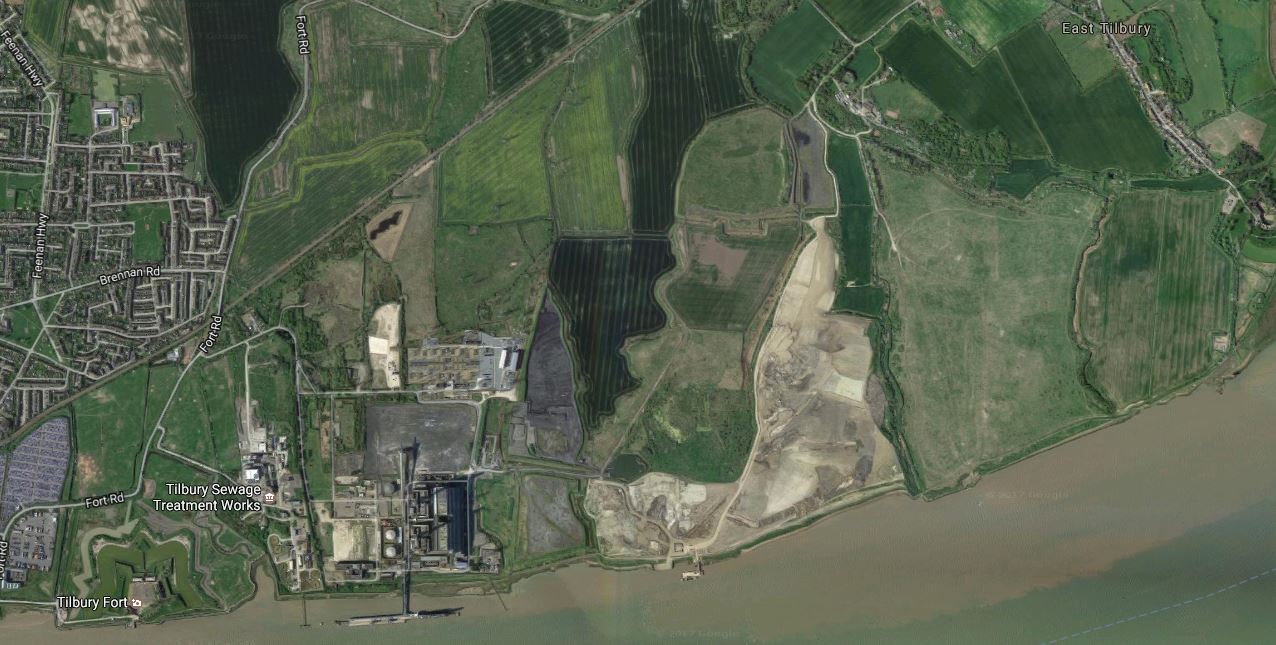
Tilbury Fort is in the South West corner of the map, by the river and East Tilbury is in the North East corner.
This is a more detailed map of the area of Goshems Farm.
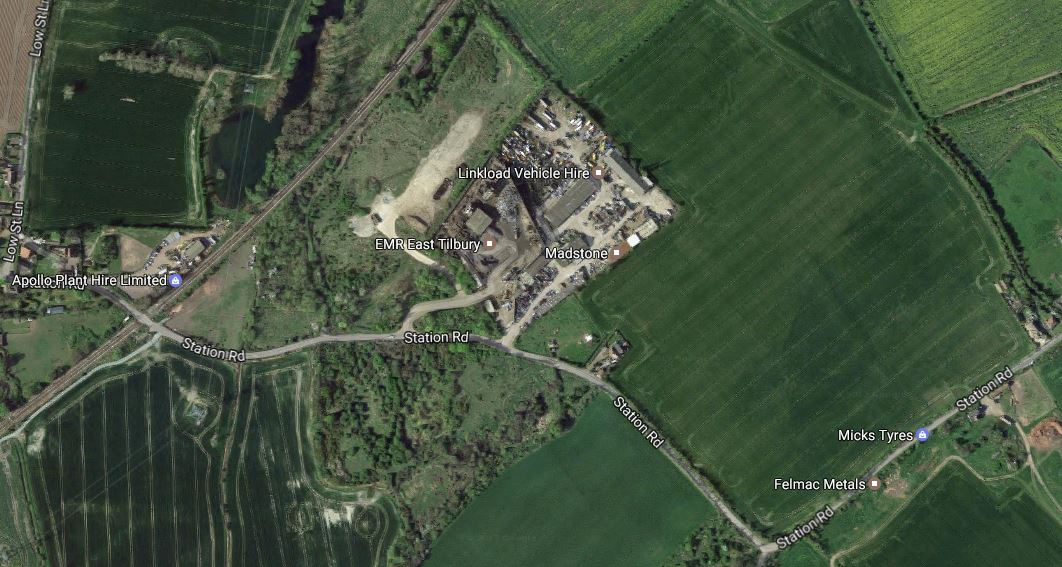
Goshems Farm is in the area of Felmac Metals and Micks Tyres, which from their names are typical businesses, you find in areas like these all over the UK.
Note Station Road leading up to the disused Low Street station, which was on the London, Tilbury and Southend Railway, which is now served by c2c.
I suspect that the spoil will go into the light-coloured land between this area and the Thames, which could be something like an old landfill site.
It’ll certainly be a lot more use as arable land.
 The Anonymous Widower