Are We Seeing A New Approach To Electrification On The Gospel Oak To Barking Line?
Over the years, I’ve followed several electrification schemes starting with the Lea Valley Lines through Southbury in the 1960s.
The electrification of the Gospel Oak To Barking Line (GOBlin), is not a particularly large or important one, in the overall scheme of things, but after the well-publicised problems of the electrification of the Great Western Main Line and the Trans-Pennine routes, Network Rail don’t want another train-load of bad publicity.
Take a ride down the line and you see the following.
- A collection of quite run-down stations, only a few of which are step-free. And some of those have extensive and somewhat tortuous ramps.
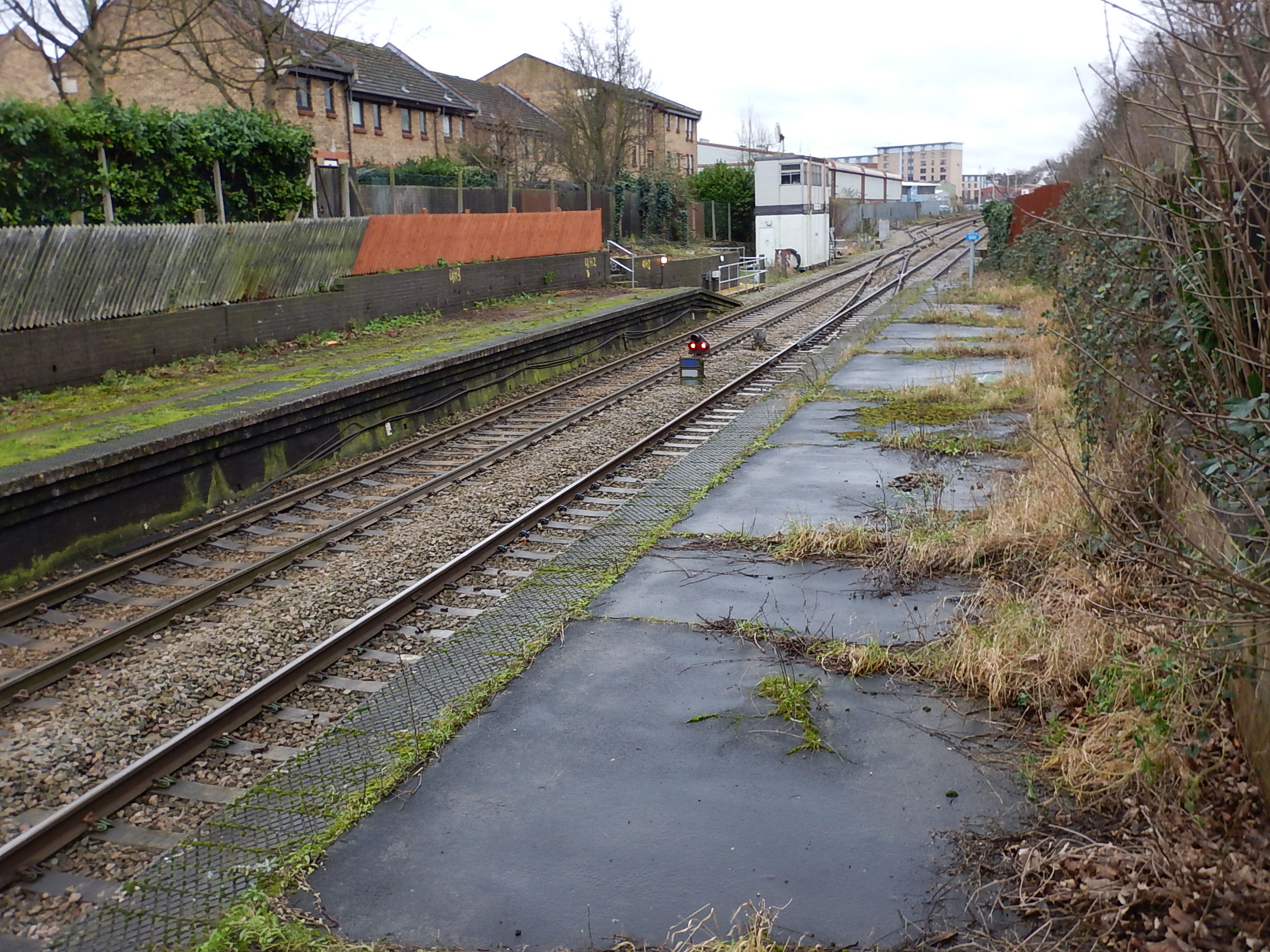
- The western end of the line from South Tottenham station sits in the middle of a wide track bed, with a few convenient metres of grass and scrub on each side of the line.
- The eastern end of the line from Leyton Midland Road station is on a viaduct, with the platforms either side of the track.
- Several of the station p[platforms are not long enough, but there are often disused sections that can be brought back into use.
- I don’t think there is any points or crossings between West of Blackhorse Road and East of Wanstead Park stations, which is all the viaduct section of the line.
- The line terminates in two bay platforms at Gospel Oak and Barking stations.
I suspect a few objectives have been laid down for the design and installation of the electrification and updating of the stations.
- Simple and affordable.
- Well-proven techniques.
- Installation in a minimum time, with as little disruption as possible.
- Ability to handle six-car trains after simple upgrades. This was not built-in to the North London and East London Lines
- As step-free as possible.
The following sections show what has been achieved so far and some of the problems and helpful factors of the electrification.
IPEMU
I like the IPEMU or Independently Powered Electric Multiple Unit and feel that it has a place in many electrification schemes.
We have to remember that the Class 710 trains destined for the GOBlin can be fitted with an IPEMU-capability.
So how could an IPEMU help in making the GOBlin an electric railway?
- The extension to Barking Riverside is only a few kilometres and could be run totally by IPEMUs charging on the rest of the line. Imagine the kudos, that would give the development at Riverside and the electrification costs it will save.
- During the construction phase, IPEMUs could provide a service from an electrified line over a section, where the wires were still being erected.
Whether we believe it or not, the IPEMU is coming and it’s just whether it will make its debut on the GOBlin.
Where Are The Trains?
One rumour from a reputable source (NC!), says that the line will be closed from June or July 2016 for eight months, whilst electrification is completed on the line and testing takes place. It will then open (Feb/Mar 2017?) with a full electric service.
If you look at Bombardier’s production schedule, the Class 710 trains destined for the GOBlin will not enter service until 2018.
So bang goes the reason for the eight-month suspension of service, as passengers won’t accept all that pain for no gain.
Perhaps, there could be some Class 315, Class 317, Class 321 or even some of the very ugly Class 319 trains available. After all only eight four-car units are required!
But I don’t think anybody would be pleased if a new flagship service was to be started after an eight-month closure, with the contents of British Rail’s dustbin.
It is often said, that someone else’s troubles is somebody else’s gain and the problems on the Great Western electrification, means that there could be some almost-new Class 387 trains available.
It should not be forgotten, that a Class 379 train, was used as the demonstrator in the IPEMU trial in Essex, and 379s are very much cousins of 387s.
I believe that the Class 387 trains, are the only acceptable and available trains, that will be available to open the service after an eight-month blockade.
Power Supplies
Often supplying power to the overhead wires is an expensive business, with the need for massive transformers and connection to the electricity supply.
The GOBlin has good connections to electrified lines and short sections that are already electrified.
- A connection to the North London Line at Gospel Oak
- A short electrified section at South Tottenham.
- A connection to the Great Eastern Main Line at Woodgrange Park.
- A short electrified section between Woodgrage Park and Barking.
So getting the power is one problem, that won’t challenge the engineers.
The Pattern Of The Piles
Look at any overhead electrified line in the UK and every fifty metres or generally less, you’ll see a masts and/or a portal frame to support the overhead wires, which is supported from both sides of the track. This Google Map shows Woodgrange Park station on the GOBlin.
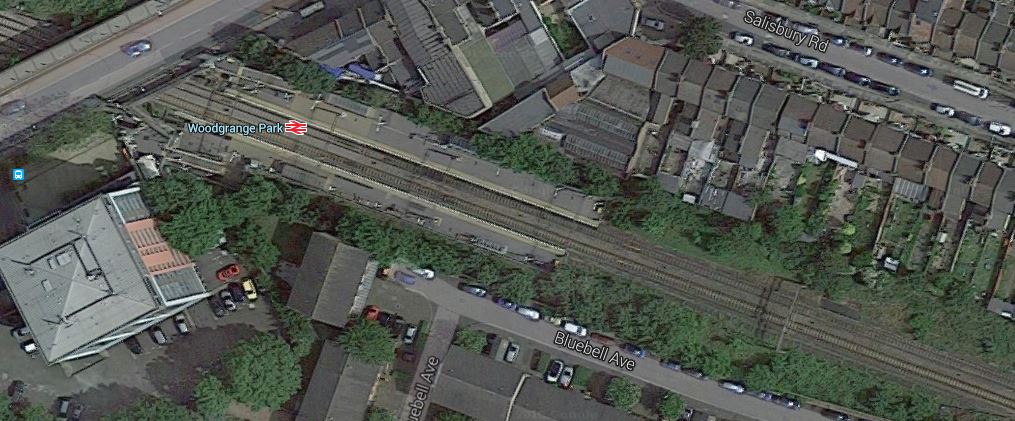
Electrification At Woodgrange Park Station
Note the frames supporting the wires everywhere, in the station, on the disused sections of the platforms and on the way to Barking,which is to the East (right).
If you look at the piles that have been put in to support the masts for the overhead wires on the western end of the GOBlin, they show a totally different pattern to that which I would expect. Here’s a few pictures.

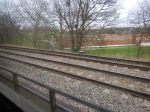
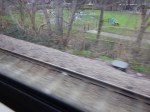
My observations lead me to define the pattern of piles as follows.
- Piles are paired, with one on each side, as expected.
- There are none in stations.
- There isn’t even any tell-tale paint, to indicate where the masts will go in the stations.
- Piles seem to stop thirty metres or so before stations and overbridges.
Murphys were so keen to get the piling started, they were thumping away on Christmas night, so given the days and nights available since them, there doesn’t seem to be too many piles in the ground.
So short of using skyhooks or drones, or perhaps calling on the services of someone like Jasper Maskelyne, what is going to happen?
In my view, there is only one possible solution and that is to put central masts between the two tracks.
I also suspect that some of the substantial road bridges over the GOBlin, will be used to support the overhead wires, as I’m sure that the engineers have a solution for that method of fixing. This picture shows an ancient fixing, under the arch at Stoke Newington station.

Overhead Wires At Stole Newington Station
I’m sure the modern product, is more elegant! And less corroded.
Central Masts
Normally in the UK, the overhead wires are supported from the sides of the track. But look at this picture from the Sheffield Supertram.
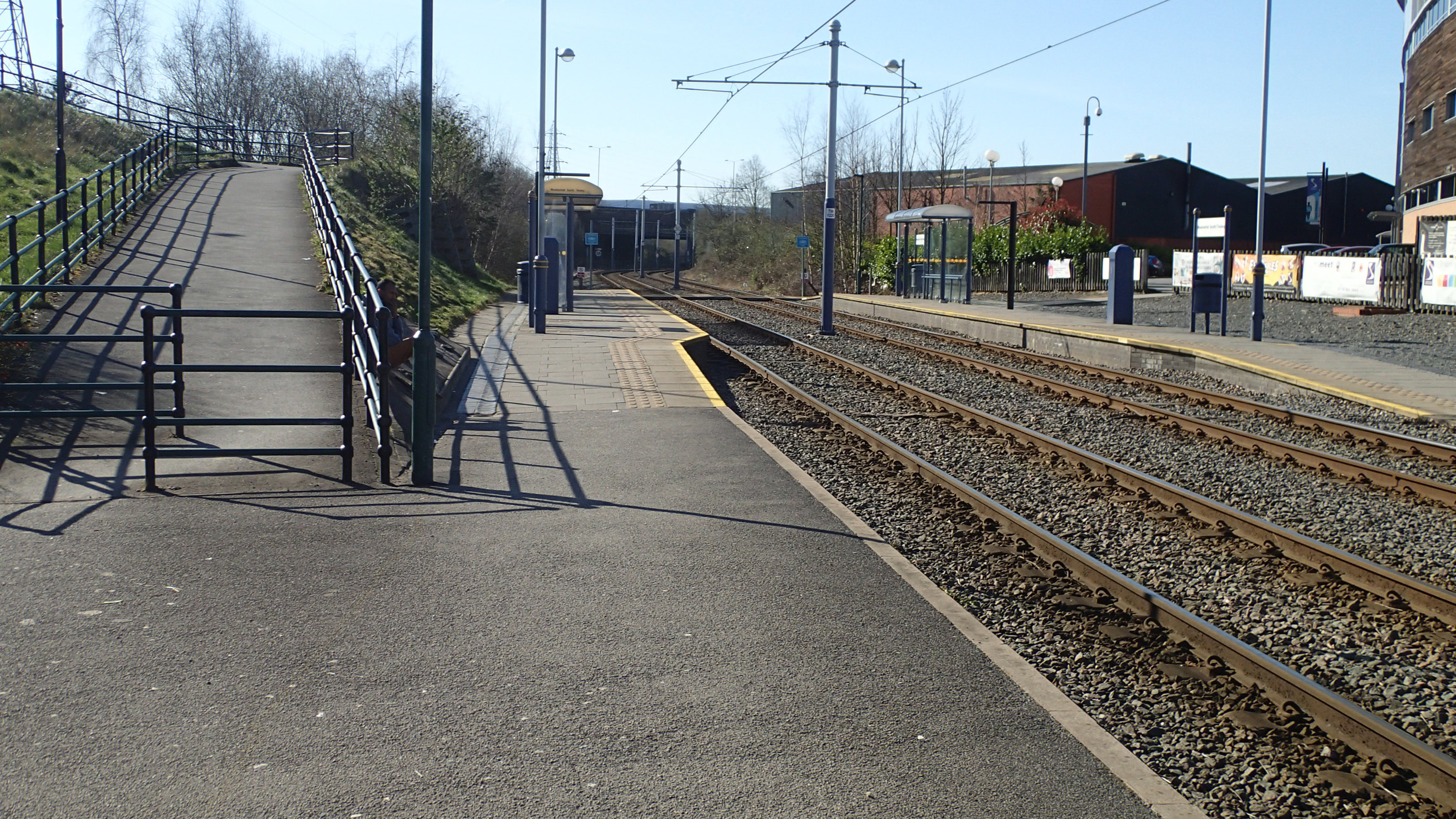
The Meadowhall South/Tinsley Tram Stop
Note how the overhead wires are supported from a central mast between the tracks.
Furrer + Frey, who are a well-respected Swiss manufacturer of equipment for railway electrification and a big supplier to Network Rail, have a wide range of methods shown in this page. One method is to use a central mast to support wires on both sides over the two tracks.
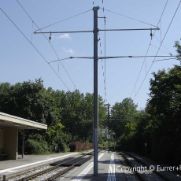
Furrer + Frey Central Mast
I feel that given the challenging constraints and demanding time-scale of electrifying the GOBlin, that central masts could help considerably.
They would need to be sturdy, but if you analyse the stresses in a typical central mast, the wires on both sides balance each other. It’s like a milkmaid carrying two buckets.
There may be other advantages in the installation of central masts, as the work will probably be done on a flat surface, using a rail mounted crane, whereas installing a portal frame over the railway may need scaffolding to be erected.
The latter method might also mean closing the businesses in the many arches under the line for the duration of the work.
The Upper Holloway Bridge
One of the problems of the work, is that in the middle of all this electrification, the bridge at Upper Holloway station is being replaced with the electrification work going on at the same time.
According to this document from TfL, the bridge deck is due to be replaced over Christmas 2016 and the project will be completed by the end of 2017.
Surely, this blows the time-scale of the whole project, as until the bridge is finished, surely electrification can’t proceed!
Or does it?
If the overhead wires through the station are supported centrally between the tracks, with the assistance of two strong portal frames outside the station/bridge area, it might be possible to change the bridge deck, using some of innovative techniques that were used at York, which I wrote about in Dancing With Cranes And A Bridge With Help From Lego.
This Google Map shows the station/bridge area.
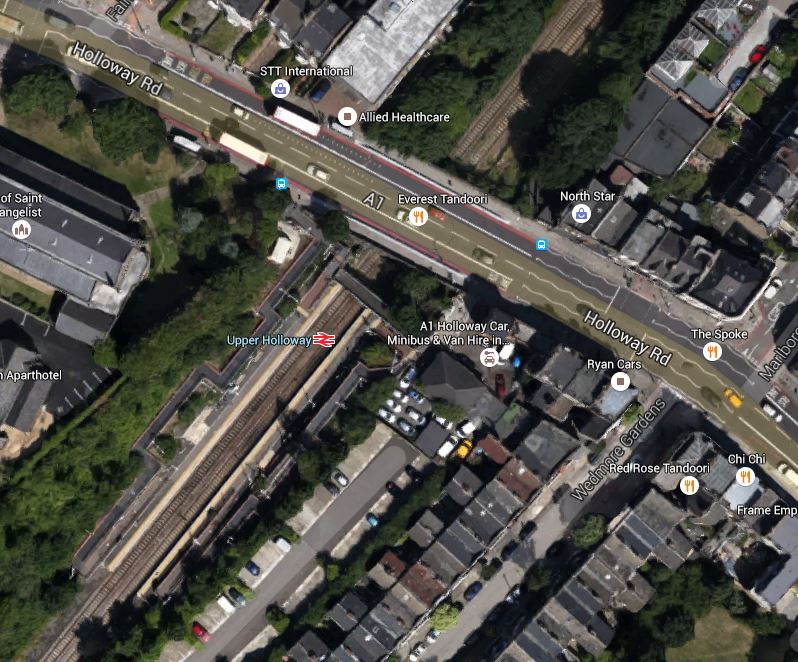
Upper Holloway Station, Bridge And The A1
Note that there is more space along the railway, than on the main road.
I think we need a new word to describe the nature of replacing this bridge, in just a few days over Christmas.
I suspect the bridge deck has been designed as a series of components, that are small enough to transport into the area, either by road or train, and then bolt them together like Meccano. It could be the most exciting live television of Christmas 2016.
To sum up, I believe that engineers have found a solution to electrify the line before the bridge deck is replaced.
I went to the station today and had a chat with an engineer.
He told me, that the bridge will be replaced bit-by-bit and indicated that there will be no big closure.
So could Transport for London have had a change of heart and decided to fit a new bridge over the gap, that will allow the wires to be put up at the same time, with the bridge assembled from a kit of smaller more manageable pieces?
The next few months will give an answer.
Whilst I was at Upper Holloway station, I took this picture, which shows the layout of lines to the West of the station.
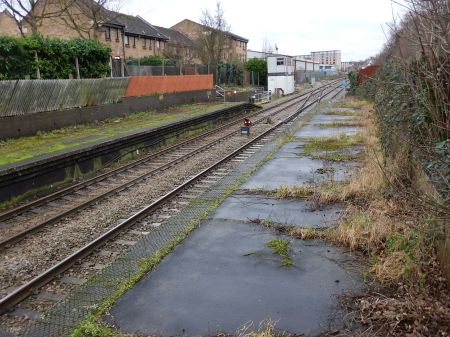
Note.
- There is only one pile in the picture and it is between the stacked-Portakabin signal box and the grey cabinet about ten metres further on, on the left.
- There are no piles or paint markings in the station area.
- There is plenty of space to extend the platforms, if that should be required.
- The crossing, which will need to be fully electrified, allows freight trains to access the Midland Main Line.
This all leads me to believe, that if overhead wires are going through this station, then they might well be supported on central masts.
Obviously, portal frames could still be attached to the platforms, but there is a lot of work going on to add two nice waiting rooms to the station. Surely, good project management would put up the masts and frames first!
Obviously, the wires can also be supported on the bridge, which was about thirty metres behind me, when I took the picture.
So you would have a solid road bridge at one end of the station and a very sturdy portal frame over the crossing by the signal box at the other to support the catenary, with some help from a couple of central masts in the station area.
Harringay Green Lanes Station
Harringay Green Lanes station is the nearest station on the line to my house, and to get there I just get a 141 bus direct too the station.
These pictures show the station.
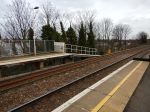
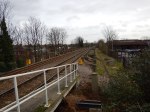


It should be said, that the station sits in the middle of an area, that Harringey Council want to redevelop and that this will involve a new station. I wrote about stations in the area in The Piccadilly And Victoria Lines, Manor House Station And Harringay Green Lanes Station.
You can understand why it needs a rebuild.
Typical portal frames to support the overhead wires would either have to reach from outside the platforms or be mounted on the platforms themselves. In the case of the former, there are extensive ramps and staircases in the way and in the case of the second, the platforms may be able to support a lot of passengers, but would they need substantial rebuilding to bear the weight of the portal frames?
Incidentally, there has been some piling to both the east and west of the station, so perhaps they’ll be two strong frames about twenty to thirty metres from the platforms? Obviously, to future-proof the station, they would be far-enough away to allow any possible platform extensions.
Between the platforms the wires could be supported on central masts. The pictures show, that the space between the tracks is probably wide enough for the installation of central masts.
Traditional electrification might be difficult or even impossible, but I’m sure there are clever engineers, who can get round the problems of stations like Harringay Green Lanes.
Leytonstone High Road Station
Leytonstone High Road station is typical of the viaduct-mounted stations towards the eastern end of the line. Leyton High Road and Wanstead Park are similar.
These pictures show the station, the viaduct to the east of the station and a nearby bridge.
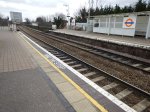

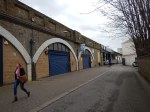
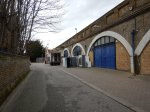

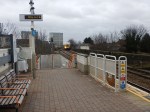
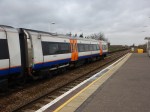

Note the following.
- The unrestored platforms, that could be brought back into use for longer trains.
- The industrial units under the station.
- The generous width between the platforms.
- No sign of any electrification works or even markings on the platforms.
I believe that these stations and the viaduct between them, could be electrified using central masts to support the overhead wires.
Arches, such as used to hold up the viaduct and house the industrial units are some of the strongest forms around. Look at any medieval cathedral or castle!
These arches may have been built by the Victorians, but you don’t hear many stories of sixty-eight tonne Class 66 locomotives and dozens of freight wagons and containers falling through.
Obviously, the masts would be properly anchored into the arches.
Could the viaduct section of the line be electrified using central masts from a company like Furrer + Frey?
Conclusion
Someone has got a very firm grip on this project and the finish date is very much up for grabs.
But it does seem, that they could be using the space between the tracks to support the overhead wires.
I also think that there could be a well-respected Swiss company somewhere in there rolling around.
Have they looked at Network Rail’s problems and applied their expertise of running electric trains in some of the most difficult terrain in Europe?
Painting London Orange
This article on BBC News is entitled Transport for London to take over suburban rail routes and it describes how TfL will have much more control over trains within and around London.
These are relevant points from the article.
- The new partnership between the Department for Transport and TfL says it aims to ensure there are more frequent trains and increased capacity.
- As franchises come up for renewal, they will come more under TfL’s control.
- The plan would mean more than 80% of stations would have a train at least every 15 minutes, up from 67%.
- Services running from London Bridge, Victoria, Charing Cross, Cannon Street and Moorgate would all be transformed under the scheme.
I think we’ll be seeing a lot more Overground orange on stations.
The Overground Philosophy
There are well-run railways all over the world, but somehow the Overground is different.
Whether it is because it is an offspring of the well-respected and much-loved Underground or whether because it reaches the parts the Underground doesn’t, it is difficult to explain, why in only a few years, the Overground has wormed its way into the hearts and minds of residents and visitors alike.
All lines adhere to the following principles.
- Trains at a frequency of at least four trains per hour.
- Staff on the station from the time the first train arrives to the time the last train leaves.
- Clean, modern trains and stations.
- Simple contactless ticketing.
- Increasing the proportion of step-free access.
- No pre-booking for passenger assistance for the disabled.
- All profits made, are invested back in the network.
- Continuous innovation and improvement
Some of these principles have come direct from the Underground.
The North London Line
Around the turn of the millennium the North London Line, had all the charm of a set of travelling urinals. Everything was tired and worn out, but within a few years of the start of the Overground, with new Class 378 trains, a couple of new stations and a deep clean of the others, ridership had soared and its major problem was increasing the size and number of the trains to cope with the growth in passenger numbers.
One of my local stations is Canonbury. The Overground has improved the station in the following ways.
- Six trains per hour on the North London Line and eight trains per hour on the East London Line.
- A new ticket office and two extra platforms.
- Full step-free access to all platforms.
- Large platform shelters.
- Cross platform interchange between Westbound NLL services and Southbound ELL services.
The only thing it lacks is a high quality artwork on the spacious island platform.
Canonbury even gets the occasional steam train, as I wrote about in Tornado at Canonbury Station.
I think it’s probably true to say, that Transport for London haven’t spent a fortune at Canonbury, but somehow they’ve created a quirky station that does its job with style.
London needs more Canonburys.
London Votes
London doesn’t vote red or blue any more. It now votes red, blue and orange!
In other words, if you stand as Mayor and don’t have a creditable policy for expanding London’s transport network, you won’t get elected. And one of the things you must do is support the Overground.
So now that Transport for London is going to get overall control of suburban services, it is perhaps worth looking at what lines out of London stack up against the principles of the Overground.
The Orange Standard
I’ll first look at various Overground routes to gauge their characteristics.
- Clapham Junction to Stratford – 2 trains per hour
- Clapham Junction to Willesden Junction – 2 trains per hour
- Dalston Junction to New Cross – 4 trains per hour
- Dalston Junction to West Croydon – 4 trains per hour
- Euston to Watford Junction – 3 trains per hour
- Gospel Oak to Barking – 4 trains per hour
- Highbury and Islington to Clapham Junction – 4 trains per hour
- Highbury and Islington to Crystal Palace – 4 trains per hour
- Liverpool Street to Cheshunt – 2-4 trains per hour
- Liverpool Street to Chingford – 4 trains per hour
- Liverpool Street to Enfield – 2-4 trains per hour
- Richmond to Stratford – 4 trains per hour
- Romford to Upminster – 2 trains per hour
All have or will have new trains by 2020.
Non-Train And Station Improvements
When you travel to a TfL-controlled station like say my local one of Dalston Junction and need to get a bus to your ultimate destination, there are lots of maps; geographic and spider and staff to ask as well.
This is not the same if you turn up at some stations controlled by South West Trains, Southeastern and other companies.
Transport for London should devise a standard for all stations connected to London.
London Lines To Paint Orange
The next few sections deal with London terminals.
Waterloo
These are the suburban lines out of Waterloo.
- Chessington South – 2 trains per hour – Must try harder
- Epsom – 4 trains per hour
- Hampton Court – 2 trains per hour – Must try harder
- Shepperton – 2 trains per hour – Must try harder
Quite frankly it’s a mess.
- There are not enough platforms at Waterloo.
- Some stations like Raynes Park come from the Topsy school of design.
- Some stations need lengthened platforms.
- There is a lack of turn-back platforms.
- Services tend to go a long way out of London, stopping in too many places, so you have overcapacity at the outer ends and overcrowding towards Waterloo.
- Connectivity meeds to be improved between the various lines.
- A lot of sacred cows need shooting.
- Action is needed now!
- South London can be very obstructive of changes!
Transport for London are promoting Crossrail 2 to sort out the mess, but I think there is a need to act immediately.
I think that these services need balancing, so that the outer overcapacity and inner overcrowding are reduced.
I have my ideas, which I’ll keep personal, but they involve rebuilding the truly awful Raynes Psrk station.
Looking For Taxis At Birmingham New Street Station
Because of the fasciitis in my right foot, I decided to take a taxi from Birmingham New Street station to St. Andrews.
But where were the taxis?

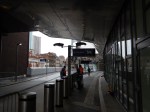


Eventually an immaculate Metrocab did turn up and the driver explained. Apparently, there’s a row between the taxi drivers and NCP, who organise the taxi rank.
So Birmingham New Street station, may have a doggie toilet, but it doesn’t have many taxis or any trams.
It has also abandoned the traditional paper posters, with their lists of trains.
Arriva Rail North’s New Trains
Arriva Rail North have announced a deal for a future fleet of new trains from privately-owned Spanish manufacturer; CAF.
Class 333 trains from this manufacturer, are already running in the North, so I suspect that Arriva Rail North know a lot about their quality and reliability. As a mere passenger, I’ve found the trains around Leeds to be very acceptable.
In the UK, CAF’s trams run on the Midland Metrolink and in Edinburgh, so CAF is not a manufacturer unknown to the UK.
CAF are proposing their Civity train, which comes in various modules, as summed up by Wikipedia.
The Civity is a modular concept which can be delivered as an Electric multiple unit, Diesel multiple unit, Diesel-electric or Dual mode. This family of trains is designed for 4 different power supplies: 1500 V DC, 3000 V DC, 15 kV AC and 25 kV AC. Each unit has shared motor bogies and a low floor of 860 mm. The design was launched in 2010.
So it would appear that, as a modular design, where DMUs and EMUs will share components and characteristics, it may offer cost savings to an operator.
This data sheet from CAF describes the Civity range. Points to note.
- It has been designed for standard gauge.
- There is a UK version called Civity UK.
- There is a cold-weather version called Civity NORDIC.
- There is a Russian gauge version. As CAF have sold to Ireland, I suspect there’s an Irish gauge version.
- Top speed is 160 kph, but 200 kph is available.
- The list of interior options is wide.
Reading the data sheet, I get the impression that Arriva Rail North are getting standard trains with the features they want.
I don’t know the answer, but I suspect that like the Class 378 trains of the London Overground, the Civity trains can be lengthened or shortened, by adding or removing trailer cars between the two driving cars. This concept has worked so well on the Overground, I doubt that a train manufacturer wouldn’t copy it.
Thus you could have four car DMUs on a route like the Calder Valley Line. When the line gets electrified, you do a bit of swapping and add two electric driving cars and get four-car EMUs and two-car DMUs.
The trains are already in service in three countries; Italy, Latvia and Montenegro, with an order for 120 trains for The Netherlands in the pipeline.
Reading the various articles about the purchase, some worries surface in comments.
One is that do CAF have the capacity to build all the trains required? I think they do for two related reasons.
They are a private company based in the Basque country and it will be a matter of pride on the part of the owners and the region to not fail. This section from Wikipedia about the countries history is interesting.
Since 1958 the company has modernized and enlarged its Beasain plant and expanded its activity to include all kinds of rolling stock. In line with this, in 1969 CAF created its Research and Development Unit, which increased the company’s competitiveness and intensified the focus on in-house technology.
CAF gives the impression, it is an ambitious, technology-led company and I believe the Arriva Rail North and Dutch orders are just steps up the ladder.
Worries are also raised that there aren’t enough trains ordered by Arriva Rail North and that the new trains will not be built in the UK.
On the number of trains, I would tend to agree, but if Arriva Rail North’s business plan is successful, then there will be money to purchase more trains and lengthen the existing ones, just as happened on the London Overground. People seem to forget we live in the New Age of the Train and Tram and the days of inadequate rolling stock orders to please the Treasury are hopefully over.
The fact that the trains will be built in Spain rather than the UK, is not that significant, if you look at what has happened in the motor industry, where a dead industry is now thriving on exports. We may not see any more train factories in the UK, but we do produce good railway technology in certain areas and as trains revive all over the world, there will be opportunities for the best companies manufacturing in the UK.
I would add a question about the order.
Over the next few years, the North will gradually develop a network of electrified trunk lines, which Arriva Rail North will exploit with the Northern Connect sub-brand.
Ever since, I rode the prototype IPEMU at Manningtree, I have believed that the technology has a place in the UK’s rolling stock and especially on routes in the North.
So I do wonder, if CAF have an IPEMU in their stable, as it would be ideal for say the Windermere and Barrow services.
But CAF did have a large hand in the creation of the Seville tram. This is said about the tram’s movement without catenary in Wikipedia.
From the start it was envisaged that part of the Metrocentro system should be able to run free from using the overhead contact wire for power. On several occasions the City of Seville administration had to dismantle the overhead wires to allow, at Easter, processions to pass without restriction; the builder of the rolling stock paid the extra cost for this.
The final system, which is now in use commenced from Holy Week 2011, the system uses advanced technology ACR (Acumulador de Carga Rápida) fast charging batteries -developed and patented by the Spanish company CAF.
As an electrical and control engineer by training, I feel that the modular design of the Civity train, which does include dual-mode trains, could possibly lead to an IPEMU.
Lets face it, Bombardier probably haven’t got much unique IPR in their IPEMU design and batteries and other energy storage devices are used in all sorts of vehicles from racing cars, to hybrid and electric cars and buses.
It’s all about putting the right modules together, to create a fleet of trains that fits the services you want to run.
If you look at the various Northern Connect routes, some could use EMUs, some DMUs and others like Windermere to Manchester Airport could use dual-mode trains.
This is said in an article in Rail Magazine.
The contract is for 31 three-car and 12 four-car electric multiple units, and 25 two-car and 30 three-car diesel multiple units. The carriages will be owned by Eversholt Rail, and all will be in traffic by December 2018.
Using the diagrams on this page on CAF’s web site, this translates into the following.
- 86 EMU cabs
- 110 DMU cabs
- 85 Trailers
Which rather unsurprisingly adds up to 281 cars, the figure given in the article.
The question has to be asked, how many, if any, of the trains will be dual-mode variants, which can run on either overhead wires or on-board diesel engines.
It should be noted that the installed diesel power on a three-car dual-mode train is 200 kW or about the same as that of a single-car Class 153 train, so it might be fine when trundling Between Oxenholme and Windermere, but it is no long-distance charger.
Until we see the full fleet running a full service, we won’t see the actual mix of trains.
I think, that we’ll see other orders for the Civity family of trains in the near future.
Some will be in the UK.
Birmingham, Bristol, East Anglia and South Wales are all places, where a flexible fleet like Arriva Rail North seems to have ordered, will go down well.
If you look at the latest offerings from Alsthom, Bombardier, Hitachi and Siemens, they lack the flexibility of the Civity design.
I think that Arriva Rail North’s order could be more significant than anybody thinks!
The Saga Of The Ordsall Chord Goes Into Extra Time
If there is one railway project that sums up one of the worst problems often faced by rail planners in this country it is the endless saga of the Ordsall Chord. Wikipedia describes the chord and the reason for building it in this paragraph.
The Ordsall Chord is a proposed short railway line in the Ordsall area of Greater Manchester. It will link Manchester Piccadilly and Manchester Victoria and it is expected to increase capacity in the region and reduce journey times into and through Manchester.
Sadly, the endless fights, that this worthy aim, which would be to the good of millions of rail travellers, could have been avoided if history was different.
The Picc-Vic Tunnel was one of three major tunnels under Northern cities to improve rail services. The other two in Liverpool and Newcastle were built, but Manchester’s solution was cancelled by that very bad friend of trains in the North; Harold Wilson.
And then, the Ordsall Chord was proposed as an alternative to the tunnel. Wikipedia says this.
The chord was first proposed in the late 1970s. Parliamentary powers for its construction were received in 1979, but the project was cancelled. Network Rail revived the proposal in 2010 as part of its Manchester Northern Hub proposal. Funding for its construction was announced in the 2011 United Kingdom budget. It is scheduled to be completed by December 2016, and will cost around £85 million to construct.
So the proposal has been around a long time and since 2011, there has been the money to build it.
In A Single Objector Holds Up The Ordsall Chord, I expressed my despair at the delay and said this.
I will not judge this case one way or the other, but one of the reasons for bad economic progress in the North is poor and outdated rail infrastructure. So surely, it would have been better to have got this argument out of the way a couple of years ago.
I do wonder in this country, how many projects don’t ever get started because organisations like Network Rail feel it is better not to have a fight and leave the inadequate status quo alone.
So now according to this article in Rail Magazine, which is entitled Whitby issues new challenge to Ordsall Chord, the original objector is taking his challenge to a higher court. This is said in the article.
That High Court ruling also refused Whitby the right to appeal. However, Whitby has appealed this refusal, and on January 11 the Court of Appeal granted Leave to Appeal. Thus the former President of the Institution of Civil Engineers is set to launch his third attempt to derail the Ordsall Chord project, on a date to be set later this year. “The grounds of appeal raise important points and have real prospects of success,” the Court of Appeal said.
Comments from Council leaders in the area are less than pleased.
In another article in Manchester Confidential, there is this user comment.
If Mark Whitby is so right why did he lose the Judicial Review? The judge who heard the hearing Mrs Justice Lang who is no pushover in these matters. Ruled that the Public Enquiry was legally flawless and agreed with the planning inspector that the common good over ruled the objections to the Chord.
I don’t think its about historic buildings more Mr. Whitby’s dented big ego because his route was rejected.
Hopefully if he loses he should be made to pick up the bill for all the public money he’s wasted.
I think a lot of people feel that way about Mark Whitby.
What worries me is that if the Court of Appeal turns down the appeal, will the case go to the Supreme Court and then an appropriate European one.
The only winners in this sad saga are the lawyers.
But there are millions all over the North, who just want to get about their business, who are very big losers.
And that doesn’t count, all taxpayers from Lands End to John O’Groats, who are eventually footing the bill, for one man’s stubbornness.
Whitechapel Station – 23rd January 2016
These pictures show the changes that have happened at Whitechapel station in the last week.

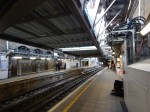
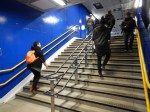

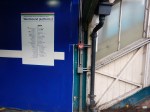
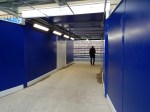

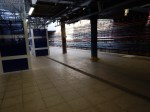

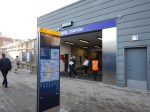
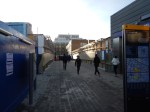

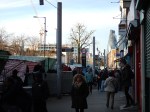
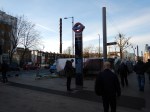


It is now possible to change direction on the wide platform between the Eastbound and Westbound lines of the District and Metropolitan Lines.
The escalators to the Crossrail lines will also be located in this wide platform. So changing between Crossrail and the \district and Metropolitan Lines will be very straightforward.
What surprised me was the quality of the temporary station. It’s actually a lot better and far more spscious than the one that was used previously, with several more gates.
A Trip To Barking
In A Story And A Rumour About The Gospel Oak To Barking Line, I reported on a rumour that an LO staffer had said that the electrification will be complete by June.
I think this is impossible, as according to this document on the TfL web site, the bridge at Upper Holloway station will only be completed before the end of 2017. I don’t think I’m alone in thinking that the bridge must be completed before the electrification.
Surely,if the electrification is to be completed by June, then there will be evidence of construction all along the line.
Today, I went to Barking station and had a look around.
- The GOBlin terminates in Platform 1 at Barking station and there is no evidence of any construction there.
- There was no evidence of piling between Barking station and the short length of electrification between Barking and Woodgrange Park station.
- There was also no evidence of any work tro create supports for the catenary on the elevated section of the line between Woodgrange Park and Leyton Midland Road stations.
On a quick look too, there didn’t appear to be any construction cabins, that would be normal for such an undertaking, as electrifyimg a dozen miles of railway..
I then had a think about the objectives of all the work on the Gospel Oak to Barking Line.
- Replace the two car Class 172 diesel multiple units with four-car Class 710 electric multiple units.
- Allow freight trains to be hauled by electric locomotives.
- Extend the line to Barking Riverside.
This map from carto.metro.free.fr shows the lines at Barking station.
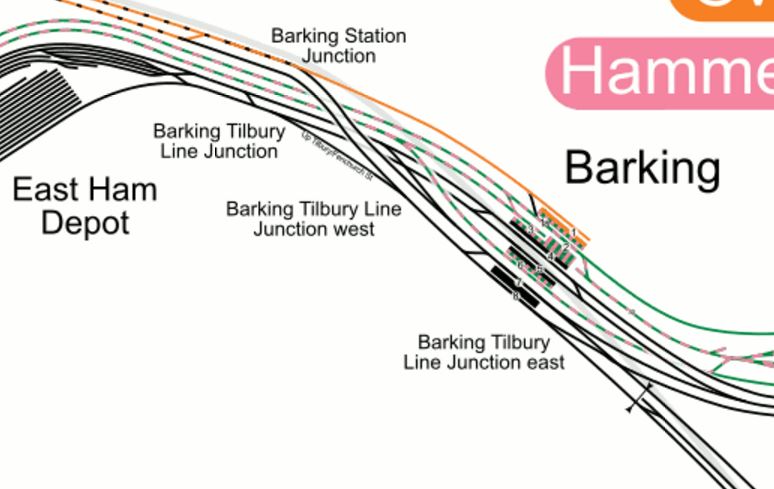
Lines At Barking Station
Note the following.
- The GOBlin (orange) terminates in the bay platform 1, on the North side of the station.
- Freight trains to and from London Gateway, Tilbury and the East, go through the two Barking Tilbury Line junctions and then access the GOBlin using a flyover and the Barking Station junction.
- Barking Riverside station is on a spur off the Tilbury Line to the South East.
So I asked myself, what electrification needs to be done to get electric-hauled freight trains off and on the GOBlin.
As c2c runs electric services in and out of Liverpool Street at certain times, I suspect that the wiring to get electric-hauled freight onto the GOBlin is already there.
So we’re left with the only electrification at Barking being platform 1 and the extension to Barking Riverside. The total length is probably under ten kilometres.
According to Bombardier, all Aventra trains like the Class 710 will have an energy storage capability.
So could we be seeing an extension to Barking Riverside like this?
- Between Barking Station junction and Barking Riverside station, the Class 710 trains run on their batteries.
- Eastbound and westbound services both use Platform 1, so the GOBlin has its own single-platform at Barking. Recently, Network Rail has built several single-platform stations.
- Platform 1 is not electrified.
- The line through Platform 1 is extended under the station to give a direct connection to Barking Riverside. This might need another flyover or some extra points and crossings.
- The branch line to Barking Riverside and the station are not electrified.
Effectively, using the IPEMU capability of the Class 710 trains, has simplified the project and reduced the length of electrification required by a large amount.
Whilst I was at Barking station, I took this picture.
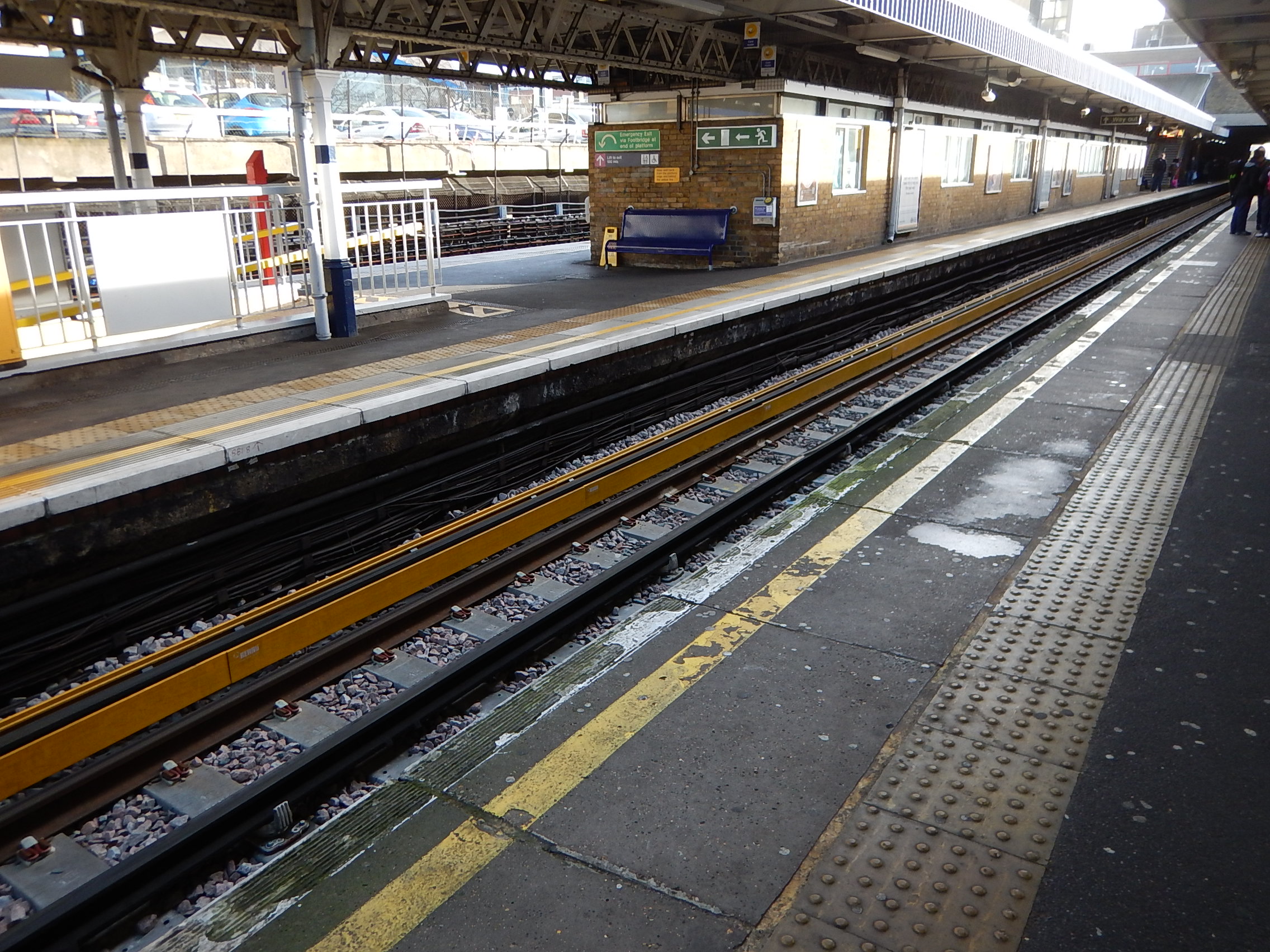
A Protected Conductor Rail At Barking Station
Note how the conductor rail is protected by a yellow wooden shield.
Why?
Is it to protect passengers or the work-force?
My Least Favourite Roundabout Gets Pedestrian Lights
When you go to Birmingham City to watch a match from Bordesley station, you take your life in your hands to cross the road. I reported the bad roundabout in A Pedestrian Crossing From Hell.
But look what’s happening!
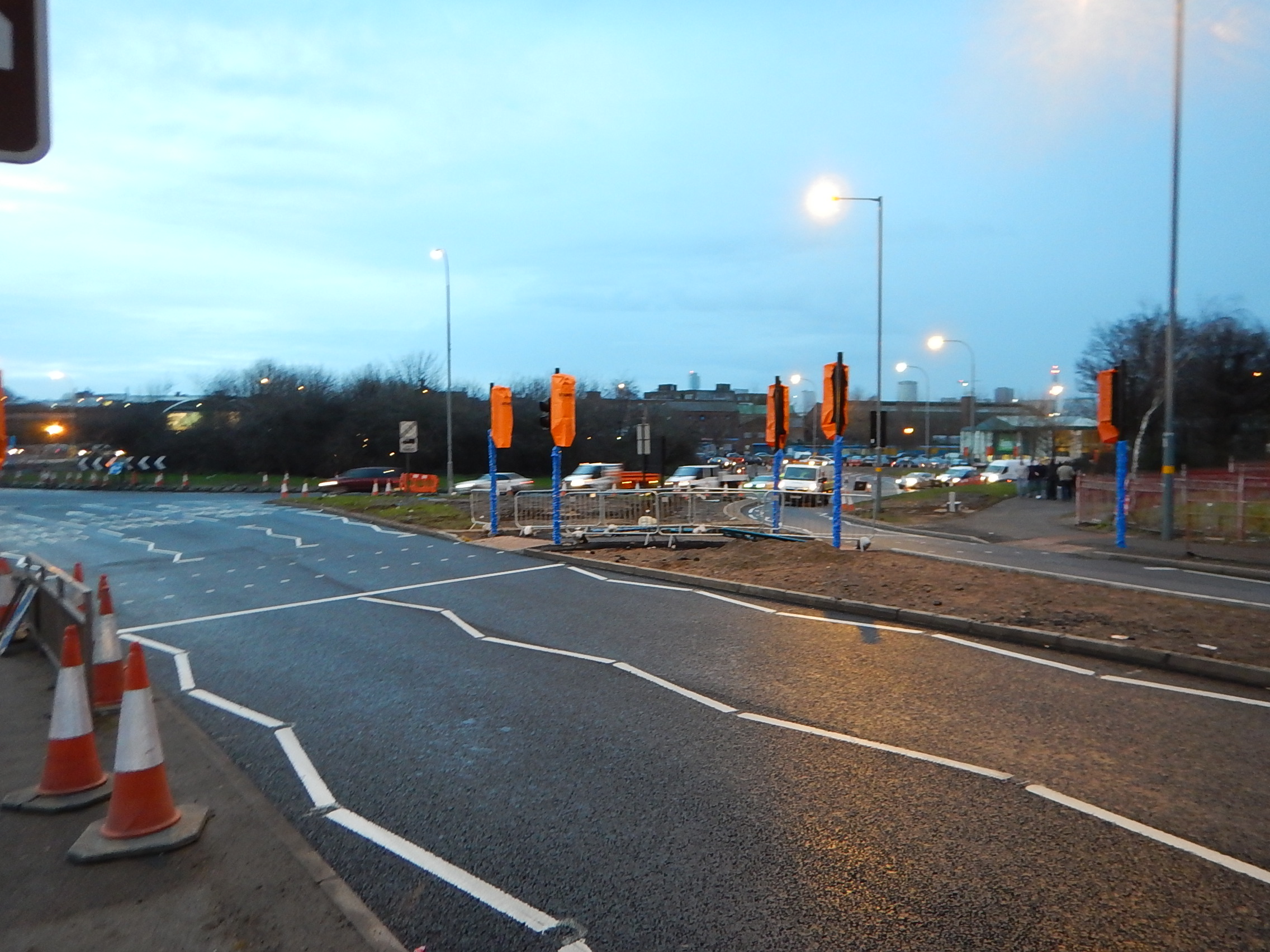
My Least Favourite Roundabout Gets Pedestrian Lights
Hopefully, the lights will be working before someone gets killed.
Crossrail Trains Will Have Auto-Reverse
I am a control engineer and I have worked in industrial automation on and off since I was sixteen, when I had a summer job in the electronics laboratory at Enfield Rolling Mills at Brimsdown.
One of the problems of running a railway to a high frequency, is that when you get to the terminus, the driver has to get off the train, walk to the other end and then step-up into the other cab. So a couple of minutes or so is wasted. On some lines, where drivers change over, there are delays and extra costs. It is one of the reasons, why train lines sometimes have reversing loops, like the Piccadilly Line at Heathrow and the Wirral Line underneath Liverpool.
It is also why, there has been talk of extending the Victoria Line in a large loop to a single platform at a new station under Herne Hill. I wouldn’t be surprised if when they extend the Northern Line Extension to Clapham Junction or the Bakerloo Line to Lewisham, that they use loops with single platform stations. The layout has the following advantages.
- The driver stays in his seat and drives the train normally.
- Stations are more affordable as they only have one platform.
- Passengers always go to the same platform and get the first train.
- It might be possible to dig the reversing loop with a single tunnel boring machine.
It is such a simple concept, I can’t understand why it isn’t used more.
Crossrail has a different problem in that all branches, except Heathrow, end on the surface and the Class 345 trains are two hundred metres long. So running a train every two minutes or so, means that drivers have a lot to do in the turn-round including a 200 metre walk.
The Class 345 trains are designed to incorporate auto-reverse. This extract from this article in Rail Engineer, which is entitled, Signalling Crossrail, explains the concept.
A new facility called ‘auto reverse’ is being provided at Westbourne Park (no station) for turning the 14 trains per hour in the reversing sidings. The driver selects ‘auto reverse’ on leaving Paddington station and walks back through the train, obviating the need for drivers to ‘step-up’. By the time the train gets back to Paddington (about a mile) the driver should be in the other cab ready to form the next eastbound departure.
The facility has the capability to turn round a full 30 tph service. There is just time for the driver to walk back through the train whilst in the reversing siding but doing so on departure at Paddington gives that extra time that will also help recover from perturbation.
Essentially, the driver does his walk whilst the train is travelling to the reversing siding. It must have other advantages.
- The driver can check the train as he walks.
- Cleaners can get on at the actual terminus and then get off again with the usual rubbish.
- Someone who goes to sleep, just gets an extra ride into the reversing siding and out again.
It’s a very simple piece of automation, which as the extract says, enables a full 30 tph service and makes recovery from delays easier.
The only problem, I can see is that the drivers’ unions could insist that a driver is in the cab at all times.
It would appear that the system will be used by Crossrail at Abbey Wood and Paddington.
I also suspect that the driver will have a rudimentary train controller to stop the train in an emergency.
 The Anonymous Widower