Restoring Manchester Victoria Station
I took these pictures as I passed through Manchester Victoria station today.
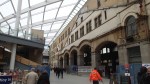



Some might think, that we spend more time and effort on getting the heritage details perfect, than we do on improving the experience for passengers.
My only hope is that if this space gets used as a restaurant, then it gets one with a bit of quality.
Where Is The Todmorden Curve When You Need It?
In my view, one of the biggest sins in good project management is to do jobs in the incorrect sequence.
In recent months, two important projects have been scheduled in the north of Lancashire.
Todmorden Curve
The Todmoden Curve is a short stretch of railway that will improve train services between Burnley and Blackburn to Manchester Victoria, by way of Todmorden and Rochdale.
The first train ran in May 2014 and from May 16th this year, there will be a full service.
Farnworth Tunnel
The Farnworth Tunnel has to be enlarged for electrification and it means that for the next few months, the direct route from Preston to Manchester will be very much reduced in capacity.
Work on this will start soon and the new reduced service kicked in today.
My Journey Today
At Preston on Friday, I asked if there would be a normal Blackburn Manchester service by the Ribble Valley Line. I was told yes and on reading the handouts from Virgin, there was no mention of any diversions or altered services.
But when I arrived at Blackburn station, I was told there was a bus to Salford Crescent, from where I could get a train to Manchester Piccadilly.
The bus took nearly ninety minutes and then I had to wait another twenty to get a train to Manchester Victoria, from where I got a tram to Piccadilly. There I got a train to Euston, which although it did go by a roundabout route because of engineering works, brought me safely to London.
It would have been so much easier to get from Blackburn to Manchester if the services by the Todmorden Curve were started before the partial closure of the Farnworth route.
The fact that the curve wasn’t opened before work on the tunnel started was a disgrace and it unnecessarily inconvenienced lots of passengers.
Mill Hill Station And Ewood Park
Ewood Park, the home of Blackburn Rovers is not the easiest ground to get to from the main station for the town.
Normally, I take a bus from the station, but it is not the easiest way as there is no relevant information, despite the fact that the bus station is outside the train one. Obviously, the natives are psychic in Blackburn.
So today, I decided to go via Mill Hill station as it looked like a downhill walk to the ground. This Google Earth image shows the area.

Mill Hill Station And Ewood Park
Mill Hill station is in the top left of the picture and the football ground is to the bottom right. These are some pictures of the station.
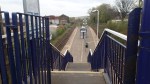
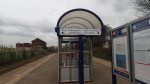
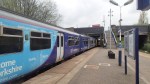
I didn’t post any of the maps and signposts at the station, as there isn’t any meaningful information on how to get to the football ground.
I don’t think I’ll bother with this route again, as it has little to recommend it and a station that desperately needs more information and disabled access.
It is a truly dreadful station and after the Todmorden Curve is fully open, you’ll need to change trains at Blackburn to get here from Manchester.
The Scenic Route From Preston To Blackburn
I didn’t take the direct route from Preston to Blackburn, but decided to explore the East Lancashire Line that stretches from Blackpool on the coast to Colne deep in the hills.



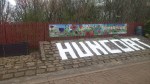






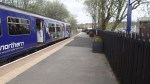
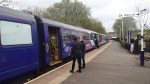
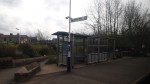
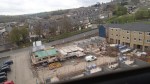
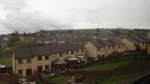
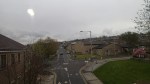

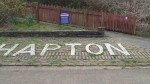

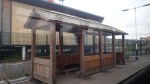

It is one of those rural lines, that has a lot of the flavour of the Valley Lines in South Wales. Trains are elderly, but well-turned out Class 142 and Class 150 trains, running between a series of stations, many of which have been recently upgraded. To get a better feel of the Burnley area, this is a Google Earth image of the centre of Burnley.
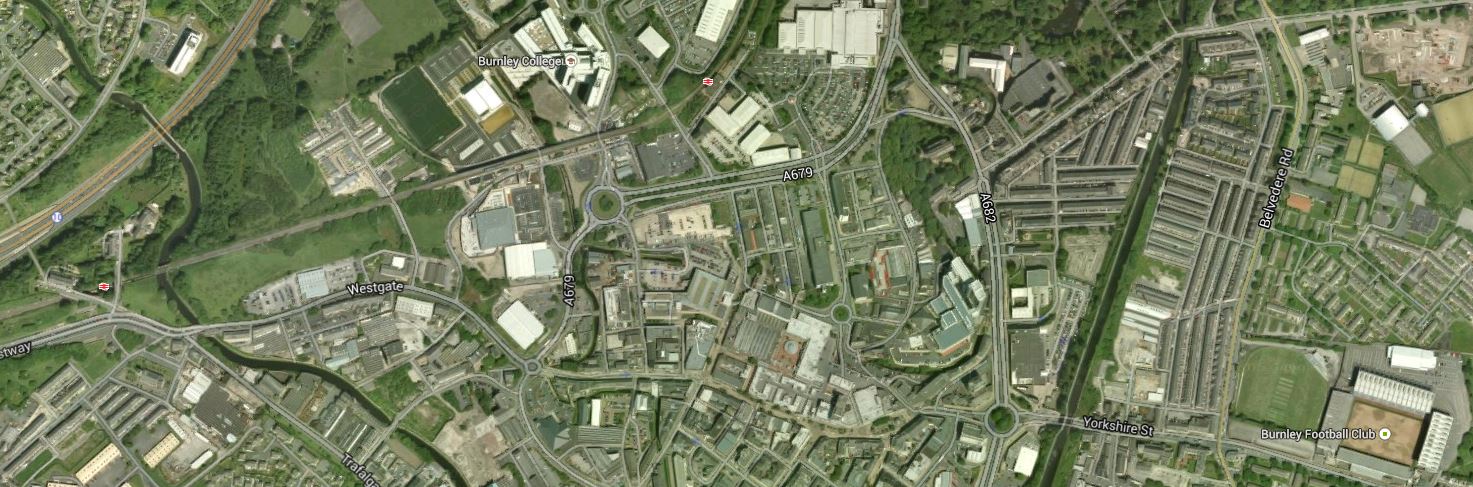
The Centre Of Burnley
The two stations; Central and Barracks lie on the rail line that goes across the top-left corner of the image. For most of that way, the line is on a viaduct with a station at each end. Turf Moor, the home of Burnley FC is at the far right of the map.
The East Lancashire Line is very much down the list of electrification priorities, but as it has interchanges at Preston, Blackpool and Rose Grove, that are electrified or will be in a few years, the costs of electrification will be eased by the supplying of power being already there.
Some work needs to be done on the stations, but a lot is informational like the signage and local maps at Mill Hill. Some like Mill Hill and perhaps others, need improvement to their disabled access.
There is pressure to extend the line past Colne to Skipton. and it is description under South East Lancashire Rail Action Partnership. The Wikipedia article says this about the link.
The missing section of railway between Skipton and Colne is 11.5 miles in length; it was closed in January 1970 although it was not a target under the Beeching Axe.
Dr. Beeching is a hot topic, but when he said a railway shouldn’t be closed, history has in some cases like the Varsity Line, shown him to be right.
At least with Colne to Skipton, the trackbed hasn’t been built on.
Having seen tram-trains working successfully in Germany and France, I think that if the Class 399 trains prove successful in their trials between Sheffield and Rotherham, that vehicles like this may offer a cost effective way of linking between two electrified lines. Skipton station is electrified, but Colne is not. However from Rose Grove to Preston and on to Blackpool is planned to be completely electrified in the next few years.
So as Burnley Barracks and Central, Brierfield, Nelson and Colne will effectively be on a single line branch from Rose Grove could it be electrified to perhaps only a tramway standard with occasional passing places and extended to Skipton? Intriguingly, at the other end of the line at Blackpool South the trains could then transfer to the Blackpool tram system.
It may sound all rather fanciful, but it might be easier to slot a tram track through Colne, rather than build a new railway, especially as this Google Earth image of Colne station, shows that there is the dual-carriageway A6068 and a football pitch in the way.
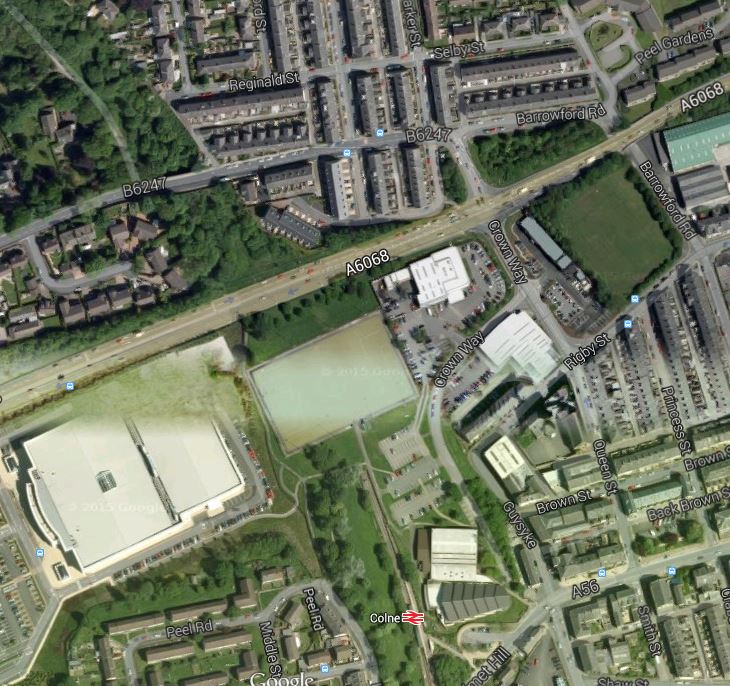
Colne Station
It would surely be cheaper to cross the main road with a tram rather than a railway track.
Surely another advantage of using tram technology is that it will be easier to add extra stops on the line.
I do think that this neglected line from Blackpool South to Colne via Preston has scope for improvement. Judging by some of the ideas in various forums on the Internet, there are a lot of ideas that get proposed by politicians, rail professionals, enthusiasts and train users.
Three things though are going to help decide what happens to this line.
If the incoming government does what is threatened at the present time and electrifies the Calder Valley Line from Preston to Leeds via Blackburn and Burnley, there will likely be a sound economic case for electrifying from Blackpool South to Preston and from Rose Grove to Colne, as both lines are mainly single track.
Electrification will also make sound sense, as there will be more than a few electric trains available, as Crossrail and Thameslink are getting new trains and the displaced trains will be cheaper to refurbish than build new diesels.
I believe tram-trains will be a success and that these could prove ideal to extend the Blackpool tramway. Incidentally, I’ve found a report on the Sintropher website, which details how the Blackpool tramway will be made compatible with tram-trains.
Poulton-le-Fylde Station
Poulton-le-Fylde station is a station on the Blackpool North branch line. After my troubles at Oxenholme, I decided to use my ticket to explore some of the stations on the branch. These are some pictures I took.
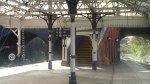
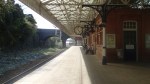
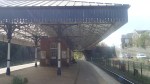
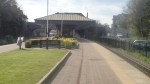
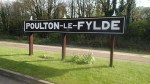
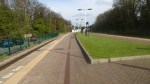
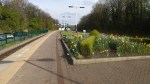

Although the station looks rather disabled-unfriendly, it does have a lift.
There is still a track from here to Fleetwood, which in some reports might be reopened as an extension to the Blackpool tramway. It is clearly visible in this Google Earth image.
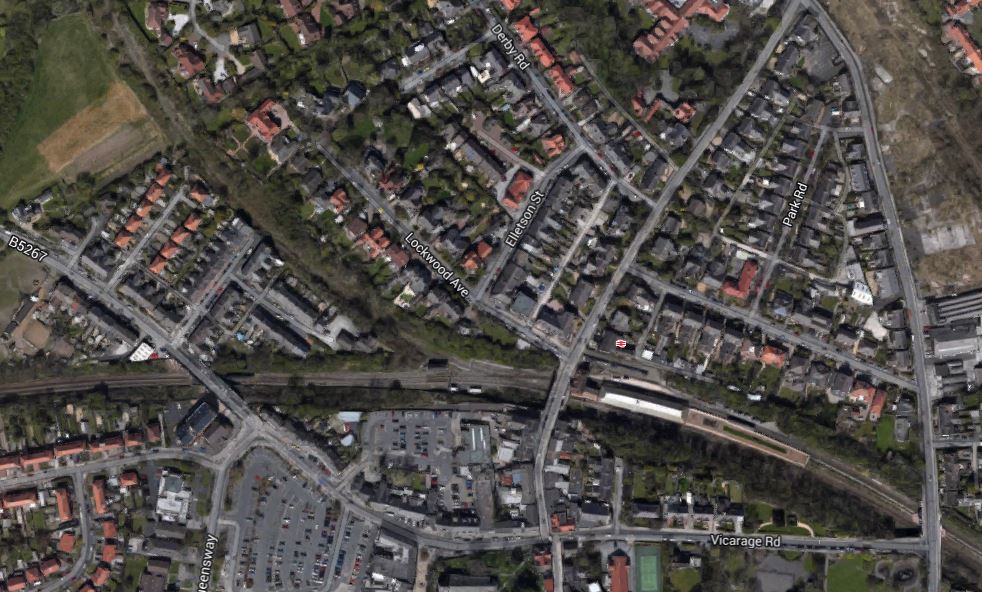
Poulton-le-Fylde Station
As the Blackpool tramway has been made tram-train ready, this might mean that tram-trains run from Fleetwood to places further inland.
Trouble At Oxenholme
These pictures don’t really tell the whole story of my changing of trains at Oxenholme from the Windermere branch to go to Carlisle, from where I intended to get the train to Leeds via the Settle-Carlisle Line over one of the most spectacular lines in England.

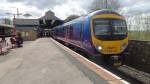
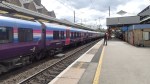
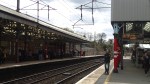
Normally, the interchange probably works well, as it appears trains on the main line going north and south are timed to meet the Class 185 train to or from Windermere.
But!
A West Coast Railways charter train, hauled by a Class 68 had broken down at Carlisle station. According to Virgin station staff the errant train had broken down twice before it actually got on the main line. Apparently, it wasn’t the brand-new engine, but the geriatric coaches. According to Wikipedia West Coast Railways are not having a good time.
West Coast Railways’ operating licence is currently suspended by Network Rail. The suspension came into force at midnight on 3 April 2015, for a minimum of six weeks, due to ongoing safety concerns relating to a serious SPAD (signal passed at danger) incident involving WCR on 7 March 2015.
I shall not be going anywhere near any of their charters.
I spent an hour on a Virgin waiting to get to Carlisle and as they said progress would be slow, I gave up and took a train south to Preston.
So I went to Poulton-le-Fylde instead.
An Excursion To Windermere
I caught a train from Preston direct to Windermere to have a look at the town.

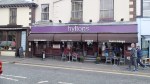


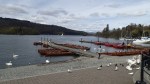
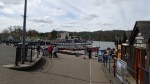
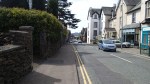
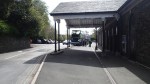
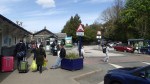
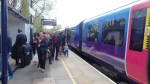
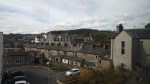

I walked from Windermere station to the town, which is a couple of miles downhill and rather badly signposted. Coming back I took a taxi up the hill, as I wanted to catch a train, which was dead on time and dumped me right in it at Oxenholme. But that wasn’t their fault and as expected there was a ready Virgin waiting.
I should note, that I had an excellent gluten-free lunch at Hyltons close to the lake.
The Windermere Branch Line is almost an oddity on the UK rail network, in that it is a very simple out-and-back line with no passing loops from Oxenholme that runs a better than hourly service using modern trains ( Class 185 trains). Signalling at present is non-existent and it relies on just one train being on the line at a time.
So now sixteen million pounds is going to be spent to electrify the line. Unless the line is given a modern signalling system and a better track layout, this won’t in itself give a better train service, than that at present.
Could the one platform Windermere station cope with anything more than a half-hourly four coach train?
So I suspect there is another motive behind electrifying this line.
The line has to be operated by diesels at present and this may give problems about where the trains are stabled at night, as they will need to be refuelled. And where would you park it overnight, as there is no siding at Oxenholm, so you’d have to leave it in a platform at either end of the line.
Currently, I suspect the first train in the morning comes in from Preston and then the last train of the day goes there for fuelling and an overnight clean and service.
My train direct from Preston to Windermere actually split at Preston, with the front half going to Blackpool. When Blackpool is electrified and electric trains serve that route, this splitting will not be possible, as you’d need to send a diesel train to Windermere, unless the branch was electrified.
Does an electric train working the branch give much greater flexibility in planning the schedules and providing a top class frequent service?
I think it probably does.
The only alternative to electrifying the Windermere branch is to use a battery-assisted electric train, like the one I rode in at Manningtree. But although that technology appears to be very successful, no train company would have just one of these, as what happens when it fails?
Carlisle
When I got to Carlisle it was nearly four and too late to go the long way back to Preston via the Settle and Carlisle Line to Leeds and then the Calder Valley Line.
I think to be fair, if I’d planned the trip better, I could have relied on getting the 16:18 to Leeds and then the 20:05 back to Preston. But the Calder Valley Line is probably best done with the scenery illuminated!
So I decided to have a walk round Carlisle city centre and then get one of the numerous fast trains back to Preston.




The centre is compact with most places you’d want to visit within easy walking distance of the station.
What surprised me was the very big Marks and Spencer, which unlike Preston had plenty of gluten-free food, including sandwiches. The shop was several times better than Preston. I can now understand why Preston was found to be the most unhealthy High Street in the UK.
From Sellafield To Carlisle
I continued up the Cumbrian Coast Line to Carlisle taking pictures as I went.
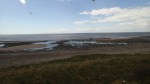

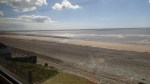



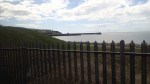



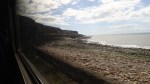
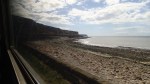
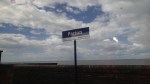
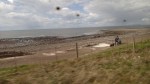




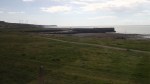
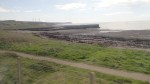
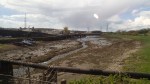




Note that in some of the pictures, you can actually see the Isle of Man. Or I could on the train!
The Cumbrian Coast Line can’t be the easiest line in the country on which to make money, but according to this article on the Northern Rail web site, they are adding extra trains to Sellafield. So at least they’re trying.
Although there are some large employers along the line, surely such a picturesque line should be able to get extra passengers like families and walkers, who might want to spend time in the area. One factor going in their favour is the extra services out of Preston to Manchester, Liverpool and Blackpool. These will make it easier to get people to the line, especially if they ran decent trains on the line, with perhaps a trolley.
At least the line is a Community Rail Line and their web site is cumbriancoastline.co.uk.
From Ravenglass To Sellafield
After lunch, I continued up the Cumbrian Coast Line towards Carlisle and these are pictures I took between Ravenglass and Sellafield stations.

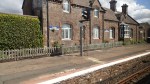

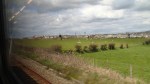

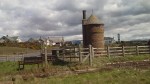
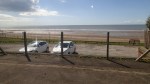
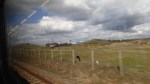

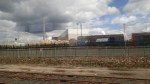

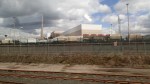
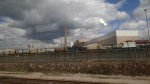

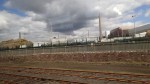

You get good views of the coast and also the Sellafield nuclear facility.
As I get older, I’m getting more and more sceptical the value of nuclear power.
There are so many things that we think are commonplace today, that in fifty years time will be laughed at by our descendants.
Nuclear power could be one of those things that will be no longer used for power generation, except possibly as a last resort.
I’m not worried about safety, but I believe that the expense of generating nuclear power and disposing of the spent fuel, will mean that other simpler and less-worrying for some methods of generating electricity for our needs. I don’t think wind will be promoted as much as it is now, as something better will come along.
We’ll still need plants like Sellafield, as we’ll be keeping some plants running and decommissioning others. This Google Earth image gives an idea of the size of the facility.

Sellafield
I just wonder what Sellafield would be like today, if the River Severn had been barraged around fifty years ago, as was proposed by Sir Frederick Snow.
 The Anonymous Widower