From West Ham to Abbey Mills on the Greenway
The Greenway has now been reopened close to West Ham station and it is now possible to walk along it past Abbey Mills Pumping Station and on to Stratford again.
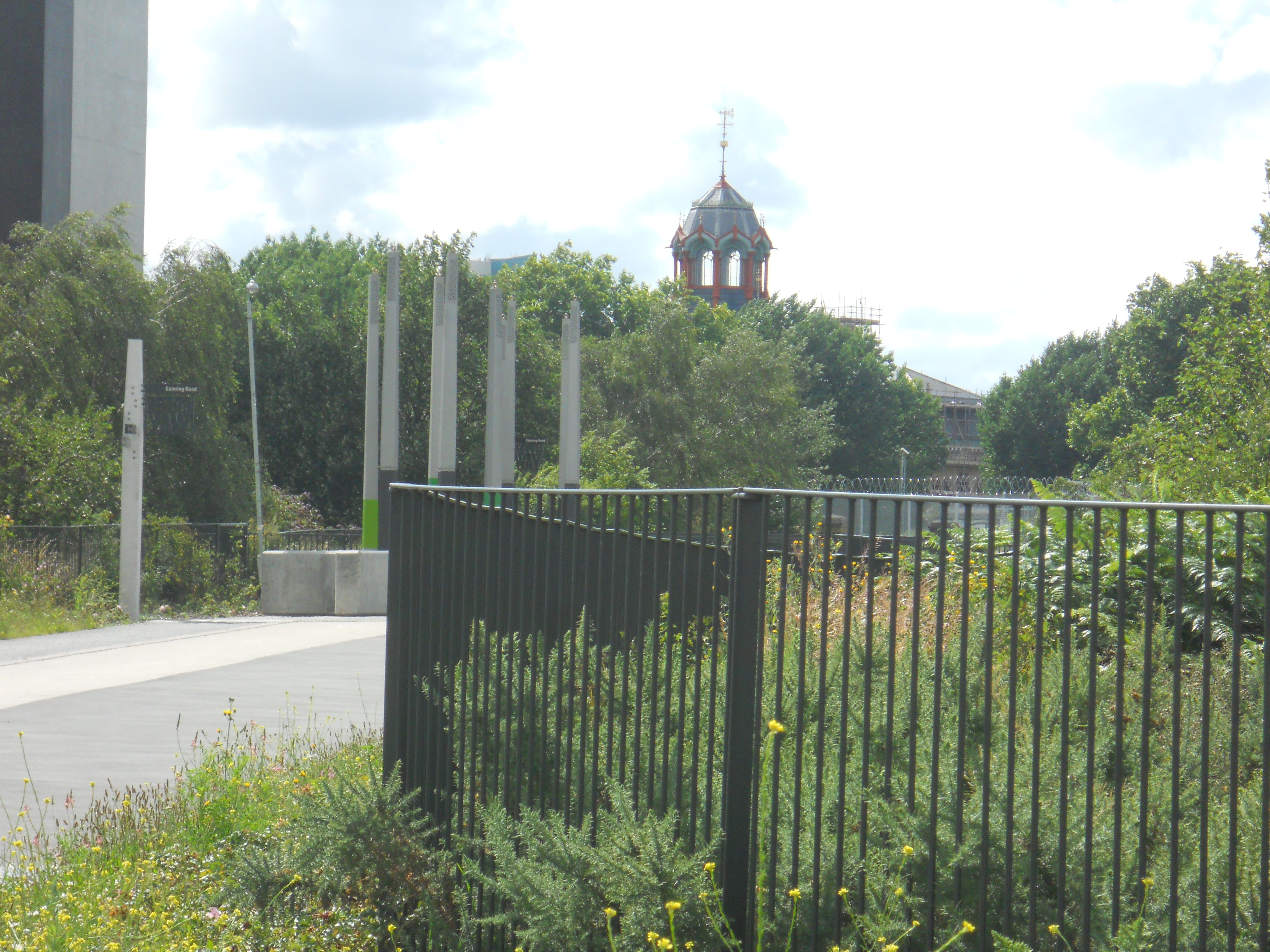


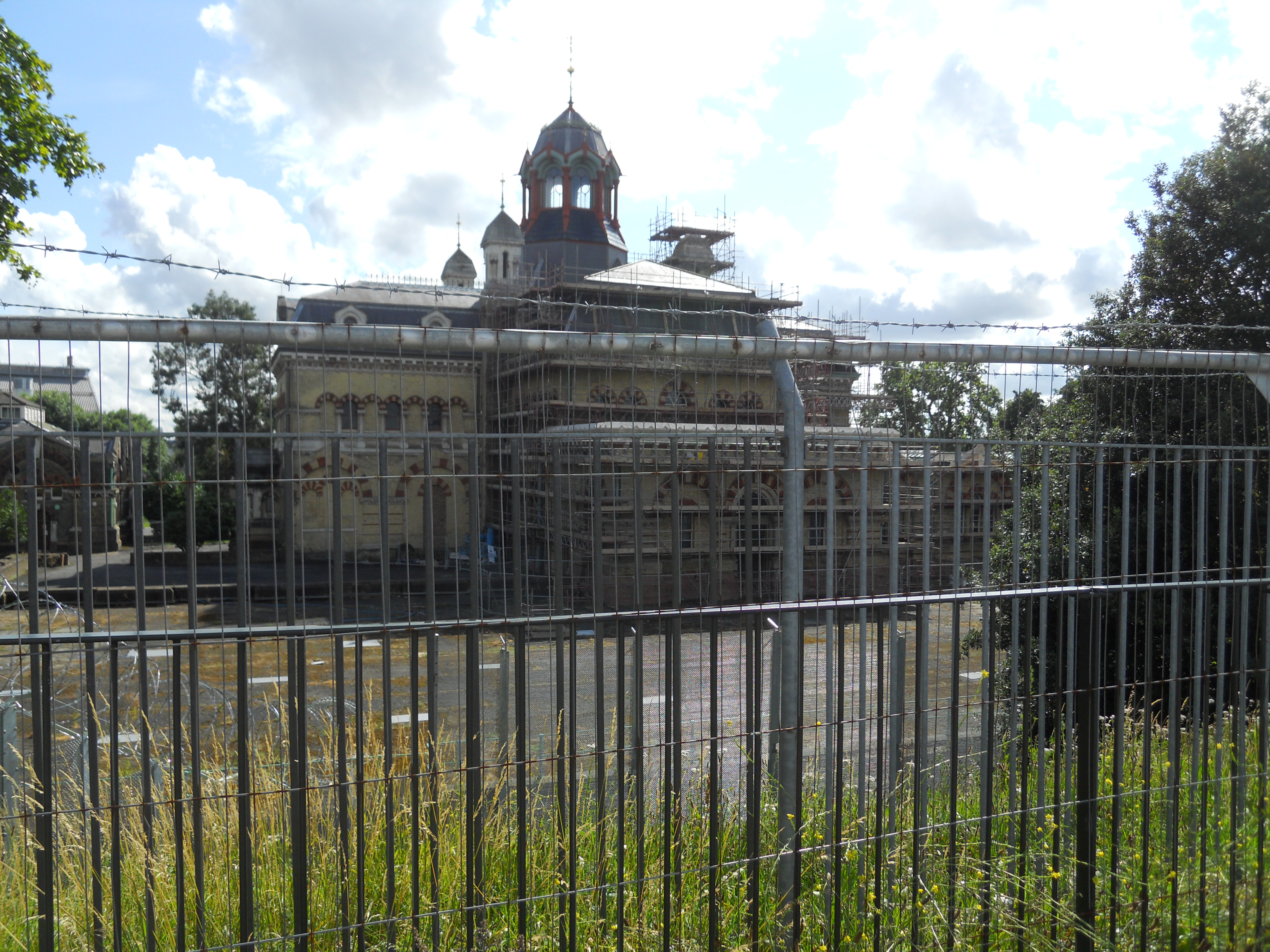


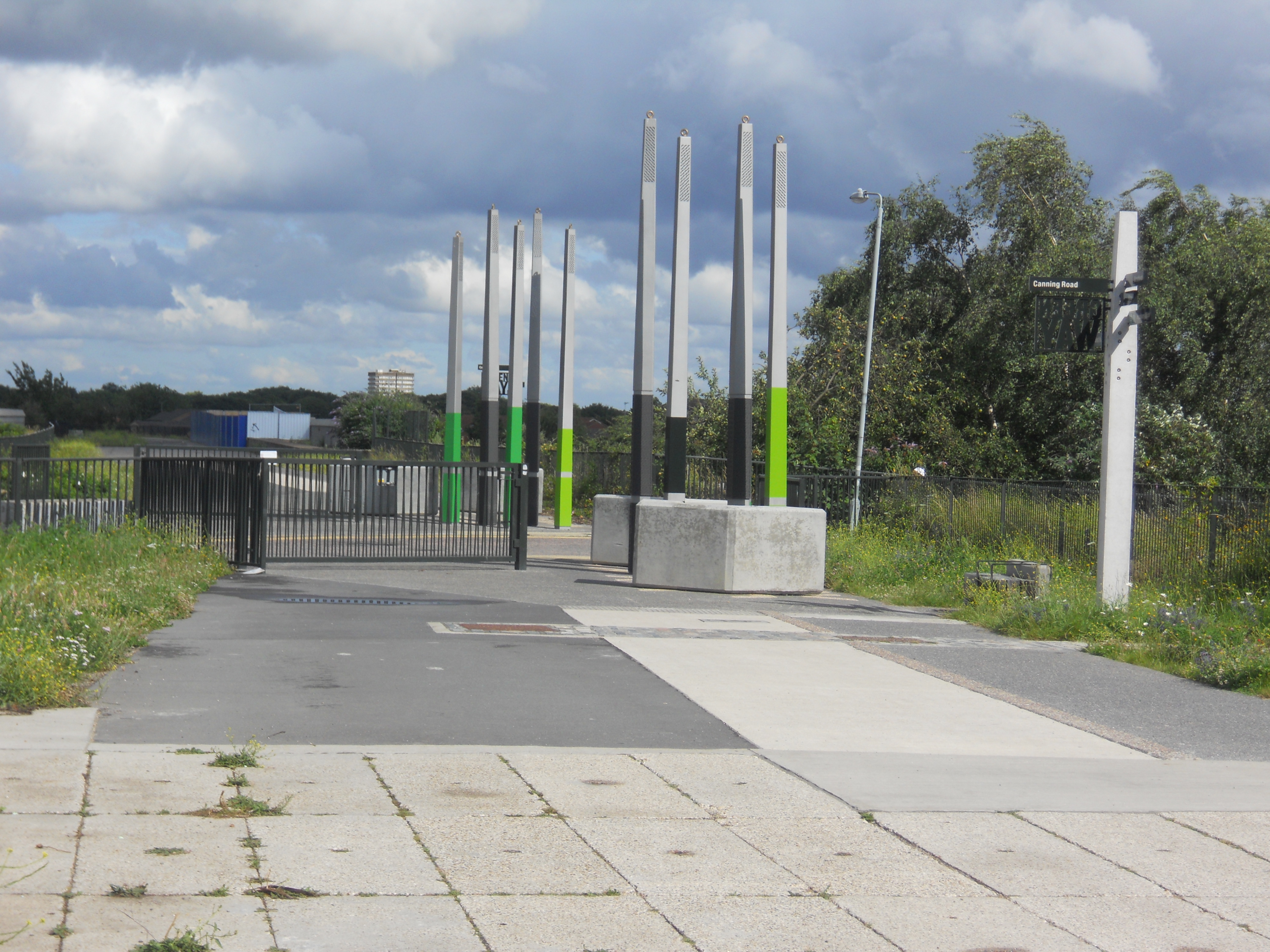
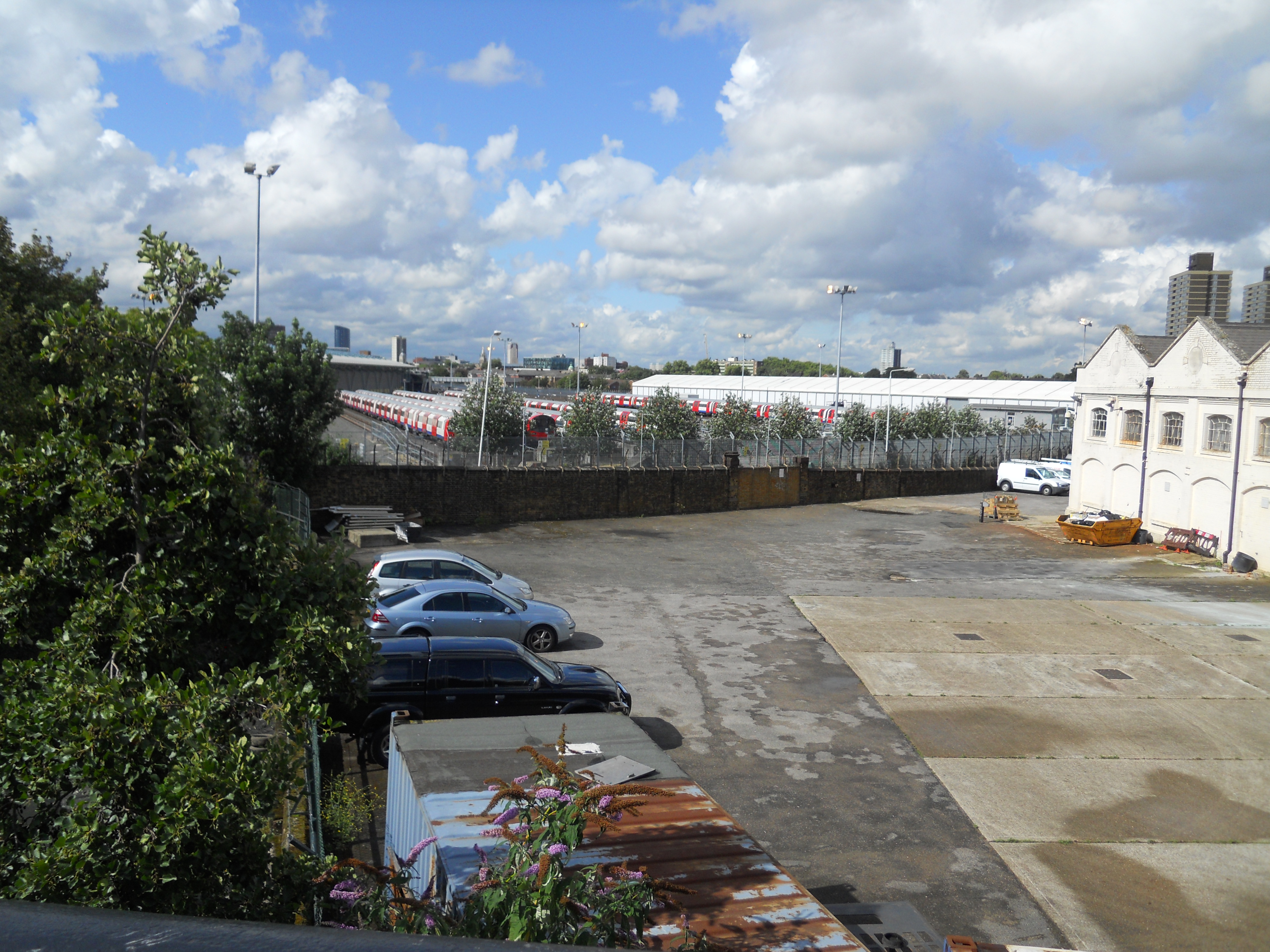
Note the large bridge, which I suspect will be used to take those walking to the Olympic site over Stratford High Street.
It will be good when it is fully open again from Hackney Wick to West Ham and on to Beckton. It will be one of the best walks in London.
July 7th 2005, Six Years On
Today is six years to the day since the London bombings of July 7th, 2005.
I didn’t suffer in any way and wasn’t even in London at the time, but still my heart goes out to anyone who suffered loss or endured physical or mental trauma at the time.
I must admit though I’m getting rather annoyed with the media images shown every time the horrendous bombings are mentioned. Showing the bus with its top open as if operated on by an enormous tin-opener surely doesn’t serve any purpose,when Wikipedia can illustrate the scale of the horrors, by just showing the emergency services lined up outside Russell Square station.
It is about time the media moved on and stopped showing the damaged bus and trains.
But then they rarely do!
For over five years now, every time the BBC talks about breast cancer, they show the same poor lady being scanned.
Is This The End of Train Building In The UK?
Does the loss of 1,400 jobs at the Bombardier factory in Derby mean the end of train building in Derby?
After all Alsthom has gone from Washwood Heath and the only light on the horizon is the news that Hitachi might be assembling the IEP in the North East. I say might be, as I have my doubts that the IEP will ever be built in it’s proposed bi-mode form, where an electric train hauls a diesel engine around the country for the places where there are no overhead wires. But then the IEP was always a creation of civil servants to avoid electrification, rather than a sound engineering proposal.
So what new trains do we need?
It would seem that at last we have got the message that every other country in the world got years ago and that is that trains should be powered by overhead wires carrying electricity. London to Bristol, Cardiff and Swansea now appears to be on track for completion in the next few years. It would also appear that Network Rail are developing a system to install the overhead wires using effectively a series of three factory trains. Wikipedia says this.
In an effort to minimise disruption during the electrification works, Network Rail is developing new “factory engineering trains” to facilitate the process of installing overhead lines. There will be three types of trains: the first train will be used to install pylons, followed by a train to hang the wires and finally there will be a train which will check the installation. The system is expected to be able to install 1.5 kilometres of electrification in one eight hour shift.
Why wasn’t this developed years ago, as it doesn’t seem to be the most difficult of technology to develop, especially, if you have lots of electrification to do? There is only one answer, politicians and civil servants like to do things on the cheap!
If the engneers get this right, then we should at last see a rolling program of electrification with the Midland Main line an obvious candidate.
So all of this will mean we will need more electric trains. And ones that go fast too! Wouldn’t it be a good idea if we had a unified fleet that could be run London to Swansea, London to Sheffield and London to Newcastle and Edinburgh, as surely economies of scale would mean cheaper trains, even if there are a lot of them. There is a precedent here in that the InterCity 125 ran on the same lines when it was built and because it was such a good and updatable design it still does.
We could almost be in a virtuous circle here, in that say the Great Western and Great Northern routes prove to be a great success, then there will be a clamour for more electrification, because it cuts carbon emissions and the customers like it. We might even see lines like Chester Holyhead electrified to improve connections to Ireland and Edinburgh to Aberdeen to improve links to the far north of Scotland.
Small pieces of fill in electrification will also open up possibilities. As a simple example, when I went from Liverpool to Edinburgh a few weeks ago, I went by two diesel trains, but the fill-in Network Rail are scheduled to do in that area, may mean that in a few years, it could be a new electric train.
So there will be a need for a lot of high speed electric trains, which at present will be satisfied by Hitachi and built in the North East. But it will only be an assembley job at best, with all design in Japan.
The next large batch of trains are the Thameslink and CrossRail trains for London. The first order has gone to Siemens and any sane person would use the same trains for both lines.
Other than that there are not too many orders in the pipeline.
There will be a need for more electric trains for the Liverpool, Blackpool, Wigan and Manchester services when they are electrified.
There is also a need to replace all of the ageing diesel trains, such as Pacers, all over the UK.
So looking at it sensibly, the fast electric trains will probably be built by Hitachi and the commuter electric trains will be built by Siemens.
There is just a significant number of scraps left.
One thing we’re good at though in this country is train refurbishment. We have to be as it’s the only way we can keep the railways running. But over the last year, I’ve had some memorable journeys in forty year old InterCity 125, where the standard of passenger comfort is up there with the best new trains.
So for example as the new trains arrive for Thameslink, there will be a large number of old ones that can be refurbished for the newly electrified services in the North West. If you doubt that refurbished trains are any good, just travel from London to Swansea and back in a day as I did.
Some respected commentators have argued that if you put good trains on old lines and improve the infrastructure, you create traffic and because people change from cars to trains, you cut carbon emmissions.
I’ll use two examples.
Cambridge to Ipswich was a Cinderella line with crap rolling stock and a frustrating timetable. It was given a modest improvement with some more comfortable hand-me-down trains and a better schedule and the investment was rewarded by an increase in passengers. They’ve even seen fit to put three-car trains on the line at busy times.
Where I live now, two lines, the North London line and the East London line have been upgraded and given new trains. The positive affects have been well documented and show that a not outlandish level of investment can bring a very high rate of return.
So it would appear that tactical investment can be positive.
Another scheme that is being brought forward is the improvement of the Ipswich to Lowestoft line, by putting in a passing loop at Beccles. This would mean an hourly service would be possible.
These last three schemes all use Bombardier trains, which are powered by electricity or diesel as appropriate.
Just as Ipswich to Lowestoft is showing improvement in passemger numbers, I don’t think it takes much thinking to know that there are many other lines in the UK, that could benefit from improvement.
A lot of the cross-country lines are very much overcrowded, but how many civil servants ever travel by train from say Ipswich to Birmingham? If they did they’d go from Ipswich to London and then get a Virgin train to Birmingham.
But if these lines are to be improved and the dreaded Pacers replaced, then we need more modern two, three and four coach trains. And Bombardier has the designs that work and they are available virtually off the shelf!
So perhaps we won’t see large numbers built, as after all the main UK fleet of trains is one of the newest in Europe, but we will see quite a few small orders for services that are not high speed or high density. But who’s to say that these won’t go to a cheap Chinese manufacturer as obviously a trip to Shanghai is more exciting that one to Derby.
We won’t see too many exports either, as our loading guage is so much smaller that to deliver trains even to Europe is a logistical nightmare.
So where does our future lie in the manufacture of trains?
We will probably make the high speed trains we need, but as I indicated above, will we really make any more than we need with extras for export?
One of our strengths is in the technology that goes on trains, as I indicated in this post. But then we have always been good at niche markets and in some ways there is more money in the design than the actual manufacture.
We are also very good at train rebuilding and you can argue that this has been one of the great successes of the last few decades.
So we will still be building trains, but the industry will be very different.
The Beautiful Blonde Brazilian on a 38 Bus
One of the good things about London, is often you get into spirit raising conversations on the bus.
Take today, when I was returning from the Waitrose at the Angel for the second time, because they didn’t have any of my preferred brand of yoghurt the first time, I ended up sitting next to a young lady, or was it a girl, with long blonde hair. As I always do, when I sit next to someone of the opposite sex, I always ask if it is OK to sit there. I may have lots of faults, but I was brought up to hold doors, give up my seat on buses and tubes and generally be polite. I’ve found it to be to my advantage in life.
We chatted until I got off and found that she was a Brazilian student from the far south of the country. She was liking her stay in London and she was pleased at her reception in the city. As a Londoner, I was pleased we’d welcomed her so well.
Despite being a wreck I must still have something left, as she didn’t think I was some old groper and turn her face to the window. But neither did the lady on the 141.
So there might be some hope for me!
The Most Well Known Piece of Art In The World
I took the Northern Line to Finchley Central station today, to see the plaque dedicated to the creator of the most well known piece of art in the world. Although we generally don’t think of it as such, the London Underground map is so recognisable, that show it to many five-year-olds in farawy places and they will recognise Harry Beck ‘s amazing solution to the problem of how to create an understandable map for a transport system. It was so good, that within a few decades it had become a standard used all over the world.
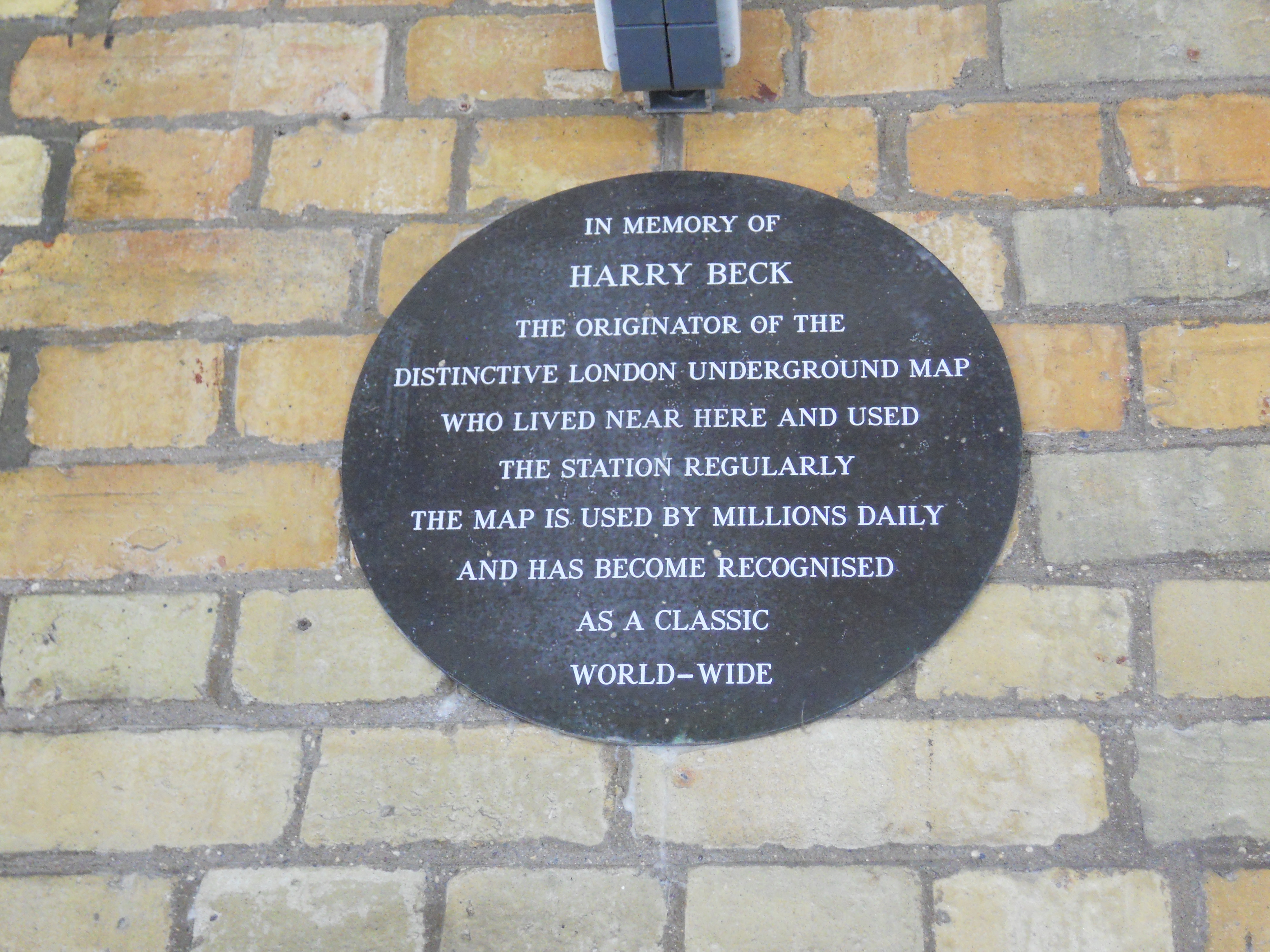
Plaque Remembering Harry Beck at Finchley Central
The picture shows the plaque dedicated to Harry, who used the station regularly.
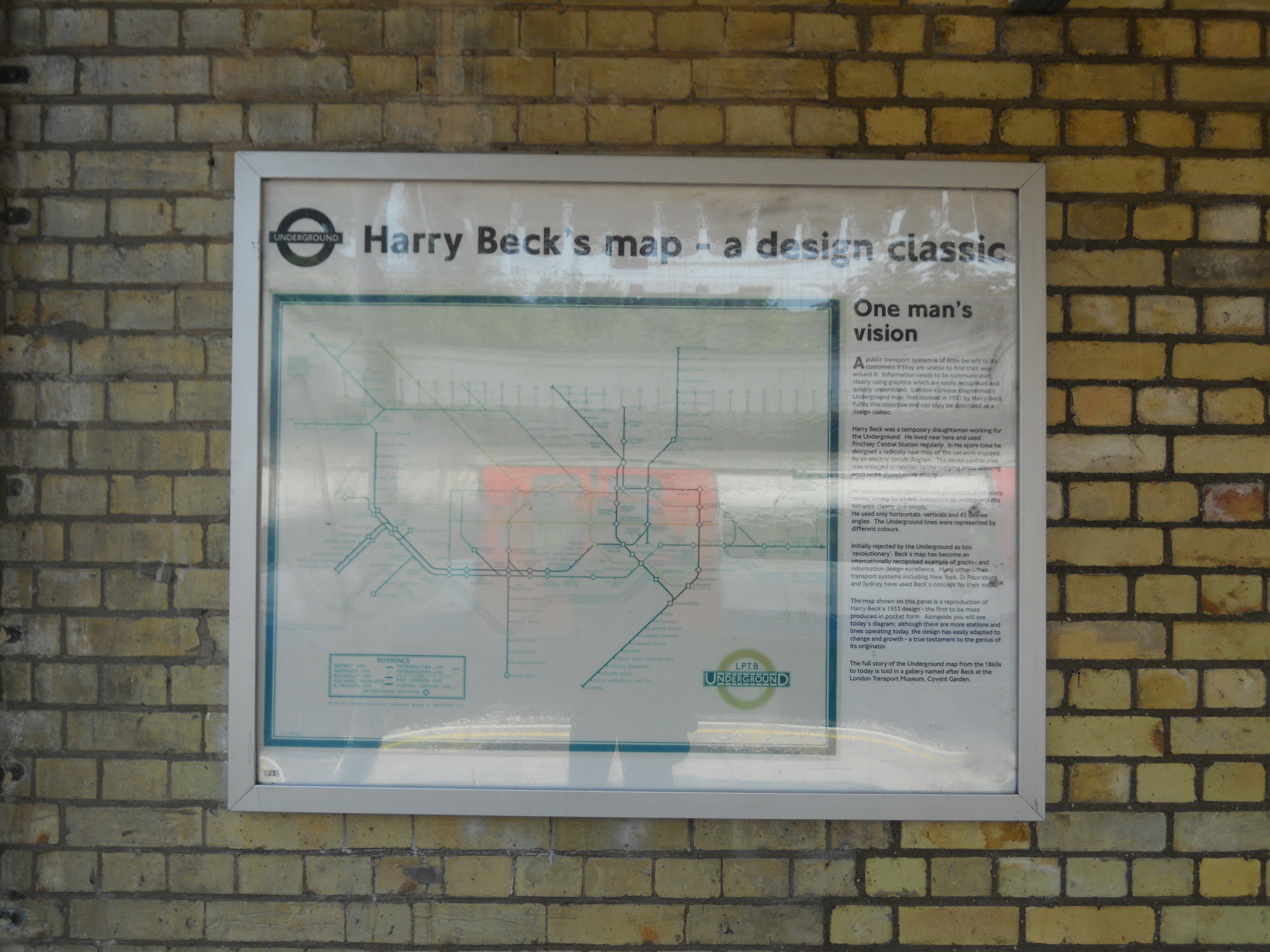
Harry Beck's Original London Underground Map
This picture shows a facimile of his original map.
Alomgside this is said in the text.
The map shown on this panel is a reproduction of Harry Beck’s 1933 design – the first to be mass produced in a pocket form. Alongside you will see today’s diagram; although there are more stations and lines operating today, the design has been easily adapted to change and growth – a true testament to the genius of its originator.
There is little more to say. Except that all modern Underground maps acknowledge Beck in the bottom left corner.
Crossrailed Again!
I have a feeling London is going to have to learn to live with CrossRail. Not content with causing chaos in Oxford Street, the construction work has now effectively removed Hanover Square from being a useful thoroughfare between Fenwick and John Lewis.
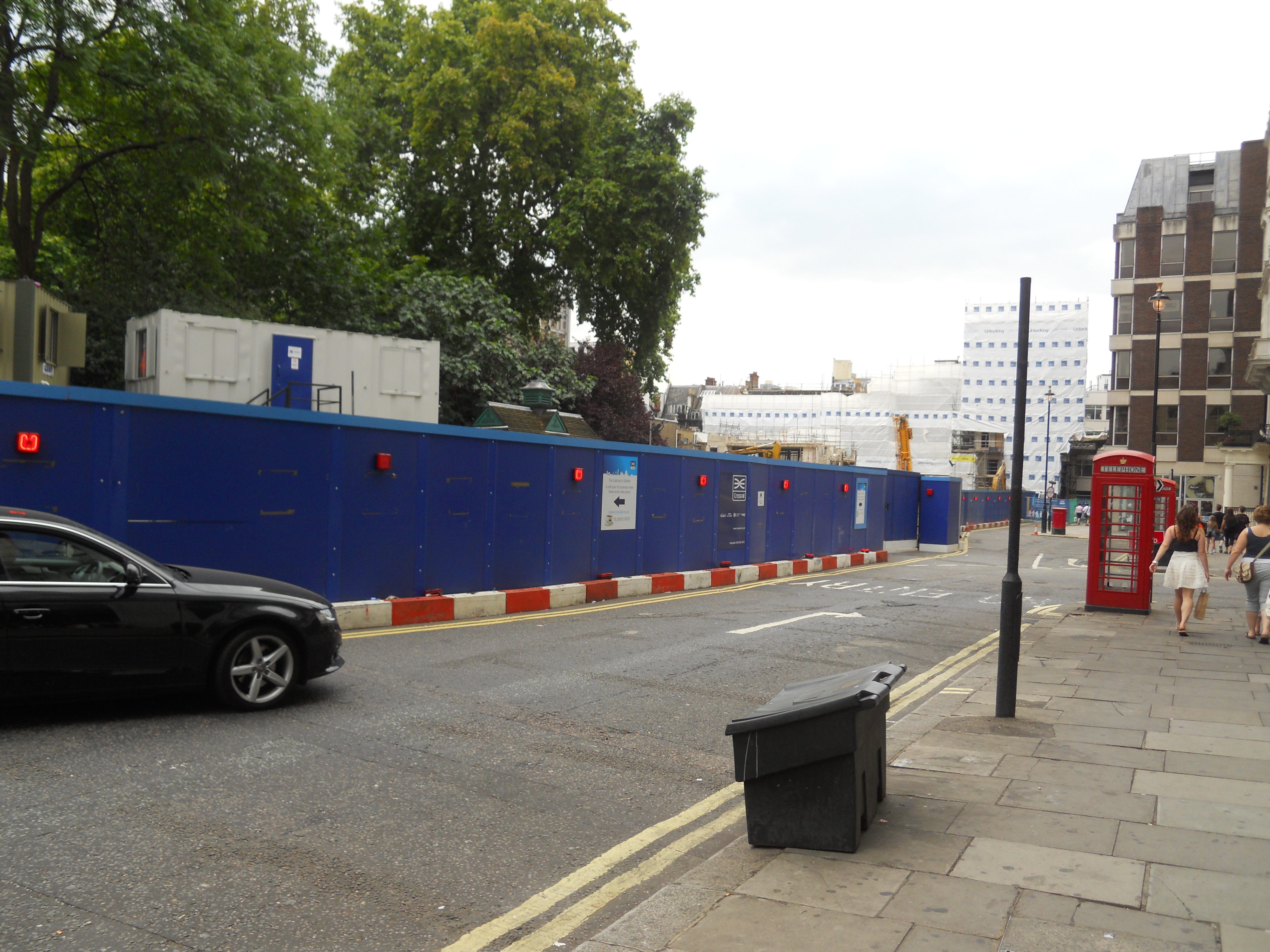
An Unfriendly Hanover Square
But it still doesn’t stop idiots driving through to make matters worse for buses, taxis and pedestrians.
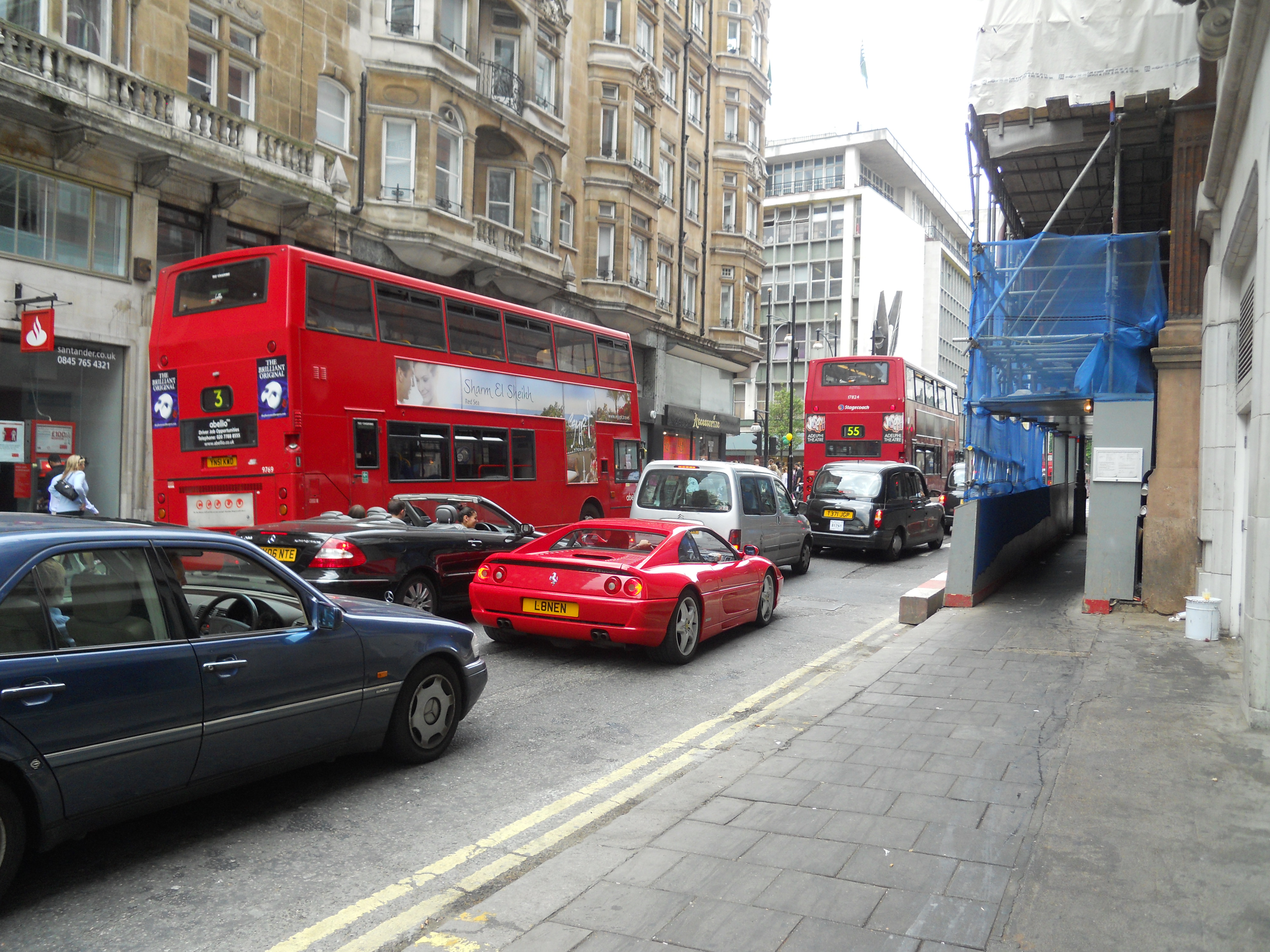
Traffic Jams Towards John Lewis
I must say that I might miss driving at times, but not in Central London.
I should say that I walked to John Lewis, a couple of minutes quicker than the Ferrari! But perhaps the driver was a learner, as this driver was.
Every Picture Tells a Story
I mentioned in the post on house-husbands that I have various skills and strangely one of them is dressmaking. Or it used to be, as I haven’t made anything in years.
But look at this picture of Celia, who in this blog I usually refer to as C, taken at a New Year’s Party in Venice probably in 2002 or 2003.

C at New Year in Venice
It looks like a strapless evening dress or a full skirt with a strapless top. It is neither.
The skirt was luxurious and there was an equally luxurious top to go with it. But when C bought the skirt from Beatrice von Tresckow, the top in her size was sold out, so they said they’d make one for her. Something went wrong and it didn’t fit.
So there we were in a five star hotel in Venice, an hour before the dinner and one of us had nothing to wear! And it wasn’t one of those parties, where she could have gone topless. I hasten to add that she never did outside of the confines of our bedroom.
Depending on where I tell this story, there are various versions. In some she’s in tears and in others she wants to go home, but the truth is probably that although she was upset, she trusted me to have an idea that would work. Her versions of the story used to have a lot of emotional actions, as aren’t most barristers frustrated actors?
She thought I was joking when I asked her for some safety pins. I found two in the dinner suit I was wearing and one in a good pair of trousers. All had been used to attach dry cleaning tickets and after that day, she never ever removed one. But she still referred to it as one of my lazy habits.
I then told her to remove the strapless bra she was wearing and replace it with a basque I knew she’d brought with her to wear under another dress, that was a bit tight and needed a bit of an extra squeeze to get into. She’d also brought it because it was New Year and she knew the extra layer added warmth. She also took the opportunity to change from tights to some stockings as a reward to me, which she said she’d remove, if I couldn’t make her respectable.
I then took the shawl that she had brought to wear with the top and skirt and wound it round her securing it with the safety pins. The hotel was warm, so the lack of a shawl wasn’t a problem.
The result is shown in the picture, which was actually taken after the dancing. So it held together without any problems.
I hasten to add, that wrapping the shawl round wasn’t my original idea, but was borrowed from a very old 1950s, TV Series, called Dick and the Duchess. In one episode, Hazel Court, who played the Duchess, got into a scrape as she often did, lost her clothes and ends up in a boiler suit. She then takes a taxi to her couturier, who was played by a very camp, Michael Medwin. To preserve her decency, he wraps her in expensive silk, tucks it all in and sends her home. He orders the boiler suit to be burnt. I never saw the errant top again.
If there is a moral to this story it is to never travel without safety pins! And steal ideas from out of context and old television shows.
Do London Underground Use a Different Calendar to Everyone Else?
I thought thw 2nd and 3rd of July was a weekend this year until I saw this!
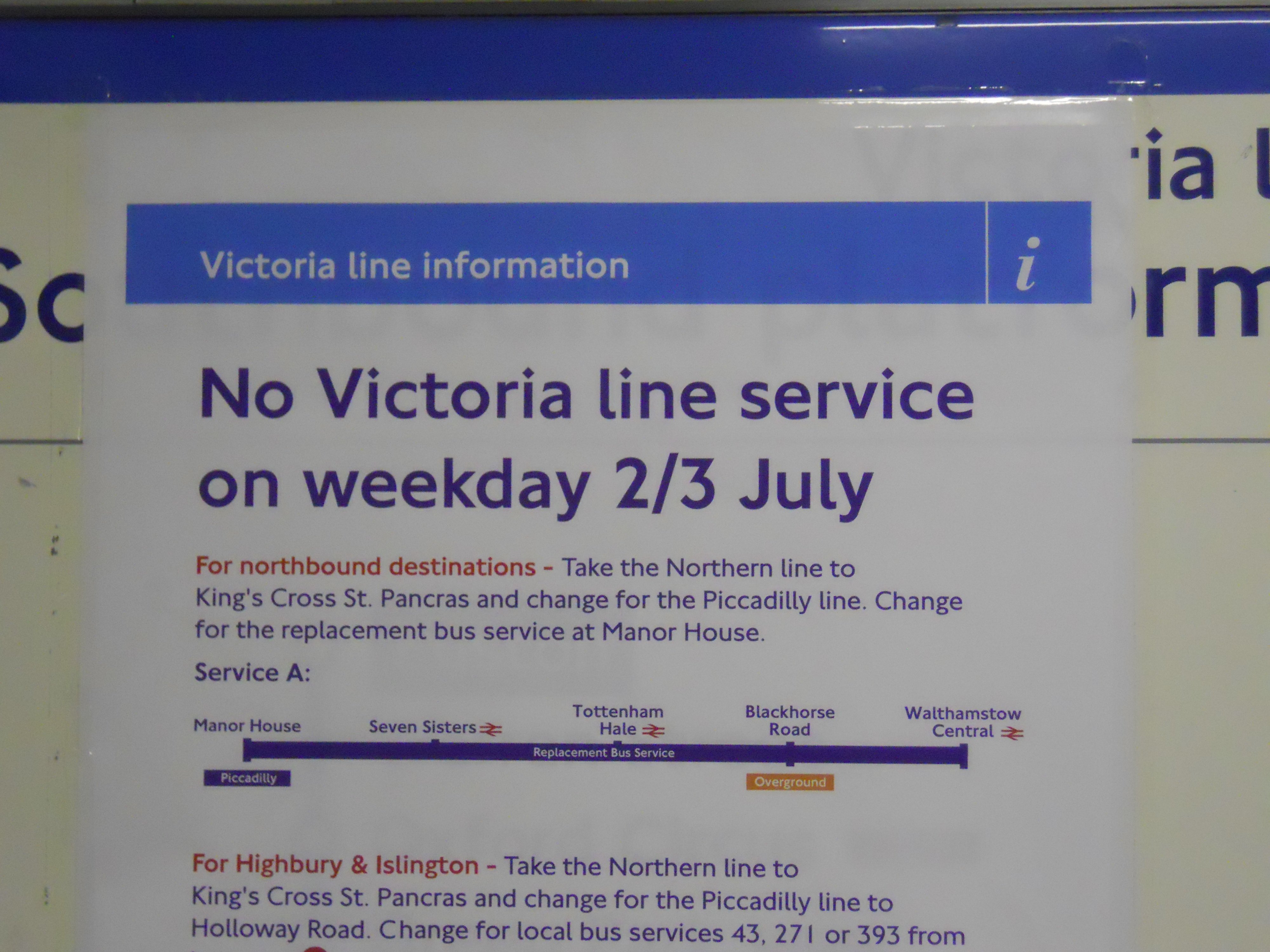
2nd/3rd of July Is Not a Weekday
But who knows?
A Dent In The Olympic Rings
I took this picture yesterday at St. Pancras International station.
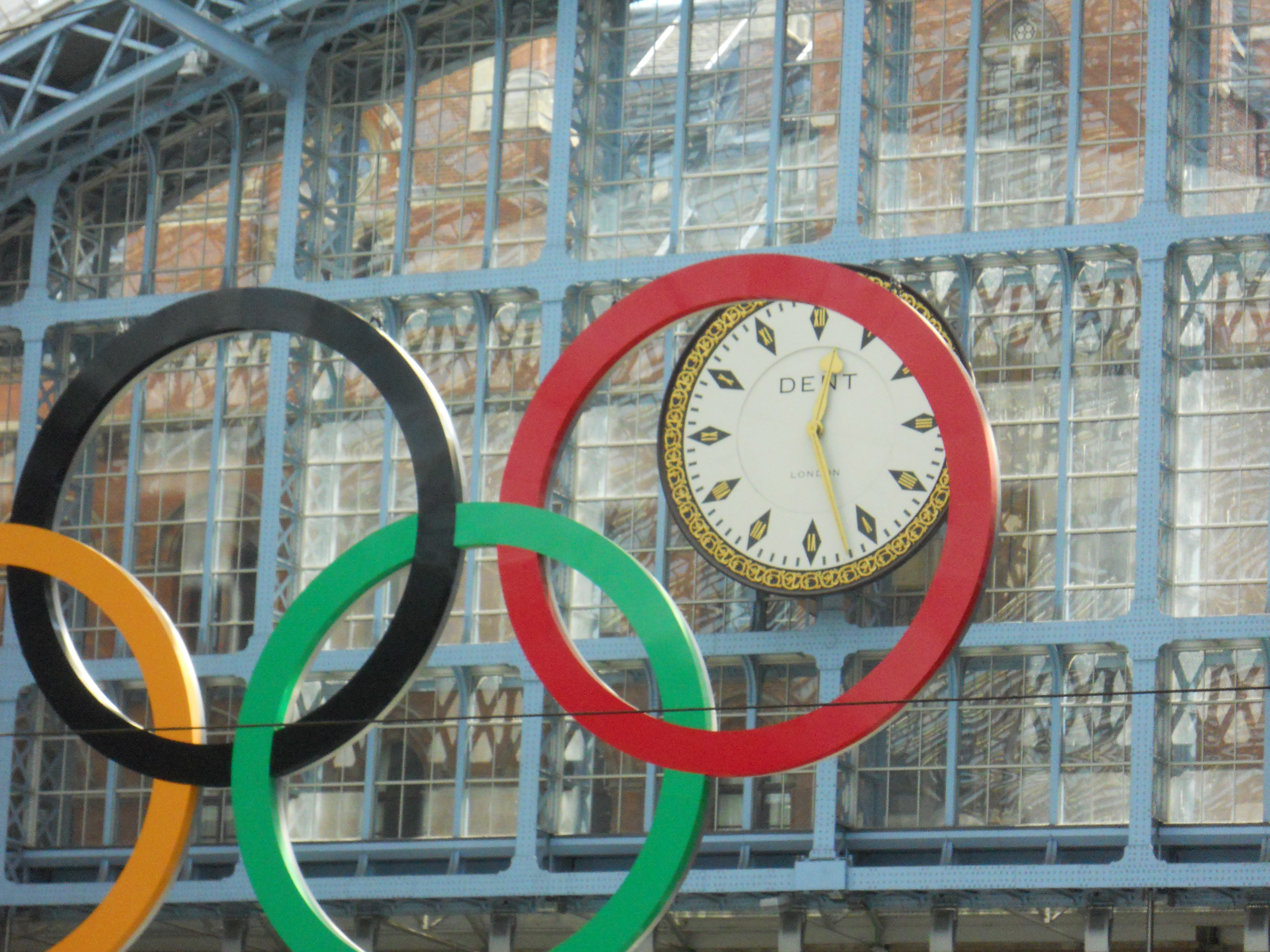
A Dent in the Olympic Rings
I wasn’t tall enough to get the clock in the centre of the ring.
King’s Cross Has Got Its Hat On!
I walked from King’s Cross to St. Pancras and the new roof can now be clearly seen and looks almost finished.
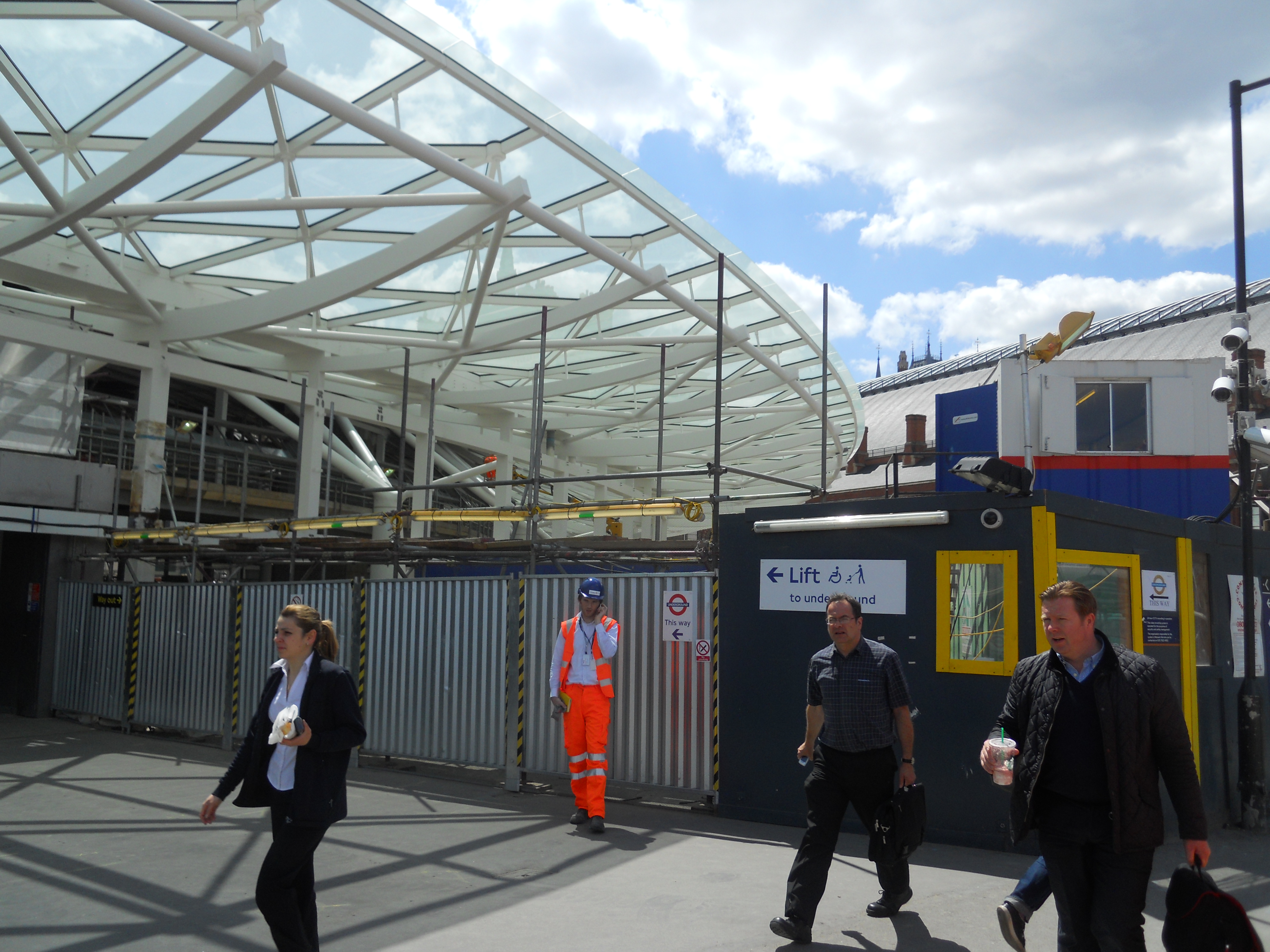
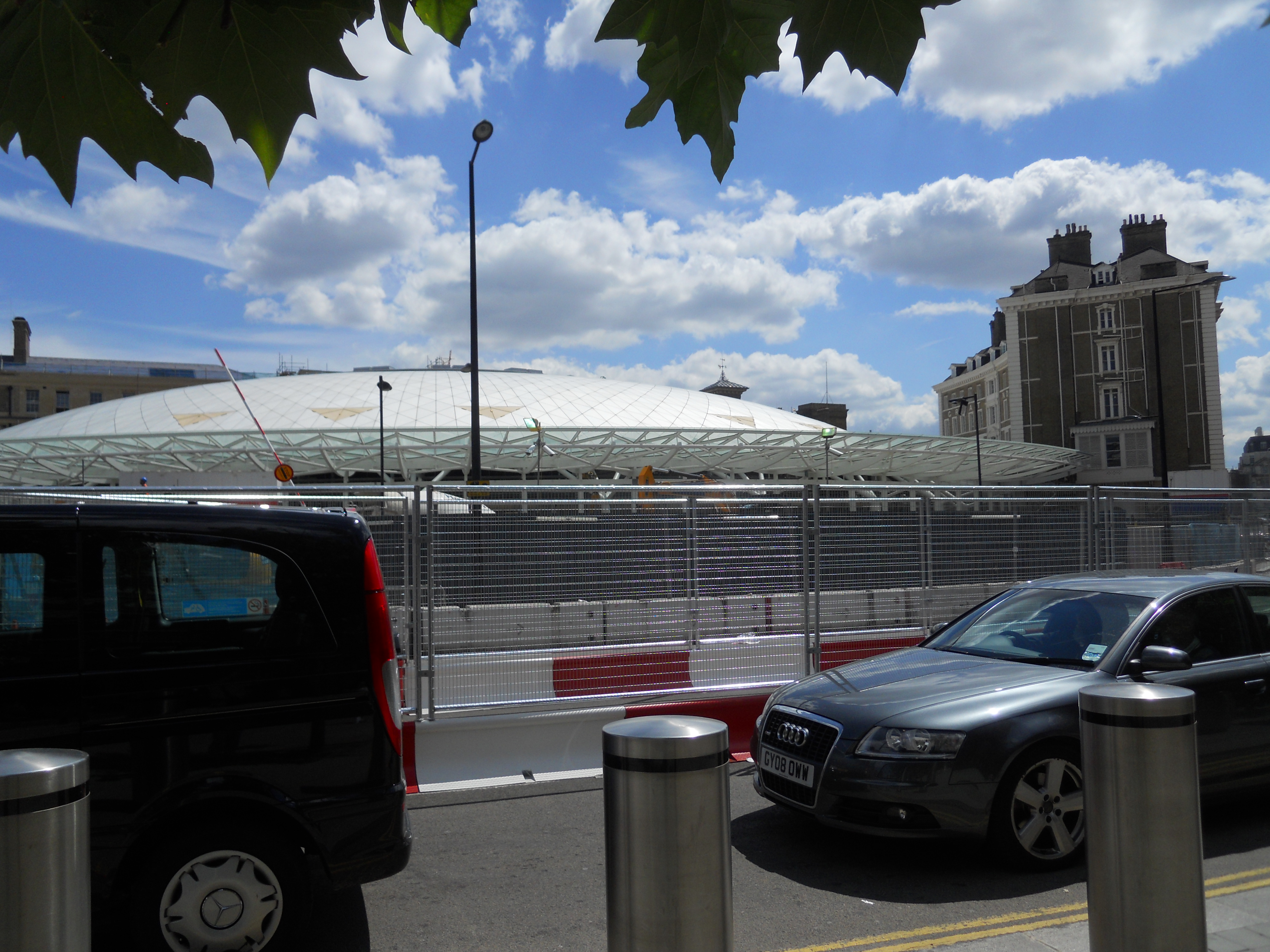
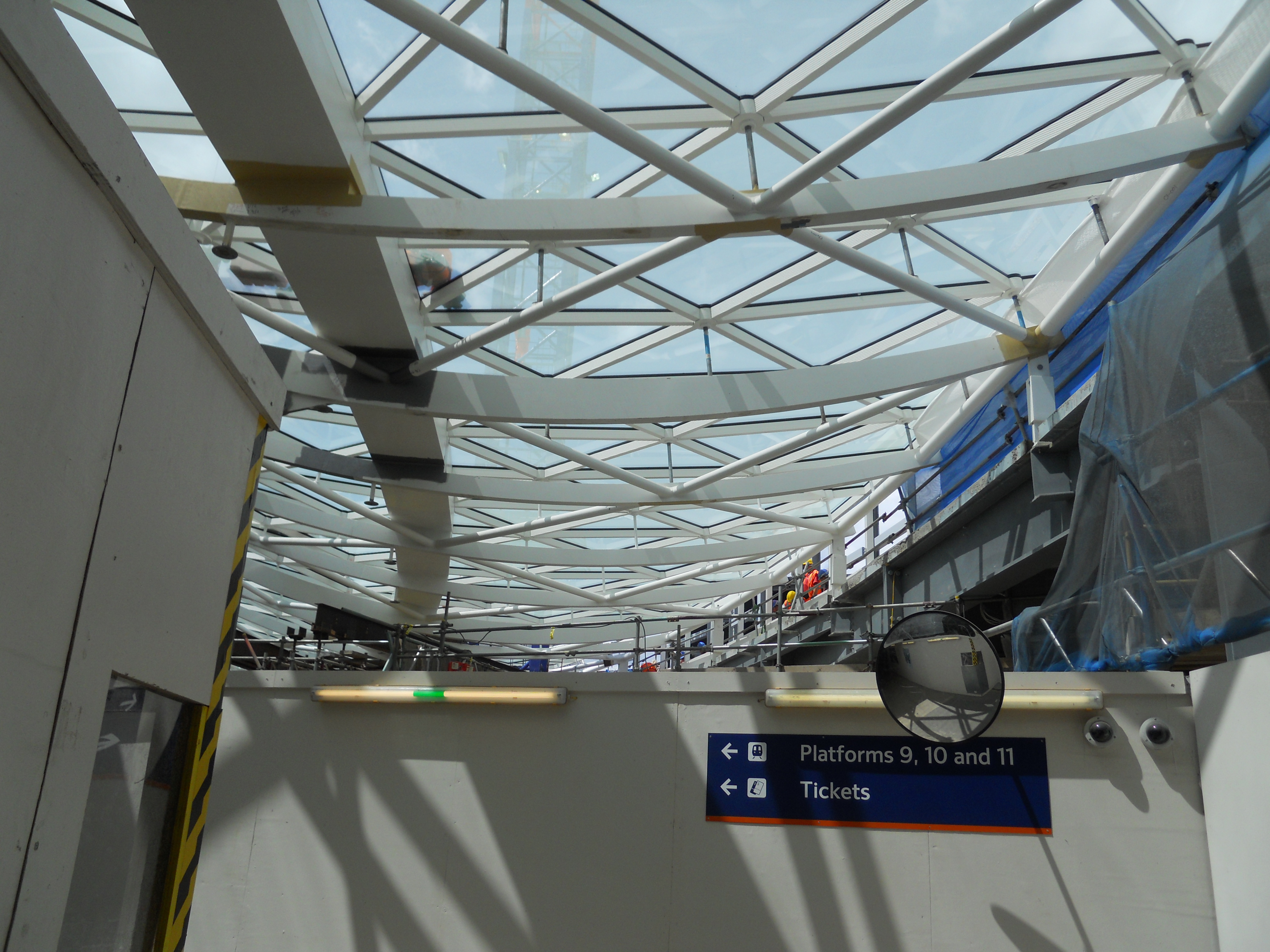
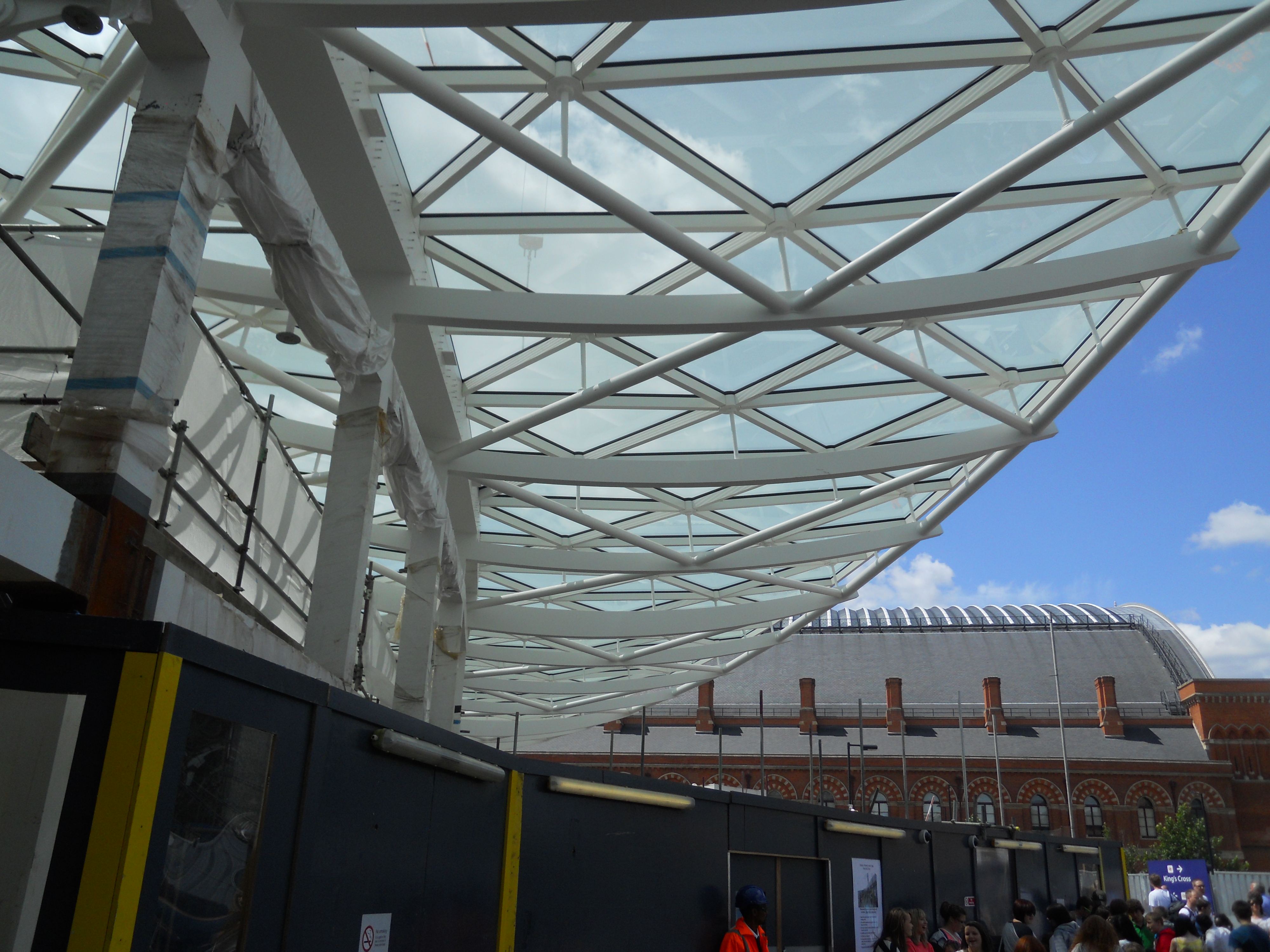
It’s certainly going to be much better than the old west facade damaged by German bombing in 1941.
 The Anonymous Widower