Progress On The Sheffield-Rotherham Tram-Train
I took these pictures in Sheffield and Rotherham, whilst trying to take pictures of Class 399 tram-trains.
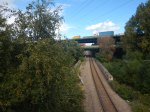
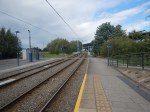
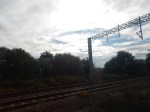
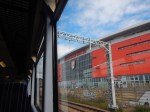

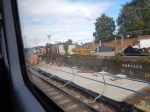
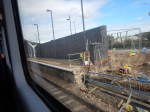
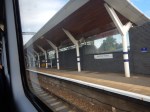
Note.
- The heavy-weight gantries for the electrification, which I suspect would support 25 KVAC electrification.
- It appears simple bi-level platforms are being built at Rotherham Central station.
- Could a stop being put at the New York stadium?
It certainly doesn’t seem to be an expensive system.
Single Or Double Track Electrified At 25 KVAC
The heavy rail route which is both single and double-track is electrified using standard 25 KVAC electrification.
Simple Voltage Changeover
In Karlsruhe, a ceramic rod is used to connect the overhead wires of different voltages. The pantograph of the tram-train runs on this rod, as the vehicle passes between the two voltages.
The different voltages would be handled automatically on the tram-train.
Kinetic energy or a battery will take the tram-train over the very short dead section.
I didn’t see it, but I suspect a similar system is used on the Tinsley Chord in Sheffield, where the two voltage systems meet.
The advantage of this simple system, is that voltage changeover can be completely automatic, with the driver only monitoring the changeover.
Simple Bi-Level Platform Extensions
This technique is used in Karlsruhe, where they have myriad problems due to various classes of tram-trains and conventional trains.
Modern construction methods will certainly help here.
How Did Network Rail Manage To Spend So Much Money?
The only feasible positive explanation is that this tram-train trial is being very comprehensive and covers all possible UK operations.
- The tram-trains are tested on 25 KVAC at Rotherham.
- Single and double-track.
- The tram-trains are tested on 750 VDC all over Sheffield.
- The tram-trains are tested on sharp curves and climbing hills on the Sheffield Supertram network.
- The voltage changeover is thoroughly tested on the Tinsley Chord.
- Platform designs get a rigorous test.
If the tram-train passes these tests and the regulators and operators like it, it’ll be passed for the UK network.
Is The Rotherham Trial A Tram-Train Or A Train-Tram?
When going from Sheffield to Rotherham, the Class 399 train, starts as a tram and changes to a train on the Tinsley Chord.
But when going from Rotherham to Sheffield, the vehicle starts as a train and changes to a tram.
So I suppose it’s both and it changes over where the voltage changes on the Tinsley Chord.
But just as in the Rotherham trial, provided there is an overhead wire with an acceptable voltage, the Class 399 tram-trains can run on any track, be it for trams or trains.
On What Routes Could A Class 399 Train Run?
There are several possibilities.
Extending An Existing Tram Network On A Heavy Rail Line
The tram-train runs normally on a standard tram line and then the route is extended on a heavy rail line, which is electrified with 25 KVAC overhead wires.
This is what is being done at Rotherham.
More possibilities exist in Sheffield and probably on other systems like Birmingham, Blackpool, Edinburgh, Manchester and Nottingham.
Creating A Tram Link Across A Town Or City
Suppose a town or city has two electrified stations on opposite sides. Perhaps one handles trains from the West and the other handles trains from the East.
If a tram route can be created between the two stations, which is connected to the lines at the station, then tram-trains can run across the town or city.
This has been done in Karlsruhe and other European cities, but I doubt we’ll see a cross-city link like this in the UK for a decade or two.
Creating A Tram Link Between Two Electrified Lines
This is similar to the previous application, except that the tram route might be in a rural area.
One possibility might be from Cambridge to Marks Tey along a rebuilt Stour Valley Railway.
Running A Branch On A Heavy Rail Line As A Tram
Creating a branch line to tram standards should be cheaper than creating it to heavy rail standards.
The proposed Glasgow Airport Tram-Train could be built this way, by building a tram track from the Inverclyde Line to the Airport.
The branch would have the following characteristics.
- Segregated single-track from the Inverclyde Line
- 750 VDC overhead electrification.
- Low floor tram-trains.
- Simple stations.
The tram-trains could run as normal electric trains from Glasgow Central station to West of Paisley St. James station, where they would take to the branch line and run as trams to the Airport.
As the performance of a Class 399 tram-train is not much slower than the current Class 314 trains that work some services on the Inverclyde Line, I feel that fitting the tram-train service into the service pattern on the line would be possible.
I estimate that a round trip from Glasgow Central to the Airport could be done within an hour, which would mean that to provide an adequate four tram-trains per hour, would require four vehicles.
Two other airports could be served in this way; Leeds and Liverpool
- Leeds Airport would require electrifying as far as Horsforth station, where a tram track would lead to the Airport.
- I suspect that the tram-trains could not only connect Leeds to the Airport, but Bradford as well.
- Liverpool Airport from Liverpool Lime Street services would change to a tram at Liverpool South Parkway station.
I think we’ll be seeing tram-trains used for services like these.
Consider these points.
- A suitable station on the electrified network is needed as a terminus.
- A suitable junction must be possible between the branch and the electrified network.
- Any number of stops could be built on the branch.
- Simple tram-style 750 VDC overhead wires can be used, which would be less visually intrusive.
Some schemes will be simple like perhaps the Slough to Windsor and Eton Line and others would be more complicated.
Conclusion
In a year or so’s time, we’ll know if tram-trains are another method of expanding and improving the UK’s rail network.
Ordsall Chord Progress – 22nd September 2017
The Ordsall Chord is coming on.



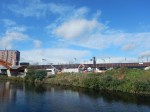
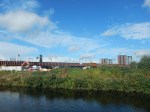


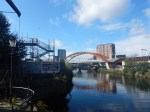
The wires would appear to be on the way up and it looks like trains will be running over it on schedule around the end of December 2017.
Merseyrail To Skelmersdale – Skelmersdale Station
In Merseyrail To Skelmersdale – How To Plan A New Rail-Link, I talked about a new Skelmersdale station.
From Kirkby, I took a taxi to look at the sites of Headbolt Lane and Skelmersdale stations.
These pictures were taken in and around the Concourse Shopping Centre at Skelmersdale.


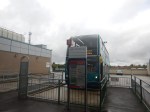


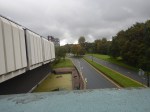
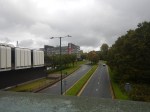
The Shopping Centre has everything needed for a railway station, if one should be built nearby.
This Google Map shows the Concourse Shopping Centre.
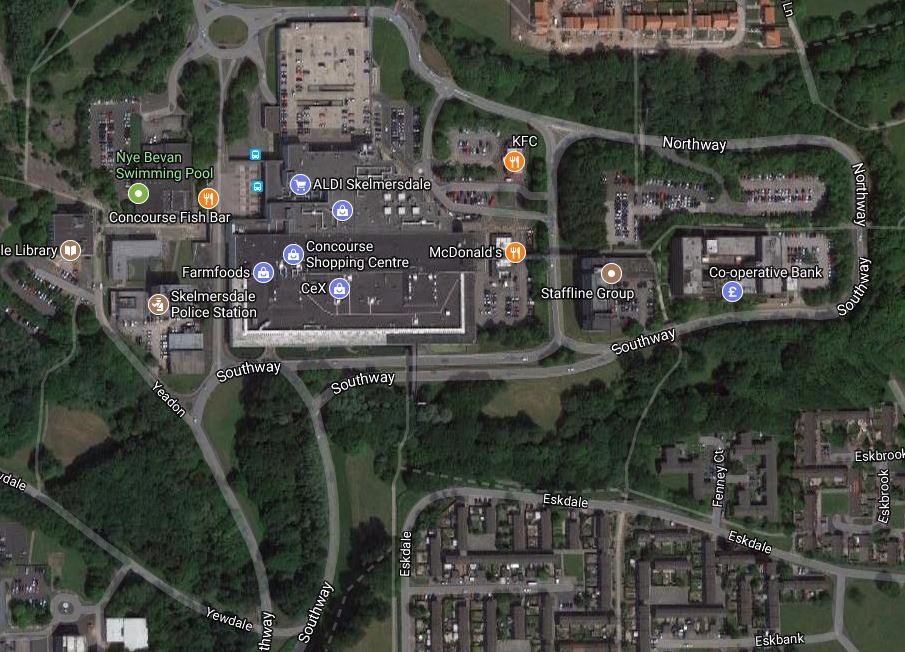
As the rail line from the junction to the East of Rainford station comes in from the South, I’m sure that Merseyrail have a good place to put the station, so that passengers can walk into the Concourse Shopping Centre.
Passengers might even be able to use the existing bridge.
Merseyrail To Skelmersdale – Headbolt Lane Station
In Merseyrail To Skelmersdale – How To Plan A New Rail-Link, I talked about Headbolt Lane station.
From Kirkby, I took a taxi to look at the sites of Headbolt Lane and Skelmersdale stations.
These pictures were taken at the site of the proposed Headbolt Lane station.
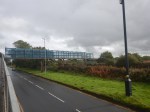


Plans for the station talk about a single platform.
This Google Map shows the railway line, which runs alongside Headbolt Lane.
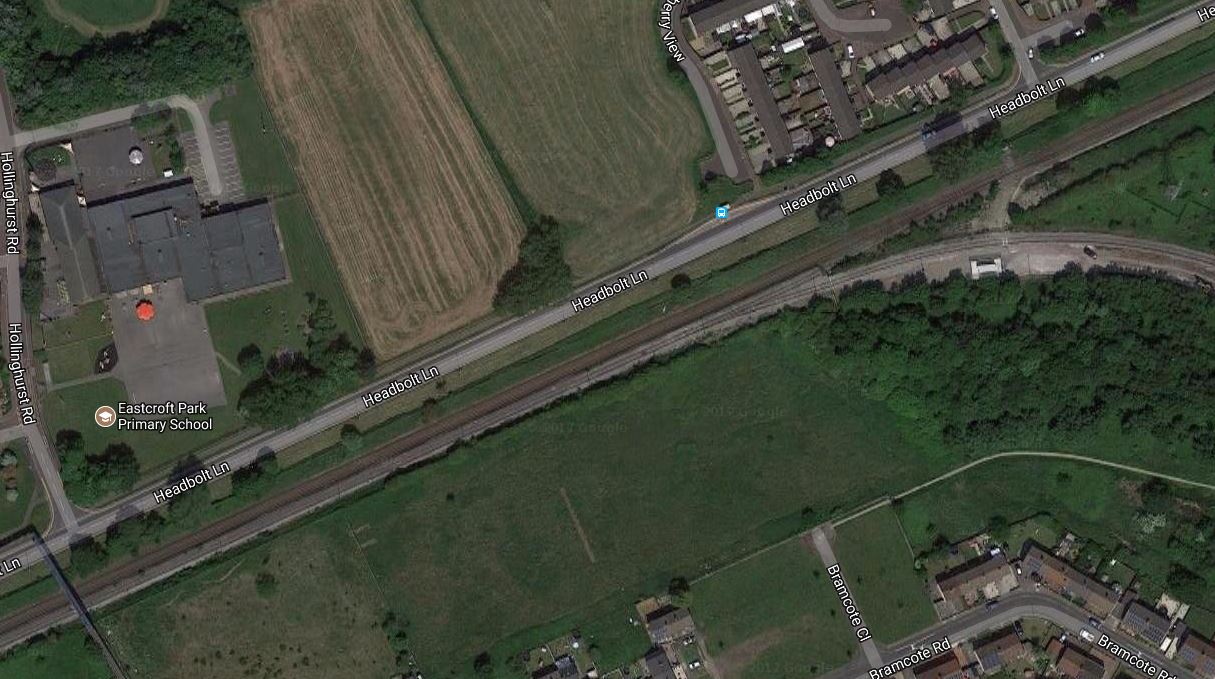
Note the footbridge in the bottom left corner of the map.
Merseyrail would seem to have a lot of space to put the station.
Merseyrail To Skelmersdale – Kirkby Station
In Merseyrail To Skelmersdale – How To Plan A New Rail-Link, I talked about Kirkby station.
So as I was going from Liverpool to Blackburn, I took a detour.
These pictures were taken at Kirkby station.


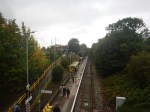
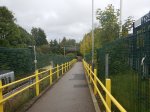


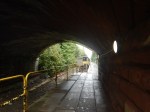

The amazing thing about Kirkby station is that in the last three years, the yearly passenger totals have averaged around 2.4 million.
Not bad for a station with four trains per hour (tph) to Liverpool and two tph to Manchester.
Near me in London, Chingford station has 4 tph to London and struggles to attract 1.7 million passengers per year.
You can understand, why Merseyrail are considering expanding the train service to Kirkby and the surrounding area.
Under Merseyrail’s plans, the station will remain a single platform, but I suspect the upgrading will do the following.
- Trains will stop by the stairs and the ramp.
- Platform facilities could be improved.
- There’s space for a lift!
I suspect there’s not too many single-platform stations that will be able to handle 4 tph in both directions.
Details In A Class 345 Train Interior
These pictures were taken of internal details of a Class 345 train.


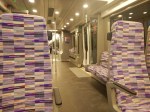

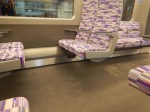
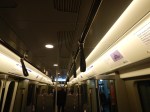


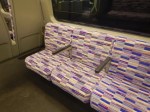


Various thoughts.
Cantilevered Seats
The bays of four-seats are cantilevered to the sides of the train, which means the space underneath the seat is available for luggage and well-behaved dogs.
Heating
It would appear that the heating is under the Metro-style seating.
As I said in Aventras Have Under Floor Heating, it would appear that the Greater Anglia Aventras do have under-floor heating, so perhaps this is a customer-chosen option, more suited to longer-distance routes.
The Lobbies
East car in the Class 345 train, has three sets of doors and lobbies.
Note how each lobby has a central handrail and two vertical handrails in each corner. One of these is just behind the door and you can grab it from outside.
Metro-Style Seating
I have not travelled in the Peak, so I don’t know how the seats perform with a full load, but this type of seating works well in the Overground’s Class 378 trains.
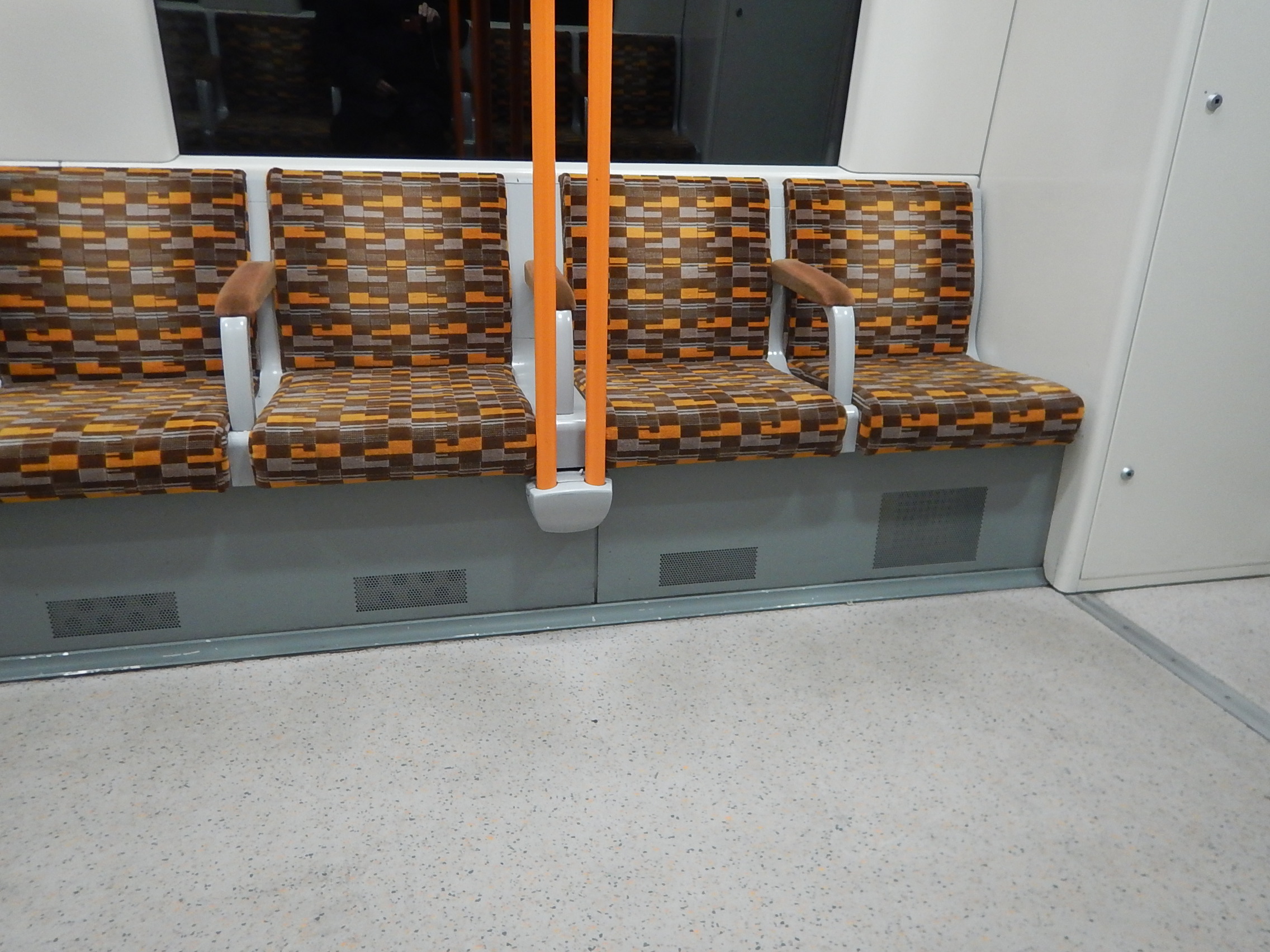
Note how the Class 378 seats have wider armrests and are not so open underneath. That vertical handrail in front of the seats can get in the way too!
The Class 378 trains were introduced in 2009, so the differences are probably down to eight years of design and advanced manufacturing.
Armrests
The armrests have received praise in some reports and they appear to work.
Note how in the metro-style seating the armrests have two levels.
Conclusion
As the first Aventra to enter service, it is a very good effort.
Certainly finding criticism of these interiors is difficult.
If you’re in London and want to go to the Olympic Park or the Eastfield Shopping Centre at Stratford, why not forsake the Jubilee and Central Lines of the Underground and take one of these new trains from Liverpool Street.
There are four trains in service at the present time, but by the end of the year, there will be eleven, so there is an improving chance you’ll get a ride in the best commuter train, in which I’ve ever ridden.
West Anglia Route Improvement – STAR – 19th September 2017
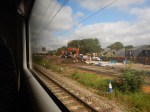
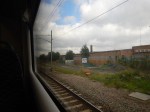
Progress appears to being made on installing the third track for STAR.



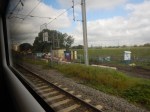
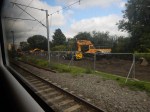
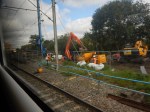






Note.
- The piles for the electrification.
- The completed piles with their orange caps.
- The digging out of the bed for the third track.
- The work around Meridian Water station
There’s certainly a lot of work going on.
Merseyrail To Skelmersdale – How To Plan A New Rail-Link
Skelmersdale is the second largest town in the North West of |England without a railway station.
But it does appear that things are progressing towards the town having what is probably a much-needed station.
This article in the Southport Visiter is entitled Funding boost for new rail link to Skelmersdale.
Reading the article, you get the impression that all the stakeholders have got together and come up with a sensible plan.
The Route
The article says this about the route.
The plan would see Merseyrail services extended on from the current terminus at Kirkby station to serve Headbolt Lane, Rainford and Skelmersdale. Skelmersdale would become the new interchange for Merseyrail, and Northern Services on to Wigan and Manchester.
This would seem to be a well-thought out plan to use Skelmersdale as an interchange.
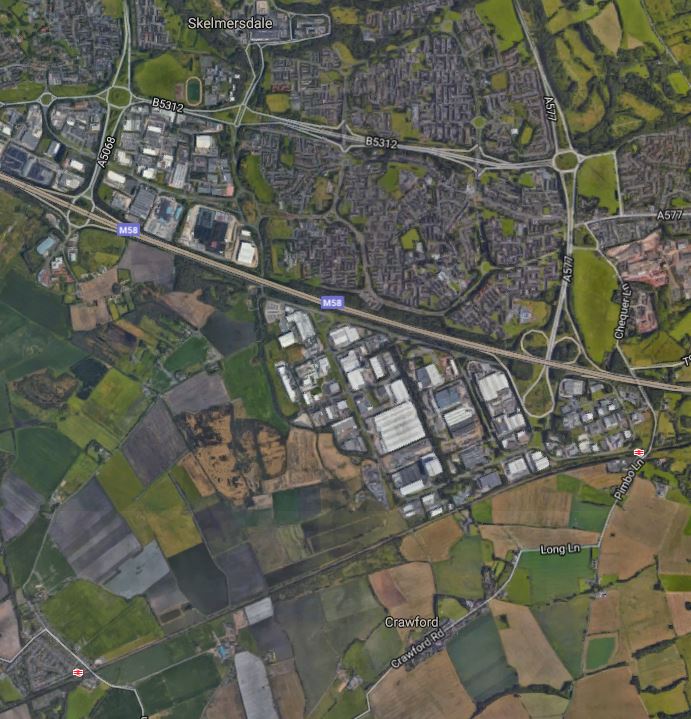
This Google Map shows the Southern part of Skelmersdale and the railway that runs through Rainford and Upholland stations.
Note.
- The town centre of Skelmersdale is the Concourse, which is marked by the town’s name in the top-centre of the map.
- The Kirkby Branch Line runs across the map.
- Rainford station is in the South-West corner of the map.
- Upholland station is on the left-centre of the map.
- Kirkby station and the new Headbolt Lane station would be West of Rainford station on the existing line which is single track.
- The track from Rainford through Upholland and to the East is double-track.
It looks like a triangular junction would be created East of Rainford, that would allow trains from both the East (Upholland, Wigan and Manchester) and trains from the West (Kirkby and Liverpool) to turn to the North to a station in Skelmersdale.
Looking at the area in more detail from my virtual helicopter, I’m certain that a station could be placed close to the town centre with the capability of handling four trains per hour from both Liverpool and Manchester.
The station would probably need two platforms; one for Liverpool and one for Manchester.
There would be various possibilities for the track layout between the station and the existing Kirkby Branch Line.
In the simplest form, each platform would have an independent single track, which would allow trains from both Liverpool and Manchester to arrive and depart from Skelmersdale simultaneously.
I would also arrange the two platforms as opposite faces of a shared island platform.
This would mean the following.
- Trains from Liverpool and Manchester would arrive at the same time.
- Trains to Liverpool and Manchester would depart a few minutes later at the same time.
- Passengers needing to change at the station would only have to walk across the platform and wait for the other train to leave.
- A coffee kiosk and a shop could be positioned on the shared platform.
The Northern end of the platform could be open and passengers could walk straight into the Shopping Centre or to the parking.
It would not only be passenger-friendly, but totally step-free and very affordable.
The only restriction would be that trains must be able to do the following in under fifteen minutes.
- Travel from the Kirkby Branch Line to Skelmersdale station.
- Turnback the train at Skelmersdale.
- Travel from Skelmersdale station to the Kirkby Branch Line.
I have said fifteen minutes, as that would be needed for four trains per hour.
This might not be possible with the current Class 508 and Class 142 trains, unless they were extremely well driven, but Merseyrail’s new Stadler trains and Northern’s 100 mph Class 319 trains, would probably be able to handle the service.
It would be a unique way to serve a town like Skelmersdale, which is a few miles from a double-track line.
The only complicated track-work needed would be where the branch joined the Kirkby Branch Line.
Electrification
Merseyrail’s network is electrified using 750 VDC third-rail, whereas if the line to Manchester were to be electrified it would probably use 25 KVAC overhead wires, as has been used all over North-West England.
Keeping the two lines independent would enable each to have its own system. This layout has been used between Dalston Junction and Highbury and Islington stations on the London Overground and it has worked successfully for over seven years.
The article in the Southport Visiter also says this.
Merseyrail’s new trains will be running on the existing network from 2020, and trials to run them beyond the existing electrified ‘third rail’ track could help inform the scope of the Skelmersdale scheme, potentially meaning that major changes to install electrified track wouldn’t be needed. Developments in Northern trains over the next few years could also remove the requirement for lineside infrastructure and power connections as part of the project.
In Battery EMUs For Merseyrail, I talked about how Stadler were going to fit batteries to two of the new Merseyyrail trains.
I’m sure that if the third-rail electrification was extended from Kirkby to Rainford, that one of the new Stadler trains will be able to reach Skelmersdale and return.
The Stadler trains might even be able to travel from the existing electrification at Kirkby to Skelmersdale and back.
Northern could run the service between Skelmersdale and Manchester, using their new Class 769 trains, which can operate on lines with or without electrification.
This could mean that the link to Skelmersdale station could be built without electrification.
Kirkby Station
Kirkby station would only need minor rebuilding as it is effectively a single long platform, where Liverpool and Manchester trains meet head-on.

The barrier in the middle of the single-track under the bridge would need removing and there would be some moving of signals, but nothing very expensive would be needed.
Headbolt Lane Station
Headbolt Lane station would be another single platform station, which would serve trains going between Liverpool and Skelmersdale.
Rainford Station
Rainford station wouldn’t need any modification, but it might be reduced to a single step-free platform.
A Co-Operative Project
The article in the Southport Visiter says this.
The Skelmersdale Project is led by Lancashire County Council, involving Merseytravel, West Lancashire Borough Council, Merseyrail, Northern Rail and Network Rail.
This must be the key to the success of the project.
The Cost Of The Project
The article in the Southport Visiter says that the current estimate of the project cost is £300 million.
These actions will need to be done.
- Create the track to connect Skelmersdale station to the Kirkby Branch Line.
- Build a shared double-platform station at Skelmersdale.
- Build a single-platform station at Headbolt Lane.
- Upgrade the signalling.
- Deliver the new Stadler trains and ascertain their range on batteries.
- Northern must acquire some trains for Skelmersdale to Manchester.
It looks to me, that a budget of £300 million would be adequate.
Building The Project
The major work would be creating the junction East of Rainford station and the route to Skelmerrsdale and its new station.
If it could be built without any major electrification, it shouldn’t be the most difficult of construction projects.
Headbolt Lane station could be built as a single platform alongside the existing line.
It looks to me, that this is a classic project that fits into Network Rail’s new philosophy as outlined in this article in Rail echnology Magazine, which is entitled Carne: I’m determined for private sector to directly invest in railway.
Conclusion
It is an excellent plan!
Whitechapel’s Monster Fatberg
This article on the BBC is entitled ‘Monster’ fatberg found blocking east London sewer.
It has now been cleared up and Thames Water have turned the mess into enough fuel to power three hundred and fifty buses for a day.
We’ve had these fatbergs in London before as the Guardian reported in 2015.
It seems the big problem is fast food outlets with dubious hygiene practices, who just tip the fat down the drains.
I know of someone, who had a problem with a pub near where they lived, which wasn’t handling its rubbish properly. A call to the local Council got it sorted.
So perhaps, the solution is in part, getting the Council to check the hygiene practices of all food outlets better.
Also, just as a plastic bag tax has cut their use, perhaps we need a wet wipe and a nappy tax to cut use of these products, as they are another big problem.
 The Anonymous Widower