Heritage Railways And Class 319 Flex Trains
Heritage Railways In The UK
Wikipedia introduces their Heritage Railway entry by saying this.
A heritage railway is a railway kept to carry living history rail traffic in order to re-create or preserve railway scenes of the past. Often heritage railways are old railway lines preserved in a state which depicts a certain period, or periods, in the history of railway systems.
But that doesn’t mean heritage railways in the UK are not run to the best professional standards.
The Class 319 Flex Train
The Class 319 Flex Train is an electro-diesel version of the Class 319 Train, originally built in the 1980s to serve the Thameslink routes.
These trains are almost as old as the classic Range Rovers., but they have probably been looked after to much higher standards.
Some trains have recently undergone a light refurbishment and are now working electric services for Northern in North-West England.
Northern would run more of the trains, if Network Rail had been able to stick to their electrification timetable.
So Northern and the train rolling stock leasing company; Porterbrook have decided to create the electro-diesel version by installing two rail-proven MAN diesels and an ABB alternator. The train will be able to generate its own electricity and thus work lines without electrification.
I have seen an advance copy of the brochure and the train combines the 100 mph capability of the original trains with the ability to work the very stiff Buxton Line.
Porterbrook describe the train as a Go-Anywhere Solution.
Through Services Onto Heritage Lines
I don’t know how many heritage lines run services that are habitually used by commuters going to school, college or on business, but there have been and might still are be heritage lines where this happens.
The next sections give my thoughts on possible connections and services.
Severn Valley Railway
The Severn Valley Railway runs for a distance of 16 miles between Kidderminster Town and Brignorth stations.
At Kidderminster, there is a connection to the Birmingham to Worcester Line.
This Google Map shows the two adjoining Kidderminster stations.
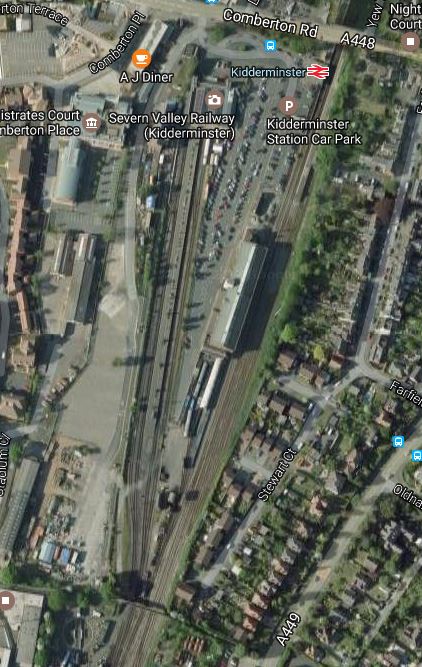
There is a section called Other Operational Extensions in the Wikipedia entry for the Severn Valley Railway, where this is said.
The General Manager, Nick Ralls has confirmed that Chiltern Railways have approached the Severn Valley Railway with a view to extending a number of its peak-time Marylebone to Kidderminster services to Bewdley to alleviate road congestion in the Kidderminster/Stourport/Bewdley area. This has raised questions regarding car parking limitations near Bewdley station. Should this go ahead the distinction between a heritage railway and a contemporary railway operation would be blurred. In conjunction with this there have been suggestions for locating a Park and Ride facility near Foley Park Halt. Investigations are in-hand to construct a station to serve a conference centre and hotel to be located at the West Midlands Safari Park.
Consider.
- According to Wikipedia, it is a future aspiration of Network Rail to electrify the entire Birmingham to Worcester via Kidderminster Line, as well as the Chiltern Main Line to London Marylebone.
- If Chiltern Railways could run to Bewdley station, surely a Class 319 Flex train could run a service to the Severn Valley Railway from anywhere between Kidderminster and Birmingham.
- If the electrification ever happens, a Class 319 Flex train could run under the wires to Kidderminster and then use diesel power to Bewdley or even Brignorth.
When does a heritage and tourist railway become a commuter route?
Swanage Railway
The Swanage Railway are working on a connection to the main line at Wareham station.
This Google Map shows Wareham station in the North East corner, with the South Western Main Line running across the image.
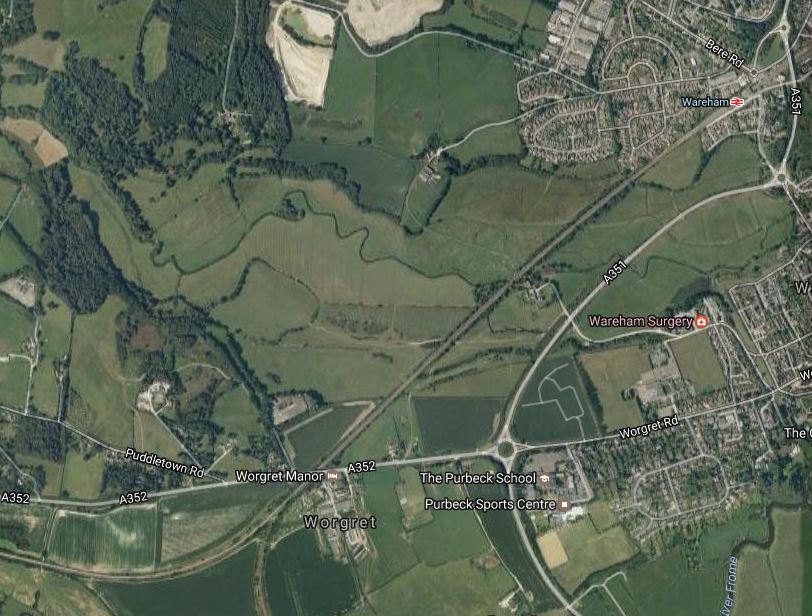
Wareham Station And The Swanage Railway
In the South West corner of the map, a junction can be seen, where the Swanage Railway joins from the South.
As the Class 319 Flex train would probably be a train fully-certified to go on any line, where the Class 319 train can run, it could run from say Poole or Bournemouth stations to the terminus of the Swanage Railway at Swanage via the iconic Corfe Castle.
- I think that Bournemouth station could turnback a local service to Swanage station.
- The Class 319 Flex train would use the third-rail electrification on the main line.
- On the main line, it would be a 100 mph train, just like the Class 444 trains working the line to Waterloo.
- The train would use diesel power to Swanage.
- I don’t think much new infrastructure would be needed, once the connection at Wareham is finished.Is a Class 319 train old enough to count as heritage? I suppose it’s fake with a couple of modern German diesels!
It could work as both a local train service and a tourist attraction.
Could There Be A Battery-Powered Class 319 Flex Train?
In the advance copy of the brochure for the Class 319 Flex train, that Porterbrook have sent me, there is a few comments about using batteries on the train.
This strong statement is Porterbrook’s view on a battery-option for the train.
A large battery option was shown to be heavy, would require a lot of space and have long recharge times.
But Porterbrook are also quoted in the article in Rail Magazine, which is entitled Flex… and flexibility, as saying.
Batteries are definitely doable, but rail will have to overcome the current range limitations for traction power. We think traction battery technology will give you a range of around 20km to 30km [12-18 miles] before needing recharging, and this is not enough for most operators.
But a lot of uses of a battery train are for very short distances.
- Moving a train in a depot.
- Moving a train to an electrically-dead siding for overnight parking.
- Moving a train to a safe evacuation place like the next station after an electrification failure.
- Moving a train over an electrically-dead section of line.
- Running on very short branch lines without electrification.
- Running to a temporary station.
- Remote start-up of the train.
As the Class 319 train is a DC train, fitting batteries would not need an expensive voltage converter.
Electrically-Dead Stations
The new Health and Safety regulations as regards electricity in stations are causing Network Rail serious problems and great expense with electrification.
A train with a limited battery option may offer significant safety advantages in that if it had a range of six mile or so on full batteries then stations could be built without electrification.
Third rail systems are often broken in stations for a short distance, so that staff can safely cross the tracks. They are also broken at level crossings.
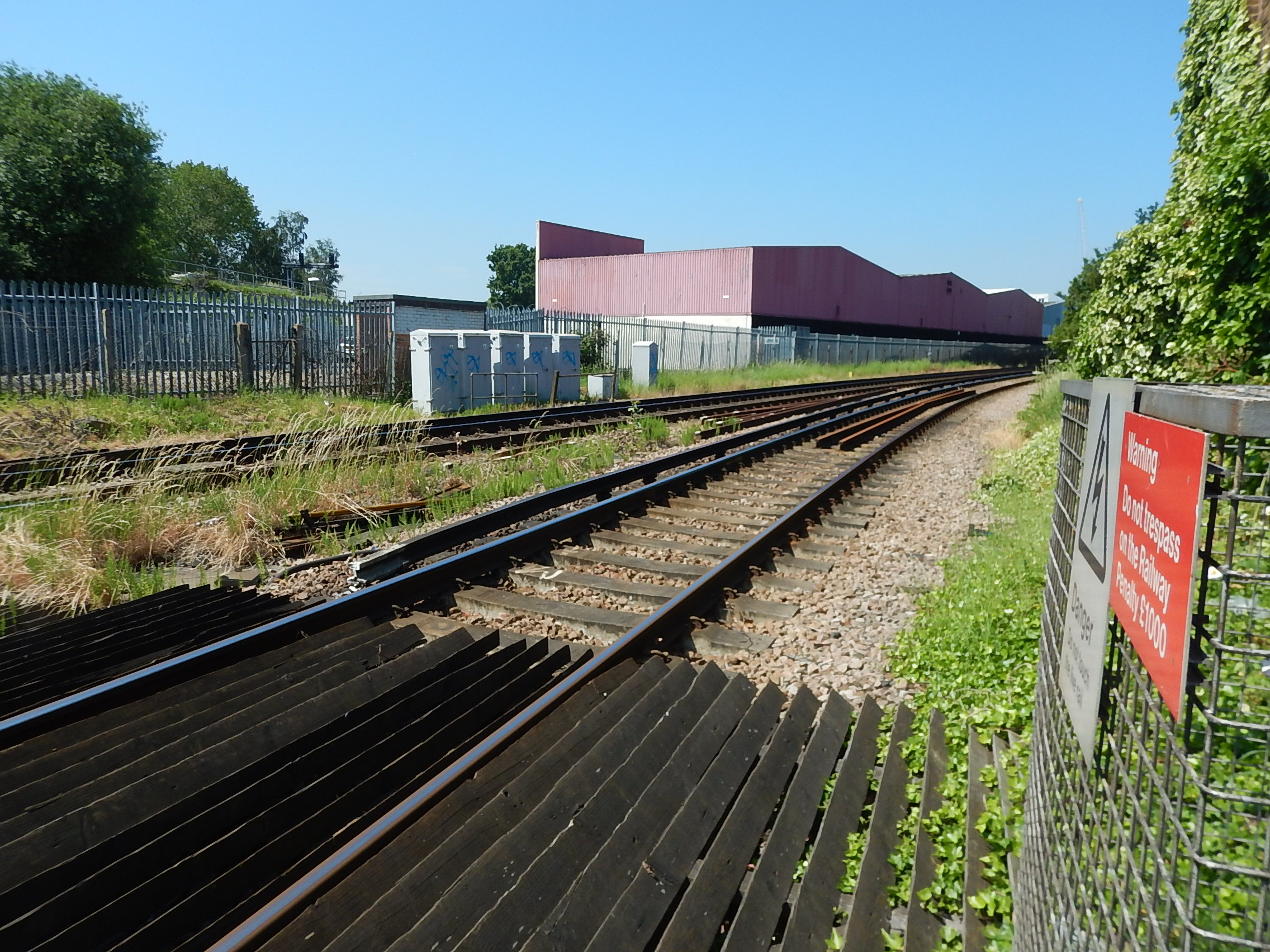
Most trains including all Class 319 trains have contact shoes at both end of the train and can bridge a short gap.
An onboard battery would allow the trains to bridge larger gaps.
The problem with overhead electrification is that the pantograph must be lowered and raised at the correct times. But this is one of those problems that could be done automatically and safely by systems linked to GPS.
There’s certainly a patent with the name of Pantograph Control Via GPS.
No overhead wires in a station with a rich architectural heritage, may lead to easier and more affordable electrification.
Think Hebden Bridge!
Very Short Branch Lines
Several branch lines that have been proposed for electrification are less than six miles in length.
- Brentford – 4 miles
- Greenford – 2.7 miles
- Henley – 4.5 miles
- Levenmouth Rail Link – 5 miles
- Windsor – 2.5 miles
So if 20 to 30 km. (12-18 mile) range mentioned by Porterbrook is serious, a Class 319 Flex train with batteries instead of diesel engines should be able to handle short branch lines with ease, provided that the batteries could be charged on the main line or in an electrified bay platform.
As electrificastion procedes more opportunities will present themselves.
This Google Map shows the distance between Leeds Bradford Airport and the Harrogate Line.
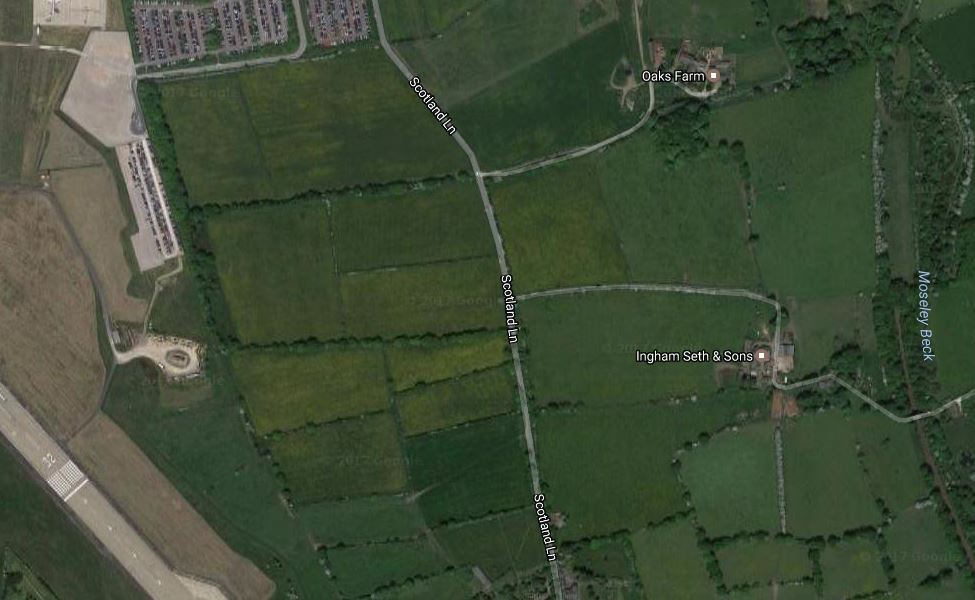
The Harrogate Line is likely to be electrified in the next tranch of electrification, as most of the other suburban lines from Leeds are already electrified.
The distance between the Airport and the Harrogate Line is probably about a mile, so Class 319 trains fitted with an affordable battery could manage this line.
Battery Technology Will Improve
It should be born in mind that battery technology will get better, thus range will increase for a battery if a given physical size.
A guaranteed twenty mile range would bring these routes into the list of possible routes for a Class 319 train with batteries.
- Braintree – 6.4 miles
- Coventry to Nuneaton – 10 miles
- Marlow – 7.25 miles
- Windermere – 10 miles
Braintree is interesting, as it needs a passing loop and the cheapest way to do this would be to remove the electrification, update the track and signalling and use an independently-powered train.
Battery Technology On Other Trains
Simpler battery systems like this will be able to be applied to a large number of modern electric trains on UK railways.
- Class 321 trains
- Class 375 trains
- Class 377 trains
- Class 378 trains
- Class 379 trains
- Class 387 trains
Note that I haven’t included the Alstom, CAF, Hitachi, Siemens and Stadler trains running now or in the future.
Will they sit on their hands and watch the other manufacturers’ trains get more efficient? You bet they won’t!
It is also worth noting that some of these trains, unlike the Class 319 trains, have regenerative braking, which could store their braking-generated energy in the battery, rather than returning it to the electrification.
Conclusion
Porterbrook have let a big genie out of the bottle.
Business As Usual: Vivarail Begins Testing Of New Battery Train
The title of this post is taken from this article in Rail Technology Magazine.
So it would appear that Class 230 trains are now running on batteries.
Apparently you can swap batteries for diesel power-packs.
The train certainly has a low-cost paint job!
Sibling Wars
I agree with the princess in this story on the BBC, which is entitled Genetically-modified crops have benefits – Princess Anne.
But I doubt her elder brother does!
Rail Sleeper Plan Between Caithness And Edinburgh
This is the headline on an article in the John O’Groats Journal.
So is this a good idea?
Some of the comments to the article are cynical it would work, but I feel that it could be a runner.
The Current Service
There are two train services from Edinburgh to Thurso during the day, both of which need a change at Inverness.
- The 08:32 from Edinburgh arrives in Thurso at 17:50.
- The 13:34 from Edinburgh arrives in Thurso at 22:20.
Both services could be summed up like this.
- The total time of the journey approaches nine hours.
- The train is something like a Class 158 diesel multiple unit.
- Both legs are between three and four hours.
- There is a long wait in Inverness.
- The second service does the second leg mainly in the dark.
- London to Thurso in a day is possible, but it would be dark and tiring.
Although there are quicker routes with more changes, I can think of better ways of spending a day, travelling North from Edinburgh to Thurso.
Coming back, there are three practical one-change services
- The 06:50 from Thurso arrives in Edinburgh at 14:22.
- The 08:34 from Thurso arrives in Edinburgh at 16:25
- The 13:01 from Thurso arrives in Edinburgh at 22:28.
These services can be summed up like this.
- The first two services are faster than the nine hours going North.
- On a good day the morning services must give good views.
- You would certainly be able to do Thurso to London by train in a day.
Certainly, as a practical train service to attract visitors, the Edinburgh-Thurso service is not a service that says you must go, like say Inverness to Kyle of Lochalsh, which I wrote about in Inverness to Kyle of Lochalsh.
The Far North Line
The Far North Line connects Inverness with Thurso and Wick. This introduction from Wikipedia, is a good summary of the line.
The Far North Line is a rural railway line entirely within the Highland area of Scotland, extending from Inverness to Thurso and Wick. It is the northernmost railway in the United Kingdom. The line has many sections of single track, mostly north of Dingwall. In common with other railway lines in the Highlands and northern Lowlands, it is not electrified and all trains are diesel-powered.
The trains are typically Class 158 trains, which provide four trains per day all the way between Inverness and Thurso. Other services give a better service on the Southern part of the line including four trains per day to Kyle of Lochalsh.
Improving The Far North Line
Wikipedia has a section on Future Expansion of the line. This is said.
For many years there have been proposals to bypass the Lairg loop with a line across the Dornoch Firth, linking Tain (via Dornoch) more directly with Golspie. This would involve building a new bridge over the Firth, or making dual-purpose the bridge[5] which now carries just the A9. Discussions have been held concerning the shortening of the Far North Line involving a bridge over the Dornoch Firth and the possible use of the trackbed of the former light railway.[6] Nothing has yet come of these ideas.
But these are expensive developments and is the traffic available.
The John O’Groats Journal has this paragraph.
I have spoken to Caledonian Sleeper and want to investigate the business case for a sleeper combination with freight.
So could Internet and other parcels traffic be a nice little earner for the line.
But then a lot of tourists venturing along the line will be heavily loaded with bicycles and heavy luggage.
Incidentally, In the 1960s, I used to work with a John Baxendale, who used to go surfing off the North Coast of Scotland, as he said it was some of the best surfing in the world.
Do surfboards feature on trains to the North, as they do on trains to Cornwall?
Trains For The North
So perhaps, this line, the Kyle of Lochalsh Line and the Inverness to Aberdeen Line need a fleet of specially configured Highland trains.
- Four carriages.
- A good buffet/restaurant car serving proper Sottish food.
- Lots of space for luggage.
- Big windows.
Abellio ScotRail are planning to refurbish twenty-six Inter-City 125s for longer routes, which fit this specification, as the rear sections of the Class 43 locomotives can be used for freight and oversized luggage.
Will we be seeing these trains on the routes out of Inverness?
Imagine a tourist day out from Inverness, where the morning train to Thurso and the evening return to Inverness offered the best breakfast, dinner and hospitality that Scotland can provide.
You never say never where Terry Miller’s iconic trains are concerned.
If ever a train will still be in main line service, a hundred years after it was built, it will be these trains.
Given their unique status, if they worked the Far North Line, they might just attract enough passengers to make line improvements worthwhile.
Factors Affecting The Edinburgh-Thurso Sleeper
In the following sections, I’ll detail a few factors that will surely affect ridership of a sleeper train between Edinburgh and Thurso.
Sleeper Trains Are Having A Revival
A few years ago, it was predicted that sleeper trains would be consigned to history in a few years.
But in the UK, the Caledonian Sleeper and the Night Riviera, seem to have ignored this advice, with the Scottish service ordering new rolling stock.
Deutsche Bahn thought sleeper trains were the past and they probably were, given the customer-unfriendly way DB ran them. But Austrian Railways are taking over the sleeper services and investing in new rolling stock.
In Sweden, there’s even their own Far North sleeper train from Stockholm to the Arctic Circle. Check out this map on the Swedish Railways web site.
The Curiosity Factor
Done properly, an Edinburgh to Thurso Sleeper would surely attract those, of which I’m probably one, who like to travel to out of the way places as some form of box-ticking.
My Reason For Using Sleeper Trains
I am one of those lucky people, who can sleep anywhere.
So if I’m coming down from a trip to Scotland, I will often have a full day and then catch the sleeper back down to Euston. If I book at the right time, I often find that my First Class sleeper ticket, is less than staying in say a Premier Inn in Edinburgh or Glasgow and buying a train ticket for the morning. I also arrive in London at a time, that hasn’t wasted half the day.
If say, I had to go to an important event in Glasgow or Edinburgh, if possible, I would take the first train to the North in the morning and then come back on that day’s sleeper.
The Edinburgh To Thurso Day Trip
If you look at the times for a train service between Edinburgh and Thurso, it would not be possible to go up and back in a day and have time for a worthwhile meeting or party.
I once drove from Ipswich to Aberdeen and back in a day, but I was in a Lotus Elan doing speeds at up to a hundred on the way.
But you couldn’t do those sorts of speeds now!
On the other hand, if there was a sleeper service between Edinburgh and Thurso, you’d arrive fresh and ready for the day or you could sleep off the Highland hospitality on the way back. Or of course vice-versa!
Why Not A Glasgow To Thurso Sleeper?
Once all the electric trains are running across the Central Belt, Glasgow to Edinburgh could be 36 minutes, with a train every 15 minutes.
So only one route would be needed, as passengers from Glasgow could just take a train across.
But for operational reasons, the sleeper service might start from anywhere in the Central Belt, like the new Edinburgh Gateway station, which is close to Edinburgh Airport.
Thurso To Edinburgh Airport
An Edinburgh-Thurso service would certainly stop at Edinburgh Gateway station, to give easy access to the Airport.
Suppose you were going on holiday or for business reasons to Caithness or somewhere on the Far North Line.
You would catch a convenient flight into Edinburgh Airport and perhaps board the Sleeper st around nine in the evening for the North.
Coming back, you’d catch the Sleeper in Thurso and arrive at Edinburgh in time for a morning flight.
Caithness Tourism
Tourism to Caithness and the North Coast of Scotland could be a big driver of passengers to an Edinburgh to Thurso Sleeper Service.
This page on the Visit Scotland web site gives more details.
There’s even pictures of surfers.
Conclusion
I feel that not next year, but once Scotland’s rail system is fully developed, with the shortened Inter-City 125s serving the longer routes and electric trains all over the Central Belt, that a Sleeper Train between Edinburgh and Thurso will be viable.
Should Greater Manchester Have More Control Of Its Stations?
I ask this question because of this article in Global Rail News, which is entutled Manchester Seeks Station Devolution.
I don’t think there is a simple answer to this question.
As an example take the case of Haggerston station, near to me in London.
The station is owned by Transport for London and managed by London Overground, who also put their names on the trains.
But the actual operator is Arriva Rail London, who are paid a fee to run everything by London Overground.
It sounds complicated, but if Transport for London want to add a station, which they haven’t yet, they would decide this with the various London politicians.
Transport for London may not have added a station, but they have promoted the extension of the Northern Line to Battersea Power Station and they are putting the funding together to extend the Bakerloo Line to Lewisham.
Merseyrail works under a similar model and they’ve just announced the construction of Maghull North station and the purchase of a fleet of new Stadler trains.
So why shouldn’t Manchester and a few other cities have control of their stations?
This is a quote in the article from Jon Lamonte, TfGM’s chief executive.
The recent redevelopment of Irlam rail station has already showcased how our vision can become a reality, demonstrating just what can be achieved when local stations realise their full social and economic potential.
In some ways the local knowledge and control is what is important. If everything is under an elected figurehead like a Mayor or Transport Commissioner, then if it all goes wrong, they will feel the wrath of the electorate.
The problem with ,local control comes, when a decision involves other Local Authorities of perhaps a different political hue.
Suppose in Manchester that for their own perfectly valid reasons, Manchester wanted to move some Liverpool services between Manchester Victoria and Manchester Piccadilly stations.
Liverpool might not like this and the problem could rumble on and on.
So who has control of the regional stations has to be chosen with care.
In some ways, it would be a great advantage to both Liverpool and Manchester, if they both ran their stations using the Merseyrail model.
Two Marks And Spencer Mini Meals
The picture shows two of Marks and Spencer Mini Meals
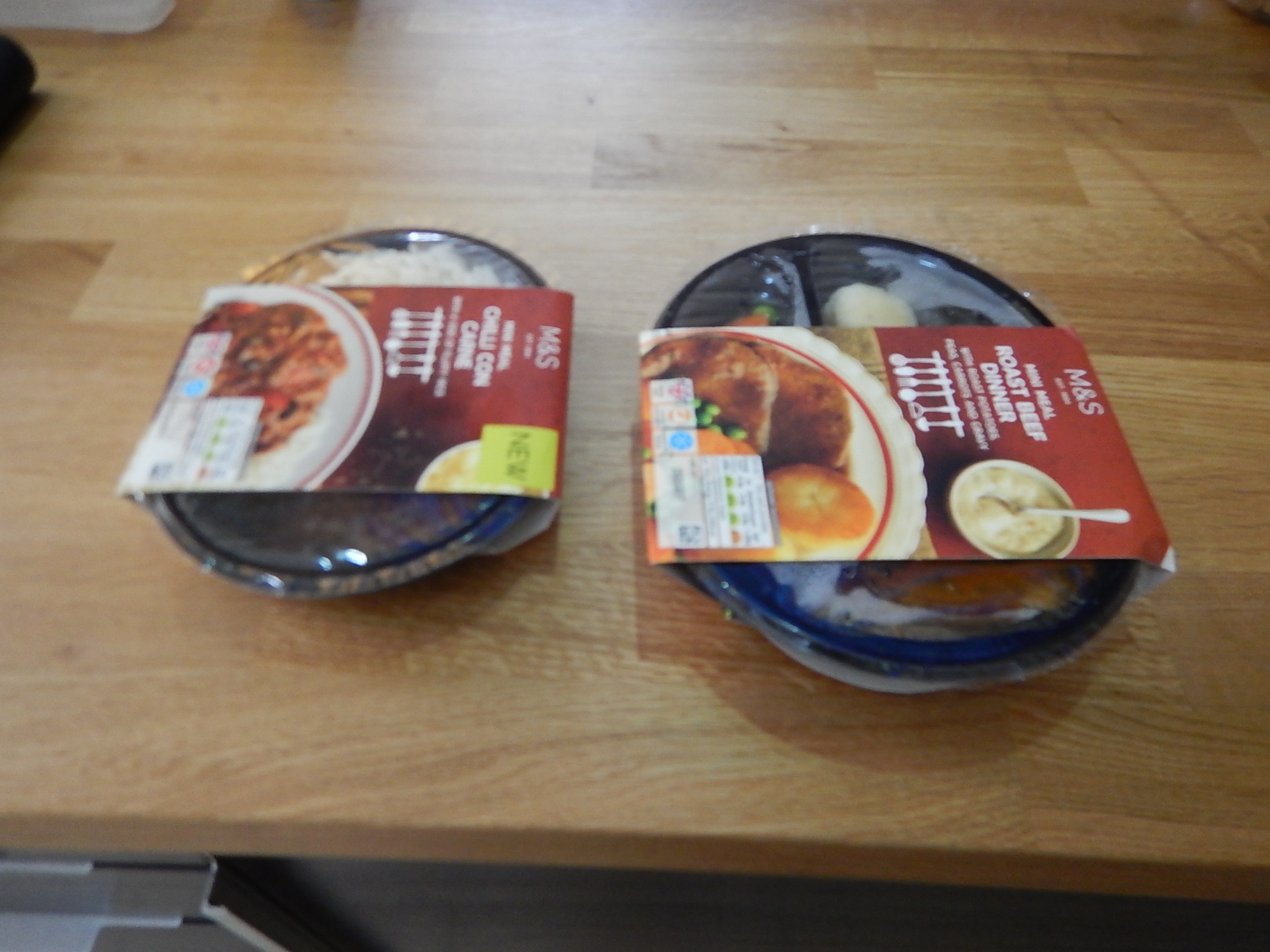
The ingredients say that they are gluten-free and freezer-friendly, so I put them in my freezer for an emergency meal, if I arrive back home without any food in the fridge and am rather peckish.
I must check to see if all of these mini-meals are gluten-free!
West Anglia Route Improvement – Angel Road Stations – 20th March 2017
I took these pictures.as I walked from the current Angel Road station to the works, which could be the construction of the new Meridian Water station.





There is obviously a lot of serious work going on in the area, as some of the trains seem to be slowing appreciably.
But most of the work so far, seems to have been setting up the site, moving the signalling cables and generally clearing up the rubbish.
Could Enfield Lock Station Have A Bay Platform?
In West Anglia Route Improvement – Modern Railways March 2017, I mentioned that Crossrail 2 might like to have turnback platform at Enfield Lock station.
As this morning, I turned back myself at Enfield Lock station, as it’s the Freedom Pass limit, I took these pictures.

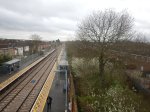
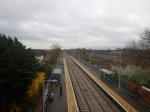


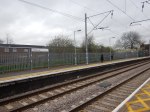
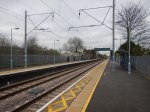
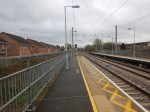
This Google Map shows the middle of the station.
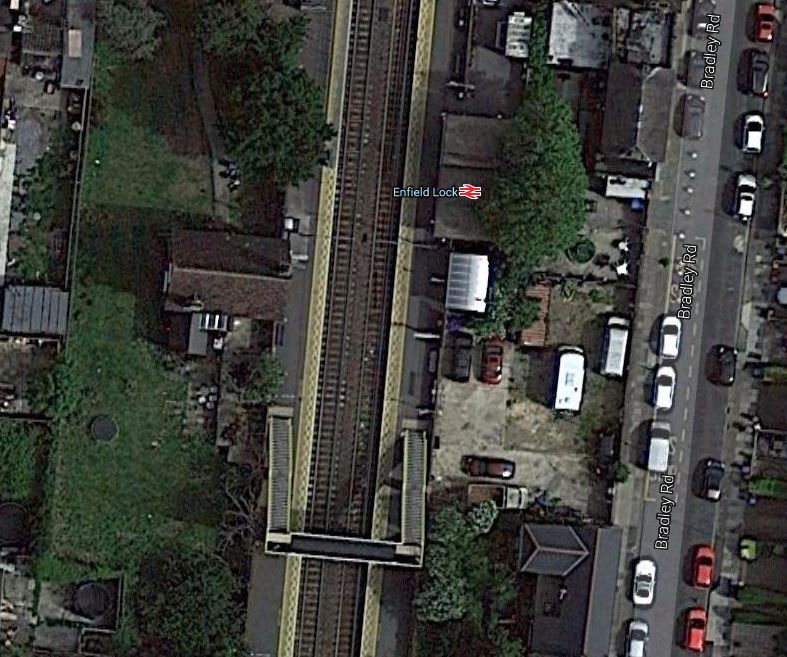
If you look at the West side of the station by the Down line, you’ll notice the house, which from the pictures could be a candidate for demolition.
So I do think, it might be possible to squeeze an extra platform, by the Down Line.
This Google Map shows the Southern end of the platforms.
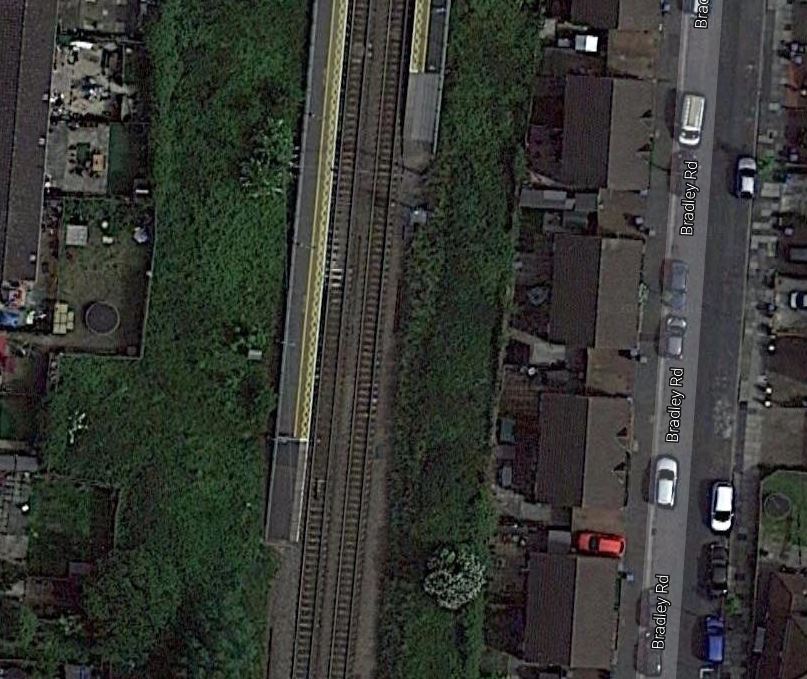
The space available would certainly be enough for an extra platform, but will there be enough for two fast lines between the current Up Line and the houses?
I suspect that there is, if the current lines could be moved slightly to the West.
But as at Tottenham Hale and Brimsdown, fitting the two fast lines through \Enfield Lock, is going to need a cunning plan.
H
West Anglia Route Improvement – Lea Bridge Station To Enfield Lock Station – 20th March 2017
I took these pictures of the works between Lea Bridge and Enfield Lock stations from the 09:06 train from Lea Bridge.
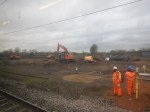
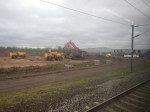
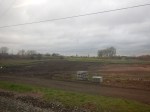
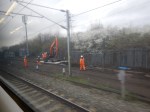





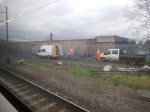


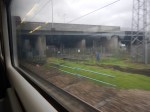
Work seems to be progressing.
- It looks like the area to the South of the Chingford Line is being levelled.
- The route of the Hall Farm Curve is being cleared.
- The level crossing at Coppermill Lane has been closed.
- The bridges are being rebuilt to take at least a single-track.
- The track-bed appears to be being created.
Incidentally, there still isn’t any sign of any overhead line equipment.
 The Anonymous Widower